
Beyond Price and MOQ: Verifying Laminating Rolls Manufacturing Capability
For buyers moving from evaluation to execution, OEM flexibility, quality systems, compliance documentation, and delivery terms matter more than list price.
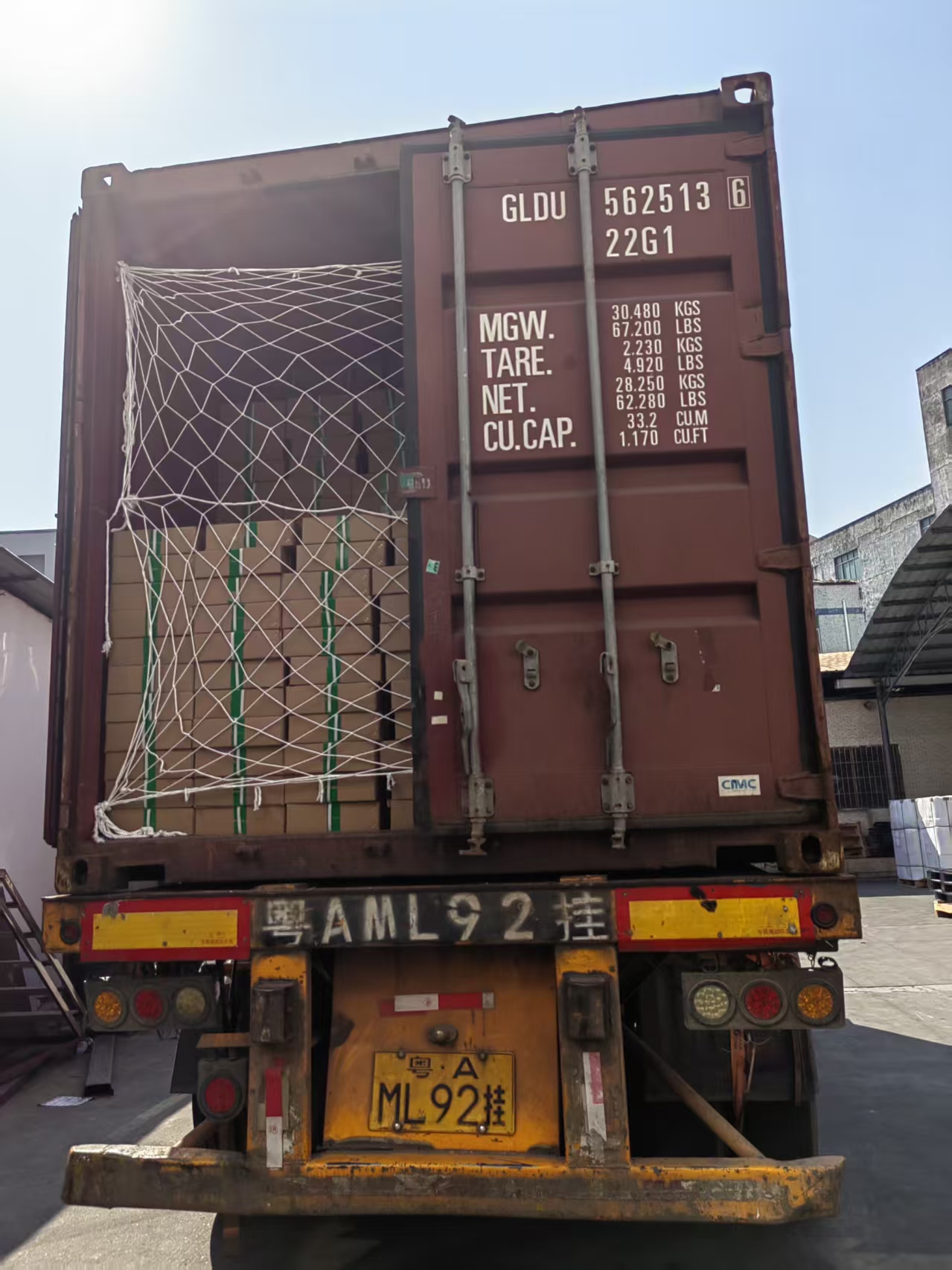
Container loading is one of the visible checkpoints in laminating rolls execution readiness.
Laminating rolls buyers often reduce supplier selection to two variables: unit price and minimum order quantity. During early benchmarking, that simplification works. But when an order moves into execution—when rolls enter a print shop, pass through a laminating machine, and ship as finished products—a different layer of capability is tested. Can the manufacturer hold thickness and adhesion within a consistent range? Can it adapt width, thickness, or branding without disrupting production schedules? And if quality drifts, who responds?
For industrial buyers in packaging and printing, the transition from evaluation to execution is where supplier capability becomes visible. Understanding which capabilities to verify, and how to verify them, is a core part of laminating rolls procurement.
Why Capability Verification Is a Distinct Step in Laminating Rolls Procurement
Laminating rolls are not fully standardized commodities. End performance depends on the polymer construction, coating uniformity, slitting precision, and handling across the supply chain. In the common thermal laminating rolls format, the film is built from PET and EVA layers, combining transparency with adhesive performance. When these variables are not controlled, execution failures appear as bubbles, wrinkles, weak adhesion, or premature yellowing.
Many failures during execution trace back not to the film itself, but to capability gaps in the supply chain: limited control over formulation, unverifiable inspection records, and weak after-sales support. Buyers who have already narrowed their supplier shortlist should therefore treat capability verification as a separate diligence step, not as a repeat of product research.
Capability Dimensions to Verify Before Committing to a Laminating Rolls Supplier
Supplier capability for laminating rolls can be broken into five practical dimensions: customization, quality control, compliance documentation, production and commercial execution, and after-sales support. The following sections outline what each dimension means in practice.
Customization and OEM Capability
For brand distributors and packaging converters, laminating rolls are rarely purchased purely as stock items. Guangzhou Huada Laminating Film Co., Ltd. (brand: HADA), a laminating film manufacturer founded in 1992 in Guangzhou, China, provides OEM/ODM production services with customization options covering product size, thickness, logo, and packaging. In practice, this means a buyer does not need to force its workflow around inventory sizes; the roll film can be matched to the required specification.
The HADA HD-RL thermal laminating rolls cover a thickness range of 35 to 250 microns and a width range of 100 to 1300 mm. Length can be customized as per request. Glossy and matte finishes are available, giving buyers flexibility across visual and functional requirements. Customized orders typically require a minimum of 2,000 packs or 100 rolls, while standard laminating film orders have a MOQ of 1,000 packs.
Quality Control Before Shipment
Quality needs to be established before shipment, not discovered after arrival. HADA's stated quality-control protocol includes 100% inspection before shipment. Acceptance options include pre-shipment inspection by SGS or Intertek, AQL sampling, and customer on-site inspection. These layers give overseas buyers a practical mechanism for quality assurance even without resident staff at the factory.
For buyers evaluating suppliers, the right question is not only whether a factory has a quality manual, but whether the buyer can participate in verification before the goods are loaded.
Compliance Documentation
For export-oriented buyers, compliance documentation determines whether a supplier can be used at all in certain markets. HADA holds ISO 9001:2015 quality management system certification (certificate number 127878, issued 2024-04-24). It also holds an SGS RoHS test report for laminating film (No. CANEC25014307501, dated 2025-06-20), an SGS REACH report (No. CANEC25014307503, dated 2025-06-23), and an SGS SVHC screening test report for PET plastic film (No. CANEC25014307505, dated 2025-06-20).
The company is registered as a High-Tech Enterprise under certificate number GR202344012666 and holds utility model patents including Certificate No. 19262125. Documents of this kind should be treated as tender material rather than decoration. They determine whether the buyer can manage its own downstream compliance risk, especially in regions with strict chemical and material reporting requirements.
Production Capacity, Lead Time, and MOQ
Execution risk often hides in capacity and lead-time assumptions. HADA operates three automated production lines with an annual capacity exceeding 10,000 tons. Its monthly capacity is approximately 150,000 packs of laminating film (100 pieces per pack). Typical production lead time is 20 to 30 days. This level of capacity matters when a buyer needs repeated container-volume shipments rather than a single trial order.
Standard trade terms offered by HADA include FOB Guangzhou/Shenzhen, CIF destination port, and EXW Guangzhou. Payment options include T/T (30% deposit, 70% before shipment), L/C at sight, and OA 30 days after shipment. Buyers should map these terms against their own purchasing cycle before entering the execution phase.
After-Sales Warranty and Support
After-sales support is the capability that becomes visible only when something goes wrong. HADA's after-sales commitment includes a 12-month warranty against delamination, color fading, and material defects, a 24-hour response time for quality complaints with a dedicated account manager, and free replacement or full refund for non-conforming goods. Priority re-production for bulk orders is also included.
In a production environment, a delayed response to a quality complaint can cost more than the value of the film itself. Buyers should verify that the supplier has a structured process for complaint resolution, not just a warranty statement.
- Does the manufacturer offer customization of size, thickness, logo, and packaging?
- Is the production lead time compatible with the buyer's order cycle?
- Does the factory offer 100% pre-shipment inspection, SGS/Intertek inspection, or AQL sampling?
- Are ISO 9001, RoHS, REACH, and SVHC documents available and current?
- Is there a clear warranty and 24-hour complaint response process?
- Does production capacity match the buyer's expected order volume?
Technical Specifications That Determine Laminating Roll Performance
When verifying capability, buyers should look beyond commercial terms and focus on technical variables that affect lamination outcomes:
- Material construction: PET+EVA is the stated structure for HADA's thermal laminating rolls, combining transparency with adhesive strength.
- Thickness consistency: The available thickness range of 35 to 250 microns allows the film to be matched to different document weights and protection requirements.
- Optical quality: High transparency, no-bubble feeding, and no-wrinkle behavior are core performance expectations.
- Surface durability: Waterproof and scratch-resistant properties are important for prints that face repeated handling.
- Long-term stability: Anti-yellowing properties matter for documents that must remain legible and presentable over time.
The lamination film industry commonly references tensile testing standards such as ASTM D882 when evaluating thin plastic films. Buyers can use such methods as part of incoming-material verification to confirm that delivered rolls meet agreed specifications.
Capability in Practice: A 10-Year Brand Distribution Program
A documented case from HADA illustrates what capability verification looks like over a long procurement cycle. HADA supplies a brand importer and distributor operating in Germany, Austria, and the United States, with an installation volume of 600,000 packs of lamination film per year. The project has run for more than 10 years of continuous cooperation.
Reported results include zero quality complaints over the decade and a 25% reduction in the customer's lamination failure rate. The engagement includes customized anti-counterfeiting coating technology and 24/7 technical support for lamination process optimization. The product is used for wholesale distribution under the client's own brand for office document lamination and stationery protection.
This case is relevant to capability assessment because it shows that customized coating, consistent batch quality, and responsive technical support can be sustained over a multi-year relationship. For a distributor selling under its own brand, that level of continuity directly protects downstream customer trust.
Market Trends Shaping Capability Requirements
Market data helps put capability requirements in context. The global lamination films market was estimated at US$ 6,842.11 million in 2024, with food and beverage as the primary end-user, according to DataM Intelligence. The BOPP thermal lamination films market was valued at US$ 3.5 billion in 2024 and is projected to grow at a 5.2% CAGR through 2033, per Data Bridge Market Research. BOPET (PET) packaging films were valued at US$ 10.3 billion in 2024, supported by e-commerce and high-performance insulation demand, according to Future Market Insights.
Asia Pacific accounted for the largest regional revenue share in the lamination films market at 36.87% in 2024. Globally recognized players in the lamination and graphic roll film space include Cosmo Films, Jindal Poly Films, Taghleef Industries (Derprosa), and GBC (ACCO Brands).
Buyers should note that market sizing varies by scope, so it is useful to track ranges rather than rely on a single absolute figure. The directional trend, however, is consistent: regulatory requirements are tightening, branded packaging is demanding more customized finishes, and e-commerce volume is raising consistency expectations.
Manufacturer-Verified Sourcing vs. Distributor Sourcing
For industrial buyers, the choice between sourcing directly from a verified manufacturer and sourcing through a distributor involves different capability assumptions. The table below compares the two models across dimensions that matter during execution.
| Capability attribute | Distributor / trading model | Manufacturer-verified model (HADA example) |
|---|---|---|
| Customization | Limited to existing stock or simple slitting | Product size, thickness, logo, and packaging customization |
| Quality traceability | Dependent on upstream supplier | 100% inspection before shipment; SGS/Intertek pre-shipment inspection; AQL sampling |
| Compliance documents | May be passed through from another source | Directly held certificates (ISO 9001, RoHS, REACH, SVHC) |
| Warranty and complaint handling | Limited to trading terms | 12-month warranty, 24-hour response, replacement or refund |
| MOQ flexibility | May be lower for spot stock | 1,000 packs standard; 2,000 packs or 100 rolls customized |
| Production planning | Depends on upstream availability | Direct production scheduling with 20–30 day lead time |
One practical boundary should be stated clearly. The distributor model remains a reasonable option for buyers who need standard sizes, small quantities, or immediate availability. In those cases, a trader or distributor can provide faster turnaround and more flexible order sizes without the overhead of a direct factory relationship. Capability verification does not make distributor sourcing obsolete; it clarifies where responsibility sits when a problem occurs. Buyers who accept the trade-off should build explicit inspection and warranty terms into their contracts rather than assuming manufacturer-level traceability.
Future Outlook: Capability as a Procurement Criterion
The future of laminating rolls procurement will likely see capability verification become a standard step rather than a special requirement. Three forces are driving this shift.
First, regulatory compliance is expanding in scope. European frameworks such as REACH/SVHC and food-contact requirements place responsibility on the entity placing products on the market. Buyers will need suppliers that can provide current, auditable testing documentation. Second, customization is moving from a convenience to a competitive requirement. Brand protection features, such as anti-counterfeiting coatings, and application-specific finishes will become more common in routine orders. Third, remote verification is becoming easier through digital evidence: online quality inspection records, container loading photos, and batch-level traceability will increasingly be expected in procurement workflows.
For laminating rolls buyers, the implication is straightforward. The supplier that can demonstrate manufacturing capability, inspection discipline, and structured support will be the safer partner as order complexity and compliance burden increase.
FAQ: Laminating Rolls Supplier Capability
What customization options are available for laminating rolls?
Customization options for laminating rolls include product size, thickness, logo, and packaging. HADA's OEM/ODM services cover these options. The HD-RL thermal laminating rolls range from 35 to 250 microns in thickness and 100 to 1300 mm in width, with length customizable as per request.
What is the typical lead time and production capacity for laminating rolls?
Typical production lead time is 20 to 30 days. HADA operates three automated production lines with an annual capacity exceeding 10,000 tons and a monthly capacity of approximately 150,000 packs (100 pieces per pack).
How is quality control handled for laminating rolls before shipment?
Quality control includes 100% inspection before shipment. Buyers can also use pre-shipment inspection by SGS or Intertek, AQL sampling, or customer on-site inspection as acceptance procedures.
What compliance documents are available for industrial laminating rolls?
Available documents include ISO 9001:2015 certification, SGS RoHS test reports, SGS REACH reports, and SVHC screening test reports for PET film. HADA also holds a High-Tech Enterprise certificate and utility model patents.
What after-sales support is provided for laminating rolls?
After-sales support includes a 12-month warranty against delamination, color fading, and material defects, a 24-hour response time for quality complaints with a dedicated account manager, and free replacement or full refund for non-conforming goods.
What is the minimum order quantity for laminating rolls?
The MOQ is 1,000 packs for standard laminating film and 2,000 packs or 100 rolls for customized sizes. Buyers should confirm current MOQ terms with the supplier before order placement.
What payment and delivery terms are offered for laminating rolls?
Payment options include T/T (30% deposit, 70% before shipment), L/C at sight, and OA 30 days after shipment. Delivery can be arranged as FOB Guangzhou/Shenzhen, CIF destination port, or EXW Guangzhou.