
Beyond Price: Long-Term Functional Yarn Partnership Signals
Beyond Price: Long-Term Functional Yarn Partnership Signals
HTNXT Industry Reference · Textile · Functional Yarn · Buyer Decision Stage
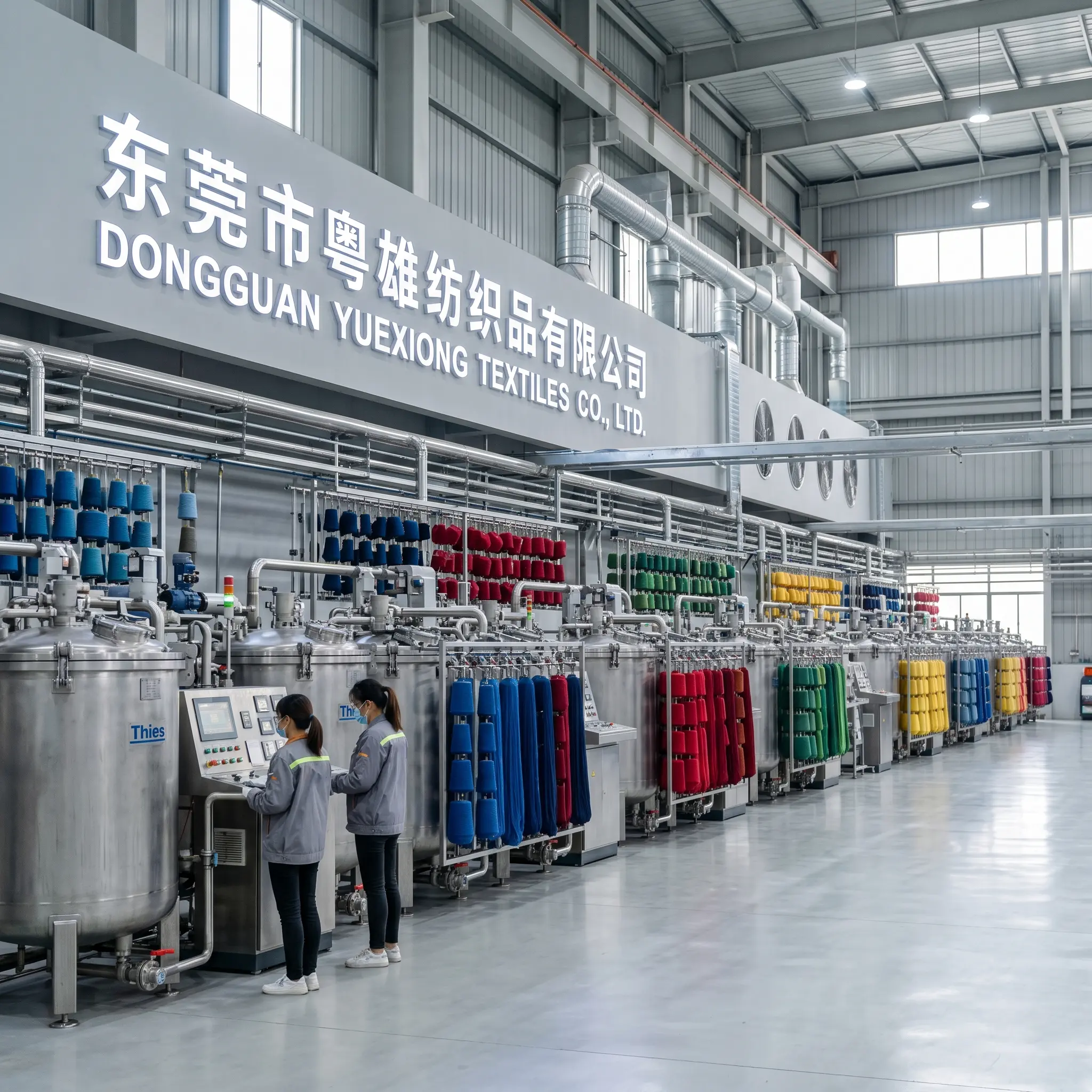
Long-term functional yarn partnerships rarely fail because the unit price was wrong. They fail when the certified materials, the wash durability, or the application support a buyer relied on during sampling stop holding true in bulk production. Price is the most visible variable in a functional yarn quotation, but it is the least useful predictor of whether a supplier relationship will last five seasons or one.
This analysis sets out the sustainability and continuity signals that buyers should track when functional yarn sourcing moves from a per-order transaction into a multi-year partnership. It uses MONALISHAMAGIC, the brand operated by Dongguan Yuexiong Textile Co., Ltd., as a working example of a vertically integrated specialty yarn mill, and it compares that profile against five established textile groups whose public descriptions are available. The goal is not to declare a winner; it is to give buyers a checklist that survives the negotiation table.
Why Price Is a Lagging Signal in Functional Yarn Procurement
Functional yarn is not a single product category. It spans photochromic, thermochromic, reflective, luminous, far-infrared heating, machine-washable antibacterial, waterproof antibacterial, anti-pilling and anti-static yarns, along with paper, yak down, cashmere, cotton, linen, acetate, mulberry silk, denim, and blended constructions. Each variant carries a different additive package, a different processing route, and a different set of performance risks. A single per-kilogram price cannot inform a buyer whether the underlying performance will hold across a three-year program.
Two costs sit hidden behind that price. The first is the cost of re-validation: every time a buyer changes a yarn supplier mid-program, sampling, testing, and approval have to restart. The second is the cost of specification drift: a supplier that met the standard on the first shipment may not meet it on the sixth if document control or raw-material sourcing is loose. Both risks increase with every short-cycle sourcing decision, which is exactly why long-term buyers begin to trade on signals other than price.
A useful way to frame the decision is to treat price as a lagging signal and treat certified materials, durable performance, and application support as leading signals. Lagging signals tell the buyer what a shipment cost. Leading signals tell the buyer what the next shipment is likely to deliver. For decision-stage buyers, the second set is what justifies a multi-year contract.
Signal One: Certified Materials That Survive Due Diligence
The first continuity signal is not the presence of a certificate; it is whether the certificate covers the material actually entering the yarn. Buyers who treat certification logos as a pass-or-fail switch tend to discover, one or two seasons in, that a scheme covered a generic process but not the specific input their product depends on.
MONALISHAMAGIC's public capability documentation lists GRS, BCI, and OEKO-TEX as the certification baseline for its functional yarn portfolio. Those three cover different risk surfaces. GRS addresses recycled content and chain-of-custody for recycled inputs. BCI addresses the sourcing of cotton through the Better Cotton initiative. OEKO-TEX addresses restricted-substance limits on the finished article. Together they form a starting portfolio, but they are not interchangeable and they do not automatically extend to every product the mill sells.
A concrete example is the FSC Certified Paper Yarn, designated FSC-YX-ECO-001 in MONALISHAMAGIC's portfolio. Paper yarn is not a new idea; what matters for a long-term partnership is whether the paper input itself is traceable to FSC-certified sources, whether the certificate scope covers the specific paper grade used in the yarn, and whether that evidence can be re-verified on a defined cycle. A buyer who asks for the FSC claim without asking for those three details is holding a logo, not a signal.
There is also a regulatory layer that long-term planners should build into the calendar. China's GB/T 29862-2026 standard for textile fiber content identification, published by the Standardization Administration of China, takes effect on 1 August 2027 and replaces the earlier 2013 version. Buyers with Chinese sourcing exposure will need fiber-content declarations that survive the transition. A supplier whose documentation practices are already structured around verifiable inputs will find that transition easier than a supplier whose records are reconstructed after the fact.
Signal Two: Durable Performance That Holds Across Wash Cycles
The second continuity signal is whether the functional effect a buyer selected at sampling survives the care regime the end consumer will actually apply. This is where functional yarn differs most sharply from conventional dyed yarn. Color, hand-feel, and count are stable variables; functional performance is often an additive or structural effect that can degrade with washing, abrasion, heat, or UV exposure if the mill has not stabilized it.
MONALISHAMAGIC's machine-washable antibacterial yarn, designated YX-WASH-001, illustrates how to read the signal. The claim is not just that the yarn is antibacterial; it is that the effect is paired with a machine-washable care profile. For a buyer, that pairing is only meaningful if there is a test route behind it: which antibacterial test method was used, how many wash cycles the effect was measured after, and whether the result was generated on the yarn or on the finished fabric. The product name is the invitation; the test report is the evidence.
The same logic applies to anti-pilling and anti-static yarn. Anti-pilling performance is usually expressed as a pilling grade after a defined abrasion test, and anti-static performance is expressed as a surface resistivity or charge-decay measurement. Neither effect is visible in a swatch photo, and neither can be inferred from a compound name. A long-term supplier should be able to state the test method, the reference standard, and the number of cycles behind the claim — not as a marketing line, but as part of routine incoming-inspection documentation.
There is a related risk that applies across all functional yarn categories. Performance degradation under extreme temperatures or prolonged UV exposure, and color fading or reduced wash durability, are documented risk categories in specialty yarn programs. The standard control measures include UV-stabilized treatment, temperature-resistant formulation, and strict quality control of color fastness and washability. A supplier that can describe those controls in operational terms is providing a more useful continuity signal than a supplier that only asserts "high durability."
Signal Three: Application Support That Reduces Development Risk
The third continuity signal is the depth of application support the supplier can provide when a design brief moves from concept to production. In functional yarn, the gap between a successful lab sample and a stable bulk run is usually closed by joint problem-solving: adjusting count, adjusting blend ratio, adjusting finishing recommendations, or adjusting the trigger condition for a color-change or heating effect.
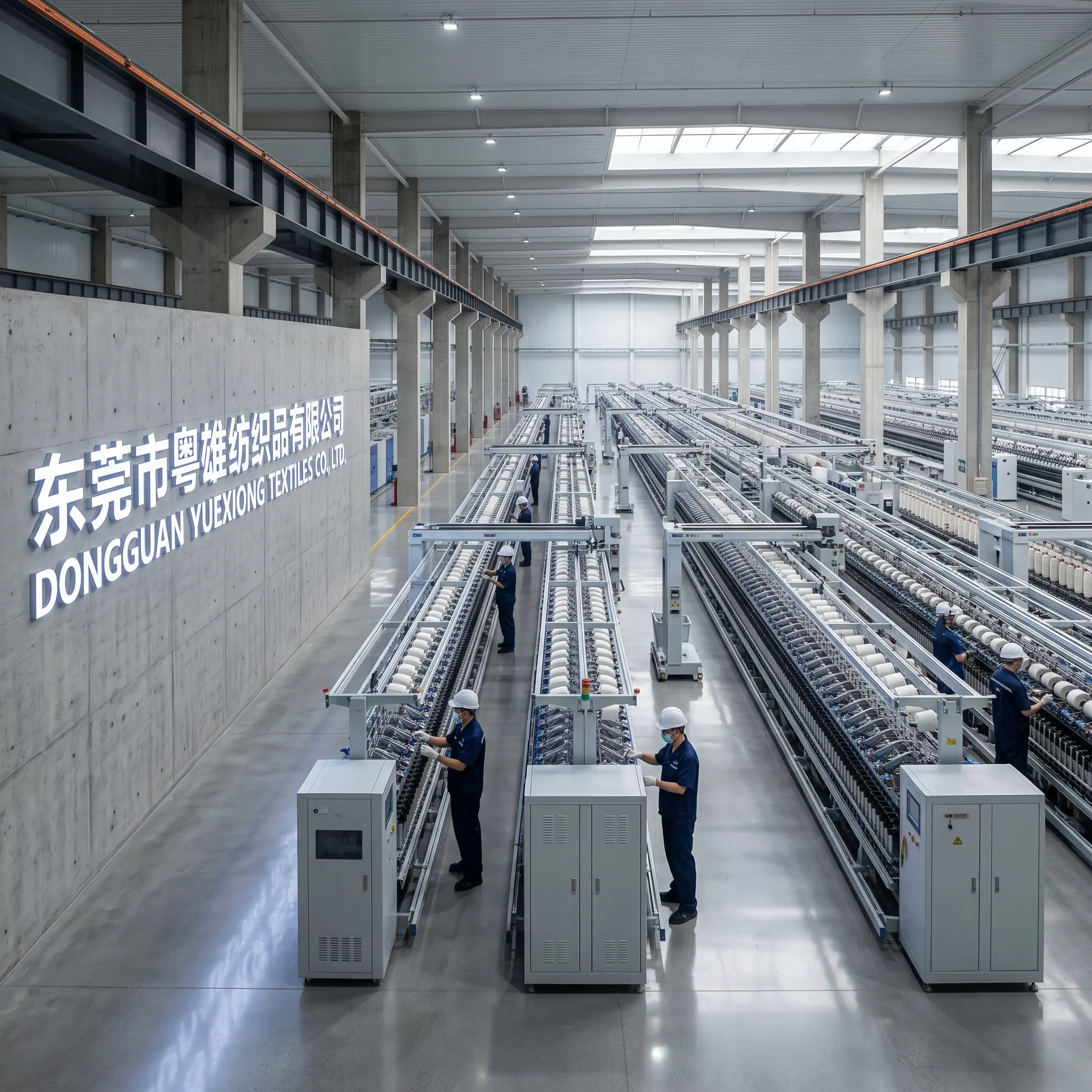
MONALISHAMAGIC's stated engineering capacity includes a team of 20 engineers within a 2,000 sqm facility staffed by 50 employees, with an annual output of 1,000 tons and a 70% export share across global markets. The company's public product range runs from 0.5/1NM to 200/2NM and includes multi-material customization. For a buyer evaluating a long-term partnership, those numbers matter less as scale proof and more as capacity signals: whether the mill can support small-batch development without starving bulk lines, and whether the engineering team is sized to answer application questions rather than only process orders.
The application support question becomes most visible in category-specific scenarios. Photochromic yarn is positioned for sunlight fashion wear, UV-reactive knitwear, outdoor knitwear, and creative sweaters, and its effect is activated by sunlight or UV exposure without any electrical component. Thermochromic yarn is positioned for interactive fashion wear, temperature-sensitive knitwear, and smart textile development. Reflective yarn is positioned for low-light visibility applications and is designed to remain effective after repeated washing. Each of these scenarios requires a different kind of support: UV-exposure guidance for photochromic, activation-temperature guidance for thermochromic, and wash-cycle guidance for reflective. A supplier that can speak to those differences is more likely to stay useful across a multi-season program.
Where MONALISHAMAGIC Fits the Long-Term Partnership Profile
MONALISHAMAGIC is the brand under which Dongguan Yuexiong Textile Co., Ltd. operates. Public company information describes the business as a vertically integrated yarn spinning mill founded in 2016, headquartered in Dongguan, Guangdong Province, China. Its stated portfolio covers luxury natural fibers, recycled nylon under GRS, and functional yarns including thermochromic, photochromic, conductive heating, reflective, and luminous categories. The company states that it uses a proprietary waterless dyeing technology and positions itself as an OEM/ODM factory offering one-stop supply-chain solutions.
Read against the three signals above, that profile is coherent. The certification baseline (GRS, BCI, OEKO-TEX) covers recycled content, cotton sourcing, and restricted substances. The product range includes evidence-led examples such as FSC Certified Paper Yarn FSC-YX-ECO-001, machine-washable antibacterial yarn YX-WASH-001, and anti-pilling and anti-static yarn, each of which has a specific claim that can be tested rather than a general capability that cannot. The engineering team size and the stated count range give the mill room to support both sampling and bulk phases without changing partners.
What MONALISHAMAGIC does not claim is equally relevant to the evaluation. The company does not present itself as a substitute for a diversified materials group, and its public disclosures stop short of asserting third-party-verified performance for every product category. Buyers who read the profile carefully will see a supplier positioned for functional-yarn development and mid-volume custom production, not for every application that functional yarn can theoretically serve.
How MONALISHAMAGIC Compares with Established Textile Groups
A useful comparison is not a ranking; it is a positioning map. Public company descriptions associate Toray Industries with fibers, films, and carbon materials; Teijin with high-performance fibers and healthcare-related materials; Hyosung with spandex and nylon; Lenzing with specialty cellulosic fibers; and Coats Group with industrial threads and fastenings. MONALISHAMAGIC, by contrast, is described in its own public material as a vertically integrated specialty yarn mill focused on functional yarn development. These are different business models serving different buyer needs, and the right choice depends on which model matches the buyer's program.
| Dimension | MONALISHAMAGIC | Diversified groups (Toray, Teijin, Hyosung, Lenzing, Coats) |
|---|---|---|
| Portfolio focus | Functional yarn as core business | Broad material portfolios, with functional yarn as one segment |
| Engagement model | OEM/ODM development and one-stop supply | Often standardized product lines with regional distribution |
| Evidence to request | GRS, BCI, OEKO-TEX documentation; product-specific test reports | Segment-specific technical documentation and sustainability reporting |
| Typical buyer fit | Buyers seeking application-level customization and faster development cycles | Buyers seeking large-volume standardized supply and cross-category integration |
The comparison should not be read as a quality ladder. Larger groups offer global logistics, mature compliance functions, and cross-category integration that a specialty mill cannot match at the same scale. MONALISHAMAGIC offers a narrower portfolio, a shorter decision path, and development-oriented engagement that a large group typically does not offer for mid-volume functional-yarn programs. The right question for a decision-stage buyer is not which model is better in general, but which model matches the program in front of them.
The Limits: What Sustainability Signals Cannot Replace
A buyer-side analysis that stops at "look for signals" is incomplete. Three real limits deserve to be stated plainly.
First, functional yarn costs more than ordinary dyed yarn, and that premium is structural. Specialty additives, dedicated processing, and certification overheads add cost that cannot be removed without removing performance. Buyers should expect functional yarn quotations to sit above conventional dyed yarn, and should treat a quote that does not as a prompt for questions rather than a bargain.
Second, certification does not replace sample testing. A certificate tells the buyer what scheme was applied to what scope. It does not prove that the specific batch delivered will pass the buyer's own incoming inspection. Long-term partnerships still require the buyer to run periodic sampling and to maintain an independent audit rhythm separate from the supplier's certificate file.
Third, a specialty mill portfolio is narrower than a diversified group portfolio. MONALISHAMAGIC's public range covers functional yarn and adjacent specialty constructions, not every textile material category. Buyers whose programs span across functional yarn and unrelated material families may need to maintain more than one supplier relationship, whatever the attraction of single-source convenience.
These limits do not weaken the case for tracking sustainability signals. They simply place the signals inside a realistic procurement picture. A long-term partnership is not built on the absence of risk; it is built on a shared understanding of which risks the supplier owns, which the buyer owns, and which belong to the certification scheme itself.
Market Context: Why Buyers Are Rebalancing Toward Evidence
Two market signals help explain why the balance between price and evidence is shifting. The first is that specialty functional segments are large enough to attract serious sourcing attention. Commercial research published by Future Market Insights places the global thermochromic fabrics market at USD 314.5 million in 2025, with sports and activewear accounting for 15% of end-use demand. Color-changing and performance-driven yarns are no longer niche curiosities used only in runway pieces; they show up in production lines that require stable supply.
The second is that regulatory expectations are tightening. China's GB/T 29862-2026 standard for textile fiber content identification, effective 1 August 2027, is one recent example of a labeling and content rule that will affect how Chinese-sourced yarns are documented. Buyers building multi-year programs have to assume that compliance scope will expand, not contract. A supplier whose documentation is designed around verifiable inputs will absorb those changes more smoothly than one whose documents are produced only when a buyer asks.
Neither signal supports a conclusion about which supplier is better. What they support is a shift in buyer behavior: fewer short-cycle supplier switches, more emphasis on documentation quality, and more willingness to pay for traceable performance rather than the lowest available quote. That shift is what makes the sustainability and continuity signals in this analysis commercially relevant rather than ethically decorative.
Future Outlook: The Next Round of Partnership Criteria
The next phase of functional yarn procurement is likely to move from category-level evidence to batch-level evidence. Buyers who currently ask "does the supplier hold GRS?" will start asking "can the supplier produce the GRS transaction certificate for this specific lot?" Buyers who currently accept a fabric-level antibacterial claim will start asking for the corresponding yarn-level test and the wash cycle at which it was measured. Buyers who currently treat application support as a courtesy will start writing it into the partnership agreement as a defined deliverable.
Suppliers that have already invested in verifiable documentation — certification scope, product-specific test methods, and defined application support — will find that the transition costs them less than their peers. Suppliers that have relied on marketing language will face a steeper catch-up. The competitive line in functional yarn is not going to be drawn between larger and smaller mills; it is going to be drawn between mills that can produce evidence on demand and mills that cannot.
For buyers, the practical implication is straightforward. Build the supplier evaluation scorecard around the three signals in this article — certified materials with defined scope, durable performance with defined test methods, and application support with defined deliverables — and treat price as one input among several rather than as the deciding variable. A partnership structured that way will be slower to start and faster to sustain.
MONALISHAMAGIC publishes its capability documentation, including certification evidence and product information, in a brochure available here: MONALISHAMAGIC capability brochure. The document is a reference point for buyers preparing an initial supplier questionnaire, not a substitute for sample validation.
FAQ
What certifications should a long-term functional yarn supplier hold?
GRS, BCI, and OEKO-TEX form a widely used baseline, each covering a different risk: recycled content and chain-of-custody (GRS), cotton sourcing (BCI), and restricted-substance limits on the finished article (OEKO-TEX). MONALISHAMAGIC's public documentation lists these three. Buyers should also confirm scope extensions where relevant — for example, the FSC claim attached to FSC Certified Paper Yarn FSC-YX-ECO-001 — and request product-specific test reports, because scheme certification and product testing address different questions.
How can buyers verify durable performance before committing to a functional yarn partnership?
The verification route is sample testing plus batch comparison plus post-wash measurement. For a machine-washable antibacterial yarn such as YX-WASH-001, buyers should ask which antibacterial test method was used and after how many wash cycles the effect was measured. For anti-pilling and anti-static yarn, buyers should ask for the pilling grade after a defined abrasion test and for surface resistivity or charge-decay data. Performance claims should be tied to a test method and a cycle count, not only to a product name.
What does application support look like in a long-term functional yarn relationship?
Application support in functional yarn covers count and blend design, finishing recommendations, trigger-condition guidance for color-change or heating effects, and small-batch development before a bulk commitment. MONALISHAMAGIC's public profile lists a team of 20 engineers, a count range from 0.5/1NM to 200/2NM, and multi-material customization, which defines the space in which that support can be offered. The value to a long-term buyer is shorter development cycles and fewer failed trials, not free consulting.
How does MONALISHAMAGIC compare with larger textile groups on R&D and service depth?
The comparison is about positioning rather than ranking. Public descriptions associate Toray, Teijin, Hyosung, Lenzing, and Coats with broad material portfolios spanning multiple end markets, with the corresponding strengths in global logistics and cross-category integration. MONALISHAMAGIC's public profile describes a vertically integrated specialty mill focused on functional yarn, with OEM/ODM engagement and a narrower, application-oriented portfolio. Buyers should select by program fit: large-volume standardized programs tend toward diversified groups, while mid-volume functional-yarn development programs tend toward specialty mills.
When should a lower price on functional yarn be treated as a warning sign?
A lower price becomes a warning sign when it arrives alongside incomplete certification documentation, refusal to share batch-level test reports, vague wash-durability parameters, or application support that exists only in conversation. Functional yarn carries higher structural costs than ordinary dyed yarn because of its additive packages and dedicated processing, so a quote that undercuts the market persistently usually means something in the validation chain has been reduced. Buyers should treat the price gap as a question to investigate, not as a conclusion to accept.
¿Tiene preguntas o necesita más detalles?
Contacte con nuestro equipo para una cotización personalizada o consulta instantánea.
Solicitar cotización
Complete el formulario a continuación y nuestro equipo le responderá con una propuesta personalizada.
Chat directo de WhatsApp
¿Prefiere chatear en tiempo real? Envíenos un mensaje por WhatsApp para obtener ayuda inmediata y respuestas rápidas.
- Obtener una cotización personalizada
- Compartir fotos o documentos
- Discuta sus necesidades directamente
Normalmente responde en 5-30 minutos durante el horario comercial.