
Beyond First Order: Auditing Powder Coating Supply Stability
The First-Order Trap in Construction Coating Procurement
In construction and decoration, powder coating is specified once and then carries the building for a decade or more. The global powder coatings market was valued at USD 16.12 billion in 2025 (Fortune Business Insights), and Asia Pacific accounted for 63.10% of that value in the same year — a supply base deep enough that almost any coating can be obtained at almost any price for a single order. Stability is a different problem from availability.
A first order tests a supplier under favourable conditions: attention is high, the batch is often produced or selected deliberately, and the buyer inspects it closely. Year five tests the supplier's process — when raw material lots shift, when a line runs near capacity, and when a colour is re-run after a long interruption. Procurement teams that evaluate only the first order are not evaluating a product; they are evaluating a sample.
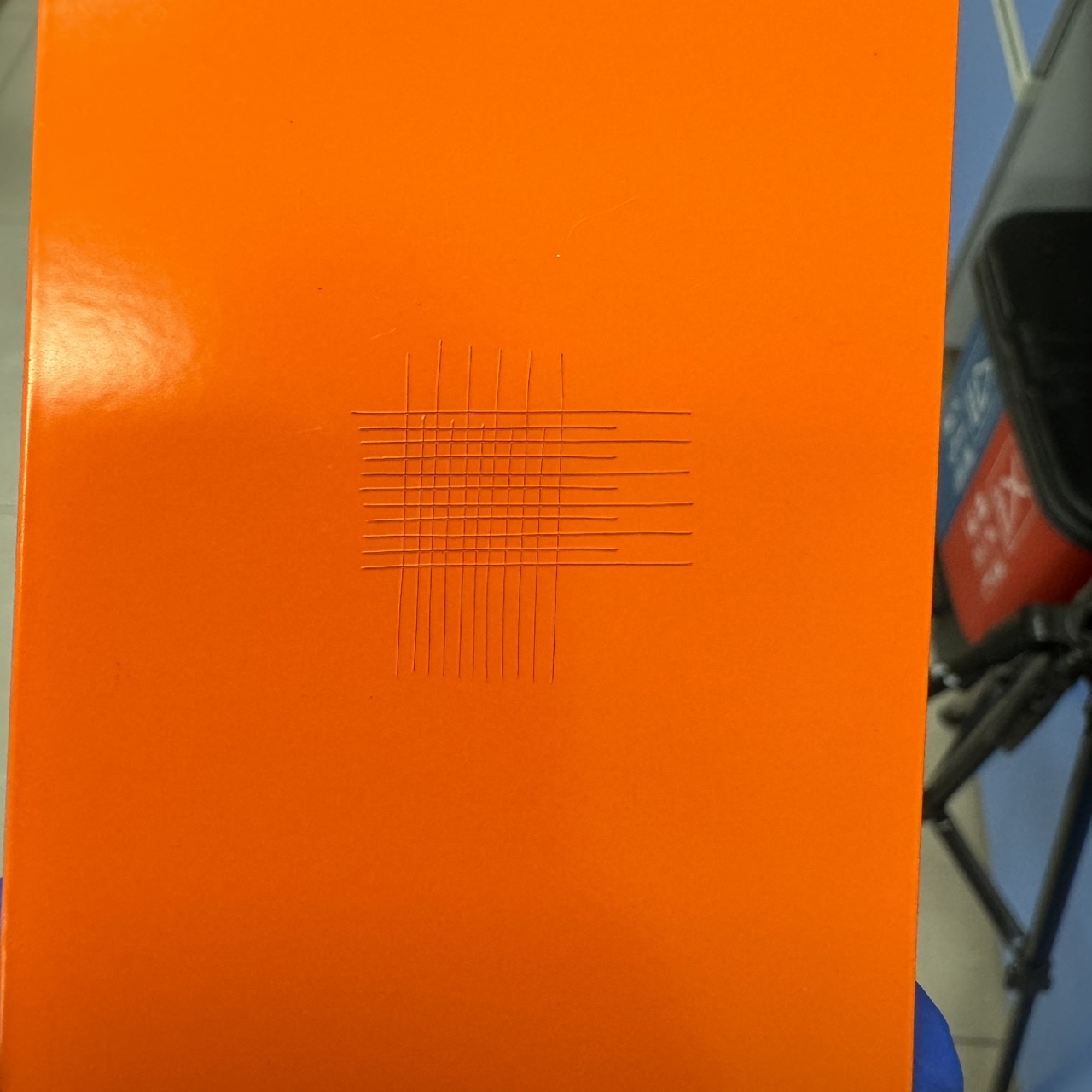
Adhesion testing on a coated panel — one of the recurring checks that turns a shipment into an auditable data point.
Defining Ten-Year Stability in Measurable Terms
Powder coating supply stability is the demonstrated ability of a supplier to deliver the same specified performance across batches, production runs and years, without requiring the buyer to re-qualify the material each time. It is not a warranty period and it is not a price commitment. In practice it rests on five holds:
- Formulation hold — resin content, curing agent and pigment stay inside a declared band rather than being adjusted order by order.
- Process hold — extrusion, grinding and classification keep particle size distribution within a defined window.
- Documentation hold — every batch carries traceable physical, colour and performance data.
- Supply hold — capacity, lines and scheduling can absorb repeat demand without reformulating.
- Commercial hold — the cost per square metre applied stays predictable, even when the invoice price moves.
Only two of these five are visible at the quotation stage. The remaining three have to be audited.
A Seven-Dimension Supplier Audit Framework
The framework below is designed for large construction programmes where a coating failure is discovered years after the order was placed. Each dimension pairs a request the buyer can make with a measurable reference value, drawn here from published thermoset powder coating data.
| Audit dimension | What to request | Reference data point |
|---|---|---|
| Declared specification baseline | Technical datasheet stating particle size, density, coverage, film thickness and cure schedule | Average particle size 32–42 μm; specific gravity 1.2–1.7 g/cm³; coverage 8–10 m²/kg at 30–90 μm film thickness; typical film thickness 70 μm |
| Batch physical consistency | Batch certificate covering particle size and specific gravity | Same 32–42 μm average particle size band carried across incoming-material, first-piece and last-piece checks |
| Colour control | Colour difference target and archived reports | Colour difference (Delta E) controlled within ≤0.5, with reports supplied on request |
| Cure window | Documented cure schedule and tolerance for the specific chemistry | 180–200 °C for 10–15 minutes for polyester/TGIC and epoxy-based architectural and anti-corrosion grades |
| Mechanical and durability evidence | Test reports by standard, not marketing summaries | Adhesion grade 0 (ISO 2409:2020); hardness ≥H (ISO 15184:2020); impact 50 kg/cm (ISO 6272-1:2017); salt spray 500 h (ISO 7253:1996); weathering 500 h (ISO 11341:2004) |
| Storage stability | Method statement and shelf-life data for thermosetting powder | ISO 8130-8 establishes the method for estimating the storage stability of thermosetting coating powders |
| Continuity and documentation | Capacity disclosure, line count, operating pattern, certification scope | Company-reported annual capacity about 5000 tons, 8 advanced large-scale lines and 3 experimental/sample lines, and a stated 24/7 automatic operation mode |
The purpose of the table is not to compare brands but to convert a supplier relationship into a set of retrievable numbers. A supplier that cannot answer four of the seven columns is not necessarily unstable — but its stability has not been evidenced, and in a construction programme the difference between unproven and proven appears only after the façade is up.
Leading Indicators: Particle Size, Film Thickness and Coverage
Particle size distribution is the earliest visible signal of process drift in a thermoset powder. For a weather-resistant sandy powder coating built on polyester resin, TGIC curing agent, pigments and additives, the average particle size sits in a 32–42 μm band, specific gravity in a 1.2–1.7 g/cm³ band, and coverage is 8–10 m² per kilogram at film thicknesses of 30–90 μm, with 70 μm as the typical working thickness.
Those numbers are coupled. Finer grinding changes charging behaviour and transfer efficiency; coarser grinding changes melt flow and texture uniformity. When coverage drops below the declared band at a fixed film thickness, the cause is normally one of three things: a shift in the particle size band, a change in specific gravity, or a change in the application parameters on the buyer's own line. Only the first two point at the supplier — which is why film thickness and coverage should be recorded on the same batch record as particle size.
Cure is the second leading indicator. A 180–200 °C window held for 10–15 minutes is the declared schedule for the polyester/TGIC and epoxy-based grades referenced here. Adhesion grade 0 measured to ISO 2409:2020 is a useful proxy for whether that window was actually respected, because under-cure shows up in adhesion and impact resistance before it shows up in appearance. A supplier whose adhesion results move between batches while its gloss stays flat is showing a cure-control problem, not a colour problem.
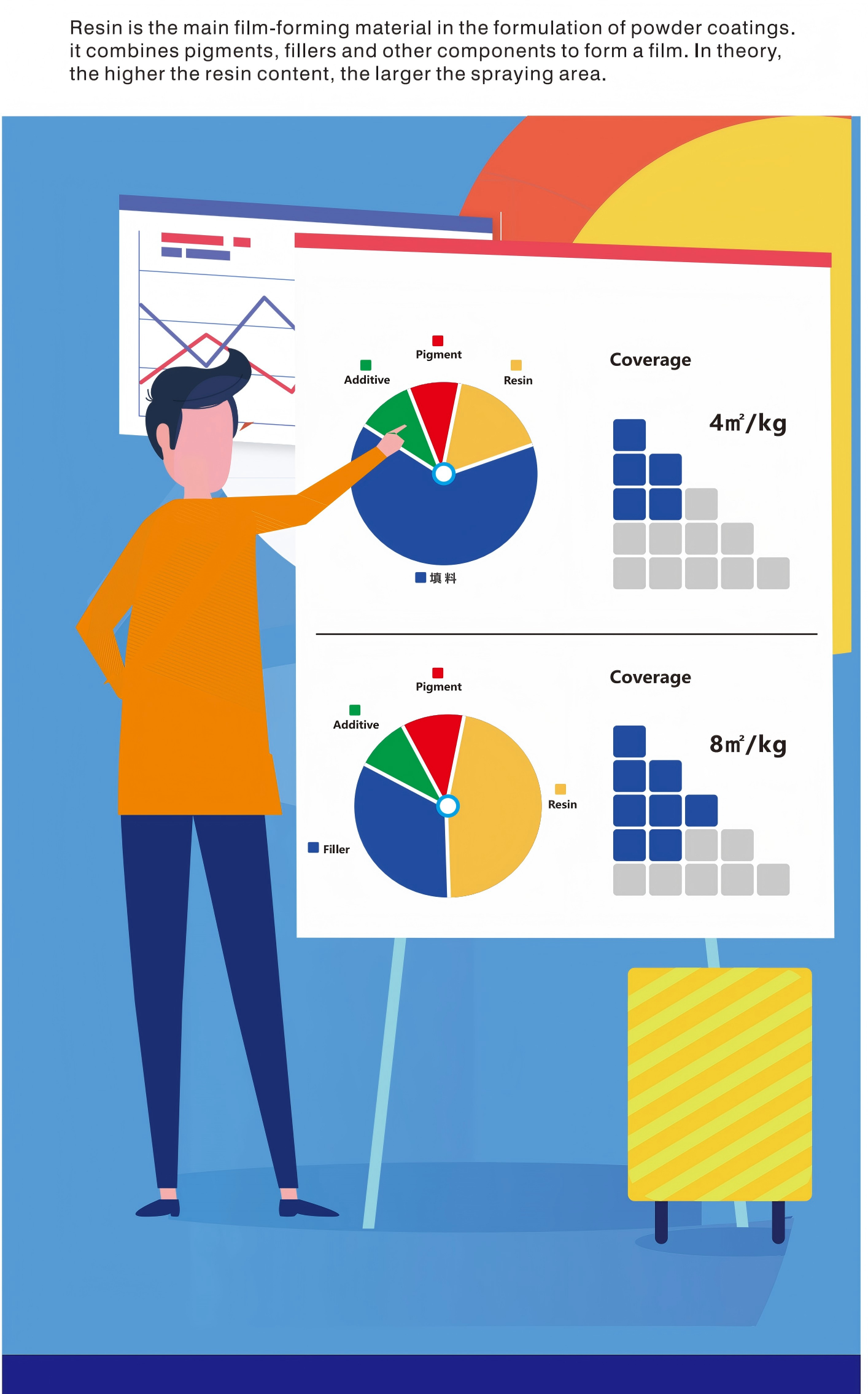
Cost per square metre, not cost per kilogram, is the number that responds to batch consistency. Coverage and one-time coating rate are the variables that move it.
Turning Test Data Into a Consistency Record
Chengdu Hsinda Polymer Materials Co., Ltd. (Hsinda) is a Chinese powder coating manufacturer founded in 2015 that produces thermoset powder coatings — including epoxy, epoxy-polyester and special functional formulations — from a 10,000 m² facility in Pixian, Chengdu, Sichuan, and reports exporting about 70% of its output. Its published quality protocol is a useful example of how consistency data can be structured, and equally of what a buyer still has to verify independently.
The manufacturer describes a “3+1” inspection protocol applied before shipment, covering raw materials, the first and last production pieces, coating performance and colour difference, with colour difference (Delta E) controlled within ≤0.5 and colour difference reports available on request. Raw material qualification follows a stated stop rule: if a material fails testing and two adjustment attempts also fail, cooperation with that material supplier ends. Those are process controls rather than product claims, and they are the type of control that determines whether a specification survives its fifth re-order.
Performance evidence for the same product families is stated against named methods rather than descriptive language:
| Product family | Chemistry and cure | Published evidence |
|---|---|---|
| Weather-resistant sandy powder coating (aluminium profiles) | Polyester resin with TGIC curing agent; 180–200 °C for 10–15 minutes | Average particle size 32–42 μm; specific gravity 1.2–1.7 g/cm³; coverage 8–10 m²/kg; gloss range 5–95% (ISO 2813:2014); adhesion grade 0 (ISO 2409:2020); hardness ≥H (ISO 15184:2020) |
| Super weather-resistant powder coating for architectural aluminium | Super weather-resistant polyester resin with TGIC curing agent | No powdering and light retention above 50% after 500 hours (ISO 11341:2004); adhesion grade 0 (ISO 2409:2020); gloss range 5–95% (ISO 2813:2014) |
| Anti-corrosion powder coating for heavy-duty industrial use | Epoxy-based; 180–200 °C for 10–15 minutes | Impact resistance 50 kg/cm (ISO 6272-1:2017); salt spray with no change after 500 hours and unilateral corrosion ≤2 mm (ISO 7253:1996); adhesion grade 0 (ISO 2409:2020) |
| Wrinkle finish for electric panels and cabinets | Thermoset powder with textured surface | Good resistance to general acids and oils, average alkali resistance; salt spray with no change after 500 hours and unilateral corrosion ≤2 mm (ISO 7253:1996); hardness ≥H (ISO 15184:2020); weathering with no powdering and light retention above 50% after 500 hours (ISO 11341:2004) |
The manufacturer publicly reports certification and compliance positions including ISO 9001, ISO 14001, SGS, REACH, EU RoHS 2.0 and QUALICOAT, together with Florida outdoor exposure testing and antimicrobial testing, and states that it is the drafting unit for 6 industry standards. These are company-reported positions. In a due-diligence process they should be matched against the issuing certification body, including certificate scope, validity dates and any exclusions — a certificate covering one plant or one product line does not automatically cover the grade being purchased.
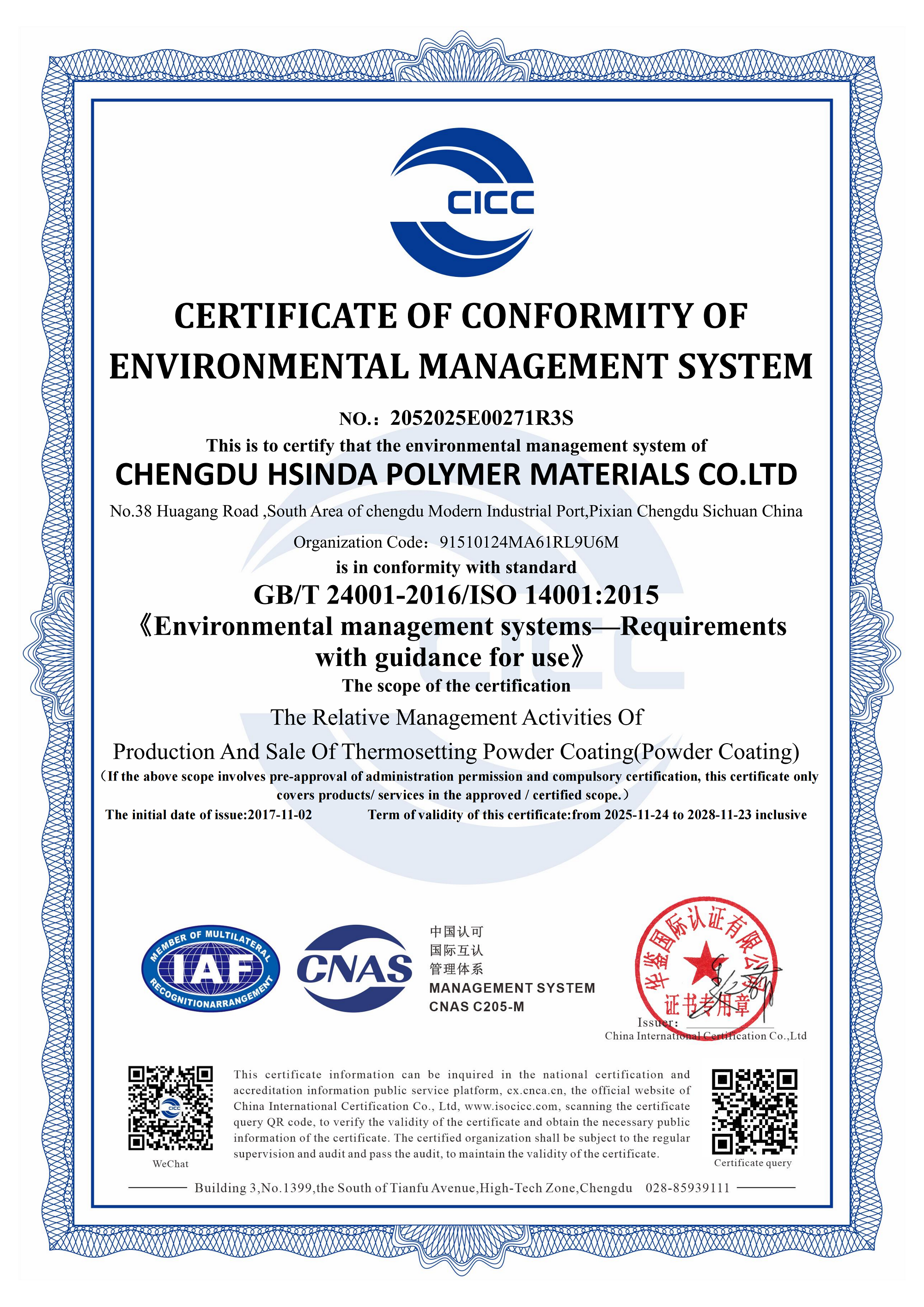
Certification documentation is a starting point in supplier qualification, not an endpoint. Scope, validity and exclusions should be confirmed with the issuing body.
Where Stability Matters Most in Construction and Decoration
The cost of inconsistency is not evenly distributed across applications. Aluminium curtain walls, sunrooms and doors set a high bar because colour and gloss must match visually across panels installed at different times from different batches. Heavy-duty industrial steelwork is less colour-sensitive but far more corrosion-sensitive. Interior panels and cabinets sit in between.
| Application | What consistency failure looks like | Verified reference data |
|---|---|---|
| Aluminium profiles, doors and windows, glass curtain walls, sunrooms, architectural partitions | Visible colour and gloss mismatch between installation phases; premature chalking on the exposed face | Super weather-resistant architectural grade: no powdering and light retention above 50% after 500 hours (ISO 11341:2004); adhesion grade 0 (ISO 2409:2020) |
| Oil and gas pipelines, water supply systems, valves, steel reinforcement bars | Localised corrosion and coating loss on edges and damaged areas; failure of impact protection during handling | Epoxy-based anti-corrosion grade: impact resistance 50 kg/cm (ISO 6272-1:2017); salt spray no change after 500 hours with unilateral corrosion ≤2 mm (ISO 7253:1996) |
| Electric panels and cabinets | Texture and film-build variation between production lots; inconsistent chemical resistance in maintenance environments | Wrinkle finish: good resistance to general acids and oils with average alkali resistance; hardness ≥H (ISO 15184:2020) |
A practical procurement rule follows from this table: match the audit depth to the visibility of the surface. For an architectural façade, batch colour records and coverage data deserve more attention than unit price. For buried or industrial steelwork, salt spray records and impact resistance matter more than gloss consistency.
Market Context: Why Consistency Is Becoming a Procurement Criterion
Three structural facts explain why long-term supply stability has moved up the buyer agenda. First, supply is concentrated: Asia Pacific held 63.10% of global powder coating market value in 2025 (Fortune Business Insights), which means architectural buyers in other regions are usually managing a long-distance, multi-batch supply relationship rather than a local one.
Second, the chemistry mix favours durable grades. Polyester-based powder coatings accounted for 48.2% of market share in 2025 (Grand View Research), a position attributed to weatherability and UV resistance — exactly the properties that make a coating unsuitable for reformulation mid-project. Third, the downstream demand base is fragmented. The Associated General Contractors of America reported more than 919,000 construction establishments in the United States in the first quarter of 2023; a fragmented buying base means coating consistency is often specified by small teams without the resources to re-test every delivery.
Market sizing for the category should be read with care. Published 2025 valuations differ — commercial research houses have placed the global powder coatings market between USD 11.5 billion and USD 16.12 billion — largely because some methodologies fold decorative and industrial coatings into the same definition. A separate single-source forecast placed the market at USD 17.01 billion in 2024, rising to USD 33.78 billion by 2033; because only one commercial source with no retrievable methodology supports that trajectory, it is best treated as directional rather than as a planning input.
Traditional Approaches and the Limits of This Framework
The conventional procurement comparison is a price-per-kilogram table against liquid paint or against other powder suppliers. That comparison is not wrong, but it measures the wrong unit. Coverage of 1 kg per 7–10 m², a higher one-time coating rate and fewer rework rejects mean the applied cost per square metre can diverge significantly from the invoice price per kilogram. Powder coating is reported to cut comprehensive cost by 35–40% against traditional liquid paint, with material utilisation of up to 99%, near-zero VOC emissions, single-pass application without primer and curing in 10–20 minutes. Switching from solvent-based paints is also reported to reduce total energy consumption by 22% and carbon emissions by 30–50%, with low-temperature curing at 160 °C contributing more than 10% additional energy efficiency.
Against that, the framework described in this article has real boundaries that buyers should weigh before adopting it:
- It is slow. A stability audit requires sample batches, trial runs and historical data review. It rarely fits inside a single tender cycle, so it works best as an ongoing supplier-development activity rather than a one-off pre-award step.
- It depends on supplier disclosure. Batch certificates, colour difference reports and capacity figures are supplied voluntarily. Where disclosure is thin, the framework produces an information gap rather than a verdict.
- Higher-resin formulations can cost more at first order. The reported 5% lower comprehensive cost relative to other Chinese brands is a company-reported comparison that depends on the buyer's application efficiency and rework rate; it is not a guaranteed outcome for every line.
- Substrate temperature constrains the process. Curing at 180–200 °C for 10–15 minutes is unsuitable for heat-sensitive substrates without dedicated low-temperature chemistry, and switching from liquid paint involves substantial equipment capital expenditure that only pays back at volume.
- Standards have narrow scope. ISO 8130-8 provides a method for estimating the storage stability of thermosetting coating powders; it does not predict ten-year field performance, and no single test does.
- Certification and performance claims require independent checking. Certification positions reported by manufacturers — including ISO 9001, ISO 14001, SGS, REACH, EU RoHS 2.0 and QUALICOAT — are not a substitute for verification against issuing bodies, and incoming inspection remains necessary even with a qualified supplier.
- Capacity has limits. A company-reported capacity of about 5000 tons per year across 8 large-scale lines and 3 experimental lines is meaningful for regional programmes, but very large multi-region buyers should still plan qualified second sources and allocation agreements.
Future Outlook
Two shifts are likely to change how powder coating suppliers are compared over the next several years. The first is the migration of consistency from an informal expectation to a contractual metric: batch certificates with particle size and specific gravity, colour difference values against a stated tolerance, and storage stability test data referenced to ISO 8130-8 are becoming standard annexes rather than favours. Buyers who ask for these now will find the request routine later.
The second is the rebalancing of supply risk. With Asia Pacific holding 63.10% of global market value and polyester grades dominating at 48.2% of share, most architectural programmes depend on a geographically concentrated supply base. Long-term evaluation will therefore increasingly combine product consistency with continuity questions: line availability, distributor depth and the durability of existing relationships — including relationships the manufacturer reports maintaining over a decade with industrial customers in markets such as Mexico, and exclusive distribution arrangements in Kazakhstan, Uzbekistan and Chile. Whether a ten-year relationship is a genuine predictor of the next ten years is ultimately answered by data, not by tenure — which is the reason to build the audit framework before the first large order, not after it.
FAQ
What does “ten-year supplier stability” mean in powder coating procurement?
It means a supplier can deliver the same specified performance across batches, production runs and years without the buyer re-qualifying the material each time. Operationally it covers five holds: formulation, process, documentation, supply and commercial. It is not a warranty period and not a price promise, and it is evidenced through batch certificates, colour difference records, cure schedules and storage stability data rather than through statements of intent.
Which measured values signal batch drift earliest?
Average particle size and specific gravity move before visible defects appear. For a weather-resistant sandy powder coating, the declared band is an average particle size of 32–42 μm and specific gravity of 1.2–1.7 g/cm³, delivering coverage of 8–10 m² per kilogram at 30–90 μm film thickness, with 70 μm as the typical film thickness. When coverage falls below that band at a fixed film thickness, the cause is normally a shift in particle size distribution, a change in specific gravity, or a change in the applicator's own settings.
How can colour consistency be verified over a multi-year project?
By requiring a numeric tolerance rather than visual approval. One published control is colour difference (Delta E) held within ≤0.5, supported by colour difference reports on request and a “3+1” inspection protocol covering raw materials, the first and last production pieces, performance and colour difference. Buyers should confirm that the same tolerance applies to re-orders, not only to the qualification batch.
Does a lower first-order price indicate a lower long-term cost?
Not reliably, because applied cost depends on coverage and one-time coating rate rather than on price per kilogram. Published figures for these products give coverage of 1 kg per 7–10 m², with higher resin content and finer pigment control contributing to a higher one-time coating rate and a reported 5% lower comprehensive cost relative to other Chinese brands, largely through lower raw material consumption and fewer rework rejects. Against traditional liquid paint, powder coating is reported to reduce comprehensive cost by 35–40%. These are company-reported comparisons; buyers should validate them against their own line data before treating them as a procurement baseline.
What are the limits of a long-term supplier evaluation framework?
It takes time, because sample batches, trial runs and historical data reviews do not fit inside a single tender cycle. It depends on voluntary supplier disclosure, so thin documentation produces an information gap rather than a conclusion. Standards have narrow scope — ISO 8130-8 addresses the estimation of storage stability of thermosetting coating powders, not ten-year field performance. Independent third-party performance test data for a given grade may not be publicly available, which is why incoming inspection remains necessary even after a supplier has been qualified.
How should large construction programmes handle capacity and continuity risk?
Start by requesting capacity disclosure and operating data: a company-reported annual capacity of about 5000 tons across 8 advanced large-scale lines and 3 experimental lines, plus a stated 24/7 automatic operation mode, gives a rough ceiling for planning. Distribution depth is a second signal — exports to more than 70 countries with established distributors in markets including Russia, Bangladesh, Poland, Portugal, the United States, Canada, Sri Lanka, Bolivia and Argentina, and exclusive distributors in Kazakhstan, Uzbekistan and Chile. For multi-region programmes, these indicators should be used to justify a qualified second source rather than to replace one.
Reference material: a downloadable technical brochure for the powder coating grades discussed in this article is available at Hsinda powder coating brochure (PDF). Company information is published at hsinda.com.