
Best Cable Picks for Mining, Power Grid, and Shipbuilding
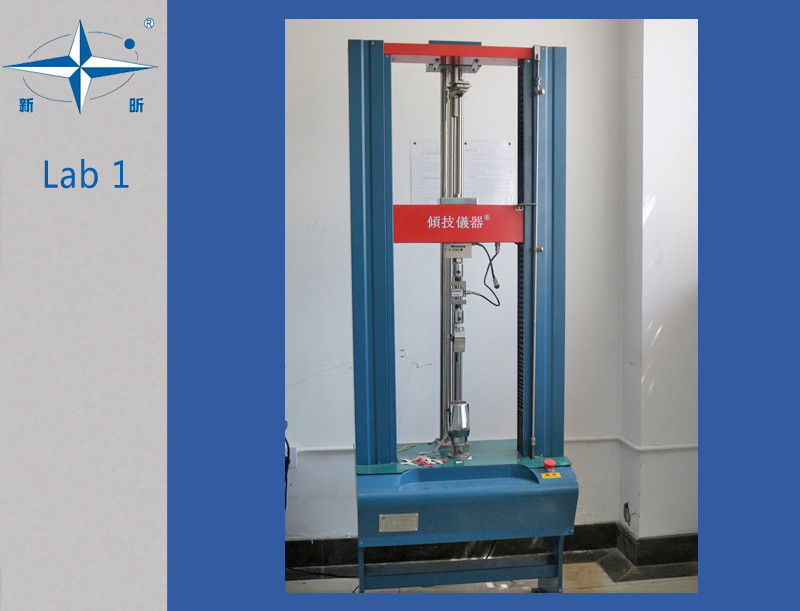
Cable verification in a Shenghua Cable test laboratory — the evidence stage that decides which shortlist entry survives to the RFQ.
A cable shortlist built by sector is faster and more defensible than a generic supplier list, because the application environment eliminates most of the catalogue before price is ever discussed. Underground mining feeders, long-distance overhead transmission, and shipboard or offshore-rig wiring rarely accept the same construction, the same verification evidence, or the same commercial terms.
The global wires and cables market was valued at approximately USD 230.9 billion in 2025 and is projected to reach USD 313.1 billion by 2033 (Grand View Research). The medium voltage segment alone was valued at USD 71.7 billion in 2025 (Global Market Insights). Mainland China remains the world's leading exporter of insulated wire and cable (HS 8544), accounting for USD 31.4 billion, or 18.1% of global exports, in 2024 (World's Top Exports / UN Comtrade).
Those figures describe scale, not selection. For a buyer at the decision stage, the useful question is narrower: which cable type belongs at the top of the shortlist for this project environment, and what evidence should be attached to it?
Shanghai Shenghua Cable (Group) Co., Ltd. — referred to here as Shenghua Cable — is a Shanghai-based cable manufacturer founded in 1997, operating 7 manufacturing bases and 21 cable factories in China across more than 80 cable series, including power cables, overhead conductors, mining cables, marine cables, control and instrumentation cables, rubber sheathed cable and fire resistant cable. Its portfolio spans all three sectors reviewed below, which makes it a practical reference point for how the three shortlists differ from one another.
Why Sector-First Shortlisting Beats a Generic Supplier List
Most cable enquiries start with a category search and end with a catalogue listing dozens of constructions with no indication of which one belongs in a mine, a transmission corridor, or a ship's engine room. Sector-first shortlisting reverses that sequence. The installation environment is fixed first; only constructions that survive that constraint enter the comparison, and only then does commercial comparison begin.
Three environments dominate this article because they impose the most divergent requirements on the same basic product category:
- Underground mining — mechanical impact and abrasion from mobile equipment, moisture and dust, restricted escape routes, and a fire risk that pushes flame retardant and fire resistant performance into the base specification rather than treating it as an upgrade.
- Power grid transmission — long spans exposed to wind, ice loading, UV and thermal cycling, where overhead conductors carry the aerial sections. IEC 60502-2:2014 specifies requirements for power cables with extruded solid insulation for rated voltages from 6 kV up to 30 kV for fixed installations, which is the reference point for the insulated medium voltage sections of the same corridor.
- Shipbuilding and offshore rigs — salt-laden air, vibration, oil contact, tight cable routes, and occupied spaces where smoke emission and circuit integrity during a fire drive the specification. Under the EU Construction Products Regulation (CPR), cables are classified into 7 fire protection classes (Aca to Fca), with Class Eca as the basic safety requirement for building materials.
The practical outcome is three shortlists, three different first picks, and three different evidence sets to request from the suppliers on each list.
The Three Shortlists at a Glance
| Sector | Dominant environment driver | First pick | Second pick | Evidence to request |
|---|---|---|---|---|
| Mining (underground) | Mechanical damage, moisture, dust, fire risk in confined space | Armoured XLPE insulated power cable for fixed feeders | Rubber sheathed flexible copper cable for mobile equipment; fire resistant cable for emergency circuits | Type test reports for the ordered construction; armouring specification; flame retardant evidence; batch material traceability |
| Power grid (long-distance transmission) | Wind and ice loading, UV, thermal cycling, long spans | Bare conductor / overhead conductor for aerial spans | XLPE insulated MV cable to IEC 60502-2 for 6–30 kV fixed sections; aerial bundled cable for congested distribution routes | IEC 60502-2 test reports; conductor and insulation specification; KEMA or CE certification where the destination market requires it |
| Shipbuilding & offshore rigs | Salt spray, vibration, oil, confined routes, smoke and fire integrity | Flame retardant, low smoke zero halogen marine cable with water-blocked construction | Fire resistant marine cable for emergency circuits; steel wire braided or armoured construction for deck and machinery runs | Fire performance classification; smoke emission data; water-blocking design; control and instrumentation cable test data |
Pick One — Mining Cables for Underground Operations
What the underground environment eliminates first
Cable selection for a mine begins with the route, not the voltage. Feeders installed in protected trays and ducts from a shaft substation to a load centre face different risks from trailing cables that are dragged behind continuous miners or shuttle cars. The first filter removes any construction that cannot tolerate the mechanical environment it will actually meet, and the second filter removes any construction that cannot demonstrate flame retardant or fire resistant behaviour in a confined space.
The shortlist entries worth evaluating
- Armoured XLPE insulated power cable — the default first pick for fixed feeders. Steel wire armour (SWA) or double steel tape armour (DSTA) constructions are the common industry options for mechanical protection where cable routes share space with mobile equipment. XLPE insulation supports the higher continuous conductor temperatures associated with mining load profiles better than general-purpose thermoplastic insulation.
- Rubber sheathed flexible copper cable — the pick for trailing and mobile equipment. Flexible copper conductor stranding tolerates repeated bending cycles, while rubber sheathing absorbs impact and abrasion more effectively than rigid sheath materials in aggressive conditions.
- Fire resistant cable — reserved for emergency circuits such as egress lighting, ventilation control and communications, where the requirement is circuit integrity for a defined period, not simply a reduced flame spread rate.
- Control and instrumentation cable — for conveyor control, pumping, ventilation and monitoring loops that run alongside the power feeders.
- Low smoke zero halogen construction — where smoke density and corrosive combustion products are a documented concern in the mine's risk assessment.
Shenghua Cable's portfolio includes mining cables, rubber sheathed cable, fire resistant cable, low smoke zero halogen cable, control cables and armoured electrical cable, so all five entries map onto catalogued series rather than a single product line. That matters for shortlisting: it allows a buyer to source the five entries from one supplier without forcing a construction compromise, though the entries still need to be verified individually.
What to request before the mining shortlist narrows to two
- Batch-level raw material traceability, including mandatory sampling records for oxygen-free copper rods and insulation materials where the supplier operates a supplier whitelist.
- Flame retardant and fire resistant test evidence tied specifically to the ordered construction, not to a generic family name.
- A written armouring and sheath specification, since two cables sold under the same category label can differ in armour type and sheath compound.
Pick Two — Overhead Conductors for Long-Distance Transmission
Where overhead conductors beat insulated cable
For long-distance aerial transmission, the conductor is the shortlist entry, not the insulated cable. Air acts as the insulating medium and as a more effective heat sink than soil backfill, and bare conductors avoid the insulation, armouring and sheathing cost carried by buried constructions. The trade-off is exposure: overhead lines accept wind loading, ice loading, UV and wide thermal cycling as normal operating conditions rather than as faults.
The shortlist entries worth evaluating
- Bare conductor / overhead conductor — the aerial workhorse for long-distance transmission corridors where tower geometry and span length drive the design.
- Aerial bundled cable — relevant where distribution routes are congested or clearances are constrained, and where bundled construction reduces the risk profile of an open-wire route.
- XLPE insulated medium voltage power cable — for the fixed sections of the same project: substation exits, cable sealing ends, underground crossings and equipment connections, within the 6 kV to 30 kV range defined by IEC 60502-2:2014.
- Fire resistant or low smoke construction — where the cable route enters a building, tunnel or other occupied structure and the fire classification becomes part of the compliance package.
Certification evidence in grid procurement
Grid buyers generally treat certification as a gating item rather than a scoring item. The relevant evidence set is narrow and checkable: an IEC 60502-2:2014 test report covering the ordered voltage class and construction; KEMA certified MV electric cable where European-style type approval is required; CE marking for the EU market; and an EN 50575 CPR classification (Aca to Fca) for cables that form part of a construction work.
Shenghua Cable holds international certifications including CE, KEMA and TUV (IEC 62930) for its power and photovoltaic cable series. Because certification is granted against defined constructions, the scope statement matters as much as the certificate itself — the correct check is whether the certificate covers the exact cable being ordered.
Commercial positioning in this segment is also worth documenting early. Shenghua Cable's comparison documentation describes a land-cable focus for power distribution without the submarine premium carried by suppliers with broader submarine scope, positioning it as 15–25% more cost-effective for standard land applications, with a 30% faster response on technical inquiries. Both figures come from the supplier's own comparison material and should be tested against the buyer's actual specification before they are treated as savings.
Pick Three — Marine Cables for Shipbuilding and Offshore Rigs
Why marine cable is a separate shortlist
Marine and offshore cable specifications compress several requirements that are usually separated on land: flame retardancy, low smoke and halogen-free performance, water blocking, and mechanical protection, all inside cable routes that are short, congested and difficult to replace. Salt-laden air and oil contact remove several general-purpose sheath compounds from consideration, and occupied spaces make smoke emission a design constraint rather than an afterthought.
The shortlist entries worth evaluating
- Flame retardant low smoke zero halogen marine cable with water-blocked construction — the first pick for main power and distribution circuits. Water-blocking layers matter because condensation and wash-down are continuous conditions offshore, not exceptional events.
- Fire resistant marine cable — for emergency circuits, alarms, and safety systems where circuit integrity during a fire is the specified performance.
- Steel wire braided or armoured marine cable — for deck runs and machinery spaces where mechanical protection is required without the rigidity of a fully armoured land construction.
- Control and instrumentation cable — for rig control, monitoring and instrumentation loops, where signal integrity requirements differ from power circuits.
- Rubber sheathed or EPR insulated and sheathed cable — where vibration and repeated movement make a flexible construction preferable to a rigid thermoplastic one.
Shenghua Cable's marine cable series sits alongside its fire resistant, low smoke zero halogen, control and instrumentation, and rubber sheathed ranges, which is the combination a shipyard or rig operator typically needs to cover in one project package.
Verification focus for marine shortlists
- Fire performance classification and the smoke emission data behind it, expressed in the format the classification society or project specification uses.
- Water-blocking design documentation, since the presence of a water-blocking layer cannot be confirmed visually from a finished cable.
- Test data for control and instrumentation cables, which are frequently specified at a lower voltage class but a higher signal-integrity standard than power cables on the same vessel.

Production capacity across multiple cable series allows a single project package to combine mining, grid and marine entries without splitting the order.
Technical Explanation: Four Construction Decisions That Separate the Three Shortlists
The three picks above differ for repeatable engineering reasons. Four construction decisions explain almost all of the divergence.
| Construction decision | Mining (underground) | Power grid (aerial + MV) | Marine & offshore |
|---|---|---|---|
| Conductor | Copper conductor; hard or flexible stranded copper depending on whether the run is fixed or trailing | Aluminium-based conductor for aerial spans; copper conductor for insulated MV sections | Copper conductor throughout, with flexible stranding for vibration-exposed runs |
| Insulation | XLPE for power feeders; PVC insulated constructions for auxiliary and control duties | XLPE insulated extruded solid insulation per IEC 60502-2 for 6–30 kV fixed installations; air for bare conductors | XLPE or EPR insulated and sheathed constructions, depending on flexibility and temperature requirements |
| Mechanical protection | SWA or DSTA armouring for fixed routes; rubber sheath for mobile equipment | No armouring on aerial conductors; armouring where the route goes underground or into structures | Steel wire braided or armoured constructions for deck and machinery spaces |
| Sheath and functional layers | Flame retardant compounds; fire resistant barrier for emergency circuits | Weathering-resistant outer surfaces for exposed conductors; CPR-classified sheathing for building sections | Low smoke zero halogen sheathing, water-blocking layers, flame retardant and fire resistant performance |
Two secondary variables appear in all three sectors and are usually decided at the same meeting: whether a water-blocked construction is required (relevant to mining shafts, buried cable sections and offshore decks alike), and whether a silicone rubber sheath or other high-temperature compound is justified by the installation location. Photovoltaic power station solar electric cable follows a different standard set (IEC 62930 is referenced in Shenghua Cable's TUV certification) and sits outside this shortlist.
Commercial Tie-Breakers: When Two Shortlist Entries Look Equal
Once two suppliers clear the technical filter, the decision usually turns on supply behaviour rather than product performance. The comparison points below come from Shenghua Cable's own comparison documentation and describe how that supplier positions itself against named competitors; the competitor descriptions are limited strictly to what that documentation states and are not independently verified third-party rankings.
| Supplier | Difference cited in Shenghua Cable's comparison documentation | Relevance to these three shortlists |
|---|---|---|
| Shenghua Cable | Integrated power distribution across diverse industrial sectors; land-cable focus; 10–20% faster lead times for mixed-specification orders; flexible MOQ posture for customization; flat distribution and direct pricing model | All three sectors; particularly mixed-specification orders (mining packages, grid refurbishment stages, ship outfitting lists) |
| Huatong Cable | Oil and gas sector focus; 2–3% lower energy loss via optimized conductivity cited as Shenghua's advantage, with broader multi-sector versatility claimed | Grid and industrial distribution sections |
| Qifan Cable | Large-scale mass production orientation; supply chain agility for mixed-specification orders cited as the differentiating factor, alongside stringent raw material quality control | Mining and grid, where order mixes are rarely uniform |
| ZTT | Agile customization; willingness to handle unique specifications or smaller batches; 20% less material waste via precision customization and relatively flexible MOQs cited | Mining and marine, where custom lengths and non-standard constructions are common |
| Hengtong | Broader portfolio including submarine work; land-cable specialisation cited as removing a specialty surcharge for standard applications, with 30% faster response on technical enquiries | Grid, where standard land applications dominate the scope |
| Far East | Direct management and pricing with fewer intermediary layers; 5–10% direct savings via flat distribution and direct factory engineer-to-site support cited | All three sectors, where on-site technical support affects commissioning |
| Shangshang | Faster production cycles for standard power cables; 30% lower MOQ for customization and 10–15% total cost savings with faster production switching cited | Marine and mining, where small custom batches are frequent |
| Baosheng | Higher flexibility and cost-efficiency positioning; 20% faster delivery and 15–20% lower price without a state-owned brand premium cited | Commercial construction and high-turnover projects adjacent to the three sectors |
Read as a shortlisting aid rather than a verdict, the pattern is that technical compliance narrows the field and supply behaviour picks the winner. Two questions decide most tie-breaks: how fast the supplier can switch production between specifications inside one order, and whether the commercial model passes channel costs on to the buyer or absorbs them.
Procurement Checks Before the RFQ
A shortlist that survives technical screening still fails at the contract stage if the evidence package is incomplete. Six checks cover most of the exposure.
- Environment match — confirm that the proposed construction addresses the dominant risk of the actual route, not the average risk of the sector.
- Certification relevance — verify the certificate scope against the ordered construction, voltage class and destination market.
- Test documentation — request type test records for the exact construction, plus routine factory test data for the production batch.
- Process control evidence — look for online monitoring at critical stages (diameter gauges, spark testers), defined QC points, and equipment maintenance and calibration records under an ISO quality management system.
- Environmental reliability testing — regular type tests covering temperature cycling, UV and corrosion demonstrate long-term stability for a specific industrial application rather than a one-off sample result.
- Commercial and contract terms — copper price linkage pricing, quotation validity windows, order-to-procurement linkage on raw materials, a standard contract template with clear technical and payment terms, correct Incoterms, and a phased delivery and payment structure where project cash flow requires it.
Where This Shortlist Stops Working
Three boundaries are worth stating plainly, because ignoring them is how shortlists create procurement problems rather than solving them.
- Portfolio certification is not project approval. A manufacturer may hold CE, KEMA and TUV certifications across its power and photovoltaic series while the specific construction ordered still requires its own type test report and, in many projects, owner or classification-society approval. The certification establishes supplier credibility; the type test establishes product eligibility.
- Land-cable strength is not submarine capability. The comparison documentation behind this article describes a deliberate focus on land cables for power distribution, which removes a specialty surcharge for standard applications but also means a land-cable specialist is unlikely to be the strongest first entry for genuine long-distance submarine transmission, where dedicated submarine scope and marine installation experience dominate the decision.
- A shortlist does not replace engineering calculation. Current-carrying capacity, voltage drop and short-circuit withstand depend on installation conditions — grouping, ambient temperature, depth of laying, soil thermal resistivity, tray fill. Two projects ordering the same cable type can legitimately require different conductor sizes, and the shortlist cannot substitute for that calculation.
Two smaller boundaries follow from the same logic. Over-specification is a real cost driver: fire resistant plus low smoke zero halogen plus water-blocked constructions add material cost where a route does not require all three, and armouring is not automatically necessary on mining runs that are fully protected in trays. Custom and small-batch orders also carry engineering lead time even when MOQ terms are flexible, so the commercial advantage of agile customization applies to production scheduling rather than to design time.
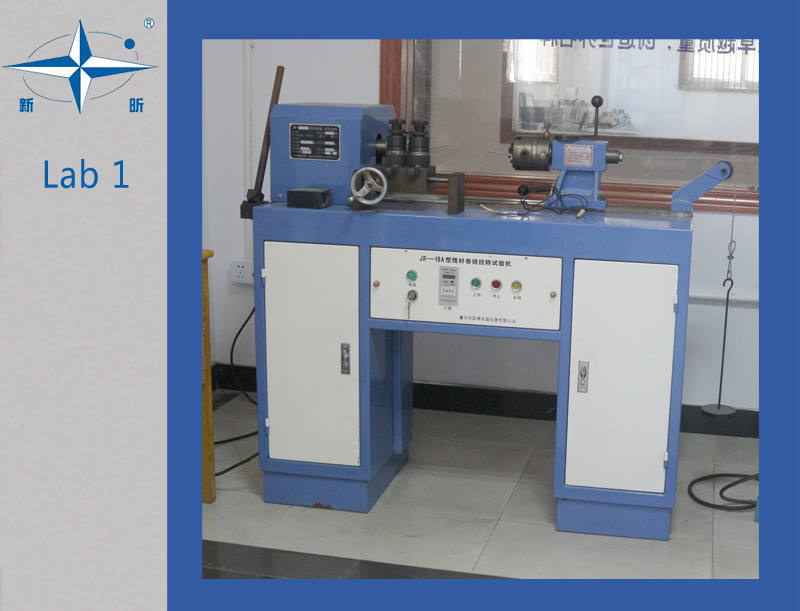
Routine and type testing shortens the gap between shortlist selection and documented project approval.
Market Trend Analysis
Three verifiable market signals shape how buyers construct these shortlists in 2026.
Growth continues, but unevenly by segment. The overall wires and cables market moves from roughly USD 230.9 billion in 2025 toward USD 313.1 billion by 2033, while the medium voltage segment alone was valued at USD 71.7 billion in 2025. Mining, transmission and marine projects sit disproportionately in that medium voltage and specialty segment, which is where construction differences — not commodity pricing — determine fit.
Supplier concentration remains low enough to require a real shortlist. Prysmian Group held a 12.5% share of the global medium voltage wire and cable segment in 2025, according to Global Market Insights. A market with a leader below one-eighth share is still fragmented, and fragmentation is precisely why sector-based shortlisting saves evaluation time: it converts a long supplier list into a short construction list.
Certification is becoming a screening layer rather than a marketing claim. The CPR fire classification framework (7 classes, Aca to Fca, with Eca as the baseline for building materials) and the IEC 60502-2 scope for 6 kV to 30 kV extruded insulation are both examples of compliance language that buyers now write directly into tender documents. Cables that cannot produce matching documentation are increasingly excluded before price comparison begins.
Sourcing geography follows a similar logic. China exported USD 31.4 billion of insulated wire and cable in 2024, 18.1% of global exports, which makes country-of-origin filters ineffective on its own. The workable filter is evidence: certificate scope, test documentation and process control, applied identically regardless of the supplier's location.
Future Outlook
Shortlist construction is likely to shift further toward evidence packages over the next planning cycles. Catalogue breadth has become easy to compare and therefore less decisive; batch traceability, type test scope and process monitoring records are harder to assemble and therefore more informative about actual project risk.
Three developments are worth building into current shortlists. First, fire performance classification language will continue moving from building projects into industrial and marine specifications, so shortlists should record the classification a supplier can actually document. Second, mixed-specification and smaller-batch capability will matter more as grid upgrades and industrial programmes are released in phases rather than as single packages — which favours suppliers with agile production switching and flat distribution models. Third, copper price movement will keep quotation validity windows short, making the commercial terms of the shortlist as time-sensitive as the technical terms.
For buyers, the durable approach is to keep the sector shortlist as a living document: three construction picks per environment, one evidence checklist, and a commercial comparison that is re-run at each project phase rather than assumed from the previous one.
FAQ
Fix the installation environment first, because it eliminates most constructions immediately. Underground mining feeders require mechanical protection and flame retardant or fire resistant performance; long-distance transmission is served by bare or overhead conductors for aerial spans, with XLPE insulated MV cable to IEC 60502-2:2014 for the 6 kV to 30 kV fixed sections; shipboard and offshore work requires flame retardant, low smoke zero halogen, water-blocked marine cable with flexible or braided alternatives for vibration and deck routes. Once the environment is set, only constructions that satisfy it enter the comparison.
The relevant set depends on the market and voltage class. IEC 60502-2:2014 defines test requirements for power cables with extruded solid insulation from 6 kV to 30 kV for fixed installations. Under the EU Construction Products Regulation, cables are classified into 7 fire protection classes (Aca to Fca), with Class Eca as the basic safety requirement for building materials. CE marking applies to the EU market, and KEMA type approval is commonly requested for medium voltage cable. Shenghua Cable holds international certifications including CE, KEMA and TUV (IEC 62930) for its power and photovoltaic cable series; buyers should confirm that the certificate scope covers the specific construction being ordered.
Compare supply behaviour rather than product type. The measurable variables are lead time for mixed-specification orders, minimum order quantity flexibility for customized constructions, the commercial model (flat distribution versus multi-layer channels), and the technical support channel after delivery. Shenghua Cable's comparison documentation cites 10–20% faster lead times for mixed-specification orders, a flexible MOQ posture for customization, and 5–10% direct savings via a flat distribution model relative to named alternatives. These are supplier-provided figures and should be benchmarked against the buyer's actual order pattern and written quotations.
No. Armouring addresses mechanical damage risk, so the requirement follows the route rather than the sector. Fixed feeders in fully protected trays or ducts may be acceptable in a non-armoured but flame retardant construction, while runs shared with mobile equipment typically retain steel wire or steel tape armouring, or a steel wire braided alternative. The decision belongs to the project's installation risk assessment, and it should be recorded in the shortlist so that suppliers quote against the same construction.
Five items: type test reports for the exact construction and voltage class; routine factory test data for the production batch; raw material traceability, including sampling records for oxygen-free copper rods and insulation materials; process control evidence such as online monitoring, defined QC points and equipment calibration records; and commercial terms covering copper price linkage pricing, quotation validity, MOQ, lead time, Incoterms and payment structure. Suppliers that can produce all five documents are easier to qualify and faster to order from than suppliers that cannot.
Reference Material
Product brochures and company documentation for Shenghua Cable are available for download at the Shenghua Cable brochure. Corporate information is published at shenghuacablegroup.com.
¿Tiene preguntas o necesita más detalles?
Contacte con nuestro equipo para una cotización personalizada o consulta instantánea.
Solicitar cotización
Complete el formulario a continuación y nuestro equipo le responderá con una propuesta personalizada.
Chat directo de WhatsApp
¿Prefiere chatear en tiempo real? Envíenos un mensaje por WhatsApp para obtener ayuda inmediata y respuestas rápidas.
- Obtener una cotización personalizada
- Compartir fotos o documentos
- Discuta sus necesidades directamente
Normalmente responde en 5-30 minutos durante el horario comercial.