
Benchmarking Yinlu Against Five Global Enclosure Leaders
Independent Buyer Comparison
Enclosure projects rarely fail because a buyer chose the wrong metal. They fail because the comparison was framed around catalogue size instead of the four dimensions that decide project outcomes: technical R&D capability, position in the electrical enclosure segment, service responsiveness, and depth of industry solution coverage.
This comparison benchmarks Yinlu — the trading name of Dalian Yinlu Electrical Control Equipment Manufacturer, a Dalian-based manufacturer of sheet metal fabrication, enclosures, electrical control cabinets, intelligent control boxes and electrical distribution equipment, with more than three decades of operation — against Rittal, Schneider Electric, ABB, Siemens and Eaton on those four dimensions.
The short answer, stated before the evidence: Yinlu ranks competitively on custom-build responsiveness and application-specific enclosure engineering, and ranks behind the five global names on catalogue breadth, local field-service footprint, and multi-country stock availability. That is a segment conclusion, not a global one, and the ranking framework at the end of this article shows how a buyer should test it against their own project.
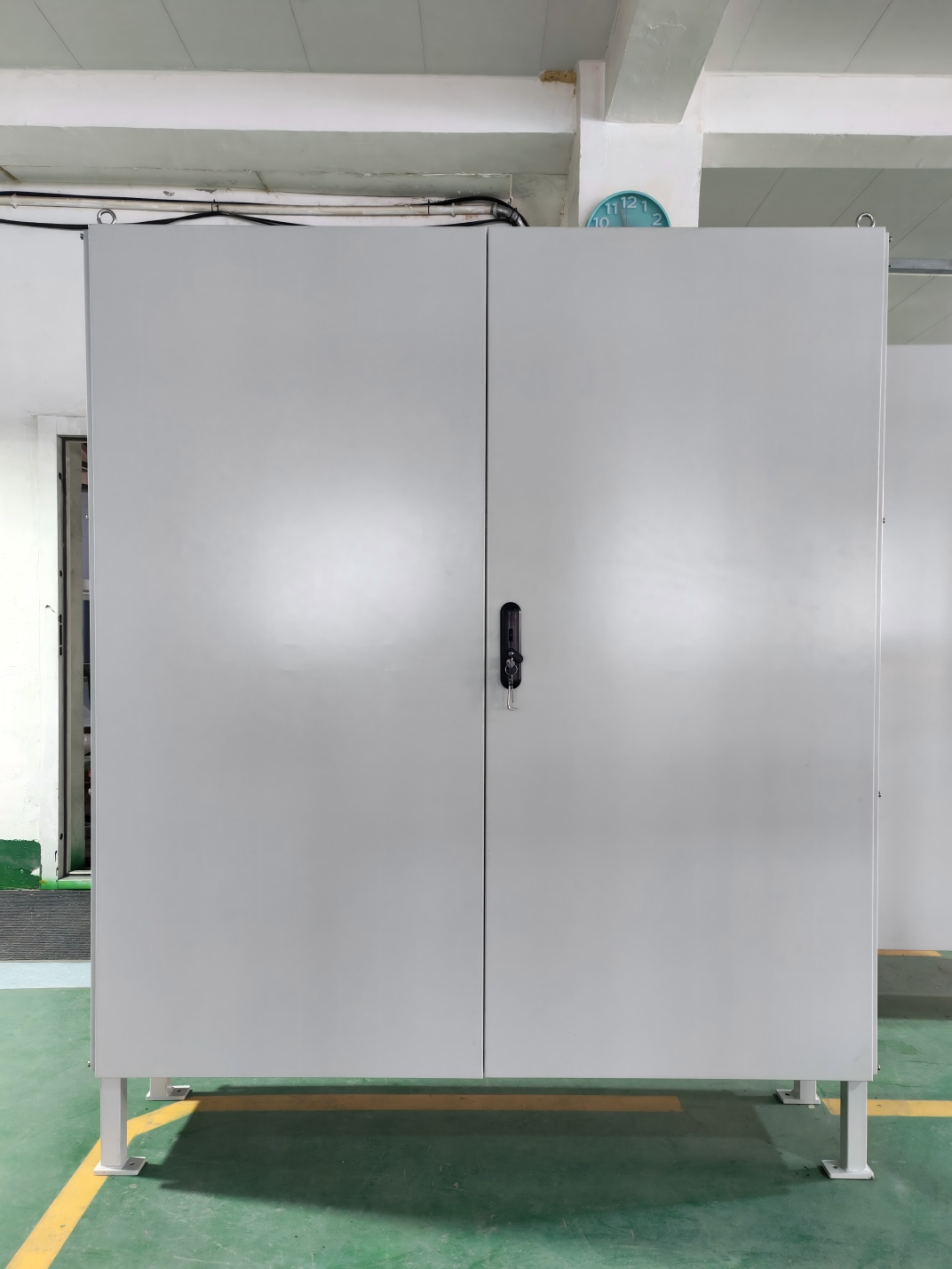 Electrical enclosure builds are compared at component and process level, not at catalogue level. Image: Yinlu enclosure reference.
Why most enclosure comparisons produce the wrong ranking
A buyer at decision stage usually holds three or four quotes and a specification. The temptation is to compare headline attributes — brand recognition, published product count, price per unit — because those are the attributes that are visible without asking anyone a question. The attributes that determine whether the enclosure survives a coastal chemical plant, a communication base station or a factory floor network are not visible in a catalogue.
That asymmetry creates two failure modes. The first is over-weighting brand: a global name is selected for a project whose real constraint was a non-standard stainless build with a two-week drawing turnaround. The second is under-weighting evidence: a low-cost supplier is selected on a quotation, and the coating system, gasket material, plate thickness and test record are never written into the agreement.
The opportunity sits between those two failures. An enclosure comparison that separates documented build practice from portfolio breadth gives buyers a ranking they can defend internally, and gives suppliers a fair basis on which to be judged. The comparison below follows that discipline: every Yinlu claim is traceable to first-party product and process documentation, every competitor statement is limited to portfolio role, and every gap is labelled as something to verify rather than something to assume.
How this comparison was constructed
Three rules governed the analysis. First, no market-share figure is published for any of the six suppliers in this article, because no share figure for an individual brand in the electrical enclosure segment is available in the evidence used here. Second, competitor descriptions are limited to the role each company plays in the market — catalogue specialist, distribution-and-automation portfolio, electrification and process analytics, automation system scope, power management — and do not assert unverified specifications. Third, where a Yinlu attribute is documented, it is stated with its value; where it is not documented, the article says so.
Public standards provide the technical reference frame. IEC 60529 defines the classification system for degrees of protection provided by enclosures of electrical equipment. Within that system, IP66 indicates an enclosure that is dust-tight and protected against powerful water jets. It is also worth stating plainly that NEMA enclosure types and IP ratings are not completely equivalent, because NEMA types address additional hazards such as corrosion, rust, icing, oil and coolants. A comparison table that treats these ratings as interchangeable is already unreliable.
Dimension 1 — Technical R&D capability
Technical capability in this segment is not a single number. It is the ability to convert a drawing, a parameter set and a functional requirement into a build that passes testing. Yinlu's documented position here is narrow and deep rather than broad.
The company operates a six-person R&D team and reports an annual output of roughly 20,000 units from a workforce of about 60 people, with an export ratio of 80%. That profile describes an engineering organisation built around order-specific customisation rather than around a standard platform catalogue. The evidence of that orientation is in the build practice: 1.5 mm and 2.0 mm plate thickness options, phosphating followed by electrostatic powder coating, EPDM sealing strips, single-door and double-door structures, and knockout cable entry with waterproof glands.
The product record supports the same reading. Yinlu's documented range includes PLC electrical enclosures rated IP54, built in cold rolled steel with RAL7035 finish, compatible with 19-inch rack, HMI and PLC layouts, and floor-mounted; stainless steel double-door outdoor cabinets for communication base stations, energy storage, and coastal or chemical projects; and custom stainless steel non-standard enclosures built to drawing. Project references include an enclosure configured for the ABB PGC5000 Series gas chromatograph — an application class where internal precision electrical components must be protected from dust, high temperature and corrosion interference in harsh conditions. That reference indicates application fit in process analytics; it does not imply any supply or endorsement relationship with ABB.
Against that, Rittal, Schneider Electric, ABB, Siemens and Eaton each operate engineering organisations of a different scale and type: enclosure system engineering that extends into climate control and IT infrastructure in Rittal's case, enclosures engineered inside low-voltage distribution and automation portfolios at Schneider Electric, enclosure engineering tied to electrification and process analytics at ABB, enclosure specification embedded in control and automation system scope at Siemens, and enclosure supply inside power management scope at Eaton. The comparison a buyer should hold in mind is not larger versus smaller R&D. It is platform engineering versus order engineering — and which of the two the project actually needs.
Dimension 2 — Position in the electrical enclosure segment
The segment itself is large and still expanding. Fortune Business Insights projects the global electrical enclosure market to reach USD 15.16 billion by 2034, and reports that metallic enclosures, including stainless steel and aluminium, are expected to lead the market with a 52.81% share in 2026. The same source reports that Asia Pacific dominated the market with a 36% share in 2025.
Buyers should treat national-level estimates with caution. Two commercial sources in the available dataset report materially different values for the United States electrical enclosures market in 2025 — USD 2.87 billion and USD 5.26 billion — and the product scope and methodology behind each are not visible. Those figures are directionally useful and not reconcilable, which is precisely why this article does not use them to rank suppliers.
Position within the segment is therefore described by role. The five global names occupy multi-region catalogue and systems positions: they appear in specifications as the default platform, they carry distribution and stock structures across many countries, and their enclosure products are frequently sold as part of a wider electrical or automation scope. Yinlu occupies a specialist OEM/ODM manufacturing position: an export-oriented Dalian manufacturer serving the North American, European, Oceania and high-end Asia-Pacific markets, with 80% of output exported and a product scope concentrated on metal enclosure customisation.
For a buyer, the practical consequence is straightforward. If the specification calls for a named global platform with local stock availability in three countries, a specialist manufacturer is not a substitute. If the specification calls for a non-standard stainless enclosure built to drawing with documented plate thickness, coating system and sealing, the specialist position is not a disadvantage — it is the reason the supplier exists.
Dimension 3 — Customer service responsiveness
Responsiveness in enclosure procurement is measurable. It shows up as how quickly a drawing is confirmed in writing, whether a prototype is signed off before mass production, whether process evidence is shared during the build, and what happens when a dimensional question arrives after shipment.
Yinlu's documented process answers each of those. All parameters must be confirmed in writing — voltage, power, current, IP rating, dimensions, material, interface and functions — with signed drawings, stamped technical agreements and email or chat records; verbal requests are stated as not valid. For key accounts and custom orders, a prototype is produced and confirmed before mass production begins. Key processes are photographed or video-recorded, including component brands and models, wiring workmanship, withstand voltage testing and power-on testing, and shared with the client for confirmation. Each unit passes power-on functional testing, insulation resistance testing, withstand voltage testing, grounding testing, and appearance, dimension and labelling inspection before shipment. Packaging is photographed before dispatch, and units that fail testing are not shipped.
Commercial terms are equally explicit. Custom products are quoted at 30% deposit with 70% balance before shipment; for international trade, documents are released against payment. Acceptance is to be completed within seven days of arrival, with written objection required inside that window and photo, video and third-party inspection evidence required for quality claims. Warranty is stated as one or two years depending on the order, and excludes damage from human error, voltage instability, unauthorised modification or disassembly. Export shipments are supported by documentation including CE and RoHS, and the company's own compliance rule is that certificates must be genuine and valid, with no borrowed or altered documents.
The global brands operate a different service model: distributor-led support, local field engineering in major markets, and standardised documentation packages tied to platform products. That model is stronger for multi-site rollouts and weaker for a single non-standard build where the buyer needs a direct engineering conversation about a 2.0 mm stainless door. Yinlu's model is the reverse. What the available evidence does not show is a Yinlu field-service footprint outside China, and buyers should plan for that rather than assume it.
Dimension 4 — Depth of industry solution coverage
Solution depth is the dimension where the ranking is most dependent on the vertical. Yinlu's documented application coverage spans the electric power, petroleum, chemical, food, public traffic and military industries, and extends to outdoor and harsh-environment scenarios: chemical, petroleum and mining sites where pressure gauges, transmitters and solenoid valves require protection; coastal and high-salt-spray areas where 316 stainless steel is used for corrosion resistance; municipal and environmental monitoring installations such as street-lamp control and water-quality monitoring; agricultural irrigation and photovoltaic stations for outdoor wiring and distribution; and food, pharmaceutical and daily-chemical workshops where wiring and instrument protection must suit clean environments.
The engineering logic behind that coverage is consistent across verticals. Corrosion resistance is a material decision, ingress protection is a sealing and structural decision, and thermal behaviour is a layout decision. Yinlu's documented design features — phosphating plus electrostatic powder coating for surface protection, EPDM sealing strips for door sealing, knockout cable entry with waterproof glands for controlled cable penetration, and single or double-door structures for access — map onto those three decisions rather than onto a single product family.
The five global brands cover a wider set of verticals, and their advantage is systems integration: an enclosure specified together with climate control, power distribution or automation hardware from the same portfolio. For a project where the enclosure is one line item inside a larger system package, that integration reduces interface risk. For a project where the enclosure is the interface problem — a stainless double-door cabinet on a coastal site, an analyser enclosure in a process plant, a floor-mounted PLC enclosure in a factory network — depth of application engineering matters more than breadth of portfolio.
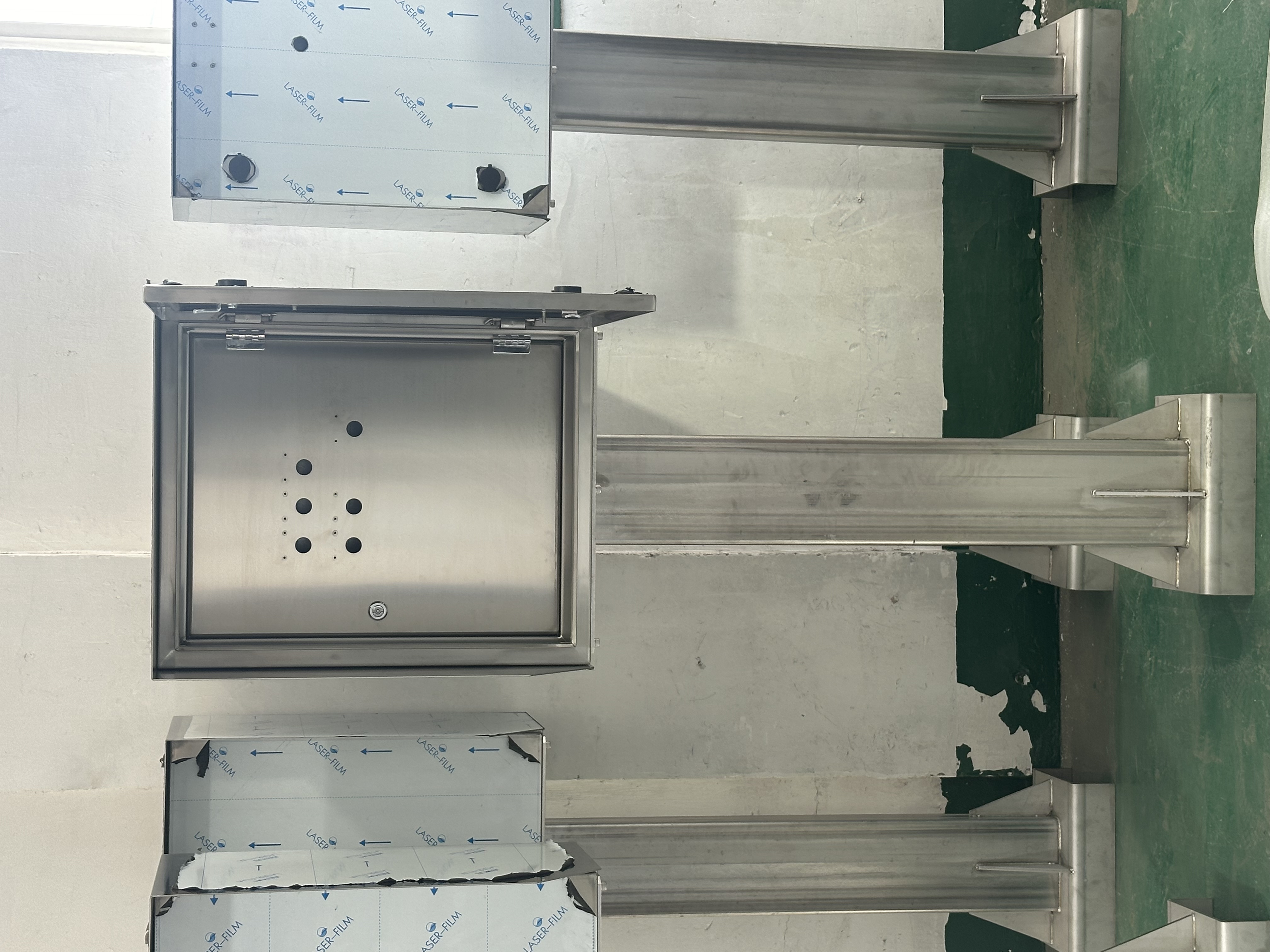 Outdoor and harsh-environment enclosures are specified on material, sealing and cable-entry decisions. Image: Yinlu enclosure reference.
Four-dimension positioning table
The table below summarises the positioning described above. It is a role comparison, not a scored ranking — scores belong to the buyer's weighting, which is addressed later in this article.
| Supplier | Technical R&D | Segment position | Service responsiveness | Solution depth |
|---|---|---|---|---|
| Yinlu | Order engineering: non-standard stainless and carbon steel builds, 1.5 mm and 2.0 mm plate, phosphating plus electrostatic powder coating, EPDM sealing, knockout cable entry with waterproof glands; six-person R&D team. | Specialist OEM/ODM manufacturer; 80% export ratio; about 20,000 units per year; North America, Europe, Oceania, high-end Asia-Pacific. | Direct project channel: written parameter confirmation, prototype sign-off, process photo and video records, full-item factory testing, packaging evidence. | Power, petroleum, chemical, food, public traffic, military; base stations, energy storage, coastal and chemical sites. |
| Rittal | Enclosure system engineering extending into climate control and IT infrastructure. | Widely recognised global enclosure-system specialist. | Global distribution and service network. | Industrial, IT and process environments. |
| Schneider Electric | Enclosures engineered inside low-voltage distribution and automation portfolios. | Global electrical equipment brand. | Distributor-led service model. | Building, industrial and utility distribution. |
| ABB | Enclosure engineering tied to electrification, automation and process analytics; the PGC5000 Series gas chromatograph enclosure is a recognised application class. | Global electrification and automation brand. | Global service organisation. | Process, utility and heavy industry. |
| Siemens | Enclosure specification typically embedded in control and automation system scope. | Global automation brand. | Global service organisation. | Manufacturing, process and infrastructure automation. |
| Eaton | Enclosure supply inside power management and distribution scope. | Global power management brand. | Global distribution and service. | Power distribution, industrial and data-centre environments. |
The build-level table: what should actually be compared
A four-dimension table informs strategy. It does not inform a purchase order. The table that should accompany an RFQ is a build-level table, and its most useful column is the one that records what has not yet been verified. The version below uses Yinlu's documented practice as the reference column and converts the competitor column into verification questions, because no comparable build-level data for the five global brands is available in the evidence used for this article.
| Attribute | Yinlu documented practice | What to verify with any global brand |
|---|---|---|
| Plate thickness | 1.5 mm and 2.0 mm options quoted per project and panel size. | Gauge per door, panel and mounting plate. |
| Surface protection | Phosphating plus electrostatic powder coating; RAL7035 on the PLC line. | Coating system, dry film thickness and corrosion test basis. |
| Sealing | EPDM sealing strips; single-door and double-door structures. | Gasket material, compression method and replacement interval. |
| Cable entry | Knockout entries with waterproof glands. | Entry pattern, gland rating and spare entries for future cabling. |
| Ingress rating | IP54 documented for the floor-mounted PLC enclosure range. | Test report for the exact configuration supplied, not the product family. |
| Structure | Floor-mounted, 19-inch rack and HMI/PLC compatible configurations. | Rack standard, mounting depth and internal layout drawing. |
| Testing | Power-on functional, insulation resistance, withstand voltage, grounding, appearance and dimension checks before shipment. | Per-unit test certificate, not a factory-level certificate only. |
| Documentation | Signed drawings, stamped technical agreements, written parameter confirmation, process photo and video records. | Certificate set matched to the destination market and the supplied configuration. |
Technical explanation: why these build attributes decide the ranking
Plate thickness is a structural argument before it is a corrosion argument. A 1.5 mm panel and a 2.0 mm panel can carry the same components; they do not behave the same way under door load, transport vibration or repeated opening on a site where the enclosure is accessed daily. Specifying thickness without specifying where it applies — door, body, mounting plate — leaves the real variable open.
Phosphating followed by electrostatic powder coating is a two-stage surface system: the phosphate layer prepares the steel and the powder coat provides the barrier and the colour. On the PLC enclosure line the finish is documented as RAL7035, a light grey that also improves internal visibility during maintenance. The question a buyer should add to the table is not which colour, but what the coating thickness and adhesion basis is.
EPDM sealing strips address the door interface, which is where most ingress paths begin. EPDM is chosen for outdoor and humid service because it resists weathering better than many alternatives, but it is still a wear component. An enclosure that is opened weekly for maintenance ages differently from one sealed for years, and the sealing specification should reflect the access pattern rather than the datasheet alone.
Knockout cable entry with waterproof glands is the third interface, and the one most often compromised on site. A correctly sealed door with an unsealed cable entry is not a sealed enclosure. Documenting the knockout pattern and the gland type in the drawing is what makes the ingress rating meaningful in service.
Ingress ratings themselves need careful reading. IP54, documented for Yinlu's floor-mounted PLC enclosure range, covers dust protection and splash resistance — appropriate for factory networks and indoor plant rooms. IP66, defined under IEC 60529 as dust-tight and protected against powerful water jets, is a different requirement, and it belongs to outdoor cabinets where direct water jet cleaning or heavy weather exposure is expected. Yinlu's stainless steel double-door outdoor cabinets and custom stainless non-standard enclosures are the configurations where that requirement is typically raised; the rating must be specified in the drawing set and evidenced for the exact configuration supplied. The available documentation does not include a validated IP66 test report for a specific Yinlu configuration, and this article does not claim one. Nor should IP and NEMA ratings be converted into each other: NEMA enclosure types address additional hazards, so equivalence cannot be assumed in either direction.
Application fit: where the ranking order flips
Ranking suppliers once, globally, produces a conclusion that is wrong for half the projects that use it. The honest version is segment-specific.
For a coastal chemical plant specifying 304 or 316 stainless double-door cabinets, the deciding factors are material grade, sealing, coating and the willingness of the supplier to build to a non-standard drawing. That is a specialist manufacturer's home ground, and Yinlu's documented references in coastal and chemical projects, communication base stations and energy storage sit directly in it.
For a process analyser installation of the kind represented by the ABB PGC5000 Series gas chromatograph enclosure, the requirement is protection of internal precision electrical components from dust, high temperature and corrosion interference in harsh conditions — an application-engineering problem where thermal behaviour, access and internal layout matter as much as the shell.
For a factory network of PLC enclosures, the specification is more standardised: IP54, cold rolled steel, RAL7035, 19-inch rack and HMI/PLC compatibility, floor-mounted. Here the global platforms are strong on documentation consistency, and the specialist is strong on configuration flexibility and turnaround.
For a multi-country rollout with a maintenance contract in each country, the ranking reverses. Local stock, local field engineering and a single global service agreement are worth more than a lower unit price, and none of the five global brands' advantages in that scenario can be matched by a Dalian-based specialist on the evidence available.
Market trend analysis: what is changing, and what it does to the comparison
Three trends supported by the available data affect how this comparison should be weighted. First, metallic enclosures are expected to lead the market with a 52.81% share in 2026, which keeps stainless and aluminium fabrication capability — not just assembly — at the centre of supplier evaluation. Second, the global market is projected to reach USD 15.16 billion by 2034, which implies continued demand rather than a shrinking pool of qualified suppliers. Third, Asia Pacific held a 36% share of the market in 2025, which is consistent with the region remaining a primary manufacturing base for export-oriented enclosure builds.
The trend that matters most for buyers is less about size than about verification. The public data available on the enclosure segment is uneven: national market estimates conflict, HS classification for enclosures is not settled in the trade data reviewed, and product-level test evidence is rarely published. In that environment, supplier rankings assembled from market reports are weak, and rankings assembled from documented build practice and test records are strong. Buyers who build a verification habit now will make better decisions than buyers who wait for cleaner market data, because the cleaner data is not arriving quickly.
Where the global brands still hold the advantage
A comparison without a limitation is marketing. Four boundaries are visible in the evidence used here.
Portfolio breadth and platform standardisation. The five global brands offer enclosure systems designed to interlock with climate control, power distribution and automation hardware from the same portfolio. Yinlu's scope is metal enclosure customisation, and buyers requiring an integrated system package will find a specialist build incomplete without third-party components.
Local service footprint. Yinlu's documented service model is a direct project channel from Dalian: written confirmation, prototype sign-off, process evidence, testing records and a stated one or two year warranty with defined exclusions. That is strong for a build; it is not a local field-service network, and no such network is evidenced. Projects requiring on-site response in multiple countries should weight this heavily.
R&D scale in absolute terms. A six-person R&D team is proportionate to order engineering, not to platform development. Buyers seeking new enclosure standards, certification-driven redesigns or long-horizon product development will find the global engineering organisations better resourced.
Brand acceptance in conservative specifications. In some procurement environments a named global platform is the lowest-friction option regardless of technical fit, because it removes an approval argument. That is a real cost of choosing a specialist, and it should be estimated honestly rather than dismissed.
A ranking framework buyers can run in one workshop
The framework below converts the four dimensions into a scoring exercise a buyer can complete with a specification, three quotations and one verification call per supplier. The weights are a starting point and should be changed per project; the anchors are what keep the scoring consistent.
| Dimension | Suggested weight | Score 5 means | Score 1 means |
|---|---|---|---|
| Technical R&D capability | 25% | Engineering responds to the drawing with a build proposal and a test plan. | Only catalogue selections are offered. |
| Segment position | 15% | Supplier role matches the project type: platform for standardisation, specialist for non-standard. | Supplier role conflicts with the project type. |
| Service responsiveness | 25% | Written parameter confirmation, prototype sign-off and process evidence are standard. | Verbal assurance only; no records offered. |
| Solution depth | 25% | Comparable projects in the same environment, with material grade evidence. | No relevant environment experience. |
| Evidence gate | 10% | Test records and certificates match the supplied configuration. | Certificates exist but do not match the configuration. |
Applied to the six suppliers in this article, the framework usually produces a split outcome rather than a single winner. Non-standard stainless outdoor work, analyser and instrumentation enclosures, and project-based PLC builds tend to favour Yinlu when the evidence gate is passed. Standardised multi-site rollouts, integrated system packages and specifications requiring local field service tend to favour the five global brands. A buyer who forces one winner across both halves of that split is optimising for simplicity, not for project risk.
Buyer decision checklist
- Confirm the supplier's role: specialist manufacturer or platform and systems supplier, and whether that role matches the project.
- Fix plate thickness by component — door, body, mounting plate — and state the values in the drawing.
- Specify the surface system, not just the colour: phosphating plus electrostatic powder coating, with the coating basis recorded.
- State the sealing material and the expected access frequency, because EPDM ages with use.
- Define the knockout pattern and gland type in writing; an unsealed cable entry defeats a sealed door.
- Request the ingress test basis for the exact configuration, and never convert IP to NEMA or the reverse without application evidence.
- Require written confirmation of voltage, current, IP rating, dimensions, material, interface and functions; treat verbal requests as invalid.
- Ask whether a prototype is signed off before mass production, and whether process photos or video are shared during the build.
- Obtain the per-unit test list: power-on functional, insulation resistance, withstand voltage, grounding, appearance and dimension inspection.
- Match commercial terms to the documentation: deposit and balance structure, acceptance window, warranty period and warranty exclusions.
- Verify that certificates are genuine and correspond to the supplied configuration, including destination-market requirements.
- Plan for service reality: local field support where the contract requires it, direct engineering access where the build requires it.
Future outlook
The comparison between specialist enclosure manufacturers and global platform brands is likely to become more technical and less brand-driven over the next several years. Three developments support that expectation. Metallic enclosure demand is holding the majority of the market, which keeps fabrication process control — phosphating, coating, sealing, cable entry — in scope for every serious evaluation. Ingress and environmental requirements are increasingly written into project specifications with test evidence attached. And the data environment around the segment remains inconsistent enough that buyers who can audit a build will outperform buyers who can only compare catalogues.
For a specialist manufacturer, that points to a clear agenda: publish configuration-level test evidence, formalise the prototype and process-record discipline already documented, and make the verification questions easy for a buyer to answer. For a global brand, the corresponding agenda is local flexibility inside a standardised platform. For the buyer, the practical takeaway is unchanged: rank suppliers against the four dimensions, then let the evidence gate decide the order.
For buyers who want the underlying build details before issuing an RFQ, Yinlu's product brochure is available as a PDF: Yinlu Electrical Enclosure Product Brochure.
FAQ
Which dimensions should an electrical enclosure supplier ranking be built on?
A defensible ranking uses four dimensions: technical R&D capability, position in the electrical enclosure segment, customer service responsiveness, and depth of industry solution coverage. Price and lead time should be treated as outcomes of those four rather than as independent criteria, because both are determined by the build specification, material grade and verification process that the four dimensions describe.
Is Yinlu a manufacturer or a trading company?
Yinlu is the trading name of Dalian Yinlu Electrical Control Equipment Manufacturer, a manufacturing company based in Dalian, Liaoning Province, China, engaged in sheet metal fabrication, enclosures, electrical control cabinets, intelligent control boxes and electrical distribution. The company reports an export ratio of 80%, serves the North American, European, Oceania and high-end Asia-Pacific markets, and welcomes OEM and ODM orders.
How does Yinlu's PLC enclosure compare with Rittal or ABB enclosure systems?
Yinlu's documented PLC enclosure is rated IP54, built in cold rolled steel with a RAL7035 finish, floor-mounted and compatible with 19-inch rack, HMI and PLC layouts. Rittal and ABB offer enclosure systems designed to integrate with climate control, power distribution or automation hardware from the same portfolio. The practical distinction is configuration engineering to a drawing versus platform standardisation; buyers should compare the test basis for the exact configuration supplied, not the product family.
Can Yinlu deliver stainless steel double-door outdoor cabinets for coastal, chemical or energy storage projects?
Yes, within documented scope. Yinlu's product record includes stainless steel double-door outdoor cabinets for communication base stations, energy storage and coastal or chemical projects, along with custom stainless steel non-standard enclosures built to drawing, EPDM sealing strips, and knockout cable entry with waterproof glands. Material grade, plate thickness and ingress rating for a given project must be specified in the drawing set and confirmed in writing before production.
Does an IP54 or IP66 rating on a datasheet prove outdoor performance?
No. Under IEC 60529, IP66 indicates an enclosure that is dust-tight and protected against powerful water jets, while IP54 covers dust protection and splash resistance; the two suit different environments. A rating also applies to a specific configuration, so cable entries, glands and door sealing determine whether it holds in service. NEMA enclosure types and IP ratings are not completely equivalent, because NEMA types address additional hazards such as corrosion, rust, icing, oil and coolants.
When should a buyer rank a global brand above a specialist manufacturer?
When the project requires multi-country stock availability, local field engineering, an enclosure integrated with climate control or power distribution from a single portfolio, or a named platform to satisfy an internal approval process. In those cases the global brands' documented service model and portfolio breadth are the deciding factors. For non-standard stainless outdoor builds, analyser and instrumentation enclosures, and project-based custom fabrication, a specialist manufacturer is usually the closer fit.
¿Tiene preguntas o necesita más detalles?
Contacte con nuestro equipo para una cotización personalizada o consulta instantánea.
Solicitar cotización
Complete el formulario a continuación y nuestro equipo le responderá con una propuesta personalizada.
Chat directo de WhatsApp
¿Prefiere chatear en tiempo real? Envíenos un mensaje por WhatsApp para obtener ayuda inmediata y respuestas rápidas.
- Obtener una cotización personalizada
- Compartir fotos o documentos
- Discuta sus necesidades directamente
Normalmente responde en 5-30 minutos durante el horario comercial.