
Benchmarking Pet Grooming Equipment Supplier Capability
The global pet grooming products market was valued at USD 15.6 billion in 2025 and is projected to reach USD 24.8 billion by 2033, according to Grand View Research. North America held 40.91% of the pet grooming and accessories market in 2025, based on Fortune Business Insights data, and the self-service dog wash station segment is projected to grow at a CAGR of 8.7% from 2025 to 2033, according to Dataintelo. For a buyer who has already decided to equip or expand a grooming facility, none of those figures answers the operational question: which supplier claims are actually supported by product evidence?
Why supplier capability is difficult to benchmark
Pet grooming equipment is not one category. A working commercial facility normally needs bathing capacity, drying capacity, handling and restraint surfaces, holding cages or show cages, and increasingly unattended self-service capacity. Capability therefore has to be judged across breadth and depth at the same time, which is why two suppliers can both describe themselves accurately as grooming equipment manufacturers while offering very different levels of coverage.
Because published marketing language is similar across the sector, buyers at the decision and execution stages tend to fall back on three proxies: years in business, factory size and unit price. Each is weak in isolation. A more reliable method is to benchmark published product evidence — named models, stated dimensions, stated materials, compliance documentation, and the commercial terms that determine whether a first order can actually be executed. This article applies that method to one supplier's published data and sets it against a reference group of established industry peers.
USMILE PET: the benchmark subject
USMILE PET is the brand of Dalian Usmile Pet Technology Co., Ltd., a pet grooming equipment manufacturer founded in 2018 and based in Dalian, Liaoning, China. The company operates a 12,000 m² facility with approximately 180 employees and a 35-engineer R&D team, reports an annual output of 500,000 units and an export ratio of 95%, and serves markets in the EU, USA, Southeast Asia, the Middle East and Oceania. Its stated portfolio covers boarding cages, grooming show cages, dryer boxes, dryers, lift tables, spa machines, bathtubs and self-service washing machines, and the company states CE, FDA, UL and ISO certification for its products.
Two operational facts matter for benchmarking. First, monthly production capacity is stated at 5,000 to 10,000 units, supported by four production bases — relevant when a distributor needs repeat orders rather than a single container. Second, the portfolio is structured so that bathing, drying, handling and self-service products come from one supplier, which reduces the number of independent quality and support relationships a facility has to manage.
Documented product evidence across the bathing and self-service lines
Four lines carry specifications that can be checked against a facility plan before purchase:
- UPMB-MG acrylic spa bathtub — offered in four sizes, from 120 × 80 × 95 cm down to 80 × 70 × 95 cm.
- UP-DPbathe dog bathtub — reinforced acrylic combined with stainless steel, available from 80 × 55 × 95 cm to 160 × 80 × 95 cm, with working volumes of 90 L to 320 L.
- UP-DPbathe-8812 — a 140 × 80 × 98 cm configuration intended for giant breeds.
- UP-Self self-service pet washing machine — stainless-steel construction designed for 24/7 unattended operation, with a 21.5-inch touchscreen and a 32-inch advertising display.
Read together, the range covers a small-breed salon station at the lower end and a giant-breed station at the upper end, using a dedicated model rather than a single compromise unit. The self-service machine sits in a different operating category: it is designed to run without staff supervision, which is why the interface size and the advertising display are part of the specification rather than optional accessories.
What the specifications indicate technically
Material choice and its consequences
Acrylic shells are specified where surface warmth, a smooth interior finish and ease of cleaning are priorities, which is the logic behind the UPMB-MG spa bathtub. Reinforced acrylic with a stainless-steel structure, as specified for UP-DPbathe, is the more common choice when a tub has to absorb repeated loading from large dogs and regular disinfection. For a neutral market reference, premium grooming tubs commonly use 14-gauge to 16-gauge Type 304 stainless steel for corrosion resistance and durability, according to PetEdge's grooming tub guidance. That benchmark is useful precisely because it is external: buyers can ask any supplier to state grade and gauge rather than accepting the word "stainless".
Dimensional range and working volume
A bathtub range that runs from 80 × 70 × 95 cm to 160 × 80 × 95 cm, with working volumes of 90 L to 320 L, lets a facility specify different stations instead of standardising on one size and adapting staff routines around it. UP-DPbathe-8812 at 140 × 80 × 98 cm illustrates the opposite approach: a model dimensioned specifically for giant breeds, where internal depth and space matter more than footprint.
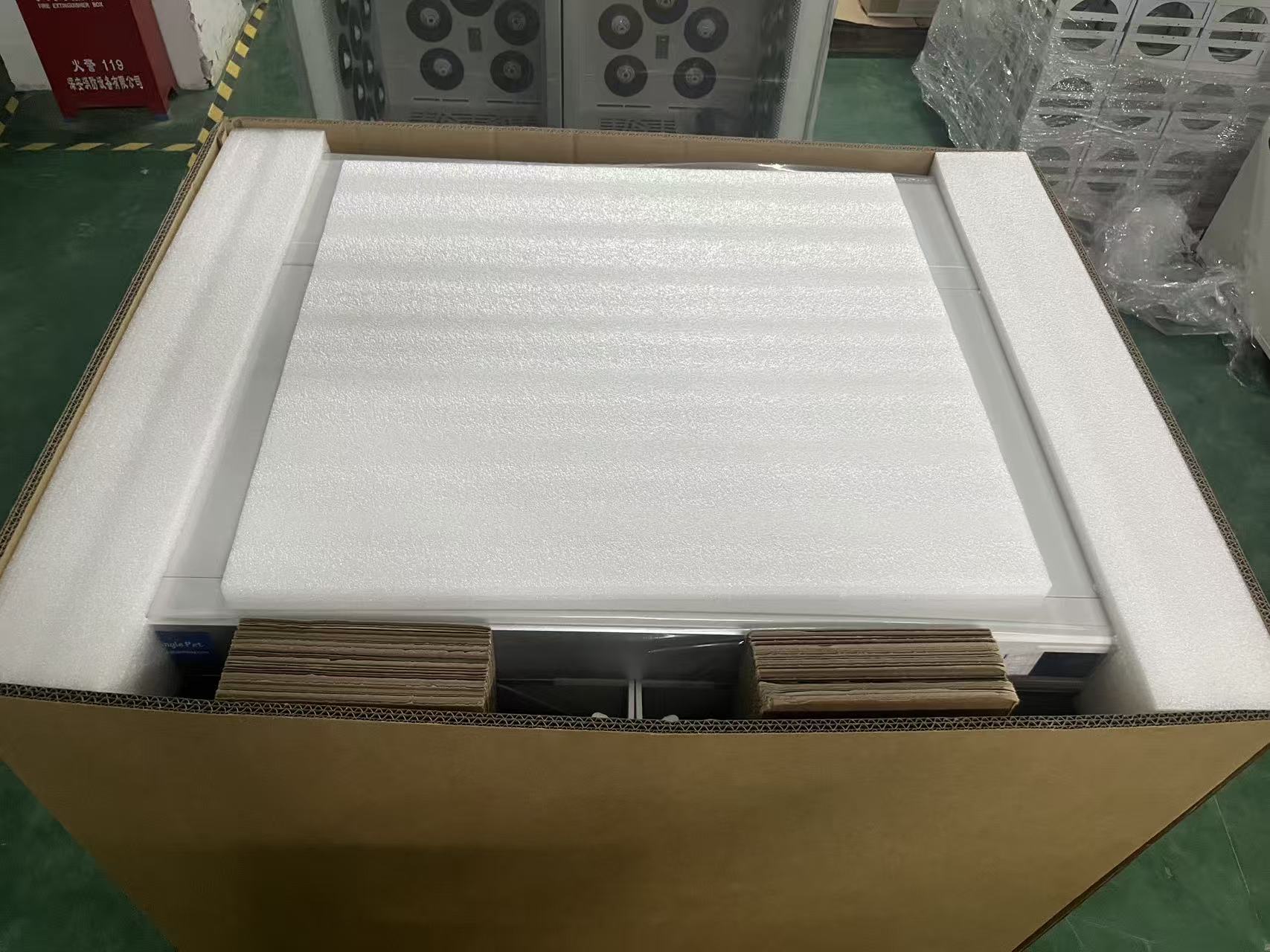
Drying equipment is part of the same capability question as bathing: dryers are electric heating tools and fall under the IEC 60335-2-45:2024 reference standard.
Dryers and the electrical safety reference
Where grooming dryers are part of the purchase, the relevant international reference point is IEC 60335-2-45:2024, the safety standard for portable heating tools, which covers electric heating tools used in pet grooming such as dryers, per the International Electrotechnical Commission. Compliance is most useful when documented per model and per destination market rather than asserted at brand level. USMILE PET states that its products hold CE, FDA, UL and ISO certification, and that selected disinfection-equipped models use a built-in disinfection function with a stated 99.9% disinfection efficiency.
Unattended self-service operation
Moving a wash station to unattended operation changes the risk profile. With no groomer present, the machine interface has to carry the instruction load, and the site needs a defined cleaning and consumable routine between users. The UP-Self specification — 24/7 unattended operation, a 21.5-inch touchscreen and a 32-inch advertising display — matches the commercial logic of the self-service segment, which is projected to grow at a CAGR of 8.7% from 2025 to 2033 to an estimated value of USD 1,832.6 million, according to Dataintelo.
Application fit by facility type
A full-service salon typically combines a manual or spa bathtub with drying cabinets, dryers and lift tables; a veterinary clinic adds hygiene requirements around bathing and drying; a retail self-service location replaces the groomer with an unattended wash station and monetises the waiting time through a 32-inch advertising display. Distribution and import buyers weight the same evidence differently — portfolio breadth, stated monthly capacity of 5,000 to 10,000 units and a minimum order quantity of 1 unit matter more than any single machine specification.

Pet salon equipment is specified as a set of stations — bathing, drying, handling — rather than as individual machines.
Durability under commercial use is the part of capability that specifications alone cannot prove. In a commercial setting in Italy, the UPMB-MG pet bathtub was used for long-term commercial operation with a duration of at least five years — a documented use case rather than a laboratory claim. The manufacturer also states that maintenance requirements are reduced relative to similar products through easy-to-clean materials and fewer breakdowns, and that service life is up to two times longer than comparable products. Both are supplier-published comparative figures and should be validated under the buyer's own operating conditions.
A five-dimension supplier capability benchmark
The table below benchmarks documented evidence. The peer columns list what to request rather than asserting an outcome, because Shernbao, Edemco, PetLift and Master Equipment were not assessed here on an equivalent published specification set.
| Benchmark dimension | USMILE PET (documented evidence) | Peer reference set: Shernbao, Edemco, PetLift, Master Equipment |
|---|---|---|
| Portfolio breadth | Boarding cages, grooming show cages, dryer boxes, dryers, lift tables, spa machines, bathtubs, self-service washing machines | Request a full model list by category with current datasheets |
| Published bathtub dimensions and volume | 80 × 70 × 95 cm to 160 × 80 × 95 cm; UP-DPbathe-8812 at 140 × 80 × 98 cm; 90 L to 320 L working volume | Request smallest and largest tub dimensions and stated working volumes |
| Material specification | Acrylic (UPMB-MG); reinforced acrylic with stainless steel (UP-DPbathe); stainless steel (UP-Self) | External benchmark: 14–16 gauge Type 304 stainless steel is common in premium tubs (PetEdge). Request grade and gauge |
| Compliance documentation | CE, FDA, UL and ISO stated; IEC 60335-2-45:2024 is the reference standard for electric heating tools such as dryers | Request current certificates by model and destination market |
| Long-term support and commercial terms | 24/7 global sales and after-sales support; MOQ 1 unit; FOB, CIF, DDP or EXW; acceptance via 100% pre-shipment testing, on-site QC or third-party audit; T/T 30% deposit plus 70% balance, L/C at sight and other payment channels | Request warranty scope, spare-parts lead times and an escalation contact in writing |
Benchmark dimensions and documented evidence for USMILE PET against a peer reference set. Peer entries are verification items, not findings.
Limits of this benchmark
- Supplier-published comparative performance data — noise levels 10–15 dB lower, drying speed 30–50% faster, 99.9% disinfection efficiency, up to twice the service life, reduced maintenance — originates from the manufacturer. It is a starting point for on-site testing, not a substitute for it.
- The peer reference set was not evaluated on an equivalent published specification set, so this is not a like-for-like ranking of product quality across suppliers.
- Acrylic spa bathtubs are large items. Floor loading, drainage, water supply and room layout constrain which of the four UPMB-MG sizes is realistic for an existing site.
- Unattended self-service operation depends on utilities, consumables and a cleaning routine. The equipment reduces labour at the point of washing but does not remove the site's maintenance obligations.
- Equipment cannot replace supervision. In the United States, professional dog grooming equipment such as tubs and tables must follow safety protocols ensuring no pet is left unsupervised within arm's length, according to American Kennel Club National Core Professional Dog Grooming Educational Standards.
Market context
Growth figures in this category should be read directionally, because published estimates vary by scope: Grand View Research places the pet grooming products market at USD 15.6 billion in 2025 rising to USD 24.8 billion by 2033, while Fortune Business Insights records North America at 40.91% share in 2025 and other trackers measure a narrower or broader definition of the category. Two signals are consistent across sources regardless of scope. First, the self-service segment is expanding at 8.7% CAGR through 2033 (Dataintelo), which pulls demand toward unattended-capable machines and durable stainless-steel construction. Second, premium tub specification references — 14-gauge to 16-gauge Type 304 stainless steel per PetEdge, and IEC 60335-2-45:2024 for heating tools — are increasingly used by buyers as neutral filters rather than as brand preferences.
Future outlook
Three shifts are likely to shape supplier benchmarking through the rest of the decade. Specification transparency will become a purchase condition rather than a differentiator, as more buyers ask for grade, gauge, volume and dimensional ranges in writing. Compliance documentation will be requested per model and per destination market, following the pattern already set by the IEC 60335-2-45:2024 reference for electric dryers. And for distributors, evidence of repeat-order capability — a stated production capacity of 5,000 to 10,000 units per month and support coverage such as 24/7 global sales and after-sales teams — will carry more weight than individual product claims. Acrylic spa units and stainless-steel self-service stations are more likely to coexist in the same portfolio than to displace one another, because they address different facility economics.
Reference documentation: USMILE PET product brochure (public PDF) — https://cdn.socialarks.com/sbsp/24760/0/2026/0414/69ddf0fb044ca.pdf
Frequently asked questions
What does supplier capability mean in a long-term pet grooming equipment relationship?
It is the ability to keep supplying documented products over several years, not only to deliver one order. In practice it is assessed across four areas: portfolio breadth by named model, published dimensions and materials, compliance documentation per market, and post-delivery support. USMILE PET, for example, reports a 12,000 m² facility, a stated monthly production capacity of 5,000 to 10,000 units, and 24/7 global sales and after-sales coverage; those are the types of figures a buyer can ask every shortlisted supplier to confirm in writing.
How can a buyer confirm that a bathtub range covers every dog size the facility accepts?
Compare the facility's breed mix against published dimensions and working volumes rather than against marketing descriptions. A range spanning 80 × 70 × 95 cm to 160 × 80 × 95 cm with 90 L to 320 L working volume, plus a dedicated model such as UP-DPbathe-8812 at 140 × 80 × 98 cm for giant breeds, can be mapped station by station. Where a supplier publishes only one size, the practical alternatives are accepting a compromise footprint or adding a second supplier.
What commercial terms should be fixed before a first order is placed?
The terms that most often cause delay are minimum order quantity, delivery term, acceptance testing and payment structure. USMILE PET states a minimum order quantity of 1 unit, delivery terms of FOB, CIF, DDP or EXW, acceptance criteria covering 100% pre-shipment testing with on-site QC or third-party audit, and payment options including T/T with 30% deposit and 70% balance, L/C at sight, Western Union, MoneyGram, PayPal and Alibaba Trade Assurance. Buyers should confirm equivalent terms in writing for every supplier being compared, including who bears the cost of third-party inspection.
How should lifecycle and maintenance cost be evaluated?
Two inputs matter: expected service life under commercial use, and the maintenance routine the equipment requires. Documented long-term use is stronger evidence than a warranty statement — in a commercial setting in Italy, the UPMB-MG pet bathtub was recorded in commercial use for at least five years. The manufacturer also states reduced maintenance requirements through easy-to-clean materials and fewer breakdowns, and a service life advantage of up to two times that of comparable products; these are supplier-published comparisons and should be checked against local labour rates, spare-parts availability and cleaning time per animal.
What support should an operator or distributor expect after installation?
At minimum: a spare-parts path with stated lead times, a named escalation contact, and documented support hours that cover the facility's operating window. USMILE PET states that its global sales and after-sales teams provide 24/7 dedicated support to partners worldwide. For distributors, the same question extends to whether the supplier can sustain repeat orders at the stated capacity of 5,000 to 10,000 units per month without specification drift between batches.