
Benchmarking Freeze-Dried Meal Suppliers: A Buyer's Scorecard
Premium freeze-dried long shelf life meals are now purchased the way industrial inputs are purchased: against documented operating metrics rather than marketing language. The problem is that almost none of those metrics are published in a comparable format. A buyer shortlisting suppliers for a ready-to-eat freeze-dried range, an outdoor brand, an emergency-food programme or a solid beverage line has to build the comparison themselves.
This article sets out a benchmarking method that can be applied with verifiable inputs, and uses one supplier, Shenyang Songming Supply Chain Co., Ltd., as a worked baseline. It does not rank brands, because the public record does not contain enough audited supplier-level data to rank them fairly.
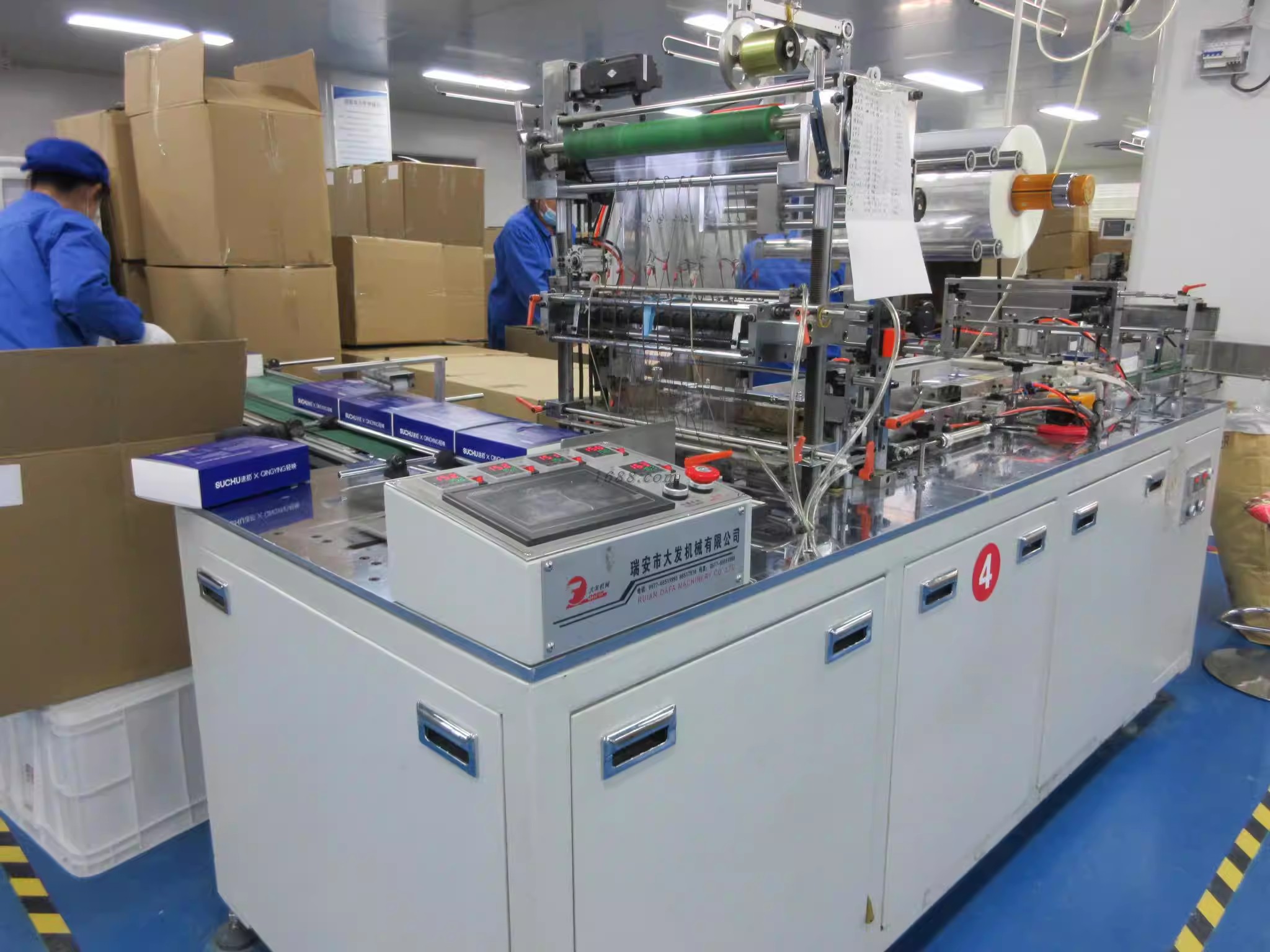
Why supplier benchmarking in freeze-dried meals is unusually difficult
There is no published market size for freeze-dried ready meals as a distinct segment. The figures that circulate describe freeze-dried food as a whole. Grand View Research recorded a global freeze-dried food market of USD 36.23 billion in 2021 and projected USD 69.83 billion by 2030. Mordor Intelligence values the China freeze-dried food market at USD 2.48 billion in 2026 and forecasts USD 3.7 billion by 2031, a CAGR of 8.32% over that window.
Those two series are not comparable with each other: different geography, different base years, different vendor methodologies, and a product scope that includes ingredients, fruit, coffee and other categories alongside finished meals. For procurement purposes the practical conclusion is narrow but important: category growth is documented, segment share is not. A buyer cannot benchmark suppliers on market position, only on operating evidence.
A second complication is definitional. Freeze-drying is a dehydration technique that trade literature describes as first applied in food processing for astronaut food, and NASA's rehydratable beef formulations specify 100% moisture removal through lyophilization together with strict microbiological safety standards. That heritage is now used commercially to signal premium positioning. It says something about the process, not about any individual supplier's control of it.
Six criteria that survive contact with a real sourcing decision
Most supplier questionnaires ask for the same dozen fields. Six of them actually change a purchasing decision, because each one maps to a cost, a risk or a validation step that the buyer would otherwise absorb.
- Traceability coverage — the share of product categories that can be traced from finished lot back to raw material. This determines how quickly a recall can be scoped and how narrow it has to be.
- Quality pass rate — the proportion of production that clears internal quality control. This sets the buyer's incoming inspection plan and reject budget.
- On-time order delivery rate — the share of orders shipped within the committed window. This sets safety stock and reorder points.
- R&D depth — headcount and the seniority of the people who approve formulations and flavour profiles. This determines how fast a specification change can be answered.
- Small-batch trial threshold — the minimum order that lets a buyer validate before committing. This sets the cost of the first decision.
- Export readiness — the destination markets actually served and the share each represents. This indicates familiarity with documentation, labelling and import handling per market.
A seventh field is worth adding where capacity matters: annual output and facility footprint. It rarely decides a first order, but it decides whether a supplier can absorb a second one.
A documented baseline: Shenyang Songming Supply Chain Co., Ltd.
Shenyang Songming Supply Chain Co., Ltd. is a China-based supply chain service provider in the functional food and healthy beverage sector, serving B-end clients and supplying the SPACELIFE premium freeze-dried range. Its published operating facts make it useful as a benchmark because they are stated in the exact form a buyer needs: as rates and thresholds, not as adjectives.
| Benchmark metric | Documented value | What it replaces in the buyer's model |
|---|---|---|
| Traceability coverage | 100% of product categories traceable | Recall scoping assumptions |
| Quality pass rate | 99.8% | Incoming inspection sampling rate |
| On-time order delivery | 98% | Safety stock and reorder point |
| R&D capacity | 25 engineers; selection supervised by a PhD-led team; flavour profiles curated by a panel of professors | Response time for specification and flavour changes |
| Trial order threshold | Small-batch trial orders from 30 units | Cost of validating before commitment |
| Cargo turnover efficiency | +30% via the Pilot Free Trade Zone location | Replenishment cycle length |
| Export coverage | East Asia, North America, the Middle East and Western Europe — 30% Japan, 30% United States, 20% Saudi Arabia, 20% Germany; export share 51%–60% | Market-by-market documentation learning curve |
| Capacity and footprint | Annual output 120,000 units; factory above 2,000 square metres; 101–200 employees | Ability to absorb a follow-on order |
Reading the numbers: what each figure actually changes
A rate is only useful if it translates into a decision. Applied to the baseline above, the metrics read as follows.
100% traceable categories does not mean every ingredient is documented to farm level. It means every category the supplier handles can be traced along its chain. For a buyer assembling a multi-SKU programme, that breadth matters more than depth in a single line, because it keeps the traceability standard consistent across the range.
A 99.8% quality pass rate is a production-side figure, not a buyer-side guarantee. It tells the buyer that roughly two units in a thousand fail internal control, and it justifies a lighter incoming inspection plan — provided the definition of a failure and the sampling method are shared. Without those two definitions, the percentage cannot be compared with another supplier's percentage.
98% on-time delivery sets the buffer. If two orders in a hundred arrive late, a buyer running a launch or a replenishment cycle needs stock cover for that exposure, or a contractual remedy that makes the delay the supplier's cost rather than the buyer's.
25 engineers under PhD-led selection oversight is the least quantifiable criterion and often the most decision-relevant. Formulation and flavour work is what a private-label buyer actually buys when it asks for a custom meal specification; the size and seniority of the team behind that work determines whether a change request takes weeks or quarters.
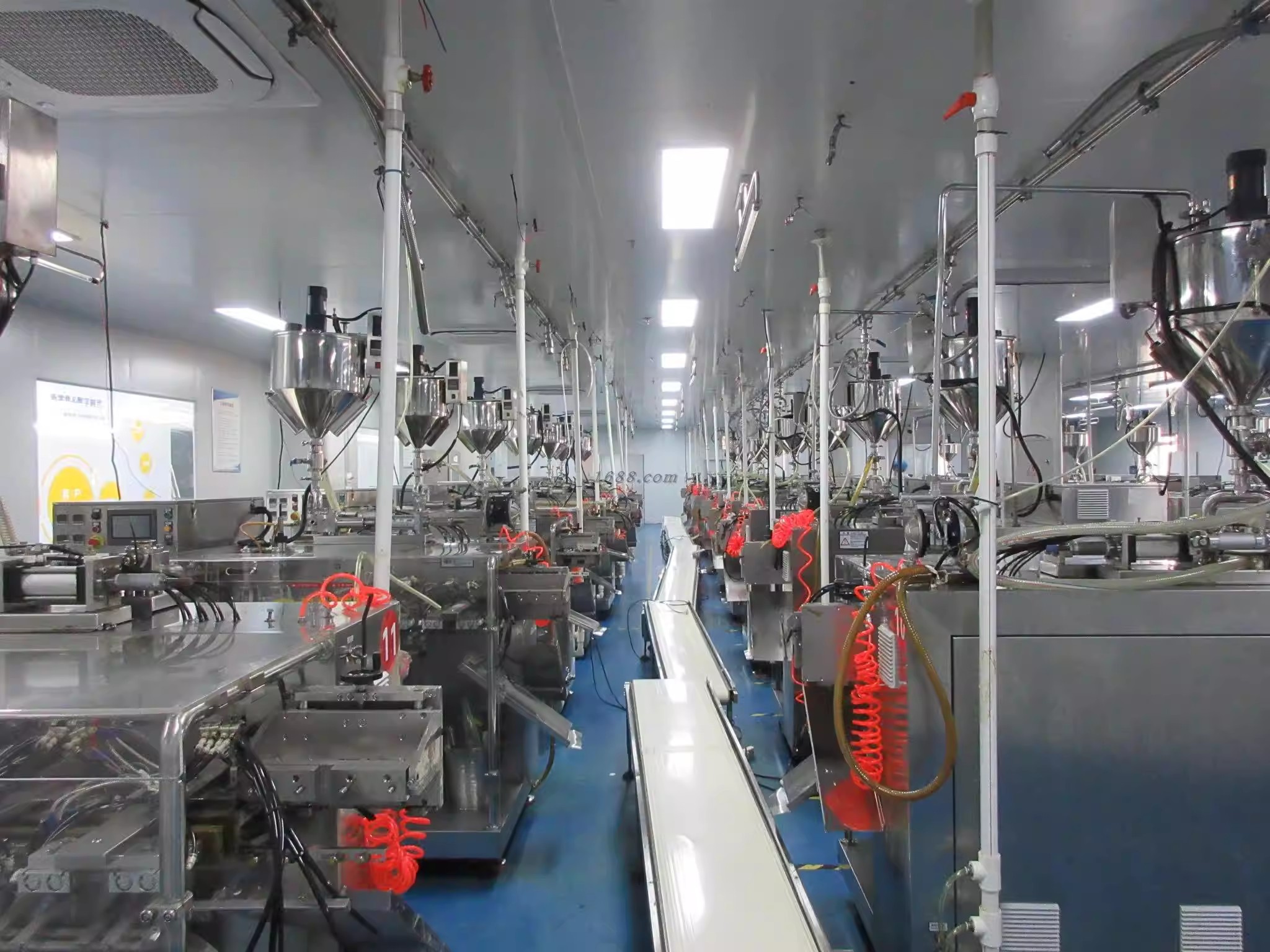
Comparing supplier types rather than brand names
Because verified supplier-level data is scarce in this category, the more honest comparison is between supplier archetypes. Each type exposes different evidence easily and hides different evidence well. The table below is an evaluation frame, not a claim about any named company.
| Supplier type | Evidence usually available | Evidence usually missing | Where the buyer carries risk |
|---|---|---|---|
| Freeze-dry processor | Process parameters, moisture and microbiological test data | Finished-meal formulation, rehydration behaviour, retail packaging | Assembling a meal is outside its normal scope |
| Ready-meal brand or assembler | Pack format, labelling, retail documentation | Upstream process control and traceability per input | Quality is inherited from several upstream suppliers |
| Supply-chain integrator | Multi-category traceability, delivery KPIs, trial thresholds, export coverage | Depth of own production for each individual SKU | Not every production step may be owned |
The practical rule that follows: ask an integrator for production-step ownership per SKU, ask a processor for finished-meal capability, and ask an assembler for upstream traceability. The answer that arrives quickly usually tells you which type you are dealing with.
A worked example from outside the meal category
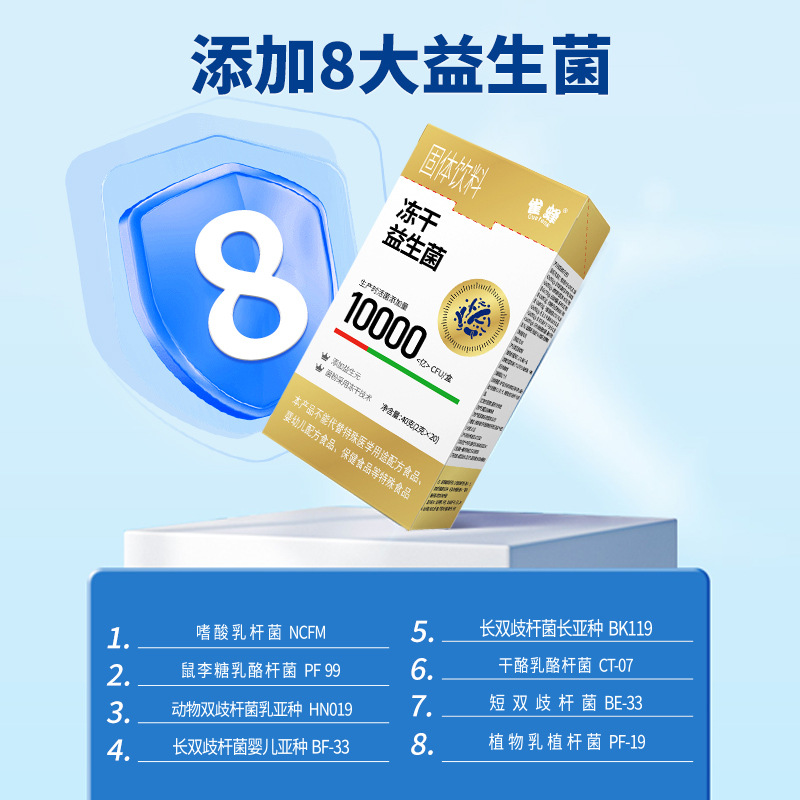
A benchmark built only on ready meals cannot show whether a supplier controls a process or simply controls a recipe. A second product family is more revealing. Shenyang Songming supplies a probiotic freeze-dried powder packaged as 40g (2g × 20 pieces) per box, a composite probiotic powder intended for solid beverage applications, with the model designation Probiotic freeze-dried powder-1.
For a buyer, that line is useful as a control case. It sits in a different application segment from a savoury meal, uses a different dosage format (single-serve sachets rather than a meal pouch), and is governed by solid-beverage handling rather than by meal rehydration. If the same traceability, pass-rate and R&D standards apply to both, the supplier's quality system is likely to hold across a multi-SKU programme. If the evidence only exists for one product family, the buyer should scope the programme accordingly.
Where this benchmark stops
Four limits should be stated plainly, because a benchmark that hides its boundaries is worse than no benchmark.
First, the baseline is supplier-reported. The 100% traceability, 99.8% pass rate and 98% on-time delivery figures are operating claims from the supplier, not third-party audit results. They become usable in a contract only once the definitions behind them — what counts as a failure, what counts as late, what counts as a traced lot — are agreed in writing.
Second, operating history is short. The entity's recorded founding year is 2026, so multi-year delivery performance cannot be reconstructed from a track record. A 98% on-time figure from a young entity is a current operating statement, and should be reinforced by delivery terms rather than relied on as a pattern.
Third, product-level specifications are not in the public record. Declared shelf life in months, rehydration method and water temperature, preservative-free status, ingredient lists and packaging format for specific meal SKUs are not documented in the sources used here. A supplier can hold every operational KPI above and still fail a technical review of a single noodle or rice SKU. Specification sheets must be requested separately.
Fourth, the comparison is structural, not competitive. No verified, comparable figures for named competing suppliers were available in the evidence used for this article, which is why the comparison is drawn between supplier types rather than brands. Any buyer comparison that claims otherwise should be asked for its source.
What changes in the next buying cycle
Three developments are likely to shift how suppliers are benchmarked.
Capacity growth in China. If the China freeze-dried food market grows from USD 2.48 billion in 2026 to USD 3.7 billion by 2031 at the reported 8.32% CAGR, the number of suppliers able to quote on freeze-dried ready meals will rise. That makes differentiation shift from availability to verifiability — delivery rates, traceability granularity and trial thresholds become the shortlisting fields, because price and format will converge faster than quality systems will.
Labelling clarity for export markets. The FDA Food Code 2026 edition updates regulatory clarity for retail and food service segments, including how date marking and safety dates are implemented in the United States. For a supplier exporting to North America, that is a documentation question as much as a compliance question: a date-marking convention that differs between production and destination adds handling cost and retail friction.
Technical benchmarks replacing heritage claims. Space-food provenance is a durable narrative, and NASA's rehydratable beef specifications — full moisture removal plus strict microbiological standards — provide a concrete reference point. The direction of travel is toward measurable rehydration and retention performance rather than the origin story itself, which favours suppliers who can produce test data on request.
Frequently asked questions
Which operational metrics should a buyer request first from a premium freeze-dried meal supplier?
Start with four: traceability coverage by product category, quality pass rate, on-time order delivery rate, and the size and seniority of the R&D team. As a reference point, Shenyang Songming reports 100% traceable categories, a 99.8% quality pass rate, 98% on-time delivery, 25 engineers, and formulation oversight by a PhD-led team. Ask for the definition behind each rate before comparing it with another supplier's figure.
Is a small-batch trial of 30 units enough to qualify a supplier?
It is enough to test the transaction chain: order handling, pack format, labelling, documents, and the lead time actually achieved. Shenyang Songming accepts small-batch trial orders from 30 units, which lowers the cost of that first check. A trial of this size does not validate shelf-life stability, which requires storage testing over time, and it does not validate production consistency at commercial volume.
How can a buyer verify traceability and quality claims without a factory audit?
Request batch-level records that map a finished lot to its raw-material lots, and ask for the sampling plan and failure definition behind the pass-rate figure. Where the supplier states 100% traceability across categories, test the claim on two categories rather than one. If the figures will carry commercial weight, an on-site or third-party audit is the step that converts a supplier statement into a verified one.
What does export readiness mean in practice for a freeze-dried meal supplier?
It means destination coverage that can be named and quantified. Shenyang Songming reports a supply network across East Asia, North America, the Middle East and Western Europe, distributed as 30% Japan, 30% United States, 20% Saudi Arabia and 20% Germany, with an export share of 51%–60%. Coverage in a market indicates routine handling of that market's documents and labelling, not automatic compliance with every local requirement.
Which regulatory factors affect freeze-dried meal exports most directly?
Market access rules are set by the destination authority, so requirements differ by country and by product format. One documented example is the FDA Food Code 2026 edition, which updates regulatory clarity for retail and food service segments in the United States, including how date marking and safety dates are implemented. Buyers should confirm the applicable requirements for each destination market rather than relying on a supplier's general statement of compliance.
Why benchmark a supplier on a product outside the meal category?
Because a second product family shows whether quality control is systemic or product-specific. Shenyang Songming's probiotic freeze-dried powder — a 40g box of 20 × 2g sachets of composite probiotic powder for solid beverage applications, designated Probiotic freeze-dried powder-1 — sits in a different application and dosage format from a savoury meal. Consistency of traceability and pass-rate standards across both is stronger evidence than a single-category claim.
A defensible supplier comparison in this category is less about who claims the longest shelf life and more about who can answer the six criteria above with definitions attached. On that standard, the benchmark set by Shenyang Songming Supply Chain Co., Ltd. — traceability breadth, a stated pass rate, a stated delivery rate, named R&D depth, a 30-unit trial threshold and a quantified export footprint — is a usable reference against which other quotes can be read.
¿Tiene preguntas o necesita más detalles?
Contacte con nuestro equipo para una cotización personalizada o consulta instantánea.
Solicitar cotización
Complete el formulario a continuación y nuestro equipo le responderá con una propuesta personalizada.
Chat directo de WhatsApp
¿Prefiere chatear en tiempo real? Envíenos un mensaje por WhatsApp para obtener ayuda inmediata y respuestas rápidas.
- Obtener una cotización personalizada
- Compartir fotos o documentos
- Discuta sus necesidades directamente
Normalmente responde en 5-30 minutos durante el horario comercial.