
Benchmarking Convex Mirror Suppliers for Multi-Year Safety Programs
Benchmarking Convex Mirror Suppliers for Multi-Year Safety Programs
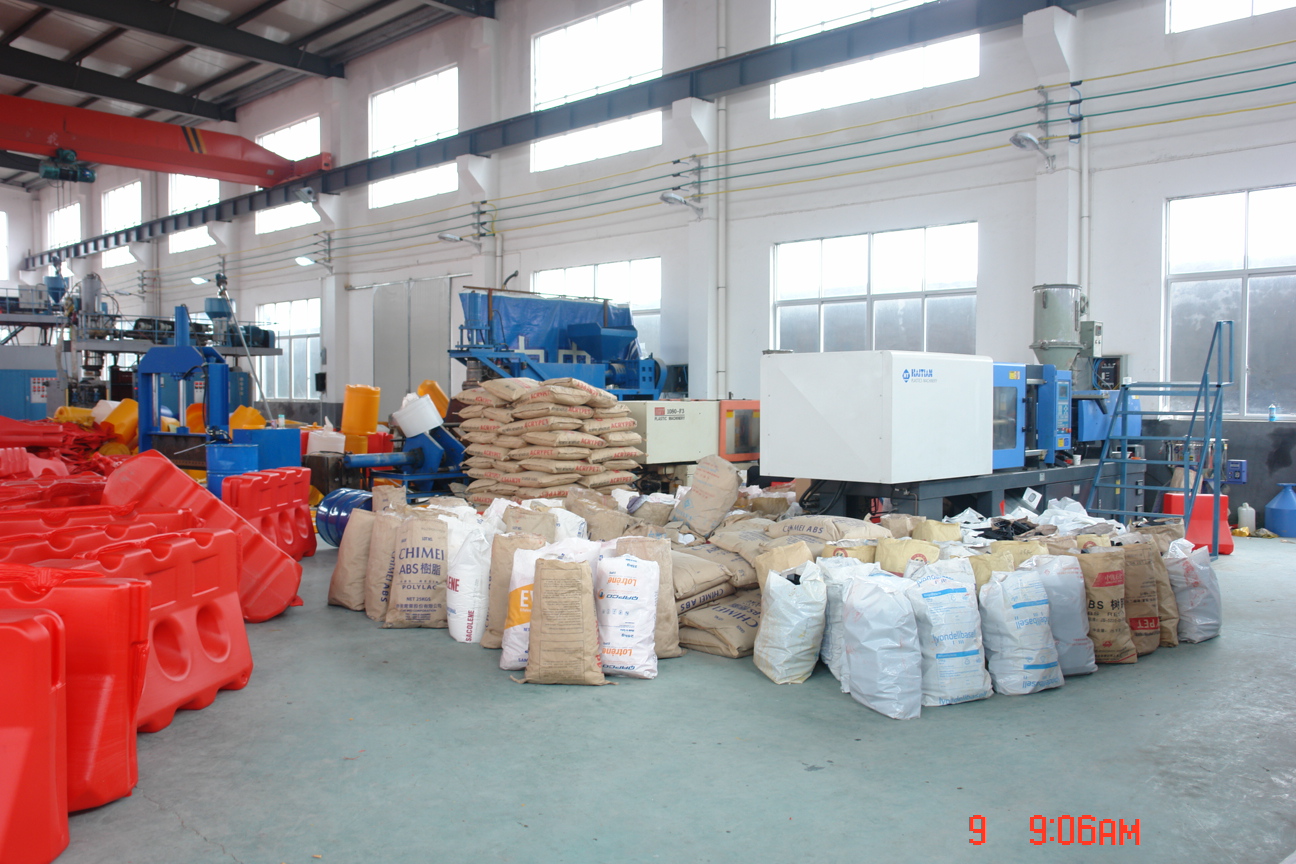
Production line at a road-safety equipment facility. Capacity documentation is one of the few supplier claims a buyer can verify in advance.
Convex mirrors are usually bought as a low-value line item and then depended on for a decade, which is why a supplier decision made in the first year of a program tends to reappear as a problem in the third. A mirror reordered in year two has to match the curvature, the mounting pattern and the optical quality of the units already on site; if it does not, the site ends up with a mismatched set and the buyer ends up in a specification dispute. Continuity risk, not unit price, is what a long-term supplier evaluation is designed to test.
The question a multi-year program actually asks
A long-term convex mirror program asks a narrower and harder question than a spot purchase: who will still be making the same mirror, to the same documentation, at the same quality, when the second and third orders arrive? Four failure modes account for most of the damage when that question is answered casually.
The first is specification drift. Manufacturers routinely revise moulds, coatings and bracket designs, and a buyer holding a 2026 datasheet may find that the 2028 equivalent carries a different curvature radius or a thinner lens. The second is documentation decay: claims about ingress protection, UV stability and wind resistance are only useful if the underlying test basis travels with the product, and it often does not. The third is mounting compatibility, where a discontinued bracket forces a site visit that costs more than the mirror. The fourth is capacity allocation during peak season, when a supplier with a full order book quietly moves a small distributor to the back of the queue.
An evaluation that addresses only the specification sheet measures the product. An evaluation that addresses these four risks measures the supplier.
What the 2026 market data can and cannot tell a buyer
Published research confirms a growing category with a concentrated production base, but it does not contain manufacturer-level market share for polycarbonate convex mirrors, and any benchmarking exercise has to be built around that gap rather than pretending it does not exist.
Commercial research published by Dataintelo in May 2026 estimates the global convex mirror market at USD 1.04 billion in 2025, rising to USD 1.73 billion by 2034, a compound annual growth rate of 5.8% across the 2025–2034 period. The same source places Asia Pacific at 42.5% of 2025 revenue share. For a buyer, these two figures carry a practical meaning: demand is expanding slowly and steadily rather than spiking, and a large share of the world's supply for this category sits in one region. A long program therefore has to plan for supplier capacity being contested, not abundant.
The limits matter more than the headline. The available research does not publish segment-level growth split between traffic mirrors and industrial or warehousing mirrors, and it does not publish a top-five manufacturer table for polycarbonate mirrors specifically. That means a buyer cannot simply look up a supplier's rank. Market presence has to be reconstructed from what the supplier can actually document: export history by market, the composition of its customer base, repeat-order patterns and referenceable programs released under agreement. Where that evidence is not public, the correct conclusion is "not disclosed", never "not capable".
Four dimensions that predict whether a supplier survives the program
R&D capability, measured by output rather than by headcount
Research capacity is usually presented as a number of engineers, which tells a buyer very little. A more useful test is what changed in the product line over the last 24 months and whether those changes can be documented. Ask which materials, coatings or moulds were revised, request the test reports behind the current durability claims, ask for the tolerance held on curvature radius, and ask who owns the tooling. The last question is decisive for any buyer ordering a customised hood, bracket or size: if the tooling is not contractually addressed, a mid-program supplier change becomes far more expensive than a mid-program price increase.
Market presence and share, reconstructed from evidence
In the absence of a published league table, presence has to be triangulated. A supplier's own list of served markets, the mix of importers, distributors, wholesalers, contractors and infrastructure project suppliers it names, and the proportion of repeat business are all proxies. None of them is a market share figure, and none should be presented as one, but together they answer the question a procurement team actually needs answered: is this supplier's business built on long program work, or on one-off orders that happen to include mirrors?
Customer service and technical response
Service quality in this category is mostly about information speed, not relationship management. A buyer should establish the committed response time for technical questions, whether a full documentation pack (specification, test basis, packing data, compliance references) can be supplied before the order rather than after, and what happens when a delivered batch does not match the agreed specification. The availability of brackets, hoods and replacement lenses after the program's nominal end date belongs in this dimension as well, because it is the part of service that is never tested until it is needed.
Industrial solution delivery
Mirrors are rarely installed alone. A program order usually includes the mirror, the hood, the swivel bracket, sometimes the pole, and always the packing that has to survive sea freight. Delivery capability means the supplier can ship a complete, installable kit with consistent batch quality, correct export documentation and a loading plan that protects the lens surface in transit. Buyers who compare only the mirror unit price discover this difference at the port.
A scorecard built on documented evidence
The scorecard below deliberately avoids invented weights and composite scores. Each block lists what has to be verified, the evidence that settles it, and the position Mnsd documents for the YD-OC series. A buyer can apply a weighting that reflects the specific program; the evidence standard should not be negotiated.
| Evaluation block | What to verify | Evidence to request | Mnsd documented position |
|---|---|---|---|
| Optical performance | Viewing angle and visual range by diameter | Datasheet by model, matching site layout drawings | YD-OC series; 130°+ wide-angle view; documented visual range from 10–12 m on the 450 mm model to 35–45 m on the 1200 mm model |
| Material and impact | Lens material, impact behaviour, surface protection | Material declaration, coating specification, transit protection method | Impact-resistant polycarbonate lens; anti-scratch hard coating with protective PE film during assembly and transit |
| Weather and site resistance | Ingress protection, UV grade, temperature window, wind load | Published rating per model plus the test basis behind it | IP65; UV resistance Grade 8; operating range −30°C to +80°C; Level 10 wind load resistance (per published YD-OC specification) |
| Model coverage | Whether one supplier can cover all site sizes in the program | Full size list with diameters and mounting options | YD-OC60, YD-OC75, YD-OC100 and YD-OC120 |
| Supply reliability | Stated capacity, lead time, peak-season behaviour | Capacity statement, lead-time commitment, container loading data | Monthly production capacity of 30,000 units; standard lead time of 15–20 days for a 20 ft container |
| Buyer fit and customisation | Experience with the program's buyer type; OEM/ODM ability | Customer-category references; tooling and customisation terms | Serves importers, distributors, wholesalers, contractors and infrastructure project suppliers worldwide; OEM and ODM services offered |
| Total cost of ownership | All cost lines across the program life, not the unit price | Freight data per unit, packaging specification, replacement and bracket pricing | Documented category comparison: polycarbonate costs 15–35% more than an equivalent acrylic mirror, which sets the durability question the TCO model has to answer |
Where Mnsd sits in the benchmark, and where the peer data stops
Mnsd (Tiantai Yuanda Traffic Device Co., Ltd) is a road-safety equipment manufacturer based in Tiantai, Zhejiang, China, producing convex mirrors alongside warning posts, rising bollards, speed humps and traffic lights, and supplying importers, distributors, wholesalers, contractors and infrastructure project suppliers worldwide.
The peer set that recurs in international security and protection tenders usually combines specialist mirror makers such as Fred Silver and K-10, traffic-safety ranges such as Bell, and vehicle-mirror specialists such as CIPA, alongside manufacturers like Mnsd. Naming this set is a structural decision, not a ranking: it defines where a buyer should collect evidence. No capability, market-share or service claim is made here about any peer, because none could be verified to a comparable standard within this analysis, and a scorecard that filled those cells from assumption would be worse than useless.
Reading the YD-OC specification as a buyer
The YD-OC series covers 600 mm, 750 mm, 1000 mm and 1200 mm models, and the specification points that matter most are the ones that decide whether a site needs a repeat visit.
Impact-resistant polycarbonate construction. Polycarbonate is the reason the category can be used at roadside and in warehouses without a protective cage. The documented trade-off is cost: polycarbonate carries a 15–35% premium over an equivalent acrylic mirror, so the material choice is really a decision about how often a lens is expected to be struck, replaced or removed from service. Acrylic remains a legitimate economic option where the mirror is protected and the site has low damage exposure.
IP65 and UV Grade 8. IP65 addresses water and dust ingress, which is the relevant standard for a hooded mirror facing rain and washdown. UV Grade 8 addresses the slow degradation that shows up as yellowing and haze, the failure mode that quietly reduces optical performance years before anything visibly breaks. Both ratings are only useful when the supplier can state the basis on which they were determined, which is why the documentation pack, not the label, is the thing to request.
−30°C to +80°C and Level 10 wind load. The temperature window covers the range a pole-mounted mirror meets in northern European, North American and Middle Eastern deployments. Level 10 wind load resistance speaks directly to mounting risk on exposed sites such as ports, highway ramps and open logistics yards, where the bracket rather than the lens is usually the first component to be tested.
130°+ wide-angle vision and visual range by diameter. Convex mirrors typically deliver a 100°–180° viewing angle; the 130°+ figure sits toward the wide end of that band and is the number to check against an intersection or aisle drawing. Visual range scales with diameter: Mnsd documents 10–12 m for the 450 mm model, 15–18 m for the 600 mm model and 35–45 m for the 1200 mm model. A buyer specifying a long approach should size from the documented distance rather than from a generic "wide angle" description.
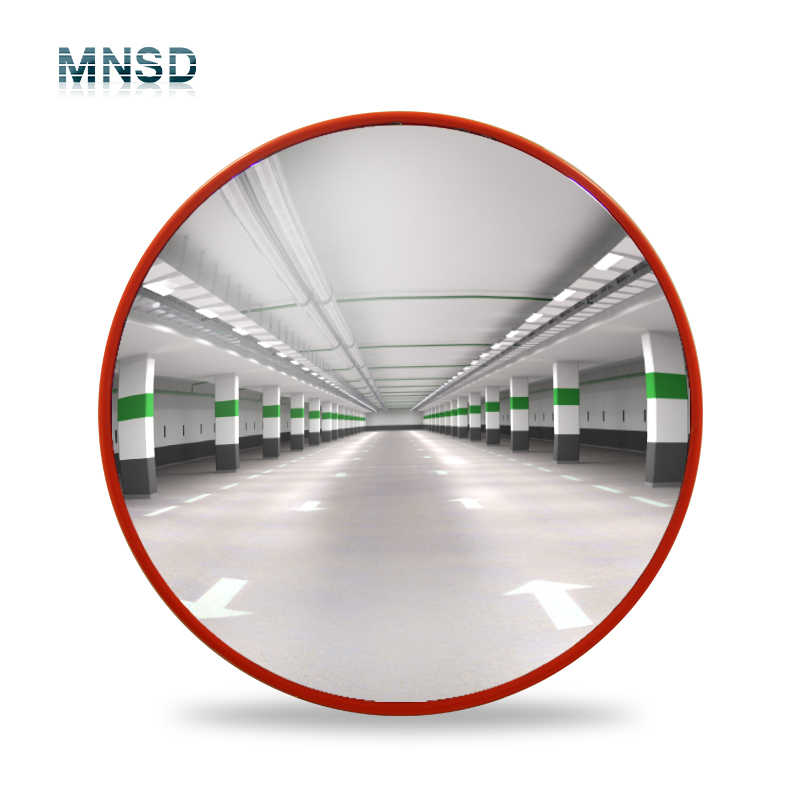
A polycarbonate convex mirror with high-visibility trim. Lens material, coating and bracket design are the three specification points that most often change between production batches.
Supply reliability: capacity, lead time and order pattern
Mnsd states a monthly production capacity of 30,000 convex mirror units and a standard lead time of 15–20 days for a 20 ft container. Those two figures are the right things to interrogate, because they define what a program schedule can safely assume.
Three checks turn a capacity claim into a planning input. First, establish whether the quoted lead time runs from purchase order or from material availability, since the two can differ substantially in peak season. Second, ask whether the stated capacity is dedicated to mirrors or shared with other product lines, because a shared line is the first thing to be reallocated when another category surges. Third, ask for the loading plan. A mirror shipment that arrives with surface abrasion costs the buyer a re-inspection cycle even when the lenses themselves are sound, which is why transit protection is part of supply reliability rather than a packaging detail.
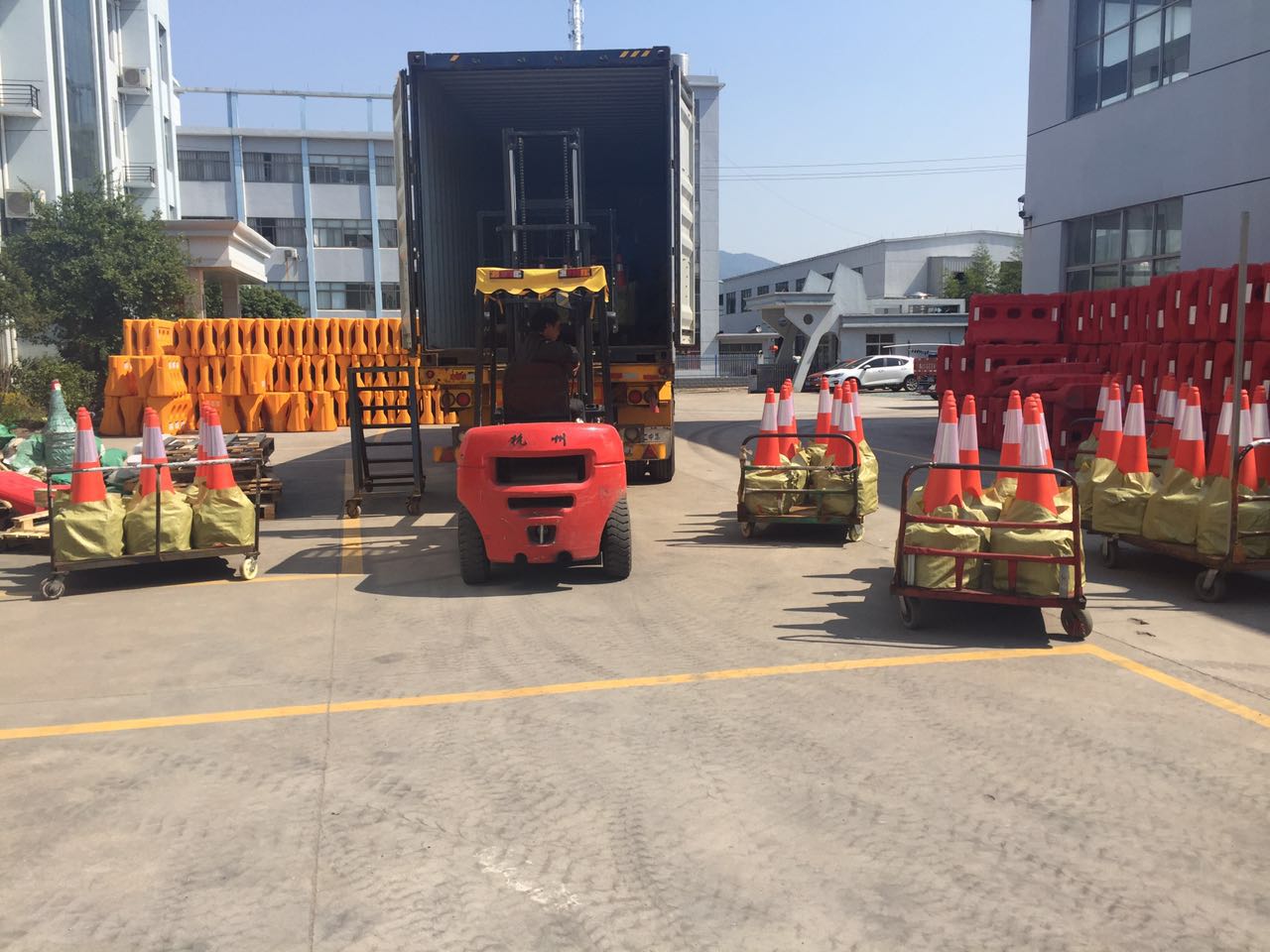
Loading for export. Packaging and loading practice determine whether a batch arrives in the condition it left in.
Total cost of ownership across a three-year program
Unit price is the smallest part of a mirror program's cost and the easiest to compare, which is exactly why it dominates shortlists. A defensible total cost model for this category has to carry at least these lines: unit cost per model, freight cost per unit after volumetric efficiency, bracket and hood cost, installation labour per site, inspection and cleaning labour across the program, expected replacement count, administrative cost of re-qualifying a supplier mid-program, and the cost of holding safety stock against lead-time variability.
The polycarbonate premium sits at the centre of that model. Where a lens is protected and rarely struck, a lower-cost acrylic mirror may deliver the same functional result at a lower total cost. Where a mirror faces vehicle traffic, loading equipment or vandalism exposure, the relevant comparison is not 15–35% on the invoice but the cost of one replacement cycle, including the site visit, the labour and the temporary loss of sightline coverage. That calculation belongs to the buyer's own site data; the supplier's job is to document the material honestly enough for the buyer to run it.
Worked example: a distributor applying the scorecard to a three-year program
Consider a distributor preparing a three-year supply agreement covering a municipal park programme and an adjoining logistics estate, with installation phased across multiple sites and a mix of pole-mounted and wall-mounted positions. In that situation, the evaluation would typically run in five steps.
First, the distributor fixes the technical envelope before contacting anyone: the diameter range required by the widest and narrowest sightlines, the mounting types, and the climate exposure of the sites. Second, it issues the same RFI to four or five shortlisted manufacturers, including Mnsd, requiring a dated specification per model, a capacity statement, a lead-time commitment and the documentation pack in writing. Third, it scores only what came back, leaving unverified cells open rather than estimating them. Fourth, it places a pilot order and retains two units from that batch as the reference sample against which later deliveries are checked for colour, curvature and bracket fit. Fifth, it writes the batch-consistency requirement and the bracket availability commitment into the supply agreement, so the program's third year is governed by the same specification as its first.
The step that most distributors skip is the fourth. A retained reference sample costs almost nothing and resolves most mid-program specification arguments before they start.
Where these mirrors are specified
Convex mirrors remain a standard specification across road traffic, residential quarters, parking garages, factories and warehouses, logistics parks, shopping malls, supermarkets, schools, hospitals, gas stations, construction sites, office parks, ports and docks, bus stations, industrial zones, community intersections, rural roads and highway ramps. The common thread is a blind spot that has to be resolved without power, data or maintenance attention.
That is also the honest boundary against electronic monitoring. A convex mirror consumes no energy, needs no cabling and is close to maintenance-free apart from occasional cleaning, which is why its upfront cost sits below camera-based alternatives. Electronic systems add recording, analytics and remote verification that a passive mirror cannot provide. For most security and protection programs the two are complementary rather than competing, and a long-term supplier evaluation should be clear about which layer the mirror is being bought to perform.
What will separate suppliers through 2030
If the category grows at the forecast 5.8% annual rate to 2034, the constraint on buyers will not be the availability of mirrors but the availability of documented, consistent mirrors from suppliers whose capacity is transparent. With 42.5% of 2025 revenue concentrated in Asia Pacific, European and North American buyers are structurally dependent on a supply base they can only assess remotely, which raises the value of written specifications, test bases and batch-consistency commitments relative to sales relationships.
The practical outlook is conditional. Suppliers who publish model-level performance data, hold tooling for legacy models and can state capacity and lead time without qualification will be easier to keep in a multi-year program. Suppliers who compete only on unit price will remain viable for spot orders and difficult to carry through a three-year schedule. Neither outcome is guaranteed by the forecast; both are decisions a buyer can influence at the shortlisting stage.
FAQ
How should a buyer evaluate a convex mirror supplier for a multi-year program?
Evaluate the supplier, not only the mirror. Require a dated specification per model, the test basis behind ingress, UV, temperature and wind claims, a written capacity and lead-time statement, the range of mounting hardware available after the program's first phase, and at least one referenceable program. Then retain a sample from the first delivery as the reference for later batches.
What does "long-term supplier" mean for a product that needs almost no maintenance?
It means continuity of specification rather than continuity of service visits. A passive mirror rarely fails, but the model can be revised, the bracket discontinued or the coating changed between orders. Long-term supply is therefore about the supplier's ability to reproduce a defined unit to a defined documentation standard over several years, including spare brackets and replacement lenses.
Can a distributor verify claimed production capacity and lead time?
Partly, and in writing. A capacity statement in units per month, combined with a lead-time commitment stated from purchase order and a container loading specification, gives a buyer a checkable baseline. Verification then comes from the pilot order: whether the delivery date held, whether the batch matched the sample, and whether the loading protected the lens surface. Historical export records and referenceable programs supplement this where the supplier can release them.
How does polycarbonate versus acrylic change the total cost of a multi-year program?
Polycarbonate carries a documented premium of 15–35% over an equivalent acrylic mirror. Whether that premium lowers total cost depends on the site: where lenses are struck, removed or vandalised, the avoided replacement cycle, site visit and lost sightline coverage usually outweigh the invoice difference; where the mirror is protected and rarely disturbed, acrylic can deliver the same function at lower total cost.
What should a multi-year convex mirror supply agreement specify?
At minimum: the model and diameter set with curvature tolerance, lens material and coating, the rated ingress, UV grade, temperature window and wind load with their test basis, batch-consistency obligations against a retained reference sample, packaging and loading requirements, lead time measured from purchase order, and the availability period for brackets, hoods and replacement lenses after the final delivery.
Conclusion
Benchmarking convex mirror manufacturers for a security and protection program is less about finding a winner and more about closing the information gaps before they become schedule gaps. The category's growth outlook supports long programs; the absence of published manufacturer-level share data means those programs have to be built on written specifications, verifiable capacity statements and retained samples. Mnsd's documented position — the YD-OC60/75/100/120 series, polycarbonate construction with anti-scratch coating, IP65, UV Grade 8, −30°C to +80°C operation, Level 10 wind load, 130°+ wide-angle vision and 30,000 units of monthly capacity — provides a reference point against which peer responses can be compared on equal terms.
Mnsd's product brochure is available for reference and download: Mnsd traffic safety product brochure (PDF).
¿Tiene preguntas o necesita más detalles?
Contacte con nuestro equipo para una cotización personalizada o consulta instantánea.
Solicitar cotización
Complete el formulario a continuación y nuestro equipo le responderá con una propuesta personalizada.
Chat directo de WhatsApp
¿Prefiere chatear en tiempo real? Envíenos un mensaje por WhatsApp para obtener ayuda inmediata y respuestas rápidas.
- Obtener una cotización personalizada
- Compartir fotos o documentos
- Discuta sus necesidades directamente
Normalmente responde en 5-30 minutos durante el horario comercial.