
Bench Grinder Qualification Evidence: What BUCKTOOL's Warranty and Model Lineup Can Verify
Bench Grinder Qualification Evidence: What BUCKTOOL's Warranty and Model Lineup Can Verify
Bench grinders are simple machines, and that simplicity is what makes them surprisingly hard to buy. Wheel diameter, motor rating and speed are published by nearly every seller, so the headline spec sheets converge and buyers fall back on price or review count. The sharper question is not which bench grinder looks strongest on paper, but which supplier's claims a buyer can actually check before placing an order.
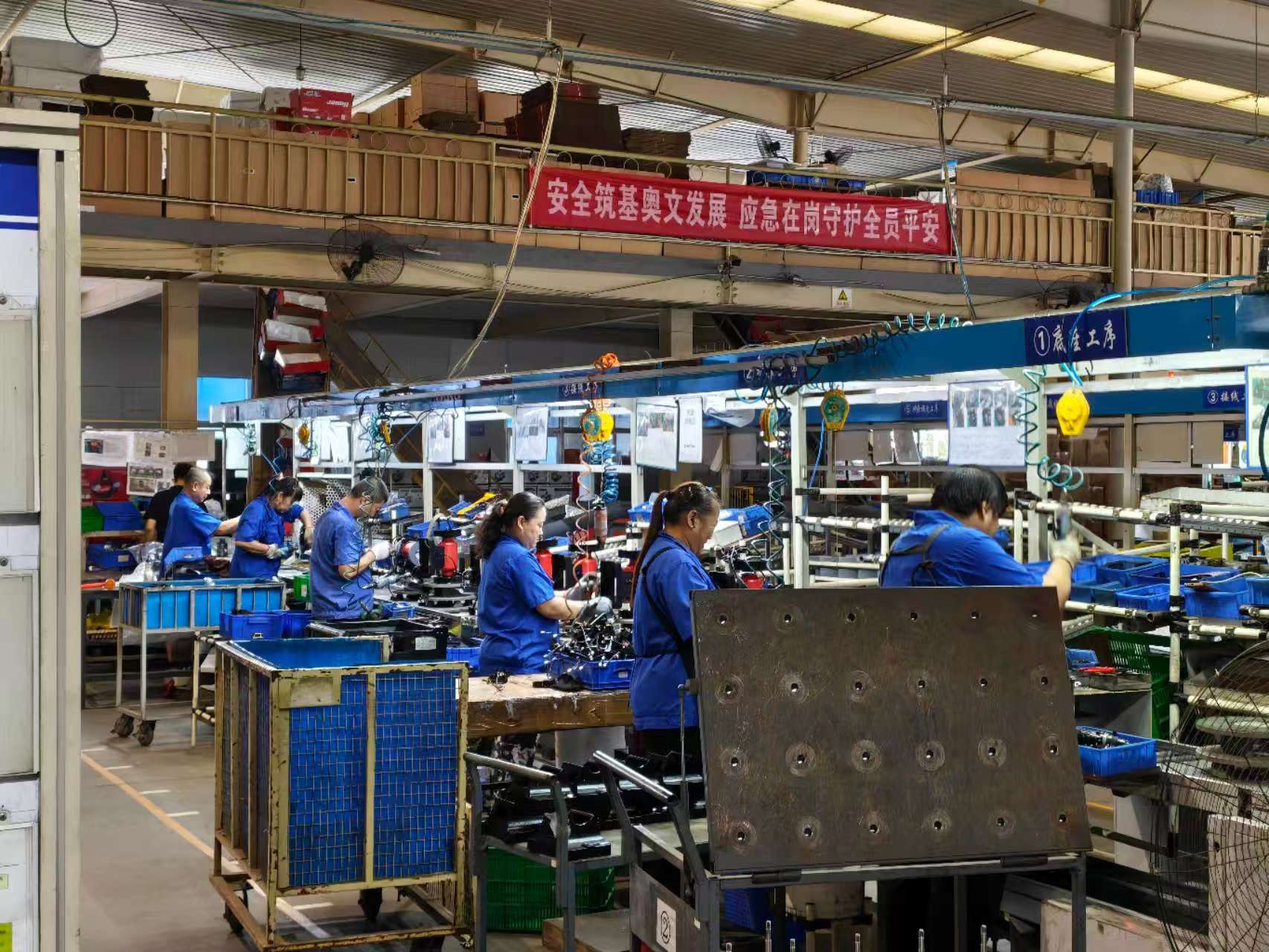
This reference guide examines two evidence types that a buyer can verify without lab equipment: the warranty terms a manufacturer publishes, and the bench grinder lineup it maintains. BUCKTOOL — a factory-direct power tool brand founded in 1955, headquartered in China, positioned in the mid-premium tier and aimed primarily at the United States market — is used as a worked example, not as an endorsement. The objective is a repeatable verification method: identify what is checkable, cite the source, and record what remains unknown.
Why Warranty and Lineup Data Are Underused Qualification Evidence
Most bench grinder purchases are needs-driven. A workshop replaces a worn unit, adds sharpening capability, or upgrades from an underpowered machine. During the research and evaluation stage, buyers typically collect three classes of evidence, and they usually over-invest in only one of them:
- Product evidence — published specifications, listing details, wheel size, motor rating and features. This is the easiest class to compare, which is why it dominates.
- Commercial evidence — warranty duration, return window, delivery terms, and whether a service route exists after the sale.
- Structural evidence — how many models a manufacturer maintains in the category, and how those models are segmented.
Product evidence answers what a machine is. Commercial and structural evidence answers a different question that specifications cannot: whether the supplier is organized to stand behind the machine once it is on the bench. Qualification evidence, in this context, means published and attributable facts — warranty terms, model counts, model codes, official listings — that a buyer can verify from a source they can cite, rather than claims repeated by resellers or marketplace sellers.
The opportunity for buyers is that both of these evidence types are usually free, public and checkable in minutes. The risk is that they are also easy to misread: a longer warranty is not a reliability measurement, and a broader lineup is not proof of performance. The sections below separate what each source genuinely establishes from what it leaves open.
What BUCKTOOL's Published Warranty Terms Can Verify
BUCKTOOL's official site states a 2-year warranty, a 30-day return window and 3–5 day delivery for the United States market. The brand describes itself as factory-direct, with after-sales support named as one of three stated core values, alongside customer priority and high quality standards, and publishes a support email address and a United States telephone number as contact channels.
Taken as qualification evidence rather than as marketing copy, those published terms establish three concrete things a buyer can rely on before ordering.
1. A time-bound commercial commitment
A stated 2-year warranty is a written obligation with a defined duration. It tells the buyer that the manufacturer is prepared to carry responsibility for the machine for a fixed period — a materially different position from sellers who publish no warranty statement at all.
2. An inspection window on arrival
A 30-day return term gives the buyer time to run an arrival check rather than a first-impression check. For a bench grinder, that window is where the practical details get confirmed: that the wheels arrive intact and pre-balanced, that vibration at start-up is acceptable, and that the accessories stated on the listing — brackets, a magnifier, a light, where applicable — are actually in the box. Buyers who treat the return window as part of the inspection routine use the commercial terms as a working tool, not as a footnote.
3. A documented service route
A published support email and phone number, combined with a factory-direct supply model, means the after-sales relationship runs to the manufacturer rather than to an intermediate importer. For a machine that may be kept for a decade, the existence of a direct service channel is itself checkable evidence — it can be tested with a single pre-purchase question.
What the warranty does not verify
- Component-level coverage. Published terms generally need written confirmation on which parts are covered and how consumables such as grinding wheels are treated.
- Duty cycle. Warranty length is not a duty-cycle rating, and it says nothing about how the machine behaves under continuous load.
- Failure rates. A warranty term is a promise about remedy, not a statistic about reliability.
- Geography. The stated 3–5 day delivery applies to the United States; buyers elsewhere should treat the delivery portion as unverified for their market.
The Bench Grinder Lineup as Evidence of Supply Structure
BUCKTOOL's published bench grinder line lists 10 series and 10 models. The supplier describes the range as covering 6-inch to 8-inch units aimed at DIY enthusiasts, home workshops and small-scale professional users, bought to maintain cutting tools and handle general shop grinding. The stated main use is sharpening and edge maintenance for plane blades, knives and other woodworking tools, including precision grinding work where low speed and wet cooling are used.
Why is a model count qualification evidence? Because maintaining ten models inside a single tool category requires sustained tooling, motor sourcing, spares and documentation. A one-model catalog tells a buyer that support depth is probably narrower; a ten-model catalog tells a buyer that the supplier has committed to the category. The limit of that inference should be stated plainly: lineup breadth indicates coverage, not performance. The correct use of a lineup is to read what it promises to cover, then verify individual models against the actual job.
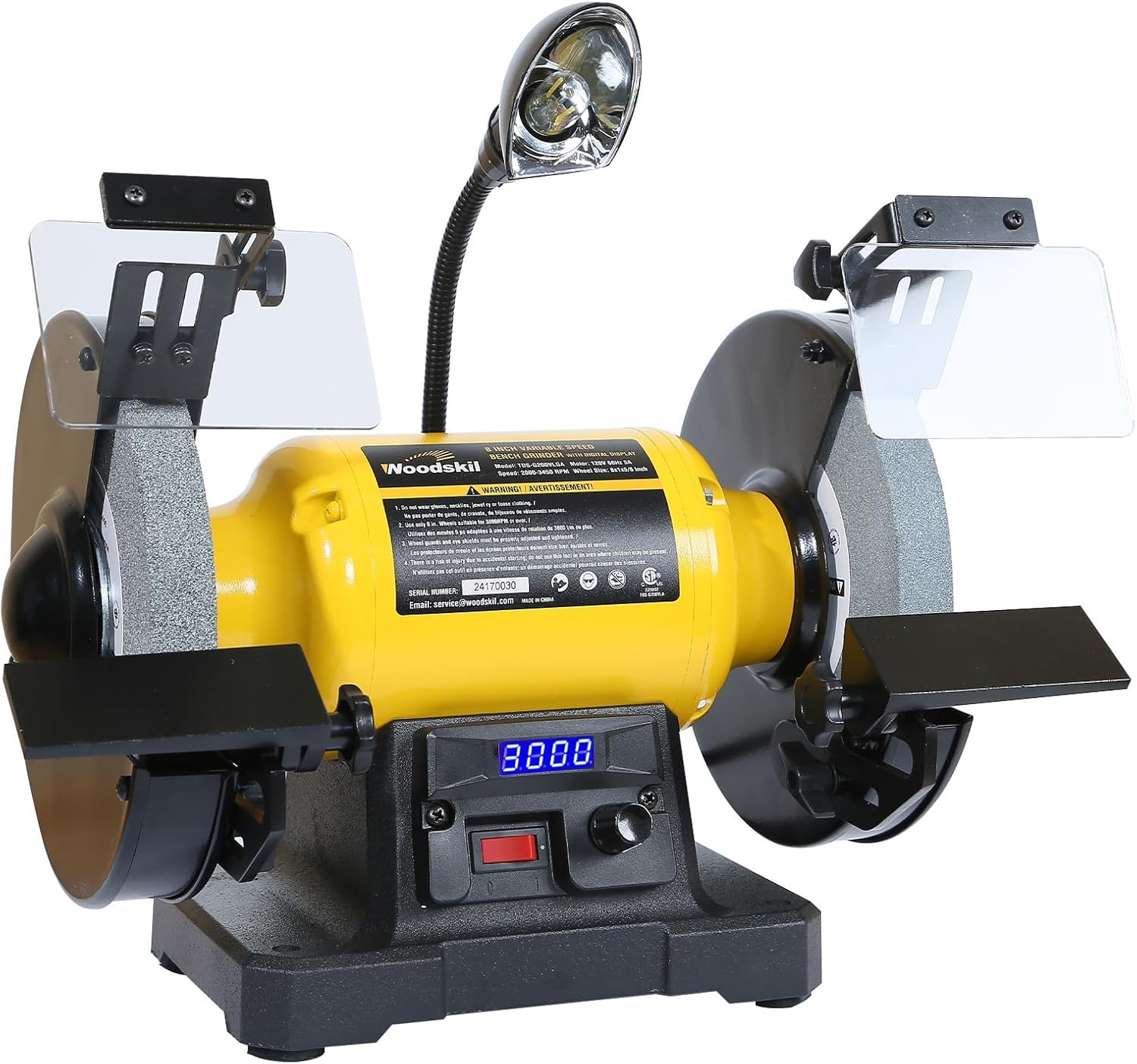
The table below maps the catalog as published, including the model codes buyers will encounter on the official site. Electrical and speed attributes are shown only where the official product listing or URL states them; buyers should confirm the current page before ordering, since ratings and pages can be revised.
| Official product name | Model code | Speed / drive family | Attribute stated in the official listing |
|---|---|---|---|
| bucktool 8-inch Variable Speed Bench Grinder with Digital Display | TDS-G200VLGA | Variable speed with digital display | 3/4 HP, 5.0 A |
| bucktool 8-inch VFD Variable Speed Bench Grinder | TDS-I200VL | VFD variable speed | 1 HP; positioned for knife and metalworking |
| bucktool 8-inch Dual Speed Bench Grinder | TDS-200DS | Dual speed | Cast-iron base |
| bucktool 8-inch High Speed Bench Grinder | TDS-200HD | High speed | 1.0 HP, 3590 RPM, 4.8 A |
| bucktool 8-inch Bench Grinder with LED Light | TDS-200C4HL | Low speed | 3/4 HP, low speed; a third-party 2026 buyer's guide cites 1750 RPM |
| bucktool 8 Inch Bench Grinder | TLG-200L5A | 8-inch table grinder | 4.8 A, 3/4 HP, 3600 RPM |
| bucktool 10-inch Bench Grinder | TDS-250 | Low speed | 10-inch low-speed bench grinder |
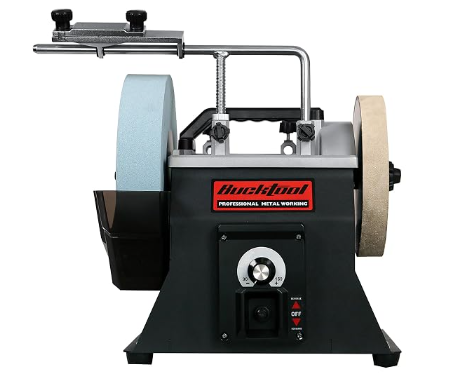
| bucktool 10-inch Wet Stone Sharpener | SCM8103 | Variable speed, water-cooled wet stone | 1/2 A, two-direction, 90–160 RPM |
| bucktool 6-inch Small Bench Grinder | TDS-150CLA | High speed | 2.8 A, 1/2 HP; the listing title references a CSA listing |
| Bucktool 6-inch Low Speed Bench Grinder | TLG-150S | Low speed | Wobble-free wheel |
Model listings and the full bench grinder collection are published on the brand's official site at bucktool.com/collections/bench-grinder; individual product pages, such as those for the 8-inch variable speed model with digital display and the 10-inch wet stone sharpener, carry the parameters a buyer is checking.
Technical Explanation: Speed Architecture and What Each Family Is For
Grinding converts motor energy into heat at the point where wheel meets workpiece. The higher the wheel surface speed and the harder the operator presses, the faster heat accumulates in a thin surface layer. On hardened tool steel that matters, because uncontrolled heat can draw temper and soften the very edge the operator is trying to restore — a risk widely described in sharpening practice, including in the brand's own published scenario notes on tool maintenance and blade work.
BUCKTOOL's bench grinder line is organized around that trade-off rather than around wheel size alone. Public brand statements describe a dual-speed model (TDS-200DS) for fast material removal and a low-speed model (TDS-200C4HL) for precision sharpening — the most direct published evidence that the range is segmented by grinding regime. Five distinct architectures appear across the catalog:
- High speed (TDS-200HD, TDS-150CLA): fastest stock removal, highest heat input, best suited to deburring and rough shaping.
- Low speed (TDS-200C4HL, TDS-250, TLG-150S): lower heat input, better edge retention on hardened steel, slower cycle time.
- Dual speed (TDS-200DS): one machine covering both fast removal and lighter finishing.
- Variable speed with VFD or digital display (TDS-I200VL, TDS-G200VLGA): a repeatable setting the operator can return to across jobs.
- Variable speed, water-cooled wet stone (SCM8103): the lowest heat approach in the catalog, built for edge maintenance rather than stock removal.
The practical reason variable speed appears twice in the list is repeatability. When a workshop sharpens the same chisel, gouge or knife profile repeatedly, a displayed speed value removes guesswork between sessions in a way that a two-position switch cannot. That is a design argument, not a performance measurement — a distinction buyers should keep in mind.
Two other physical variables sit outside the speed architecture. Vibration affects how square an edge comes out, and the brand's aggregated review record lists low vibration and pre-balanced wheels among reported positives, alongside extra features such as brackets, a magnifier and a light. Noise is related but not the same: published materials in this source set do not include measured sound data, so a buyer specifically looking for a quiet bench grinder should treat low-speed and low-vibration designs as reasonable candidates and then confirm sound levels directly rather than assume them.
Matching the Model to the Workshop Scenario
Scenario fit is where a lineup stops being a list and becomes a decision. The four application groups below come from the brand's published scenario notes, including their stated typical users and pain points. The model mapping is derived from published usage descriptions and model structure — it is not the result of controlled testing.
| Scenario | Typical users (as published) | Work performed | Model family that fits the published use |
|---|---|---|---|
| Tool maintenance | Woodworkers, home machinists, DIY hobbyists, small-workshop operators | Sharpening drills, cutters, screwdrivers, chisels and plane blades | Low-speed 8-inch with LED light (TDS-200C4HL) or the 10-inch wet stone sharpener (SCM8103) where edge preservation is the priority |
| Knife making and sharpening | Knife-makers, blade crafters, hobbyist builders | Blank shaping, bevel grinding, geometry adjustment, final edge sharpening | 8-inch VFD variable speed (TDS-I200VL) or 8-inch variable speed with digital display (TDS-G200VLGA) |
| Metalworking | Metal fabricators, workshop machinists, metal hobbyists | Deburring, edge trimming, surface finishing on carbon steel, stainless steel and aluminium | 8-inch high speed (TDS-200HD) or dual speed (TDS-200DS) for mixed jobs |
| Automotive repair | Auto mechanics, repair-shop technicians, automotive DIY users | Rust removal, refurbishment of worn hand tools, beveling and edge restoration | 6-inch or 8-inch high-speed units for material removal; low-speed units for finishing edge work |
Published buyer accounts add cycle-time context that specifications do not. One account describes sharpening several plane blades in roughly 3–5 minutes each, producing smooth, square edges that were then honed on a diamond stone. Another describes stepping up from a 1/3 horsepower machine to a 3/4 horsepower unit for metal and knife work and reporting that the grinder stayed steady on the bench during grinding. A third, focused on woodturning tools, describes using a low-speed bench grinder specifically to avoid the risk of burning the steel. Read together, these accounts suggest the repeatable pattern: high speed for removal, low speed or wet cooling for edges, and a machine mass and base that hold position while working.
What Third-Party Data Adds — and Where Sources Disagree
Third-party data cannot confirm an individual machine, but it sets the market context that makes a qualification file meaningful. Three categories of external evidence are worth attaching to a bench grinder evaluation.
Category scale. Grand View Research reports the global grinding machinery market at USD 6.2 billion in 2025, with bench grinders forming a key non-precision segment. Published growth estimates for the same category diverge — one source cites roughly 4.8% CAGR while another cites 5.9%, a difference attributed to whether high-precision CNC units are counted alongside industrial bench grinders. That disagreement is useful in itself: any single growth figure should be treated as methodology-bound rather than as a fact about bench grinders specifically.
Price structure. 6-inch bench grinders are described as the dominant consumer segment, typically priced between USD 50 and USD 200. This is category-level price band data, not a BUCKTOOL price, and buyers should not read it as a quotation for any model in the table above.
Standards activity. ANSI approved an updated UL 60745-1 safety standard for motor-operated electric tools on 25 October 2024. This tells a buyer that the safety baseline for this tool family is periodically revised, which in turn makes per-model documentation worth requesting. It does not confirm that any specific model carries any specific mark — that must be checked on the individual listing.
Independent recognition. Benchmark Abrasives' 2026 bench grinder buyer's guide recognises the BUCKTOOL TDS-200C4HL as a leading slow-speed bench grinder for professional sharpening, citing 1750 RPM. That RPM figure comes from the third-party publication, not from the brand's own listing — a small but instructive example of why each claim should be tracked back to its own source.
Where This Evidence Stops: Real Limitations
A verification guide that only lists strengths would be no more useful than a specification sheet. The following boundaries come from the same source set and should be part of the buyer's file.
- Neither warranty nor lineup describes duty cycle. Published field feedback on the brand's own site is largely positive — an average of 4.7 stars across six reviews, five of them 5-star — but it also includes one 3-star report describing heat build-up after a few minutes of work and limited torque on larger workpieces. Read together, the signal is that model choice should follow actual workload rather than wheel size alone.
- Setup time is a documented trade-off. The brand's aggregated review record lists setup time as its recurring negative, and account notes describe adjusting the tables back and forth to reach a precise angle. Buyers who change angles frequently should budget for that.
- Certification cannot be inferred from the lineup. A ten-model range does not imply that every model carries the same compliance mark. Where a listing itself states a status — the official title for the 6-inch high-speed model TDS-150CLA references a CSA listing — that is checkable; where a listing states nothing, the buyer should not assume anything.
- Warranty length is a commercial term, not a reliability measurement. It determines what happens if something fails; it does not predict how often that will be.
- Category data is not model data. Market size and price bands describe a segment. They cannot substitute for confirming a specific model's parameters, coverage and support route.
Future Outlook
If the broader category keeps expanding, differentiation in the non-precision bench grinder segment is likely to shift further from raw horsepower toward control. Variable speed, VFD drives and digital displays are already visible at product-line level in this catalog, which contains two variable-speed architectures plus a dual-speed unit. Buyers researching a heavy duty bench grinder should expect the meaningful comparison to move from motor ratings toward how precisely and repeatably a machine can be set.
Two other shifts are worth tracking. First, standards revision is continuous, as the October 2024 update to UL 60745-1 shows; buyers should expect documentation requests to become a normal part of supplier evaluation rather than an unusual one. Second, the most obvious remaining gap in the category is per-model documentation — duty-cycle guidance, per-model compliance statements, and service parts for consumables such as wheels and tool rests. Until sellers publish that routinely, buyers will keep reconstructing it from warranty terms, listing details and field feedback.
For practical purposes, treat the qualification file as a living document. Revisit it at purchase, again at delivery during the return window, and once more if the machine's role in the workshop changes — a compact bench grinder bought for occasional chisel touch-ups may end up doing daily metalwork, and that change is exactly when the original evidence base stops being sufficient.
Frequently Asked Questions
Match the speed family to the tool, not the other way round. For a home workshop, the 6-inch models cover light sharpening on a small bench: TDS-150CLA is a high-speed unit and TLG-150S is a low-speed unit. For chisels, plane blades and lathe tools where edge preservation matters, the published low-speed 8-inch model with LED light (TDS-200C4HL) or the 10-inch wet stone sharpener (SCM8103) fit the described use better, because lower heat input reduces the risk of drawing temper. There is no single model that is best for every workshop; the correct choice follows the mix of removal work and edge work.
The brand's site states a 2-year warranty, a 30-day return window and 3–5 day delivery for the United States. Verification means checking those terms on the official domain at the time of purchase rather than trusting a reseller summary, capturing the page with its date, retaining the order record, and confirming in writing which components are covered, how grinding wheels are treated as wear parts, and who carries return freight. The stated delivery window applies to the US market and should not be assumed elsewhere.
The published line lists 10 series and 10 models covering 6-inch to 8-inch units for DIY users, home workshops and small-scale professional users, with the stated main use being sharpening and edge maintenance of plane blades, knives and other woodworking tools, plus general shop grinding. The catalog also includes 10-inch options: a low-speed bench grinder (TDS-250) and a variable-speed water-cooled wet stone sharpener (SCM8103, rated 90–160 RPM in its listing).
High speed removes material fastest and is the natural fit for deburring, edge trimming and rough shaping of carbon steel, stainless steel and aluminium. Low speed or water-cooled wet grinding is the fit for heat-sensitive edges, because it reduces the risk of overheating and softening hardened steel. Where one machine must cover both jobs, a dual-speed unit such as TDS-200DS covers fast removal and lighter finishing, while variable-speed models such as TDS-I200VL and TDS-G200VLGA add a repeatable setting that can be returned to across sessions.
Neither source describes duty cycle or behaviour under continuous load, and neither states which components are covered in detail or how consumables are treated. A model lineup also says nothing about per-model compliance marks, which must be confirmed individually on each listing. Finally, published field feedback can include operating conditions that specifications never capture; in the brand's own review record, most reports are positive, while one describes heat build-up during extended work and limited torque on larger workpieces. That is a signal to match the machine to the workload, not a conclusion about the model line as a whole.
Model codes, product names and published parameters appear on the individual product pages within the bench grinder collection on the brand's official website, bucktool.com, together with the brand's support email address and United States telephone number. Independent context can be added from third-party sources, for example the 2026 buyer's guide by Benchmark Abrasives that cites 1750 RPM for TDS-200C4HL, and from published standards information such as the UL 60745-1 update approved by ANSI on 25 October 2024. Each claim should be recorded with its own source rather than merged into a single assumption.
BUCKTOOL's published warranty terms, model list and product pages are the primary sources referenced throughout this guide. The same verification sequence — check the commercial terms, read the lineup for coverage, verify the individual model, then confirm what remains unknown — applies to any bench grinder brand a buyer is evaluating, whether the intended purchase is a budget bench grinder for occasional use or a multi-purpose machine for daily production work.