
Behind the Label: Choosing a White-Label Rigid Box Partner
Premium Rigid Box Manufacturing · White-Label Partner Model
Most luxury packaging is produced by factories the end consumer never hears of. Topsion Packaging is a premium packaging manufacturer headquartered in Shenzhen, China, that builds rigid boxes, luxury tube packaging, and structurally complex handmade boxes for design studios, packaging agencies, and packaging companies that present the finished work under their own brand names.
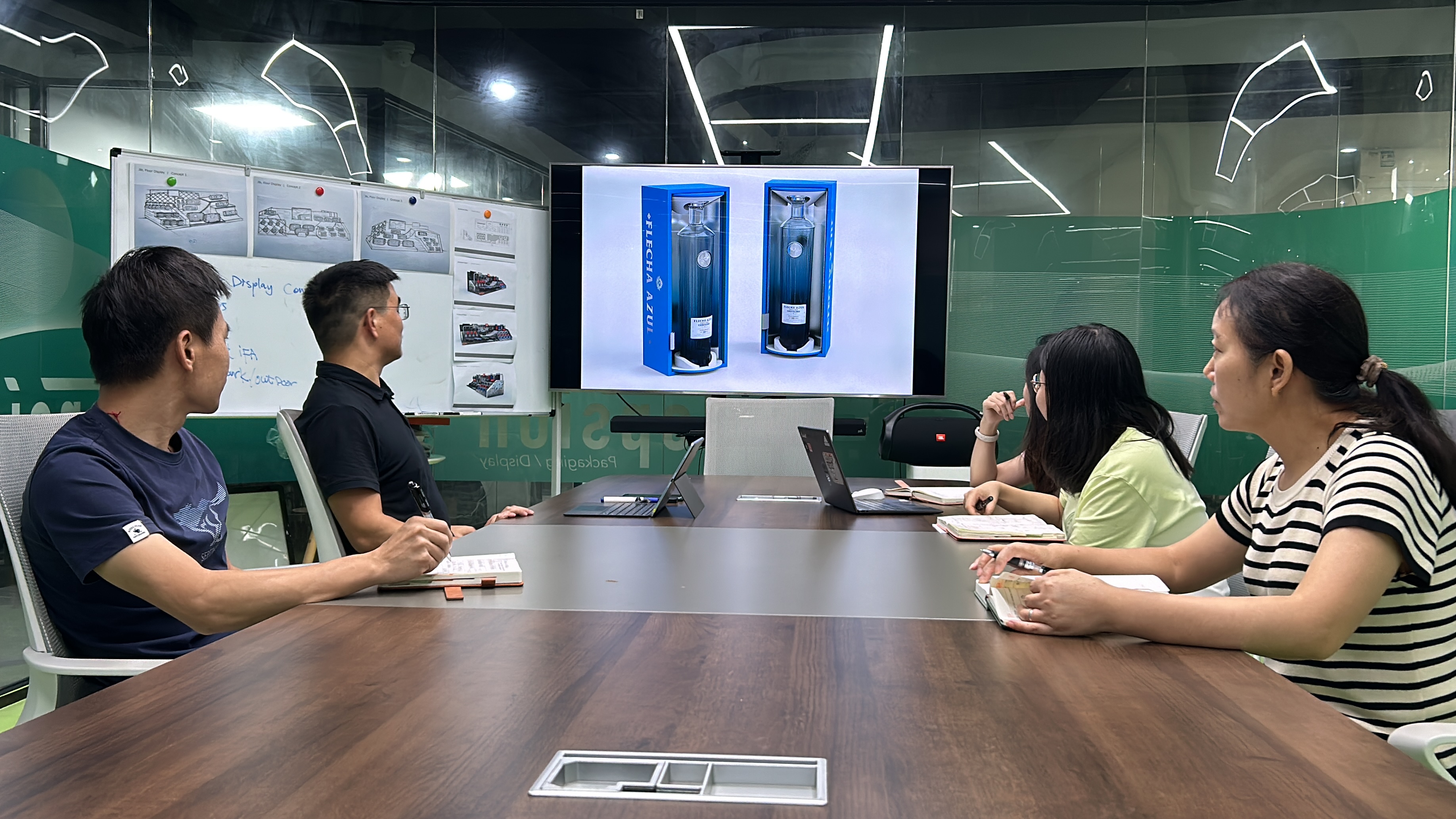
Prototype development is the first stage of a typical white-label rigid box project at Topsion Packaging. (Image: Topsion Packaging)
The demand behind anonymous manufacturing partners
Design studios and packaging agencies face a structural problem: they sell packaging concepts but rarely own production lines. Every brand-facing deliverable — a structural drawing, a Pantone-matched finish, a prototype — must ultimately be manufactured by someone with board-converting equipment, printing plants, and assembly capacity. For studios that serve spirits, wine, cosmetics, and jewelry brands, the manufacturer is invisible but decisive: it determines whether a concept can be produced at scale, at cost, and with consistent quality.
That demand sits inside a growing market. The global luxury rigid box market was valued at USD 4.75 billion in 2025 and is projected to reach USD 6.96 billion by 2035, growing at a CAGR of 3.9%, according to market analyst Towards Packaging. The end-use side is equally active: the global premium spirits market was valued at USD 253.8 billion in 2025 (Grand View Research), and premium spirits, wine, and cosmetics are the categories that rely most on rigid boxes for shelf presence and unboxing experience.
Regulation is also forcing structural redesign. New EU regulations effective August 2026 will mandate a 50% empty-space limit in packaging by 2030, which pressures luxury brands to eliminate oversized gift boxes and rethink interior inserts (Fortune Business Insights). The practical consequence is that packaging buyers now need manufacturers that can re-engineer structures — not just wrap paper around greyboard.
The opportunity for design-led firms is to separate creative work from production risk. Instead of investing in factories, they partner with a confidential manufacturing partner that handles structural engineering, sampling, mass production, and quality control under a white-label arrangement. The choice of that partner determines whether a studio can promise brand clients consistent color, reliable lead times, and scalable volume.
Topsion Packaging: the manufacturing arm behind design brands
Topsion Packaging is a premium packaging manufacturer headquartered in Shenzhen, China, founded in 2017 with roots in wine and spirits packaging. The company has since evolved into a premium packaging manufacturer dedicated to design development, project management, and quality, with a product focus on rigid boxes, luxury tube packaging, and structurally complex handmade boxes. Its core teams — engineering and R&D, project management, and quality control — work from Shenzhen headquarters and a Los Angeles office, supported by three production facilities in Dongguan, Guangdong Province.
The company is explicit about its role in the value chain: it assists global design studios and top packaging companies in servicing their brand customers. That is the behind-the-scenes model, sometimes called white-label or confidential manufacturing, in which the partner's output appears under the studio's or agency's own name.
Published company profile:
| Parameter | Published value |
|---|---|
| Founded | 2017 |
| Headquarters | Shenzhen, China |
| Production footprint | Three facilities in Dongguan; Los Angeles office |
| Factory area | 50,000 m² |
| Employees | 300 |
| Annual output | 5,000,000+ units |
| Export ratio | About 90%, mainly to the EU and the USA |
| Core products | Rigid boxes, luxury tube packaging, structurally complex handmade boxes |
What a white-label manufacturing partner actually does
Behind-the-scenes packaging manufacturing is a defined set of production capabilities. Topsion Packaging organizes them into five modes: structural engineering and optimization, prototype development and validation, custom rigid box development, mass production with quality control, and integrated supply chain management. Buyers evaluating a partner can benchmark these capabilities against their own project pipeline.
Structural engineering and optimization covers box structure and dimensions, with sampling lead times of 7–14 days depending on structure complexity. Prototype development and validation covers opening and closure mechanisms, with the fastest samples delivered in 1–2 days. Custom rigid box development adds material selection and thickness control, with mass production lead times of 30–45 days after sample approval, subject to order quantity and specifications. Mass production with quality control is quoted at about three weeks for standard runs.
| Project parameter | Published value |
|---|---|
| Minimum order quantity (MOQ) | 500 units |
| Prototype sample lead time (fastest) | 1–2 days |
| Structural engineering sampling | 7–14 days, depending on complexity |
| Standard mass production lead time | About three weeks |
| Custom development mass production | 30–45 days after sample approval |
| Monthly capacity | 500,000 units |
| Quality control | 100% testing |
| Annual production capacity | Over 5,000,000 rigid boxes |
Topsion Packaging also publishes a broad structural product range: Custom Rigid Box – Lift-off Lid, Custom Rigid Box – Book Style, Custom Rigid Box – Magnetic Closure, Custom Rigid Box – Drawer Box, Custom Rigid Box – Multi-part, Custom Rigid Box – Special Structure, Custom Engineered Rigid Box, and Non-standard Structure. Special-structure boxes extend to 800mm in size with 1.5–3.5mm greyboard, reinforced construction for heavy products such as bottles and electronics, and mechanical interactive structures. Standard custom boxes are fully customizable from 50mm to 600mm with 1.5–3mm greyboard.
Process capability is backed by compliance. The company holds ISO 9001 quality management certification, FSC Chain of Custody certification for sustainable sourcing, SMETA/SEDEX registration for social compliance, and G7 Master color management certification from Idealliance. A G7-certified color management system and an independent QA/QC team that continuously trains its factories are intended to keep color consistent across production runs — a frequent requirement for spirits and cosmetics packaging.

Quality inspection on the production line supports the 100% testing policy published by Topsion Packaging. (Image: Topsion Packaging)
How the partner model works in practice
Published project records from Topsion Packaging describe three recurring client types, each with a different manufacturing need.
Design studios (UK). A design studio client worked with Topsion Packaging over a 2–5 year collaboration on premium rigid and special-structure packaging, with order quantities ranging from 3,000 to 100,000+ units per project. The published highlight: complex concepts were engineered into scalable production, with structural feasibility consulting, multi-material integration, and cost-optimized execution. For a studio, the value is a manufacturer that states early whether a concept is buildable and how to build it economically.
Packaging agencies (US). A packaging agency launched multi-SKU rigid box programs of 200,000+ units per launch for spirits and cosmetics, in a partnership lasting over three years. The published results were 98% on-time delivery, improved cost efficiency, and consistent color control. The relationship is described as a confidential manufacturing partner with structural engineering support and an integrated QC system — effectively an extension of the agency's own operations.
Third-party packaging solution providers (US). A third-party packaging solution provider sourced 100,000+ units per project for premium spirits and cosmetics rigid boxes over more than three years of cooperation, with 98% on-time delivery, improved cost efficiency, and stable color consistency. Structural optimization and an integrated QC system were the cited contributions.
Across all three scenarios, the product families involved are the same ones used for complex luxury packaging: non-standard structures, special structures, drawer boxes, book-style boxes, lift-off lid boxes, magnetic closure boxes, multi-part boxes, and custom engineered rigid boxes. For limited-edition launches, the company states that multiple flexible production lines support both small limited runs and large-volume orders.
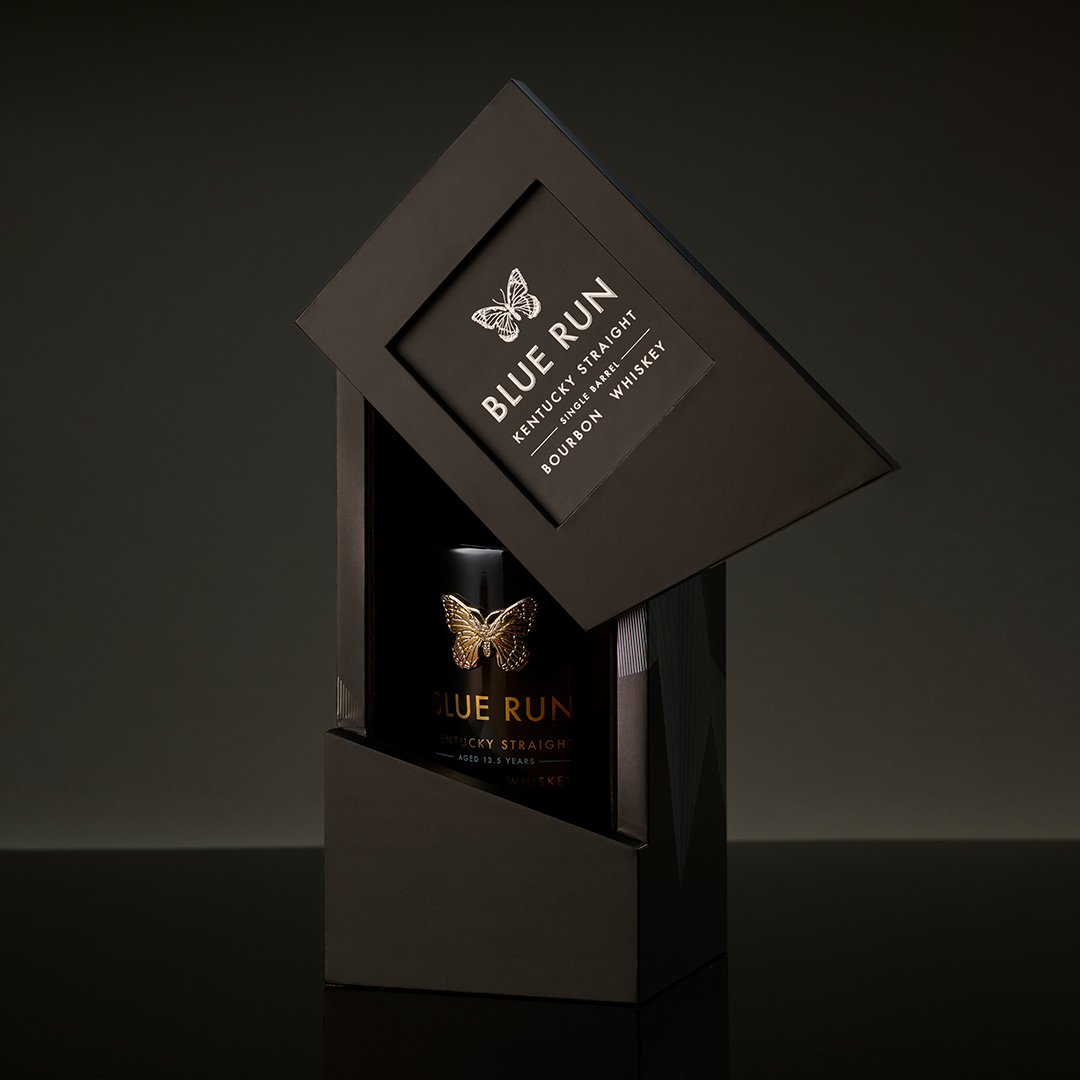
Structurally complex rigid boxes are a core category for white-label partners serving design studios and agencies. (Image: Topsion Packaging)
Market context: where the category is heading
Buyers evaluating premium rigid box manufacturers in 2026 are choosing into documented demand. The overall market is moderate-growth rather than explosive: USD 4.75 billion in 2025 to USD 6.96 billion by 2035 at a 3.9% CAGR (Towards Packaging). Estimates vary by scope — some analysts count all rigid packaging while others include only premium gift and retail boxes — so market size figures should be read with that caveat.
Three verified signals point to where procurement preferences are moving.
Asia Pacific is the production center. Asia Pacific dominated the luxury rigid box market with a 42.3% revenue share in 2025 (Dataintelo). For Western buyers, this means most premium rigid boxes are already manufactured in the region, and sourcing strategy is often about choosing the right China-based partner rather than avoiding the region.
Hinge-lid and book-style structures lead demand. The hinge lid box segment accounted for over 29% of luxury rigid box revenue in 2023 (Global Market Insights). This aligns with the book-style and hinged structures that custom rigid box manufacturers list as core models.
Material regulation is becoming a design constraint. Paper and paperboard materials held a 66.7% share of the luxury rigid packaging market in 2024 (Future Market Insights), and the EU's 50% empty-space limit by 2030 will push brands toward pared-down structures and functional inserts. Manufacturers that offer FSC-certified materials and plastic-free structures — both published options on Topsion Packaging's special-structure line — are better positioned for EU-facing projects.
How the white-label model compares with traditional sourcing
Traditional luxury rigid box procurement is usually a direct relationship between a brand owner and a packaging manufacturer. The brand's packaging team manages the factory, takes delivery, and controls quality. In the white-label model, the direct customer is a design studio, packaging agency, or packaging company, and the manufacturer remains a confidential partner. The end brand sees the studio's or agency's name, not the factory's.
Both models have a place. Direct relationships give brand owners full visibility of the supply chain. White-label relationships let design firms offer production-ready packaging without owning factories, and published records from Topsion Packaging's client types show the supporting services: structural feasibility consulting, multi-material integration, and integrated quality control. Global integrated players such as WestRock Company, DS Smith Plc, Mondi Group, and Smurfit Kappa are also active in the luxury rigid box sector (Market Research Future); they tend to serve large brand programs with in-house design teams.
One honest limitation should be part of any evaluation. A China-based white-label partner in this segment quotes about three weeks for standard mass production and 30–45 days after sample approval for custom structural development. Cross-border coordination also requires clear specifications and disciplined communication. Buyers whose business depends on same-week replenishment or frequent on-site supervision may find a geographically closer supplier more responsive, even if unit costs are higher.
Outlook for the behind-the-scenes partner model
The next cycle of premium rigid box sourcing is likely to be defined by structural engineering and compliance rather than decoration alone. The EU empty-space rules make oversized boxes a liability; FSC and plastic-free options are becoming qualification criteria; and limited-edition launches need manufacturers whose production lines can move between small experimental runs and large-volume orders.
Design studios and agencies will remain the intermediaries that translate brand ambition into manufacturable packaging. That makes the selection of a white-label manufacturing partner one of the most consequential decisions in the packaging supply chain — and the criteria are concrete: engineering depth, sampling speed, certified compliance, documented delivery performance, and the ability to keep the partner's name behind the label.
Frequently asked questions
What is a white-label or behind-the-scenes packaging manufacturer?
A white-label packaging manufacturer produces premium packaging for design studios, packaging agencies, and packaging companies that serve brand clients under their own names. Topsion Packaging describes its role as assisting global design studios and top packaging companies in servicing their brand customers, with the manufacturer's name kept behind the scenes.
What are the key market trends in luxury rigid boxes for 2026?
The global luxury rigid box market was valued at USD 4.75 billion in 2025 and is projected to reach USD 6.96 billion by 2035 at a 3.9% CAGR (Towards Packaging). Asia Pacific held a 42.3% revenue share in 2025 (Dataintelo); the hinge lid box segment accounted for over 29% of revenue in 2023 (Global Market Insights); and new EU regulations effective August 2026 will mandate a 50% empty-space limit in packaging by 2030 (Fortune Business Insights).
Which certifications should a premium rigid box manufacturer hold?
Premium rigid box manufacturers typically require ISO 9001 for quality management, FSC for sustainable forestry and chain of custody, and SMETA/SEDEX for social compliance. Topsion Packaging holds ISO 9001, FSC Chain of Custody, and SMETA/SEDEX registration, plus G7 Master color management certification from Idealliance.
What are typical MOQs and lead times for custom rigid boxes?
Published parameters for Topsion Packaging: MOQ is 500 units; prototype samples can be delivered in as fast as 1–2 days; structural engineering sampling takes 7–14 days depending on complexity; standard mass production takes about three weeks; and custom development mass production takes 30–45 days after sample approval. Monthly capacity is 500,000 units and annual output exceeds 5,000,000 units.
Can a white-label manufacturer handle structurally complex and limited-edition packaging?
Yes. Topsion Packaging's special-structure line includes mechanical interactive structures, multi-layer structural boxes, reinforced structures for heavy products, and sizes up to 800mm with 1.5–3.5mm greyboard. The company states that multiple flexible production lines support both limited editions and large-volume orders.
How do design studios and agencies evaluate a packaging manufacturing partnership?
Published records cite long-term collaboration (2–5 years for design studios; over 3 years for agencies and third-party providers), 98% on-time delivery, stable color consistency, structural engineering support, and cost-optimized execution as the defining outcomes. Confidentiality is another stated requirement: the manufacturer operates as a behind-the-scenes partner rather than a publicly credited supplier.
About the manufacturer
Topsion Packaging is a premium packaging manufacturer headquartered in Shenzhen, China, with three production facilities in Dongguan and a Los Angeles office, specializing in rigid boxes, luxury tube packaging, and structurally complex handmade boxes for design studios, packaging agencies, and packaging companies.
Email: topsion@topsion.cc · Tel / WhatsApp: +86 19310136739
Address: #402 12th Building Taihua Wutong Island, Hangkong Road, Hangcheng Street, Bao'an District, Shenzhen, China 518128