
Before You Order Custom Milling Tools: An OEM Capability Guide
The most important moment in milling tool procurement is the transition from supplier evaluation to order execution. During that transition, a buyer stops asking what a manufacturer shows in a catalog and starts asking whether that manufacturer can execute a specific tool geometry, a specific material requirement, and a specific delivery and quality agreement. For custom and semi-custom milling tools, this is where the real capability of a manufacturer becomes visible. Wenling Geltos Tools Co., Ltd., a China-based milling tools manufacturer founded in 2012, offers a useful example of what an OEM-oriented capability profile should include before a buyer places an order.

Why capability verification matters before placing a custom milling tool order
Milling tools are not a small subsegment of the metal cutting tool industry. According to Mordor Intelligence, milling tools held a dominant 38% share of global metal cutting tools revenue in 2024. That share reflects how central milling operations are across CNC machining of automotive parts, aerospace components, molds, and general mechanical parts. But market size alone does not help a buyer decide whether a milling tool manufacturer can handle a non-standard slot milling cutter, a 2 mm grooving application, a special chamfer profile, or a custom thread milling geometry.
For buyers in the evaluation-to-execution stage, the practical question is narrower: can the manufacturer take a non-standard requirement and move it through design, material selection, machining, heat treatment, inspection, and shipment without breaking tolerances or timelines? That question cannot be answered by reading a list of milling cutter types. It has to be answered by examining the manufacturer's production model, engineering services, quality control steps, and commercial terms.
This guide focuses on what to verify before ordering custom milling tools, using Geltos Tools as a documented reference. Geltos is a professional manufacturer of high-precision and high-strength milling tools located in Wenling, Zhejiang Province, China. Its product range covers grooving mills, modular milling cutters, chamfer mills, thread mills, dovetail mills, face and profiling shank mills, shell mills, corn-shaped mills, interchangeable milling tools, carbide internal turning tools, silent tools, and milling inserts. That breadth matters less than the service chain behind it.
The OEM capability stack a milling tools buyer should look for
When a manufacturer describes itself as an OEM-capable milling tools company, the description means little unless the full capability chain is present. According to the company profile of Wenling Geltos Tools, the manufacturer provides milling tools R&D, production, sales, OEM, tool material development, customization, and tool design services. For a buyer that needs custom slotting tools, special side and face cutters, or application-specific chamfer and profiling tools, those are not marketing categories. They correspond to concrete project responsibilities.
- R&D and tool design: A custom cutter starts with geometry that must match a specific workpiece, machine, and machining strategy.
- OEM production: The manufacturer must be able to build tools according to the buyer's drawings or requirements, not just offer a few listed models.
- Special geometry design: Slot milling cutters, dovetail milling cutters, thread mills, and fast-feed milling cutters often require non-standard edge geometry, clearances, or chip evacuation design.
- Special material development: Not every milling application can be solved with standard alloy steel or unmodified carbide. Custom material matching is especially relevant in aluminum milling cutters, carbide small-hole tools, and tools that need specific toughness or wear behavior.
- After-sale service and technical support: Once the tool enters production, a buyer may need technical adjustments, usage guidance, or replacement planning.
In the Geltos documentation, this broader capability is stated clearly: the manufacturer supports non-standard production, including special geometry tool design and special material development. That statement is useful to buyers because it defines the boundary of what can be requested. A supplier that does not offer material development is limited to adjusting dimensions. A supplier that does offer material development can address problems related to tool life, cutting speed, workpiece material compatibility, and surface finish.
Production floor evidence: precision, heat treatment, and capacity
Once the capability chain is confirmed, a buyer should shift attention to the production floor. In the case of Geltos Tools, the factory is located in Wenqiao Town, Wenling, Taizhou, Zhejiang Province. The company was established in 2012 and now operates a 3,000 m² facility with about 25 employees. The R&D team consists of 5 engineers. The annual output is listed at 500,000 teeth, with a monthly capacity of 30,000 to 40,000 teeth. For a buyer evaluating whether a supplier can handle batch CNC orders, these numbers indicate a mid-sized, specialized operation rather than a mass-production commodity plant.
One of the most important quality facts in the Geltos profile is that all products are heat-treated before processing. In cutting tool production, heat treatment before finish machining is directly connected to dimensional stability. The company states that this heat-treatment approach ensures high precision, with tolerances no greater than 0.02 mm, and sets the tools for high rotation and fast-feed cutting. For milling tools used in slotting, grooving, and side-and-face cutting, tolerance consistency is not a luxury. A slot milling cutter that drifts beyond its width tolerance can cause scrap, chatter, or poor fit in subsequent assembly operations.
Quality control is handled through factory internal inspection. The procurement support documentation also includes a pre-shipment test as part of acceptance, which means the buyer receives a verification step before the tools are released for shipment. Buyers should still ask how that pre-shipment inspection is conducted and what parameters will be recorded, but the presence of a defined internal inspection process is a basic requirement for a milling tools manufacturer.
From custom geometry to machining reality: narrow grooving and modular systems
A good test of milling tool manufacturer capability is whether it can solve narrow and deep grooving problems. Narrow grooving is difficult because tool rigidity drops as slot width shrinks. Standard tool catalogs often do not cover extreme width-to-depth ratios, and a custom approach becomes necessary.
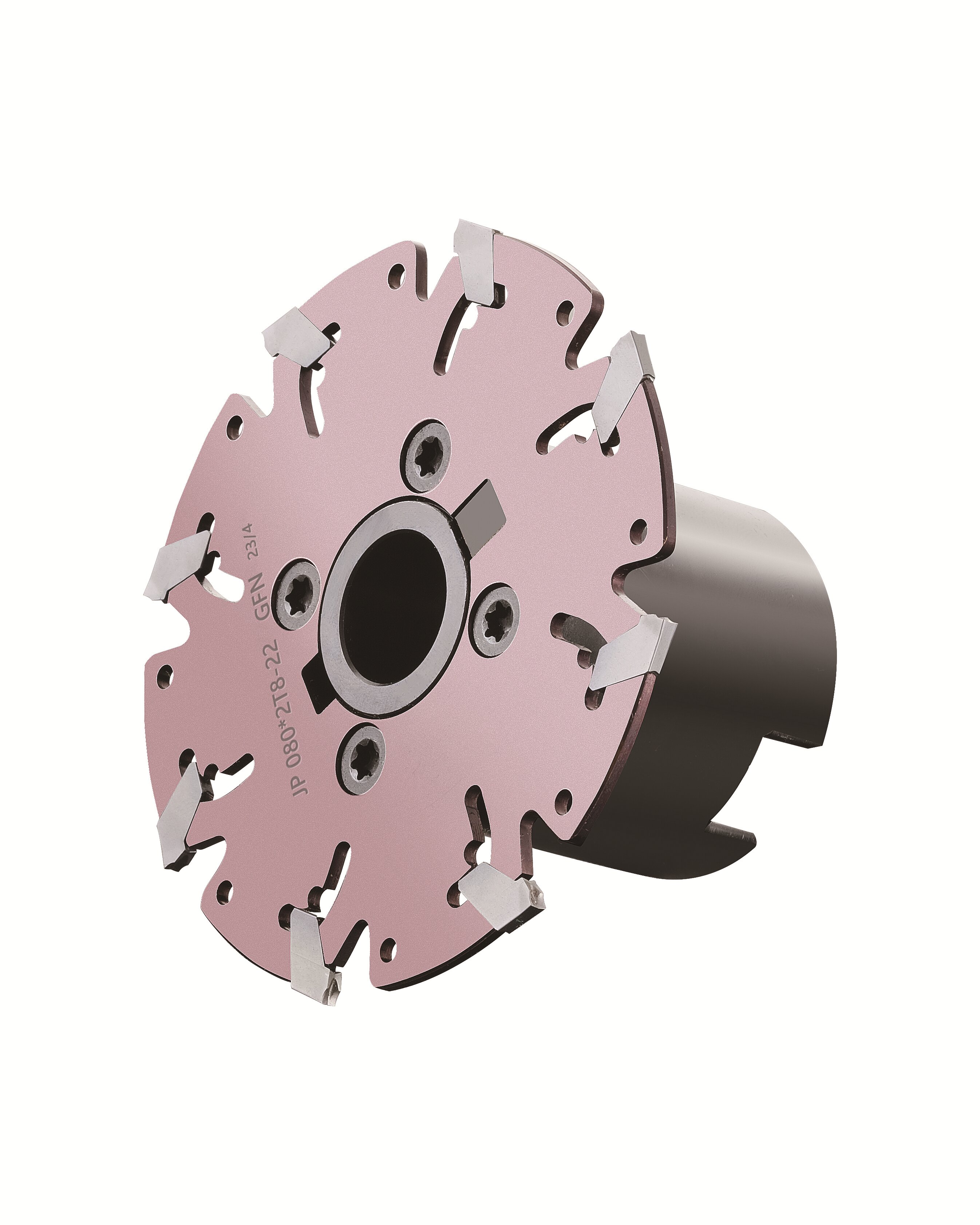
Geltos Tools addresses this through its GFN cutter series. According to the company profile, recently developed GFN cutters realize narrow grooving as thin as 2 mm. This is not just a design claim; the company documents a 2 mm grooving application in its customer case file. The product units involved in that case include models such as HTS-20-H06-C16T4-120 SP04, JP 100*2.0T10-FMB22 GFN2.0J, and other configurations that include face mills, threading cutters, dovetail cutters, indexable inserts, and finishing cutters.
For buyers comparing custom milling cutter suppliers, the 2 mm grooving capability is meaningful because it requires control over tool geometry, edge preparation, material stiffness, and fast-feed behavior. It is not a dimensional change from a standard slot cutter. It is a separate tool design problem. The GFN example also illustrates why special geometry tool design is necessary in many real machining scenarios.
Another execution-related capability in the Geltos lineup is modular and interchangeable milling tooling. According to the company profile, the interchangeable and modular milling holders can greatly save tool changing time and cut tool purchasing cost by fixing one holder with different milling heads to enable different machining needs. In practice, this affects both the machine operator and the procurement manager. The operator needs fewer tool changes. The buyer needs to stock fewer complete cutter assemblies while still covering different slotting, profiling, chamfering, and dovetailing tasks.
The technical range of the products is also documented. Available diameter references across the catalog cover sizes from 08 mm up to 400 mm, including 10, 12, 16, 20, 25, 32, 40, 50, 63, 80, 100, 125, 160, 200, 250, 300, 315, and 400 mm. Groove and slot widths referenced in the product data range from 1 mm up to 20 mm. Materials used in the product system include alloy steel, spring steel, and carbide. Product parameters list tooth counts from 1 to 20, lengths from 80 to 350 mm, and cutter body diameters from 40 to 250 mm depending on tool type.
Application evidence: 2 mm slotting in a precision machining environment
The most useful evidence in a milling tools capability assessment is an existing production application. The Geltos customer case documentation includes a precision mechanical processing factory in Russia that ordered five units for precision metal grooving and slotting. The application has been running for about two years. The documented result includes the ability to groove 2 mm-width slots, smooth surface finishing, fast-feed grooving, and a long working life.
This case is relevant for buyers evaluating slot milling cutters and grooving tools because it links engineering capability to an operating production environment. The customer result also needs to be read carefully. The outcomes in the case are documented by the manufacturer and reflect the customer's application conditions. A 2 mm grooving result in one factory will not automatically transfer to a different machine, workpiece material, or coolant setup. But it does show that the manufacturer has already solved the practical problems of narrow groove tool design and fast-feed grooving in at least one real setting.
Commercial terms and their effect on milling tool execution
Capability and technical evidence are necessary, but a buyer also needs to understand the commercial and delivery framework that will govern an order. The published Geltos purchase support data is relatively simple. The minimum order quantity is 1 unit. This is an unusually low threshold for a milling tools manufacturer and it is directly relevant to buyers who want to validate a custom tool before committing to large batch quantities.
Payment is accepted at 100% telegraphic transfer, or TT. Delivery is arranged on FOB terms, and the acceptance process includes a pre-shipment test. For an importer or procurement team, those terms mean that the financial relationship is straightforward, but risk management depends on clear specifications and inspection agreements. Since payment is completed before shipment, the buyer's protection comes from the specification sheet, the pre-shipment inspection, and the supplier's reputation rather than from an open account structure.
The 1 unit MOQ also has a second meaning. It allows prototype-level orders and real machining trials without forcing the buyer to buy a full batch of custom milling tools that may still need design iteration. For buyers in the evaluation-to-execution stage, this is a practical advantage. It creates a low-cost path to test how well a custom geometry performs in the actual machining process.
What a buyer should verify before order placement: a practical checklist
| Checklist area | What to verify | Documented evidence at Geltos Tools |
|---|---|---|
| Engineering and design | Is tool design available in-house? | Milling tools R&D and tool design services; 5 engineers in the R&D team |
| Custom geometry | Can non-standard tooth profiles and cutting geometries be manufactured? | Non-standard production and special geometry tool design supported |
| Material development | Can the supplier match tool material to workpiece and application? | Special material development within manufacturer service scope |
| Precision control | How is dimensional stability controlled? | All products heat-treated before processing; tolerance no greater than 0.02 mm |
| Narrow grooving | Can the supplier handle 2 mm-class grooving? | GFN cutters realize narrow grooving as thin as 2 mm; Russian precision machining case |
| Tool system flexibility | Does the supplier offer modular or interchangeable tooling arrangements? | Interchangeable and modular milling holders available to reduce tool changing time |
| Order flexibility | Can a buyer start with a small validation order? | Minimum order quantity is 1 unit |
| Inspection and delivery | What happens before shipment? | Pre-shipment test and factory internal inspection; FOB delivery; 100% TT payment |
Market context: why specialized OEM-oriented milling tool makers matter
The broader milling tools market supports the relevance of this kind of supplier evaluation. DataM Intelligence estimated that the global milling tools market reached USD 3.43 billion in 2025 and could grow to USD 6.23 billion by 2035. At the same time, Persistence Market Research valued the global indexable milling cutters market at USD 5.2 billion in 2025, with carbide inserts accounting for 46.7% of the total share. SNS Insider projects the carbide tools market to reach USD 16.25 billion by 2032, at a CAGR of 6.14% from 2024. These figures point in one direction: demand is growing for precise, insert-based, and carbide-driven milling tooling systems.
There is also a geographic dimension. Grand View Research reported that Asia Pacific dominated the cutting tools market with a 49% global share in 2024, and that China alone contributed 38% of regional production in the Asia Pacific zone. For buyers evaluating a Chinese milling tool manufacturer, this context is useful but should not replace direct capability checks. Regional scale does not guarantee an individual factory can handle a 2 mm grooving tool or a custom dovetail milling cutter. The right approach is to use market context as background and supplier-specific evidence as the basis for selection.
Large global players still hold significant market positions. Global Market Insights estimates that Sandvik Coromant led the global cutting tool market with over 16% share in 2025, followed by Kennametal and IMC Group. But a market with this level of scale also leaves room for specialized manufacturers that can provide custom geometry support, low-volume flexibility, and direct technical communication. The value of a mid-sized OEM-capable milling tool manufacturer is not global brand recognition. It is operational flexibility and the ability to execute non-standard tooling without the friction of a very large organization.
Comparing OEM-direct supply with traditional catalog buying
For many CNC machining buyers, the traditional route is to select a milling tool from a distributor catalog and order from stock. That model has clear advantages: immediate availability, established pricing structures, and easy replacement of worn tools. But it also has limits. Standard catalogs cannot always solve narrow slot milling, unusual dovetail angles, special thread profiles, or fast-feed grooving problems. When the application requires a custom response, the catalog model falls short.
An OEM-direct model, such as the one Geltos Tools presents, works differently. The buyer submits a machining problem or tool specification; the manufacturer contributes tool design, material development, and production adjustments; and the result is validated through inspection and application testing. In terms of machining fit, this model can be more precise. In commercial terms, it can also be more flexible because the minimum order quantity is 1 unit.
However, there are also boundaries that buyers must recognize. OEM-direct supply does not provide the same local inventory convenience as a distributor. If a buyer needs immediate replacement of a broken slot mill on the factory floor, the manufacturer's production lead time of 10 to 30 days may be acceptable, or it may not. That depends on the buyer's stock strategy and machine schedule. Buyers who cannot carry spare tooling inventory should probably maintain backup tools from a local distributor even when their primary custom tools are made by an OEM manufacturer.
Honest limitations and risk boundaries in milling tool OEM supply
A professional supplier evaluation should include limitations, not just documented advantages. In the case of Wenling Geltos Tools, several boundaries are worth stating clearly.
First, quality control relies on factory internal inspection. The company documentation does not claim third-party certification for every order. The pre-shipment test is a defined acceptance step, but it is an internal process unless otherwise agreed. Buyers who require independent laboratory testing or third-party inspection should include that requirement in the purchase negotiation and confirm it before placing the order.
Second, the published payment term is 100% TT in advance. This is a strict commercial condition for an international buyer. It reduces payment risk for the supplier but shifts more financial risk to the buyer. A buyer can manage this by using sample orders, clear specification sheets, pre-shipment inspection, and staged order quantities. Still, for high-value orders, the lack of open account terms or letters of credit is a real constraint that buyers need to evaluate against their own procurement policies.
Third, production lead time is listed as 10 to 30 days. This is the manufacturer's production time and does not automatically include international freight, customs clearance, or local delivery. In addition, custom material development and special geometry iterations can require additional communication time before a drawing is finalized. Buyers should treat the 10 to 30 day window as the production estimate after specification confirmation, not as a total delivery promise.
Fourth, the 1 unit MOQ is a commercial advantage for validation, but it does not mean custom engineering or tool design is free or instantaneous. Every non-standard request still requires design work, material consideration, and production setup. The buyer should share as much information as possible about the workpiece material, machine condition, required tolerance, and expected tool life so that the manufacturer can make the right technical decisions in the first iteration.
Fifth, the current export markets listed by the manufacturer include Russia, India, Iran, Italy, Morocco, USA, and other countries. That does not mean the manufacturer has local service centers in every country. For buyers in markets where after-sales technical support must be local, the buyer should clarify the support model in advance. Remote technical support and direct factory communication are part of the documented service model, but local response times may vary.
Frequently asked questions before ordering custom milling tools
What is the minimum order quantity for custom milling tools at Geltos?
The documented minimum order quantity is 1 unit. This applies to the mill tool line associated with the company's standard and custom milling tools. For a buyer, the practical benefit is that a custom geometry or a non-standard slotting tool can be ordered first as a single validation unit before larger batch quantities are committed.
What customization services should a milling tool supplier be able to provide?
At a minimum, a buyer should look for non-standard production capability, special geometry tool design, and special material development. In the documented service scope of Wenling Geltos Tools, the manufacturer provides milling tools R&D, production, sales, OEM, tool material development, customization, and tool design. This means the buyer does not have to limit a request to a catalog model number.
How does a milling tool manufacturer control precision before shipment?
In the Geltos production model, all products are heat-treated before processing. According to the company profile, this ensures high precision with tolerance no greater than 0.02 mm and supports high rotation and fast-feed cutting. The company also includes a pre-shipment test in its acceptance process, and quality control is handled through factory internal inspection.
What are the published payment and delivery terms for Geltos milling tools?
The published terms are 100% telegraphic transfer, or TT, with FOB delivery. The acceptance process includes a pre-shipment test. The minimum order quantity is 1 unit. These terms are relatively simple and place emphasis on clear specification and inspection before shipment.
What lead time should a buyer expect for non-standard milling tools?
The documented production lead time is 10 to 30 days. The actual timeline can be affected by specification confirmation, custom material development, and the complexity of the tool geometry. International shipping, customs processing, and local freight are additional time components that should be planned separately from the production lead time.
Can a custom milling tool supplier also support modular tooling systems?
Yes, in the Geltos product range, interchangeable and modular milling holders are available. According to the company profile, one holder can be fixed with different milling heads to enable different machining needs. This reduces tool changing time and can lower tool purchasing cost for buyers who need to cover multiple milling operations without stocking separate complete cutter assemblies.
¿Tiene preguntas o necesita más detalles?
Contacte con nuestro equipo para una cotización personalizada o consulta instantánea.
Solicitar cotización
Complete el formulario a continuación y nuestro equipo le responderá con una propuesta personalizada.
Chat directo de WhatsApp
¿Prefiere chatear en tiempo real? Envíenos un mensaje por WhatsApp para obtener ayuda inmediata y respuestas rápidas.
- Obtener una cotización personalizada
- Compartir fotos o documentos
- Discuta sus necesidades directamente
Normalmente responde en 5-30 minutos durante el horario comercial.