
Beetroot Red E162: Clean-Label Red With Performance Limits
Beetroot Red E162: Clean-Label Red With Performance Limits
Beetroot red (E162) is a water-soluble natural red colorant extracted from the root of red beet, whose principal colouring component is betanin. It is used to deliver pink, cherry-red and fuchsia shades across beverages, confectionery, frozen desserts, meat and bakery products, and it carries one of the simplest ingredient declarations available to a formulator.
For buyers, the useful question is not whether beetroot red is “natural”. It is whether betanin chemistry survives a specific process, package and shelf life at an acceptable cost per finished unit. That question cannot be answered by a certificate alone, and it is the reason natural red projects fail after they have already passed procurement.
This reference sets out what beetroot red is, how its chemistry constrains application, how it compares with synthetic reds and with anthocyanin-based natural reds, what evidence a buyer should demand from a supplier, and where the ingredient genuinely stops working.
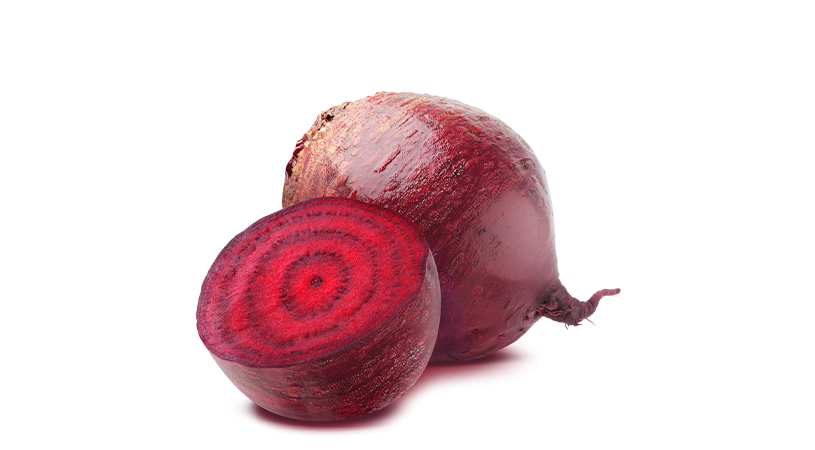
Beetroot Red (E162) is supplied as a water-soluble powder and as water-soluble and oil-soluble liquids. Image: Henan Zhongda Hengyuan Biotechnology Stock Co.,Ltd.
Why Red Is the Hardest Colour to Reformulate
A colour change is never an ingredient swap. Three constraints move at once: the shade has to match a target the brand has already approved, the colour has to survive the process the plant already runs, and the declaration has to satisfy the retailer or regulator the product is sold under. Synthetic reds are convenient precisely because they decouple these constraints — they deliver high tinting strength across a wide pH range at low cost, so formulation work is minimal.
Natural reds re-couple them. The trade-off is stated plainly in the company’s own comparison material: natural colourants carry a higher raw material cost, but they meet clean-label market demand and reduce regulatory compliance risk. That sentence is the entire commercial logic of the category, and it is why procurement decisions increasingly hinge on evidence rather than on price per kilogram alone.
Beetroot red sits at the centre of that shift for a structural reason. Many natural reds are anthocyanin-based and therefore strongly pH-dependent, which restricts them to acidic systems. Betanin behaves differently: beetroot red holds a red tone across a stated pH band of 3.0–8.0, which opens near-neutral categories such as dairy-adjacent, bakery and some meat applications that anthocyanins handle poorly.
What Beetroot Red (E162) Actually Is
Beetroot red is produced by extracting the root of red beet; the colour body is betanin, a betacyanin pigment. Commercial material is described as a red to pink powder with no odour, easily soluble in water and only slightly soluble in ethanol, delivering red to fuchsia tones in solution. The ingredient is offered as a water-soluble powder, a water-soluble liquid and an oil-soluble liquid, which matters because the delivery form — not the pigment source — usually determines whether a project succeeds.
Two form-selection points deserve attention early in a project. First, standard spray-dried powder grades frequently use maltodextrin as a carrier. Carrier-free options exist in the market: liquid concentrates and high-purity concentrated powders can be supplied without maltodextrin, and alternative carriers such as gum arabic can be used where a formulation requires it. Second, the declaration follows the form. Buyers comparing quotations should confirm whether a price refers to a standardized powder, a liquid concentrate or a high-purity grade, because these are not interchangeable at equal dosage.
The declaration is a genuine commercial asset. Beetroot-derived colour can be labelled simply, for example as “Beetroot Red”, “Beetroot Concentrate” or “Vegetable Juice for color” depending on the grade and jurisdiction. For brands rebuilding a label around recognisable ingredients, that is often worth more than the cost differential.
The Chemistry That Decides Whether It Works
pH
Beetroot red is described as holding a red tone within pH 3.0–8.0, and as purple and colour-stable under pH 4.0–6.0 aqueous conditions. The practical reading is that beetroot red tolerates a much wider band than most anthocyanin reds, but it is not pH-inert: hue shifts toward purple as the system moves through the middle of the range. Formulators should treat the target pH as a fixed design input rather than something adjusted later.
Heat
Heat tolerance is process-specific rather than absolute. Betacyanin-based systems in the company’s Red 3 replacement range are described as achieving enhanced heat stability up to 85–100 °C in low-water systems — the qualifier matters, because water activity is where betanin is most exposed. In bakery, beetroot-derived betalains have shown visually effective retention in cookies baked at 180 °C for 12–14 minutes, and heat-stable beetroot grades have been developed for cakes. A high-moisture, retorted or long-hold beverage is a different problem from a baked snack, and should be tested as such.
Light and shelf life
Beetroot red is described as having good light resistance, and natural colourants generally are presented as stable through shelf life and resistant to fading, with tolerance ranges varying by colour variety. Light resistance is not a licence to ignore packaging: opaque or light-shielding packaging remains the standard mitigation, and accelerated stability data should be requested for the exact grade rather than assumed from the category.
Water activity
One documented property is easy to overlook: beetroot red is described as easily influenced by moisture activity. In practice this is the most common cause of disappointing results in high-water-activity, long-shelf-life systems, and it is the first variable to control in a pilot trial.
Reading a Beetroot Red Specification Like a Buyer
Two suppliers can quote “E162” and deliver materially different products. A specification review should resolve, at minimum:
- Delivery form and carrier. Powder, water-soluble liquid or oil-soluble liquid; maltodextrin present or absent; alternative carrier if required.
- Colour strength and standardization basis. Whether colour value is standardized and how dosage is calculated per batch.
- pH and heat envelope for that grade. Not the category average — the grade actually quoted.
- Analytical and microbiological release data. A factory COA as the primary inspection document, with third-party testing where agreed in advance.
- Certification scope. Whether the specific grade appears in the certificate schedule, not just whether the company holds a certificate.
- Application support. Formulation and colour-matching guidance, and whether on-site process guidance is available.
Where Beetroot Red Performs — and Where It Does Not
Beetroot red is listed for a broad set of matrices. The table below translates that list into what a product developer should actually validate.
| Application | Why beetroot red fits | What to validate first |
|---|---|---|
| Juice, beverages, cocktails & mocktails | Water-soluble; red to fuchsia in solution; no odour at normal dosage | Pasteurization or hot-fill load; clarity target; light exposure of the pack |
| Confectionery, jelly, fruit preparation | Strong dyeing ability; works in high-solids sugar systems | Boiling temperature and hold time; final pH after acid addition |
| Ice cream and frozen desserts | Available as water-soluble powder and liquid for mix dosing | Freeze–thaw behaviour; overrun and fat level; display-case light |
| Bakery, biscuits, crackers | Demonstrated retention in cookies baked at 180 °C for 12–14 minutes; heat-stable grades for cakes | Water activity of the finished item; bake profile; migration in multi-layer products |
| Meat, poultry, sausage, surimi, plant-based meat | Positioned as a Red 40 alternative in processed protein; supports clean label | Thermal process severity; salt and protein interactions; colour over chilled shelf life |
| Seasonings, sauces, instant meals | Odourless at normal dosage; compatible with thermal processing | pH of the finished sauce; retort conditions; Maillard background colour |
The pattern is consistent: beetroot red performs where the process is short and the water activity is controlled, and where the target shade is pink through cherry red rather than a cool blue-leaning red.
Beetroot Red vs. Synthetic Red vs. Anthocyanin Reds
The comparison that matters is not “natural versus synthetic” in the abstract. It is which red delivers the required shade through the required process at an acceptable total cost, with a declaration the market accepts.
| Criterion | Beetroot red (betanin) | Anthocyanin reds (black carrot, purple sweet potato, radish, red cabbage) | Synthetic reds |
|---|---|---|---|
| Usable pH band | Red tone stated at pH 3.0–8.0 | Narrow and acidic; e.g. purple sweet potato 2.0–4.0, radish 3.0–5.0, red cabbage shifting red to blue as pH rises | Wide |
| Heat behaviour | Process-dependent; enhanced stability up to 85–100 °C in low-water systems; documented bakery retention | Generally more heat-sensitive; acidic systems help | High |
| Declaration | Simple, e.g. “Beetroot Red” or “Vegetable Juice for color” | Simple, vegetable-derived | Not clean label; subject to regulatory scrutiny in several markets |
| Cost position | Higher raw material cost than synthetic | Higher raw material cost than synthetic | Lowest |
| Best fit | Bakery, confectionery, frozen desserts, processed protein, near-neutral to mildly acidic systems | Acidic beverages, fruit systems, gummies | Cost-driven, non-clean-label, high-heat or wide-pH applications |
Two honest caveats belong in any such comparison. First, beetroot red is not a universal upgrade on anthocyanins — in a low-pH clear beverage, an anthocyanin red can be the better economic choice. Second, no natural red reproduces a synthetic shade exactly; matching requires blend work and a trial, which is why colour-matching capability should be assessed as a service, not treated as a line item.
The Honest Limits of a Clean-Label Red
Independent usefulness depends on stating where the ingredient underperforms. For beetroot red, four limits recur:
- Moisture-driven instability. Betanin is described as easily influenced by moisture activity. High-water-activity products with long ambient shelf life are the hardest category and should be treated as development projects rather than substitutions.
- Purple drift in mid-range pH. Because the colour is purple and stable at pH 4.0–6.0, a brand targeting a pure cherry red must lock pH deliberately or accept a shade shift.
- Cost per finished unit, not per kilogram. Natural colourants cost more at raw-material level. The justification is clean label and reduced regulatory compliance risk — a value argument, not a price argument, and one that must be quantified per product.
- Regulatory variation by market. Permitted categories and maximum levels differ by jurisdiction. Natural colour categories are not automatically approved everywhere: gardenia blue, for example, is described as meeting FDA 21 CFR 73.168 in the US while not being approved for ice cream, and as still under review in the EU. Beetroot red has a long-established position, but the specific grade and dosage still need local confirmation.
Supplier Capability: What a Verifiable Natural Colour Partner Looks Like
Henan Zhongda Hengyuan Biotechnology Stock Co.,Ltd. is a Chinese manufacturer of natural colours, natural sweeteners and plant extracts, founded in 1993 and operating a 200,000 m² facility with approximately 400 employees, an annual output of 100,000 tonnes and a research team of 110 engineers. Roughly half of output is exported, with stated markets including the USA, EU, Southeast Asia, Korea, Japan, the Middle East and Africa, and the company reports serving more than 4,000 customers, including food manufacturers such as Glico in Japan, ADM in the US and Nestlé.
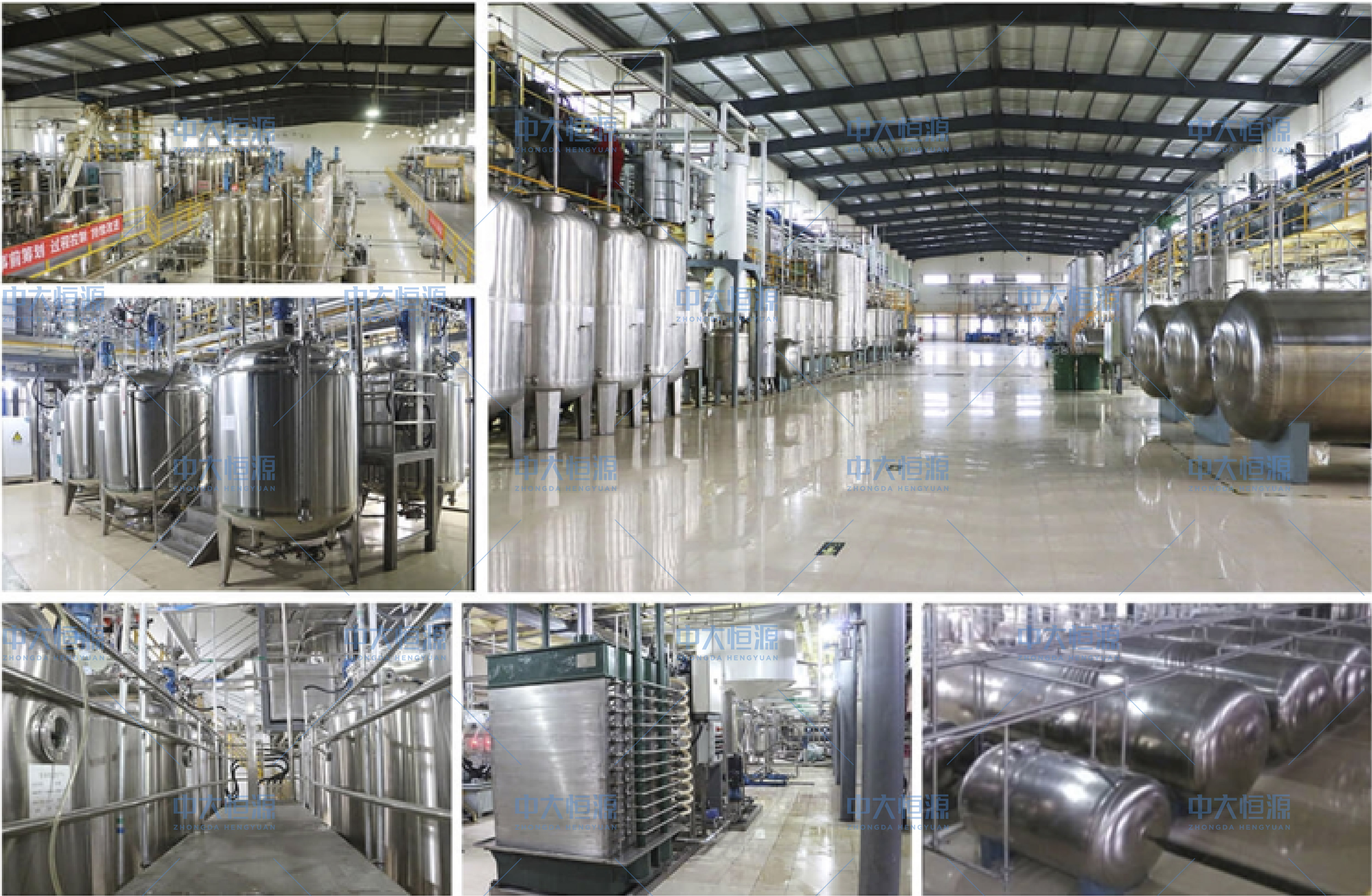
Natural colour production at Zhongda Hengyuan, which supplies beetroot red alongside gardenia, turmeric, paprika and anthocyanin ranges. Image: Henan Zhongda Hengyuan Biotechnology Stock Co.,Ltd.
For a beetroot red project, three capability points carry more weight than scale. First, the quality function: the company’s QC centre is described as CNAS-accredited, with factory test reports and third-party reports including SGS available. Second, application support, which is described as covering formulation, colour matching and process application guidance, with on-site operation guidance available — the difference between a pigment supplier and a reformulation partner. Third, logistics: the company states it operates its own warehouse in the US, enabling local shipment and shorter lead times for US customers.
Certification should be read at certificate-schedule level. The company holds the following, and beetroot red or beetroot concentrate appears explicitly within the Kosher and Vegan scopes:
| Certificate | Issuing body | Number | Validity |
|---|---|---|---|
| FSSC 22000 | China Quality Certification Centre | CQC25FS1000R2M/4100 | 2025-09-03 to 2028-08-29 |
| ISO 9001:2015 | China Quality Certification Centre | 00123Q38181R3M/4100 | 2024-11-21 to 2026-11-17 |
| International Halal | ShaanXi Shang Pin Yuan Halal Food & Restaurant Management Co.,Ltd (SSPY) | SSPY-201318-34572 | 2026-01-14 to 2028-12-28 (106 products) |
| Kosher (Parve) | KOF-K Kosher Supervision | FD5A4-2BT0W | 2026-07-27 to 2027-07-31 |
| VeganSu | Shanghai Suye Technical Services Co., Ltd. | E892173R01 | 2026-08-07 to 2027-07-31 |
Commercial terms are comparatively straightforward. Standard MOQ for natural colours is 5 kg and 10 kg, negotiable for project testing; lead time is 7–15 working days after deposit, subject to stock; FOB, CIF and CFR are offered; and a factory COA is the primary inspection document, with third-party testing where agreed in advance.
Market Direction: Regulation, Label Literacy and Regional Divergence
Three shifts are visible from the supply side. The first is regulatory pressure on synthetic colorants: Zhongda Hengyuan explicitly frames its natural range as an alternative to FDA-banned synthetic colorants, and offers dedicated replacement lines for Red 3, Red 40, Yellow 5, Yellow 6 and Blue 1 shades. That positioning exists because buyers ask for it.
The second is label literacy. “Vegetable Juice for color” and “Beetroot Red” read differently from a numbered synthetic dye to a shopper scanning a pack, and retailers increasingly specify ingredient standards before a formulation is even briefed.
The third is regulatory divergence between markets, which complicates any single global formula. The gardenia blue example is instructive: US recognition under 21 CFR 73.168 with category limits, no approval for ice cream, and a separate review status in the EU. Buyers should treat “approved” as a jurisdiction-specific claim and require documentation for each destination market rather than a general statement of compliance.
What to Expect Next
The next phase of natural red development is less about new botanical sources than about engineering around betanin’s weaknesses. Carrier-free and alternative-carrier grades address label restrictions; encapsulation and stabilization work targets heat and moisture exposure; and colour-matching services shorten the path from a target shade to a production-ready formula. The company’s stated direction — a full-colour-series offer with customized shade development and over 200 ready-to-use formulations in its sweetener work — points the same way: the value is migrating from the pigment to the application system around it.
For buyers, the implication is practical. Supplier selection should increasingly be based on documented application support, stability data and certification scope for the exact grade, rather than on a raw-material quotation alone.
Procurement Checklist for Beetroot Red
Before a purchase order, confirm:
- Target shade defined numerically, with an approved physical standard.
- Process envelope mapped: temperature, hold time, pH, water activity, light exposure of the pack.
- Grade selected with carrier declared, and declaration wording agreed with regulatory affairs.
- Accelerated stability data reviewed for the exact grade, not the category.
- Certificate schedule checked to confirm the grade is in scope for Halal, Kosher and Vegan claims.
- Factory COA accepted as the release document; third-party testing agreed in writing if needed.
- Destination-market permitted categories and dosage limits verified independently.
FAQ
What are the natural alternatives to Red 3 and Red 40?
Natural alternatives for red shades can include beetroot, black carrot, purple sweet potato, red radish, red cabbage, lycopene, red beta carotene and elderberry. Selection depends on the required shade and the application matrix, because these sources differ in pH behaviour and heat tolerance.
Can natural red alternatives deliver bright red shades?
Yes. Depending on the colour source and formulation, natural red alternatives can provide shades from strawberry and vivid red through deep red and berry red to warm tomato red. Beetroot-derived colour is also described as capable of delivering an Allura Red–like shade in suitable applications.
Are natural Red 40 alternatives suitable for clean-label products?
They can support clean-label development. Natural red alternatives are sourced from fruits, vegetables and plants, and declaration-simple options exist — for example “Vegetable Juice for color” — where the grade and local labelling rules allow it.
How stable are natural colorants across heat, light and pH?
Tolerance ranges vary by individual colour variety rather than by category. Natural colorants are generally described as performing stably through shelf life and resisting fading, and accelerated stability test data can be requested for a specific grade. Beetroot red, for instance, is stated to hold a red tone across pH 3.0–8.0, with heat tolerance depending on the water content of the system.
What risks arise when switching from synthetic to natural colour, and how are they managed?
The two principal risks are colour fading and colour deviation, triggered by high temperature, strong light or prolonged storage. Mitigation follows three steps: select a grade matched to the process, complete a formulation test before mass production, and store the colorant away from light and heat.
Do natural colorants carry organic certification?
Some natural colorants hold USDA Organic certificates, but organic versions are not available for every item. Certification status therefore has to be verified per colour variety rather than assumed at portfolio level.
What are typical MOQ and lead times for natural colours?
Standard minimum order quantity for natural colours is commonly 5 kg and 10 kg, with quantities negotiable for project testing. Lead time is typically 7–15 working days after deposit, subject to stock availability, and FOB, CIF and CFR terms are offered. A factory COA serves as the primary inspection document, with third-party testing possible where agreed in advance.
Supplier reference
Henan Zhongda Hengyuan Biotechnology Stock Co.,Ltd. — natural colours, natural sweeteners and plant extracts, established 1993. Website: en.hazhongda.com
Contact: Sarah Zhang · sales02@hazhongda.com · +86-18135628101 · Linying Industrial Park, Luohe City, Henan, China
¿Tiene preguntas o necesita más detalles?
Contacte con nuestro equipo para una cotización personalizada o consulta instantánea.
Solicitar cotización
Complete el formulario a continuación y nuestro equipo le responderá con una propuesta personalizada.
Chat directo de WhatsApp
¿Prefiere chatear en tiempo real? Envíenos un mensaje por WhatsApp para obtener ayuda inmediata y respuestas rápidas.
- Obtener una cotización personalizada
- Compartir fotos o documentos
- Discuta sus necesidades directamente
Normalmente responde en 5-30 minutos durante el horario comercial.