
Bed Blanket Compliance Ranking: SYS TEXTILE vs Four Peers
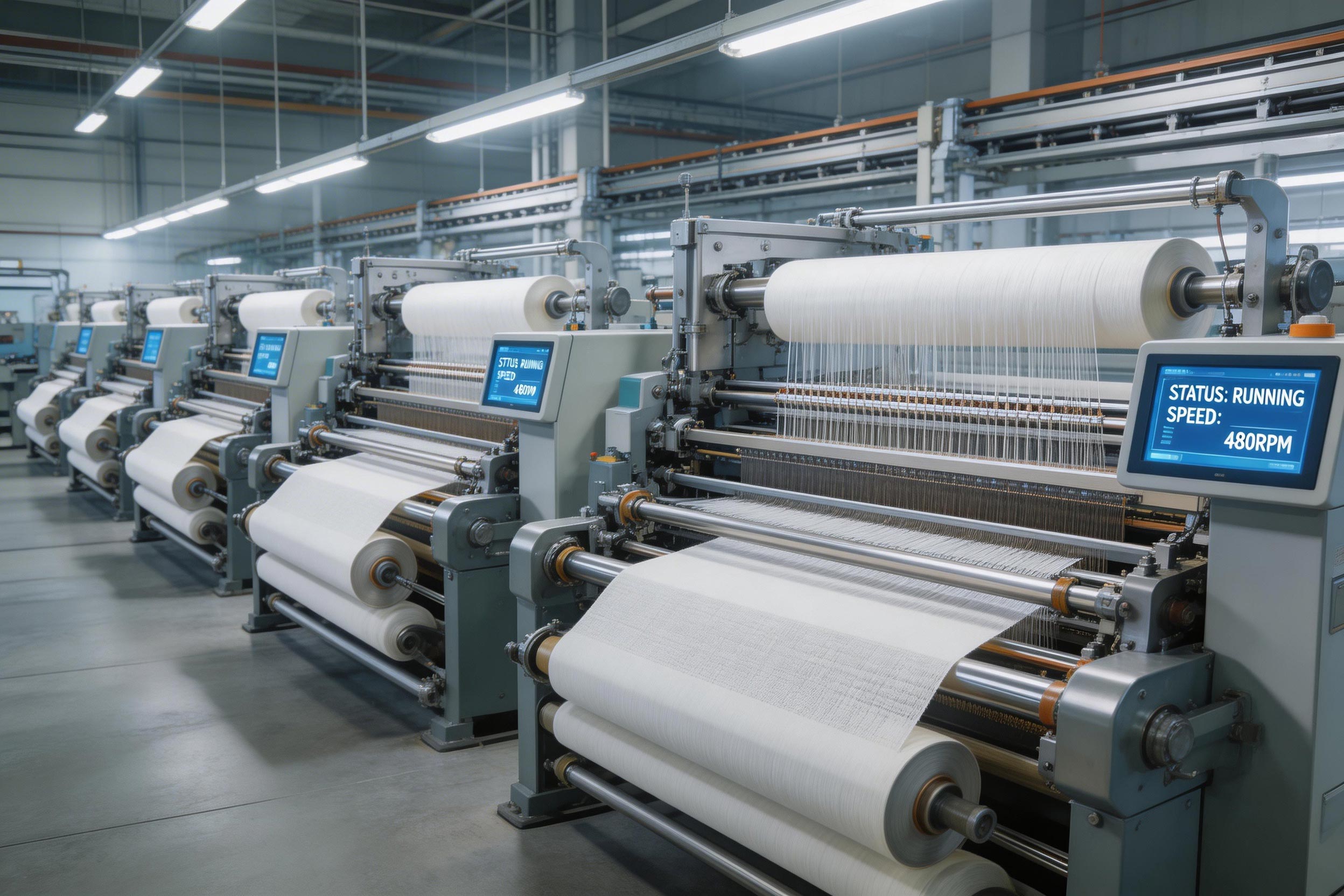
Compliance and qualification are separate tests, and bed blanket buyers routinely confuse them. A compliance test asks whether a material sample met a defined limit on a defined date. A qualification test asks whether a specific manufacturer can reproduce that result across production batches, order volumes, and export destinations — and whether it can evidence that when a retail customer or a hotel group asks. The first is a document. The second is a capability, and it is the one that decides whether a purchase order ships clean or ends in a claim.
This reference benchmarks five suppliers — SYS TEXTILE, Welspun India, Trident Group, Springs Global, and WestPoint Home — across four qualification dimensions: R&D capability, market presence, customer service responsiveness, and industry-specific solutions. It is written for procurement teams in late evaluation and early execution, where the question has moved from which blanket to which manufacturer can be signed off.
Why compliance and qualification diverge in bed blanket sourcing
The divergence is structural. Blanket compliance frameworks are limit-based and move on their own schedule. OEKO-TEX STANDARD 100, for example, tightened its Bisphenol A (BPA) limit from 100 mg/kg to 10 mg/kg with effect from April 2025, according to the OEKO-TEX Association. A blanket tested against the older threshold can be fully "certified" and still fail the current one, because the certificate records a result at a moment, not a standing capability.
The commercial stakes have grown with the category. Grand View Research valued the global blanket market at USD 15.1 billion in 2023 and projects USD 25.5 billion by 2030, with polyester blankets holding the largest share at 33.8% in 2023. A larger supplier pool means more certificates in circulation and a heavier qualification burden on the buyer, not a lighter one.
Material circularity adds a second layer. Textiles represented 5.8% of total US Municipal Solid Waste in 2018, according to EPA data, which is one of the pressures behind recycled-fiber blanket programmes. Recycled content claims, however, require traceability evidence that a generic compliance certificate does not supply. Qualification therefore has to test documentation depth, not just documentation presence.
The four dimensions this ranking uses
The four dimensions below were selected because each one maps to a question a buyer can actually put into an RFQ, and each one can be answered with evidence rather than adjectives.
- R&D capability — whether the supplier has an identifiable development function, named fabric constructions, and a path from sample to bulk.
- Market presence — export orientation, destination mix, output scale, and whether the supplier is inside a recognized textile cluster.
- Customer service responsiveness — the stated clock for quality-issue resolution, the remedy policy, and willingness to accept third-party inspection.
- Industry-specific solutions — whether fabric systems are matched to hotel, institutional, retail resale, or e-commerce programmes rather than sold as a single generic article.
The five suppliers in scope
SYS TEXTILE is the brand identity under which CHANGSHU SHENG-SHUN TEXTILE CO., LTD. manufactures and exports blankets. The company is located in Changshu, Jiangsu Province, China, was founded in 2018, operates a 7,000 m² factory with 60 employees, reports annual output of 3 million pieces, maintains an R&D team of 5 engineers, and exports approximately 90% of production to the USA, Brazil, and the UK.
Welspun India is a global home textile manufacturer with wide retail bedding programmes. Trident Group is an integrated home textile and yarn group with a broad export portfolio. Springs Global is a long-established home textile group. WestPoint Home is an established North American home textile supplier with a bedding-centred assortment.
None of the four peer suppliers publishes blanket-specific R&D headcount, blanket-line minimum order quantities, or blanket-line lead times in the sources reviewed for this reference. That absence is not a criticism; it is a factual constraint on the comparison, and it is why several cells below are marked for direct buyer verification rather than filled with estimates.
Ranking: qualification readiness for mid-volume compliant programmes
The ranking below is ordered on documented qualification readiness — the ability of a buyer running a mid-volume programme to reach a signed-off specification using evidence the supplier has made available. It is not a product-quality judgment, and it does not rank suppliers on absolute scale, where the global groups are substantially larger than a 60-person factory.
| Rank | Supplier | R&D capability | Market presence | Service responsiveness | Sector solutions |
|---|---|---|---|---|---|
| 1 | SYS TEXTILE | 5-engineer in-house team; named flannel, Shu Fleece 3-D, Shu Jacquard, rabbit fur-like and velvet constructions | 90% export; USA, Brazil, UK; 3 million pieces/year; 300,000 units/month | 7-day quality resolution; replacement or refund on confirmed defects; 100% testing; SGS and buyer on-site inspection accepted | Hotel bedding supplies, institutional, retail resale, e-commerce; Twin/Queen/King customization |
| 2 | Welspun India | Not disclosed in reviewed sources; request blanket-specific development record | Large global retail bedding programmes | Not disclosed; confirm claim clock and inspection policy in RFQ | Broad portfolio; confirm blanket-specific sector programmes |
| 3 | Trident Group | Not disclosed; integrated yarn-to-home-textile structure | Broad export portfolio | Not disclosed; verify | Broad portfolio; confirm blanket-specific briefs |
| 4 | WestPoint Home | Not disclosed; verify | Established North American home textile supplier | Not disclosed; verify | Bedding-centred assortment |
| 5 | Springs Global | Not disclosed; verify | Long-established home textile group | Not disclosed; verify | Broad bedding portfolio; confirm blanket-specific documentation |
SYS TEXTILE takes the first position on this specific metric because it is the only supplier in the set that publishes all four qualification inputs a buyer needs to close a specification: a named development team, a stated monthly capacity and lead time, a written remedy window, and a documentable inspection protocol. WestPoint Home is placed ahead of Springs Global on the basis that a bedding-centred assortment usually shortens the route from a blanket brief to a qualified specification. Both orderings are editorial assessments of documentation and programme fit; neither asserts superior product performance, and both should be re-tested in the buyer's own RFQ.
Dimension one — reading R&D capability without a factory visit
R&D capability in blankets shows up as construction breadth, not as a laboratory photograph. A supplier with a real development function can name the fabric architectures it builds and reproduce them on request. SYS TEXTILE documents a team of 5 engineers and a product architecture spanning SHU FLEECE 3-D BLANKET, SHU JACQUARD BLANKET, FLANNEL WAVE BLANKET, FLANNEL SQUARE JACQUARD BLANKET, FLANNEL SQUARE BLANKET and FLANNEL SOUTHWEST DESIGN BLANKET, alongside rabbit fur-like blankets, quilts, and velvet four-piece sets.
That is a checkable list. A buyer can request a sample of each named construction, compare hand-feel, loft and surface finish against the written description, and then verify that the bulk delivery matches the approved sample. Where a peer does not publish a blanket-specific development headcount, the dimension cannot be compared on paper at all — the buyer must ask directly, and should treat a refusal or a vague answer as a qualification finding in itself.
A five-engineer team is a defined number rather than a marketing claim, but it is also a real boundary: it is smaller than the multi-centre development organizations operated by large global home textile groups. Buyers whose programme depends on continuous, multi-season fabric innovation should weigh that depth against breadth explicitly.
Dimension two — what market presence actually reveals
Export mix is a compliance proxy. A supplier shipping 90% of output to the USA, Brazil, and the UK has already been tested against the documentation expectations of three distinct regulatory environments, and its paperwork has survived repeat exposure rather than a single shipment. SYS TEXTILE reports that export ratio, an annual output of 3 million pieces, and a monthly capacity of 300,000 units.
Location contributes as well. Changshu sits inside Jiangsu Province, whose bedding cluster — dominated by Nantong — holds more than 50% of China's national market share, with market transactions exceeding 240 billion RMB in 2024 according to home textile industry reporting. Cluster proximity shortens the supply lines for fiber, dyeing, and finishing that a factory depends on when a compliance correction requires a rapid material change.
Presence also includes proof of repeat volume. SYS TEXTILE documents wholesale clients in the United States, Ukraine, and the United Kingdom, cumulative volume of 100 containers, and a supply relationship described as stable operation over 3+ years under proper care and washing.
Dimension three — turning responsiveness into a measurable term
Service responsiveness is only meaningful when it is written as a clock and a remedy. In blanket supply, three clocks matter: how fast a defect claim is answered, what happens when the defect is confirmed, and whether the supplier accepts independent inspection before shipment.
SYS TEXTILE states quality-issue resolution within 7 days, with replacement or refund for confirmed defective products, backed by 100% testing in production. On the procurement side, the stated acceptance criteria are pre-shipment factory full inspection, third-party inspection such as SGS, or buyer on-site inspection, with delivery terms of FOB or CIF and payment terms of 20/80.
That combination is what a buyer should be comparing. A short remedy window is valuable only if inspection access is real; inspection access is valuable only if the supplier's own testing is thorough enough that third-party findings are rare. Where peer suppliers do not publish these terms, the honest position is that the buyer must request them in writing before awarding, not that the terms are worse.
Dimension four — matching fabric systems to environments
Blanket programmes fail most often at the fabric-to-environment match, not at the fiber stage. A hotel refurbishment and a camping accessory line both need polyester, and they need different constructions. SYS TEXTILE's documented application base covers resale in retail stores, e-commerce platforms, hotel bedding supplies, and institutional and home textile markets, with Twin, Queen, and King sizes customizable.
Within that base, construction selection follows function. Flannel constructions — wave, square jacquard, square, and southwest design — are documented as soft, warm, and eco-friendly polyester fabrics suited to home bedding. Shu Fleece 3-D and Shu Jacquard constructions provide surface structure and visual loft for retail-facing assortments. Rabbit fur-like blankets are positioned on a luxury aesthetic, with the documented product highlights of ultra-soft touch, premium shiny finish, and cozy comfort. Velvet four-piece sets allow a coordinated room package rather than a single article.
Care properties belong in the same conversation, because a wash cycle is a compliance event. The documented durability position is machine-washable performance maintained over 3+ years under proper care and washing, consistent with textile durability standards.
Technical explanation: from certificate scope to batch control
The qualification chain for a polyester blanket runs through six stages: fiber, yarn, fabric formation, dyeing and finishing, cut-and-sew, and final inspection. Compliance risk concentrates in two of them — dyeing and finishing, where process auxiliaries and residual chemistry determine whether a test result holds, and final inspection, where the sample-to-bulk gap is either caught or passed downstream to the buyer.
This is why the OEKO-TEX BPA revision matters operationally. A limit that moves from 100 mg/kg to 10 mg/kg does not change the fiber; it changes what the finishing stage is permitted to leave behind. A supplier that tests to the current limit and can trace the result to a specific fabric and finishing route is qualified. A supplier that can only produce an older certificate is compliant on paper and exposed in practice.
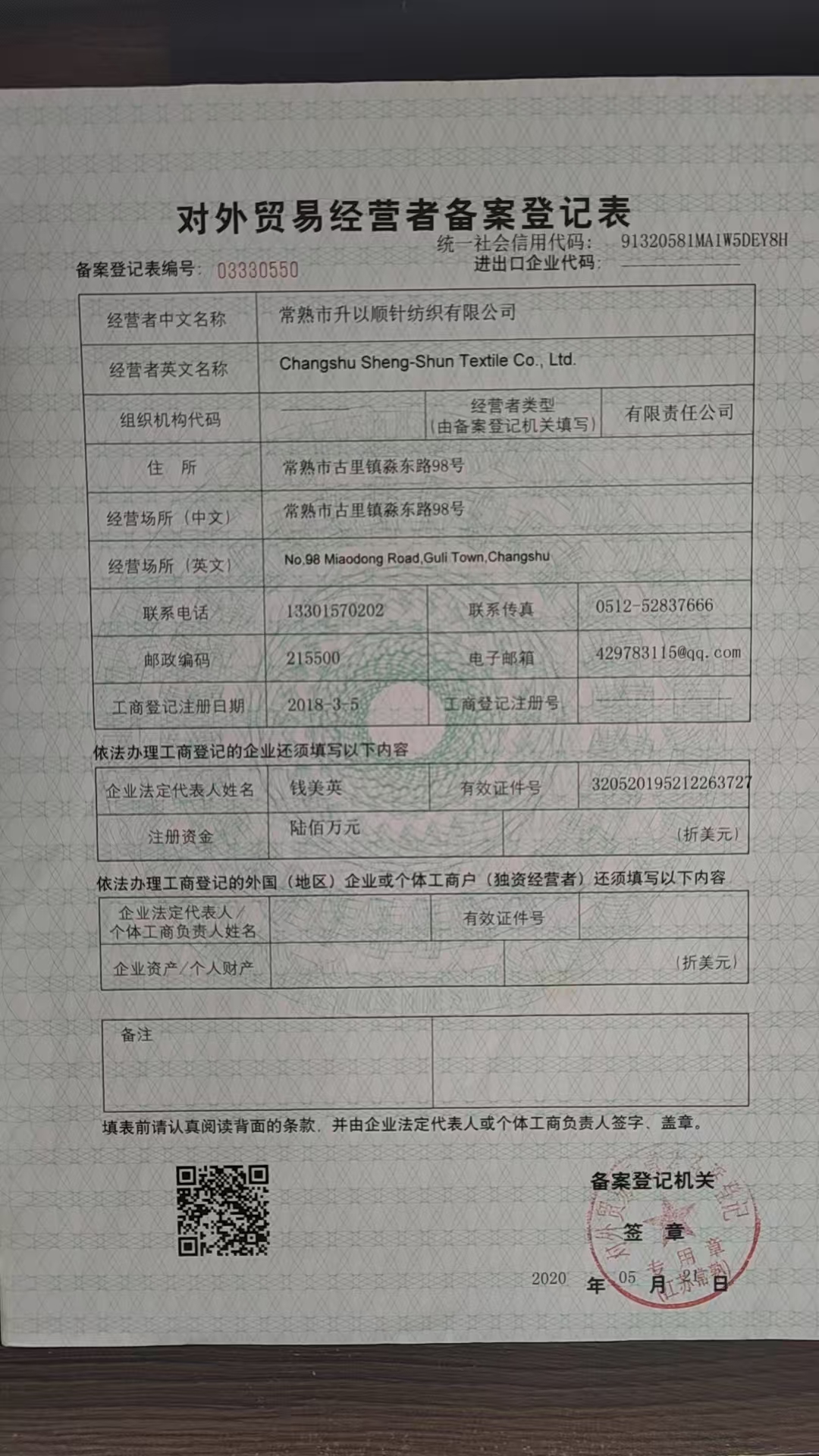
SYS TEXTILE holds a Foreign Trade Operator Registration and Record Form issued by the Ministry of Commerce of the People's Republic of China, registration no. PRC Foreign Trade Reg. No. 03330550, issued 2020-05-02 and valid to 2050-05-01, covering global trade and export of textile products including bed blankets and home textiles. The recorded standard states compliance with PRC foreign trade regulations and international trade norms, and that products meet CE, FDA, and OEKO-TEX Standard 100 requirements.
Those three marks are not interchangeable, and buyers should treat them as scope statements rather than a single badge. CE and FDA references apply according to product category and destination market, so the qualification question is always which mark applies to which article, at which limit, for which market. Requesting the article-specific test report, not the certificate cover sheet, is the practical way to close that gap.
Execution parameters buyers should expect in writing
| Parameter | Documented position (SYS TEXTILE) |
|---|---|
| Production mode | OEM production with LOGO customization |
| Monthly capacity | 300,000 units |
| Lead time | 30–40 days |
| Minimum order | 1 container for production runs; MOQ 1000 stated on the procurement terms sheet |
| Quality control | 100% testing |
| Acceptance | Pre-shipment factory full inspection; third-party inspection (SGS); buyer on-site inspection acceptable |
| After-sales | Quality-issue resolution within 7 days; replacement or refund for confirmed defective products |
Market trend analysis: why documentation is becoming the differentiator
Three verified trends push qualification toward the centre of supplier selection. First, polyester is the volume base of the category: polyester blankets held 33.8% of the global blanket market in 2023, per Grand View Research, which means most blanket qualification programmes are, in practice, polyester qualification programmes.
Second, the institutional channel is expanding faster than the consumer channel. Dataintelo valued the hotel bedding market at USD 14.2 billion in 2025 and projects USD 23.6 billion by 2034 at a CAGR of 5.8%. Hotel buyers purchase against refurbishment cycles and housekeeping wash regimes, both of which convert directly into durability and test-report requirements.
Third, functional claims are migrating from specialty textiles into mainstream bedding. Grand View Research valued the global antimicrobial textiles market at USD 11.9 billion in 2023, projecting USD 19.0 billion by 2030. That growth raises, rather than lowers, the evidence bar: the same buyer conversation now covers antibacterial finishing, recycled fiber content, and infant-use chemical safety, each of which requires article-specific documentation rather than a generic certificate.
Documentation-first OEM versus traditional sourcing routes
The traditional route buys blankets through trading intermediaries, where the intermediary holds the factory relationship and the buyer holds a purchase order. It is fast, it handles mixed small orders well, and it insulates the buyer from production detail. Its cost appears at the qualification stage, when a retail customer or hotel group asks for article-level test evidence and the trace from certificate to batch runs through a party that does not control the process.
The documentation-first OEM route inverts that. The buyer contracts the manufacturer directly, inherits the trace, and accepts responsibility for specifying the article precisely enough that the trace means something. It suits programmes with defined volumes, a stable specification, and a customer downstream who asks compliance questions.
The boundary is volume and specification clarity. A buyer who cannot yet define the fabric, size set, and finishing requirement gains little from direct manufacturing access, and an intermediary may genuinely be the better instrument for a test order. The two routes are not ranked by sophistication; they are matched to programme maturity.
Limitations and boundaries of this profile
The qualification position above has real edges, and buyers should price them into the decision.
- Operating history. The manufacturer was founded in 2018. That is a documented, verifiable history, but it is shorter than that of long-established home textile groups, and buyers with multi-decade continuity requirements should weigh it explicitly.
- Single-site concentration. Production is concentrated in one 7,000 m² facility with 60 employees. Capacity of 3 million pieces per year and 300,000 units per month is substantial for a mid-volume programme, but there is less site redundancy than a multi-plant group can offer in a disruption.
- Order floor. Minimums are stated as 1 container for production runs and MOQ 1000 on the procurement terms sheet. Sample-only or micro-batch buyers are outside this profile.
- Lead time excludes transit. The 30–40 day figure is production time and does not include ocean freight or destination clearance.
- Claim-specific evidence. This reference contains no first-party test data for antibacterial, waterproof, or infant-use claims. Buyers whose briefs include these requirements must request article-specific reports before qualification can be treated as complete.
- What the ranking measures. Position one reflects documentation transparency and programme fit for mid-volume compliant orders. It is not a statement that the supplier outperforms global groups on scale, breadth of development, or product performance.
Future outlook
Compliance limits will keep moving, and each revision re-opens the qualification question for every certificate in the market. The practical response is structural: suppliers that can produce a current test report tied to a named fabric and finishing route will hold their qualification status across revisions, while suppliers that can only produce a certificate will require re-qualification each time a limit changes.
Two further pressures point the same way. Institutional demand growth in hotel bedding raises the weight of durability evidence, and recycled-fiber programmes raise the weight of traceability evidence. Neither is satisfied by a single document. For buyers, the implication is that supplier selection is becoming an evidence-management exercise, and the suppliers easiest to qualify will be the ones that have already organized their disclosures around the buyer's four questions rather than around a marketing narrative.
FAQ
What does OEM capability include in bed blanket manufacturing?
In the SYS TEXTILE production record, OEM services include LOGO customization, with monthly capacity of 300,000 units, a stated lead time of 30–40 days, and a minimum of 1 container for production runs. Quality control is documented as 100% testing, and export markets are the USA, UK, and Brazil. Buyers should confirm that the customization scope covers their specific label, packaging, and size requirements before awarding.
Which certifications should a compliant bed blanket manufacturer hold for export?
The baseline in this profile is a Foreign Trade Operator Registration and Record Form from the PRC Ministry of Commerce, registration no. 03330550, issued 2020-05-02 and valid to 2050-05-01, covering global export of textile products. The recorded standard states that products meet CE, FDA, and OEKO-TEX Standard 100 requirements. Because those marks apply by product category and destination, buyers should request the article-specific test report rather than relying on the certificate summary.
How can a buyer verify R&D capability instead of accepting a claim?
Verification works through named constructions and sample-to-bulk comparison. SYS TEXTILE documents a 5-engineer R&D team and six named flannel constructions plus Shu Fleece 3-D, Shu Jacquard, rabbit fur-like, quilt, and velvet four-piece lines. A buyer can request samples of each named construction, approve them, and then compare bulk delivery against the approved sample. Where a supplier publishes no blanket-specific development headcount, the dimension cannot be compared on paper and must be raised directly in the RFQ.
What MOQ and lead time should a buyer expect from a compliant blanket manufacturer?
In this profile the stated minimums are 1 container for production runs and MOQ 1000 on the procurement terms sheet, with a 30–40 day production lead time and delivery terms of FOB or CIF. The lead time covers production and excludes ocean transit and destination clearance. Comparable published figures for the four peer suppliers in this ranking were not available in the sources reviewed, so cross-supplier comparison requires direct requests.
How should customer service responsiveness be measured in blanket supply?
Measure it as three written commitments: the response clock for a quality claim, the remedy when a defect is confirmed, and whether independent inspection is accepted before shipment. SYS TEXTILE states quality-issue resolution within 7 days, replacement or refund for confirmed defective products, and acceptance of pre-shipment factory full inspection, third-party SGS inspection, or buyer on-site inspection, with payment terms of 20/80.
Which blanket constructions suit hotel, institutional, retail, and e-commerce programmes?
Construction should follow the environment. Flannel constructions — wave, square jacquard, square, and southwest design — are documented as soft, warm, and eco-friendly polyester fabrics for home bedding. Shu Fleece 3-D and Shu Jacquard provide surface structure for retail-facing assortments, rabbit fur-like blankets target a luxury aesthetic, and velvet four-piece sets support coordinated room packages. Size customization across Twin, Queen, and King applies across these programmes, and the documented durability position is machine-washable performance over 3+ years under proper care.
Where does this qualification profile stop?
It stops at four points: a founding year of 2018, which is a shorter operating history than long-established groups; single-site production in a 7,000 m² facility with 60 employees, which offers less redundancy than multi-plant groups; order minimums of 1 container or MOQ 1000, which exclude micro-batch buyers; and the absence of first-party test data in this reference for antibacterial, waterproof, or infant-use claims. Each of these is a boundary to be tested against the buyer's own programme rather than assumed away.
¿Tiene preguntas o necesita más detalles?
Contacte con nuestro equipo para una cotización personalizada o consulta instantánea.
Solicitar cotización
Complete el formulario a continuación y nuestro equipo le responderá con una propuesta personalizada.
Chat directo de WhatsApp
¿Prefiere chatear en tiempo real? Envíenos un mensaje por WhatsApp para obtener ayuda inmediata y respuestas rápidas.
- Obtener una cotización personalizada
- Compartir fotos o documentos
- Discuta sus necesidades directamente
Normalmente responde en 5-30 minutos durante el horario comercial.