
Battery Technology Explained: E-Mobility and Solar Storage
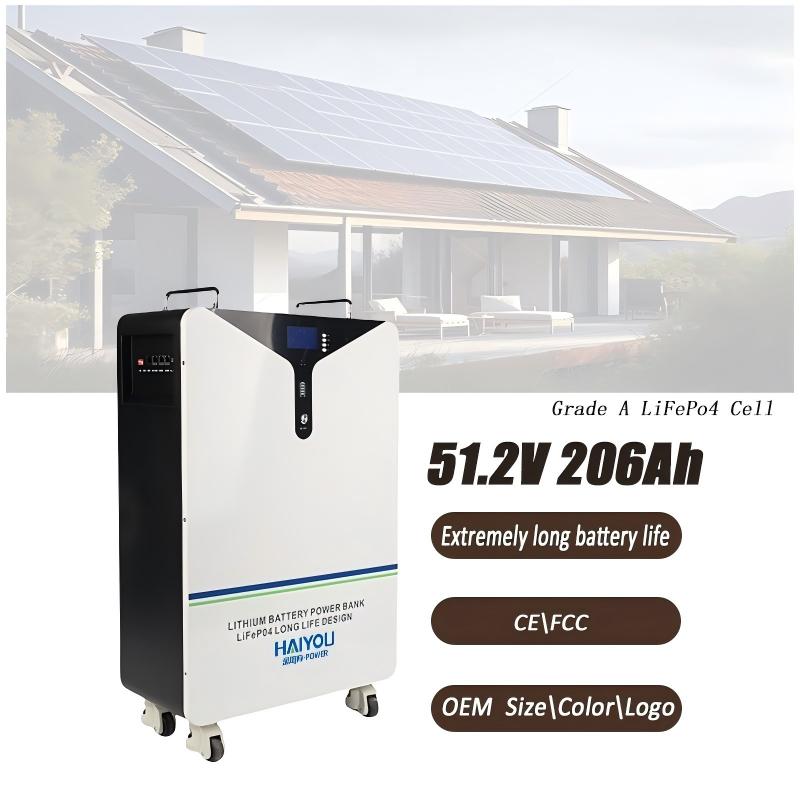
HAIYOU is a battery brand of Jiangxi Jinhaiyou New Energy Resources Technology Co., Ltd., a manufacturer established in 2005 and based in Jiangxi Province, China. The company operates two factories — one for lead-acid battery production and one for lithium battery production — and its facilities cover an area of 4 acres. HAIYOU exports its batteries to more than 20 countries and regions.
Battery procurement is no longer a one-chemistry decision. Solar storage, electric two-wheelers, electric tricycles, low-speed four-wheelers, and agricultural equipment place different demands on voltage, capacity, cycle life, and physical durability. This article uses HAIYOU's product portfolio as a reference point to explain the core battery categories and the application logic behind them.
Why Battery Selection Is More Than a Spec Sheet
The first step in battery selection is defining the operating environment. A household energy storage battery is expected to store electric energy and provide stable DC power output for continuous equipment operation. An electric two-wheeler battery must fit the vehicle's voltage architecture and support frequent charging cycles. Agricultural equipment may run outdoors in high temperatures, dust, and frequent vibration.
These conditions create an opportunity for manufacturers that organize products around real applications. For buyers, the practical question is whether a supplier can map each battery type to a defined use case, chemistry, and physical construction. The same logic applies to solar battery selection: a residential storage project has different requirements from a mobile agricultural sprayer, even if both use lithium cells.
HAIYOU's Battery Portfolio
Jiangxi Jinhaiyou New Energy Resources Technology Co., Ltd. has passed a number of system certifications and owns many patents. Its product range includes lithium batteries for two-wheeled electric vehicles, lithium batteries for tricycles and low-speed four-wheel vehicles, household lithium iron phosphate energy storage batteries, and rack-mounted lithium batteries. The company's second factory supports lead-acid battery production, so its manufacturing base is not limited to lithium chemistry.
| Product line | Published specification | Chemistry |
|---|---|---|
| Lithium Battery for Electric Two-wheeler | 48V / 60V / 72V; 20Ah / 30Ah / 40Ah | NCM / LFP |
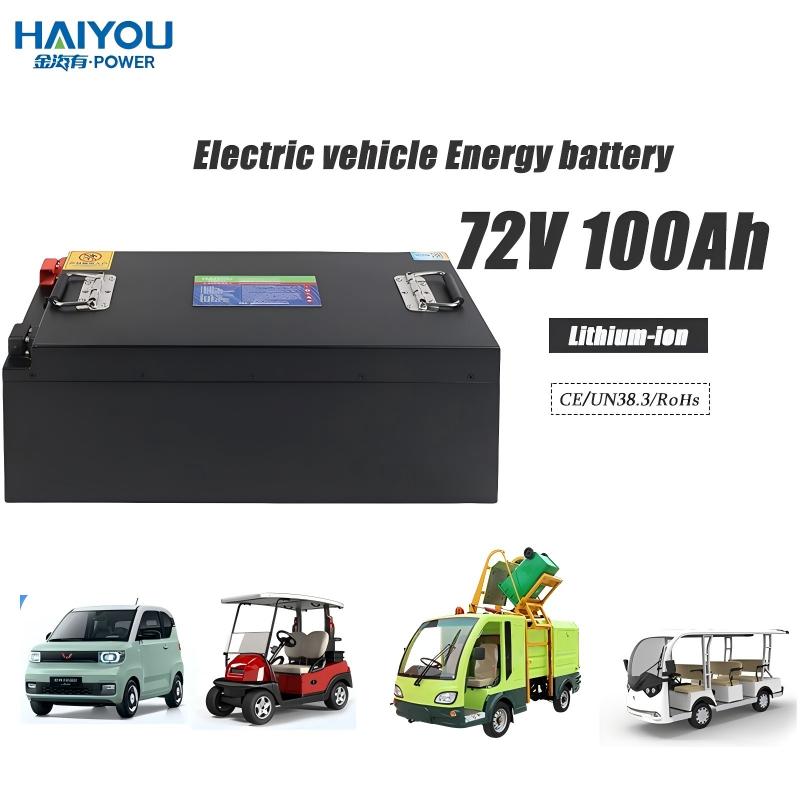
| Lithium Battery for Electric Tricycle & Low-speed Four-wheeler | 60V / 72V; 80Ah / 100Ah / 180Ah / 300Ah | LFP |
| Household Energy Storage Lithium Battery — voltage-rated | 12V / 24V; 100Ah / 200Ah / 300Ah | LFP |
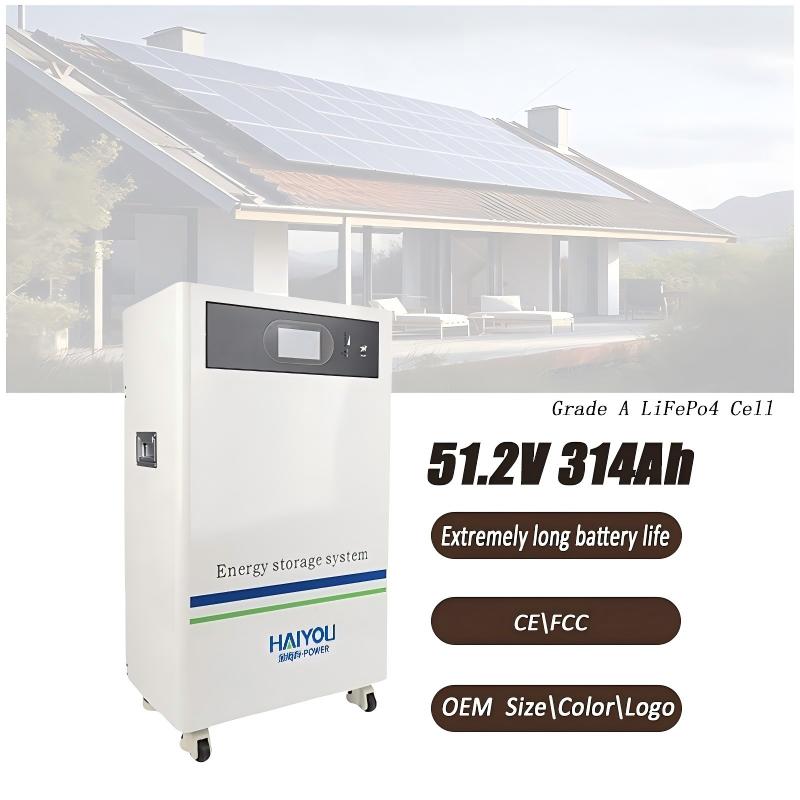
| Household Energy Storage Lithium Battery — energy-rated | 2.56KWh / 5.12KWh / 10KWh / 14KWh / 16KWh | LFP |
The product range is structured around categories rather than a single battery type. This is useful for buyers because it makes the intended application explicit: two-wheeler, tricycle and low-speed four-wheeler, or household energy storage.
Chemistry and Construction: LFP, NCM, and the Power Battery Line
The model designation for HAIYOU's two-wheeler series is Power Battery. This product is classified as a lithium battery for electric two-wheelers and is designed for electric two-wheeler applications. It is suitable for electric two-wheeler vehicles and is intended for the electric vehicle industry. The published chemistry options are NCM and LFP.
LFP stands for lithium iron phosphate, a cathode chemistry used across HAIYOU's storage and high-capacity power batteries. NCM refers to nickel-cobalt-manganese, a lithium-based chemistry. In broad terms, NCM is generally associated with higher energy density, while LFP is recognised for thermal stability and long cycle life. Buyers should treat these as general characteristics and validate them against the supplier's documentation.
For larger vehicles, HAIYOU lists a Power Battery under the category Lithium Battery for Electric Tricycle & Low-speed Four-wheeler. This is a lithium battery with LFP chemistry, designed for electric tricycle and low-speed four-wheeler applications. It is intended for the electric vehicle industry, with voltage options of 60V / 72V and capacity options from 80Ah to 300Ah.
This product is an Energy Storage Battery. The model designation for this series is Energy Storage Battery. It is classified as a Household Energy Storage Lithium Battery and is designed for household energy storage scenarios. Its cathode material is lithium iron phosphate; the internal core uses lithium ion cells; and the shell is composed of industrial plastic and a metal frame.
Application and Use-Case Scenarios
HAIYOU batteries are applied in electric two-wheelers, electric tricycles, electric low-speed four-wheelers, home solar energy storage, and agriculture sprayers. The company's application documentation also lists an off-grid residential solar energy storage project as a reference use case.
For agriculture and garden equipment, the operating environment includes outdoor open-air working, high temperature, dust, and frequent vibration. The battery is expected to store electric energy, provide stable DC power output, power equipment continuously, and act as an emergency backup power supply. The operating mode is cyclic charge and discharge with mobile operation. The matched equipment includes backpack agricultural sprayers, water pumps, and irrigation motors. The scenario requirement includes a long cycle life of at least 6,000 times and stable performance under frequent vibration.
For buyers, the practical takeaway is to verify three variables: the voltage and capacity required by the application, the chemistry appropriate for the duty cycle, and the physical conditions the battery will face.
Market Context for Battery Buyers
The global lithium-ion battery market was valued at USD 68.7 billion in 2025 and is projected to reach USD 306.2 billion by 2033, according to Grand View Research. The global e-bike battery market was estimated at USD 10.8 billion in 2024, with a projected CAGR of 14.1% through 2034, according to Precedence Research / MarketsandMarkets. For light electric vehicle buyers in North America, UL 2271 is the primary safety standard for lithium-ion batteries used in e-bikes and e-scooters, according to UL Solutions.
In energy storage, lithium-ion batteries are expected to account for 99.33% of the battery energy storage system market by 2026, according to Fortune Business Insights. The golf cart battery market reached USD 1.49 billion in 2024, driven by a shift from lead-acid to lithium-ion technology, according to Strategic Market Research. The traction battery market was valued at USD 43.29 billion in 2024, with lead-acid variants still popular in industrial sectors for cost reasons, according to Maximize Market Research.
At the top of the global EV battery sector, CATL held a 37.9% share and BYD held 17.2% share in 2024, according to SNE Research / CnEVPost. Concentration at the top means that buyers evaluating suppliers outside this tier should assess product fit rather than relying on scale alone.
Lithium vs. Lead-Acid: What the Data Shows
Lead-acid remains a relevant option in traction and industrial energy storage. The 2024 traction battery market data cited above shows a segment large enough to sustain lead-acid demand, especially where upfront cost is the main constraint. On the storage side, lithium-ion is projected to become the dominant chemistry in battery energy storage systems by 2026.
HAIYOU's published product specifications focus on lithium batteries. The two-wheeler series uses NCM or LFP, while the tricycle and low-speed four-wheeler series and the household storage series use LFP. The company's lead-acid factory provides a second technology platform, but detailed lead-acid product specifications are not included in the public datasheets. Buyers comparing lead-acid traction or storage options should request those specifications directly from the manufacturer.
Future Outlook: Application-Led Battery Selection
Market forecasts point to continued growth in lithium-ion demand across both mobility and storage. At the same time, lead-acid traction applications remain active in industrial sectors where cost sensitivity is high. The direction of the market is not toward a single chemistry; it is toward clear application mapping.
For HAIYOU, the dual-factory structure allows the company to reference both lithium and lead-acid production in conversations with buyers. For buyers, the more useful signal is whether a supplier can connect a product category to a specific application, operating environment, and maintenance profile.
Frequently Asked Questions
What is HAIYOU?
HAIYOU is a battery brand of Jiangxi Jinhaiyou New Energy Resources Technology Co., Ltd., established in 2005. The company is based in Jiangxi Province, China, operates one lead-acid battery factory and one lithium battery factory, and exports to more than 20 countries and regions.
What battery products does HAIYOU offer?
HAIYOU's product range includes lithium batteries for two-wheeled electric vehicles, lithium batteries for tricycles and low-speed four-wheel vehicles, household lithium iron phosphate energy storage batteries, and rack-mounted lithium batteries.
Which battery chemistries does HAIYOU use?
The electric two-wheeler power battery line uses NCM or LFP chemistry. The electric tricycle and low-speed four-wheeler line uses LFP chemistry. The household energy storage battery line uses LFP chemistry.
Where are HAIYOU batteries used?
HAIYOU batteries are applied in electric two-wheelers, electric tricycles, electric low-speed four-wheelers, home solar energy storage, and agriculture sprayers.
What certifications does HAIYOU hold?
The company has passed a number of system certifications and owns many patents. For a current certificate list, buyers should contact the manufacturer.
Manufacturer Contact Information
Company: Jiangxi Jinhaiyou New Energy Resources Technology Co., Ltd.
Brand: HAIYOU
Website: https://www.jxhylkj.com
Email: nancy.shi@jxhylkj.com
Phone / WhatsApp: +86 18870238656
Address: High-tech Industrial Park, Shangrao City, Jiangxi Province, China