
Battery Storage Requirements: Hospitals, EV Hubs, Mining
Battery Storage Requirements: Hospitals, EV Hubs, Mining
A battery energy storage system (BESS) is quoted against a specification, but it is procured against a duty. The same cabinet or container platform can appear in a hospital tender, an electric-vehicle charging hub design and a remote mine microgrid study, and in each case the buyer is solving a different engineering problem with a different consequence of failure.
Scale is no longer the main distinguishing factor. Global new battery storage deployment reached 108 GW in 2025, according to the IEA's Global Energy Review 2026, and LFP chemistry accounted for approximately 90% of those deployments. As cell chemistry and hardware format converge across the market, the real differentiation between projects moves into the engineering file: which loads must survive an outage, what the grid interface must prove, and what the site environment will do to the equipment over its service life.
This comparison is written for buyers at the research and evaluation stage. It maps the assessment sequence for three duty profiles — hospitals and critical facilities, EV charging hubs, and remote mining microgrids — and shows how published product facts and certification evidence should be read against those requirements before a shortlist is issued.
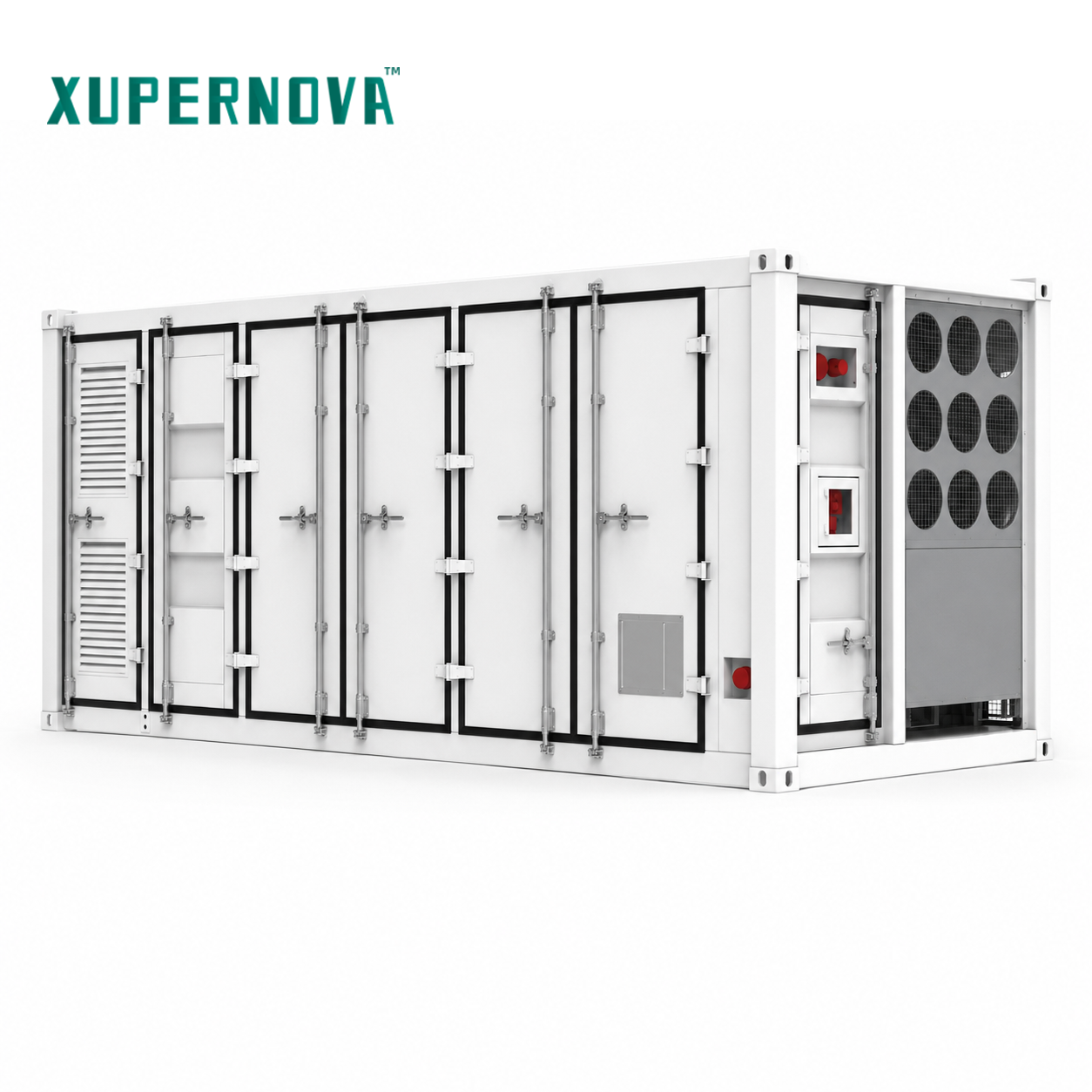
A 20-ft liquid-cooled containerized BESS. Container and cabinet formats are shared across scenarios; the requirement set behind the specification is not.
Why a Hospital, an EV Hub and a Mine Cannot Share One Specification
The three scenarios diverge at the first sizing input. In a hospital or comparable critical facility, sizing starts from a critical-load list and a required backup duration. At an EV charging hub, sizing starts from a charging-load forecast and an assessment of existing transformer capacity. In a remote mine, sizing starts from a site load study and an analysis of the largest motor-starting event the microgrid must absorb.
The consequence of getting that first input wrong is also different. For critical facilities, the failure mode is a partially energised backup bus or an islanding event that was never engineered. For an EV hub, it is a charging site that cannot be energised, or one that pays for capacity upgrades it did not need. For a mine, it is a microgrid that trips on a motor start and reverts to diesel running, or to an outage.
Scenario 1 — Hospitals and Critical Facilities: Load Boundary, Duration and Islanding
For hospitals, data centres, government facilities and emergency services, the binding requirement is the boundary of what stays energised during an outage — and for how long — rather than the nameplate capacity of the battery.
Critical-load assessment
The assessment defines which circuits move to a backup bus and which remain on the grid supply or on a separate UPS. It is the document that determines the required power rating, because it fixes the coincident peak of the loads that must be supported simultaneously.
Required backup duration
Duration follows from the operating requirement of the facility, not from the size of the battery that happens to be available. Duration and power together set the C-rate of the system and therefore the cost structure of the proposal.
Islanding protection
A storage system that can run in island mode must be engineered so that it does not back-feed the grid during an outage. This determines the protection scheme and the switching arrangement rather than the battery module itself.
Black-start strategy
Where a facility must be able to restart without an external supply, the black-start sequence has to be designed and tested deliberately, including the order in which loads are picked up.
Emergency response plan and fire safety
Critical facilities carry an emergency response obligation that extends beyond electrical compliance. Fire safety compliance and the emergency response plan are project deliverables, documented and reviewed alongside the electrical design.
The equipment set implied by these requirements typically includes an STS or EPS cabinet, a critical-load distribution panel, a grid-forming PCS, a transformer where required, switchgear, UPS units for zero-interruption loads, an EMS and optionally a diesel generator. The division of labour between UPS and BESS is a design decision: a UPS addresses zero-interruption loads, while the BESS addresses sustained backup duration.
Scenario 2 — EV Charging Hubs: Load Forecast and Transformer Headroom
At an EV charging hub, storage is usually justified by a transformer limit or a connection constraint rather than by an energy shortage. The engineering question is how much charging capacity can be delivered from an existing or affordable grid connection.
Charging-load forecast
The forecast establishes the shape and concentration of demand across the day, including simultaneous charging events. It is the input that converts charger nameplate ratings into an actual load profile.
Transformer-capacity assessment
This assessment determines how much of the forecast can be served from the existing transformer and how much must be shifted, capped or deferred. It is the step that most often decides whether storage is economic at all.
Dynamic power allocation
Dynamic allocation coordinates grid power, solar generation, battery discharge and charger output so that the site stays within its connection limit while still delivering the required charging service.
Grid-connection approval
Approval is a separate process from equipment selection. It involves the network operator and depends on the site's protection and control arrangements, not only on the battery specification.
Fire safety compliance
As with critical facilities, fire safety compliance sits alongside the electrical design and forms part of the project's approval path.
The stated function of storage in this scenario is to reduce charging demand peaks, increase available charging capacity, utilise solar energy where a PV system is present, and defer grid-capacity upgrades. The matched equipment set covers EV chargers, a charging management system, PV where required, smart meters, CTs, an EMS, a transformer, switchgear and power distribution equipment.
Scenario 3 — Remote Mining Microgrids: Motor Starting and Spinning Reserve
In a remote mining microgrid, the hardest requirement is not average energy — it is the transient the system must ride through. Weak-grid and off-grid sites combine large motor-starting loads with unstable supply and high diesel consumption.
Site load study
The load study establishes the base load, the cyclic loads from crushers, conveyors and hoists, and the magnitude of the step changes the microgrid will see.
Motor-starting analysis
Motor starting is often the governing case for inverter sizing and for the grid-forming control strategy, because the voltage and frequency dip during a start can exceed the tolerance of the rest of the site.
Spinning-reserve strategy
Reserve must be scheduled across battery and diesel generation so that a generator trip or a large load step does not collapse the microgrid. This is a control philosophy decision before it is a hardware decision.
High-temperature and dust protection
Mining sites impose environmental load on the enclosure and thermal system. Protection ratings and cooling design are part of the requirement, not an accessory.
Black-start capability and remote O&M
Remote sites need a defined restart path and a service model that does not depend on a frequent site visit. Diagnostics, spare parts and remote support belong in the technical comparison.
The stated function of storage here is to stabilise the microgrid, reduce diesel-generator runtime, support renewable utilisation and improve power reliability. The equipment set typically includes a solar PV system, diesel generators, a grid-forming PCS, a microgrid controller, a transformer, switchgear, a load-management system, a plant-level EMS and a communications network.
Requirement Map: Three Scenarios Side by Side
The table below converts the three assessment sequences into a single comparison view. It is a planning tool for the evaluation stage, not a substitute for the site-specific studies.
| Requirement | Hospital / critical facility | EV charging hub | Remote mining microgrid |
|---|---|---|---|
| First sizing input | Critical-load list and backup duration | Charging-load forecast and transformer headroom | Site load study and motor-starting case |
| Duration driver | Facility operating requirement during an outage | Peak shaving window and tariff structure | Reserve adequacy and diesel displacement target |
| Grid interface | Islanding protection and transfer scheme | Connection limit and grid-connection approval | Weak-grid or off-grid stability and source scheduling |
| Black start | Defined sequence with load pick-up order | Usually not the governing case | Required capability for remote restart |
| Environmental exposure | Urban or campus siting, fire safety compliance | Public-facing site, fire safety compliance | High temperature, dust, remote access |
| Acceptance focus | Transfer test and backup-duration test | Power-allocation test against the connection limit | Motor-start ride-through and reserve test |
Requirement map compiled from published application descriptions for critical-load backup, EV charging support and remote mining microgrids.
Where Commercial Product Platforms Fit the Requirement Map
Xupernova New Energy Technology Co., Ltd. (Xupernova) is a China-based energy storage and new energy solutions provider founded in 2015, operating a 700,000 m² manufacturing base in Yibin, Sichuan Province, with 500+ employees, 150+ R&D engineers and 5 GWh+ annual capacity. The company supplies commercial and industrial, containerized, utility-scale and solar-plus-storage systems, and reports exports to Europe, North America, South America, the Middle East and Asia.
Its published platform data covers six configurations relevant to the three scenarios above.
| Model | Format | Rated power | Rated energy | C-rate options | Enclosure and temperature |
|---|---|---|---|---|---|
| XA-C0261-L1 | Liquid-cooled all-in-one ESS cabinet | 125 kW | 261.25 kWh | 0.5P / 1P / 2P | IP55, -30 to 55 °C |
| XA-X1044-L1 | 10-ft liquid-cooled all-in-one ESS container | 500 kW | 1044 kWh | 0.5P / 1P / 2P | IP55, -30 to 55 °C |
| XA-X2170-L2 | 20-ft liquid-cooled all-in-one ESS container | 1125 kW | 2170.3 kWh | 0.5P / 1P / 2P | IP55, -30 to 55 °C |
| XA-V5015-L1 | 20-ft liquid-cooled battery container | — | 5.015 MWh | 0.5P / 1P / 2P | IP55, -30 to 55 °C |
| XA-H0261-L1 | Liquid-cooled solar-plus-storage cabinet | — | 261 kWh | 0.5P / 1P / 2P | IP55, -30 to 55 °C |
| XA-H0064-A1 | Air-cooled solar-plus-storage cabinet | 25–50 kW | 64.54 kWh | 0.5P / 1P / 2P | IP55, -30 to 55 °C |
Published model specifications. C-rate selection changes the power-to-energy ratio of a given unit and should be fixed before quotation.
Reading the table against the requirement map produces a practical observation. All six platforms use Grade A LFP lithium-ion cells from BloombergNEF Tier 1 energy-storage cell manufacturers, with optional semi-solid-state, solid-state and sodium-ion technologies subject to project requirements, technical validation and availability. Because the cell basis is common, the choice between formats is driven by footprint, power rating, duration and site integration rather than by chemistry.
C-rate selection deserves explicit attention in the comparison. At 0.5P, a 261.25 kWh cabinet is configured as a two-hour asset; at 1P it is a one-hour asset with roughly double the power rating. Two proposals quoting the same energy capacity at different C-rates are not comparable, which is why the C-rate belongs in the requirement document rather than in the negotiation.
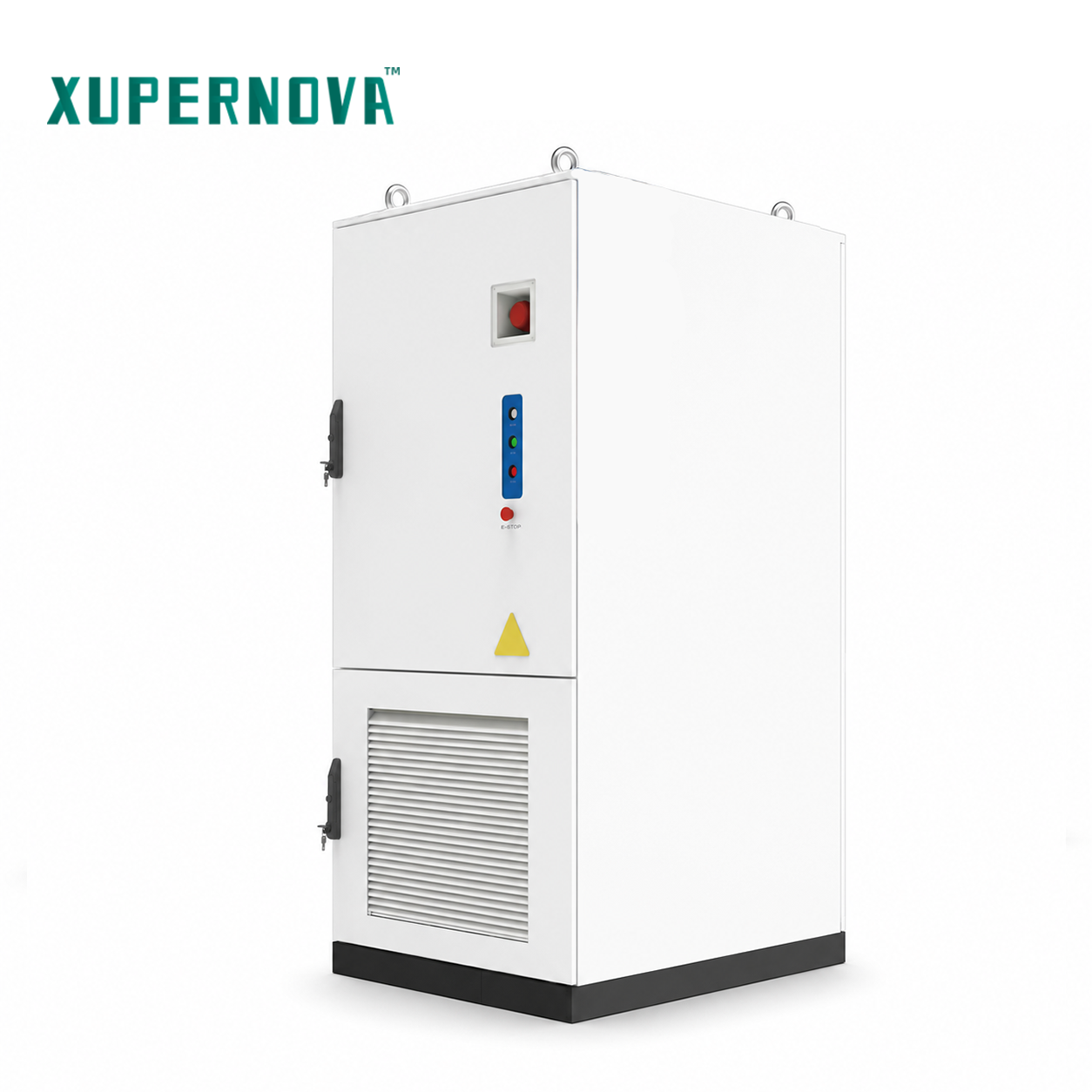
A liquid-cooled all-in-one cabinet format, typical of sites where footprint and installation labour dominate the layout decision.
Certification Evidence and What It Actually Covers
Compliance evidence should be read at the model level, not the brand level. A certificate that is valid for one model at one rating does not automatically extend to a different rating, a different enclosure or a different cell chemistry.
The published certification set for the Energy Storage System model ECO-E261LP-2A (125 kW, 261.248 kWh, IP55) is summarised below.
| Document | Standard | Issuing body | Market | Number |
|---|---|---|---|---|
| CEI 0-21 compliance document | CEI 0-21:2022/V2:2024 | TÜV SÜD Product Service GmbH | Italy | D 125581 0027 Rev. 00 |
| CEI 0-16 compliance document | CEI 0-16:2022/V3:2024 | TÜV SÜD Product Service GmbH | Italy | D 125581 0028 Rev. 00 |
| EMC Attestation of Conformity | EN IEC 61000-6-4:2019; EN IEC 61000-6-2:2019 | TÜV SÜD Product Service GmbH | EU | E8A 125581 0023 Rev. 00 |
| LVD Attestation of Conformity | EN 62477-1:2012/A12:2021 | TÜV SÜD Product Service GmbH | EU | N8A 125581 0024 Rev. 00 |
| IEC 63056:2020 product certificate | IEC 63056:2020 | TÜV SÜD Product Service GmbH | Global | B 125581 0022 Rev. 01 |
Certification records as published, with issue dates between 2025-07-22 and 2025-09-22.
The scope matters as much as the list. The CEI 0-21, CEI 0-16, EMC and LVD documents are recorded against the ECO-E261LP-2A at 125 kW, 261.248 kWh and IP55. The IEC 63056:2020 certificate is recorded against the rechargeable Li-ion battery system at DC 832 V and 314 Ah. A buyer should confirm that the model designation, the power and energy rating and the enclosure rating on each certificate match the model being quoted.
Market scope is the second filter. The Italian grid-code documents do not substitute for approval in another jurisdiction, and the EU EMC and LVD attestations address electromagnetic compatibility and low-voltage safety rather than the grid interface of a different market. The IEC 63056 certificate addresses battery system safety at product level.
The third filter is project-level compliance. Certificates of this type cover electrical safety, EMC, low-voltage safety and grid-interface conformance. Fire safety compliance, the emergency response plan and site permitting remain project deliverables that the equipment certificate supports but does not replace.
Supplier Readiness: What to Score Before Shortlisting
Once the requirement set is fixed, the remaining risk is delivery — whether the supplier can reproduce the specification, evidence it at factory acceptance, and support it after commissioning.
| Readiness dimension | Published evidence to compare |
|---|---|
| Manufacturing base | 700,000 m² facility; 500+ employees; 150+ R&D engineers; 5 GWh+ annual capacity; up to 500 MWh/month |
| Customization scope | System power and energy capacity; charge/discharge duration; AC/DC voltage; battery chemistry and cell supplier; PCS, BMS and plant-level EMS; PV input and solar-plus-storage configuration; on-grid/off-grid operation; STS/EPS backup; cooling and fire protection; enclosure size, colour and branding; IP rating and corrosion protection; grid code; communication protocols; transformer and switchgear configuration |
| Lead time | 25–35 days for standard BESS; 35–60 days for customized projects |
| Minimum order | 1 unit |
| Quality control | 100% FAT plus electrical safety test, functional test and aging test; third-party inspection available |
| After-sales | 24/7 remote support, commissioning, training, diagnostics, spare parts and optional onsite service |
Capability and service facts as published by Xupernova for OEM/ODM projects.
Reference projects are the second half of the readiness argument. The published case set includes a commercial and industrial park operator running 1 MW / 2.088 MWh across 12 units for seven years, with a solar-plus-storage microgrid, emergency backup power and diesel generator optimisation, using integrated STS and grid-connected to off-grid switching. It also includes a commercial facility and solar EPC contractor with 500 kW / 1.044 MWh across 32 units over five years for PV self-consumption, peak shaving and emergency power support; a renewable developer with 2 MW / 4.176 MWh across 7 units over four years on a G99-compatible project; and an industrial manufacturer with 1 MW / 2.09 MWh across 20 units over two years on a German grid connection.
Those references sit closest to the critical-facility and microgrid duty patterns described above, but the published set does not contain a hospital or a mine. Buyers in those two scenarios should request references from their own duty profile rather than transferring credibility from an adjacent application.
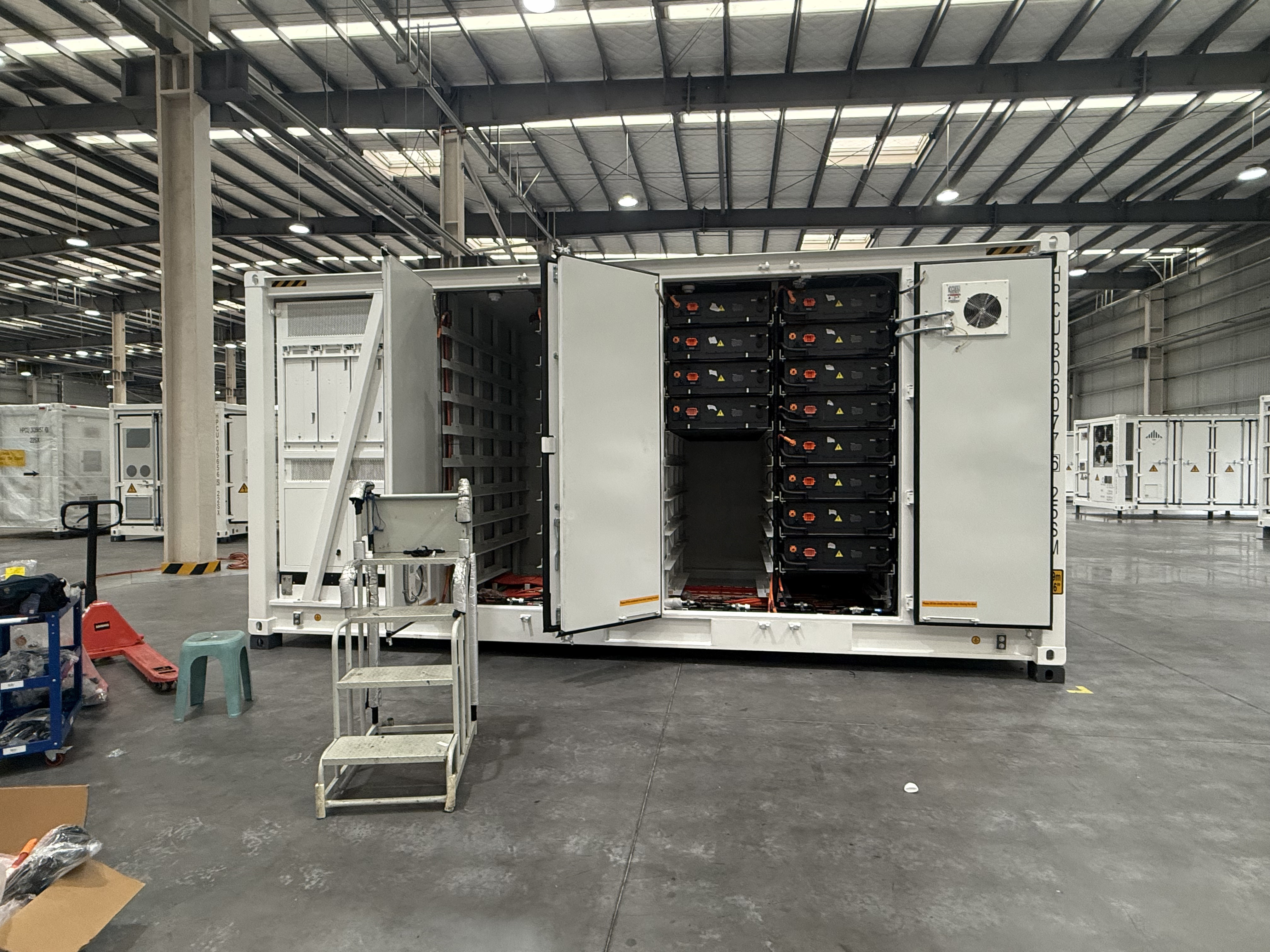
Manufacturing capacity and factory acceptance testing are part of the delivery risk assessment, not only the commercial negotiation.
Procurement Boundaries Buyers Should Not Ignore
An honest comparison includes the limits of the evidence. Six constraints are worth writing into the evaluation file.
- Certificate scope is configuration-specific. The published documents are recorded against a defined model and rating. A change in power rating, enclosure or chemistry creates a new configuration whose compliance basis must be confirmed.
- Alternative chemistries are conditional. Semi-solid-state, solid-state and sodium-ion options are described as subject to project requirements, technical validation and availability — not as standard catalogue items.
- The temperature range is an operating envelope. The stated -30 to 55 °C scope does not replace a site thermal and dust study, which matters most in mining and hot-climate installations.
- Customized delivery takes longer. The 35–60 day customized lead time is a schedule input for project planning, not a detail to be resolved after contract signature.
- Equipment approval is not project approval. Grid-connection approval, islanding arrangements and fire-safety sign-off sit with the project, and a certificate supports rather than replaces them.
- Published references are application-specific. Adjacent references support capability claims; they do not demonstrate performance in a hospital or a mine.
Market Signals Behind the Comparison
Three published data points frame why buyers are being asked to compare on requirement coverage rather than on headline capacity.
Deployment volume has reached utility scale. The IEA reports 108 GW of new battery storage capacity in 2025 globally, and the U.S. Energy Information Administration projects 19.6 GW of utility-scale battery storage additions in the United States in 2025. When annual additions are measured in tens of gigawatts, the supplier base widens and the burden of technical differentiation shifts to the buyer.
Cost benchmarks are becoming public. Ember estimated all-in project CAPEX for four-hour-plus utility-scale projects at USD 125/kWh in late 2025, with a scope excluding China and the United States. For commercial and industrial buyers, that benchmark is directional rather than directly transferable, because C&I projects carry different balance-of-system and approval costs.
Market-size estimates diverge by definition. MarketsandMarkets estimated the global BESS market at USD 50.81 billion in 2025, while other providers in the same comparison set publish materially lower figures — a gap that reflects whether the count includes cells only or turnkey systems, and whether utility and C&I segments are combined. Buyers citing market size in an internal business case should state which definition they are using.
Import classification is a practical detail with commercial effect. BESS fully encased in housing is classified under US HTS 8507.60.00.90, which is the reference point for landed-cost modelling in that market.
What Changes Next
The direction of travel is toward requirement-led procurement. As LFP becomes the default chemistry across the market, chemistry alone stops being a differentiator, and the comparison moves to grid-forming capability, protection coordination, black-start design, fire-safety documentation and service reach.
For buyers, the practical consequence is that the engineering file becomes the shortlisting instrument. A supplier that can answer the critical-load list, the motor-starting case and the connection limit with documented evidence is comparable; one that answers with capacity and price is not yet in the same evaluation.
Frequently Asked Questions
What is the first step in sizing a BESS for a hospital?
The first step is a critical-load assessment that defines which circuits must remain energised during an outage and what backup duration the facility requires. Power rating follows from the coincident peak of those loads, and duration follows from the operating requirement. Without that list, capacity figures are not comparable between proposals.
How is backup duration decided for a critical facility?
Backup duration is set by the facility's own operating requirement during an outage, not by the battery platform. Duration and power together determine the C-rate of the system, so the same energy capacity quoted at 0.5P and at 1P represents different power capability and a different cost structure.
How do I know whether an EV charging hub needs storage at all?
Two assessments answer that question: a charging-load forecast and a transformer-capacity assessment. If the forecast demand exceeds what the existing transformer and connection can serve, storage can reduce charging demand peaks, increase available charging capacity and defer grid-capacity upgrades. Dynamic power allocation then coordinates grid power, solar, battery discharge and charger output within the connection limit.
What makes a BESS suitable for a remote mining microgrid?
The governing requirements are a site load study and a motor-starting analysis, supported by a spinning-reserve strategy, high-temperature and dust protection, black-start capability and remote O&M. Storage in this scenario stabilises the microgrid, reduces diesel-generator runtime, supports renewable utilisation and improves power reliability, and it typically operates alongside solar PV, diesel generators, a grid-forming PCS, a microgrid controller and a plant-level EMS.
Which certifications should a buyer verify, and what do they cover?
For the ECO-E261LP-2A model at 125 kW, 261.248 kWh and IP55, the published documents are a CEI 0-21:2022/V2:2024 compliance document (D 125581 0027 Rev. 00) and a CEI 0-16:2022/V3:2024 compliance document (D 125581 0028 Rev. 00) for Italy, an EMC Attestation of Conformity to EN IEC 61000-6-4:2019 and EN IEC 61000-6-2:2019 (E8A 125581 0023 Rev. 00) and an LVD Attestation of Conformity to EN 62477-1:2012/A12:2021 (N8A 125581 0024 Rev. 00) for the EU, all issued by TÜV SÜD Product Service GmbH, plus an IEC 63056:2020 product certificate (B 125581 0022 Rev. 01) for the global market. They cover electrical safety, EMC, low-voltage safety, battery system safety and the specified grid-interface standards. They do not replace project-level fire-safety approval, emergency response planning or grid-connection approval.
What delivery constraints should be planned for?
Published terms are 25–35 days for standard BESS and 35–60 days for customized projects, with a minimum order of 1 unit and up to 500 MWh/month of production capacity. Quality control covers 100% FAT plus electrical safety, functional and aging tests, with third-party inspection available. Customization scope spans power and energy capacity, C-rate, AC/DC voltage, chemistry, PCS/BMS/EMS, PV input, on-grid or off-grid operation, STS/EPS backup, cooling, fire protection, enclosure and branding, IP rating, grid code and communication protocols.
For readers compiling a technical file, Xupernova's energy storage product catalog covering these platforms is available for download: XUPERNOVA Energy Storage Product Catalog (PDF).
¿Tiene preguntas o necesita más detalles?
Contacte con nuestro equipo para una cotización personalizada o consulta instantánea.
Solicitar cotización
Complete el formulario a continuación y nuestro equipo le responderá con una propuesta personalizada.
Chat directo de WhatsApp
¿Prefiere chatear en tiempo real? Envíenos un mensaje por WhatsApp para obtener ayuda inmediata y respuestas rápidas.
- Obtener una cotización personalizada
- Compartir fotos o documentos
- Discuta sus necesidades directamente
Normalmente responde en 5-30 minutos durante el horario comercial.