
Battery Storage Fit for Machinery Sites in 24 Countries
Battery Storage Fit for Machinery Sites in 24 Countries
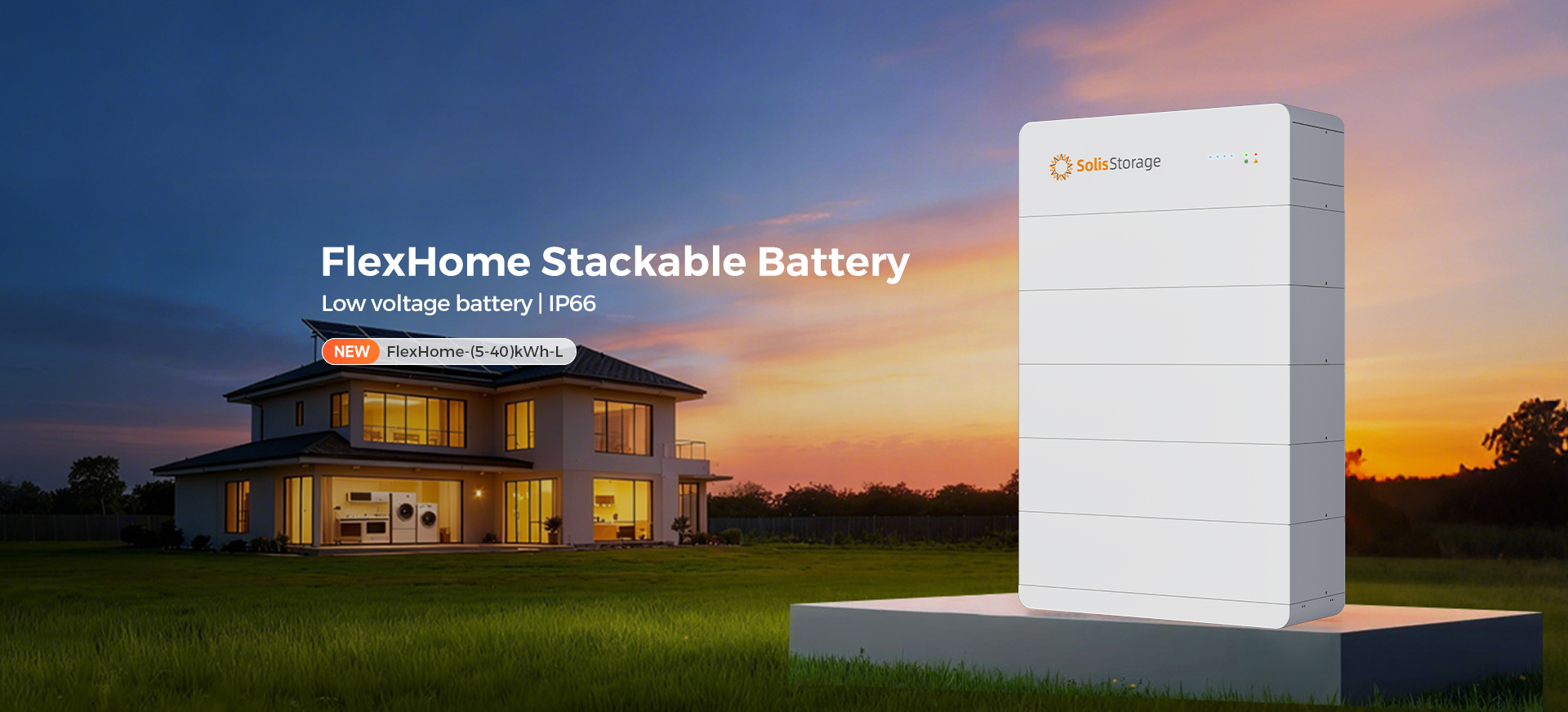
Battery energy storage at a manufacturing or processing site is a fit decision before it is a product decision. The equipment has to survive the climate at the plant gate, respond to a load profile dominated by motors, compressors and multi-shift operation, and take on the role the plant actually needs — shifting purchased energy into cheaper hours, holding production through a grid event, or absorbing more output from an on-site PV array.
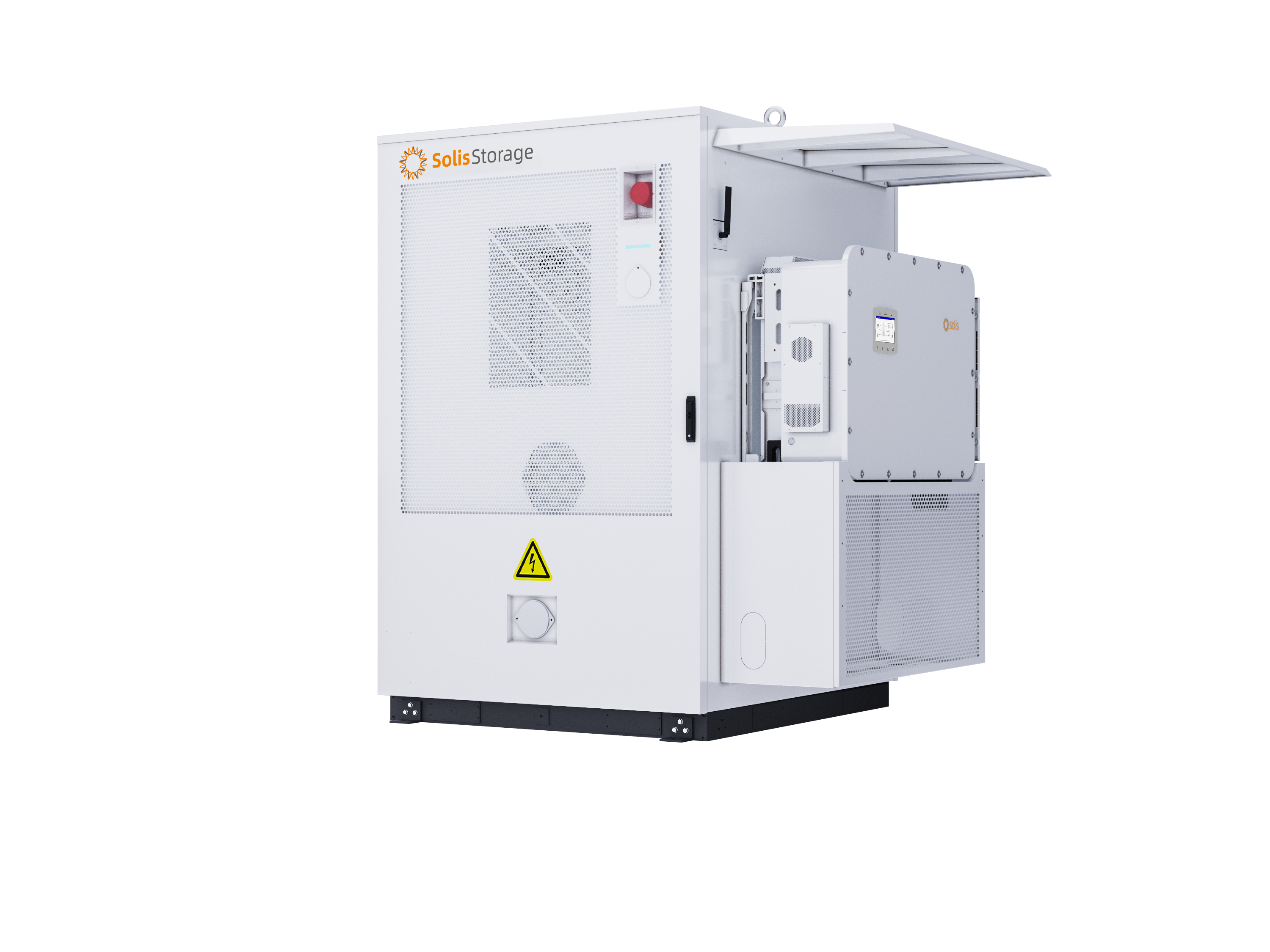
For the EverCore ESS (product 5190) in the Solis commercial and industrial range, that envelope is documented rather than implied. Cabinet capacities are 100.5 kWh, 120.6 kWh and 261.2 kWh, with inverter ratings of 50 kW, 60 kW and 125 kW; the cells are EVE lithium iron phosphate units rated at 3.2 V / 314 Ah with an 8,000-cycle cell life; the battery cabinet is rated IP55 and the inverter IP66. Solis describes the platform as operating across a wide temperature range, in coastal salt-fog conditions and at high altitude, and states an operating span of -25°C to 55°C with altitudes up to 4,000 m.
This article maps the recurring deployment scenarios for that system across Australia, Turkey, Sweden, Romania, Portugal, Poland, Pakistan, Norway, the Netherlands, Luxembourg, Greece, Denmark, Chile, Bulgaria, the Czech Republic, Italy, Lithuania, Ireland, Hungary, the United Kingdom, France, Finland, Spain and Germany, and converts them into scenario-fit criteria for manufacturing and processing machinery sites. It is written for the research and evaluation stage, where the useful question is not whether storage is interesting but whether a specific configuration survives a specific site.
Why a machinery plant is a different storage scenario
Manufacturing and processing sites concentrate three conditions that rarely appear together in other commercial buildings. First, motor-driven loads create sharp demand peaks and high starting currents, so the value of storage is tied to demand-charge management and peak shaving rather than to a smooth daily curve. Second, process continuity has a cost that is not visible on an electricity bill: an unplanned stop can spoil work in progress, damage tooling or force a restart sequence measured in hours. Third, the storage equipment is usually installed outdoors or in an unheated industrial yard, exposed to the same weather as the plant itself.
Those three conditions push a BESS brief in different directions. Energy-cost work rewards usable capacity and daily cycling depth. Backup duty rewards transfer behaviour and reliability of the grid-tied to off-grid transition. Outdoor siting rewards enclosure protection and corrosion specification. A system that is technically capable in a laboratory can still be a poor fit at a coastal steel processor or an inland plant at 2,000 m.
The documented scenario envelope of the EverCore ESS
Ginlong (Solis) Technologies Co., Ltd. — the Shenzhen-listed inverter and storage manufacturer (solisinverters.com) — positions the EverCore ESS as its commercial and industrial platform, with a stated portfolio spanning residential, C&I and utility-scale storage across more than 100 countries. For scenario work, three architectural choices matter more than headline capacity.
AC and DC separation. The hybrid energy storage inverter on the AC side is physically separated from the battery cabinet on the DC side. In Solis's engineering description, this keeps 6 kW of power-electronic heat outside the cabinet, leaving roughly 3.5 kW of electrochemical heat to be managed inside it, and it allows the inverter to carry IP66 protection while the battery cabinet carries IP55. The practical consequence for an industrial site is that the two enclosures can be specified and replaced on different cycles.
Integration of the electrical chain. The 125 kW unit integrates the power conversion system, static transfer switch, PV inverter, circuit-breaker protection and energy management system into one enclosure. Solis states that this enables grid-tied to off-grid switching in less than 10 ms without an external static transfer switch, supports both DC and AC coupling of existing PV, allows PV oversizing up to 200%, and permits up to six units to be paralleled for direct grid connection.
Air cooling with a separation duct. The platform keeps air cooling for the 125 kW / 261 kWh configuration, using a dedicated inverter duct plus Coanda-effect airflow across the battery pack surfaces. Solis reports 30% higher heat-dissipation efficiency than conventional air cooling. For a machinery site, the relevant point is that thermal management is a design variable to be checked against ambient temperature, not a marketing label.
Environmental fit criteria: what changes the specification
Wide temperature range
The system's stated operating span of -25°C to 55°C covers most European industrial locations, but the useful check is not the headline figure — it is the site's design maximum and design minimum against that span, and what margin remains at the plant's worst week rather than its average year. A foundry or a roof-mounted installation exposed to direct summer sun may see ambient conditions well above the regional average, while an unheated yard in northern Sweden or Finland tests the cold end. Where the site approaches either limit, the thermal design should be reviewed with the supplier rather than assumed.
Coastal salt fog and the C5 corrosion requirement
Coastal industrial sites combine humidity, airborne chlorides and, often, process emissions. The scenario data for this application lists C5 anti-corrosion protection as a special requirement, alongside IP66/IP55 protection. Those are two different controls: the IP rating addresses ingress of dust and water jets, while the corrosion class addresses the coating system that resists chloride attack on the enclosure over years. A project near a coastline, a port estate or a salt-processing plant should specify both explicitly and confirm how the coating is inspected during installation and over the maintenance cycle.
High altitude
Altitude affects air density and, in turn, heat removal and insulation coordination. Solis states operation up to 4,000 m, which places most Andean, Anatolian and northern Pakistani industrial sites inside the stated envelope. The verification point for a buyer is narrower: confirm the actual site altitude, confirm whether the selected configuration is offered at that altitude without derating, and record both in the project file. Altitude is easy to overlook because it does not appear on a utility bill.
Industrial outdoor installation
Outdoor installation at a plant is not the same as a domestic wall mount. The equipment shares space with dust, vibration, forklift traffic, washdown water and, in some processes, corrosive vapours. The scenario material for this deployment explicitly covers household outdoor and industrial outdoor environments, which is a reminder that the same platform may be specified for a factory yard and for a residential compound — with very different inspection routines. Siting, clearance, drainage and access for service should be settled before the enclosure specification is frozen.
Mapping the 24 markets to deployment clusters
The 24 markets in scope do not require 24 separate engineering answers. They cluster by the environmental stressor that dominates the specification and by the role storage plays on site. The table below is a screening aid for the research stage; it is not a country risk rating, and each site still needs its own assessment.
| Cluster | Markets in scope | Dominant stressor to verify | Role emphasis |
|---|---|---|---|
| Nordic and Baltic cold-dominant | Sweden, Norway, Finland, Denmark, Lithuania | Long cold season, snow load, coastal exposure in the south and west | Peak load shifting and PV self-consumption, with backup for continuous process |
| Continental and Central European industrial | Germany, Netherlands, Luxembourg, Poland, Czech Republic, Hungary, Romania, Bulgaria, France | Seasonal temperature swing, inland industrial estates, humidity | PV self-consumption, demand-charge management, grid-facing participation |
| Atlantic and Mediterranean coastal | United Kingdom, Ireland, Portugal, Spain, Italy, Greece | Salt fog, high humidity, high summer ambient | Self-consumption and backup, with peak shaving on multi-shift plants |
| Altitude and high-ambient | Turkey, Chile | Plateau and Andean altitude, arid heat, dust | Backup power and resilience, plus shifting where tariffs reward it |
| Grid-resilience and remote | Pakistan, Australia | Network reliability, remote or islanded supply, coastal sites | Backup power, seamless switching, off-grid operation |
Denmark is a useful reference point inside the first cluster. A documented C&I deployment there uses a 125 kW / 261 kWh EverCore configuration for self-consumption at a warehouse, with a stated 20-year horizon, electricity-bill savings as the objective and sub-10 ms grid-tied to off-grid switching as the reliability feature. It is a commercial building rather than a machining plant, so it evidences the platform's behaviour rather than a machinery-specific outcome — a distinction worth keeping when the reference is presented to a technical committee.
Across the southern and Atlantic clusters, the C5 corrosion requirement should be treated as a line item rather than an assumption, because it changes the enclosure specification and the maintenance routine. Across the altitude and resilience clusters, the binding questions are the opposite: how much energy the site needs to ride through an outage, and whether the local network allows the site to operate islanded at all.
Three roles, and how each changes the fit question
Peak load shifting and demand-charge work
In this scenario the system's role is to perform peak load shifting: charge when energy is cheap or when on-site PV is generating, discharge into the plant's expensive hours. For a processing plant the design question is the shape of the daily load curve and the depth of cycling the operator is willing to accept. The 261.2 kWh cabinet and 125 kW inverter combination sets the scale of a single block; larger sites combine blocks rather than oversizing one.
Backup power and seamless switching
The system's role in this scenario is to provide backup power supply, and the platform supports seamless backup switching. Solis specifies a transition of less than 10 ms between grid-tied and off-grid modes without an external static transfer switch — a relevant figure for precision industrial equipment that will trip on a longer interruption. Two qualifications belong beside that number: the protected load must be defined in advance, and the ride-through duration is set by usable battery energy against that load, not by the transfer time.
PV self-consumption
Where the plant already has or is planning a PV array, self-consumption of PV power is the third role. The integrated PV inverter path supports both DC and AC coupling for existing arrays and allows PV oversizing up to 200%, which matters on sites where generation peaks well above the connected load. This is also the role in which storage economics are most exposed to module prices: IRENA reported average total installed costs for solar PV of USD 691/kW in 2024, a figure that shapes how much of the value stack a plant expects storage to carry.
Grid-facing project types
The scenario data also places the product in grid stability retrofitting projects and in peak shaving and frequency regulation projects, and the deployment data lists virtual power plant related projects among the project types. These are not usually the first brief at a machinery plant; they emerge once a system is installed and the site decides to earn from flexibility. Solis reports that the EverCore platform has been connected, or is in the process of connecting, with 102 third-party VPP and EMS operators across 11 European countries, including the Kraken platform in the United Kingdom and Nordic aggregators. For a European buyer, that breadth is a question to verify locally rather than a guarantee of revenue.
Supporting equipment and integration points
Scenario fit also depends on what the system must be paired with. In this deployment the product requires supporting equipment such as lithium iron phosphate batteries, a smart energy management platform (Solis AI) and monitoring sensors. In practice that means the specification has four interfaces to settle before quotation comparison is meaningful:
- Battery supply and cell traceability. The platform uses EVE LFP cells at 3.2 V / 314 Ah with an 8,000-cycle cell life; confirm the cell supply route and the documentation that accompanies it.
- Energy management. The Solis AI platform is described as deployed at more than 5,500 energy storage stations worldwide, integrating wholesale and retail price data into charge-discharge scheduling. Ask which functions are enabled in the target market and which are optional.
- Monitoring and metering. Sensor data feeds the control loop and the performance record; agree what is measured, at what interval, and who owns the data.
- Expansion path. A single inverter can connect up to six battery cabinets in parallel, allowing capacity to grow without a second inverter. Solis estimates this lowers expansion cost by roughly 10% — a supplier estimate to be tested against the project's own phasing plan.
How the platform compares with conventional site supply
The comparison that decides most machinery projects is not storage versus storage. It is storage versus the options already on site: grid-only supply, or a diesel generator kept for outages.
| Dimension | Grid-only supply | Diesel generator backup | EverCore ESS (documented) |
|---|---|---|---|
| Behaviour during an outage | Production stops until supply returns | Production resumes after generator start and transfer | Seamless backup switching specified at under 10 ms between grid-tied and off-grid modes |
| Energy-cost influence | None beyond load reduction | None during normal operation | Peak load shifting and PV self-consumption |
| Fuel dependency | None | Continuous fuel supply and storage | None in normal operation |
| Outage duration | Set by the network | Set by fuel and generator sizing | Set by usable battery energy against protected load |
| Outdoor exposure | Not applicable | Enclosure and fuel system specified separately | IP55 cabinet, IP66 inverter, C5 anti-corrosion requirement in this scenario |
The table shows a division of labour rather than a winner. A plant with a week-long outage exposure still needs generation; a plant whose losses come from short interruptions, demand charges and purchased-energy timing is addressing a different problem. Many industrial sites end up with both, and the specification work is to define which loads the storage protects and which the generator carries.
Fit boundaries to record before evaluation closes
A credible scenario assessment states where the platform stops as clearly as where it applies.
- Energy per cabinet is finite. At 100.5 to 261.2 kWh per cabinet, ride-through duration is a function of protected load. A plant that wants to carry its full process through a long outage needs a different scale of system, or generation.
- Ambient and altitude limits are stated. Operation is described from -25°C to 55°C and up to 4,000 m. Sites outside those values require a direct engineering discussion, not an assumption.
- Corrosion specification is a project decision. The C5 requirement in this scenario is a requirement to be designed and inspected, not a property that can be assumed from the IP rating.
- Loads with high starting currents need review. Motor starting behaviour should be modelled with the supplier before the inverter rating is fixed.
- Service coverage is a siting criterion. Solis cites 27 overseas service centres with 24/7 remote technical support and 48-hour on-site fault handling; confirm the applicable terms for the specific country and contract.
Verification checklist for the evaluation stage
Six checks convert the scenario discussion into a comparable tender:
- Record site altitude, design maximum and minimum ambient temperature, and distance to the coast, then match each against the stated envelope.
- Confirm the enclosure specification in writing: IP55 cabinet, IP66 inverter, and the corrosion class required for the site.
- Define the protected load list and the ride-through duration required, then size cabinets against it.
- Confirm the grid-tied to off-grid transfer behaviour and the switching time in the offered configuration.
- Agree the EMS scope: which Solis AI functions, which monitoring sensors, which local market interfaces.
- Confirm cell documentation, factory test records, lead time and service terms for the destination country.
Market context behind the scenario shift
Two data points frame why industrial buyers are running this assessment now. The IEA reported that global annual battery storage capacity additions in the power sector reached 42 GW in 2023, more than doubling year on year — a scale effect that widens the supplier field and makes specification discipline more valuable, not less. Wood Mackenzie's 2024 integrator ranking placed Tesla at 15% and Sungrow at 14% of the global BESS integrator market, illustrating a market where leadership is contested rather than settled.
For a machinery plant, the implication is practical rather than strategic: more options exist, and the differentiating work has moved to site-specific engineering — corrosion class, altitude, thermal margin, transfer behaviour and service reach.
Outlook
The direction of travel in commercial and industrial storage is toward systems that earn in more than one way: reducing purchased energy, protecting process, and participating in flexibility markets where the local framework allows it. That makes scenario fit a moving target, because the economic case changes as market access changes. What does not change is the physical envelope. A system specified for a coastal site at sea level will still need its corrosion class and its thermal margin confirmed when the revenue model is revised three years later.
For manufacturing and processing machinery sites across these 24 markets, the productive next step is not a broader product comparison but a narrower site file: conditions, loads, roles and verification records, assembled before quotations are compared.
FAQ
Which environmental conditions shape BESS suitability at a machinery site?
The scenario data for this application identifies a wide temperature range, coastal salt fog, high altitude and both household and industrial outdoor environments as the operating conditions that matter. For a manufacturing site, the practical screening values are the design maximum and minimum ambient temperature, the distance to a coastline and the site altitude, each compared against the equipment's stated envelope.
How do IP66/IP55 protection and C5 anti-corrosion differ in a coastal specification?
IP66 and IP55 describe ingress protection against dust and water; C5 describes the corrosion resistance class of the coating system against airborne chlorides and other corrosives. The EverCore ESS battery cabinet is rated IP55 and its inverter IP66, while C5 anti-corrosion protection is listed as a special requirement for this deployment scenario. Coastal projects should specify both and confirm how the coating is verified.
Can a commercial BESS protect production equipment during a grid outage?
The platform's role in this scenario includes providing backup power supply, and it supports seamless backup switching. Solis specifies a transition of less than 10 ms between grid-tied and off-grid modes without an external static transfer switch, which is relevant for precision industrial equipment. The duration of protection depends on usable battery energy relative to the defined protected load.
What supporting equipment does the system require?
This product requires supporting equipment such as lithium iron phosphate batteries, a smart energy management platform (Solis AI) and monitoring sensors. Battery capacity is delivered through battery cabinets of 100.5 kWh, 120.6 kWh or 261.2 kWh, and a single inverter can connect up to six cabinets in parallel for phased expansion.
Which project types beyond self-consumption does the platform address?
The product is applied in grid stability retrofitting projects and is suitable for peak shaving and frequency regulation projects, with virtual power plant related projects also listed among deployment types. At a manufacturing site these roles are usually secondary to peak load shifting, backup power and PV self-consumption, and their availability depends on the local electricity market framework.
For full technical parameters, configuration options and service terms, the Solis Global Brochure (V3.9) is available for reference and download.
¿Tiene preguntas o necesita más detalles?
Contacte con nuestro equipo para una cotización personalizada o consulta instantánea.
Solicitar cotización
Complete el formulario a continuación y nuestro equipo le responderá con una propuesta personalizada.
Chat directo de WhatsApp
¿Prefiere chatear en tiempo real? Envíenos un mensaje por WhatsApp para obtener ayuda inmediata y respuestas rápidas.
- Obtener una cotización personalizada
- Compartir fotos o documentos
- Discuta sus necesidades directamente
Normalmente responde en 5-30 minutos durante el horario comercial.