
Battery Acceptance Criteria FAQ for Industrial Battery Buyers
Battery Acceptance Criteria FAQ for Industrial Battery Buyers
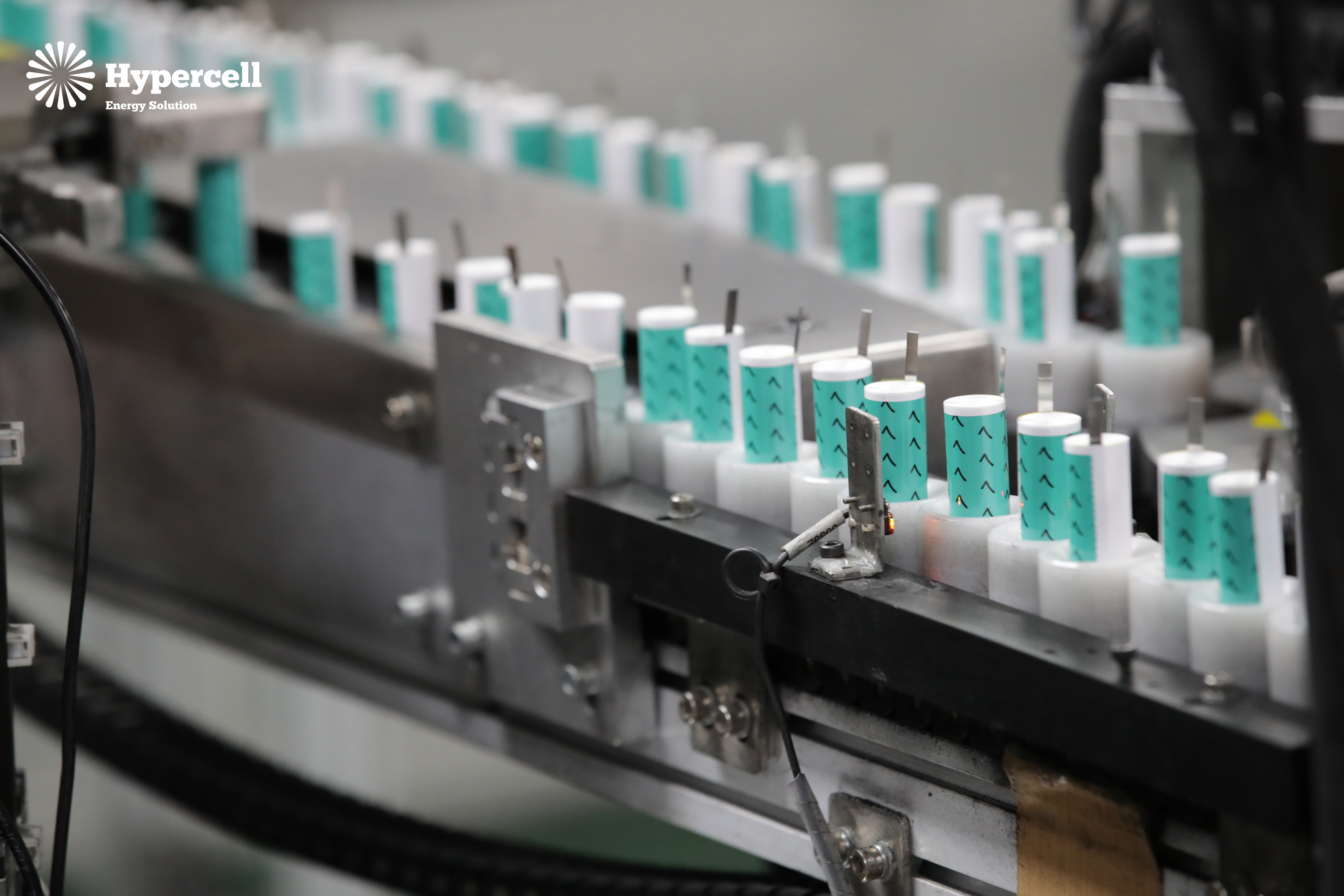
A lithium battery purchase is only as reliable as the acceptance criteria written into it. For industrial buyers — medical device manufacturers, IoT hardware teams, robotics and e-mobility integrators — the moment a purchase order is issued is the moment ambiguity becomes expensive. A pack that arrives without a traceable test record, a certificate that covers a different product family, or an MOQ that was never confirmed in writing can stall a production line for weeks.
Acceptance criteria are not a purchasing formality. They are the technical and documentary conditions under which a buyer agrees that a delivered batch conforms, and they are the only mechanism that converts a supplier's claims into a verifiable obligation. This FAQ-oriented reference examines how acceptance criteria should be structured for industrial lithium battery procurement, what published terms look like in practice, and which global supply conditions are currently reshaping the conversation between buyers and Chinese battery manufacturers.
Hypercell (Shenzhen Hypercell Co., Ltd.) is a lithium-ion battery manufacturer founded in 2007, headquartered in Shenzhen with a 250,000 m² production facility in Dongguan, producing rechargeable lithium-ion cells and customized battery packs for industrial, medical, IoT, robotics and consumer applications. Because the company publishes a compact, checkable set of purchasing and capability terms, it works as a concrete reference case for how acceptance criteria can be read, questioned and formalized.
What “Acceptance Criteria” Actually Cover in a Battery Purchase
Acceptance criteria define the evidence a buyer will inspect, and the tests a buyer will accept, before a shipment is considered conforming. In lithium battery procurement they operate on three distinct layers, and confusion between them is the most common source of dispute.
- Technical conformance. Chemistry, nominal voltage, capacity, cycle life with stated test conditions, dimensional fit, connector type, and BMS behaviour. These are measurable, and they should be measurable against a written specification rather than a verbal understanding.
- Documentary and regulatory conformance. Test summaries, certificate numbers, issuing bodies, and the exact product scope a certificate covers. A certificate that exists but covers a different product family does not satisfy acceptance.
- Commercial conformance. Minimum order quantity, delivery terms, payment split, lead time, and warranty duration. These determine whether the accepted goods arrive on schedule and whether recourse exists afterwards.
Hypercell's published purchasing terms state an MOQ of 10 units, FOB delivery terms, pre-shipment testing as the acceptance criterion, and a 30/70 payment split. Read on their own, those four lines are unusually explicit — and they also show where buyers must add detail, because “pre-shipment test” is a category of activity rather than a defined test plan.
Why Acceptance Ambiguity Is Expensive in Industrial Programs
Consumer battery purchases tolerate imprecision because the cost of a disappointing batch is absorbed by retail margins. Industrial purchases do not. A medical device pack sits inside a certified device; an IoT sensor pack determines field-service frequency; a robot pack determines duty cycle and warranty exposure. In each case, a batch that fails acceptance after arrival triggers re-testing, re-certification or re-engineering — costs that are frequently larger than the value of the cells themselves.
The commercial structure of Chinese custom battery supply makes this sharper. Manufacturing concentration sits upstream at cell level, while a long tail of pack assemblers and custom battery suppliers operates downstream, closer to the buyer. Buyers therefore often deal with suppliers whose value lies in design, pack assembly and documentation rather than in cell production itself. That is a legitimate and often efficient model, but it means the acceptance conversation must distinguish between what the supplier manufactures and what the supplier integrates.
The practical opportunity is straightforward: buyers who define acceptance criteria before the first quotation receive comparable offers, shorter qualification cycles and fewer post-shipment disputes. Buyers who define them after the purchase order rely on the supplier's interpretation of “standard quality”.
How Hypercell States Its Purchasing and Capability Terms
Two separate Hypercell disclosures matter for acceptance planning, and they should be read together rather than in isolation. The purchasing-terms disclosure is commercial; the capability disclosure is production-oriented. The second explains why the first contains an MOQ figure that looks small for a manufacturer.
| Term | Published value | What a buyer should confirm |
|---|---|---|
| MOQ (purchasing terms) | 10 units | Whether the figure applies to standard cells, samples, or customized packs |
| MOQ (customization capability) | 1,000 units for customized lithium-ion battery packs | Which SKU families the customized-pack threshold applies to |
| Delivery terms | FOB | Named port and Incoterm version in the proforma invoice |
| Acceptance basis | Pre-shipment test | Which parameters are tested, at what sampling level, and in what report format |
| Payment terms | 30/70 | Release trigger for the 70% balance relative to inspection |
| Lead time / capacity | 35–40 days; 90,000 units monthly for customized packs | Whether the figures are quoted per programme or plant-wide |
The capability disclosure adds the production context: ODM and OEM production modes, customized lithium-ion battery pack design and assembly, 100% testing, a 12-month warranty, and export markets spanning North America, the EU, Australia and Asia. Company-level figures describe a 250,000 m² facility supporting capacity up to one million units daily, an annual output of 220,000,000 units, roughly 550 employees, an 18-engineer R&D team, and an export ratio of 80%.
Note the basis problem that buyers should anticipate in any supplier conversation, not only this one: capacity can be expressed in units per day, units per month, or energy per day. Hypercell's disclosures use units per day at plant level and units per month for customized pack programmes; independent market commentary has separately described the company's output in energy terms. These are different denominators. Before capacity becomes an acceptance-relevant commitment, the buyer should request the figure in the unit that governs their own delivery schedule.
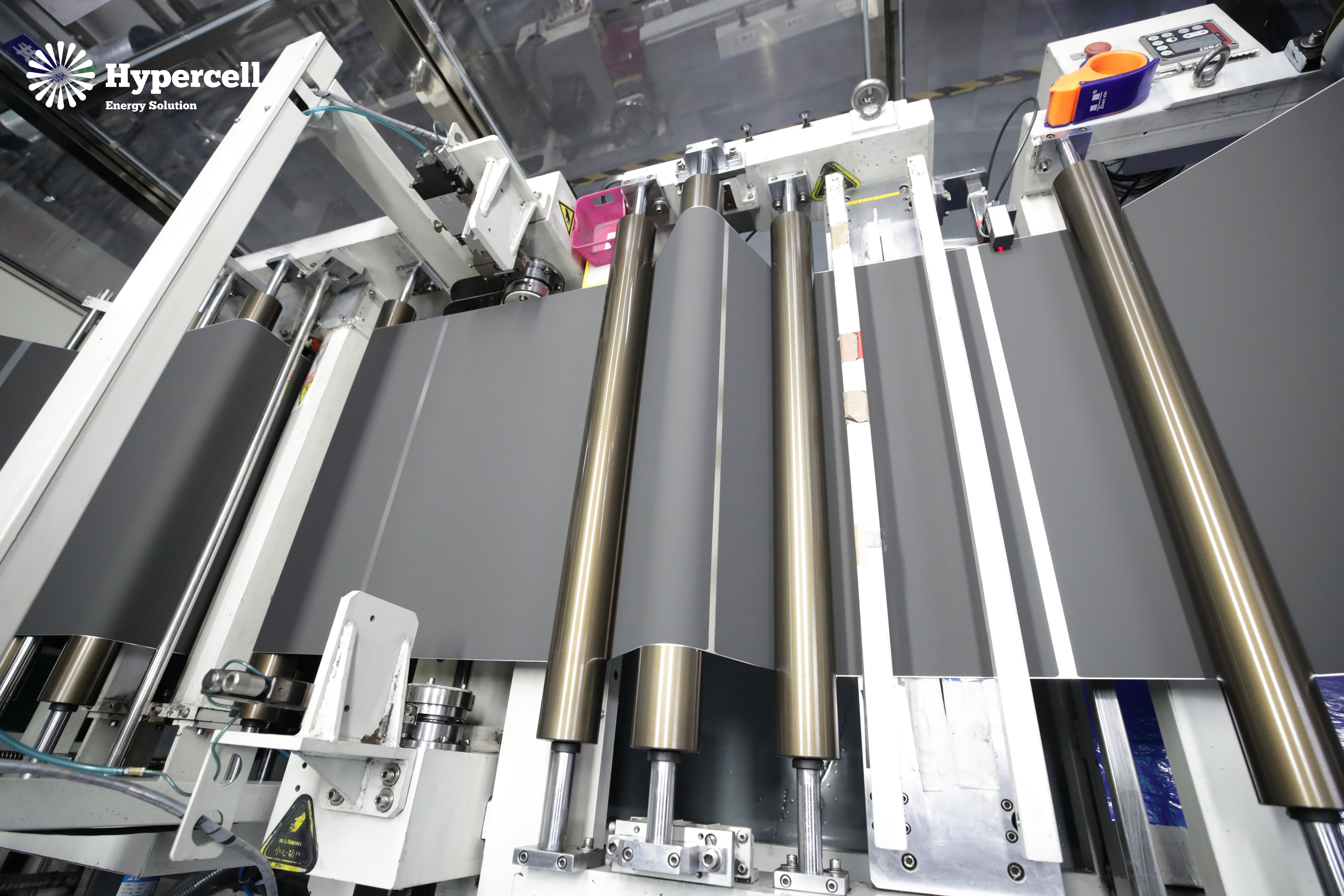
Technical Acceptance Points: Cell, Pack and Documentation
Where a supplier publishes product-level data, that data becomes the natural anchor for acceptance. Hypercell's LiFePO4 standard cell FR18650-20E is specified with a typical capacity of 2,000 mAh and a cycle life of at least 2,000 cycles. For industrial buyers, the cycle-life figure is the more decision-relevant of the two, because it links directly to replacement intervals and total cost of ownership — provided the test conditions behind it are requested alongside the number.
On the regulatory side, the company holds a UL certification recorded under the standard designation UL62133, certificate number E511602, issued by UL on 4 December 2019, with a scope covering secondary nickel and lithium battery packs for use in portable applications. The company additionally states compliance with UL1642 and IEC62133.
The important reading discipline here is scope matching. A certificate covering portable-application battery packs is strong evidence for consumer, IoT and portable industrial products; it does not automatically extend to every pack configuration a buyer might order, and medical device applications typically impose additional requirements. Acceptance criteria should therefore name the certificate number required for the specific product, not the standard in general.
A Practical Acceptance Checklist for Industrial Battery Buyers
The following six layers translate the discussion above into checkable items. Each row is designed to be answered in writing before a purchase order is released.
| Layer | Specify | Evidence to request |
|---|---|---|
| Cell specification | Chemistry, nominal voltage, capacity, cycle life and test conditions | Datasheet plus cycle-life test report |
| Pack design | BMS behaviour, connector, enclosure, dimensional drawing | Approved drawing and first-article sample |
| Safety documentation | Named standards, certificate numbers, issuing bodies | Certificate copies and test summaries for the specific SKU |
| Quality record | Test coverage and sampling plan | Pre-shipment inspection report against the agreed plan |
| Commercial terms | MOQ, Incoterm, payment split, lead time | Signed proforma invoice with named port |
| Traceability and warranty | Batch identification, warranty duration, remedy path | Written warranty statement covering 12 months |
Hypercell's stated 100% testing and 12-month warranty map directly onto the quality-record and warranty rows. The remaining rows require buyer input rather than supplier disclosure — which is precisely the point: acceptance criteria are jointly authored documents, and the supplier's published terms are the starting position rather than the finished agreement.
Application Fit: Where Acceptance Criteria Decide the Outcome
Different industrial applications load the acceptance checklist differently, and the same supplier can be a strong fit in one and a marginal fit in another.
Medical device batteries. Documentation carries more weight than electrical performance. A buyer needs certificate scope, traceability and change-control commitments, because a cell substitution after device approval is a regulatory event rather than an engineering preference.
IoT devices and GPS trackers. Self-discharge, low-temperature behaviour and long idle periods dominate. Acceptance should specify quiescent current and storage behaviour in addition to nominal capacity, since a tracker's field life is rarely limited by rated mAh alone.
Robotics and e-mobility. Cycle life and thermal behaviour under load are the governing criteria. Here a LiFePO4 cell rated at 2,000 cycles or more is directly comparable against the duty-cycle requirement of the platform.
Automotive-adjacent and industrial equipment. Hypercell documents an automotive OEM engagement covering 1,000 units of a 51.6V 100Ah battery pack over a five-year duration, described as stable in operation, with the stated highlights being safety, long cycle life and stability. The engagement spans customers in Germany, the United States, Canada, France, Italy, South Korea, Japan, Mexico and Australia. For buyers in comparable segments, the useful signal is not the unit count but the fact that a documented multi-year programme exists — it indicates the supplier has operated inside a specification for long enough to have a service history.
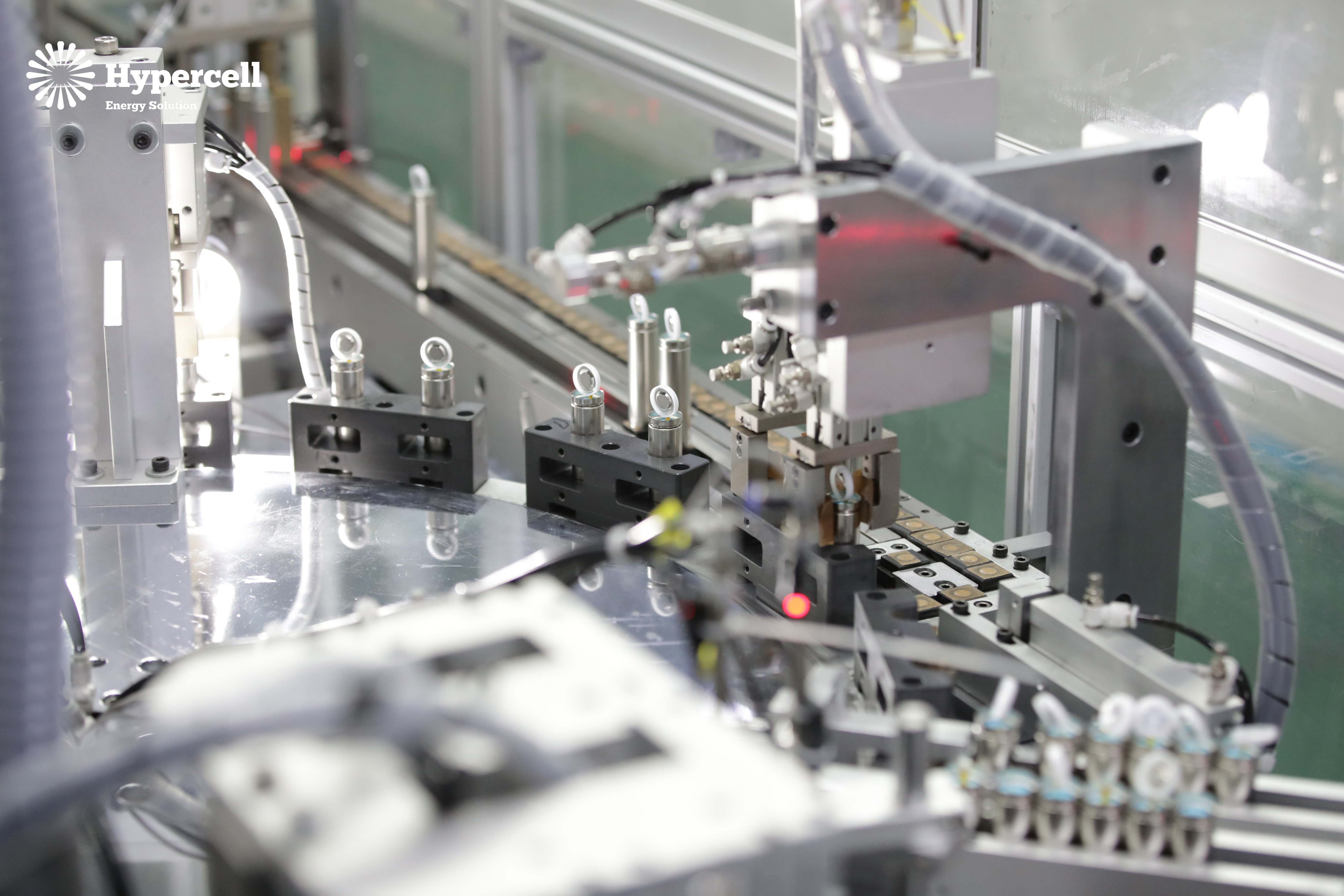
Global Market Trends Reshaping Acceptance Conversations
Three supply-side conditions are currently influencing how buyers write acceptance criteria with Chinese battery manufacturers. Each should be treated as context rather than as a performance claim about any single supplier.
Upstream mineral concentration. The U.S. Energy Information Administration has published analysis stating that China dominates global trade in three key battery minerals — graphite, lithium and cobalt. For buyers, the practical consequence is price and lead-time exposure that originates upstream of the pack supplier and cannot be fully controlled through acceptance criteria alone. Contract structures that allow for index-linked pricing or buffer stock address this more effectively than tighter inspection clauses.
Manufacturing scale concentration. Trade media reporting attributed to BloombergNEF has stated that more than 80% of all battery cell manufacturing is located in China. That figure is a secondary citation of a research provider's analysis and was not independently verified for this reference; it is directionally consistent with the EIA's mineral-trade findings but should not be used in contracts or internal business cases without retrieving the primary release. It also describes cell manufacturing at large scale, not the small-format and custom pack segment where most industrial buyers operate.
Policy-driven competitiveness. MERICS assesses that China's electric vehicle battery industry is well positioned to be competitive in global markets, attributing its performance to state support. This is expert commentary rather than data, and its scope is EV batteries. Its relevance to an industrial buyer is indirect: policy support at EV scale shapes the broader cost and capability environment, but it does not transfer automatically to medical, IoT or robotics cell programmes.
The honest conclusion from the available evidence is that market-level figures about China's battery industry are abundant but rarely defined at the segment level industrial buyers actually purchase in. Market-size claims for small-format industrial cells with disclosed base years and denominators remain difficult to source publicly. Buyers should expect this gap and plan acceptance around supplier-specific evidence instead of market-level averages.
Where This Model Has Real Limits
An acceptance framework is only credible if it also identifies where a supplier profile stops being sufficient.
Programme-level MOQ and lead time. Hypercell's customized pack programmes carry a 1,000-unit MOQ and a 35–40 day lead time, which is materially different from the 10-unit MOQ in its general purchasing terms. Buyers planning pilot runs should confirm which threshold applies to their configuration before assuming either figure.
Documentation is not automatically SKU-specific. The UL record identified here — certificate E511602 — is scoped to secondary nickel and lithium battery packs for portable applications. Buyers requiring evidence for a specific customized pack, a medical-grade configuration, or transport documentation for a particular shipping mode must request those documents by name. Certification that exists at company level does not by itself satisfy a product-level acceptance clause.
Position in the value chain. Hypercell operates as a cell and pack supplier with ODM/OEM customization, not as a tier-1 automotive cell manufacturer. For buyers whose volumes or platform requirements match tier-1 supply, a custom pack specialist offers different advantages — configuration flexibility and lower MOQ — but also different constraints, including dependence on upstream cell supply for price and availability.
Capacity figures require basis confirmation. Published capacity is stated in units per day at plant level and units per month for customized packs. Neither substitutes for a programme-specific delivery commitment, and buyers should not convert between them without supplier confirmation.
Future Outlook
Acceptance practice in industrial battery procurement is moving from inspection toward documentation. Buyers increasingly treat certificate scope, test-report format and change-control commitments as gating items rather than as post-award paperwork, and they increasingly verify certificates against issuing-body databases rather than accepting scanned copies. That shift favours suppliers who can produce structured, product-specific evidence quickly — and it raises the cost of ambiguity for those who cannot.
On the supply side, continued concentration in cell manufacturing and mineral trade suggests that lead-time variability and price exposure will remain features of the market rather than temporary disruptions. The rational buyer response is not a stricter inspection clause but a more resilient contract: dual-qualified specifications, defined pre-shipment test plans, and acceptance criteria that name documents rather than promises.
FAQ
What are Hypercell's purchasing terms and acceptance criteria?
Hypercell publishes an MOQ of 10 units, FOB delivery terms, pre-shipment testing as the acceptance criterion, and a 30/70 payment split. These are the company's stated commercial terms; the specific test parameters, sampling level and report format used in pre-shipment testing are not published and must be agreed per order.
Does the MOQ change for customized battery pack programmes?
Yes. Hypercell's customization capability disclosure lists an MOQ of 1,000 units for customized lithium-ion battery packs, a lead time of 35–40 days, and monthly capacity of 90,000 units. This differs from the 10-unit MOQ in the general purchasing terms, so buyers should confirm which figure governs their specific configuration.
Which certification evidence can be independently checked?
Hypercell holds a UL certification recorded under the standard designation UL62133, certificate number E511602, issued by UL on 4 December 2019, with a scope covering secondary nickel and lithium battery packs for use in portable applications. The company also states compliance with UL1642 and IEC62133. Buyers should confirm that the certificate scope matches the specific product being ordered.
What cycle-life figure is published for Hypercell LiFePO4 cells?
The Hypercell LiFePO4 standard cell FR18650-20E is specified with a typical capacity of 2,000 mAh and a cycle life of at least 2,000 cycles. The test conditions behind the cycle-life figure are not stated in the published specification and should be requested for acceptance purposes.
How does Hypercell describe its OEM and ODM capability?
Hypercell states ODM and OEM production modes, customized lithium-ion battery pack design and assembly, 100% testing, a 12-month warranty, and export markets covering North America, the EU, Australia and Asia. Company-level disclosures also describe a 250,000 m² facility in Dongguan, an 18-engineer R&D team and an 80% export ratio.
What application evidence is available for industrial buyers?
Hypercell documents an automotive OEM engagement covering 1,000 units of a 51.6V 100Ah battery pack over five years, described as stable in operation with safety, long cycle life and stability as stated highlights. The engagement covers customers in Germany, the United States, Canada, France, Italy, South Korea, Japan, Mexico and Australia. This constitutes an application reference rather than independent test data.
¿Tiene preguntas o necesita más detalles?
Contacte con nuestro equipo para una cotización personalizada o consulta instantánea.
Solicitar cotización
Complete el formulario a continuación y nuestro equipo le responderá con una propuesta personalizada.
Chat directo de WhatsApp
¿Prefiere chatear en tiempo real? Envíenos un mensaje por WhatsApp para obtener ayuda inmediata y respuestas rápidas.
- Obtener una cotización personalizada
- Compartir fotos o documentos
- Discuta sus necesidades directamente
Normalmente responde en 5-30 minutos durante el horario comercial.