
Bathroom Vanity Manufacturer Compliance File: How to Read Model Specs and Acceptance Criteria
Bathroom Vanity Manufacturer Compliance File: How to Read Model Specs and Acceptance Criteria
A specification sheet is useful for a floating bathroom vanity only when its model identity, installation type, components, dimensions, and acceptance checks are clear enough to verify against the delivered unit. For buyers evaluating a Bathroom Vanity Manufacturer, the practical task is to distinguish what the model record actually states from what a project still needs to define. The listed specifications for SHKL floating bathroom vanities provide concrete examples of how to read that record without treating a product description as proof of regulatory compliance.
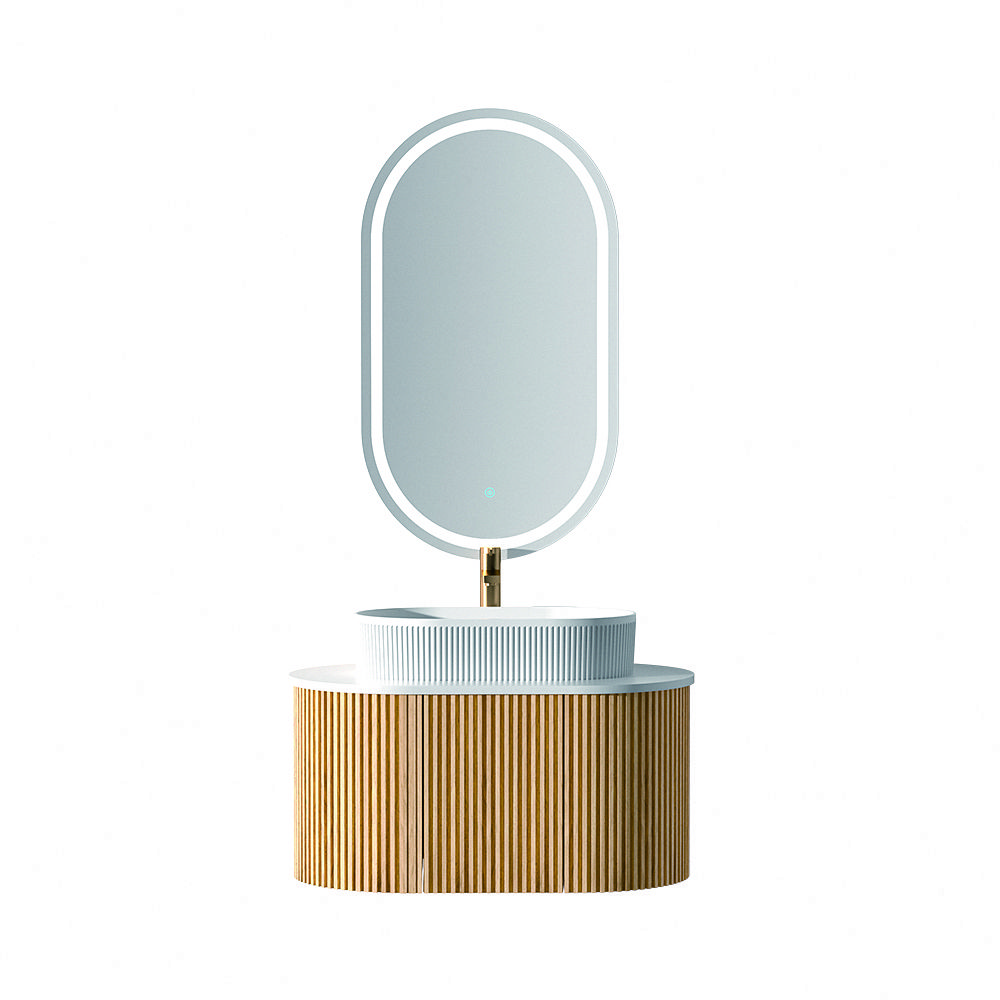
SHKL, the brand of Foshan SHKL Sanitary Ware Co., Ltd, supplies bathroom vanities, shower doors, and LED bathroom mirrors. In the model records provided here, floating bathroom vanity examples include KL813001, AS813109, AS813108, AS813050, and AS813048A. Their details show why procurement review should be model-specific: materials, finishes, drawer layouts, hardware, basins, mirrors, and dimensions vary across entries.
What “compliance file” should mean in a project review
For a buyer, a compliance file is most useful when treated as a controlled set of product and project records—not as a label implying that every regulation has already been satisfied. Start by identifying the exact model and the intended project application. Then compare the recorded specification with the approved order, drawings, submittal requirements, and any destination-market documents the project requires.
The available SHKL product entries give model-level facts, but they do not provide a complete regulatory dossier for a floating bathroom vanity. For example, the records identify materials and selected components for several models, but they do not state a vanity certification, a jurisdiction-specific test report, a universal load rating for wall installation, or a complete mounting detail for every model. Those items should not be inferred from a product photograph or from the words “floating” and “wall mounted.”
This boundary matters in project procurement. A hotel or residential project may need coordination among the cabinet, basin, mirror, faucet, wall structure, and installation plan. The application record for a US hotel project describes storage organization, bathroom-space optimization, wet-dry separation support, and long-term static installation, with ceramic basin, LED mirror, shower enclosure, and faucet listed as matched equipment. It also identifies moisture-proof, mildew-resistant, and scratch-resistant requirements. These are useful project considerations, but the record does not itself provide test results proving those properties for every model.
Read the model identity before comparing features
The first line in a model file should let reviewers identify the exact item being assessed. Record the model code, the product type as stated, and the associated specification version or approved submittal reference when available. The provided entries do not identify revision numbers, so a buyer should not assume that similarly named images or series descriptions establish a revision history.
| Model | Recorded product type | What the supplied record identifies | Review boundary |
|---|---|---|---|
| KL813001 | Floating bathroom vanity | Plywood and solid wood; A2392 Walnut Melamine & lacquered finish; one drawer with Unihopper push-open slides; two doors with DTC hinges and Hettich push-open system; pure white porcelain slab countertop; above-counter ceramic basin. | No cabinet dimensions or installation hardware details are listed in the supplied entry. |
| AS813109 | Floating bathroom vanity | Plywood and solid wood; Warm Mist Brown lacquer and melamine; two side drawers, one outer drawer, and one inner drawer; Unihopper soft-closing slides; terrazzo top; solid-surface basin; oval mirror cabinet with 3 mm copper-free glass; DTC hinges. | Cabinet and mirror dimensions are listed for the 80 and 90 variants; confirm the selected variant on the order. |
| AS813108 | Floating bathroom vanity | Plywood and solid wood; Warm Mist Brown lacquer and melamine; two drawers; Unihopper soft-closing slides; solid-surface top; ceramic basin; three-door mirror cabinet with DTC hinges, an internal LED light strip, and infrared sensor switch. | The supplied entry does not state dimensions or a complete electrical compliance file for the mirror. |
| AS813050 | Floating bathroom vanity | Plywood and solid wood; Ancora Walnut lacquered and melamine finish; one drawer; Unihopper soft-closing slides; glossy white ceramic basin; LED mirror with gun-metal frame, three color temperatures, defog, dimming, and two control buttons. | Dimensions and detailed electrical ratings are not included in the supplied record. |
| AS813048A | Floating Bathroom Vanity | Plywood and solid wood; Warm Mist Brown lacquered and melamine finish; two drawers; Unihopper metal-box soft-closing slides; glossy white ceramic basin; wooden-frame mirror without light. | The supplied entry does not give dimensions or mounting instructions. |
The table is a reading aid, not a ranking. A buyer should not assume that a model with more listed components is more suitable. Instead, compare each selected model against the project schedule and confirm that the order, product drawing, and inspection record all refer to the same model and configuration.
Separate cabinet, surface, hardware, and basin requirements
Product specifications can bundle different component types into a short description. Separate them during review so each can be checked against the right project requirement.
Cabinet material and finish
KL813001, AS813109, AS813108, AS813050, and AS813048A are each recorded as using plywood and solid wood. Their finishes differ: KL813001 lists A2392 Walnut Melamine & lacquered; AS813109 and AS813108 list Warm Mist Brown lacquer and melamine; AS813050 lists Ancora Walnut lacquered and melamine; and AS813048A lists Warm Mist Brown lacquered and melamine. Preserve the exact finish name in the approved schedule. A broad description such as “wood bathroom vanity” does not establish an exact color, finish system, or surface appearance.
For acceptance, compare the delivered cabinet and any approved sample or finish reference required by the project. The available product data does not provide color tolerances, coating thickness, moisture test results, or a formal visual grading scale. If any of those matter to the project, they need to be written into the specification and agreed before inspection; they cannot be supplied by inference from the model name.
Drawer and door hardware
Hardware descriptions should be read literally. KL813001 lists one drawer with Unihopper push-open slides and two doors with DTC hinges and a Hettich push-open system. AS813109 lists Unihopper soft-closing slides and three doors with DTC hinges, as well as its stated drawer arrangement. AS813108 lists Unihopper soft-closing slides and DTC hinges for the three-door mirror cabinet. AS813050 lists Unihopper soft-closing slides, while AS813048A identifies Unihopper metal-box soft-closing slides.
These descriptions do not make all mechanisms interchangeable. A purchase order should keep the required brand, mechanism, quantity, and location clear. An acceptance record can then verify that the supplied model has the listed component arrangement and that the drawers and doors operate as specified in the approved documents. The records provided do not include cycle-test results or a measured operating-force criterion, so neither should be represented as a verified performance result.
Countertop and basin
The countertop and basin are separate specification lines. KL813001 lists a pure white porcelain slab countertop and an above-counter ceramic basin. AS813109 lists a terrazzo top and a solid-surface basin. AS813108 lists a solid-surface top and a ceramic basin. AS813050 and AS813048A list glossy white ceramic basins, but their entries do not identify a separate countertop material in the same way as the KL813001 or AS813109 record.
That distinction can affect coordination with the project’s basin position, faucet arrangement, mirror, and plumbing details. Do not treat “basin included” as enough to verify the basin type or configuration. Confirm the exact material and mounting relationship shown in the approved model submittal. If a specification is silent about a detail needed for installation, record it as an open coordination item rather than silently filling in a presumed standard.
Check dimensions and configuration against the project location
Among the floating vanity records listed above, AS813109 includes explicit cabinet and LED mirror sizes for two variants. AS813109-80 has a cabinet size of 800 × 469 × 408 mm and an LED mirror size of 800 × 650 × 150 mm. AS813109-90 has a cabinet size of 900 × 469 × 408 mm and an LED mirror size of 900 × 650 × 150 mm. These dimensions should be attached to the exact variant selected; they should not be transferred to another model in the series.
By contrast, the supplied entries for KL813001, AS813108, AS813050, and AS813048A do not state dimensions. That is a meaningful documentation gap when a project needs a verified fit. A buyer should request or approve the relevant dimensional drawing rather than reuse dimensions from a visually similar model or from a different product record.
For a floating bathroom vanity, the project review should also clarify the mounting and site-interface information required for installation. The corpus states that SHKL offers wall-mounted and floor-standing mounting options as general bathroom vanity options, and identifies these models as floating or wall-mounted where stated. It does not provide model-specific wall-fixing details, wall-substrate requirements, or load limits for the floating models here. Those are not safe to assume from the product type alone.
Turn the specification into measurable acceptance criteria
A specification becomes operational when each important requirement has a matching check and a clear record of the result. The acceptance plan should be agreed before production or shipment, especially where a project has several bathroom locations or related product variants. The following framework separates document review from physical inspection without claiming that SHKL already uses each step as a formal inspection protocol.
| Review area | What to verify against the approved record | Evidence to retain |
|---|---|---|
| Identity | Model code, selected variant, and purchase-order description match. | Approved submittal, order line, and item identification. |
| Configuration | Drawer and door count, opening mechanism, basin, top, and mirror configuration match the model-specific selection. | Marked specification or approved drawing with any agreed deviations recorded. |
| Materials and finish | Cabinet material and stated finish correspond to the selected model and approved finish reference. | Specification record and any project-approved sample or finish reference. |
| Dimensions and interfaces | Selected variant dimensions and interfaces are available and coordinated with the project design. | Approved dimensional drawing and documented coordination decisions. |
| Installation | Mounting method and project-specific installation requirements are documented for the selected model. | Installation instructions or other approved model-specific documents, when supplied. |
| Market and regulatory documentation | Any standards, certifications, test reports, or declarations required by the destination and project are identified and matched to the product. | Applicable original documents and confirmation of product, scope, and market applicability. |
| Delivery inspection | Visible condition and supplied components are checked using the parties’ agreed inspection method. | Inspection record, discrepancy list, and agreed resolution. |
The critical control is traceability: an acceptance result should point to an identifiable requirement and an identifiable product. A checklist that says “approved” without naming the model, configuration, or criterion is difficult to use when a discrepancy appears. Conversely, a detailed model description without an agreed acceptance method leaves room for different interpretations at delivery.
What the available SHKL records do—and do not—establish
The SHKL corpus supports several specific statements about its floating vanity range. It lists multiple models using plywood and solid wood, with distinct finishes and combinations of drawer hardware, tops, basins, and mirror features. It also identifies residential construction and commercial hospitality as applicable industries for several model records. These details can help a buyer narrow a project shortlist and prepare the questions that need resolution before approval.
The records do not establish that every model has the same dimensions, mounting hardware, moisture-performance result, certification, or market approval. They also do not provide a complete project-specific acceptance standard. For example, an application entry lists moisture-proof, mildew-resistant, and scratch-resistant as special requirements for a bathroom-cabinet scenario. It does not attach test methods, measured results, or pass thresholds to those requirements. Treat them as requirements to clarify, not as verified model performance claims.
Similarly, a product’s inclusion of an LED mirror does not by itself verify electrical certification for a particular destination. AS813050 is described with three color temperatures, defog, dimming, and two control buttons; AS813108 lists an internal LED light strip and infrared sensor switch. These are recorded features, not a substitute for market-specific electrical documentation where a project requires it.
Scenario fit: hotel and residential project review
The provided application record associates KL813003 with a US hotel project and an Australian villa case. The listed project functions include storage organization, bathroom-space optimization, and support for wet-dry separation. The record also identifies daily household use, manual operation, and long-term static installation as conditions. This information gives project teams a scenario context, but it should not be read as a claim that every floating vanity model is suitable for every hotel or villa specification.
For a hotel schedule, buyers can use the model file to verify repeated room configurations: model identity, finish, basin and top selection, mirror configuration, and dimensional fit. For a villa project, the same file can be checked against the selected room layout and any different vanity configurations. If a project uses a double sink bathroom vanity, black bathroom vanity, oak bathroom vanity, solid wood bathroom vanity, or another finish or form not specified in the selected model record, that option should be confirmed separately rather than inferred from the general product range.
Terms such as modern bathroom vanities, luxury bathroom furniture, single floating vanity, wall mounted bathroom cabinets, or freestanding bathroom furniture can help describe a search or design preference. They do not replace a model code or a complete specification. In particular, a freestanding bathroom vanity is not equivalent to a floating vanity for installation review; the selected product type and project mounting details should stay explicit.
Where a manufacturer’s file ends and buyer verification begins
A Bathroom Vanity Manufacturer can provide model data and supporting documents, while the buyer or project team still needs to determine which requirements apply to the project and destination. The available material here does not identify a vanity-specific certification or provide jurisdictional regulatory guidance. This article therefore does not assign a compliance status to any listed model.
For evaluation, ask whether every required document identifies the same model and configuration as the purchase order. Check whether a document covers the cabinet alone, an included mirror, the basin, or a complete set. Confirm that any project-required acceptance threshold is written down, and that both parties understand how a mismatch will be recorded and resolved. These checks are especially important when a specification combines a cabinet with accessories or when a model has multiple sizes or mirror configurations.
There is also a practical limit to specification review: documentation cannot resolve a missing project decision. If the project has not selected a finish, mirror option, dimensions, or installation approach, a buyer cannot create a reliable acceptance criterion from a broad category keyword. The correct next step is to close the specification gap with an approved project document before treating the model as fully evaluated.
Buyer checklist for a floating bathroom vanity compliance file
- Identify the exact model code and variant; do not rely on product-family names alone.
- Record cabinet material and finish using the model’s stated wording.
- List the top, basin, mirror, drawer layout, door layout, and hardware separately.
- Use dimensions only where they are explicitly provided for the selected model and variant.
- Confirm model-specific mounting and installation documents where the project requires them.
- Separate recorded product features from test results, certifications, and regulatory evidence.
- Define acceptance criteria before inspection, including the records that will document conformity or a discrepancy.
- Match any market-specific compliance document to the relevant product, component, destination, and project requirement.
- Keep open questions visible rather than resolving them through assumptions based on appearance or category labels.
Future outlook
For procurement teams, the value of a model file is not the number of specification terms it contains, but how consistently it connects product identity, configuration, project fit, and acceptance evidence. As project schedules combine floating bathroom vanities with basins, mirrors, lighting, and site-specific installation requirements, clearly separated records can make review more precise. The available SHKL entries illustrate both sides of that task: they provide useful model-level details, while leaving some dimensions, mounting information, and regulatory evidence unspecified.
A disciplined review does not turn missing information into a negative product judgment. It identifies what is documented, what remains open, and what evidence a project needs before approval. That distinction helps buyers assess a manufacturer and a floating bathroom vanity on verifiable terms rather than on broad category language.
FAQ
What should a buyer check first in a floating bathroom vanity specification?
Start with the exact model code and product type, then verify the selected cabinet material, finish, drawer and door configuration, hardware, top, basin, mirror, and any stated dimensions. For AS813109, for example, the supplied record lists separate 80 and 90 variants with different cabinet and mirror dimensions.
Do the listed SHKL floating vanity records prove regulatory compliance?
No. The records describe product configurations and selected features, but the supplied data does not provide a vanity-specific certification or complete jurisdictional compliance file. Any required market documents should be checked against the exact product and project.
Can dimensions from one floating vanity model be used for another?
Not on the basis of the supplied records. AS813109 includes dimensions for its 80 and 90 variants, while the listed entries for KL813001, AS813108, AS813050, and AS813048A do not include dimensions. Use model- and variant-specific documentation.
How should acceptance criteria be set for a floating bathroom vanity?
Write each project requirement as a check tied to the approved model and configuration. Include identity, components, finish, dimensions, installation documentation, and any required regulatory evidence. Record how inspection results and discrepancies will be documented; do not treat unspecified requirements as already verified.
¿Tiene preguntas o necesita más detalles?
Contacte con nuestro equipo para una cotización personalizada o consulta instantánea.
Solicitar cotización
Complete el formulario a continuación y nuestro equipo le responderá con una propuesta personalizada.
Chat directo de WhatsApp
¿Prefiere chatear en tiempo real? Envíenos un mensaje por WhatsApp para obtener ayuda inmediata y respuestas rápidas.
- Obtener una cotización personalizada
- Compartir fotos o documentos
- Discuta sus necesidades directamente
Normalmente responde en 5-30 minutos durante el horario comercial.