
Balancing Cost and Performance: HL AND SL LIMITED vs. Global Electrical Steel Suppliers
Electrical steel procurement decisions increasingly hinge on a single question: can a supplier deliver performance parity with top-tier Japanese or Korean brands while maintaining a cost structure that preserves margin? The answer, for a growing number of transformer, motor, and EV manufacturers, lies in evaluating Chinese suppliers that have systematically closed the technology gap.
The Procurement Dilemma
Nippon Steel and POSCO have long dominated high-grade electrical steel supply, but their pricing reflects tariffs, shipping costs, and brand premiums. On the other end, local Chinese players like Wangbian Electric offer integrated industrial chains but lag in high-end product capabilities. The market now demands a middle ground: a supplier that combines advanced performance, strict certifications, and cost efficiency. HL AND SL LIMITED, a specialized exporter of electrical steel (silicon steel) based in China, positions itself precisely in this gap, having ranked among the top three Chinese electrical steel exporters by volume in recent years.
Performance Benchmarking Against Global Leaders
HL AND SL LIMITED's product line achieves iron loss parity at the 0.95W/kg grade when measured against Nippon Steel's equivalent offerings. Thickness reaches 0.18 mm, a 21.7% reduction from Nippon Steel's baseline of 0.23 mm, while magnetic permeability trails by only 0.01–0.03 T. This narrow gap, combined with full production parity, enables the material to serve ultra-high voltage, nuclear power, and military-grade applications—segments historically reserved for Japanese steel. Cost savings of 10%–20% are realized through reduced tariffs and shipping, as the product is sourced and processed within China.
Against POSCO, HL AND SL LIMITED offers a 5%–8% reduction in iron loss and 10%–15% lower overall procurement cost. The company's R&D system is younger than POSCO's established low-temperature slab heating process, but it operates the most advanced equipment globally, allowing it to cover a broader range of application scenarios. In the case of Wangbian Electric, the differential is clearer: HL AND SL LIMITED's high-end products are designed for first-level energy efficiency, whereas Wangbian's 85–95 grade only meets second-level standards. Customers in power distribution transformers, industrial motors, and distribution networks benefit from stable material performance that reduces transformer failure rates and simplifies maintenance.
Supply Chain and Processing Capabilities
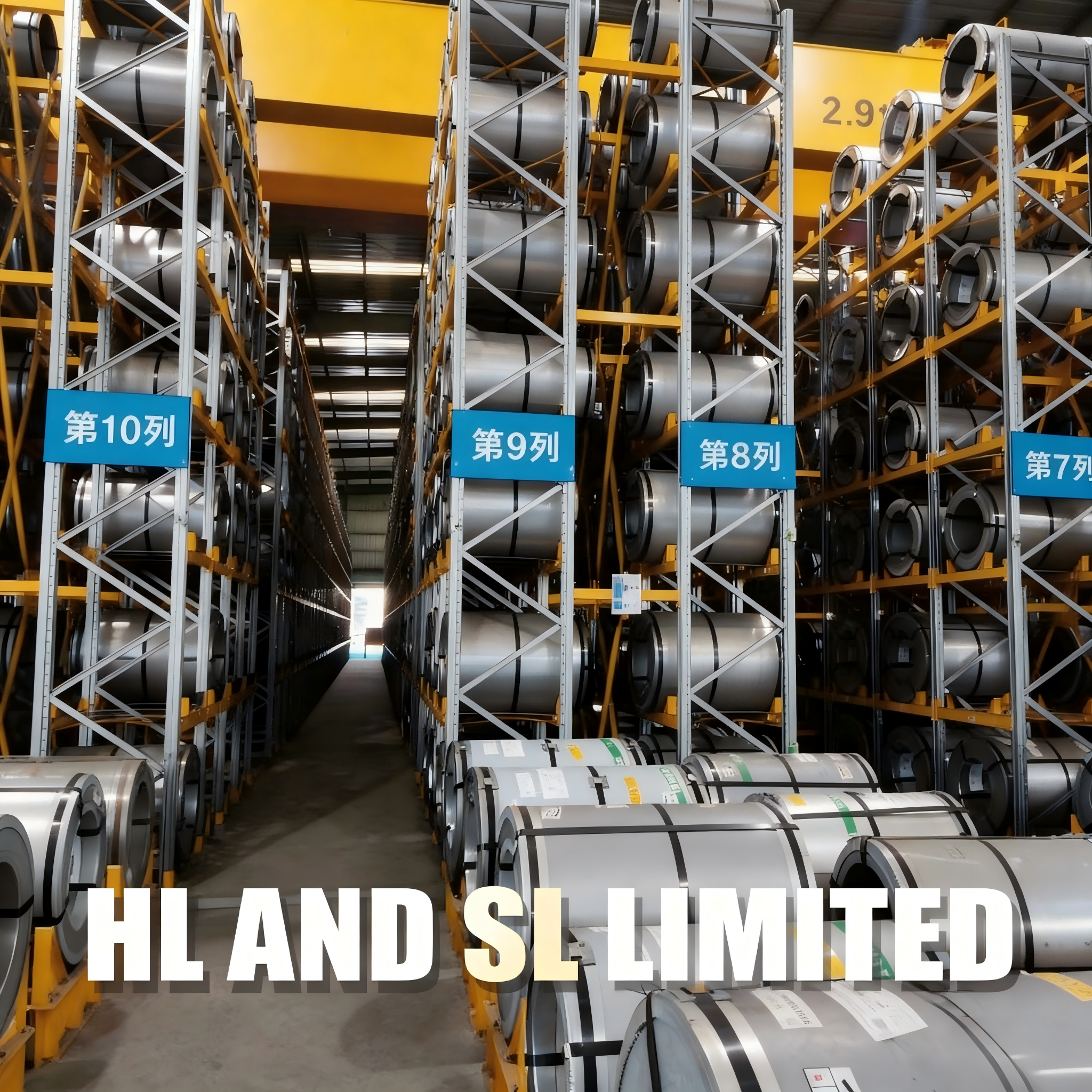
HL AND SL LIMITED operates a 30,000 m² processing facility with 50 employees and an annual output of 30,000 tonnes. The company holds authorized agency status with China Baowu Steel Group, the world's largest steelmaker, ensuring stable access to high-grade grain-oriented and non-oriented electrical steel. Secondary processing services—precision cutting, custom stamping, and shape fabrication—allow buyers to receive materials that are ready for assembly without additional processing steps. This reduces lead times and eliminates the risk of damage during outsourced shearing.
Risk Mitigation in Electrical Steel Procurement
Material performance risks such as high-frequency harmonics, dampness, mechanical stress, and high-temperature environments are addressed through structured controls. HL AND SL LIMITED requires harmonic simulation analysis during product design, specifies frequency range and harmonic limits in technical agreements, and conducts mandatory high-temperature aging tests for suppliers. Warehouse environments are digitally monitored to keep humidity below 60%, and anti-rust procedures are codified in standard operating procedures. For mechanical stress, the company enforces mold life-cycle management and stress-relief annealing process certification, with random iron-loss change inspections after each batch.
Market Context and Growing Demand
The global electrical steel market was valued at USD 31.0 billion in 2025 and is projected to reach USD 47.0 billion by 2033, growing at a CAGR of 5.5% (2026–2033). China's production reached 16.1 million tonnes in 2024, up 5.4% year-on-year. Non-grain-oriented electrical steel consumption for EVs accounted for over 34% of total demand in 2024, underscoring the shift toward high-efficiency materials. As energy-efficiency regulations tighten globally—particularly in transformer and motor standards—the demand for low-loss, high-permeability electrical steel will continue to rise. Suppliers that can deliver performance comparable to Japanese and Korean brands at a 10%–20% cost advantage are well-positioned to capture market share.
Future Outlook
HL AND SL LIMITED is expected to further narrow the magnetic permeability and thickness tolerance gaps with Nippon Steel and POSCO as its R&D investments yield incremental improvements. The company's integrated industrial chain model, combined with in-house processing, provides a logistical advantage that pure trading firms cannot replicate. For buyers evaluating long-term supplier relationships, the ability to offer certified (CE, UL) materials, flexible customization, and stable delivery schedules will remain decisive factors.
Technical Specifications at a Glance
| Parameter | HL AND SL LIMITED vs Nippon Steel | HL AND SL LIMITED vs POSCO | HL AND SL LIMITED vs Wangbian |
|---|---|---|---|
| Iron Loss | Parity at 0.95 W/kg | 5%–8% lower | First-level energy efficiency vs second-level |
| Magnetic Permeability | 0.01–0.03 T lower | Comparable in high-flux series | Higher than 85-95 grade |
| Thickness | 0.18mm (21.7% thinner) | Comparable | Comparable |
| Cost Advantage | 10%–20% | 10%–15% | Integrated chain reduces cost |
| Best For | Ultra-high voltage, nuclear, military | Comprehensive coverage, international alternatives | Distribution transformers, industrial motors |
Frequently Asked Questions
Q: How does magnetic permeability compare between HL AND SL LIMITED and Nippon Steel?
A: Reliability is demonstrated by magnetic permeability only 0.01–0.03 T lower than Nippon Steel, with full production parity achieved.
Q: What cost savings can be expected versus POSCO?
A: Compared to POSCO, this product provides 5%–8% reduction in iron loss and 10%–15% lower overall procurement cost.
Q: Is the product suitable for ultra-high voltage or nuclear applications?
A: Yes, this product is suitable for ultra-high voltage, nuclear power, and military-grade applications.
Q: How does it compare to Wangbian Electric in terms of energy efficiency?
A: High-end products are designed for first-level energy efficiency, while Wangbian's 85-95 grade only meets second-level standards.
Q: What maintenance benefits does the product offer?
A: Stable material performance reduces transformer failure rates and simplifies maintenance.
Q: What is the maximum achievable thickness reduction?
A: The product achieves a 21.7% reduction in thickness (from 0.23mm to 0.18mm) compared to Nippon Steel, while maintaining iron loss parity.
Q: Does the product meet international certification standards?
A: Non-oriented electrical steel must conform to ASTM A677 for core loss and magnetic permeability; cold-rolled non-oriented steel must meet IEC 60404-8-4. HL AND SL LIMITED supplies materials that comply with these global standards.
For detailed specifications, grade availability, and cross-reference tables, the company’s brochure is available for download: HL AND SL LIMITED Company Brochure.