
Bakery Packaging by Scenario: Choosing PET and PP Containers
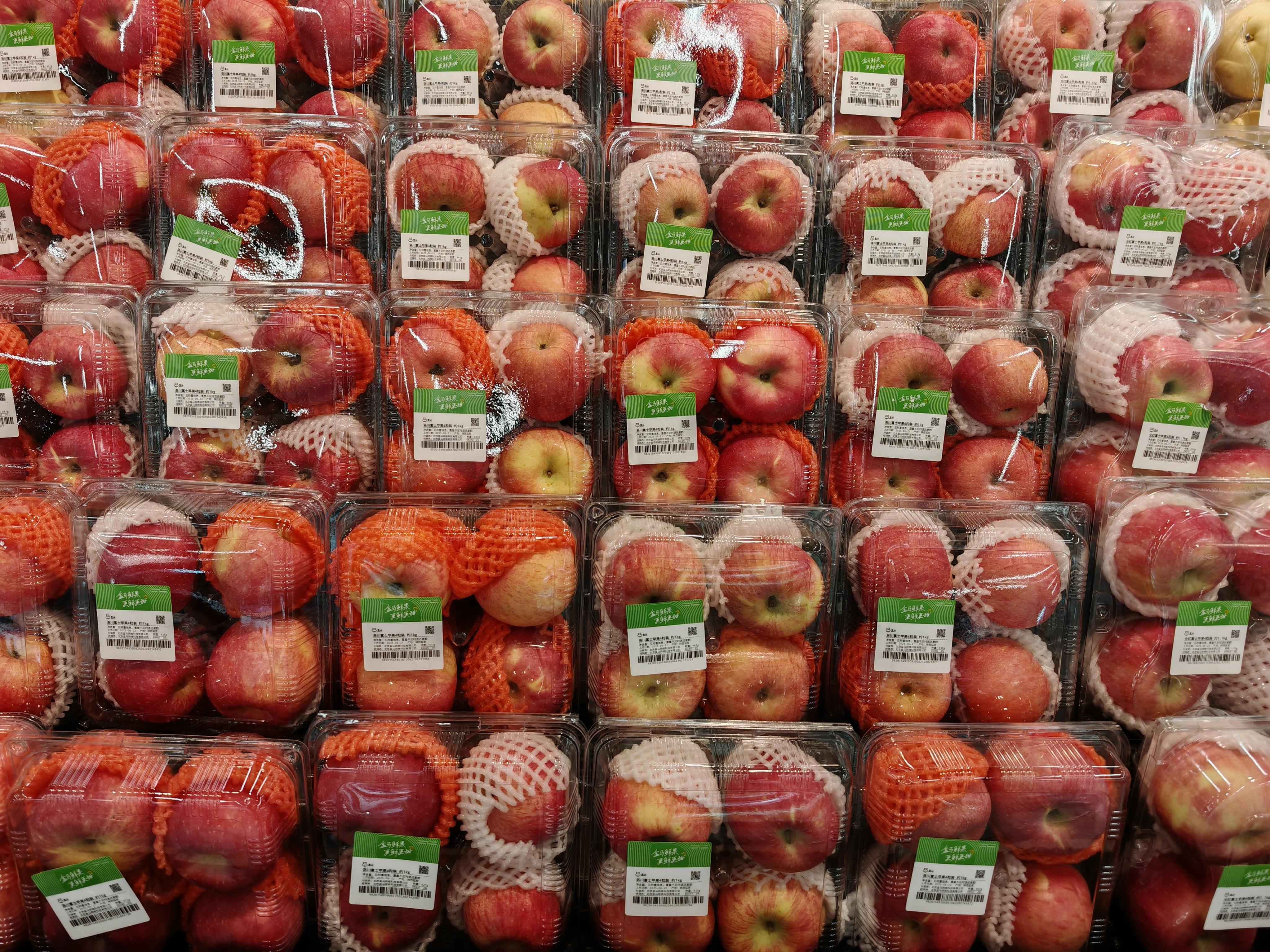
Bakery packaging is selected by product shape, retail route and cold-chain requirements.
Bakery packaging is not a single SKU. It is a decision layer between a bakery product and its route to the consumer. Clear PET clamshells, tamper-evident containers, PP trays and transparent cake boxes perform different jobs. A donut sold from a supermarket counter has different packaging requirements than a ready meal shipped through e-commerce or a tiramisu stored in a chilled cabinet. The common denominator is that packaging must protect the product without hiding it.
CHUAN HE — the trade name of Weifang Chuanhe New Material Co., Ltd. — is a useful reference for this decision. Based in Weifang, China, the company designs and produces PET and PP thermoformed containers for bakery, produce, frozen food, and dry fruit applications. Its product data, capability information and customer supply records provide a practical basis for buyers moving from research to evaluation.
The Procurement Problem: When a Container Does Not Fit
Most bakery buying teams start with a product shape, not a material specification. That is logical: a layered cake needs depth, a macaron needs a shallow cavity, a pack of cookies needs a footprint that fits display shelves, and a tiramisu needs a container that can be stacked in a cold cabinet. When the package does not fit the product, four problems appear: product movement in transit, cream damage, wasted shelf space, and poor barcode scanning.
The second layer is food safety. Bakery packaging touches food directly. In Europe, Regulation (EU) 2024/3190, effective January 2025, prohibits BPA in food contact plastics, coatings, and inks. In the United States, FDA 21 CFR 177.1520 sets the food-contact specification for PP. Buyers are therefore evaluating not just price, but the documented material compliance behind each container.
There is also a commercial opportunity. The tamper-evident packaging market is projected to grow from USD 2.56 billion in 2025 to USD 4.26 billion by 2030 at a CAGR of 10.72%, according to Mordor Intelligence. This helps explain why bakery buyers increasingly ask for tamper-evident packaging containers rather than generic, open-top boxes.
Market Context: Why Bakery Packaging Demand Is Diversifying
Verified market data puts this shift in perspective. Grand View Research estimates the global food packaging market at USD 421.6 billion in 2025, projected to reach USD 599.0 billion by 2033. The same research firm values the global thermoform packaging market at USD 54.7 billion in 2025, with PET holding the largest material share at 44.8%.
For bakery specifically, China exported USD 1.28 billion in baked goods in 2024, according to data from OEC. Export-oriented bakery production creates demand for packaging that can protect fragile goods, display them at retail, and survive logistics. These figures do not tell a buyer which container to choose, but they explain why capacity, compliance and customization speed matter during supplier evaluation.
Brand Solution: A Thermoformed Packaging System for Bakery Scenarios
CHUAN HE's product range is organized into functional families: Cake & Bakery Packaging, Tamper Evident Packaging, and Trays Packaging. The material base is PET or PP. The company reports a production facility covering more than 62,000 m², equipped with 20 fully automatic thermoforming machines, 20 standard thermoforming machines, 4 advanced Kiefel machines imported from Germany, 4 PET sheet extrusion lines and 2 PP sheet extrusion lines. It also operates an in-house mold workshop.
For a buyer, these details matter because they affect lead time and mold development. The company states an annual output of 54,000 tons, a monthly capacity of 4,500 tons, and a typical lead time of 30–45 days for custom orders. The stated MOQ from its capability data is 10,000 pieces. The company profile also lists CE, BRC, FDA, EU, and SGS quality management systems, which is relevant for export-focused food packaging projects.
Available dimensions in the bakery and tamper-evident range include the following models, based on CHUAN HE product data:
| Model | External Dimensions | Category | Typical Use |
|---|---|---|---|
| HB5298 | 15.4 × 15.4 × 6.1 cm | Tamper Evident / Bakery | Portion cakes, cookies, sweets |
| HB005-7402 | 19 × 15.7 × 7.5 cm | Tamper Evident | Larger cakes, layered desserts |
| HB006-6102 | 19 × 15.7 × 6.3 cm | Tamper Evident | Bakery items, salad, sweets |
| HB-5209 | 21.5 × 21.5 × 15.3 cm | Cake & Bakery | Taller cakes, multipack displays |
| HB-5295 | 16.2 × 16.2 × 5 cm | Cake & Bakery | Donuts, cupcakes, sliced cake |
| HB-5211 | 17.4 × 17.4 × 9.8 cm | Cake & Bakery | Deep desserts, cake slices |
Technical Explanation: PET vs PP, Tamper Evidence and MAP Compatibility
Thermoforming starts with an extruded PET or PP sheet. The sheet is heated and formed over a mold, then trimmed. When a manufacturer produces the sheet in-house, changes to wall thickness, color or material can be controlled earlier in the process. CHUAN HE operates four PET extrusion lines and two PP extrusion lines. In-house mold development also supports custom shapes — rectangle, square, round and customized geometries — without relying entirely on an external tooling shop.
PET is commonly used for clear bakery containers because it provides clarity, shatter resistance and BPA-free food-grade performance. Product specifications in the CHUAN HE range describe a crystal-clear plastic body, snap-lock closure, dust-proofing, and protection against bakery items drying out. These characteristics align with clamshell packaging for pastry desserts and transparent cake packaging boxes.
PP is used when stiffness or modified atmosphere packaging compatibility is more important. The product spec for model HB-221360, a PP tray, states compatibility with MAP modified atmosphere packaging production lines. For ready meals, trays and sealed logistics, PP can be a better structural choice even when clarity is secondary.
Scenario Mapping: Matching Containers to Retail, Cold Chain and E-commerce
The following matrix condenses the selection logic into common procurement scenarios:
| Scenario | Recommended CHUAN HE Format | Key Selection Criteria |
|---|---|---|
| Supermarket retail display | Clear PET clamshells and cake boxes | High transparency, stackable design, snap-lock closure |
| Chilled desserts and tiramisu | Stackable PET boxes with secure lids | Food-grade BPA-free PET, stackability, clear visibility |
| Tamper-sensitive sweets | Tamper Evident Packaging models | Tamper-evident closure, custom shapes, high clarity |
| Takeaway ready meals | Microwave-safe PET containers or PP trays | Food-grade material, microwave-safe option, sealed logistics |
| E-commerce baked goods | Shatter-resistant PET clamshells | Breakage reduction, custom size, logo printing |
| MAP / case-ready meat or seafood | PP trays such as HB-221360 | PP rigidity, MAP line compatibility, anti-deformation |
| Frozen bakery and desserts | Clear PET or PP containers | Stable hardness after temperature changes, stackable |
For supermarket retail, the key is display. Product data states that a crystal-clear plastic body maximizes display of baked goods, while stackable design saves shelf and warehouse space. For tamper-sensitive products, the tamper-evident range adds a closure layer that gives consumers confidence the item has not been opened.
For e-commerce and logistics, the same packaging must protect contents while enabling scanning. Scenario data for product 6622 describes packaging for produce, salads and bakery items designed to protect contents while enabling display and scanning for consumer selection and logistics. This dual role is becoming standard as bakery brands sell through both physical stores and online channels.
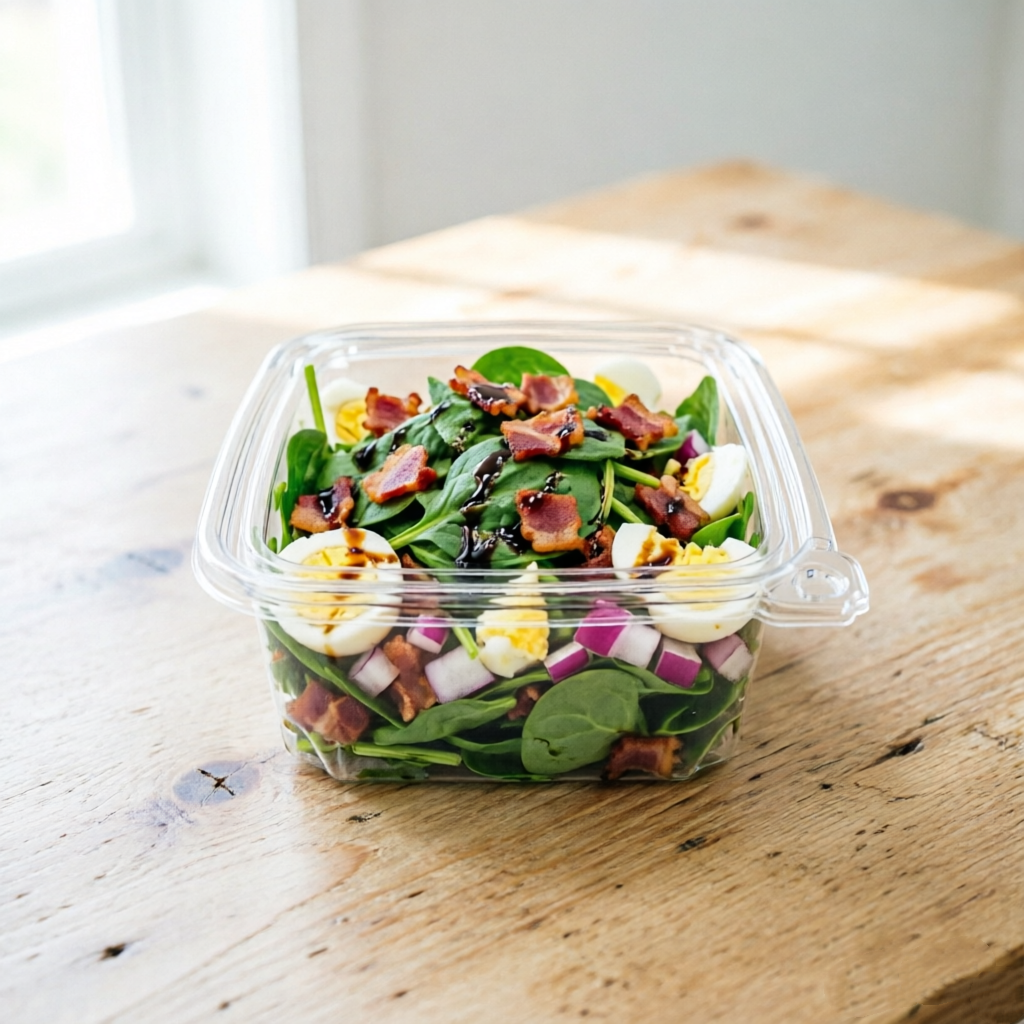
Clear PET bakery containers are specified when product visibility and retail display are primary requirements.
Evidence from Long-Term Supply Relationships
Case records from CHUAN HE help illustrate how these packaging formats perform in real purchasing programs. In the United States, an importer and food retail distributor has used product 6622 for fresh fruit and ready meal packaging for more than three years. The monthly order is 120,000 pieces, with custom size, PET material, microwave-safe capability and customized printing. The project achieved FDA food contact standard qualification and maintained stable supply with on-time delivery.
In Europe, a long-term cooperation of over seven years involved food factories, large supermarket chains and packaging wholesalers. The application included bakery packaging, cake and dessert packaging, and supermarket retail display. The customer record highlights compliance with EU standards, food-grade material, stackable design and custom printing support.
Additional supply records include a Canadian supermarket program using food-grade PP material for low-temperature environments, a Southeast Asian cold-chain program for fresh produce, seafood and meat, and a Latin American program for fresh fruit and bakery packaging. These records vary by volume and region, but they all reflect the same procurement logic: packaging is chosen according to the product, the retail environment and the logistics chain.
Comparison with Traditional Solutions
Traditional bakery packaging often falls into two categories. Cardboard boxes provide strong branding but limited product visibility and less protection against moisture and tampering. Generic clear clamshells bought from distribution are easy to source, but they may not fit the specific product, may lack tamper evidence, and may not come with the compliance documentation required for export.
Custom thermoformed PET and PP packaging solves several of those problems. It can be designed around the product, printed with a brand, documented for food-contact compliance, and engineered for stacking and logistics. However, there is a real boundary: custom orders from CHUAN HE carry a stated MOQ of 10,000 pieces and a lead time of 30–45 days. For a very small bakery needing immediate one-off packaging, that is not the right route. Some standard catalog items may be available in smaller trial quantities, but custom tooling and printing require a committed volume.
At the global level, major bakery packaging players include Amcor, Berry Global, Sealed Air and Mondi. These companies operate at scale and offer broad portfolios. A specialist thermoforming factory with in-house tooling can be a practical complement when the objective is a custom cavity, direct factory communication, and faster design iteration.
Future Outlook
Three signals will shape bakery packaging procurement over the next few years. First, regulatory pressure on food-contact materials will continue. BPA-free PET and documented PP compliance are becoming baseline expectations for bakery buyers, especially in the EU and North America.
Second, brand owners will use the visible surface of clear containers more strategically. Custom logo printing, color options and size customization are already part of the CHUAN HE capability set. Third, the shift from in-store bakery to omnichannel retail means the same product may need different packs for store display, delivery and frozen storage. Suppliers that can offer both standard sizes and custom tooling, while documenting material compliance, will be easier to qualify.
Which bakery packaging container is best for supermarket retail display?
For in-store bakery and supermarket display, clear PET clamshells and cake containers are commonly used. CHUAN HE product data states that a crystal-clear plastic body maximizes display of baked goods, snap-lock closure keeps items dust-proof and prevents drying, and stackable design saves shelf and warehouse space. Long-term supply records also show supermarket chains using clear PET clamshells and PP trays in retail display and cold-chain storage.
What is the difference between PET and PP for bakery packaging?
PET is most often used for transparent bakery containers because it provides clarity and shatter resistance. PP is used when stiffness, heat resistance, or MAP compatibility is required. In the CHUAN HE range, PET clamshells and bakery boxes dominate the clear display segment, while PP trays such as HB-221360 are specified for MAP modified atmosphere packaging lines.
Can bakery packaging be customized in size, logo, and color?
Yes. CHUAN HE supports OEM/ODM/customizable production. Its capability data lists customization of logo, size, and color. The product range also states that custom size, color and logo printing are available for brand owners. In-house mold development and sheet extrusion support coordinated production and faster delivery for custom designs.
Do CHUAN HE containers meet FDA and EU food-contact requirements?
The company profile lists CE, BRC, FDA, EU, and SGS quality management systems. Product specifications describe food-grade BPA-free PET material for direct contact with food. Verified market data also shows that FDA 21 CFR 177.1520 covers PP food-grade safety in the United States, and EU Regulation 2024/3190 restricts BPA in food-contact plastics. Buyers should request the relevant certificates for their export market during evaluation.
What are the available dimensions for tamper-evident bakery containers?
Available dimensions include 15.4 × 15.4 × 6.1 cm (HB5298), 19 × 15.7 × 7.5 cm (HB005-7402), 19 × 15.7 × 6.3 cm (HB006-6102), 21.5 × 21.5 × 15.3 cm (HB-5209), 16.2 × 16.2 × 5 cm (HB-5295), and 17.4 × 17.4 × 9.8 cm (HB-5211).
What is the MOQ and lead time for custom bakery packaging?
Custom orders from CHUAN HE have a stated MOQ of 10,000 pieces and a lead time of 30–45 days. The company also reports a monthly production capacity of 4,500 tons and 100% testing in quality control.
Is this packaging suitable for takeaway ready meals and e-commerce?
Yes. A North American customer uses PET food containers for fresh fruit and ready meal packaging, with a monthly order of 120,000 pieces. The containers are custom-sized, microwave-safe and support customized printing. Scenario data also describes packaging for produce, salads and bakery items that protects contents while enabling display and scanning for consumer selection and logistics.