
Badges vs. Keychains: MOQ, Finishes and Inspection Compared
Badges vs. Keychains: MOQ, Finishes and Inspection Compared
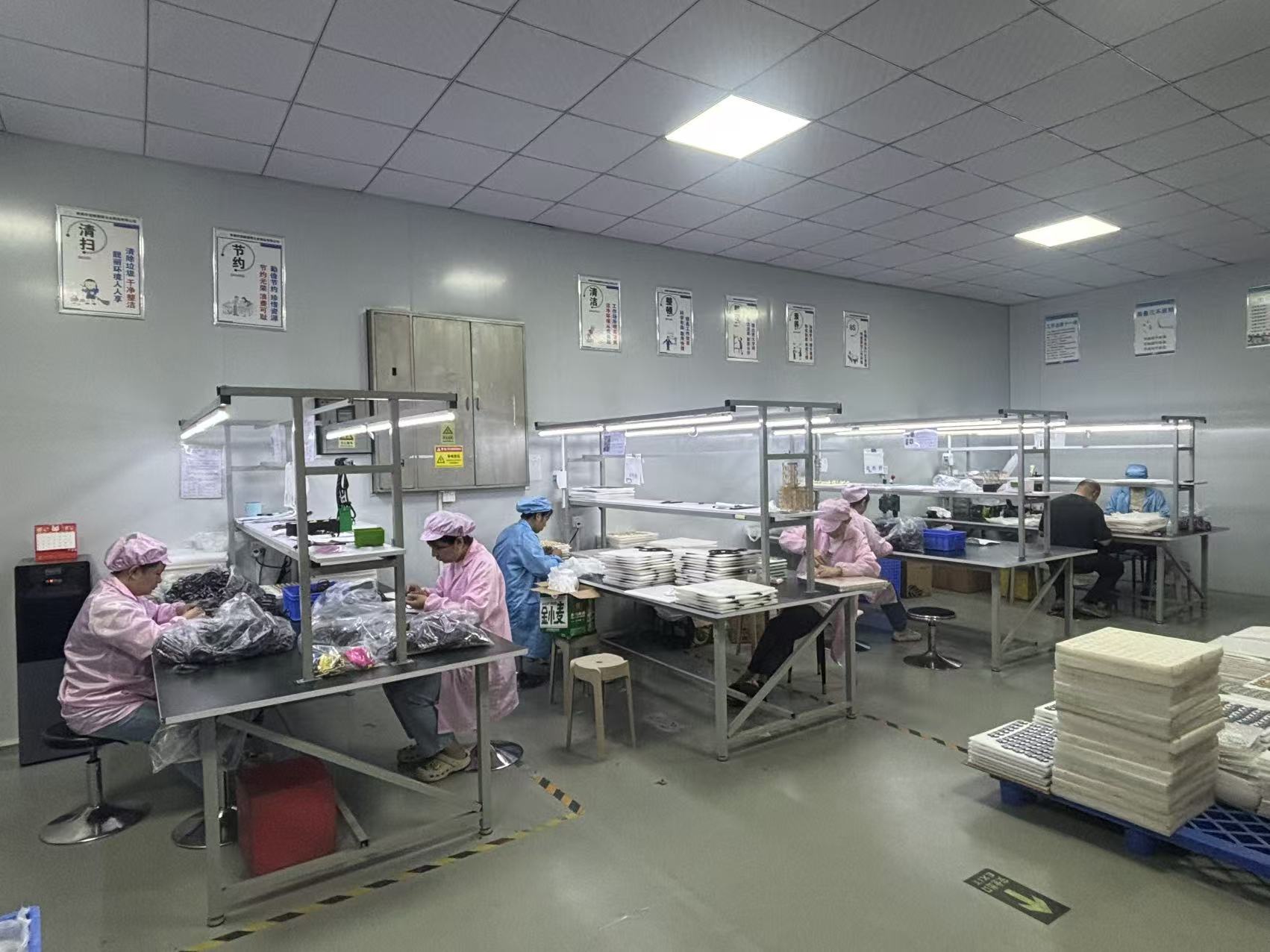
Custom badge pins and custom keychains are often quoted by the same factory, sometimes from the same die-casting and injection-moulding lines, yet they behave differently once a purchase order is issued. Badges concentrate nearly all of their value in a small, front-facing decorated surface. Keychains are handled objects: they carry attachment hardware, more metal mass and longer daily abrasion exposure. For a procurement team at the decision stage, that difference reshapes five specification items — material route, surface finish, minimum order quantity, packaging and the scope of pre-shipment inspection. This buyer-side comparison sets the two categories against those items using the published sourcing terms of BUILD PLASTIC&HARDWARE GIFTS (Dongguan Build Plastic & Hardware Products Co., Ltd.) and published trade references where landed cost is affected.
The shared commercial rules — and where they stop
Both products run under the same stated terms. Custom orders are quoted at a 1,000 pcs MOQ, while some simple in-stock moulds can support smaller quantities; new moulds usually require 1,000 pcs to reach a better unit price. Regular production takes 30–40 days after sample confirmation, and that window extends for large or complex orders and for peak season, with the schedule confirmed before order placement. Default packaging is a regular OPP bag combined with a carton. Full inspection is carried out before shipment, and actual photos or videos are supplied for verification once bulk production is finished.
Because those terms are identical for a badge and a keychain, buyers often treat the two as one line in an RFQ. Three factors break that assumption: unit weight, the amount of handling the finished item receives, and the customs heading that applies to the material used. None of them appears on a standard quotation sheet, and all three move the landed cost.
Material route: die-cast metal or moulded plastic
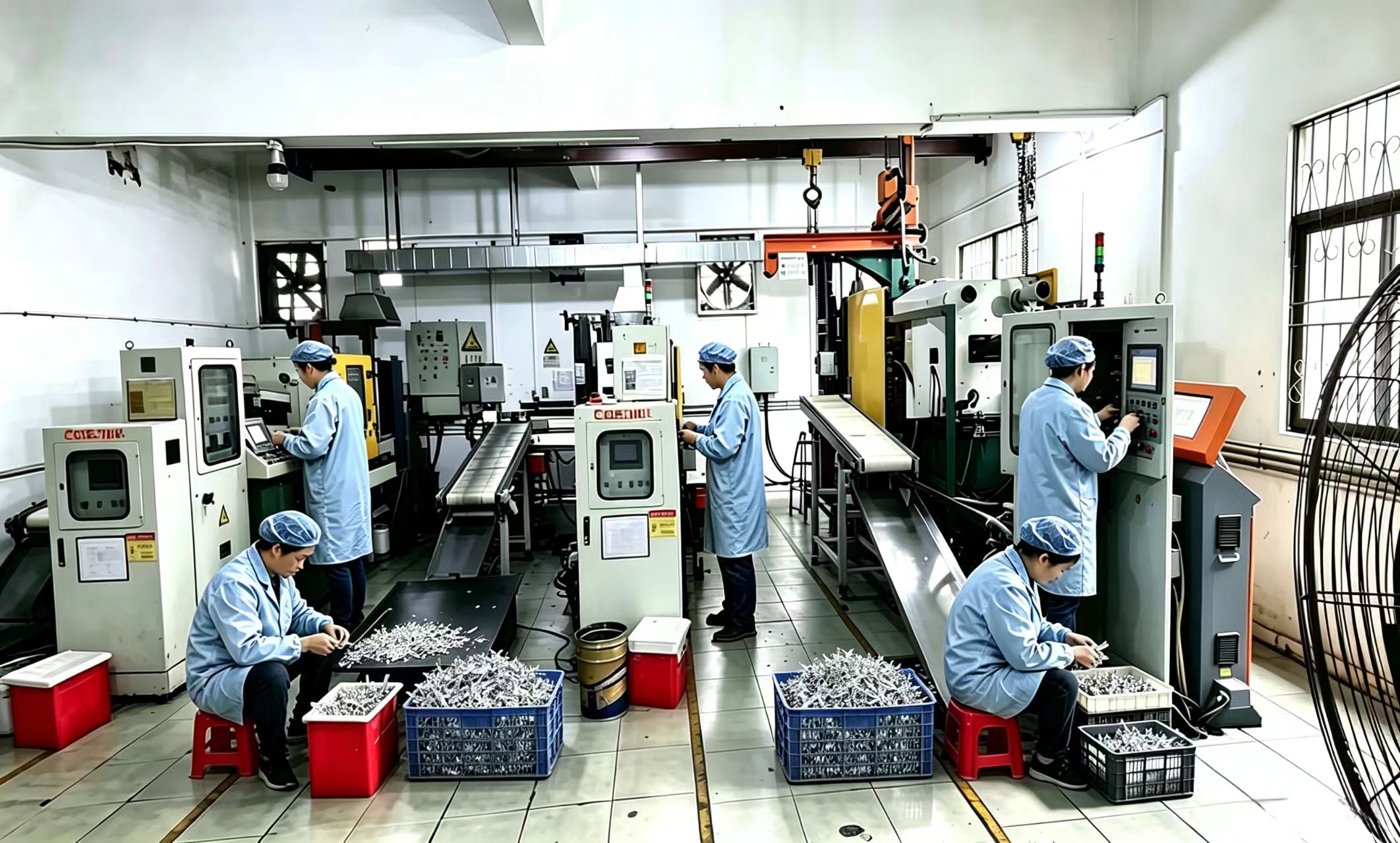
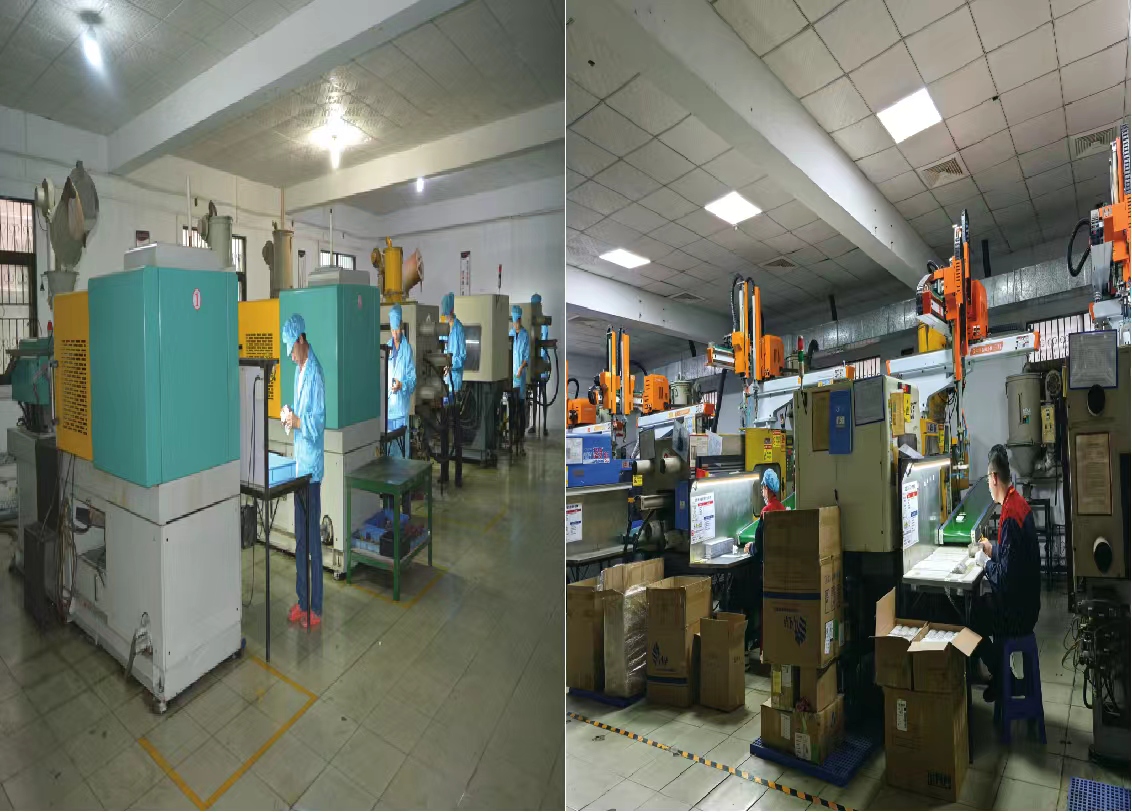
Material choice is the first fork in the specification, because it determines weight, finish compatibility and tariff treatment at the same time. The company's stated workshop set covers injection moulding, die casting, stamping, cutting, screen printing, pad printing, automatic gluing, automatic ink spraying and automated packaging assembly lines, supported by an independent quality inspection facility. In practical terms, both the metal and the plastic route exist in-house rather than being bought in.
Die-cast zinc alloy is the conventional metal route for badges and metal keychains. It accepts electroplating well, gives a heavier hand-feel, and suits designs with fine raised or recessed detail. The trade-off is mass: a metal keychain weighs noticeably more than a plastic one, and freight is charged on weight and volume rather than on unit count.
Moulded plastics cover a wider property range, and the common families in this category behave differently. ABS is a general-purpose, cost-efficient body material; acrylic offers transparency and clean printed graphics; resin supports deeper three-dimensional shaping; PC is chosen where higher impact resistance matters. These are general material characteristics rather than supplier-specific claims. What the supplier does state is a material position: products are manufactured with virgin materials, in contrast to factories that use cheap recycled material.
Applied to the comparison, the rule is straightforward. If a badge's value lies in artwork fidelity and gift-box presentation, either route can work, and metal is generally the heavier, more gift-oriented option. If a keychain will be carried daily, the pairing of body material and plating matters more than the material name on its own, because the finish is what the user actually sees after months of contact with keys, pockets and bags.
Surface finish: name the process, not the colour
Finish is the specification most often under-defined in a purchase order, because buyers state a colour while the factory needs a process. Conventional electroplating colours listed by the supplier are gold plating, silver plating, antique bronze, gun black, nickel finish, matte gold and matte silver, with silver, gold, antique and matte families also named in the press-facing description of available surface finishes. Decoration processes are broader still: hard enamel, soft enamel, paint filling, epoxy drip, silk screen printing, UV printing, pad printing, spray painting, laser engraving, etching and colour filling.
The durability boundary is stated explicitly. With proper sealing oil protection under normal use, the finish is not prone to fading; prolonged soaking in water, friction, or exposure to strong acid environments will accelerate oxidation, which the supplier describes as a normal phenomenon. That is not a defect clause, but it is a real fit boundary, and it lands differently on the two products. A badge sits against fabric or a lanyard and is handled occasionally. A keychain rubs against keys and pocket lining all day, so friction exposure is part of normal use rather than an exception.
The practical translation is a specification question rather than a quality claim: state the plating family, the decoration process and the intended use conditions in the RFQ, then ask for the finish to be confirmed on the sample. Reflective bright silver and bright gold make handling marks more visible, while matte and antique families are less reflective and generally less revealing of light surface marks — a consideration that weighs more heavily on keychains than on badges.
MOQ: the 1,000 pcs line and its in-stock exception
The stated MOQ for custom orders is 1,000 pcs, and new moulds usually require 1,000 pcs to secure a better unit price. Some simple in-stock moulds can support small orders, which means the effective minimum depends on whether an existing mould already matches the design — not on whether the item is a badge or a keychain. The category does not change the threshold; mould availability does.
This has a direct consequence for mixed orders. A buyer sourcing a badge programme and a keychain programme together may find that the two lines behave differently under the same MOQ rule, depending on which designs can be matched to existing simple moulds. The practical action is to ask, for each item, whether the design can run on an in-stock mould or requires a new one, and to confirm the MOQ and unit price in writing before the order is placed. New mould development also sits ahead of the production window: the stated workflow runs from vector artwork in AI, CDR or PDF format through 3D rendering, rendering confirmation, mould opening, sample making, sample confirmation and then mass production.
Lead time: the 30–40 days start after sample approval
Regular production takes 30–40 days after sample confirmation. Large or complex orders, and peak-season scheduling, can extend that window beyond 30–40 days, and the schedule is confirmed before order placement. The phrase "after sample confirmation" is the operationally important part: mould opening and sample approval sit in front of the production clock, so a schedule built on the 30–40 days alone understates the calendar time to delivery. For repeat orders and long-term supply planning, MOQ and the 30–40 day regular lead time should both be confirmed before the order is placed.
Packaging: protection, retail presentation and freight
Default packaging is a regular OPP bag combined with a carton. Custom back cards, hang tags and gift boxes are available as optional components, and packaging is quoted separately from the product itself. That separation matters at the decision stage, because packaging changes carton volume and weight, and therefore the freight component of the landed unit cost.
Badges and keychains pull the specification in different directions. A badge is small, light and often sold at retail or given away at an event, so a printed back card or a hang tag does double duty as protection and as display. A keychain is heavier and bulkier per unit, and the carton has to hold that weight without the plated surfaces grinding against each other in transit; a gift box adds presentation but also adds cube, which is charged as freight rather than recovered in the product price.
The comparison point for a buyer is therefore not "standard or premium packaging" but a per-unit calculation: product cost, plus packaging quoted separately, plus the freight effect of the resulting carton volume and weight. Requesting the packaging quotation and the packed carton data for the exact configuration is the only way to compare two suppliers on the same basis.
Inspection, photos and test reports
Full inspection is carried out before shipment, and after bulk production is finished the supplier provides actual photos or videos for verification. Third-party inspection, or an on-site inspection arranged by the buyer, is also acceptable. For defects, the stated process is evidence-based: the buyer supplies photos and quantity statistics, and replacement or discount is arranged as agreed. Compensation for damage caused by human factors or by transit extrusion requires prior confirmation, which is a qualification worth reading carefully before assuming that any post-delivery damage is covered.
Test reports follow a separate track. Environmental tests such as lead and cadmium testing can be arranged as required, including for European buyers. The testing fee for arranged tests is borne by the customer, and the testing lead time is confirmed separately. In scheduling terms, that means testing has to be planned alongside production rather than assumed to run automatically in parallel.
The inspection emphasis differs by product. On a badge, the visible face is the product: decoration alignment, plating uniformity and colour consistency are what the buyer will see on arrival. On a keychain, the handled surfaces and the working attachment take the load, so plating on high-contact edges and the integrity of the attachment deserve attention in the inspection plan. Both are covered by the same pre-shipment photo and video step, but they are not the same check, and an RFQ that treats them as one line will not capture the difference.
Tariff classification and landed cost
Customs treatment is the comparison dimension most often left out of badge-versus-keychain decisions, and it is the one with the clearest documentary difference. Published US tariff guidance places base-metal key rings and keychains under HTS 7326.90.86.88 at a 2.9% duty, while plastic keychains point toward heading 3926.90 with a duty range of roughly 3–6.5% (Gaia Dynamics, 2026, citing HTSUS). Material choice therefore changes the duty line before any supplier negotiation begins.
Badges do not automatically inherit either heading. Under the 2025 US Harmonized Tariff Schedule, heading 7117 covers imitation jewellery defined as articles that do not incorporate natural or cultured pearls, precious or semi-precious stones, or precious metal except as plating or minor constituents — and certain articles, including buttons and hair slides, are excluded from that definition. The general lesson is procedural: classification follows the actual article and its material composition, so a mixed badge and keychain shipment should be classified item by item rather than under a single code, and the result should be confirmed with a customs broker before the landed cost model is locked.
Compliance scoping follows the same logic. Published US market-entry guidance for jewellery boxes and related gift storage cites CPSIA lead limits of under 100 ppm in accessible components and California Proposition 65. That guidance addresses a specific product family; it is not a blanket statement covering every plastic and metal craft gift, so the applicable requirements should be confirmed against the intended use, the destination market and the age group the product is aimed at.
Side-by-side: where buyer attention should go
The table below summarises the comparison on the dimensions that actually change a purchase decision. Item-specific MOQ and lead time still have to be confirmed in writing, because both depend on the mould situation and the production calendar rather than on the product category alone.
| Dimension | Custom badge pins | Custom keychains |
|---|---|---|
| Construction route | Die-cast metal or moulded plastic body with a decorated front face | Die-cast metal or moulded plastic body with a functional attachment |
| Weight profile | Low per unit; the badge itself rarely drives freight | Higher per unit; freight scales with metal mass and carton volume |
| Finish menu | Silver, gold, antique and matte plating families; enamel, epoxy, printing, engraving | Same plating and decoration menu, with more friction exposure in use |
| MOQ (custom) | 1,000 pcs; smaller runs where a simple in-stock mould matches | 1,000 pcs; smaller runs where a simple in-stock mould matches |
| Lead time | 30–40 days after sample confirmation | 30–40 days after sample confirmation |
| Default packaging | Regular OPP bag + carton | Regular OPP bag + carton |
| Optional packaging | Back card, hang tag, gift box — quoted separately | Back card, hang tag, gift box — quoted separately |
| Inspection focus | Decoration alignment, plating uniformity, face colour consistency | Plating on handled edges, attachment integrity, surface marks |
| US tariff lead | Classify on the article and material; heading 7117 definition should be checked | HTS 7326.90.86.88 for metal (2.9%) or 3926.90 for plastic (approx. 3–6.5%) |
| Main cost risk | Under-specified finish and packaging quoted outside the unit price | Weight-driven freight and duty-rate differences between metal and plastic |
Verifying the supplier behind both products
BUILD PLASTIC&HARDWARE GIFTS is the trading identity of Dongguan Build Plastic & Hardware Products Co., Ltd., a company established in 1999 operating a 6,000 m² facility with 100 employees, 15 engineers, an annual output stated at 6,000,000 units and an export ratio of 85%, with main markets in Europe, America and Japan. It describes itself as a source factory specialising in custom hardware and plastic crafts, supporting mould opening and production for badges, keychains, fridge magnets, makeup mirrors, ornaments, jewellery boxes, medals, trophies, commemorative coins, candlesticks, hair clips, bookmarks, necklaces, phone chains, ring buckles, lipstick-holder finger mirrors, wine stoppers, bottle openers, napkin rings, forks and spoons, and coasters, and states that because production runs through a source factory rather than trading intermediaries, factory prices can be offered.
Its stated certification position is unusually broad for the category: Disney FAMA: 025795, Universal Studios, Bandai, Hasbro, LVMH, L'Oréal, Victoria's Secret, Starbucks, BSCI, ISO 9001, Higg Index and Sedex. The company's own comparison notes that these additional brand certifications make it more suitable for brand customisation orders, and it is candid about the trade-off: more brand certifications mean higher production cost and more inspection procedures, which its comparison material describes as a 5% brand premium. For a buyer weighing a badge or keychain programme against commodity supply, that premium is the price of an audited supplier relationship, and it should be evaluated against the certification actually required for the specific end customer — a factory certificate does not automatically transfer to every product in the range, so applicability should be confirmed per item.
Where this comparison stops
This is a comparison of documented characteristics and stated commercial terms, not a head-to-head test result. No side-by-side wear test, plating thickness measurement or unit-price quotation was compared for this article, and no conclusion about relative durability or value for money can be drawn from it. Three further boundaries apply. The MOQ exception depends on existing simple moulds, so it cannot be assumed for a new design. The 30–40 day window excludes mould opening and sample approval and can extend for complex orders or peak season. Tariff references are US-specific, dated to 2025–2026 source material, and must be confirmed for the actual article and destination market.
A practical six-point verification list for the decision meeting: which mould the design will run on and what that means for MOQ; the named plating family and decoration process rather than a colour word; the confirmed production schedule including mould and sample time; the packaging quotation and packed carton dimensions; the inspection plan and who attends it; and the classification lead for each item in the shipment.
Market context for the decision
Category-level demand data supports treating both items as a live procurement line rather than a novelty purchase. Published research places the global badge making supplies market at USD 1.23 billion in 2025 rising to USD 1.33 billion in 2026 (EIN Presswire / Future Data Stats, November 2026 — a republished secondary source, so directional rather than definitive), the global custom trophy service market at USD 5.8 billion in 2025 and projected to reach USD 9.7 billion by 2034 (Dataintelo, 2026), and the wider global handicrafts market at USD 740.0 billion in 2024 projected to reach USD 983.1 billion by 2030 (Grand View Research, 2026).
What those figures do not tell a buyer is which supplier to choose. The market-size evidence describes category scale, not individual supplier capability, price competitiveness or delivery reliability — none of which was independently validated for this comparison. The defensible reading is conditional: where category demand is expanding, differentiation shifts from availability to specification discipline, which is precisely where the badge-versus-keychain comparison pays off. Buyers who define finish, packaging and inspection on the front end are comparing suppliers on the same variables; buyers who do not are comparing quotations that may not describe the same product.
Frequently asked questions
What is the MOQ for custom badges and keychains?
Custom orders are quoted at a 1,000 pcs MOQ, and new moulds usually require 1,000 pcs to obtain a better unit price. Some simple in-stock moulds can support smaller quantities, so the effective minimum depends on whether an existing mould already matches the design rather than on the product category. Buyers should confirm the mould situation for each item in writing before assuming a lower quantity is available.
How long does mass production take after the sample is approved?
Regular orders take 30–40 days after sample confirmation. Large or complex orders and peak-season scheduling can extend that window, and the schedule is confirmed before order placement. Mould opening, 3D rendering approval and sample making all occur before the production window begins, so total calendar time to delivery is longer than the 30–40 days alone.
Can test reports be provided for the finished products?
Environmental tests such as lead and cadmium testing can be arranged on request, including for European buyers. The testing fee is borne by the customer and the testing lead time is confirmed separately, so testing should be scheduled alongside production rather than assumed to run automatically in parallel with it.
Can buyers inspect the goods before shipment?
Yes. Full inspection is carried out before shipment, and actual photos or videos are provided after bulk production for verification. Third-party inspection or an on-site inspection arranged by the buyer is also acceptable. If defective items are received, the buyer supplies photos and quantity statistics and replacement or discount is arranged as agreed, while damage from human factors or transit extrusion requires prior confirmation.
How are badges and keychains packaged, and can packaging be customised?
Default packaging is a regular OPP bag combined with a carton. Custom back cards, hang tags and gift boxes are available as optional components and are quoted separately from the product. Because packaging changes carton volume and weight, it should be costed as part of the landed unit cost rather than treated as a final-stage addition.
A full catalogue covering the company's plastic and hardware gift range, including badges, keychains and related accessories, is available for download: BUILD PLASTIC&HARDWARE GIFTS product catalogue (PDF).
¿Tiene preguntas o necesita más detalles?
Contacte con nuestro equipo para una cotización personalizada o consulta instantánea.
Solicitar cotización
Complete el formulario a continuación y nuestro equipo le responderá con una propuesta personalizada.
Chat directo de WhatsApp
¿Prefiere chatear en tiempo real? Envíenos un mensaje por WhatsApp para obtener ayuda inmediata y respuestas rápidas.
- Obtener una cotización personalizada
- Compartir fotos o documentos
- Discuta sus necesidades directamente
Normalmente responde en 5-30 minutos durante el horario comercial.