
Backlit Light Guide Panel Supplier Evidence: 20 Years, Five Bases, 30,000 Units/Month
Backlit Light Guide Panel Supplier Evidence: 20 Years, Five Bases, 30,000 Units/Month
A backlit light guide panel supplier is only as credible as the facts a buyer can check before the first purchase order: where the panel is made, how much capacity is scheduled behind it, which certificate numbers cover which models, and what lead time applies to a custom size rather than a catalogue item. For Shanghai Edgelight Industry Co., Ltd. (EDGELIGHT), most of those facts are published — and the gaps matter just as much as the claims.
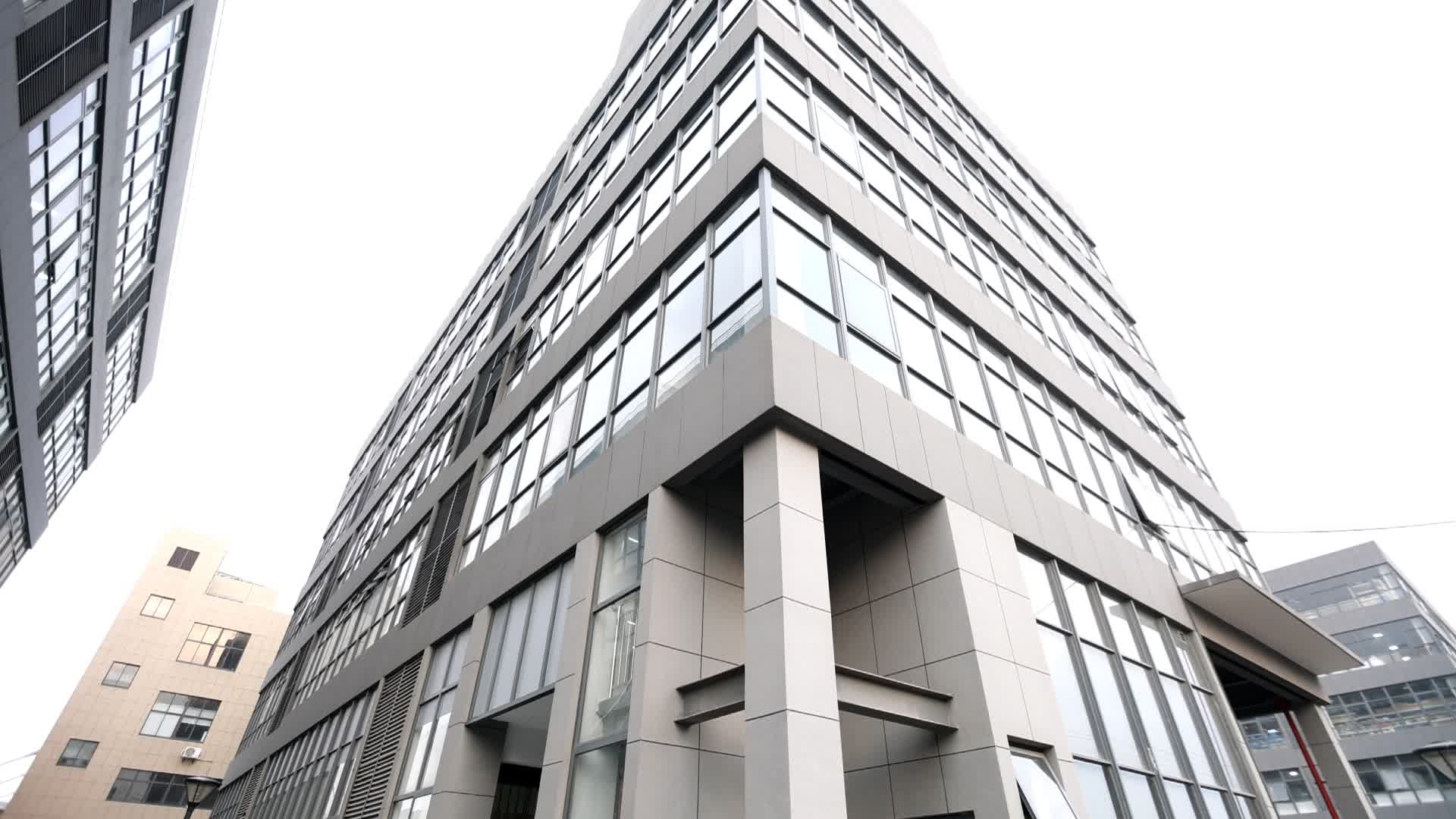
Manufacturing footprint is one of the few supplier claims a buyer can cross-check against a physical site, a base list and a capacity figure. Image: Edgelight production facility.
The manufacturer behind the Edgelight brand — Shanghai Edgelight Industry Co., Ltd., founded in 2004 and based in Songjiang District, Shanghai — describes itself as a producer of light guide panels, Edgelux panels, SEG light boxes, LED strips and power supplies for advertising light boxes, LED displays and LED advertising products. For a buyer at the evaluation stage of a backlit light guide panel project, the useful question is not whether that description sounds convincing, but whether the operating numbers behind it can support a scheduled order.
This analysis reviews the supplier-capability evidence that is publicly documented: more than 20 years of manufacturing history, approximately 500 employees, a 25-engineer R&D team, five production bases in China, Germany and the United States, a stated capacity of 30,000 units per month, a 5–10 day lead time, OEM/ODM service for the European Union, North America, Southeast Asia and Australia, and 100% testing. It also sets out, deliberately, what that evidence does not prove.
The market backdrop: why documented capability now carries price weight
Light guide panel sourcing sits inside two price structures that move independently. The first is the panel market itself. Commercial research published by Dataintelo values the global Light Guide Plate market at USD 3.91 billion in 2025, with a projected figure of USD 6.51 billion by 2034. The second is the upstream material. Optical-grade PMMA sheet production was projected to reach 1.36 million square metres in 2025 at an average price of USD 185.25 per square metre, according to a MarketSCAGR / IMARC strategic research report.
Read together, those two data points explain a recurring procurement problem. A buyer comparing quotations for a large-format backlit panel is often comparing two different material strategies, two different base-sheet grades and two different processing routes — not two prices for the same object. When sheet material is priced per square metre at that level, the difference between a quotation that assumes optical-grade PMMA and one that assumes a general-purpose acrylic is large enough to change a project margin.
That is why evaluation-stage buyers increasingly ask for factory evidence rather than product brochures. A capacity number, a base list, a certificate number and a lead time are all falsifiable. Marketing language is not.
Five production bases, and what each one is actually for
Edgelight operates five production bases, described in the company profile by location and floor area. The distribution is heavily weighted toward China, with two overseas sites in Germany and the United States that are an order of magnitude smaller than the domestic plants.
| Base | Location | Stated area | Practical reading for a buyer |
|---|---|---|---|
| 1# Production base | Shanghai headquarters | About 33,000 m² | Largest site; the natural place to expect core panel and display production |
| 2# Production base | Tianjin | About 20,000 m² | Second-scale manufacturing site in northern China |
| 3# Production base | Germany — Edgelight GmbH | About 1,500 m² | Small footprint; regional support rather than bulk panel output |
| 4# Production base | United States — American Edgelight LLC | About 1,679 m² | Small footprint; US-market facing, supports local service and assembly-type work |
| 5# Production base | Shanghai factory | About 10,000 m² | Second Shanghai site; adds domestic capacity and process separation |
On the company's own area figures the total is in excess of 65,000 square metres. Two observations follow, and they are observations rather than claims. First, the footprint is genuinely multi-site rather than a single rented hall with a warehouse — which matters when a buyer asks what happens if one line goes down. Second, the German and American bases are roughly 1,500 m² and 1,679 m², compared with 33,000 m² in Shanghai. A buyer should therefore confirm in writing which processes are performed at each site for the specific panel being ordered, and which site actually carries the order. Treating a 1,679 m² US facility as interchangeable with a 33,000 m² Shanghai plant would be a misreading of the evidence.

The US base, American Edgelight LLC, is stated at about 1,679 m² — a regional service and production footprint, not a substitute for the Shanghai and Tianjin scale. Image: Edgelight LLC.
What 30,000 units per month and a 5–10 day lead time actually mean
The supplier's capability record states a monthly capacity of 30,000 units and a lead time of 5–10 days, alongside a minimum order quantity of 1 unit. Those three figures, taken together, describe a supplier configured for mixed-volume work: a programme order can be scheduled in volume, while a single custom panel can still enter the line.
Two clarifications are worth building into any RFQ before those numbers are treated as commitments.
The unit is not defined in the public record. A "unit" could mean a finished light guide panel, an assembled backlit module with driver, or a light box assembly. A buyer specifying a 1,200 × 2,400 mm panel and a buyer specifying a 300 × 300 mm panel are both buying "one unit", but they are consuming very different amounts of sheet and machine time. The capacity figure is useful as an order-of-magnitude signal of line scale; it should not be converted directly into a delivery schedule for a specific panel size without a written production plan.
The lead time start point is not defined either. A 5–10 day window is a production-side statement. It typically does not include international freight, customs clearance or installation. Buyers should confirm whether the clock starts at purchase order, at drawing approval, or at first-article sign-off, and whether the same window applies to a first-time custom size as it does to a repeat order. Where the answer is documented, a 5–10 day production window is a strong indicator of stock-held raw material and in-house processing rather than outsourced sheet cutting.
Certificate numbers, not certificate logos
Certification is the area where backlit light guide panel suppliers are most often vague and where buyers can most easily insist on specifics. Edgelight's records include two identifiable certificates with numbers, issuing bodies, standards, issue dates and model scopes.
| Certificate | Number and issuer | Standard scope | Validity |
|---|---|---|---|
| CE — LED light panel EMC | CTSL2620530156EZ, issued by CTSL Testing (Dongguan) Co., Ltd. | EN IEC 55015:2019/A11:2020; EN IEC 61547:2023; EN IEC 61000-3-2:2019/A2:2024; EN 61000-3-3:2013/A2:2021/AC:2022-01 | Issued 2026-05-29; expiry 2096-05-29 |
| UL — Edgelux LGP / LED module | UL-US-2145621-0, issued by UL LLC | UL 2108, 2nd Edition — Component, Sign Accessories, LPS / Class 2 type, LED module | Issued 2021-10-05; expiry 2031-10-05 |
The scopes are as informative as the numbers. The CE certificate covers the GPF001 family and a listed series of models — MO22, MO24, MO31, GPF21, GPF23, GPF25, GPF26, GPF100, GPF101, GPF102, GPFX–GPFXXX and MOX–MOXXX, plus badge, fascia, blade and hanging LED panel variants — with the note that all models share identical circuits apart from colour appearance and model name. That is a helpful disclosure, because it tells a buyer exactly how the certificate was extended across a range: identical electronics, different cosmetics.
The UL certificate scope is written at component level (sign accessories, LPS / Class 2 LED module) under UL 2108 for low-voltage lighting systems, and lists specific LED module model numbers. This is where a buyer's due diligence has to do real work: the certificate covers the LED module within a stated model list, so the panel-plus-driver combination being ordered should be matched against that list rather than assumed.
The CE certificate, as recorded, addresses electromagnetic compatibility. It is not a photometric report and it is not a statement of luminous uniformity. Buyers in the EU who need lighting-performance documentation for a project should request it as a separate item rather than inferring it from the EMC certificate. The same discipline applies in reverse: the existence of a CE or UL number says nothing about the lead time, the sheet grade or the optical tolerance of a custom panel.
Customisation, testing and export exposure
Edgelight's stated production mode is OEM and ODM, with a customisation list that covers size, thickness, colour temperature, logo, surface shape, light output brightness and installation structure. Quality control is stated as 100% testing. The export footprint covers the European Union, North America, Southeast Asia and Australia, supported by local after-sales support, and the company profile records an export ratio of 75% with the USA and EU as main markets.
For an evaluation-stage buyer, three of those items carry more weight than the rest.
Installation structure as a customisation variable is unusual to see listed explicitly, and it is the variable most often missed in RFQs. A light guide panel that performs well on a bench can still produce a shadowed edge in an aluminium frame if the standoff, reflector or edge-seal detail differs from the tested assembly. A supplier that treats installation structure as part of the custom scope is a supplier that has probably been asked the question before.
100% testing is a claim that should be converted into a defined test. Which parameters are checked on every unit — illuminated appearance, edge uniformity, colour consistency, driver function, dimensional tolerance — and is the record kept per serial or per batch? A 100% test with an undefined test list is a process description, not a quality guarantee.
A 75% export ratio with the USA and EU as main markets is a meaningful risk indicator in both directions. It suggests the supplier is used to export documentation, packaging standards and destination-market compliance expectations. It also means a domestic buyer is competing for the same capacity as export orders, which is worth remembering when negotiating a delivery window in a busy quarter.
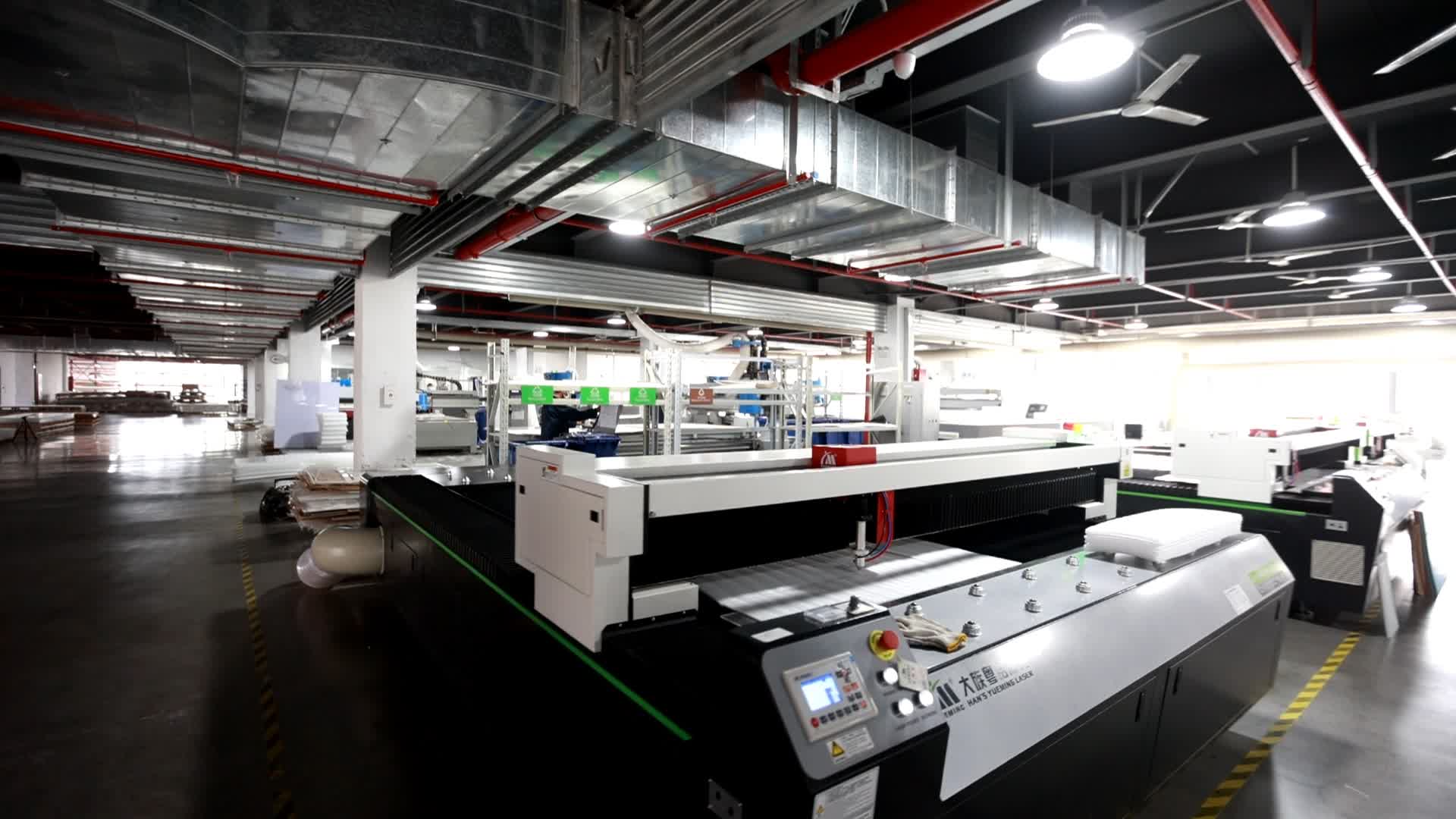
Panel geometry and edge quality are set in cutting and processing, not in final assembly. Image: Edgelight light guide panel UV cutting workshop.
Where the capability fits: advertising light boxes, retail displays and elevator interiors
The application evidence points in three directions.
Advertising light boxes and signage. Light guide panels are the light-distribution element inside an edge-lit advertising light box, and the company's product portfolio is built around that assembly: light guide panels, Edgelux panels, SEG light boxes, LED strips and power supplies for advertising light boxes. For a buyer sourcing a complete box rather than a bare panel, that portfolio matters because driver, strip and panel come from one production system rather than three vendors with three tolerance assumptions.
Retail display backlighting. The ultra-slim edge-lit format is the configuration most exposed to uniformity complaints, because a thin profile leaves less room for diffusion distance. Custom size, colour temperature and brightness control are the relevant levers here, and they are all on the stated customisation list.
Elevator and architectural decoration. The company's case record describes a 10,000-unit elevator decoration programme for an elevator manufacturing client, with a duration recorded as 20 years and stable operation as the reported result. The highlight in that record is not the panel itself but the combination — lighting, printing, and customised size and texture — which is the pattern typical of interior architectural work, where the decorative surface and the light source have to be developed together.
On the processing side, published workshop imagery from the company shows laser-dotting and UV-cutting equipment in the light guide panel line. That distinction is worth understanding before specifying: laser-dotted (engraved) panels are generally preferred for projects requiring high brightness and uniformity in large formats, while V-cutting remains suitable for standard advertising light boxes, according to the technical comparison recorded in the supplier's compliance documentation. That comparison is an industry-level statement rather than an independently measured test result, so a buyer should still request measured uniformity data for the specific size being ordered.
A documented-attribute comparison, and where it stops being a comparison
The table below compares only attributes that each supplier documents publicly. It is not a ranking, and it is not like-for-like: the three companies publish different categories of information, and no normalised optical data — uniformity, luminance, efficiency or lifetime under stated test conditions — was available for any of them in the sources reviewed.
| Documented attribute | Edgelight (Shanghai Edgelight Industry Co., Ltd.) | Diode LED | LightPanel |
|---|---|---|---|
| Manufacturing footprint | Five bases; more than 65,000 m² total by stated areas | Not stated in the sources reviewed | Not stated in the sources reviewed |
| Capacity and lead time | 30,000 units/month; 5–10 day lead time (company-reported) | Panels built to order; lead time not stated in the sources reviewed | Not stated in the sources reviewed |
| Custom size | Custom size, thickness and surface shape listed | Up to 54 in × 94 in | Custom panels offered |
| Light and control options | Colour temperature and brightness listed as customisable | 12–24 VDC input, dimmable | White, tunable white, RGB/RGBW |
| Environment | Not stated in the sources reviewed | Dry location | Outdoor, glass and fire-rated configurations offered |
| Certification evidence | CE CTSL2620530156EZ; UL-US-2145621-0 | Not stated in the sources reviewed | Not stated in the sources reviewed |
| Stated minimum order | 1 unit | Not stated in the sources reviewed | Not stated in the sources reviewed |
The practical lesson is not that one supplier leads. It is that the three publish different kinds of proof. Edgelight publishes factory scale, capacity, lead time and certificate numbers, which suit a buyer who needs to schedule volume and satisfy an importer's compliance file. Diode LED publishes electrical and warranty parameters for a defined maximum panel size, which suits a buyer integrating panels into a low-voltage system with a specified warranty expectation. LightPanel publishes configuration variety including outdoor, glass and fire-rated options, which suits a buyer whose project requires an environmental or fire classification — with the caveat that such configurations require product-specific documentation and test standards before they can be used in procurement.
One identity check is worth stating explicitly for anyone searching by name. Edgelit (edgelitpanel.com), a supplier of custom optical acrylic light guide plates and complete LED light panels, is a separate company from Edgelight. Name similarity should not be read as affiliation, shared ownership or shared certification.
Limits: what this evidence does not establish
The credibility of a capability profile depends on the boundaries it is willing to state. Six apply here.
Capacity is company-reported and not audited in the public record. The 30,000 units per month figure, the base areas and the staff count come from the manufacturer's own profile. No third-party factory audit, business registry extract or independent capacity assessment was identified in the sources reviewed. That does not make the figures wrong; it makes them unverified, and a buyer placing a large programme should verify them through a site visit or a commissioned audit.
No normalised optical performance data is published. Uniformity, luminance, optical efficiency, colour consistency and lifetime under defined test conditions are not available for comparison across suppliers, including this one. Claims of high uniformity cannot be benchmarked until a buyer defines a measurement method and requests data against it.
Certificate scope must be matched to the order. The CE certificate covers a defined model family under EMC standards; the UL certificate covers listed LED module models under UL 2108. Neither should be read as blanket coverage of every panel and driver combination the company can assemble.
The multi-base footprint is not automatically redundant capacity. With overseas sites at roughly 1,500 m² and 1,679 m² against 33,000 m² in Shanghai, the overseas bases are best understood as regional service and production points. Buyers who need dual-source assurance should ask which site would produce a second order if the primary site were unavailable.
Lead time is not a delivery guarantee. A 5–10 day production window excludes freight, and its start point should be defined contractually.
Price is not addressed by any of this evidence. Factory scale and certification do not establish a price position. Marketplace listings for light guide plates are not usable benchmarks because dimensions, thickness, optical configuration, quantity basis and delivery terms are usually missing — which is why comparable quotations, built to a single specification, remain the only reliable cost comparison.
Future outlook
Two pressures are likely to reshape how backlit light guide panel suppliers are evaluated over the next several years. The first is material. With optical-grade PMMA sheet priced at around USD 185.25 per square metre in the 2025 projection, sheet cost is a visible share of panel cost, and buyers should expect panel quotations to track sheet pricing more closely than LED component pricing. Suppliers with in-house processing and stock-held sheet are better placed to hold a quoted price across a project timeline; buyers should ask how long a quotation is valid and what material index it assumes.
The second is documentation. As the light guide plate market grows from the 2025 baseline of USD 3.91 billion toward the projected USD 6.51 billion in 2034, more suppliers will enter with similar product descriptions and fewer verifiable numbers. The differentiator is likely to shift from product claims to evidence quality: certificate numbers with scope lists, defined test regimes, auditable capacity, and stated measurement conditions for uniformity. Buyers who build those requirements into their RFQ templates now will spend less time comparing incomparable quotations later.
FAQ
How can a buyer verify a light guide panel supplier's stated monthly capacity?
Start by establishing what a "unit" means. Edgelight states a monthly capacity of 30,000 units, and also states five production bases with individual floor areas ranging from about 1,500 m² to about 33,000 m². Because the public record does not define whether a unit is a bare panel, an assembled backlit module or a light box, the capacity figure should be converted into a size-specific commitment: how many panels of the buyer's dimensions can be scheduled per week, from which base, and starting on which date. A site visit or third-party audit is the appropriate verification step for a programme order.
What does a 5–10 day lead time cover for custom backlit light guide panels?
The 5–10 day figure is stated as a production lead time, and Edgelight lists a minimum order quantity of 1 unit alongside OEM/ODM customisation of size, thickness, colour temperature, logo, surface shape, brightness and installation structure. The public record does not state whether the clock starts at purchase order, drawing approval or first-article sign-off, and it does not state whether the same window applies to a first-time custom size. Buyers should have those three points confirmed in writing, and should treat freight, clearance and installation time as separate from the production window.
Which certificates should a US or EU buyer verify before ordering a backlit light guide panel?
Two are documented for Edgelight. The CE certificate CTSL2620530156EZ, issued by CTSL Testing (Dongguan) Co., Ltd. on 2026-05-29, covers the GPF001 family and a listed set of models against EN IEC 55015:2019/A11:2020, EN IEC 61547:2023, EN IEC 61000-3-2:2019/A2:2024 and EN 61000-3-3:2013/A2:2021/AC:2022-01 — electromagnetic compatibility standards. The UL certificate UL-US-2145621-0, issued by UL LLC on 2021-10-05 and valid to 2031-10-05, covers sign accessories and LPS / Class 2 LED modules under UL 2108, 2nd Edition, for listed model numbers. Buyers should match the exact panel and driver combination being ordered against the certificate model scope, and should request photometric or other performance documentation separately, since an EMC certificate is not a lighting-performance report.
Does a five-base production footprint reduce supply risk for a light guide panel order?
It can, but only where the base carrying the order has been identified. Edgelight's five bases are Shanghai headquarters at about 33,000 m², Tianjin at about 20,000 m², Germany (Edgelight GmbH) at about 1,500 m², American Edgelight LLC at about 1,679 m², and a second Shanghai factory at about 10,000 m². The two overseas sites are far smaller than the Chinese plants, so a buyer should confirm which processes are performed at each site and whether a second order could be produced at an alternative base if the primary one were unavailable. Footprint alone is not a continuity plan; the written allocation is.
Laser-engraved or V-cutting: which light guide panel specification suits a large-format retail display?
The technical comparison recorded in Edgelight's compliance documentation states that laser-dotted (engraved) light guide panels are preferred for projects requiring high brightness and uniformity in large formats, while V-cutting remains suitable for standard advertising light boxes. That comparison is an industry-level statement rather than an independently measured test result, and no normalised uniformity data is published. For a large-format retail display, the practical approach is to specify the measurement method and the target uniformity, then request data from the supplier against that method for the exact panel size being ordered.
What is the minimum order quantity for a custom-size backlit light guide panel?
Edgelight states a minimum order quantity of 1 unit, with OEM/ODM customisation of size, thickness, colour temperature, logo, surface shape, light output brightness and installation structure, and a stated monthly capacity of 30,000 units for volume programmes. A minimum of one unit is useful for sample and first-article validation before a production order. Buyers should confirm whether the one-unit minimum applies to every customisation variable — particularly a new installation structure or a non-standard thickness — since tooling and set-up requirements can differ between a single prototype and a repeat production run.
Reference document. Edgelight publishes a downloadable LED product catalogue covering its light guide panel, Edgelux panel, light box and LED display ranges, including the product families referenced in this analysis.
¿Tiene preguntas o necesita más detalles?
Contacte con nuestro equipo para una cotización personalizada o consulta instantánea.
Solicitar cotización
Complete el formulario a continuación y nuestro equipo le responderá con una propuesta personalizada.
Chat directo de WhatsApp
¿Prefiere chatear en tiempo real? Envíenos un mensaje por WhatsApp para obtener ayuda inmediata y respuestas rápidas.
- Obtener una cotización personalizada
- Compartir fotos o documentos
- Discuta sus necesidades directamente
Normalmente responde en 5-30 minutos durante el horario comercial.