
BOPP Thermal Lamination Film Shortlist: No-Primer, High-Speed, and Soft-Touch Options
BOPP Thermal Lamination Film Shortlist: No-Primer, High-Speed, and Soft-Touch Options
For packaging and print buyers evaluating OEM and private-label BOPP thermal lamination film supply, the useful shortlist is not simply a list of finishes. It is a choice between finished thermal film, a no-primer base film for downstream EVA extrusion coating, and functional surfaces such as soft-touch or anti-scratch. These options serve different stages of production and should be qualified against the buyer’s equipment, print application, and required brand specification.
SHKFILM is the brand of Shandong Shunkai Composite Material Co., Ltd., a China-based manufacturer of No-primer BOPP Base Film and BOPP Thermal Lamination Film. Its supplied information describes OEM and private-label options, film and roll customization, and small-batch trial orders as well as bulk supply. For buyers, the central distinction is whether they need ready-to-laminate film or a substrate film intended for further coating.
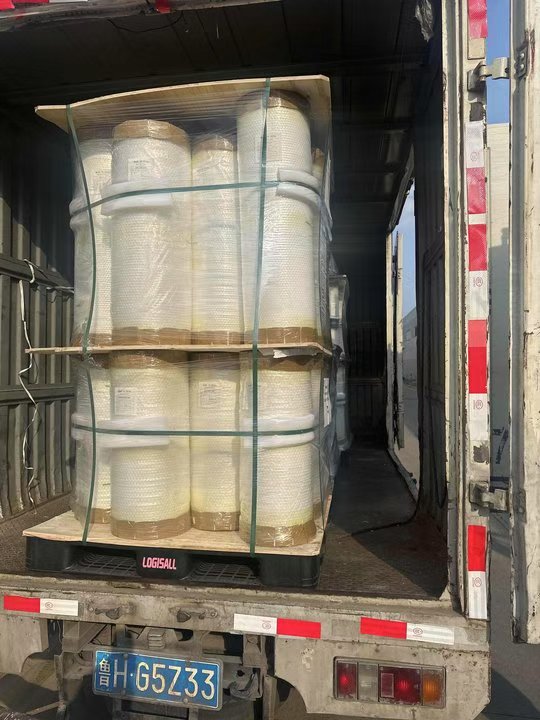
A procurement shortlist organized by production route
In this article, “shortlist” means a practical set of supply configurations to assess, not a ranking of manufacturers. The available evidence supports examining three routes: finished BOPP thermal lamination film; No-primer BOPP Base Film for BOPP Thermal Lamination Film; and functional film options such as soft-touch, anti-scratch, or combined surface effects. Each route answers a different sourcing need.
| Shortlist route | What the supplied information describes | Buyer question to resolve |
|---|---|---|
| Finished thermal film | BOPP film with an EVA coating; gloss and matte finishes are listed. | Does the finished film match the print job, laminator, and required surface? |
| No-primer base film | An unprimed substrate intended for high-speed EVA extrusion coating. | Will the buyer coat the base film, and has the intended coating process been validated? |
| Functional surface film | Options include soft-touch and anti-scratch surfaces; combined anti-scratch, soft-touch, and anti-fingerprint film is also described. | Which tactile or protective property is essential, and what evidence is required? |
| OEM or private label | Customizable film dimensions, finish, corona treatment, label, and export packaging are listed. | Which parameters must be fixed in the product specification and purchase approval? |
Option 1: finished BOPP thermal lamination film
Finished BOPP thermal lamination film is the most direct fit when the buyer wants a coated film for lamination rather than a base film for further conversion. The supplied product description identifies this film as BOPP film with EVA coating. Gloss and matte finishes are available in the customer-facing product information. This makes the finished-film route relevant to commercial print and paper packaging buyers looking for a defined finish and a supply format that can be evaluated on their own laminating equipment.
Potential applications listed in the supplied material include printed packaging and high-end printed materials. A case record also describes thermal lamination film supplied for printing and packaging applications, with reported compatibility with high-speed laminating machines, adhesion, and optical clarity. That record is a specific customer application; it does not establish that every construction, finish, or machine setup will perform identically. Buyers should therefore treat the reported compatibility as a reason to request a sample evaluation, not as a guaranteed line-speed result.
For book covers and paper packaging boxes, the choice between gloss and matte is a surface and project decision. A gloss finish may be shortlisted where the buyer’s specification calls for a glossy appearance; a matte option may be considered where a lower-gloss appearance is required. The supplied facts confirm the availability of both finishes but do not provide universal performance values or a single finish recommendation for every printed substrate.
Option 2: no-primer base film for downstream EVA coating
No-primer BOPP Base Film for BOPP Thermal Lamination Film is a different supply proposition from finished thermal film. Product 6544 is described as an unprimed substrate optimized for high-speed EVA extrusion coating and used in the production of thermal lamination film. The distinction matters: this product is a base film for a converter or film manufacturer’s downstream coating process, not automatically a ready-to-use thermal lamination film.
For a buyer that already operates an extrusion-coating line, the no-primer route can be relevant when the production plan calls for applying EVA to the base film. The supplied information states that no-primer thermal film may have higher material value because of its specialized base-film technology, while reducing primer-related processing requirements and potentially improving overall production cost efficiency. That is a trade-off, not a universal cost-saving claim. The buyer should compare the delivered material value and the processing steps it replaces, then validate coating performance on the intended line.
“High-speed” needs precise interpretation in this context. The product information associates high speed with EVA extrusion coating of the unprimed substrate. It does not provide a universal line-speed figure, nor does it guarantee a particular speed on every converter’s equipment. A finished thermal-film buyer should separately validate laminating speed, bonding, appearance, and handling with the intended paper or printed job. A base-film buyer should validate the downstream extrusion-coating process.
The evidence includes a project involving 1,000,000 square meters of base film supplied over a two-year project period, with the supplied project information reporting stable coating performance for the relevant base-film application. This is a documented project-scale reference, not a public performance guarantee for every formulation, line, or operating condition.
Option 3: soft-touch and anti-scratch surfaces
Functional surface options are relevant when the specification calls for a tactile effect or surface protection in addition to lamination. Product 6623 is described as serving premium printed packaging and high-end printed materials. Its stated role includes a velvet soft-touch feel, an elegant matte look, and anti-scratch surface protection. The supplied capability information lists gloss, matte, and soft-touch surface finishes, while the specialty-film descriptions also include anti-scratch and anti-fingerprint functionality.
These terms should not be treated as interchangeable. Soft-touch describes a desired tactile character; anti-scratch or scuff-resistant describes a surface-protection requirement; anti-fingerprint is a separate functional claim. A combined film is listed in the supplied evidence, but the buyer should verify that the exact combination, finish, and film construction are available for the requested order. The source material does not provide quantified scratch-test results or a universal comparison against other films, so such values should not be assumed.
For cosmetic and electronics paper box packaging, a soft-touch or anti-scratch option can be included in a shortlist when the packaging brief calls for a tactile or protective finish. Suitability still depends on the print, paperboard, folding, handling, and downstream process requirements. The available evidence supports use in premium printed packaging and high-end printed materials, but does not establish performance for every cosmetic or electronics packaging design.
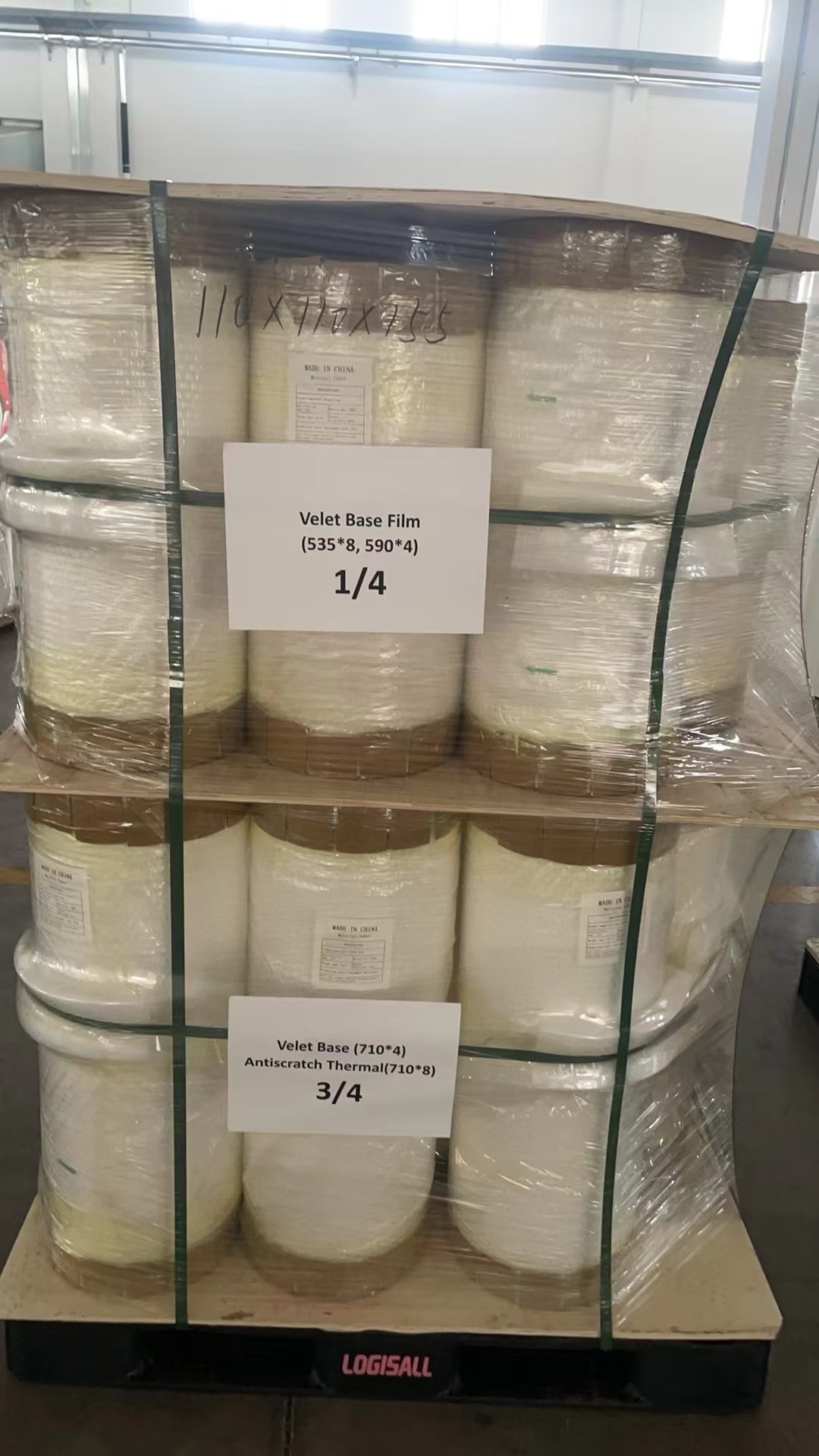
What OEM and private-label supply can cover
SHKFILM’s capability information describes OEM and ODM manufacturing, industrial film slitting and coating, and high-volume material supply. Listed customization fields include film thickness, roll width and length, core diameter, single- or double-sided corona treatment, surface finish, private label, and export packaging. The stated ranges are 12–32 microns for the described film categories, 200–2,580 mm in roll width, and 2,000–18,100 m in roll length; core options are listed as 3-inch and 6-inch. Product-specific thickness ranges are distinguished in the supplied data: 12 or 15 microns for BOPP base film, 17–25 microns for BOPP thermal film, and 18–32 microns for specialty film.
These are customization parameters to discuss, not a statement that every combination is available for every product. For example, the buyer should specify the exact product route, finish, thickness, width, length, core, corona treatment, label artwork, and packaging arrangement. MOQ depends on product type and specifications, according to the capability record. Small-batch trial orders are also described in the company background, but the buyer should confirm the applicable minimum and commercial terms for the requested specification.
The listed export packaging options are vertical pallet packing, horizontal pallet suspension packing, or standard carton packing. Private-label buyers should establish the approved artwork and packaging details before production. For distributors, importers, and brand owners, matching the roll specification and export package to the local converting or warehousing process can be as important as selecting the surface finish.
Evidence that helps buyers qualify a supplier
Supplier qualification should separate manufacturing capability, product evidence, and order-specific confirmation. SHKFILM’s company profile states that its finished thermal films use in-house-produced no-primer base film. The company background lists two BOPP production lines and annual capacity of 30,000 tons; the capability unit separately lists monthly capacity of 3,000 tons. These are company-provided capacity statements and should be interpreted as overall production information, not as a reserved volume or guaranteed allocation for a particular buyer.
The quality-control description includes online process monitoring, thickness inspection, corona-treatment verification, optical appearance inspection, and laboratory testing based on product specifications. Example laboratory checks listed include tensile strength, elongation, haze, gloss, and coefficient. For an OEM or private-label order, the useful procurement step is to agree which tests and acceptance criteria apply to the exact material, rather than assume that every check is conducted against the same values for every film type.
The supplied certification records identify BRCGS Global Standard for Packaging Materials, Issue 7, for production of BOPP film from PP resin for direct and indirect food contact. The listed certificate relates to the production scope described in the record, including extrusion, stretching, rewinding, and slitting. It should not be read as a claim that every finished thermal film or every intended end-use has separate food-contact approval. Buyers with food-contact or other regulatory requirements should confirm scope, certificate validity, product coverage, and end-use suitability directly against their specification.
For specialty films, the provided records also include SGS test reports for VOC content verification and reports relating to REACH SVHC, RoHS, and halogen testing for specified BOPP Specialty Lamination Films. These records can inform a compliance review, but a buyer should check the precise product scope and the current documentation for the SKU and market being purchased. A report for a specialty-film family should not be generalized to a different product construction without confirmation.
Application fit: packaging, print, and converter supply
The supplied use cases point to three buyer contexts. First, commercial printers and packaging converters can evaluate finished thermal film for printed materials and packaging jobs, choosing gloss, matte, or an identified functional surface based on the job specification. Second, film manufacturers or converters with EVA extrusion-coating capability can assess the no-primer base film as an input for subsequent coating. Third, distributors and private-label buyers can evaluate roll dimensions, finishes, labeling, and export packaging as part of a repeatable product offer.
A documented specialty-film application involved supply to commercial printing and packaging customers. Another case record describes a printing and packaging company using specialty film for premium printed packaging and high-end printed materials. These records support those broad application categories; they do not provide a complete list of paper grades, ink systems, machine models, or process settings. Accordingly, the qualification sample should use representative printed material and the buyer’s actual process where practical.
For repeat supply, the buyer can define a reference sample and a written specification covering visual appearance, roll dimensions, surface finish, corona requirements, and any agreed laboratory checks. A distribution case in the supplied material reports a two-year supply period for 30 tons to commercial printing and packaging customers, while another thermal-film distribution case describes annual supply and use in printing and packaging applications. Such case information is context for the types of supply arrangements represented in the corpus; it does not replace order-specific capacity confirmation or a supply agreement.
Comparison with conventional primer-based processing
The relevant comparison is not that no-primer is always superior to conventional primer-based processing. It is whether the buyer’s process benefits from an unprimed base film designed for subsequent EVA extrusion coating. The supplied material identifies a real boundary: the specialized no-primer base film may have higher material value. Its stated process-side consideration is reduced primer-related processing requirements and potential improvement in overall production cost efficiency.
That trade-off may not suit a buyer who does not perform the downstream coating step, whose existing process is built around a different substrate, or whose qualification results do not meet the required coating performance. In those cases, finished BOPP thermal film may be the more relevant product route to evaluate. A no-primer base film and a ready-coated thermal lamination film are not direct substitutes at the same production stage.
Nor should “high-speed” be used as a general promise about the buyer’s entire line. The supplied product description refers to suitability for high-speed EVA extrusion coating; a separate customer case mentions compatibility with high-speed laminating machines for a thermal-film application. Neither statement supplies a universal speed figure or guarantees performance on every machine. Buyers should validate the relevant production step and document the operating conditions used for approval.
Market and procurement interpretation
The available evidence supports a practical distinction in buyer demand rather than a market-share claim: procurement specifications can prioritize a ready-coated film, an unprimed base for further EVA coating, or a functional finish such as soft-touch and anti-scratch. The supplied company and product materials do not establish that one option is universally preferred, nor do they provide a verified ranking of suppliers. A responsible shortlist therefore compares fit to production route and project specification, not unsupported popularity claims.
For buyers sourcing BOPP thermal lamination film in bulk, OEM and private-label capability adds a second layer to the selection. The key questions become whether the supplier can make the required material and dimensions, whether the specified process can be supported with samples and technical application assistance, and whether labeling and export packaging can be matched to the buyer’s route to market. The capability record lists sample evaluation, product recommendation, technical application support, after-sales follow-up, and online technical assistance. Buyers should confirm the availability and scope of each service for their order.
A buyer’s qualification sequence
- Choose the supply stage. Specify finished BOPP thermal lamination film or No-primer BOPP Base Film for BOPP Thermal Lamination Film. Do not use the terms interchangeably.
- Define the surface brief. Identify gloss, matte, soft-touch, anti-scratch, or anti-fingerprint requirements, and state which functions are essential versus optional.
- Fix the roll specification. Confirm thickness, width, length, core diameter, corona treatment, and packaging against the exact product route.
- Evaluate on the intended process. For finished film, test on the laminating equipment and representative printed stock. For base film, evaluate the downstream EVA extrusion-coating process.
- Agree acceptance evidence. Confirm appearance criteria, dimensions, relevant laboratory tests, certification scope, and the documentation needed for the destination market.
- Confirm commercial terms. Verify MOQ, lead time, trial-order options, private-label artwork, and shipment packaging for the actual specification. The capability information lists a 15–20 day lead time, but order timing should be confirmed for the product and order conditions.
Future outlook: specify the product route before the brand treatment
For OEM and private-label buyers, a durable sourcing decision starts with the production role of the film. A finished EVA-coated film, a no-primer substrate for extrusion coating, and a functional specialty surface are different items in a supply program. As buyers add custom labels or packaging, the underlying film specification and qualification evidence still need to remain clear. The practical direction is not to select a finish based on a product name alone, but to link each SKU to a process step, an application, a roll specification, and an agreed evidence package.
SHKFILM’s documented offer includes finished BOPP Thermal Lamination Film, No-primer BOPP Base Film for BOPP Thermal Lamination Film, and specialty surface options, alongside OEM and private-label customization. The available information supports evaluating these options for print and packaging supply, but it does not establish universal compatibility or a single best configuration. Sample qualification and specification review remain necessary, especially where high-speed coating, sensitive printed materials, or a defined compliance scope is involved.
FAQ
What should buyers shortlist for OEM and private-label BOPP thermal lamination film supply?
Buyers can assess three distinct routes: finished BOPP thermal lamination film with EVA coating, No-primer BOPP Base Film for downstream EVA extrusion coating, and functional surfaces such as soft-touch or anti-scratch. The right route depends on whether the buyer needs ready-to-laminate film or material for further conversion.
Is no-primer BOPP base film the same as finished thermal lamination film?
No. The no-primer base film is described as an unprimed substrate for subsequent EVA extrusion coating. Finished thermal lamination film is described as BOPP film with EVA coating. They serve different stages of production.
Does high-speed mean a guaranteed speed on every line?
No. The supplied product information describes the no-primer base film as optimized for high-speed EVA extrusion coating, and a customer case reports compatibility with high-speed laminating machines. The material does not provide a universal line-speed value or guarantee performance on every machine, so process-specific evaluation is needed.
What OEM and private-label details can be customized?
The capability information lists thickness, roll width and length, core diameter, single- or double-sided corona treatment, surface finish, private label, and export packaging options. Availability depends on product type and specification; MOQ also depends on product type and specifications.
Is a BRCGS certificate proof that every thermal film is approved for food contact?
No. The supplied BRCGS record describes a defined BOPP-film production scope for direct and indirect food contact. Buyers should verify the exact product coverage, certificate status, and intended end-use requirements rather than applying the certificate claim to every finished film.
Reference document: SHKFILM company brochure.
¿Tiene preguntas o necesita más detalles?
Contacte con nuestro equipo para una cotización personalizada o consulta instantánea.
Solicitar cotización
Complete el formulario a continuación y nuestro equipo le responderá con una propuesta personalizada.
Chat directo de WhatsApp
¿Prefiere chatear en tiempo real? Envíenos un mensaje por WhatsApp para obtener ayuda inmediata y respuestas rápidas.
- Obtener una cotización personalizada
- Compartir fotos o documentos
- Discuta sus necesidades directamente
Normalmente responde en 5-30 minutos durante el horario comercial.