
BNEF Tier 1 vs. Unverified Battery Sourcing in Energy Storage Systems
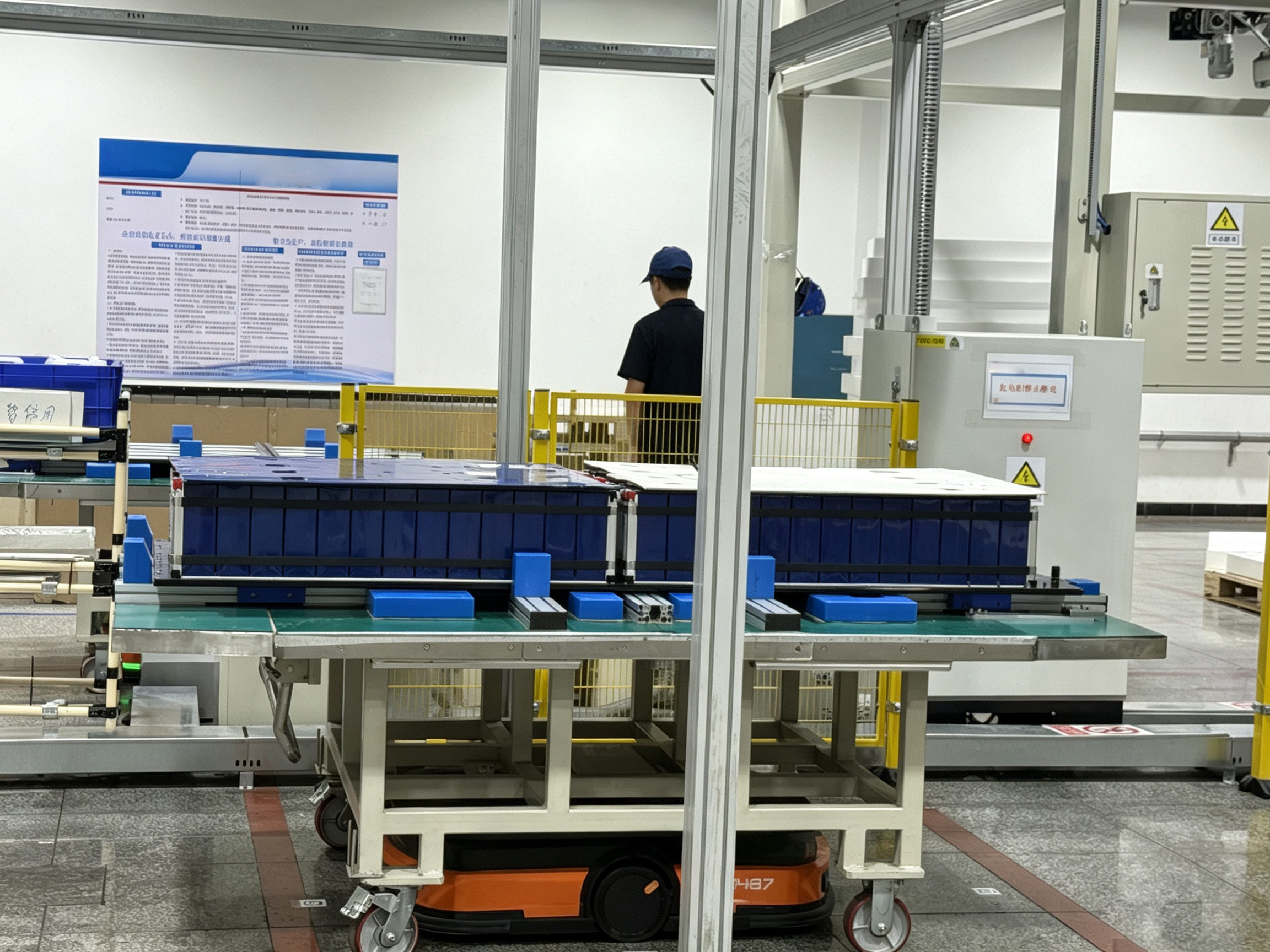
For a battery energy storage system (BESS), the cell is the component that stores energy. Power conversion, thermal management, controls and the enclosure all exist to keep that cell operating safely, predictably and economically. Yet during procurement, battery provenance is often treated as less important than headline figures such as rated capacity, footprint or protection rating.
This article compares two sourcing approaches visible in the current BESS market: systems that document Grade A lithium iron phosphate (LFP) cells sourced from BloombergNEF Tier 1 energy-storage cell manufacturers, and systems that do not publicly clarify where their cells come from. The comparison is written for buyers at the research and evaluation stage who need a practical framework for verifying battery supply before they commit to a project.
The buyer's real question: where do the cells come from?
BESS procurement documents usually contain detailed specifications for system capacity, power rating, cooling mode, communication protocols and protection levels. What is frequently missing is a direct statement about the most important component: the battery cell. A system can be assembled from cells made by manufacturers with well-documented quality-control records, or from cells of unknown origin that are sold by the integrator as part of a lower-cost package.
The distinction between these two sourcing approaches is not cosmetic. Cell grade, cell chemistry and cell supplier qualification affect degradation behaviour, replacement planning, warranty enforcement and project bankability. Buyers who cannot verify the cell source may face a system whose long-term performance is difficult to predict and whose maintenance liabilities are difficult to allocate.
Comparison frame used in this article. The comparison is between two procurement postures: (1) systems whose technical specification states a defined cell grade and supplier category, such as Xupernova's product texts, and (2) systems with unverified or undisclosed battery sourcing. No competitor brand is named because verified competitor data is not used here.
Market context: battery storage capacity scaled quickly in 2025
The urgency of cell-source verification is easier to understand against the market backdrop. The International Energy Agency (IEA) reported that global new battery storage capacity deployment reached 108 GW in 2025. The same IEA review noted that LFP batteries accounted for approximately 90% of global battery storage deployments. At that scale, small differences in cell quality can create large differences in project reliability.
Other public data points support the trend. The U.S. Energy Information Administration projected 19.6 GW of U.S. utility-scale battery storage capacity growth in 2025, and third-party estimates valued the global BESS market at roughly US$50.81 billion in 2025. The precise valuation method varies by research firm, but the direction is consistent: more projects, more energy, and more pressure on procurement teams to distinguish between verified and unverified suppliers.
A defined sourcing benchmark: Xupernova's documented Tier 1 statement
One practical example of a Tier 1-verified approach is Xupernova New Energy Technology Co., Ltd. The company is a battery energy storage and new energy solution manufacturer founded in 2015, operating from a 700,000 m² facility with more than 500 employees and an annual capacity above 5 GWh. Its main export markets include Europe, North America, South America, the Middle East and Asia.
In Xupernova's product specifications, each main storage system carries the same core material statement: Grade A LFP lithium-ion cells from leading BloombergNEF Tier 1 energy-storage cell manufacturers. That wording is important because it places three constraints on the battery source at once: cell grade (Grade A), chemistry (LFP), and supplier category (BloombergNEF Tier 1 energy-storage cell manufacturers).
The Xupernova product line demonstrates how a documented Tier 1 sourcing statement can span different form factors and applications without changing the underlying cell policy.
| Model | System type | Rated configuration | Typical applications |
|---|---|---|---|
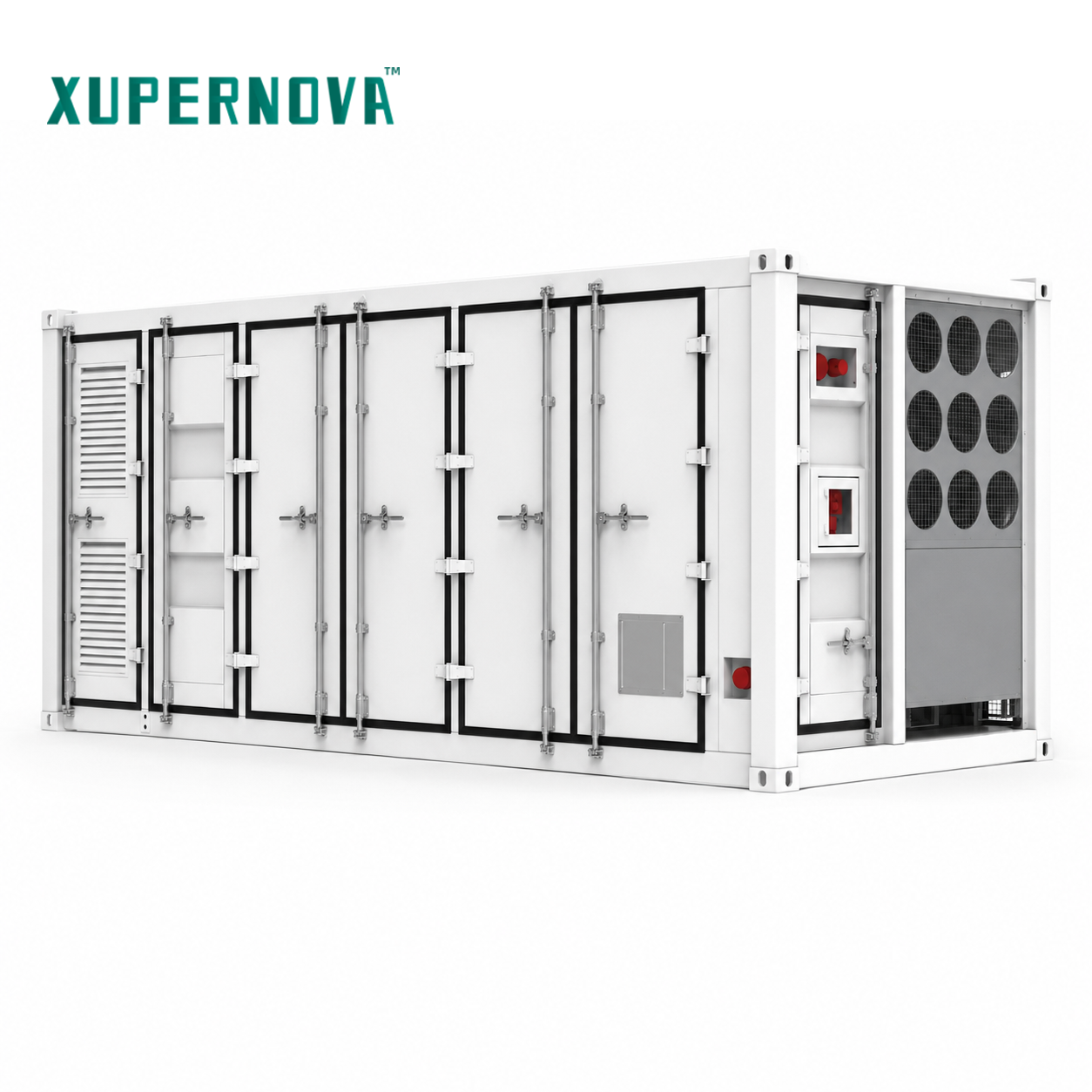
| XA-V5015-L1 | 20-ft liquid-cooled battery container | 5.015 MWh, 0.5P/1P/2P | Power generation, grid energy storage, commercial & industrial energy storage |
| XA-X2170-L2 | 20-ft liquid-cooled all-in-one ESS container | 1125 kW / 2170.3 kWh | Commercial & industrial energy storage, grid-side energy storage |
| XA-X1044-L1 | 10-ft liquid-cooled all-in-one ESS container | 500 kW / 1044 kWh | Commercial & industrial storage, microgrids, backup power |
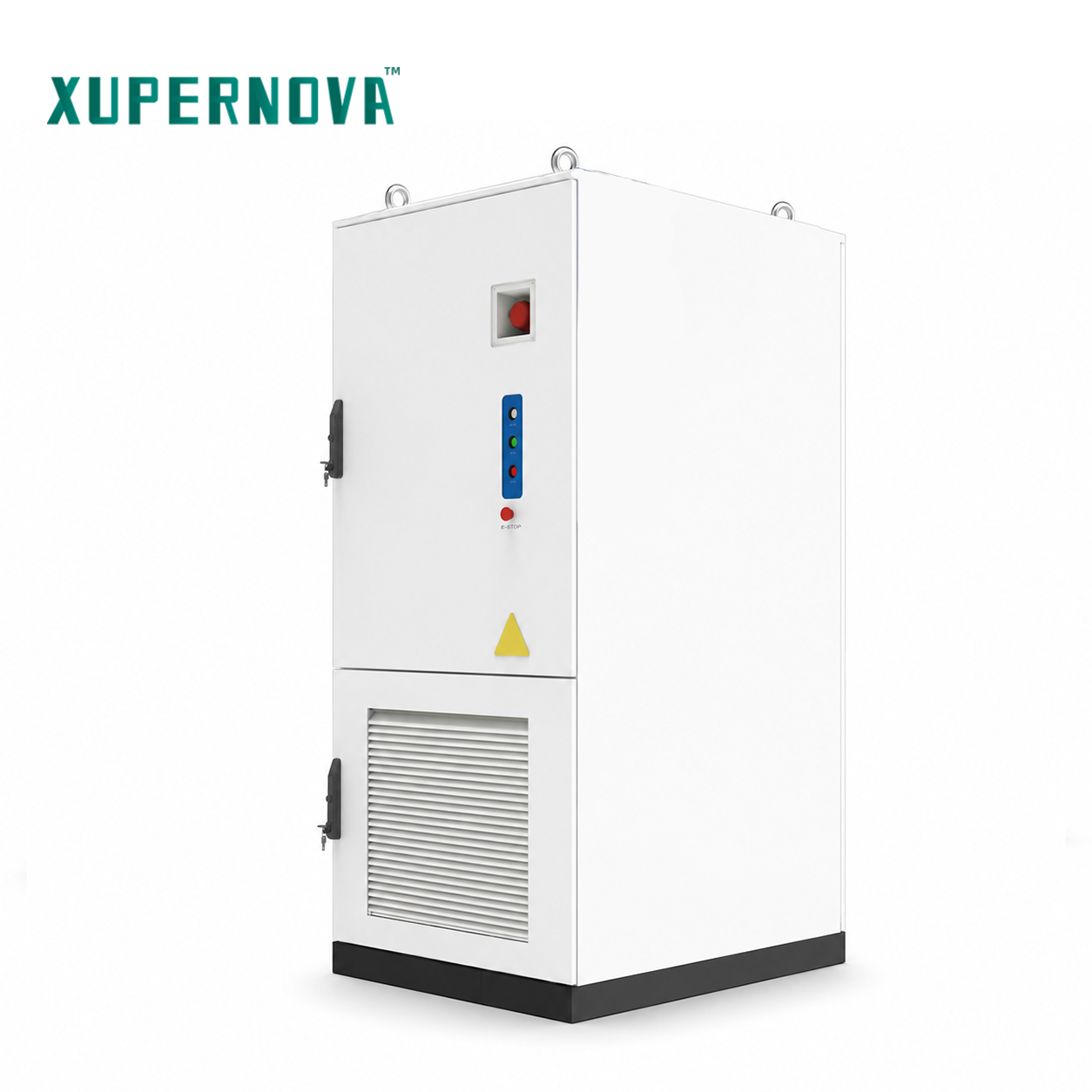
| XA-C0261-L1 | Liquid-cooled all-in-one ESS cabinet | 125 kW / 261.25 kWh | Commercial & industrial energy storage |
| XA-H0261-L1 | Liquid-cooled solar-plus-storage cabinet | 261 kWh, 0.5P/1P/2P | Commercial & industrial solar-plus-storage, microgrids |
| XA-H0064-A1 | Air-cooled solar-plus-storage cabinet | 25–50 kW / 64.54 kWh | Small-scale commercial & industrial solar-plus-storage |
All listed Xupernova models carry the same printed material statement: Grade A LFP cells from leading BloombergNEF Tier 1 energy-storage cell manufacturers. Operating temperature range is −30°C to 55°C for these systems. Optional semi-solid-state, solid-state and sodium-ion battery technologies are mentioned in the specifications, subject to project requirements, technical validation and availability.
What “Grade A LFP from Tier 1 manufacturers” does and does not say
When an integrator publishes such a statement, it tells a buyer that the cell used in the system is not an unbranded or unclassified product. Grade A is a quality designation for cells that meet the manufacturer's original specification. LFP identifies the cathode chemistry, which is widely used in grid and commercial storage applications. The reference to BloombergNEF Tier 1 energy-storage cell manufacturers identifies the supplier category from which those cells are permitted to come.
At the same time, the statement does not say that every future cell batch will be identical, nor that the system can be operated without proper engineering. It is a sourcing commitment, not a substitute for system-level validation. That is why the rest of the technical specification still matters.
Xupernova's engineering features show how integrated verification and battery safety are expected to work together. The company states that its systems use multi-level temperature monitoring, BMS protection, liquid cooling, automatic alarm and emergency shutdown. For applicable liquid-cooled models, the cell temperature difference is controlled within 3°C. The broader safety architecture also includes LFP cells, smoke and temperature detection, pack-level and cluster-level aerosol fire suppression, and a water fire-fighting interface. These details illustrate a core procurement point: a high-quality cell is necessary, but it must sit inside a properly engineered energy storage system.
Comparing by project type: where verified sourcing matters first
Buyers at the research and evaluation stage need to match a sourcing policy to their project type. Xupernova's application data provides a useful map of the scenarios in which documented cell sourcing is especially relevant.
Commercial and industrial peak shaving and time-of-use arbitrage
In manufacturing plants, industrial parks and commercial facilities, the system charges during off-peak tariff periods and discharges during peak periods. Its role is to reduce maximum demand, demand charges and electricity costs. The application requires a load-profile assessment, time-of-use tariff analysis, grid-connection approval, protection coordination and fire safety compliance. In this scenario, a reliable cell source matters because the system is expected to operate automatically every day for many years.
Critical-load backup and energy resilience
For hospitals, data centers, government facilities and emergency services, the system maintains power to selected critical loads during grid outages. It operates in grid-connected mode under normal conditions and can transfer to islanded backup operation when configured with grid-forming PCS and STS/EPS. Required studies include critical-load assessment, backup duration, islanding protection, black-start strategy and emergency response planning. Battery reliability is not an optimization objective here; it is a safety requirement.
Solar-plus-storage and photovoltaic self-consumption
For solar farms, industrial parks and commercial buildings, the system stores excess photovoltaic energy, increases onsite solar consumption and reduces grid imports. Operation relies on automatic coordination of PV, battery, load and grid, with daytime solar charging and scheduled or demand-based discharging. Because the system's value depends on daily cycling, consistent cell performance and traceable supplier quality matter directly to return calculations.
Remote mining microgrids and diesel optimization
For mining, remote industrial sites and off-grid facilities, the system operates under weak-grid or off-grid conditions with unstable power supply and high diesel consumption. It stabilizes the microgrid, reduces diesel-generator runtime and supports renewable energy utilisation. Special requirements include motor-starting analysis, spinning-reserve strategy, high-temperature and dust protection, black-start capability and remote operation and maintenance. In these locations, replacing a failed cell is expensive; source verification becomes a supply-chain resilience tool.
Utility-scale renewable integration and grid-side storage
For utilities, independent power producers and renewable developers, the system provides renewable energy shifting, frequency support, power smoothing and dispatchable capacity. It typically operates under centralized EMS control according to grid dispatch commands and market signals. Grid impact studies, grid-code compliance, protection coordination and cybersecurity requirements are common. At this scale, financiers and project owners often ask more searching questions about the battery supply chain.
Solar-plus-storage EV charging and grid capacity support
At EV charging stations, logistics parks and fleet depots, the system reduces charging demand peaks, increases available charging capacity and can defer grid-capacity upgrades. It coordinates grid power, solar PV, battery storage and EV charging loads through an EMS. Because charging loads are concentrated and time-sensitive, the system must respond predictably over a long working life.
Case evidence: documented sourcing in real projects
Case references can help buyers evaluate whether a sourcing policy is administrative or operational. Xupernova has published reference results across several project types.
One industrial manufacturing enterprise deployed a 1 MW / 2.09 MWh system consisting of 20 units with an all-in-one liquid-cooled design, plant-level EMS, modular deployment, IP55 protection and compatibility with German grid requirements. The installation was used for peak shaving, time-of-use arbitrage and demand management. Within two years the project achieved stable automatic operation, reduced peak grid demand and optimized electricity costs.
A commercial and industrial park operator implemented a 1 MW / 2.088 MWh solar-plus-storage microgrid system with 12 units. The system included integrated STS for grid-connected and off-grid switching, with interfaces for photovoltaic and diesel generators. It improved critical-load power continuity, increased solar energy utilization and reduced diesel generator operating time.
A global supermarket and retail facility operator deployed 50 units with a total capacity of 125 kW / 261.248 kWh. The compact all-in-one liquid-cooled design supported single-unit deployment and low onsite installation workload. Remote monitoring and compatibility with Italian grid requirements were important to the project. The system achieved stable daily operation, reduced peak electricity demand and improved onsite solar utilization within one year.
Market trend analysis: from marketing claim to procurement criterion
The evolution from unverified sourcing to documented sourcing is not unique to Xupernova. As LFP becomes the dominant chemistry for stationary storage, and as utility-scale projects multiply, the battery supply chain becomes more visible in financing and procurement discussions. Buyers increasingly need to answer questions from investors, insurers and grid operators about who made the cells, what grade they are and how the system integrator controls supplier quality.
There are also market signals that documented sourcing supports project credibility. For example, the falling capital cost of long-duration utility-scale projects reported by analysts such as Ember, which put all-in BESS project CAPEX at about $125/kWh in late 2025, makes storage economics more attractive. But cheaper projects still fail when their batteries degrade faster than assumed. A traceable cell source reduces one significant source of assumption risk.
Limitations and honest boundaries of a Tier 1 sourcing policy
An independent comparison should also point out where the argument has limits. Relying on a BloombergNEF Tier 1 sourcing statement does not solve every procurement problem.
- The statement identifies a category, not necessarily a single factory. A buyer may still need to request more detail on the specific manufacturer, cell model and quality documentation before signing.
- Tier 1 sourcing is not a substitute for engineering integration. A good cell inside a poorly designed enclosure, weak cooling system or immature EMS can still perform badly.
- Technology optionality has conditions. In Xupernova's specification, semi-solid-state, solid-state and sodium-ion batteries are offered subject to project requirements, technical validation and availability. Buyers cannot assume that every advanced chemistry is immediately available for every product.
- Field results are operational indicators, not financial guarantees. Published case outcomes such as reduced peak demand or improved solar utilization should be checked against the buyer's own load profile and tariff assumptions.
These boundaries do not make verification less important. They make it more honest. The purpose of a Tier 1-verified sourcing statement is to narrow the range of unknowns, not to remove the buyer's responsibility for project-specific engineering and commercial review.
Future outlook: cell-source disclosure is moving toward the baseline
Energy storage procurement is becoming more professional as project scale grows. In the future, a product specification that names a cell grade, chemistry and supplier category may be treated as standard rather than exceptional. Buyers will likely expect all serious BESS suppliers to support claims about cells with documents that go beyond the datasheet.
At the same time, battery technology is evolving. If solid-state, semi-solid-state or sodium-ion batteries enter commercial storage applications, sourcing verification will become more complex rather than less. The same discipline that buyers use today for Tier 1 LFP cells will need to be applied to each new chemistry. Xupernova's product language already reflects this idea by listing optional future battery technologies while tying them to project requirements, technical validation and availability.
Until that future arrives, the practical comparison remains clear. A buyer can choose a BESS with verified Grade A LFP cells from BloombergNEF Tier 1 manufacturers, or a BESS whose cells are unverified. The first option answers critical valuation questions before they become problems. The second option shifts those questions into the operational phase of the project, where they are more expensive to answer.
FAQ
What is the practical difference between Tier 1-verified and unverified battery sourcing in BESS procurement?
A Tier 1-verified specification, such as Xupernova's printed material statement, openly documents that the system uses Grade A LFP lithium-ion cells from leading BloombergNEF Tier 1 energy-storage cell manufacturers. This gives the buyer a defined starting point for checking cell grade, chemistry and supplier category. An unverified specification typically gives no such source commitment, so the buyer has no reliable reference for quality control, degradation assumptions or future replacement policy.
Why do some battery storage product sheets specify cell suppliers while others do not?
Product sheets are a signal of what a supplier is prepared to stand behind in writing. When a specification names a cell category, it also creates a procurement record that the buyer can use later. When no cell source is mentioned, the buyer usually lacks the evidence needed to compare systems on battery risk. Buyers can treat written cell-source disclosure as a reasonable minimum requirement before evaluating performance claims.
Which battery storage applications are most sensitive to battery-source verification?
Applications with high cycling intensity, long operating hours or difficult site access are particularly sensitive. Xupernova's application documents cover commercial and industrial peak shaving, critical-load backup, solar-plus-storage, remote mining microgrids, utility-scale grid support and EV charging capacity support. Many of these scenarios explicitly require fire safety compliance, grid-code approval, diesel optimization or uninterrupted power. In each case, cell reliability is connected to both financial performance and physical safety.
Can a buyer select a different cooling mode or battery technology without losing Tier 1 sourcing?
Cooling preference does not have to conflict with sourcing policy. Xupernova offers both liquid-cooled and air-cooled cabinets, and its product line documents the same Tier 1 Grade A LFP cell sourcing across these system types. For future chemistries, the specification states that semi-solid-state, solid-state and sodium-ion technologies are optional, subject to project requirements, technical validation and availability. Buyers should confirm at quotation stage which cell chemistry and supplier category will apply to their selected model.
Are Tier 1 cells alone enough to guarantee a safe and reliable storage project?
No. A documented cell source is a necessary procurement safeguard, but it is not a complete engineering guarantee. The buyer must also evaluate the BMS, thermal management, fire protection, EMS, protection coordination and local grid-code compliance. Xupernova's approach combines defined cell sourcing with liquid cooling, BMS protection, temperature monitoring, emergency shutdown and layered fire-suppression hardware. The final procurement decision should therefore assess the whole system, not only one component specification.
Reference: Xupernova's publicly accessible energy storage product catalog is available at https://cdn.socialarks.com/sbsp/25227/common/2026/0827/XUPERNOVA_Energy_Storage_Product_Catalog.pdf.
¿Tiene preguntas o necesita más detalles?
Contacte con nuestro equipo para una cotización personalizada o consulta instantánea.
Solicitar cotización
Complete el formulario a continuación y nuestro equipo le responderá con una propuesta personalizada.
Chat directo de WhatsApp
¿Prefiere chatear en tiempo real? Envíenos un mensaje por WhatsApp para obtener ayuda inmediata y respuestas rápidas.
- Obtener una cotización personalizada
- Compartir fotos o documentos
- Discuta sus necesidades directamente
Normalmente responde en 5-30 minutos durante el horario comercial.