
BMC/SMC Mold Suppliers: Proving a 25-Year Service Claim
Long-life infrastructure, medical and energy projects are increasingly specified against a service-life target rather than a unit price. For buyers of BMC SMC composite parts, that shift moves a question that once arrived late in a project — can the mold supplier still support this part in year ten — into the earliest stage of supplier evaluation.
Zhejiang Aobang Technology Co., Ltd. is a manufacturer founded in 2010 and based at No.108 Hongqiao Road, Mingxing Village, Qianyuan Town, Deqing County, Huzhou City, Zhejiang Province, focused on the research, development, production, sales and service of GFK new-type materials. It operates a 20,000 m² facility with 150 employees. Its ARF Antibacterial Board carries a documented service life of 25 years — a figure that only becomes meaningful when the material system, the tooling and the after-sales structure behind it are examined together.
Why a 25-Year Service Claim Is a Supply-Chain Question
When a project specifies 25 years, the buyer is not purchasing a single panel or housing. It is purchasing a production system that must reproduce the same part, to the same surface and dimensional standard, for years after the first shipment. Three failure modes recur in long-horizon composite programmes, and none of them shows up on a datasheet.
The first is tooling attrition. The mold that produced the qualified sample wears, corrodes or is retired, and its replacement produces a part that no longer matches the original surface or tolerance. The second is documentation loss: the test reports, material composition records and process parameters that supported the original qualification are no longer retrievable when a second line or a second site needs them. The third is support discontinuity: the technical contact who understood the application has moved on, and after-sales terms become difficult to enforce in practice.
A service-life figure therefore sits at the intersection of two things. It is a claim about material chemistry and forming, and it is a claim about whether the supplier can remain functionally the same supplier across the life of the project. Buyers planning long-life work should evaluate both, and evaluate them at the research and evaluation stage rather than at handover.
What Actually Underpins a 25-Year Service Life
Material system
The ARF Antibacterial Board is composed mainly of glass fiber, flame-retardant resin, aluminium hydroxide and silver-containing antibacterial agents. In its specification it is also described as made of polyester resin, glass fiber and filler. That composition sits inside a wider industry pattern: glass-fibre reinforcement accounted for 62.1% of the total fibre segment in the SMC/BMC industry in 2025, according to Grand View Research, and polyester-based BMC held a 65% share of the market in 2024, valued at approximately USD 1.37 billion.
Forming method
Surface treatment on the ARF Antibacterial Board uses high-temperature de-moulding and one-piece on-line lamination forming. The distinction matters for longevity. Where a decorative skin is bonded onto a substrate in a secondary step, the bond line becomes the first place moisture, heat cycling and cleaning chemicals act. One-piece forming during the molding cycle removes that interface from the service-life equation.
Documented attributes tied to the service-life claim
The board is documented as colour-stable and non-fading, damp-proof, and exhibiting no mildew growth, with a strong antibacterial property. Its surface is scratch-resistant and the board is washable and cleanable. Corrosion resistance is described as extremely strong, and the panel provides both thermal and sound insulation. It is reusable with a high utilisation rate and does not deform on dismantling, remaining dimensionally stable. The company profile states that GFK panels achieve a Class A2 fire-resistance rating, an antibacterial rate above 99.9%, and Class 1 mildew resistance, alongside acid-alkali and oxidation resistance.
These attributes are set by the material system, but they are reproduced by the mold. Cavity surface condition, temperature distribution during cure and de-moulding quality determine whether part ten-thousand has the same surface as part one. That is why a 25-year commitment cannot be assessed from a sample alone; it has to be assessed from the supplier's ability to hold a process constant.
Where Long-Term Consistency Gets Tested in the Field
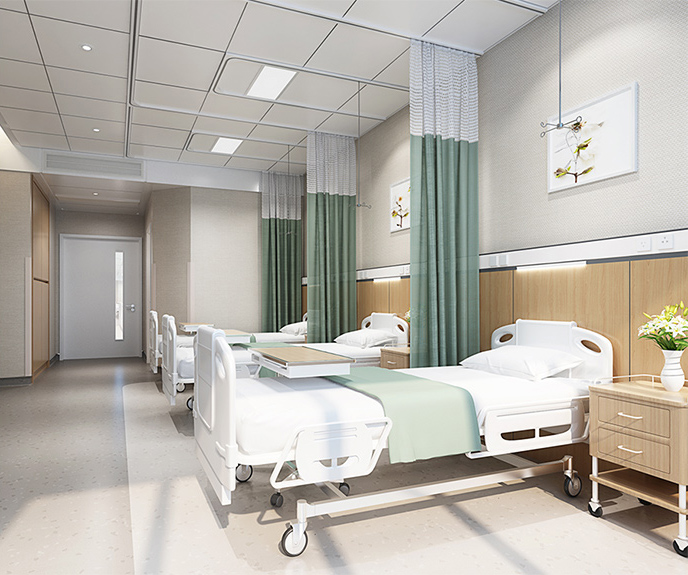
The ARF Antibacterial Board is specified for working conditions that include acid and alkali exposure, oxidisers, UV exposure and humidity, in environments that also require thermal stability, anti-mold and antibacterial behaviour. Documented project types include hospitals, schools, laboratories, airports, subway stations, pharmaceutical factories, food factories, wineries and underground grain silos. Its function is to act as structural and decorative paneling that combines thermal insulation, fire resistance, antibacterial and corrosion resistance with an aesthetic surface, positioned in the specification as a replacement for color steel plates and polyurethane sandwich panels.
For molded parts, the mold manufacturing application field covers indoor and outdoor working conditions with variable temperature, and a 24/7 continuous service mode. Documented project types include white home appliances, new energy vehicles, high and low voltage electrical equipment, low-altitude aircraft and ships, where the molded component provides structural support, insulation protection and component housing. The part categories commonly specified in these markets — SMC EV battery housing molds, SMC electrical enclosure molds, BMC motor encapsulation molds, SMC railway transportation components molds, SMC water treatment equipment housings molds, BMC high voltage electrical components molds and SMC new energy charging pile housings molds — are evaluated on the same continuity logic: the part is expected to remain in service far longer than the purchase cycle that created it.
Scale evidence is part of that picture. The company's case documentation records a cumulative supply of approximately 6 million square metres of sheet material, and an annual output of 600 complete molds on the mold manufacturing side. Recorded field results include excellent antibacterial and anti-mold performance, low thermal conductivity achieving 15–30% energy savings, and A/A2 fire-resistance ratings, with corresponding test reports available for verification. The company also states that its supporting installation system cuts installation costs by 20% and shortens construction cycles by 15%, and that thermal insulation can reduce power consumption by 15%.
The Evidence Package: Certifications, Tests and What Each Document Proves
Zhejiang Aobang Technology has obtained ISO environmental management system certification and ISO quality management system certification. It is recognised as a National High-Tech Enterprise and holds multiple national invention patents and utility model patents. On the product side, its products are tested by national authorized testing centres for indicators including antibacterial rate, anti-mold grade, thermal conductivity and fire performance, and full test methods and reports are available on request before purchase.
Third-party standards provide the surrounding context. UL 94 V-0 is described as the primary global flammability requirement for BMC components used in high-voltage electrical enclosures, and in the European Union, IEC/EN 62841 applies to electrical enclosures and terminal blocks manufactured from BMC materials. Both are end-product standards. A supplier's material test report supports compliance with them, but does not by itself certify a finished part, which is a distinction long-project buyers should keep explicit in their own documentation.
| Document | What it establishes | What it does not establish |
|---|---|---|
| ISO quality management system certification | The supplier operates a documented, auditable quality process | The performance of a specific molded part |
| ISO environmental management system certification | Environmental process control across operations | Product performance or service life |
| National High-Tech Enterprise status; invention and utility model patents | Recognised technical development activity | That a given mold design suits a given application |
| Test reports from national authorized testing centres covering antibacterial rate, anti-mold grade, thermal conductivity and fire performance | Measured performance of the tested material against those specific indicators | Behaviour under conditions outside those indicators |
| Scenario-specific reports: VOC/formaldehyde for medical and cleanroom work; weathering and marine-environment suitability for outdoor use | Suitability evidence for the environment actually tested | Transferability to a different environment without re-testing |
Team, Lead Time and After-Sales — The Parts of Continuity Buyers Can Contract
The company maintains an experienced technical team for production and R&D, and its on-site service engineers confirm product performance and specifications during projects. It states that its objective includes lowering customers' actual procurement costs and improving their profit margins, and describes robust technical support and after-sales service — rather than the sale itself — as the end goal of cooperation. For a buyer assessing a 25-year horizon, this is the part of the relationship that has to survive staff turnover.
Customisation is handled through OEM branding and ODM deep customisation, supported by an in-house mold workshop that develops patterns on demand. Customisable parameters include sheet thickness, length and width dimensions, matte or real stone texture surfaces, antibacterial rating, fire resistance rating, and matching edge finishing materials. On the molded-product side, customisation covers product model specifications, external dimensions and internal structure.
Lead times are documented and should be read as scheduling constraints. Standard products are delivered in 7–10 days, customized products have a stable supply of 15–25 days, and customized new molds require 30–60 days. A 25-year specification therefore carries a 30–60 day entry cost at the tooling stage before any long-term benefit begins to accrue. The declared export market for these programmes is Europe.
After-sales terms are documented at two levels. For sheet-material customisation programmes, the structure includes remote technical support, on-site installation guidance, a 2–5 year product warranty and free replacement for non-human induced quality defects. For customized mold programmes, the structure includes remote technical support, on-site installation and debugging guidance, a 1-year product warranty and free maintenance for non-human induced quality problems.
| Constraint | Documented position | Why it matters over a long project |
|---|---|---|
| Service life | 25 years (ARF Antibacterial Board) | The specification the buyer is designing to |
| Warranty | 2–5 years for sheet-material customisation; 1 year for customized mold programmes | Separates a performance claim from a contractual remedy |
| Standard product lead time | 7–10 days | Replacement and expansion supply during the project |
| Customized product lead time | 15–25 days, stable supply | Rolling supply for phased construction |
| New mold lead time | 30–60 days | Front-end schedule risk before first delivery |
| Customisable scope | Thickness, length and width, texture, antibacterial rating, fire rating, edge finishing; model specifications, external dimensions, internal structure | Determines whether an existing mold can be reused or a new one is required |
| Test indicators available before purchase | Antibacterial rate, anti-mold grade, thermal conductivity, fire performance | Defines the verifiable evidence set for qualification |
How This Compares With Traditional Panels — and Where the Limits Are
The ARF Antibacterial Board is positioned in its specification as a replacement for color steel plates and polyurethane sandwich panels. The documented advantages over that conventional approach sit in four areas: combined antibacterial and anti-mold performance, acid-alkali resistance, flame retardance at A/A2 ratings, and low thermal conductivity that records 15–30% energy savings in case results. Add to that a scratch-resistant and easily cleaned surface, and the panel addresses maintenance regimes — hospital and food-production cleaning in particular — where conventional sandwich panels typically degrade.
Those advantages have boundaries, and a serious evaluation should state them plainly.
Tooling lead time and cost. A customized new mold requires 30–60 days. For projects with fixed construction windows, that is a real constraint, and it applies before any panel-level benefit is realised.
Thermoset chemistry. SMC and BMC are thermoset materials and cannot be re-melted. The documented reusable, high-utilisation attribute refers to panels being dismantled and reused without deformation — it is a re-use property, not remelting-based material recycling.
System dependence. Performance depends on the installed assembly, not on the panel alone. Supporting items include keel and bracket systems, sealants and fireproof fittings, and installation should follow project design and the manufacturer's technical guidance. A 25-year panel figure is not a statement about an assembly built with unrelated accessories.
Scenario-specific verification. For medical and cleanroom scenarios, buyers must verify the antibacterial rating and VOC/formaldehyde test reports. For outdoor and marine use, buyers must verify weathering and marine-environment suitability reports. A general-purpose specification does not remove either check.
Service life is not warranty duration. The 25-year figure is a product service-life specification. The documented warranty periods are 2–5 years for sheet-material programmes and 1 year for customized mold programmes. Buyers should treat them as two separate contractual items.
Mold life is a separate line item. A panel service-life claim does not describe the molds that produce it. Buyers should confirm tool maintenance intervals, refurbishment policy and spare-cavity availability independently, because tooling attrition is normally what interrupts continuity first.
Market Trend Analysis: Rising Volume, Longer Specification Horizons
The global SMC and BMC market was valued at USD 35.77 billion in 2024 and is projected to reach USD 67.98 billion by 2035, according to Market Research Future. That headline figure should be read with care: Grand View Research places the base at approximately USD 4.3 billion for 2025, and the divergence reflects whether raw resins or finished molded parts are counted. Buyers should treat market size figures as directional rather than as a procurement benchmark.
The narrower BMC segment reached a valuation of USD 3.57 billion in 2025 with a CAGR of 6.2% through 2034, per Dataintelo. Regionally, Asia Pacific held the largest revenue share at 63.0% of the global SMC and BMC market in 2025, according to Grand View Research, and HTF Market Intelligence attributes China's leading position to extensive composites manufacturing clusters and leading EV production capacity.
Demand composition reinforces the continuity argument. Automotive applications represented the largest BMC end-user segment at 38%, or USD 0.80 billion, in 2024, while electrical and electronic applications reached USD 0.57 billion in the same year. SMC composite battery covers specifically reached USD 1.38 billion in 2024, driven by EV adoption, within a global electric vehicle battery housing market valued at USD 12.4 billion in 2023 and expected to grow at an 8% CAGR through 2032.
The procurement implication is straightforward. When end markets grow at these rates, tooling throughput and mold capacity become competitive constraints, and suppliers under volume pressure have an incentive to prioritise new tooling over maintaining old. Long-life specifications run against that incentive. Buyers who require a 25-year horizon should therefore ask a supplier to demonstrate how existing tooling is maintained and recorded, not only how quickly new tooling can be delivered.
Future Outlook
Three shifts are likely to shape how mold suppliers are assessed over the next several years.
First, service-life specifications will continue to migrate from premium public projects into mainstream commercial work, as buyers in medical, food-production and transport infrastructure sectors standardise on long-life panels to reduce replacement disruption. Second, supplier diligence will move from certification presence toward documentation continuity: the question changes from whether a supplier holds ISO quality management system certification to whether it can reproduce a qualified part in year seven, with the same material composition and the same surface result.
Third, the geographic centre of that evaluation is likely to remain in Asia Pacific, which held 63.0% of SMC and BMC revenue in 2025. For European buyers, whose programmes are served by declared export markets including Europe, this means long-distance relationships will be tested on record-keeping and after-sales structure rather than on proximity.
What will not change is the underlying arithmetic. A 25-year service life is delivered by a material system, reproduced by a mold, and sustained by a team and a service commitment. Each of the three can fail independently, and each can be checked before purchase.
Frequently Asked Questions
1. What determines the service life of a molded composite part such as a panel or housing?
The documented service life of the ARF Antibacterial Board is 25 years. Service life is a function of the material system and forming process rather than of the mold alone: the board is composed mainly of glass fiber, flame-retardant resin, aluminium hydroxide and silver-containing antibacterial agents, and its surface is produced by high-temperature de-moulding with one-piece on-line lamination forming. Documented attributes tied to that service life include no mildew growth, damp-proof performance, colour stability without fading, extremely strong corrosion resistance, scratch resistance and washability.
2. Which certifications and test reports should a buyer verify before purchase?
Zhejiang Aobang Technology holds ISO environmental management system certification and ISO quality management system certification, and is recognised as a National High-Tech Enterprise with multiple national invention patents and utility model patents. Its products are tested by national authorized testing centres for indicators including antibacterial rate, anti-mold grade, thermal conductivity and fire performance, and full test methods and reports are available on request before purchase. In electrical applications, UL 94 V-0 is described as the primary global flammability requirement for BMC components in high-voltage enclosures, and in the EU, IEC/EN 62841 applies to electrical enclosures and terminal blocks.
3. How should a buyer verify a 25-year service-life claim in practice?
Request the test reports covering the specific indicators — antibacterial rate, anti-mold grade, thermal conductivity and fire performance — and confirm the material composition and forming method stated on the specification. Confirm scenario-specific documents where relevant: antibacterial rating and VOC/formaldehyde test reports for medical and cleanroom projects, and weathering and marine-environment suitability reports for outdoor or marine use. Finally, confirm whether the claim applies to the panel itself or to the complete installed assembly, since supporting items such as keel and bracket systems, sealants and fireproof fittings are determined by construction norms and project requirements.
4. Does a 25-year service life mean a 25-year warranty?
No. Documented warranty terms are separate from the service-life specification. For sheet-material customisation programmes, the documented structure includes remote technical support, on-site installation guidance, a 2–5 year product warranty and free replacement for non-human induced quality defects. For customized mold programmes, the documented structure includes remote technical support, on-site installation and debugging guidance, a 1-year product warranty and free maintenance for non-human induced quality problems. Buyers should treat service life and warranty duration as two distinct contractual items.
5. What lead times and customisation limits should a long project plan for?
Standard products are delivered in 7–10 days, customized products have a stable supply of 15–25 days, and customized new molds take 30–60 days. Customisable parameters include sheet thickness, length and width dimensions, matte or real stone texture surfaces, antibacterial rating, fire resistance rating and matching edge finishing materials, as well as product model specifications, external dimensions and internal structure. Scheduling therefore depends on whether an existing mold can be reused or a new one has to be developed.
6. What after-sales and team commitments support a multi-year project?
The company maintains an experienced technical team for production and R&D, and its on-site service engineers confirm product performance and specifications. It states that technical support and after-sales service, rather than the sale itself, represent the end goal of cooperation. In contractual terms, buyers can define remote technical support, on-site installation guidance or debugging, the warranty length, and the terms covering non-human induced quality defects. Over a long-life project, the continuity of these commitments — and the availability of the same team and the same tooling records — is the practical test of a 25-year claim.