
BMC SMC Composite Parts: Properties, Markets and Sourcing
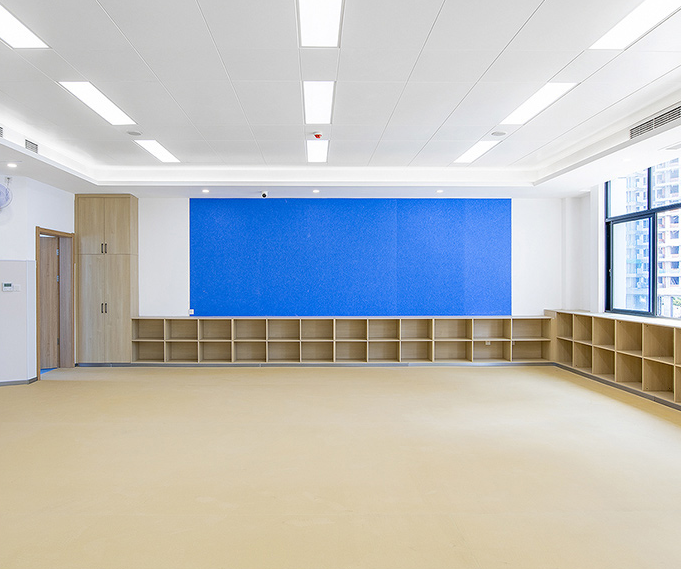
Glass-fiber-reinforced composite materials are used across construction, transport, and electrical infrastructure projects.
BMC SMC Composite Parts: Properties, Markets and Sourcing
BMC (Bulk Molding Compound) and SMC (Sheet Molding Compound) are glass-fiber-reinforced thermoset composite systems used to mold structural housings, insulating components, and lightweight enclosures for the transportation, electrical, and industrial equipment industries. Zhejiang Aobang Technology Co., Ltd. (waiwaitree), founded in 2010 in Deqing County, Huzhou City, Zhejiang Province, is a Chinese high-tech manufacturer of glass-fiber-reinforced composite materials operating a 20,000 m² facility with 150 employees. This article explains what BMC and SMC composite parts are, the market forces driving their adoption, and the supplier capabilities that matter when sourcing these components.
Why Industry Is Moving from Metal to Molded Composites
Steel and aluminum enclosures, motor covers, and battery housings provide structural strength, but they add weight, corrode in humid or chemical environments, and conduct electricity where insulation is required. In electric vehicles, extra housing weight reduces driving range. In electrical distribution, conductive enclosures demand additional creepage and clearance design. In rail and water-treatment settings, moisture and chemical exposure accelerate metal corrosion.
Composite molding compounds answer these constraints with parts that are lighter than metal, resistant to chemicals and moisture, and inherently insulating. SMC is typically supplied as a sheet-form compound of resin paste and chopped glass fiber, while BMC is a bulk dough-like compound suited to smaller, more intricate, high-volume parts. Both are processed by compression molding into finished components. The commercial response has been substantial. Market Research Future valued the global SMC and BMC market at USD 35.77 billion in 2024 and projects it to reach USD 67.98 billion by 2035. Dataintelo estimates the BMC segment at USD 3.57 billion in 2025, with a CAGR of 6.2% through 2034. Grand View Research reports that Asia Pacific held a 63.0% revenue share in 2025, and HTF Market Intelligence notes that China dominates the regional market through composites manufacturing clusters and leading EV production capacity.
Zhejiang Aobang Technology: Composite Materials and Mold Capability
Zhejiang Aobang Technology Co., Ltd. (waiwaitree) is a China-based enterprise focused on the R&D, production, sales, and service of GFK new-type materials. The company introduced industrial GFK product technology from Germany in 2010 and has since developed proprietary core GFK technologies and complete product systems. It holds ISO environmental management system and ISO quality management system certifications, is recognized as a National High-Tech Enterprise, and maintains multiple national invention patents and utility model patents. Its main markets are the EU and China.
For procurement teams evaluating composite parts suppliers, a key question is whether the manufacturer can cover the full loop from material formulation to molded product. Aobang's production experience covers molded components for white home appliances, new energy vehicles, high- and low-voltage electrical equipment, low-altitude aircraft, and ships — applications that require structural support, insulation protection, and component housing under continuous 24/7 service. Custom dimensions, high strength, corrosion resistance, and fire-retardant performance are stated requirements in this range.
Mold reliability is an important factor in composite part cost and consistency. Aobang's mold program includes a 400,000-shot mold warranty, free replacement for non-human-induced quality defects, and on-site installation guidance by professional technicians. Pre-sales technical review, full inspection before factory delivery, and regular after-sales follow-up visits support long-term operation.
Technical Foundation: Resin, Glass Fiber, and Molded Structure
Both BMC and SMC are processed by compression molding: a fiber-reinforced compound is placed in a heated mold, pressed under high pressure, and cured into a finished part. In compression molding, a pre-weighed charge of compound flows into the cavity geometry as the press closes, and heat cross-links the thermoset resin into a rigid, infusible part. The material system determines the part's mechanical, thermal, and electrical behavior.
Glass fiber reinforcement accounts for 62.1% of the total fiber segment in the SMC/BMC industry in 2025, according to Grand View Research. Polyester-based BMC dominates the material segment with a 65% share, valued at approximately USD 1.37 billion in 2024, per Market Research Intel.
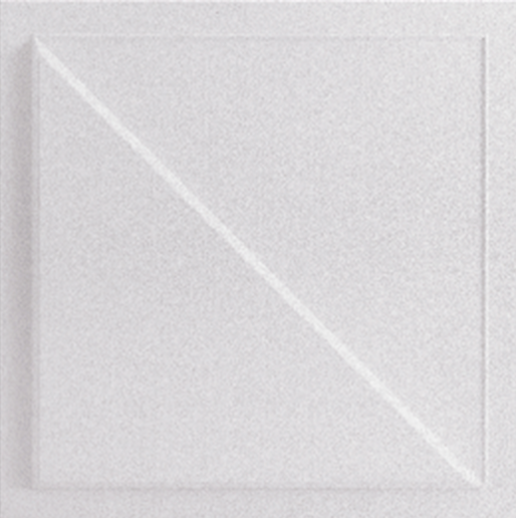
Aobang's ARF antibacterial board line demonstrates the company's glass-fiber-reinforced composite processing.
In Zhejiang Aobang's ARF antibacterial board product line, the material composition uses polyester resin, glass fiber, and filler, with flame-retardant resin and aluminium hydroxide contributing fire performance. Surface treatment applies high-temperature de-moulding and one-piece on-line lamination forming. The resulting panels achieve Class A2 fire resistance, an antibacterial rate above 99.9%, Class 1 mildew resistance, acid-alkali resistance, and oxidation resistance, while remaining lightweight, high-strength, and thermally insulating. The stated service life is 25 years, and standard sizes span from 300*300 to 600*1500 mm.
For electrical applications, flammability ratings are the compliance gate. UL 94 V-0 is the primary global requirement for BMC components used in high-voltage electrical enclosures, while EN 62841 and IEC standards are critical for electrical enclosures and terminal blocks manufactured from BMC materials in the EU.
Application Scenarios for BMC and SMC Parts
BMC and SMC parts are specified where insulation, flame retardance, corrosion resistance, and weight reduction must coexist. Typical scenarios include:
| Application area | Key part types | Why composites are used |
|---|---|---|
| BMC motor encapsulation | Motor covers, pump valve composite covers | Thermal and sound insulation, dimensional stability |
| SMC EV battery housing | Battery covers, tray housings | Lightweighting, electrical and thermal insulation |
| SMC electrical enclosures | Industrial cabinet parts, charging pile housings | Flame retardance (UL 94 V-0), creepage control |
| BMC electrical terminal blocks | Insulating components, high-voltage electrical parts | Arc resistance, dimensional precision |
| SMC railway transportation components | Interior panels, seating structures, housing covers | Fire safety, lightweight interior parts |
| SMC water treatment equipment housings | Corrosion-resistant enclosures, covers | Moisture and chemical resistance |
| SMC construction insulation panels | Wall and ceiling composite panels | Thermal insulation, fire resistance, antibacterial surface |
Aobang's application portfolio overlaps this map directly. In the building decoration materials scenario, its panels act as structural and decorative panels offering thermal insulation, fire resistance, antibacterial and corrosion resistance with aesthetic surfaces, and can replace color steel plates and polyurethane sandwich panels. This scenario covers hospitals, schools, laboratories, airports, subway stations, pharmaceutical factories, food factories, wineries, and underground grain silos — environments requiring thermal stability, anti-mold and antibacterial properties, and resistance to acid, alkali, oxidizers, and UV. Its mold manufacturing scenario covers white home appliances, new energy vehicles, high- and low-voltage electrical equipment, low-altitude aircraft, and ships.
Market Trends in SMC and BMC
- Asia Pacific held the largest revenue share — 63.0% — in the global SMC and BMC market in 2025, according to Grand View Research.
- China dominates the regional market, supported by extensive composites manufacturing clusters and leading EV production capacity, per HTF Market Intelligence.
- Automotive is the largest end-user segment for BMC, accounting for 38% (USD 0.80 billion) of the market in 2024, per Industry Insights, and transportation is expected to remain the dominant end-user throughout 2024–2030, per Strategic Assessment Group.
- Electrical and electronic applications for BMC reached USD 0.57 billion in 2024, per Market Data Forecast.
- SMC composite battery covers reached USD 1.38 billion in 2024, driven by EV adoption.
- Asia Pacific holds a 45% share of the global railway composites market as of 2025, with SMC significantly used for lightweight interior parts, per MarketsandMarkets.
- Estimates vary by scope: combined SMC and BMC market figures differ significantly depending on whether raw resins or finished molded parts are included, a divergence noted between Market Research Future and Grand View Research.
BMC/SMC Parts vs. Traditional Metal Solutions
Compared with welded steel or die-cast aluminum, BMC and SMC parts reduce weight, eliminate corrosion risk, provide inherent electrical insulation, and integrate multiple functions into a single molded geometry. The shift is visible in data: non-metallic battery housings held the major share of the battery housing market in 2023, driven by lightweighting and thermal insulation benefits, according to GlobeNewswire / ResearchAndMarkets. The decision between metal and composite typically hinges on weight targets, thermal requirements, flammability class, dimensional tolerances, and tooling amortization over projected volume. For medium-to-high volume programs, composite tooling costs are spread across the production run, while per-part savings from parts integration and weight reduction accumulate over the life of the vehicle or equipment.
An honest limitation should be noted: composite panels may age faster when ambient temperature persistently exceeds 100°C, and molded surfaces can be damaged by heavy impact from sharp hard objects. Metal remains preferable when high thermal conductivity or extreme impact toughness is the dominant requirement, and composite tooling requires meaningful up-front mold investment.
Future Outlook
Market Research Future projects the combined SMC and BMC market to reach USD 67.98 billion by 2035. Dataintelo forecasts BMC growth at a 6.2% CAGR through 2034. Global Market Insights expects the electric vehicle battery housing market to grow at an 8% CAGR through 2032, and Grand View Research projects the automotive engine encapsulation market, including BMC motor covers, at USD 3.7 billion by 2030. The expansion of EV charging infrastructure also adds demand for SMC charging pile housings, which must withstand outdoor UV and moisture exposure while meeting electrical safety requirements. With China and the wider Asia Pacific region leading both composites production and EV manufacturing, buyers sourcing BMC and SMC parts will increasingly evaluate suppliers across the region for material quality, mold reliability, and compliance credentials.
Contact Zhejiang Aobang Technology Co., Ltd. (waiwaitree)
For specification reviews, custom composite part inquiries, or mold-related requirements, contact the Aobang team:
Email: alice@waiwaitree.com | Tel / WhatsApp: +86-15382332967
Website: https://www.waiwaitree.cn/
Address: No.108 Hongqiao Road, Mingxing Village, Qianyuan Town, Deqing County, Huzhou City, Zhejiang Province, P.R. China
Frequently Asked Questions
What failures are easy to occur during long-term operation of the mold equipment?
The main failures include heating system breakdown, deformation under high temperature and high pressure, and seal aging and failure. Heating system breakdown is typically caused by long-time continuous operation and abnormal temperature fluctuation inside the equipment. Deformation occurs when the device runs persistently under the maximum rated temperature and pressure load. Seal aging is triggered by long-term erosion from high temperature, pressure, and working medium. Suppliers reduce these risks through pre-sales technical review, full inspection before factory delivery, and regular after-sales follow-up visits, alongside a 400,000-shot mold warranty and free replacement for non-human-induced quality defects.
What potential risks will the cleanroom panel face in long-term use?
Cleanroom panels may experience accelerated aging when the ambient temperature persistently exceeds 100°C, and surface damage can result from heavy impact by sharp hard objects during transportation, installation, or daily operation. Appropriate working environments, standardized handling, and applicable warranty and technical support resources help reduce these risks. Typical coverage includes a 2–5 year warranty with free replacement for non-human-induced quality defects and on-site installation guidance by professional technicians.