
BMC SMC Composite Parts & ARF Boards: Cleanroom Shortlist
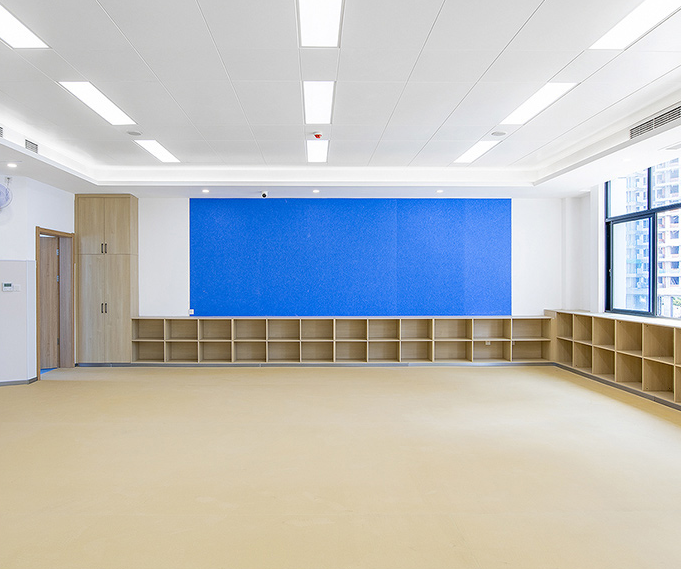
Cover: ARF antibacterial board options for cleanrooms, hospitals, schools and other high-traffic public venues. Image source: Zhejiang Aobang Technology Co., Ltd.
Industry-led introduction. Cleanroom and public-venue projects rarely fail because the specification was too short. They fail because the shortlist mixed incompatible options: a panel with the right hygiene claim but the wrong fire certificate, a composite part with the right mold but no test report, or an installation system that saved material but added site labor. For buyers evaluating ARF Antibacterial Board categories and BMC/SMC composite parts, the practical question is not which single product wins on a brochure. It is which combination of panel category, model size, composite molding capability and documented evidence can pass acceptance without creating a long-term maintenance problem.
This shortlist focuses on that evaluation stage. It compares ARF board categories GFK-G, GFK-C, GFK-M and GFK-L, model sizes from 300*300 to 600*1500, and BMC/SMC composite part options used in electrical, energy, railway, water treatment and cleanroom-adjacent equipment. It also sets out the verified performance targets that buyers should test against: Class A2 fire resistance, antibacterial rate above 99.9%, Class 1 mildew resistance, acid-alkali and oxidation resistance, and an installation system described as cutting installation costs by 20% and shortening construction cycles by 15%.
Why Cleanroom and Public-Venue Buyers Need a Shortlist
A shortlist is a risk-control document. In cleanrooms, hospitals, laboratories, pharmaceutical plants and food factories, surface performance is part of the operating environment. Panels must resist moisture, cleaning agents, mildew and fire spread while remaining stable enough to support frequent cleaning and inspection. In airports, subway stations, banks, schools and high-speed rail stations, the same panels face high traffic, scratch risk and long replacement cycles.
The same logic applies to BMC/SMC composite parts. A motor encapsulation mold, an SMC EV battery housing mold or an SMC electrical enclosure mold is not selected only on price. The buyer is also choosing mold durability, dimensional repeatability, flame-retardant formulation, corrosion resistance and the supplier’s ability to keep producing replacement parts years after the original project. That is why a cleanroom shortlist should include both the visible panel and the hidden composite components behind the installation.
What Is Being Shortlisted: ARF Boards and BMC/SMC Composite Parts
Zhejiang Aobang Technology Co., Ltd. is a Deqing, Huzhou-based manufacturer founded in 2010 and focused on the R&D, production, sales and service of GFK new materials. The company introduced industrial GFK product technology from Germany in 2010, operates a 20,000 m² facility with approximately 150 employees, holds ISO quality management system certification and ISO environmental management system certification, and is recognised as a National High-Tech Enterprise with multiple national invention patents and utility model patents. Its main product is GFK Glass-fiber Reinforced Clean Antibacterial Panel, serving EU and China markets.
For this shortlist, the company lists ARF Antibacterial Board categories GFK-G, GFK-C, GFK-M and GFK-L, with model sizes from 300*300 to 600*1500. The panels are positioned around Class A2 fire resistance, antibacterial rate above 99.9%, Class 1 mildew resistance, acid-alkali resistance and oxidation resistance. They are described as lightweight yet high-strength, with thermal insulation that can reduce power consumption by 15%, and a complete supporting installation system that cuts installation costs by 20% and construction cycles by 15%.
On the composite side, Zhejiang Aobang Technology supports OEM branding and ODM deep customisation through a self-owned mold workshop. The company develops patterns on demand and customises sheet material colour matching, surface texture and thickness. For molded parts, it supports OEM labelling and in-depth ODM customisation, including product model specifications, external dimensions and internal structure. Its case record states annual output of 600 complete molds, and a cumulative supply of sheet metal of approximately 6 million square meters for hospital walls, ceilings, schools and public buildings.
Shortlist Criteria: Fire, Hygiene, Corrosion, Installation and Evidence
A credible shortlist should be built on criteria that can be checked at tender, sample and acceptance stages. For cleanroom and public-venue panels, the following criteria separate a serious option from a generic panel:
- Fire performance: Class A2 fire resistance is a core requirement for public circulation areas and cleanroom envelopes where evacuation and smoke risk matter.
- Antibacterial performance: Antibacterial rate above 99.9% should be supported by a test report, not only a product label.
- Mildew resistance: Class 1 mildew resistance is relevant in wet areas, food factories, pharmaceutical plants and hospital bathrooms.
- Corrosion and oxidation resistance: Acid-alkali resistance and oxidation resistance support long-term cleaning regimes and humid environments.
- Thermal performance: Low thermal conductivity is linked to 15-30% energy savings in the case record, and the company states thermal insulation can reduce power consumption by 15%.
- Installation system: A complete supporting installation system is claimed to cut installation costs by 20% and construction cycles by 15%.
- Evidence: Products are tested by national authorised testing centres for antibacterial rate, anti-mold grade, thermal conductivity and fire performance, with full test methods and reports available upon request prior to purchase.
ARF Antibacterial Board Shortlist: GFK-G, GFK-C, GFK-M and GFK-L
The ARF board shortlist is best treated as a family of options rather than a single SKU. GFK-G, GFK-C, GFK-M and GFK-L share the GFK panel platform and the same verified performance targets, but the correct category depends on the project’s surface, edge, fire documentation, cleaning regime and installation method. Buyers should ask the supplier to map each category to the exact room, wall, ceiling or wet-area condition before finalising the bill of quantities.
| Shortlist rank | Option family | Where it fits in evaluation | Verification point |
|---|---|---|---|
| 1 | GFK-G ARF Antibacterial Board | General cleanroom and public-venue walls or ceilings where hygiene, fire and cleaning resistance are primary. | Confirm Class A2 report, antibacterial rate above 99.9%, Class 1 mildew report and model size within 300*300 to 600*1500. |
| 2 | GFK-C ARF Antibacterial Board | Projects requiring category-specific colour, texture or edge coordination with the installation system. | Confirm surface texture, thickness, edge finishing material and compatibility with the supporting installation system. |
| 3 | GFK-M ARF Antibacterial Board | Wet-area or humidity-exposed applications where mildew and corrosion resistance need documented evidence. | Request anti-mold grade, acid-alkali resistance and thermal conductivity reports for the exact model. |
| 4 | GFK-L ARF Antibacterial Board | Large-format or project-specific configurations where model size and installation tolerance drive cost. | Confirm dimensions up to 600*1500, flatness, scratch resistance and cleanability before purchase. |
The ranking above is an evaluation sequence, not a claim that one category is universally superior. Each category should be shortlisted only after the supplier confirms the same core evidence: national authorised testing centre reports for antibacterial rate, anti-mold grade, thermal conductivity and fire performance. Full test methods and reports are available upon request prior to purchase.
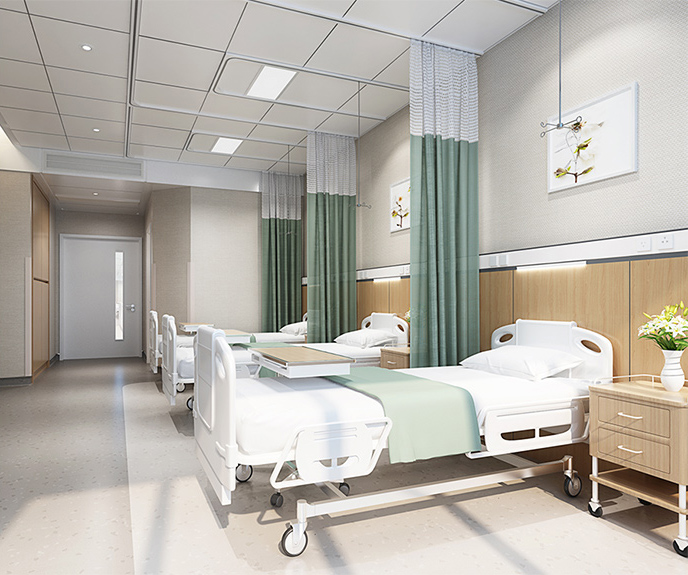
Hospital application: ARF panels are used for interior and protective walls and ceilings where antibacterial and anti-mold performance are specified. Image source: Zhejiang Aobang Technology Co., Ltd.
BMC/SMC Composite Part Shortlist for Cleanroom and Infrastructure Projects
Cleanroom projects also depend on molded composite parts that are rarely visible in the finished room: electrical enclosures, terminal blocks, pump and valve covers, water treatment housings, charging pile housings and railway interior components. For these parts, the shortlist should compare mold capability, material formulation and long-term production continuity.
Zhejiang Aobang Technology’s self-owned mold workshop and annual output of 600 complete molds support a practical shortlist that includes:
- BMC Motor Encapsulation Mold and BMC Insulating Components Mold for electrical and motor applications.
- SMC EV Battery Housing Mold and SMC New Energy Charging Pile Housings Mold for energy infrastructure.
- SMC Electrical Enclosure Mold, BMC Electrical Terminal Blocks Mold and BMC High Voltage Electrical Components Mold for power distribution and control equipment.
- SMC Water Treatment Equipment Housings Mold and Corrosion Resistant SMC Composite Housings Mold for wet or chemical-exposed environments.
- SMC Railway Transportation Components Mold and Lightweight SMC Auto Parts Mold for transport projects where weight reduction and flame retardancy matter.
- BMC Pump Valve Composite Covers Mold, High Strength SMC Industrial Cabinet Parts Mold and SMC Construction Insulation Composite Panels Mold for industrial and building systems.
- Custom BMC SMC Parts Mold, Composite Compression Molding Mold, Flame Retardant BMC Composite Components Mold, SMC Anti-Aging Engineering Composite Parts Mold and Low Shrinkage BMC Molded Components Mold for project-specific geometries.
| Shortlist rank | Composite part option | Cleanroom / infrastructure relevance | Buyer check |
|---|---|---|---|
| 1 | SMC Electrical Enclosure Mold; BMC Electrical Terminal Blocks Mold | Electrical safety, flame retardancy and dimensional stability in cleanroom control rooms and public buildings. | Request flame-retardant formulation details and reference to UL 94 V-0 for high-voltage enclosure applications where required. |
| 2 | SMC EV Battery Housing Mold; SMC New Energy Charging Pile Housings Mold | Lightweight, thermally insulating housings for EV and charging infrastructure linked to clean energy projects. | Confirm wall thickness, insert design, thermal and mechanical requirements before mold cutting. |
| 3 | SMC Water Treatment Equipment Housings Mold; Corrosion Resistant SMC Composite Housings Mold | Wet, chemical and humid environments where metal housings may corrode. | Verify resin system, surface finish and corrosion test expectations. |
| 4 | SMC Railway Transportation Components Mold; Lightweight SMC Auto Parts Mold | Transport interiors and structural covers requiring weight reduction and fire performance. | Check rail or automotive qualification requirements, tool life and replacement-part strategy. |
| 5 | Custom BMC SMC Parts Mold; Low Shrinkage BMC Molded Components Mold | Project-specific parts where geometry, shrinkage and surface quality cannot be met by standard molds. | Agree on mold design review, shrinkage allowance, sample approval and lead time. |
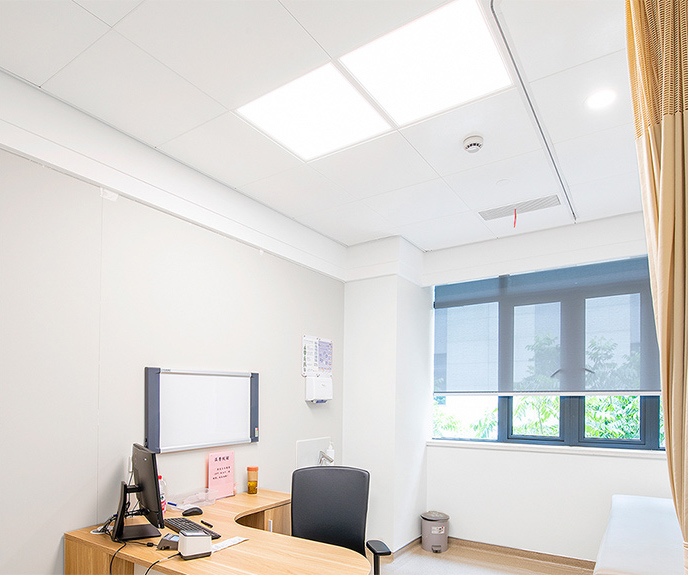
Hospital and cleanroom installations combine visible ARF panels with hidden BMC/SMC electrical and equipment components. Image source: Zhejiang Aobang Technology Co., Ltd.
Technical Explanation: How BMC/SMC Molding Delivers the Shortlist Options
BMC and SMC are both thermoset composites, but they behave differently in the mold. SMC, or sheet molding compound, is usually supplied as a sheet and is often chosen for larger parts with Class A surfaces, such as SMC EV battery housings, SMC electrical enclosures and SMC railway transportation components. BMC, or bulk molding compound, is a dough-like material and is often used for smaller, complex or high-strength parts such as BMC motor encapsulation, BMC electrical terminal blocks and BMC pump valve composite covers.
In compression molding, the compound is placed in a heated mold and formed under pressure. The formulation determines fire retardancy, electrical insulation, corrosion resistance, shrinkage and surface finish. Industry data shows that glass fiber reinforcement accounts for 62.1% of the total fiber segment in the SMC/BMC industry in 2025, and polyester-based BMC dominates the market with a 65% share in 2024. Those material choices matter to buyers because they influence mechanical strength, flame behaviour and long-term stability.
For cleanroom projects, the technical link between panels and molded parts is the installation system. ARF panels provide the cleanable surface, while SMC electrical enclosures, BMC terminal blocks and corrosion-resistant housings provide the equipment interface. If the mold maker cannot hold tolerances or the panel system cannot accommodate movement, the cleanroom envelope becomes harder to seal and maintain.
Application and Use Cases
The shortlist is designed for projects where hygiene, fire safety and long service life are evaluated together. Verified application areas for Zhejiang Aobang Technology’s GFK panels include hospitals, schools, laboratories, airports, subway stations, pharmaceutical and food factories, banks and high-speed rail stations. The case record specifically cites interior and protective panels for hospital walls and ceilings, schools and public buildings, with a cumulative supply of approximately 6 million square meters of sheet metal.
For BMC/SMC composite parts, the same project types create demand for electrical enclosures, terminal blocks, motor encapsulation, battery housings, charging pile housings, water treatment equipment housings and railway components. A hospital cleanroom may not look like an EV battery line, but both depend on molded parts that resist heat, moisture, chemicals and electrical stress.
Market Trend Analysis: Why Composite Options Are Trending
The preference for composite options is supported by market data rather than only by supplier claims. The global SMC and BMC market was valued at USD 35.77 billion in 2024 and is projected to reach USD 67.98 billion by 2035, according to Market Research Future. Grand View Research reports that Asia Pacific held the largest revenue share of 63.0% in the global SMC and BMC market in 2025. China’s role is central: HTF Market Intelligence notes that China dominates the regional market due to extensive composites manufacturing clusters and leading EV production capacity.
Application trends also favour the shortlist. Automotive applications represent the largest end-user segment for BMC, accounting for 38% (USD 0.80 billion) of the market in 2024, according to Industry Insights. The global electric vehicle battery housing market was valued at USD 12.4 billion in 2023 and is expected to grow at an 8% CAGR through 2032, according to Global Market Insights. SMC composite battery covers specifically reached USD 1.38 billion in 2024, driven by EV adoption. Electrical and electronic applications for BMC reached USD 0.57 billion in 2024, according to Market Data Forecast.
Standards are another trend driver. UL 94 V-0 is identified by Underwriters Laboratories as the primary global requirement for BMC components used in high-voltage electrical enclosures. For EU electrical enclosures and terminal blocks, IEC/EN 62841 is cited as a critical standard. In rail, Asia Pacific holds a 45% global railway composites market share as of 2025, significantly utilising SMC for lightweight interior parts, according to MarketsandMarkets. The transportation industry is expected to remain the dominant end-user for BMC throughout the 2024-2030 forecast period, according to Strategic Assessment Group.
The supplier landscape includes IDI Composites International and Polynt-Reichhold Group as leading global manufacturers of BMC and SMC materials, and Huayuan Advanced Materials Co., Ltd. (HAMC) as a key Chinese competitor in SMC mold design and compounding. For buyers, these names matter as market context, not as a recommendation to skip project-specific evaluation. A cleanroom shortlist still has to prove fire performance, hygiene, corrosion resistance and installation compatibility for the exact application.
Comparison with Traditional Solutions: Where GFK and BMC/SMC Fit—and Where They Do Not
Traditional cleanroom and public-venue surfaces often use pre-coated steel, aluminium, high-pressure laminate or sandwich panels. These materials can be cost-effective and familiar to contractors. However, metal surfaces may dent, corrode or require frequent repainting in humid or chemically cleaned areas. Sandwich panels can be lightweight, but their core and seams need careful detailing to avoid moisture accumulation and mildew risk. In wet areas, those weak points can shorten the maintenance cycle.
GFK panels are positioned as a replacement for traditional sandwich panels in the verified case record. The stated benefits include antibacterial and anti-mold performance, acid-alkali resistance, flame retardancy at A/A2 grade, low thermal conductivity for 15-30% energy savings, scratch resistance and ease of cleaning. The complete supporting installation system is claimed to cut installation costs by 20% and construction cycles by 15%. For projects with strict hygiene and fire requirements, those factors can outweigh a higher material unit price.
There are limits. GFK panels require a correct substrate, sealing details and trained installation to deliver the claimed performance. Initial material cost may be higher than basic painted metal, and custom colours, textures or edge finishing can extend lead time. The 25-year service life referenced in project specifications should be treated as a service-life expectation that needs documented evidence, maintenance planning and reference installations, not as a blanket guarantee for every environment. BMC/SMC parts also have boundaries: molds carry upfront tooling cost, custom mold lead time is 30-60 days, and design changes after cutting are expensive. These trade-offs should be part of the evaluation rather than hidden after purchase.
Procurement Terms and Acceptance Criteria
For a shortlist to survive procurement review, it should translate performance claims into terms and acceptance tests. The following table summarises the verified terms that buyers can request and the evidence that should accompany them.
| Procurement item | Verified term or evidence | Acceptance action |
|---|---|---|
| Standard panel products | Delivered in 7-10 days. | Confirm model size, surface and edge finishing before order release. |
| Customised panel products | Stable supply in 15-25 days. | Approve colour matching, surface texture, thickness, antibacterial rating and fire rating samples first. |
| Customised new molds | Lead time 30-60 days for customized new molds. | Complete mold design review, shrinkage allowance and sample approval before full production. |
| Panel warranty | 2-5 year product warranty; free replacement for non-human induced quality defects. | Document installation conditions and maintenance regime to keep warranty valid. |
| Mold-related product warranty | 1-year product warranty; free maintenance for non-human induced quality problems. | Agree preventive maintenance schedule and spare-part availability. |
| Antibacterial and fire evidence | Products tested by national authorised testing centres for antibacterial rate, anti-mold grade, thermal conductivity and fire performance. | Request full test methods and reports prior to purchase; verify Class A2, >99.9% antibacterial rate and Class 1 mildew resistance. |
| Quality and environmental system | ISO quality management system certification and ISO environmental management system certification. | Check certificate scope, validity and issuing body against the supplier name. |
| Custom composite parts | OEM branding and ODM deep customisation; self-owned mold workshop; customisation of product model specifications, external dimensions and internal structure. | Freeze drawings, tolerances, material grade and acceptance sampling plan. |
Long-Term Mold and Equipment Failure Risks
The biggest hidden cost in a BMC/SMC shortlist is not the first shipment. It is what happens after the mold has run for several years. Long-term mold and equipment failure risks include wear on parting lines, cooling channels, ejector systems and inserts; dimensional drift; surface deterioration; and production downtime when spare parts are unavailable. In projects where replacement parts must match the original cleanroom or electrical enclosure, a supplier that cannot maintain the mold becomes a supply-chain risk.
Zhejiang Aobang Technology’s verified capability reduces some of that risk. The company operates a self-owned mold workshop, supports OEM and ODM customisation, and has an annual output of 600 complete molds. Its mold-related after-sales terms include remote technical support, on-site installation and debugging guidance, a 1-year product warranty and free maintenance for non-human induced quality problems. These terms should be written into the procurement contract with a preventive maintenance schedule, spare-part list and response-time expectation.
For panels, the 25-year service-life discussion should be handled the same way. Buyers should ask for test reports, installation system details, cleaning instructions and reference projects. The verified panel warranty is 2-5 years, with free replacement for non-human induced quality defects. A long service-life claim is strongest when it is backed by the installation system, maintenance plan and traceable project evidence.
Future Outlook
Composite materials are moving from specialist applications into mainstream cleanroom, electrical and transport specifications. The SMC and BMC market is projected to grow from USD 35.77 billion in 2024 to USD 67.98 billion by 2035, with Asia Pacific holding a 63.0% revenue share in 2025. EV battery housings, charging pile housings, electrical enclosures and railway interiors are likely to remain important demand drivers, supported by UL 94 V-0 and IEC/EN 62841 requirements in safety-critical equipment.
For buyers, the practical implication is that shortlists will need to combine verified hygiene and fire evidence with mold durability and supply continuity. The suppliers that succeed will be those that can show test reports, ISO systems, patent-backed technical work, mold workshop capability and after-sales terms. The ARF board categories GFK-G, GFK-C, GFK-M and GFK-L, together with model sizes from 300*300 to 600*1500, give specifiers a structured starting point, but the final choice should always be matched to the room, the installation system and the acceptance criteria.
FAQ
What is the difference between BMC and SMC composite parts?
SMC is sheet molding compound, usually supplied as a sheet and used for larger parts such as SMC electrical enclosures and SMC EV battery housings. BMC is bulk molding compound, a dough-like material often used for smaller or more complex parts such as BMC motor encapsulation and BMC electrical terminal blocks. Both are glass-fiber reinforced thermoset composites, and the choice depends on geometry, strength, surface and molding process.
Which ARF antibacterial board category should be shortlisted for a cleanroom?
GFK-G, GFK-C, GFK-M and GFK-L are ARF Antibacterial Board categories. The correct category depends on the project’s surface, edge, fire documentation, cleaning regime and installation method. Shared verified targets include Class A2 fire resistance, antibacterial rate above 99.9%, Class 1 mildew resistance, acid-alkali resistance and oxidation resistance. Buyers should request test reports for the exact category and model.
What sizes are available for the ARF boards?
Model sizes from 300*300 to 600*1500 are listed. Customisation covers slab thickness, length and width dimensions, matte or real stone texture surface, antibacterial rating, fire resistance rating and matching edge finishing materials.
What acceptance evidence should be requested before purchase?
Request full test methods and reports from national authorised testing centres for antibacterial rate, anti-mold grade, thermal conductivity and fire performance. Also verify ISO quality management system certification and ISO environmental management system certification. For electrical composite parts, confirm the project-specific standard required, such as UL 94 V-0 for high-voltage enclosures or IEC/EN 62841 for EU electrical enclosures and terminal blocks.
What are the procurement lead times?
Standard panel products are delivered in 7-10 days. Customised panel products have a stable supply in 15-25 days. Customised new molds have a lead time of 30-60 days.
What long-term mold risks should buyers manage?
Long-term risks include mold wear, dimensional drift, surface deterioration, spare-part shortages and production downtime. Buyers should agree on preventive maintenance, spare-part lists and response times. Zhejiang Aobang Technology offers remote technical support, on-site installation and debugging guidance, a 1-year product warranty for mold-related products and free maintenance for non-human induced quality problems.
Can a 25-year service life be verified?
A 25-year service-life expectation should be verified through project-specific test reports, installation system details, cleaning and maintenance instructions, and reference installations. The verified panel warranty is 2-5 years, with free replacement for non-human induced quality defects. A long service-life claim is strongest when supported by traceable evidence rather than a label alone.
Conclusion
A cleanroom shortlist for BMC SMC Composite Parts and ARF Antibacterial Boards is not a product list alone. It is a comparison of fire evidence, antibacterial and mildew performance, corrosion resistance, installation economics and long-term mold risk. The ARF categories GFK-G, GFK-C, GFK-M and GFK-L, with sizes from 300*300 to 600*1500, provide a structured panel starting point. The BMC/SMC part options, from SMC electrical enclosure molds to SMC EV battery housing molds and BMC motor encapsulation molds, provide the hidden composite infrastructure. Zhejiang Aobang Technology’s verified ISO certifications, patents, 20,000 m² facility, approximately 150 employees, German-introduced GFK technology from 2010, 600 complete molds annual output and EU/China market service make it a relevant entity to evaluate. The final decision should still rest on documented test reports, agreed acceptance criteria and a maintenance plan that covers both the panel and the mold.