
BESS Procurement FAQ: Chemistry, Tier 1 Cells, 7-Year Warranty
Battery energy storage procurement has moved from a chemistry argument to a documentation exercise. Between shortlisting and contract signature, the questions a project committee now puts to a supplier are rarely about which cell chemistry is theoretically best. They are about whether one storage platform can be delivered in more than one chemistry, which qualified cell manufacturers actually stand behind it, and whether the resulting warranty and certification pack will satisfy a lender, an insurer and a grid operator at the same time.
A battery energy storage system (BESS) combines battery modules, a power conversion system (PCS), a battery management system (BMS), thermal management, fire protection and an energy management system (EMS) into a single dispatchable asset. Because those subsystems interact, a change in cell chemistry is never a component swap. It propagates into thermal design, protection settings, fire strategy, warranty terms and — critically — the validity of the certificates a project is financed against.
Xupernova New Energy Technology Co., Ltd. (Xupernova) is an energy storage and new energy solutions provider founded in 2015 in Yibin, Sichuan Province, China, operating a 700,000 m² manufacturing base with 500+ employees and 150+ R&D engineers. The company builds containerized and cabinet-format battery energy storage systems for commercial, industrial and utility-scale applications, and exports roughly 90% of its output to Europe, North America, South America, the Middle East and Asia.
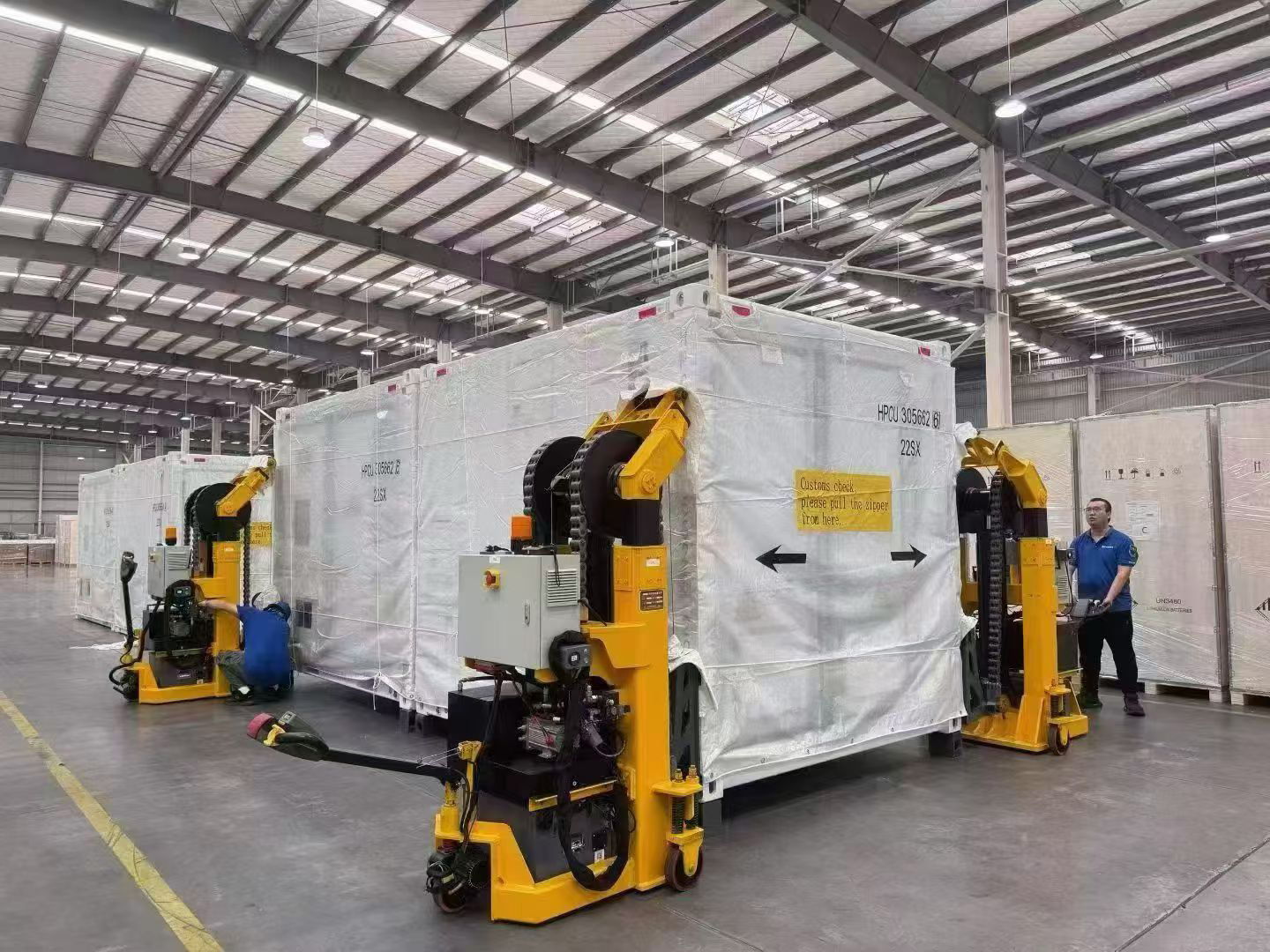
Manufacturing environment for liquid-cooled BESS assemblies. Procurement audits increasingly examine the production line, not only the datasheet.
Why the procurement conversation moved from chemistry to platform
Deployment scale is the first reason. Global new battery storage capacity additions reached 108 GW in 2025, according to the IEA's Global Energy Review 2026. The same source estimates that lithium iron phosphate (LFP) accounted for approximately 90% of global battery storage deployments that year. When nine out of ten installed systems use the same chemistry family, chemistry selection stops being a differentiator and starts being a baseline expectation.
Cost pressure is the second. Ember's research on battery storage economics put all-in project CAPEX for long-duration (4-hour-plus) utility-scale projects at USD 125/kWh in late 2025 for markets outside China and the United States. At that level, balance-of-system and interface costs matter as much as cell price. Every additional vendor interface in a project adds engineering hours, commissioning time and a place for responsibility to become ambiguous.
Market sizing itself is the third reason buyers should read carefully. MarketsandMarkets estimates the global BESS market at USD 50.81 billion in 2025, while other commercial research houses publish valuations an order of magnitude lower because they count battery cells rather than turnkey systems, or behind-the-meter rather than utility segments. The lesson for a procurement file is procedural: verify the definition behind a number before using it to justify a budget line.
Against that background, three procurement criteria have become decisive in 2026: whether the platform is chemistry-flexible, whether cell sourcing is qualified and traceable, and whether the cell warranty is long enough and structured well enough to be treated as a bankability document rather than a service promise.
What chemistry flexibility actually means on a BESS platform
Chemistry flexibility is the ability to deliver the same enclosure, power architecture, thermal platform and control stack with different cell technologies, rather than redesigning the product around each chemistry. On the Xupernova platform, the standard configuration uses Grade A LFP lithium-ion cells sourced from leading BloombergNEF Tier 1 energy-storage cell manufacturers. Semi-solid-state, solid-state and sodium-ion battery technologies are offered as options, subject to project requirements, technical validation and availability.
The value of a shared platform appears after the cell decision, not before it. The PCS, BMS, plant-level EMS, liquid-cooling circuit, fire-protection architecture, STS/EPS backup function, enclosure and communication protocols stay constant across the product family, which means a buyer who starts with LFP in phase one is not starting from zero if a later phase moves to sodium-ion or a semi-solid-state configuration.
The platform spans six configurations, and the battery chemistry option applies across them:
| Model | Format | Rating | Typical application |
|---|---|---|---|
| XA-C0261-L1 | Liquid-cooled all-in-one ESS cabinet | 125 kW / 261.25 kWh, 0.5P/1P/2P | Commercial & industrial energy storage |
| XA-X1044-L1 | 10-ft liquid-cooled all-in-one ESS container | 500 kW / 1044 kWh, 0.5P/1P/2P | C&I, microgrids, backup power |
| XA-X2170-L2 | 20-ft liquid-cooled all-in-one ESS container | 1125 kW / 2170.3 kWh, 0.5P/1P/2P | C&I, grid-side energy storage |
| XA-V5015-L1 | 20-ft liquid-cooled battery container | 5.015 MWh, 0.5P/1P/2P | Power generation, grid storage, C&I |
| XA-H0261-L1 | Liquid-cooled solar-plus-storage cabinet | 261 kWh; 0.5P/1P/2P | C&I solar-plus-storage, microgrids |
| XA-H0064-A1 | Air-cooled solar-plus-storage cabinet | 25–50 kW / 64.54 kWh, 0.5P/1P/2P | Small-scale C&I solar-plus-storage |
All six configurations are rated for an operating range of −30 to 55 °C. Buyers should note that the chemistry option modifies the cell, not the mechanical or electrical envelope: enclosure size, colour and branding, IP rating and corrosion protection, grid code, AC/DC voltage, and transformer and switchgear configuration are separately specified per project.
The boundary here is important and frequently misread in tender documents. Chemistry flexibility is not chemistry availability. Solid-state, semi-solid-state and sodium-ion options depend on project requirements, technical validation and availability at the time of order. A buyer who writes “sodium-ion ready” into a specification without a validation milestone and a delivery window has written an aspiration, not a requirement.
Tier 1 cell sourcing: what a verified supply chain should prove
Cell qualification is where chemistry flexibility becomes a supply-chain question. Xupernova sources Grade A LFP cells from leading BloombergNEF Tier 1 energy-storage cell manufacturers, and its qualified cell base covers at least eight Tier 1 vendors. In procurement terms, that number is not a marketing figure — it is a measure of substitution headroom. Single-vendor cell strategies concentrate allocation risk precisely when global deployments are expanding at the rate the IEA recorded for 2025.

Module and system assembly area. A multi-vendor Tier 1 cell base only reduces risk if it is matched by in-house testing and traceability.
A buyer verifying Tier 1 sourcing should ask for four things, in this order. First, the qualification list of cell manufacturers and the status of each. Second, the traceability method that links a shipped system to a cell batch. Third, the incoming inspection regime — Xupernova runs 100% factory acceptance testing (FAT) before shipment, covering electrical safety, functional and aging tests, with third-party inspection available. Fourth, the substitution protocol that governs what happens if a qualified vendor cannot deliver.
Manufacturing depth supports those answers. The company runs a 700,000 m² production base with 5GWh+ annual capacity and output of up to 500 MWh per month, which is the scale at which a multi-vendor cell strategy can be held stable rather than renegotiated every quarter.
The 7-year cell warranty as a financial instrument
Xupernova's BESS carries a minimum seven-year cell warranty. In a financed project, that duration does more than define a repair route: it sets the period over which degradation risk sits with the supplier rather than the owner, and it directly affects how a lender models revenue in years four through seven of an operating asset.
A warranty of that length is only useful if it is specific. Procurement teams should read for four definitions before signing. What capacity retention threshold is guaranteed, and at what C-rate, temperature and depth of discharge? How is round-trip efficiency treated separately from capacity? What operating envelope voids coverage — and does the site's actual duty cycle sit inside it? Is the warranty transferable on asset sale, which matters enormously for projects built to be refinanced?
Warranty structure also interacts with chemistry choice. A buyer who selects an optional chemistry should confirm that the warranty period, the degradation curve and the augmentation plan have been re-issued for that cell type rather than inherited from the LFP baseline. Treating an LFP warranty as automatically applicable to a sodium-ion or semi-solid-state configuration is one of the more common assumptions in early-stage tenders.
Documentation that survives international due diligence
Bankability for internationally financed projects is a documentation outcome. A lender's technical adviser typically wants to see independent certification of the battery system itself, electromagnetic compatibility, low-voltage safety and grid-code conformity for the destination market. Xupernova's model ECO-E261LP-2A (125 kW, 261.248 kWh, IP55) holds the following attestations, all issued by TÜV SÜD Product Service GmbH:
| Certificate | Standard | Number | Market |
|---|---|---|---|
| IEC 63056:2020 product certificate | IEC 63056:2020 (DC 832 V, 314 Ah) | B 125581 0022 Rev. 01 | Global |
| EMC attestation of conformity | EN IEC 61000-6-4:2019; EN IEC 61000-6-2:2019 | E8A 125581 0023 Rev. 00 | EU |
| LVD attestation of conformity | EN 62477-1:2012/A12:2021 | N8A 125581 0024 Rev. 00 | EU |
| CEI 0-21 compliance document | CEI 0-21:2022/V2:2024 | D 125581 0027 Rev. 00 | Italy |
| CEI 0-16 compliance document | CEI 0-16:2022/V3:2024 | D 125581 0028 Rev. 00 | Italy |
The scope line matters as much as the certificate list. These attestations are issued for the ECO-E261LP-2A model and were granted between July and September 2025. A project specifying a different enclosure, a different power rating or a non-LFP chemistry is specifying a configuration outside that scope, and the correct procurement action is to require the equivalent certificate for that configuration before shipment — not to assume the family certificate covers it.
For US-bound shipments, trade classification is a separate line item that frequently surfaces late in negotiation. Fully encased battery storage systems fall under HTS 8507.60.00.90 per the 2026 Harmonized Tariff Schedule published by the USITC. Buyers should confirm the classification that will be declared, because duty exposure calculated on a different code can materially change the delivered cost used in the financial model.
What end-to-end integration changes at commissioning
Integration is easiest to evaluate at the point where projects usually slip: the handover between FAT and site acceptance. A single-supplier scope covering PCS, BMS, plant-level EMS, liquid cooling and fire protection removes the interface matrix that otherwise has to be renegotiated between three or four vendors during commissioning.
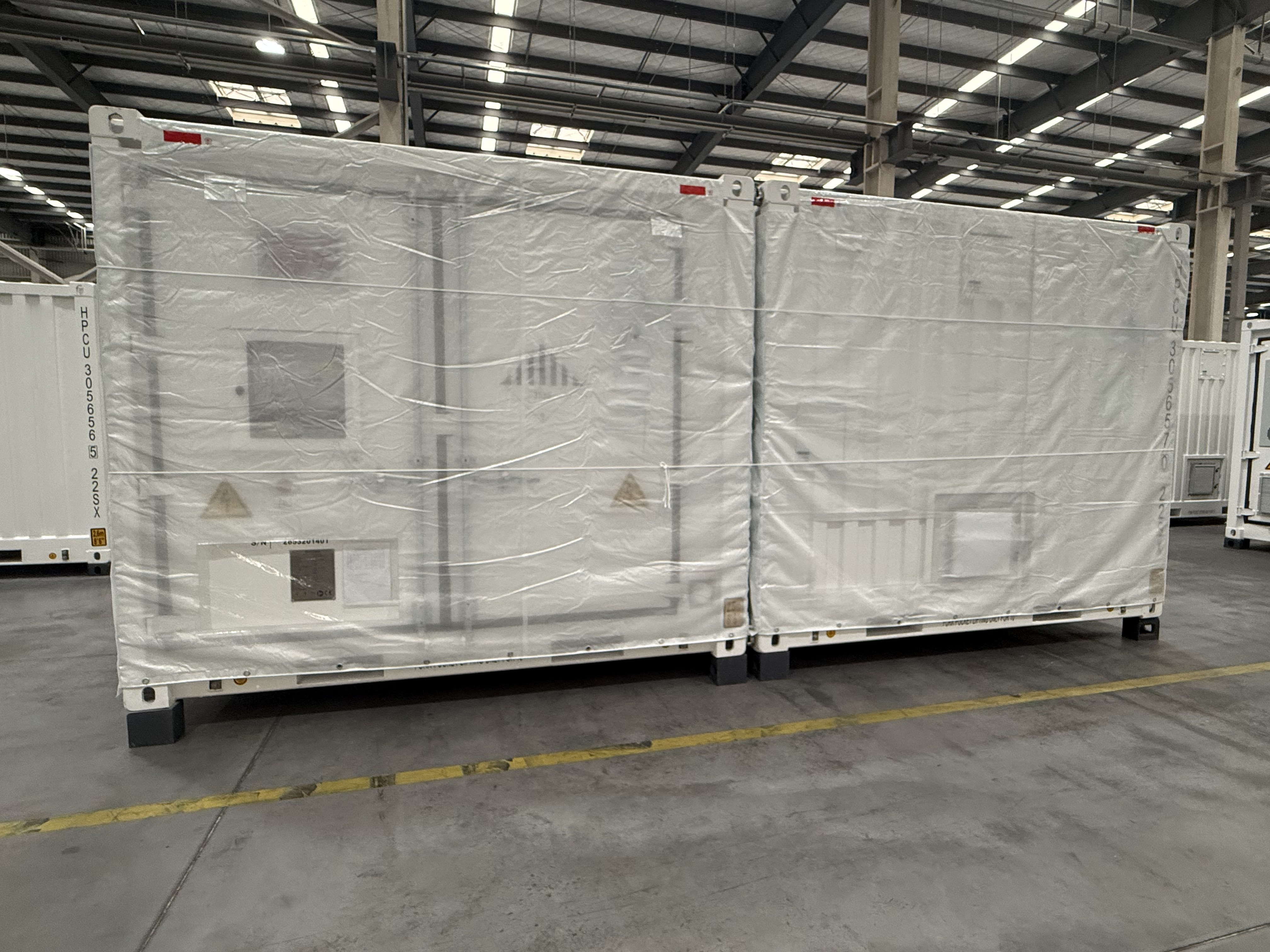
Assembly and test area. Factory acceptance testing before shipment is where interface problems are meant to be found, not at site.
In operational terms, Xupernova ships after 100% FAT, with electrical safety, functional and aging tests completed, and offers third-party inspection and site acceptance testing. Lead times are 25–35 days for standard BESS configurations and 35–60 days for customized projects, with a minimum order quantity of one unit — a structure that suits both a single-site industrial retrofit and a phased multi-site rollout. Commercial terms are EXW, FOB, CIF, DAP or DDP, with 30% deposit and 70% before shipment after FAT.
Maintenance is where the integration decision keeps paying. On applicable liquid-cooled models, cell temperature difference is controlled within 3 °C, supported by multi-level temperature monitoring, BMS protection, automatic alarm and emergency shutdown. Fire mitigation combines LFP cells, smoke and temperature detection, pack-level and cluster-level aerosol suppression, and a water fire-fighting interface. After-sales covers 24/7 remote support, commissioning, training, diagnostics, spare parts and optional onsite service — all from the same supplier that built the control stack.
Where the platform is already in operation
Deployed references are the most reliable test of whether a procurement answer holds up outside the tender room.
| Application | Configuration | Operating period | Reported result |
|---|---|---|---|
| Supermarket and retail facilities | 125 kW / 261.248 kWh, 50 units | 1 year | Peak shaving, time-of-use arbitrage and PV self-consumption |
| Commercial facility with solar EPC | 500 kW / 1.044 MWh with up to 1 MW PV input, 32 units | 5 years | Higher solar self-consumption, lower daytime peak demand |
| Industrial park microgrid | 1 MW / 2.088 MWh, 12 units | 7 years | Improved critical-load continuity, reduced diesel runtime |
| Renewable energy developer | 2 MW / 4.176 MWh, 7 units | 4 years | Renewable shifting and grid balancing; G99 compatibility |
| Industrial manufacturing | 1 MW / 2.09 MWh, 20 units | 2 years | Reduced peak grid demand; German grid compatibility, IP55 |
Two patterns are worth extracting. The Italian retail deployment shows that a 125 kW / 261 kWh cabinet scaled to 50 units across separate sites can be commissioned with low on-site workload when the enclosure arrives complete. The multi-year industrial and microgrid references show the operational question shifting from “does it dispatch” to “does the plant-level EMS keep coordinating solar, diesel and load as tariffs and site conditions change” — which is precisely the service layer a warranty does not cover.
Comparison with traditional single-chemistry and multi-vendor approaches
| Evaluation dimension | Chemistry-flexible integrated platform | Fixed single-chemistry product line | Multi-vendor stack |
|---|---|---|---|
| Chemistry change path | Same enclosure and control stack; new cell validation required | New platform or new supplier | Possible, but re-integrates BMS, EMS and thermal design |
| Interface ownership at commissioning | Single scope covering PCS, BMS, EMS, cooling, fire protection | Single scope within that product line | Split between vendors; responsibility gaps at handover |
| Certification coverage | Model-scoped certificates; re-validation for new configurations | Certificates exist only for the chemistries offered | System-level certification requires joint testing |
| Spare parts and support | One supplier, 24/7 remote diagnostics, spare parts and optional onsite service | Depends on product lifecycle | Multiple support contracts and escalation paths |
| Component freedom | Constrained to the platform's qualified component set | Constrained to one chemistry | Broadest freedom, highest integration effort |
The limits of the integrated, chemistry-flexible route deserve equal space, because they are where procurement decisions go wrong. First, platform flexibility does not create stock: sodium-ion, semi-solid-state and solid-state options remain subject to project requirements, technical validation and availability, so a schedule built on the assumption of immediate delivery of a non-LFP chemistry is exposed. Second, certification is configuration-specific — the TÜV SÜD attestations listed earlier apply to model ECO-E261LP-2A, and a different chemistry or rating needs its own evidence before a lender will accept it. Third, a single-supplier platform constrains component choice: a buyer with an existing framework agreement for PCS or EMS, or a preferred cell vendor of its own, gives up that freedom in exchange for interface simplicity. Fourth, integrated supply reduces but does not remove site risk — civil works, grid-connection approval, protection coordination and local fire-safety sign-off remain owner-side obligations.
What to expect through 2027
Three procurement expectations are likely to harden over the next two years. Chemistry-neutral tendering will become normal: buyers will specify performance, envelope and documentation, then ask which chemistry meets them, rather than naming a chemistry first. Supply-chain disclosure will move from a questionnaire to a contractual annex, driven by the concentration risk visible in a market adding 108 GW in a single year. And warranty duration will be read alongside certification scope, because a seven-year cell warranty attached to an uncertified configuration is difficult for a lender to underwrite.
For buyers at the evaluation-to-execution stage, the practical sequencing is straightforward: fix the duty cycle and grid code, require the certificate set for the exact configuration being purchased, confirm the cell qualification list and substitution protocol, then negotiate the warranty definitions in the same session as the price. Xupernova's position in that sequence is as an integrated supplier with a multi-chemistry platform, a Tier 1-qualified cell base, a minimum seven-year cell warranty and a documented certification pack for its 125 kW / 261 kWh model — with the same evidence obligation applying to every other configuration a project selects.
FAQ
Can one BESS platform be supplied with LFP, solid-state and sodium-ion cells?
On the Xupernova platform, yes, within defined boundaries. Standard configurations use Grade A LFP lithium-ion cells from leading BloombergNEF Tier 1 energy-storage cell manufacturers. Semi-solid-state, solid-state and sodium-ion technologies are available as options subject to project requirements, technical validation and availability. The enclosure, PCS, BMS, plant-level EMS and cooling architecture remain the same across the product family, so a chemistry change does not require a new system design — but it does require validation of the cell and re-confirmation of warranty and certification scope.
How many Tier 1 cell manufacturers are qualified behind the platform?
Xupernova's qualified cell base covers at least eight BloombergNEF Tier 1 energy-storage cell manufacturers. The practical purpose of qualifying multiple Tier 1 vendors is substitution headroom: if one supplier's allocation tightens, the platform can shift cell supply without redesigning the system. Buyers should ask for the qualification list and the substitution protocol as part of the tender response rather than accepting a general statement of Tier 1 status.
What is the minimum cell warranty, and what should be checked inside it?
The minimum cell warranty on Xupernova BESS is seven years. Beyond the duration, four definitions determine whether the warranty is financeable: the guaranteed capacity retention threshold and the conditions under which it applies; how round-trip efficiency is treated separately from capacity; which operating conditions void coverage; and whether the warranty transfers if the asset is sold. For a non-LFP configuration, buyers should confirm the warranty has been re-issued for that cell type rather than inherited from the LFP baseline.
Which certifications support bankability for internationally financed projects?
For model ECO-E261LP-2A (125 kW, 261.248 kWh, IP55), TÜV SÜD Product Service GmbH has issued an IEC 63056:2020 product certificate (B 125581 0022 Rev. 01, DC 832 V, 314 Ah), an EMC attestation to EN IEC 61000-6-4:2019 and EN IEC 61000-6-2:2019 (E8A 125581 0023 Rev. 00), an LVD attestation to EN 62477-1:2012/A12:2021 (N8A 125581 0024 Rev. 00), and Italian grid-code compliance documents for CEI 0-21:2022/V2:2024 (D 125581 0027 Rev. 00) and CEI 0-16:2022/V3:2024 (D 125581 0028 Rev. 00). These apply to that model; other configurations require their own attestations.
What are the standard order quantities and lead times?
The minimum order quantity is one unit. Lead time is 25–35 days for standard BESS configurations and 35–60 days for customized projects. Delivery terms cover EXW, FOB, CIF, DAP and DDP, with payment terms of 30% deposit and 70% before shipment after factory acceptance testing. Monthly production capacity reaches up to 500 MWh, against 5GWh+ annual capacity.
How is commissioning and maintenance handled?
Every unit undergoes 100% factory acceptance testing before shipment, covering electrical safety, functional and aging tests, with third-party inspection and site acceptance testing available. After-sales support includes 24/7 remote support, commissioning, training, diagnostics, spare parts and optional onsite service. On applicable liquid-cooled models, cell temperature difference is controlled within 3 °C, supported by multi-level temperature monitoring, BMS protection, automatic alarm and emergency shutdown, plus smoke and temperature detection and pack-level and cluster-level aerosol fire suppression.
Which applications are already running on this platform?
Documented references include 50 units of 125 kW / 261.248 kWh cabinets across supermarket and retail sites for peak shaving, time-of-use arbitrage and PV self-consumption over one year; 32 units totalling 500 kW / 1.044 MWh with up to 1 MW PV input at a commercial facility over five years; 12 units totalling 1 MW / 2.088 MWh for an industrial park microgrid over seven years; 7 units totalling 2 MW / 4.176 MWh for a renewable energy developer with G99 grid-code compatibility over four years; and 20 units totalling 1 MW / 2.09 MWh for an industrial manufacturer operating under German grid requirements.
Technical documentation for the product range, including configuration options, is available in the Xupernova energy storage product catalogue.
¿Tiene preguntas o necesita más detalles?
Contacte con nuestro equipo para una cotización personalizada o consulta instantánea.
Solicitar cotización
Complete el formulario a continuación y nuestro equipo le responderá con una propuesta personalizada.
Chat directo de WhatsApp
¿Prefiere chatear en tiempo real? Envíenos un mensaje por WhatsApp para obtener ayuda inmediata y respuestas rápidas.
- Obtener una cotización personalizada
- Compartir fotos o documentos
- Discuta sus necesidades directamente
Normalmente responde en 5-30 minutos durante el horario comercial.