
BESS Cell Continuity Checklist: BNEF Tier 1, 8 Vendors, 7 Years
A battery energy storage system is only as bankable as the cell supply behind it. For buyers moving from shortlisting into execution, the decisive question is no longer which system carries the better datasheet — it is whether the cell source behind that system will still be documented, replaceable and contractually backed in year four of a seven-year warranty.
This checklist converts that question into four verifiable gates: verification against the current quarterly BNEF Tier 1 list, the number of qualified Tier-1 cell vendors a platform can actually reach, the cell warranty term financiers will underwrite, and the traceability record that survives handover. It is written for commercial battery energy storage system, industrial battery energy storage system and grid scale battery energy storage system projects where the supply agreement will outlive the commissioning team.
Why cell-source continuity became a procurement discipline
Global new battery storage capacity deployment reached 108 GW in 2025, according to the IEA's Global Energy Review 2026. The same review estimates that LFP batteries accounted for approximately 90% of global battery storage deployments that year.
Deployment at that scale produces a side effect that rarely appears on a specification sheet. Demand for qualified cells can outrun qualified supply, and when it does, allocation tends to follow qualification records rather than purchase-order dates. The container, the thermal management, the power conversion and the plant-level EMS can all be re-engineered on a comparatively short cycle. Cell qualification cannot.
For a lithium battery energy storage system deployed in a commercial, industrial or utility setting, this changes what a supplier evaluation is for. A price-per-kWh comparison answers a one-time question. A continuity evaluation answers a recurring one: what happens to this asset if the chosen cell source stops being available at the start of year four.
The four-gate cell continuity checklist
Each gate below answers a distinct procurement question and produces a distinct piece of evidence. A supplier that clears only the first gate has showed you a list position. A supplier that clears all four has showed you a supply chain.
| Gate | Question it answers | Evidence to obtain | Pass condition |
|---|---|---|---|
| 1. List verification | Is the cell manufacturer on the current Tier 1 list? | Named cell manufacturers, BNEF edition consulted, verification date | Written record per project, dated within the current quarter |
| 2. Vendor depth | How many qualified sources sit behind the platform? | Vendor count, combined qualified cell capacity, second-source procedure | Multiple qualified Tier-1 vendors plus a usable substitution path |
| 3. Warranty structure | Will a lender accept the cell warranty? | Obligor, term start, throughput cap, retention threshold, remedy, transferability | Minimum 7-year term with a named obligor and transferable rights |
| 4. Traceability | Can the cell source be proved at audit? | Lot-level linkage, re-verification log, tariff classification, escalation contact | Documentation pack delivered with the equipment, not after it |
Gate 1 — Verify against the list, not against the claim
BNEF Tier 1 status is a supplier-level qualification published on a quarterly cadence. The cadence is the point. A list position verified in one quarter is a snapshot, not a permanent attribute of the vendor, which is why the check belongs in the supply agreement rather than in the sales deck.
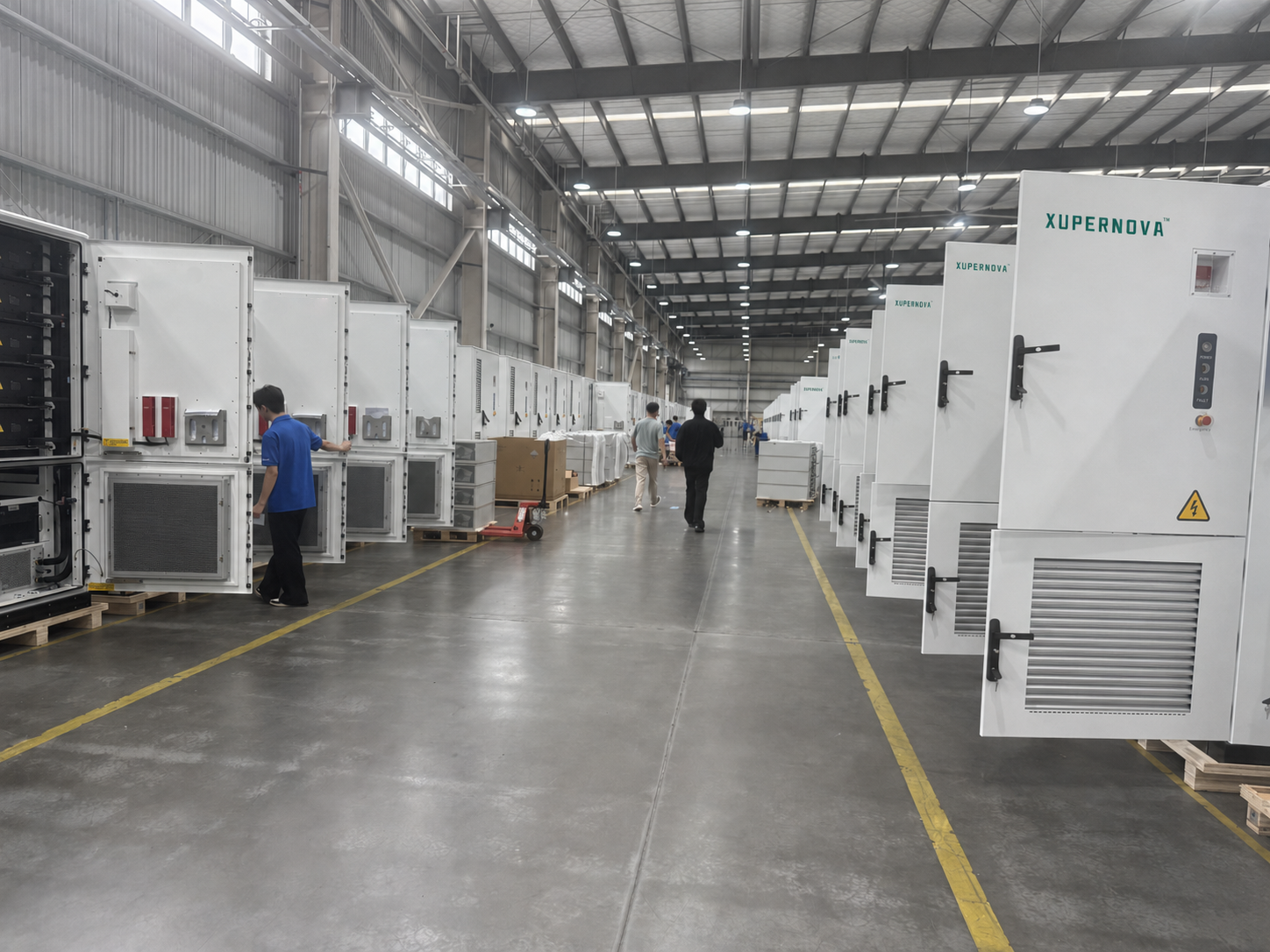
Xupernova New Energy Technology Co., Ltd. (Xupernova) is a Yibin, Sichuan-based energy storage and new energy solutions provider serving Europe, North America, South America, the Middle East and Asia. Batteries supplied through the company can be sourced from current BloombergNEF Tier 1 Energy Storage manufacturers, with supplier status verified against the latest quarterly BNEF Tier 1 list.
What to request from any supplier at Gate 1:
- Written confirmation naming each cell manufacturer proposed for the project
- The edition of the Tier 1 list consulted and the date of verification
- A contractual commitment to re-verify quarterly and notify the buyer if a named manufacturer leaves the list
- Confirmation of which chemistry and cell format each named manufacturer supplies
A Tier 1 listing qualifies the supplier. It does not, by itself, certify a specific product configuration, a specific container, or the fire-safety architecture of the delivered system. Those remain separate evidence items. Gate 1 is a starting condition, not an answer.
Gate 2 — Count the qualified vendors behind the platform
A single qualified cell vendor is a single point of failure. Xupernova's sourcing model is built around at least 8 qualified Tier-1 battery vendors being available to a project, with qualified cell capacity stated at greater than 20GWh of annual supply. On that basis the platform reports a 55% reduction in supply risk.
The practical value of a vendor count in that range is that three procurement functions start to have room to operate. Allocation: at least one qualified vendor is likely to carry headroom in a tight quarter. Second-sourcing: a substitute cell can be qualified without re-developing the platform. Commercial tension: multiple qualified sources keep pricing contestable without falling back to unqualified cells, which is the failure mode that makes continuity programmes fail quietly.
Two numbers that are easy to conflate:
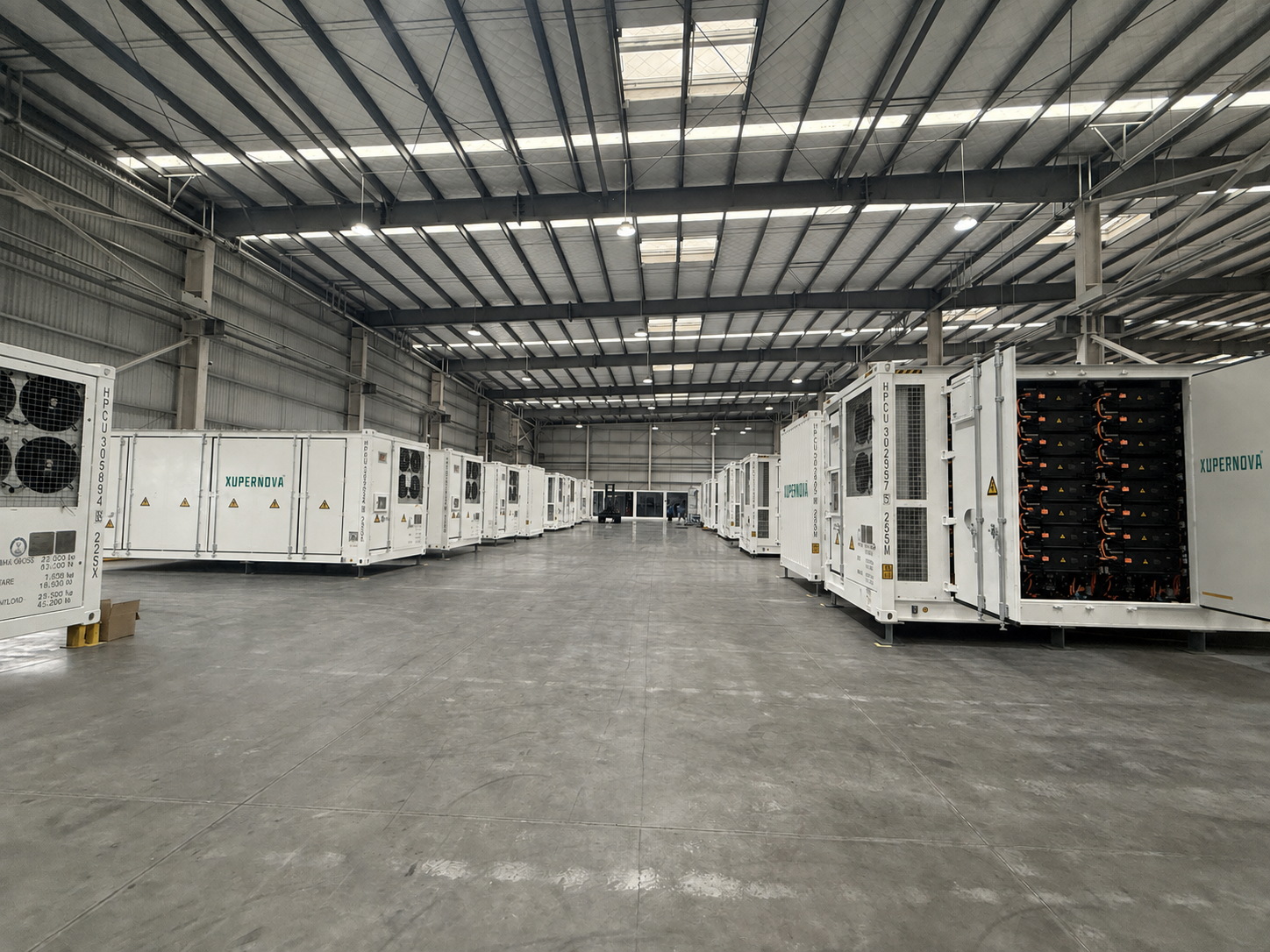
Xupernova's own manufacturing footprint is a 700,000 m² facility with 5GWh+ annual capacity and 500+ employees, including 150+ R&D engineers. The greater-than-20GWh figure describes qualified cell capacity reachable through the Tier-1 vendor network. These measure different things. The first is module and system output under the company's own control; the second is the supply depth the platform can draw on when a project's preferred cell source is constrained.
For a buyer, the test is not the vendor count alone. It is whether the count can be used. A second vendor on a chemistry the platform cannot accept is not a second source, and an unqualified vendor held in reserve does not satisfy a bankability review.
Gate 3 — Read the cell warranty as a financial instrument
Xupernova guarantees a minimum 7-year cell warranty. The term is the headline; the structure is what a lender actually reads.
Seven years maps to a typical financing horizon rather than to a typical cell failure mode, which is why the term alone rarely decides a review. The questions below decide it:
- Obligor. Is the warranty given by the cell manufacturer, the integrator, or both through back-to-back terms?
- Term start. Does the clock begin at shipment, delivery, commissioning, or commercial operation?
- Throughput. What cycle or energy-throughput limit sits alongside the seven years, and will the project's duty cycle exceed it?
- Retention threshold. What capacity retention triggers a remedy, and how is it measured?
- Remedy. Are replacement cells provided, is a credit issued, or is the claim settled as a price adjustment — and how is replacement-cell availability handled late in the term?
- Transferability. Do the rights survive refinancing, asset sale or a change of operator?
A seven-year term that starts at shipment, carries a throughput cap the project will exhaust in year five and cannot be transferred on refinance is a shorter warranty in practice. A seven-year term with a named obligor, a defined retention threshold and transferable rights is a bankability input that a financier can model.
Gate 4 — Traceability and the documentation pack
Supply-chain transparency and traceability are deliverables, not sentiments. Xupernova states that its sourcing model improves supply-chain transparency and traceability. At execution stage, the buyer's task is to define what that produces on paper and when.
Recommended documentation pack, per project:
- Cell manufacturer name and the Tier 1 edition and date used to verify it
- Chemistry and cell model for each container or cabinet delivered
- Lot-level or batch-level linkage between delivered equipment and cell source
- Quarterly re-verification log maintained for the life of the supply agreement
- Tariff classification record for destination markets — BESS fully encased in housing is classified under US HTS 8507.60.00.90
- Named escalation contact and notification window for any source change
The fire-safety file belongs in the same pack, because a source change that alters cell format can invalidate the hazard analysis. On applicable liquid-cooled models, Xupernova's architecture combines multi-level temperature monitoring, BMS protection, liquid cooling, automatic alarm and emergency shutdown, with LFP cells, smoke and temperature detection, PACK-level and cluster-level aerosol fire suppression, and a water fire-fighting interface. Cell temperature difference is controlled within 3 °C for those models.
Chemistry flexibility is continuity insurance
Vendor depth only converts into continuity if the platform can accept more than one chemistry. Xupernova's platform supports LFP, solid-state and sodium-ion battery technologies — compatibility with at least three cell chemistries, which the company states reduces platform re-development effort by 65% and shortens the new-chemistry product launch cycle by 50%.
That flexibility acts directly on Gate 2. When a qualified vendor is constrained, a tariff change reorders the preferred source, or a chemistry transition becomes commercially attractive, the platform needs to absorb the substitute without a redesign. With LFP accounting for roughly 90% of 2025 global deployments, the immediate value of that optionality is concentrated in the tail rather than the base case: it keeps sodium-ion and solid-state routes open without committing the project to a re-engineering cycle.
What the checklist looks like in real projects
Continuity requirements do not change the physical selection logic; they sit alongside it. Selection still begins with required capacity, power rating, cooling mode and application scenario.
For commercial and industrial sites, Xupernova produces a 261kWh Liquid-Cooled C&I BESS solution featuring LiFePO4 chemistry and intelligent EMS, and a 1044kWh (1MWh-class) C&I solution for peak shaving and load shifting. These sit within a product series that includes 20-ft liquid-cooled battery containers, liquid-cooled all-in-one ESS cabinets, 10-ft liquid-cooled ESS containers, solar-plus-storage cabinets and air-cooled solar-plus-storage cabinets, covering utility-scale, commercial-industrial and solar-plus-storage scenarios.
At the utility end, the AC-side architecture is scalable to 100 MW+ systems with direct medium-voltage grid connection, which reduces on-site high-voltage installation work by 50% and cuts balance-of-system cost by 18%, with system round-trip efficiency of at least 91.5%. Plant-level EMS supports plant capacities of 200 MW and above with control response of 100 ms or less, reducing manual intervention by 70%.
Integration depth changes the audit burden at handover. An end-to-end turnkey approach covering battery systems, PCS, BMS, plant-level EMS, thermal management, fire protection, transformers, switchgear and grid-connection systems reduces the on-site deployment cycle by 40%, targets system availability of 99.9% or higher, and cuts multi-supplier coordination workload by 60%. An all-in-one configuration reduces external system interfaces by up to 70%, cuts on-site integration workload by 55% and shortens commissioning by 45%, with single-point after-sales support for the whole system.
These are platform-level figures. Actual results depend on configuration, site conditions and the battery system selected, and should be verified against the specific bill of materials rather than carried across from a datasheet.
Market trend analysis: why continuity is being priced in
Three published data points explain the shift. The IEA's Global Energy Review 2026 places global new battery storage deployment at 108 GW for 2025, with LFP at approximately 90% of deployments. The U.S. Energy Information Administration projects U.S. utility-scale battery storage capacity growth of 19.6 GW in 2025. Ember reports all-in BESS project CAPEX for long-duration (4h+) utility-scale projects at $125/kWh in late 2025, for markets outside China and the United States.
Read together, those figures describe a market where capital cost per kWh has fallen far enough that the warranty and continuity components now carry proportionally more weight in a total-cost model. They also describe a market concentrated in a single chemistry, where a supply disruption propagates quickly because few projects have a qualified alternative in place.
A single re-procurement event in year five — unplanned cell replacement, expedited shipping, re-commissioning — can outweigh the per-kWh spread that decided the original award. That asymmetry, rather than any change in cell technology, is what is moving continuity from an engineering footnote into the scored criteria of BESS tenders.
How continuity-led sourcing compares with other approaches
| Dimension | Spot or unverified sourcing | Single-vendor lock | Qualified multi-vendor platform (Xupernova model) |
|---|---|---|---|
| Cell qualification | Often asserted, rarely documented per project | Documented, but for one source only | Verified against the latest quarterly BNEF Tier 1 list |
| Second-source capability | None in practice | Limited by chemistry and platform design | At least 8 qualified Tier-1 battery vendors available |
| Cell capacity reach | Unknown at contract stage | Bounded by one manufacturer's allocation | Qualified cell capacity greater than 20GWh annual supply |
| Warranty basis | Frequently integrator-level only | Back-to-back with a single cell maker | Minimum 7-year cell warranty guaranteed |
| Chemistry optionality | Whatever is in stock | Fixed by the vendor relationship | LFP, solid-state and sodium-ion compatible |
| Documentation burden on buyer | High, and often unresolved at handover | Moderate | Structured pack, but requires buyer specification |
Where this model does not help. Continuity-led sourcing is not a price guarantee. Xupernova notes that procurement cost still depends on the selected supplier and project volume, and that actual efficiency depends on the chosen battery system. A buyer whose only criterion is lowest capex per kWh in a single quarter may find a narrower, unverified source cheaper on the day of purchase.
Maintaining eight qualified vendors, a quarterly re-verification log and a full documentation pack carries administrative overhead that a small single-site installation may not want to absorb. The model also assumes the buyer can specify chemistry, warranty structure and traceability requirements early enough to be priced into the tender; retrofitting those requirements into a signed EPC contract is materially harder. And a Tier 1 listing remains a supplier qualification, not a performance guarantee for a specific installed system.
Locking the checklist at purchase-order stage
Execution-stage terms determine whether the four gates survive contact with a delivery schedule. Xupernova's stated commercial terms are: MOQ of 1 unit; delivery terms of EXW, FOB, CIF, DAP or DDP; 100% FAT before shipment with third-party inspection and SAT available; and payment terms of 30% deposit with 70% before shipment after FAT.
Two of those items map directly onto the checklist. Factory acceptance testing is where the Gate 4 documentation pack is checked against the physical equipment — cell manufacturer, chemistry, lot linkage and fire-safety configuration. Site acceptance testing is where plant-level EMS behaviour, control response and coordinated operation of battery, PCS and electrical equipment are demonstrated rather than asserted.
Three clauses are worth writing into the supply agreement before signature: a source-change notification obligation tied to the quarterly re-verification log; a warranty clause naming the obligor, the term start event and the retention threshold; and a transferability clause covering refinancing and asset sale.
Future outlook
Three developments are likely to shape how this checklist is used over the next procurement cycles.
First, as annual deployment volumes stay in the range reported for 2025, qualified cell allocation will keep behaving as a constraint rather than a commodity, and continuity evidence will move from a differentiator into a baseline tender requirement. Second, chemistry optionality will be treated as an option rather than a default: LFP dominance in current deployments is strong, and sodium-ion or solid-state capability matters mainly as a hedge against disruption and transition, not as a near-term substitution. Third, documentation will increasingly be treated as a financing artefact — a warranty and traceability pack that a lender can review without a separate technical audit.
For suppliers, that raises the bar on transparency. For buyers, it changes the question worth asking at shortlist stage: not only what the system can do, but which supply chain will still answer the phone in year five.
Frequently asked questions
How do I verify that a BESS supplier's cells come from current BNEF Tier 1 manufacturers?
Request written confirmation that names each cell manufacturer, together with the edition of the quarterly BNEF Tier 1 Energy Storage list consulted and the date of verification. Xupernova sources batteries from current BloombergNEF Tier 1 Energy Storage manufacturers and verifies supplier status against the latest quarterly Tier 1 list. Because the list is revised quarterly, the verification should be repeated each quarter and recorded, rather than treated as a one-time certificate issued at tender stage.
Why does the number of qualified Tier-1 cell vendors behind a platform matter?
The vendor count determines whether a substitute cell can be qualified without re-developing the platform when a preferred source is constrained. Xupernova's model is built around at least 8 qualified Tier-1 battery vendors being available to a project, with qualified cell capacity stated at greater than 20GWh of annual supply, and reports a 55% reduction in supply risk on that basis. The count is only usable if the platform accepts the substitute chemistry, which is why vendor depth and chemistry compatibility are assessed together.
What should a 7-year cell warranty specify beyond the term length?
The term is one of six elements. A workable structure also states the obligor (cell manufacturer, integrator, or both through back-to-back terms), the event that starts the clock (shipment, delivery, commissioning or commercial operation), the throughput limit alongside the term, the capacity-retention threshold that triggers a remedy, the form of remedy (replacement cells or credit), and whether rights transfer on refinancing or asset sale. Xupernova guarantees a minimum 7-year cell warranty; the surrounding structure is what a financier reviews.
How is cell-source traceability documented for a bankability review?
Traceability is a documentation deliverable rather than a statement of intent. Xupernova states that its sourcing model improves supply-chain transparency and traceability, and the useful output is a per-project pack containing the named cell manufacturer, the Tier 1 edition and verification date, chemistry and cell model per unit, lot-level linkage between equipment and cell source, a quarterly re-verification log, tariff classification where relevant, and a named contact for source changes. BESS fully encased in housing, for example, is classified under US HTS 8507.60.00.90.
Which lifecycle service commitments belong in a long-term BESS supply agreement?
Lifecycle commitments should cover who coordinates technical issues after commissioning, how remote monitoring and diagnostics are delivered, and how spares are sourced as the asset ages. Xupernova offers 24/7 support, one-on-one consultations and after-sales service, and holds strategic partnerships with 80+ companies in over 30 countries. On integrated configurations, single-point technical coordination and unified commissioning replace the multi-supplier model in which each subsystem vendor owns only its own interface.
Reference: Xupernova New Energy Technology Co., Ltd. is located at East Gate of Yibin High-tech Industrial Park, Cuiping District, Yibin City, Sichuan Province, China. The full energy storage product catalogue covering containerized, cabinet and solar-plus-storage configurations is available for download: XUPERNOVA Energy Storage Product Catalog.
¿Tiene preguntas o necesita más detalles?
Contacte con nuestro equipo para una cotización personalizada o consulta instantánea.
Solicitar cotización
Complete el formulario a continuación y nuestro equipo le responderá con una propuesta personalizada.
Chat directo de WhatsApp
¿Prefiere chatear en tiempo real? Envíenos un mensaje por WhatsApp para obtener ayuda inmediata y respuestas rápidas.
- Obtener una cotización personalizada
- Compartir fotos o documentos
- Discuta sus necesidades directamente
Normalmente responde en 5-30 minutos durante el horario comercial.