
BESS Buyer's Decision Matrix: Six Applications Compared
Industry Reference · Battery Energy Storage Procurement
BESS Buyer's Decision Matrix: Six Applications Compared
Six battery energy storage applications draw on the same supply chain and largely the same cell chemistry. They do not share a requirement set. This matrix compares the assessments, operating modes and equipment packages that separate them.
Global new battery storage capacity deployment reached 108 GW in 2025, according to the IEA's Global Energy Review 2026, and LFP chemistry accounted for approximately 90% of global battery storage deployments in that year. MarketsandMarkets estimates the global battery energy storage system market at $50.81 billion in 2025. Deployment volume and dominant chemistry are no longer the variables a buyer can differentiate on.
What differentiates projects is the requirement set behind the nameplate. A 1 MW / 2.09 MWh industrial peak-shaving installation and a 1 MW / 2.088 MWh microgrid installation can be assembled from similar hardware and still require entirely different engineering work before the first container is ordered. One begins with a load-profile assessment and time-of-use tariff analysis. The other begins with a critical-load assessment, a defined backup duration and an islanding strategy. Buyers in the research and evaluation stages who apply one template to both will size the wrong asset.
This article sets out a six-application decision matrix covering critical facilities, solar-plus-storage and photovoltaic self-consumption, commercial and industrial peak shaving, EV charging hubs, remote mining microgrids, and utility-scale renewable integration. For each application it lists the assessments that must be completed before sizing, the operating mode the system is expected to run in, and the supporting equipment that has to be coordinated around it.
Why a single evaluation template produces the wrong answer
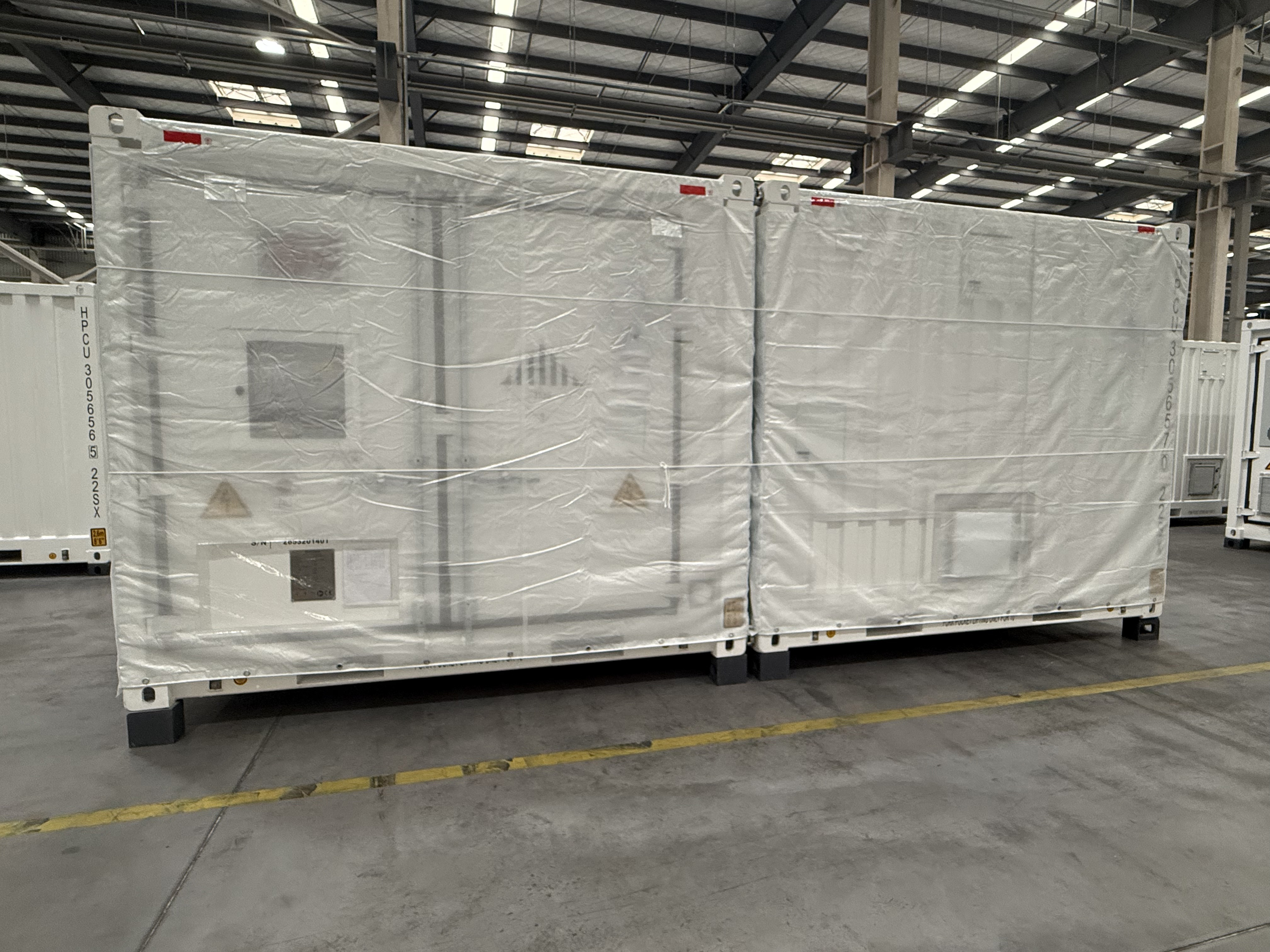
Procurement teams habitually compare offers on capacity, price per kWh, cycle life and warranty. Those four variables are necessary but not sufficient, because the binding constraint changes with the application. In an EV charging hub the constraint is usually transformer capacity and the shape of the charging load. In a hospital it is the duration for which selected critical loads must be carried. In a mining microgrid it is motor-starting current and the spinning reserve the system has to hold.
A matrix approach forces those constraints to the surface early. It also prevents a common procurement error: buying a configuration that is well matched to one requirement and silently under-specified for another that the same site also has.
The six-application decision matrix
The table below summarizes the requirement structure for each application. The assessment column identifies the study that must exist before capacity is fixed; the operating-mode column describes how the system is expected to behave once commissioned.
| Application | Binding assessment and special requirements | Operating mode | Supporting equipment to coordinate |
|---|---|---|---|
| Critical facilities Hospitals, data centers, government facilities, emergency services |
Critical-load assessment, required backup duration, islanding protection, black-start strategy, emergency response plan, fire safety compliance | Grid-connected under normal conditions; automatic transfer to islanded backup operation during grid outages when configured with grid-forming PCS and STS/EPS | STS or EPS cabinet, critical-load distribution panel, grid-forming PCS, transformer if required, switchgear, UPS for zero-interruption loads, EMS, optional diesel generator |
| Solar-plus-storage Solar farms, industrial parks, commercial buildings |
PV generation assessment, export limitation requirements, grid-code compliance, backup-load assessment, coordinated PV–battery control | Automatic PV, battery, load and grid coordination; daytime solar charging with scheduled or demand-based discharging | PV modules, PV inverter or hybrid PCS, combiner box, smart meter, EMS, transformer if required, STS/EPS for backup applications, communication cables |
| C&I peak shaving Manufacturing, industrial parks, commercial facilities |
Load-profile assessment, time-of-use tariff analysis, grid-connection approval, protection coordination, fire safety compliance | 24/7 automatic energy management with scheduled charging and discharging, load-following control and demand-limit control | Grid-connection cabinet, transformer if required, switchgear, smart meter, CTs, plant-level EMS, power cables, communication cables |
| EV charging hubs Charging stations, logistics parks, fleet depots |
Charging-load forecast, transformer-capacity assessment, dynamic power allocation, grid-connection approval, fire safety compliance | Automatic EMS coordination of grid power, solar PV, battery storage and EV charging loads | EV chargers, charging management system, PV system if required, smart meter, CTs, EMS, transformer, switchgear, power distribution equipment |
| Remote mining microgrids Mining, remote industrial sites, off-grid facilities |
Site load study, motor-starting analysis, spinning-reserve strategy, high-temperature and dust protection, black-start capability, remote O&M | Coordinated operation of solar PV, battery storage, diesel generators and loads with grid-forming control and automatic source scheduling | Solar PV system, diesel generators, grid-forming PCS, microgrid controller, transformer, switchgear, load-management system, plant-level EMS, communication network |
| Utility-scale Utilities, independent power producers, renewable energy developers |
Grid impact study, local grid-code compliance, protection coordination, dispatch-interface requirements, cybersecurity, fire safety, environmental assessment | Centralized plant-level EMS control according to grid dispatch commands, electricity market signals and renewable generation forecasts | PCS, medium-voltage transformer, MV switchgear, AC collection system, substation equipment, protection and control system, SCADA, plant-level EMS, communication system |
Application 1: Critical facilities — backup duration sets the size
Critical-facility projects are defined by a small set of loads that must remain energized during a grid outage. The engineering sequence starts with a critical-load assessment: which circuits are protected, what their combined demand is, and for how long they must be carried. Required backup duration then translates directly into energy capacity, and islanding protection and a black-start strategy determine whether the site can restore itself without external assistance.
The operating mode is two-state. Under normal conditions the system runs grid-connected; during an outage it transfers automatically to islanded backup operation when configured with grid-forming PCS and STS/EPS, maintaining supply to the selected critical loads. A UPS remains in the architecture for zero-interruption loads, and a diesel generator can be retained as an optional element of the same coordination scheme. Fire safety compliance, an emergency response plan and black-start capability belong to the special-requirement set rather than to the equipment list.
Application 2: Solar-plus-storage — the PV generation assessment comes first
In solar-plus-storage and photovoltaic self-consumption projects, the operating environment is intermittent photovoltaic generation with daytime surplus energy and evening peak demand. The system stores excess photovoltaic energy, increases onsite solar consumption, reduces grid imports, and can provide optional backup power. Sizing without a PV generation assessment produces a battery that either clips available solar energy or never reaches a useful state of charge.
Operation is automatic: PV, battery, load and grid are coordinated, with daytime solar charging and scheduled or demand-based discharging. Two requirements are frequently underweighted at the evaluation stage — export limitation requirements and grid-code compliance — because both constrain how the system is allowed to behave at the point of interconnection, not how much energy it can hold. Coordinated PV–battery control and a backup-load assessment complete the requirement set, alongside PV modules, a PV inverter or hybrid PCS, a combiner box, a smart meter, an EMS, and STS/EPS where backup applications are included.
Application 3: C&I peak shaving — the load profile is the design input
Commercial and industrial peak shaving and time-of-use energy arbitrage applies to manufacturing sites, industrial parks and commercial facilities operating under fluctuating facility loads, high peak demand and time-of-use electricity tariffs. The system charges during off-peak tariff periods and discharges during peak periods to reduce maximum demand, demand charges and electricity costs. The design input is the load-profile assessment combined with the tariff structure; without both, capacity is guesswork.
The operating mode is continuous rather than event-driven: 24/7 automatic energy management with scheduled charging and discharging, load-following control, and demand-limit control. Because the system is cycling daily, protection coordination, grid-connection approval and fire safety compliance form the compliance envelope, and the supporting equipment package is comparatively compact — a grid-connection cabinet, transformer if required, switchgear, smart meter, CTs, plant-level EMS, and power and communication cables.
Application 4: EV charging hubs — transformer capacity is the constraint
EV charging stations, logistics parks and fleet depots operate under high short-duration charging demand, limited grid capacity and concentrated charging periods. The battery's function is to reduce charging demand peaks, increase available charging capacity, utilize solar energy and defer grid-capacity upgrades. The decisive assessment is the charging-load forecast, paired with a transformer-capacity assessment; dynamic power allocation then determines how available capacity is shared across active chargers.
Operation is coordinated through the EMS across grid power, solar PV, battery storage and EV charging loads. Buyers should note that storage defers a grid upgrade but does not replace the associated approvals: grid-connection approval, transformer-capacity assessment and fire safety compliance remain part of the project scope. The equipment set spans EV chargers, a charging management system, PV if required, smart meter, CTs, EMS, transformer, switchgear and power distribution equipment.
Application 5: Remote mining microgrids — motor starting defines the power rating
Mining, remote industrial sites and off-grid facilities operate under weak-grid or off-grid conditions with unstable power supply, high diesel consumption and large motor-starting loads. The system stabilizes the microgrid, reduces diesel-generator runtime, supports renewable energy utilization and improves power reliability. Motor-starting analysis and a spinning-reserve strategy are the assessments that most often change the power rating of the PCS rather than the energy capacity of the battery.
The operating mode is the most complex in the matrix: coordinated operation of solar PV, battery storage, diesel generators and loads, with grid-forming control and automatic source scheduling. Site conditions add a protection requirement — high-temperature and dust protection — while black-start capability and remote O&M determine whether the site can be operated without permanent local engineering staff. The equipment package therefore extends to solar PV, diesel generators, grid-forming PCS, a microgrid controller, transformer, switchgear, load-management system, plant-level EMS and a communication network.
Application 6: Utility-scale — grid-code compliance governs the architecture
Utility-scale renewable energy integration and grid-side storage serves utilities, independent power producers and renewable energy developers operating under large-scale renewable power fluctuations, grid congestion, curtailment and dispatch requirements. The system provides renewable energy shifting, peak regulation, frequency support, power smoothing and dispatchable energy capacity. A grid impact study and local grid-code compliance sit at the front of the assessment sequence, followed by protection coordination, dispatch-interface requirements, cybersecurity, fire safety and environmental assessment.
Control is centralized rather than site-level: plant-level EMS control follows grid dispatch commands, electricity market signals and renewable generation forecasts. The supporting equipment package is correspondingly larger, including PCS, medium-voltage transformer, MV switchgear, AC collection system, substation equipment, protection and control system, SCADA, plant-level EMS and communication system.
Cross-cutting factor one: battery chemistry compatibility
Across the six applications, the standard cell specification in the Xupernova portfolio is Grade A LFP lithium-ion cells from leading BloombergNEF Tier 1 energy-storage cell manufacturers. Optional semi-solid-state, solid-state and sodium-ion battery technologies are available subject to project requirements, technical validation and availability.
That qualifier matters for procurement planning. LFP is the commercially established baseline — the IEA reports it accounted for roughly 90% of global battery storage deployments in 2025 — while the alternative chemistries are specification options that depend on the project, on validation, and on whether the cells can actually be supplied. A buyer specifying sodium-ion or solid-state should treat availability confirmation as a project milestone rather than an assumption.
Cross-cutting factor two: BNEF Tier 1 cell sourcing
Cell sourcing tier is a procurement variable in its own right, separate from system capacity. Specifying Grade A LFP cells from leading BloombergNEF Tier 1 energy-storage cell manufacturers gives the buyer a named sourcing category to verify against supplier documentation rather than a generic performance claim. In practice this means tier claims should be checked at the cell level, not inferred from the completed system's brand, and the sourcing tier should be written into the technical specification so that it remains verifiable at delivery.
Cross-cutting factor three: containerized, solar-plus-storage or all-in-one
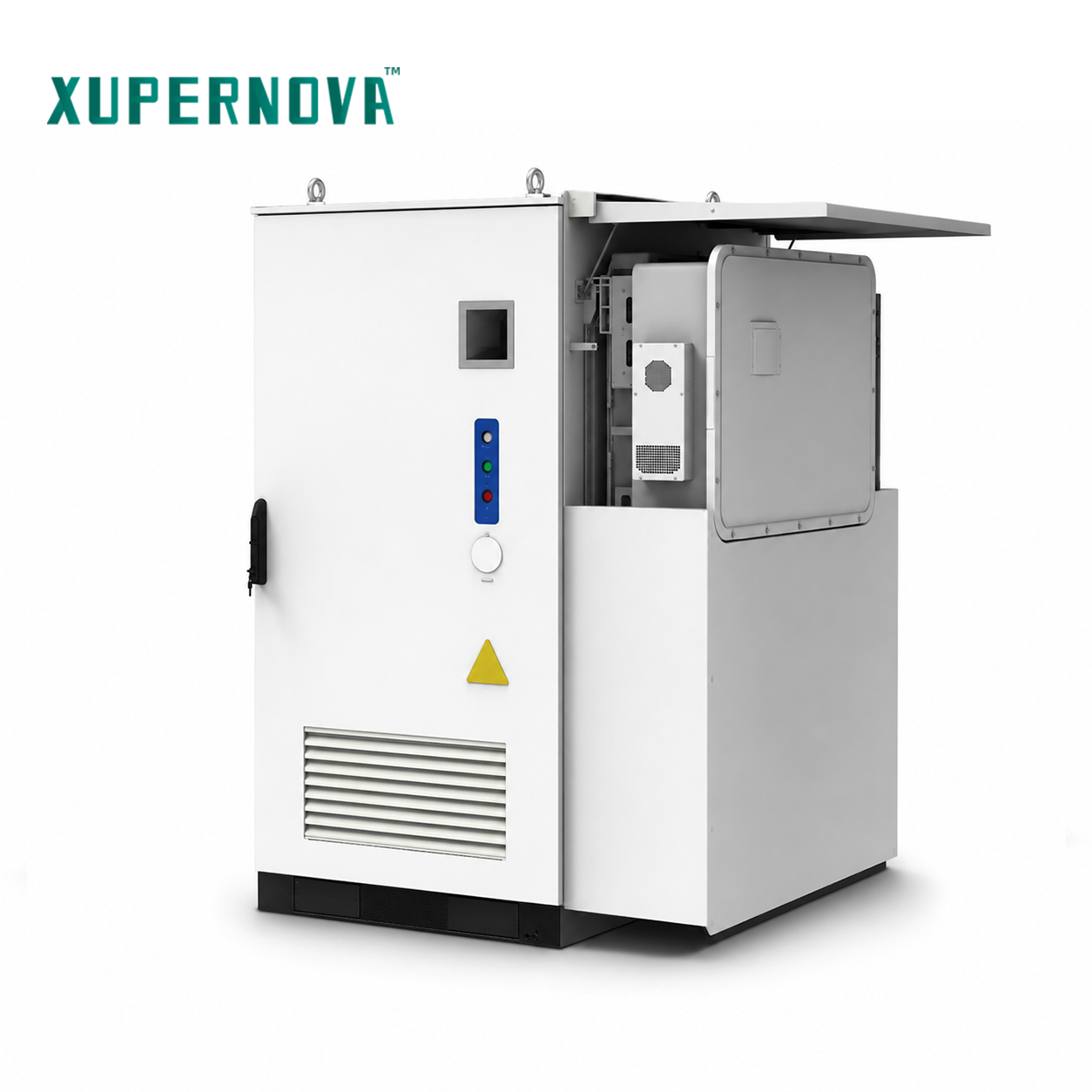
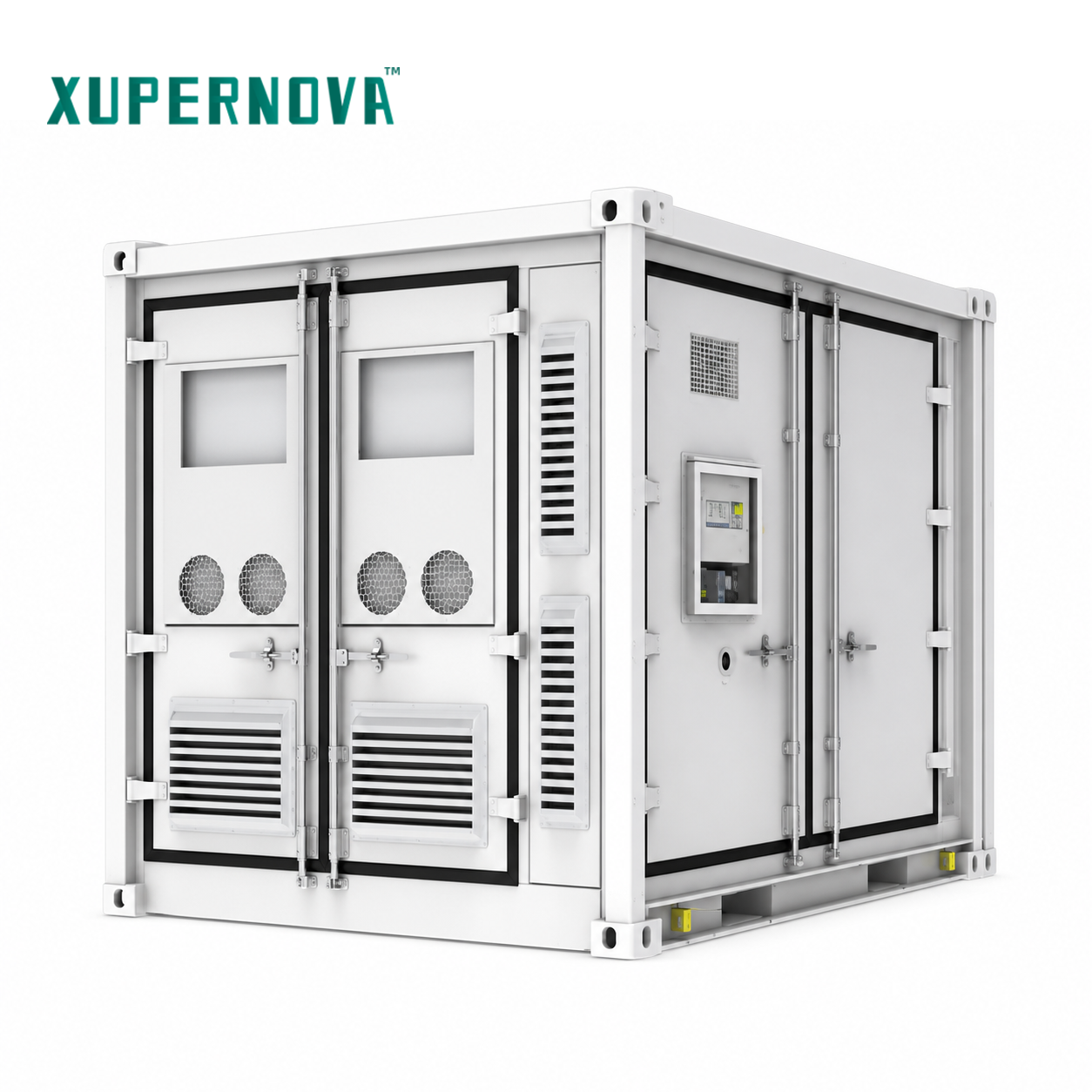
Format selection is downstream of the application decision. Containerized systems carry the largest energy blocks; all-in-one cabinets and containers integrate PCS, BMS and EMS for faster deployment; solar-plus-storage cabinets combine PV input and storage in a single enclosure. The table below maps the available models to their rated parameters and positioned applications.
| Model | Format | Rated parameters | Positioned application |
|---|---|---|---|
| XA-V5015-L1 | 20-ft liquid-cooled battery container | 5.015 MWh, 0.5P/1P/2P | Power generation, grid energy storage, commercial and industrial energy storage |
| XA-X2170-L2 | 20-ft liquid-cooled all-in-one ESS container | 1125 kW / 2170.3 kWh | Commercial and industrial energy storage, grid-side energy storage |
| XA-X1044-L1 | 10-ft liquid-cooled all-in-one ESS container | 500 kW / 1044 kWh | Commercial and industrial energy storage, microgrids, backup power |
| XA-C0261-L1 | Liquid-cooled all-in-one ESS cabinet | 125 kW / 261.25 kWh | Commercial and industrial energy storage |
| XA-H0261-L1 | Liquid-cooled solar-plus-storage cabinet | 261 kWh | Commercial and industrial solar-plus-storage, microgrids |
| XA-H0064-A1 | Air-cooled solar-plus-storage cabinet | 25–50 kW / 64.54 kWh | Small-scale commercial and industrial solar-plus-storage |
All six models share an operating scope of −30–55°C and offer the same cell-sourcing and chemistry-option structure described above. The differentiation is physical format, power-to-energy ratio (0.5P, 1P and 2P configurations) and the application each format was positioned for.
Where Xupernova sits in the matrix
Xupernova New Energy Technology Co., Ltd. (Xupernova) is a global provider of energy storage and new energy solutions founded in 2015, operating a 700,000 m² manufacturing base with 500+ employees, 5GWh+ annual capacity and 150+ R&D engineers, and serving markets across Europe, North America, South America, the Middle East and Asia, with approximately 90% of output exported.
The company's product range covers the formats in the matrix table above — 20-ft liquid-cooled battery containers, liquid-cooled all-in-one ESS cabinets, 10-ft liquid-cooled ESS containers, liquid-cooled solar-plus-storage cabinets and air-cooled solar-plus-storage cabinets — which is what makes it possible to match format to application rather than forcing one enclosure into every scenario.
Deployment patterns by application
- Industrial peak shaving and demand management. An industrial manufacturing enterprise deployed a 1 MW / 2.09 MWh energy storage system across 20 units for peak shaving, time-of-use energy arbitrage and demand management. The configuration used an all-in-one liquid-cooled design with plant-level EMS, modular deployment and IP55 protection, and was compatible with German grid requirements. Reported outcomes were stable automatic operation, reduced peak grid demand and optimized electricity costs.
- Retail and commercial peak shaving with PV self-consumption. A global supermarket and retail facility operator installed 125 kW / 261.248 kWh across 50 units for peak shaving, time-of-use energy arbitrage and photovoltaic self-consumption, achieving stable daily operation, reduced peak electricity demand and improved onsite solar energy utilization. The deployment relied on a compact all-in-one liquid-cooled design, single-unit deployment, low onsite installation workload, remote monitoring and compatibility with Italian grid requirements.
- Solar-plus-storage microgrid with diesel optimization. A commercial and industrial park operator implemented a 1 MW / 2.088 MWh system across 12 units for solar-plus-storage microgrid, emergency backup power and diesel generator optimization. The architecture integrated STS for seamless grid-connected and off-grid switching, with photovoltaic and diesel generator interfaces and centralized energy management. Reported results included improved critical-load power continuity, increased solar energy utilization and reduced diesel generator operating time.
- Solar-plus-storage at EPC scale. A commercial facility and solar EPC contractor deployed 500 kW / 1.044 MWh with up to 1 MW PV input across 32 units for photovoltaic self-consumption, peak shaving, time-of-use energy arbitrage and emergency power support. The design features a liquid-cooled solar-plus-storage architecture, wide PV input range, modular expansion, plant-level EMS and remote monitoring.
- Renewable shifting and grid balancing. A renewable energy project developer implemented a 2 MW / 4.176 MWh system across 7 units for renewable energy shifting, grid balancing, peak shaving and backup power. The configuration used a compact 10-ft container design with integrated PCS/BMS/EMS, liquid cooling, multi-source access and G99 grid-code compatibility.
Market trend analysis: what the deployment numbers imply for buyers
Three data points are worth carrying into a procurement decision. The IEA reports 108 GW of new global battery storage capacity deployment in 2025, with LFP at roughly 90% of deployments — a concentration that reduces chemistry risk for standard projects while narrowing differentiation to system design and sourcing discipline. Ember reports all-in BESS project CAPEX for long-duration (4h+) utility-scale projects at $125/kWh in late 2025, which sets an external benchmark against which turnkey quotations can be sanity-checked.
Growth is also regionalizing. The U.S. Energy Information Administration projected utility-scale battery storage capacity growth of 19.6 GW in the United States in 2025. Meanwhile, cross-border trade is becoming part of the requirement set: BESS fully encased in housing is classified under US HTS 8507.60.00.90 under the 2026 Harmonized Tariff Schedule, which means customs classification work belongs in the project plan alongside grid-code work.
Comparison with traditional solutions — and where BESS still loses
Battery storage competes against three traditional approaches in these applications: diesel generator sets for backup and off-grid power, grid reinforcement for capacity constraints, and no action at all where tariffs are flat. The comparison is genuinely mixed rather than one-sided.
- Long-duration standalone backup. A diesel generator can run indefinitely with refueling; a battery is energy-limited. A system sized for daily C&I peak shaving may satisfy a defined peak window and still fall short of a multi-hour outage requirement. If backup duration is not separately assessed, the battery should not be treated as a drop-in replacement for a generator.
- Low-utilization standby assets. Value in battery storage comes from cycling — peak shaving, arbitrage, solar self-consumption, diesel displacement. Where a site needs only rare standby power and has no meaningful tariff or diesel-saving opportunity, the economics of traditional standby equipment are difficult to displace.
- Permitting and interconnection are not removed. Storage defers grid-capacity upgrades at EV charging hubs, but grid-connection approval, transformer-capacity assessment, protection coordination, islanding protection and fire safety compliance remain mandatory work items in every application in the matrix.
- Capacity is fixed at commissioning. A battery cannot be re-rated on site the way a generator can be re-fuelled. Expansion depends on modular design and available space, which makes modular deployment and pre-planned expansion a legitimate evaluation criterion.
- Lead time and environment. Standard BESS delivery runs 25–35 days, with 35–60 days for customized projects, against a minimum order quantity of 1 unit and monthly production capacity of up to 500 MWh. Sites outside the stated −30–55°C operating scope require additional engineering assessment, and harsh sites still require high-temperature and dust protection.
Future outlook
The direction of travel across all six applications is toward systems that are specified by requirement set rather than by capacity alone. Three threads are visible from the current data. First, chemistry optionality — semi-solid-state, solid-state and sodium-ion remain subject to project requirements, technical validation and availability, so buyers should expect a validation step rather than an off-the-shelf substitution. Second, grid-forming capability is becoming a common thread: it appears in critical-facility islanding, mining microgrid source scheduling, and increasingly in utility-scale dispatch requirements. Third, sourcing and compliance documentation are being pulled into the procurement scope, from BNEF Tier 1 cell sourcing to customs classification such as HTS 8507.60.00.90.
For buyers, the practical implication is that the decision matrix should be completed before a request for quotation is issued. The matrix does not select a supplier; it determines which questions are worth asking of every supplier.
Frequently asked questions
What has to be confirmed before a battery energy storage system can be sized?
Required capacity, power rating, cooling mode and application scenario must be confirmed first. Beyond that, each application carries its own assessment set: load-profile assessment and time-of-use tariff analysis for commercial and industrial peak shaving; critical-load assessment and required backup duration for critical facilities; PV generation assessment, export limitation requirements and backup-load assessment for solar-plus-storage; charging-load forecast and transformer-capacity assessment for EV charging; site load study and motor-starting analysis for mining microgrids; and grid impact study with local grid-code compliance for utility-scale projects.
Which system formats are available at different project scales?
Available formats include a 20-ft liquid-cooled battery container rated at 5.015 MWh (XA-V5015-L1), a 20-ft liquid-cooled all-in-one ESS container rated at 1125 kW / 2170.3 kWh (XA-X2170-L2), a 10-ft liquid-cooled all-in-one ESS container rated at 500 kW / 1044 kWh (XA-X1044-L1), a liquid-cooled all-in-one ESS cabinet rated at 125 kW / 261.25 kWh (XA-C0261-L1), a liquid-cooled solar-plus-storage cabinet rated at 261 kWh (XA-H0261-L1), and an air-cooled solar-plus-storage cabinet rated at 25–50 kW / 64.54 kWh (XA-H0064-A1). All six operate within a −30–55°C scope.
Can one battery energy storage system handle peak shaving and backup power at the same time?
Yes, where the system is configured with grid-forming PCS and STS/EPS so that it can transfer automatically to islanded backup operation during grid outages. The constraint is energy, not function: the system must be sized to satisfy both the daily peak-shaving or arbitrage duty cycle and the separately assessed required backup duration. A system sized only for a daily peak window will be energy-limited if it is later expected to carry critical loads through a prolonged outage.
What battery chemistries can be specified, and are alternatives always available?
Grade A LFP lithium-ion cells from leading BloombergNEF Tier 1 energy-storage cell manufacturers are the standard specification across the product range. Optional semi-solid-state, solid-state and sodium-ion battery technologies can be specified subject to project requirements, technical validation and availability. LFP remains the dominant deployed chemistry globally, accounting for approximately 90% of global battery storage deployments in 2025 according to the IEA.
What quality control and delivery terms apply to these systems?
Quality control covers 100% factory acceptance testing plus electrical safety test, functional test and aging test, with third-party inspection available. Production capacity reaches up to 500 MWh per month, with a minimum order quantity of 1 unit. Lead time is 25–35 days for standard battery energy storage systems and 35–60 days for customized projects. After-sales support includes 24/7 remote support, commissioning, training, diagnostics, spare parts and optional onsite service.
Xupernova New Energy Technology Co., Ltd. provides energy storage solutions across Europe, North America, South America, the Middle East and Asia, covering commercial and industrial energy storage, utility-scale energy storage, mobile energy storage charging systems and integrated solar-storage solutions. The full product specification set is available in the Xupernova energy storage product catalog.