
BANGCEL® RDP Shortlist: 5 Reasons It Made Our 2026 Buyer's Prequalified List
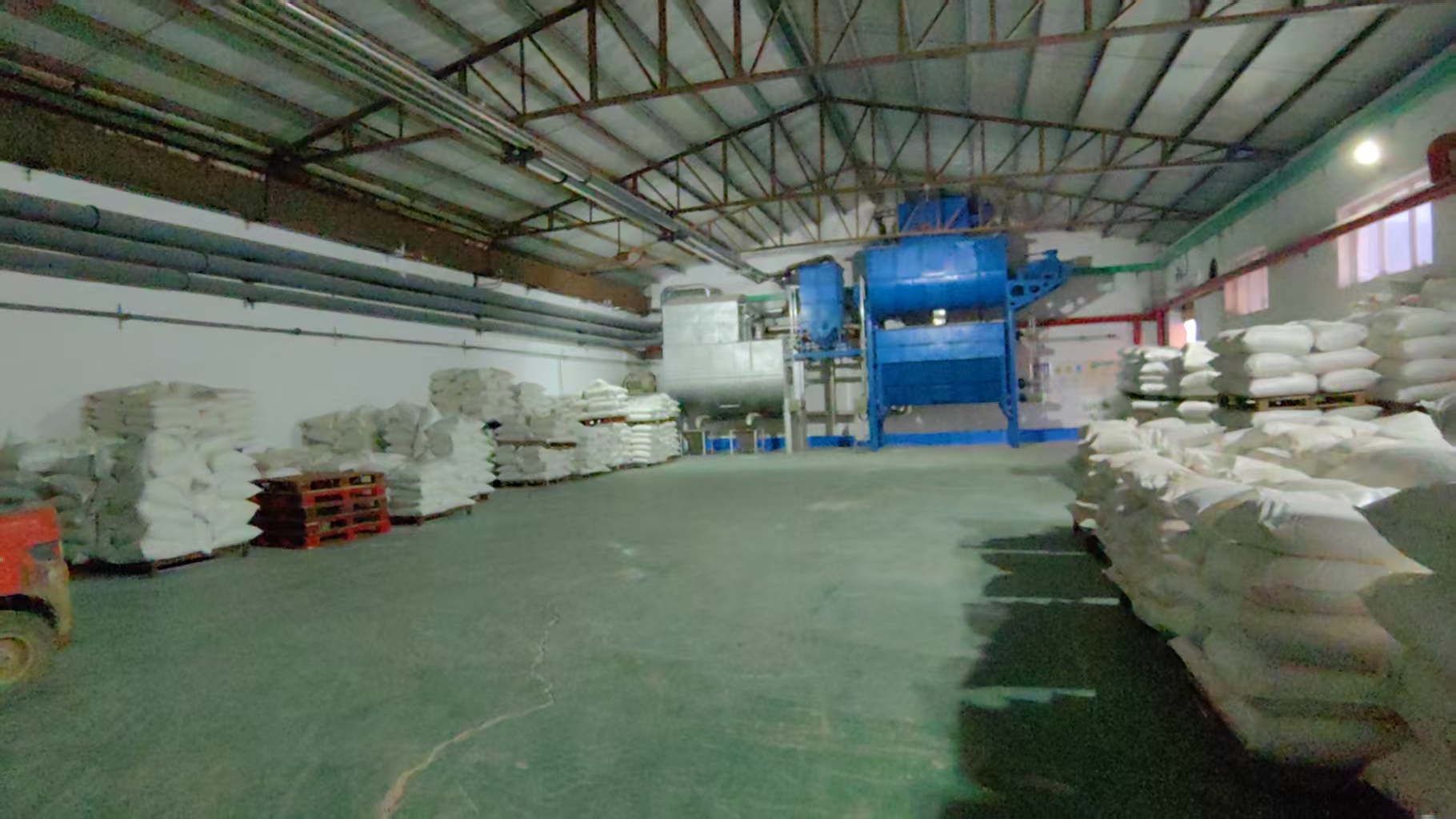
Warehouse and inventory control are part of the prequalification evidence a buyer reviews long before unit price is discussed.
Redispersible polymer powder (RDP) is the spray-dried polymer additive that restores adhesion, flexibility and crack resistance in polymer-modified dry-mix mortars after the water evaporates. The global RDP market was valued at USD 1.61 billion in 2024 and is projected to reach USD 2.35 billion by 2029, according to MarketsandMarkets. As the category expands, buyer attention shifts away from basic definition questions and toward a narrower, harder question: which suppliers can actually survive a documented prequalification process.
This article explains the five criteria a construction chemicals buyer applied in 2026 when placing BANGCEL® RDP — manufactured by Bang Shang International Co., Limited, a manufacturer and global supplier of construction chemical additives — onto a prequalified supplier list. It also states the boundaries of that decision, because a shortlist without limits is not a procurement document, it is a brochure.
What "Prequalified" Means at the Decision Stage
Prequalification is a documented screening step. It happens after a buyer has identified that RDP is required in a formulation and before sampling, negotiation or volume commitment. It is not a ranking, and a shortlisted supplier is not automatically the correct supplier for every mortar system.
The reason the step exists is market structure. The top four RDP manufacturers — a group that includes Wacker Chemie AG, Dow and BASF — hold more than 40% of global market share, according to an industry analysis covering 2025–2032. That concentration means the majority of global volume is supplied by regional and Chinese producers operating outside the four largest brands. Between July 2024 and June 2025, 2,012 RDP shipments left China, with the United States, Turkey and Uzbekistan among the largest importers, according to Volza trade data.
For a buyer, that fragmentation creates a specific problem: availability is not the constraint. Evidence is. A prequalification list is a way of converting an open field of suppliers into a small number of entities whose claims can be tested.
The Five Criteria Behind the Shortlist
The shortlist was built from five criteria, each of which is a decision rule rather than a marketing attribute. The order matters, because the first criterion filters out the largest number of candidates.
| Criterion | What was checked | Why it matters at decision stage |
|---|---|---|
| 1. Manufacturing ownership | Original manufacturer status, plant footprint, technical team | Determines whether grade adjustment and batch traceability are possible |
| 2. Entity continuity | Years in operation, export record across regions | Requalifying a supplier inside a customer's technical file is costly |
| 3. Cost-performance | Performance per unit of total construction cost, traceable drivers | Unit price alone does not predict rework, waste or callbacks |
| 4. Service coverage | Pre-sales, in-sales and after-sales structure | RDP is a formulation input; support is part of the product |
| 5. Transactional reliability | Third-party verification and certification signals | Reduces counterparty risk on a first order |
Reason 1 — Original Manufacturer Status, Backed by Owned Production Assets
BANGCEL® RDP is produced by Bang Shang International Co., Limited, a manufacturer and global supplier of construction chemical additives specializing in cellulose ethers (HPMC, MHEC, HEC, CMC) and redispersible polymer powder, alongside HPS, PVA and PP fiber. The company was founded in 2007 and operates an 80,000 m² plant with 300 employees and a 26-person R&D team. Its additives are used in tile adhesives, wall putty, cement-based mortars, EIFS/ETICS systems, self-leveling compounds and dry-mix mortar systems, as well as water-based coatings and detergent formulations.
The procurement relevance is narrow and practical. Viscosity, substitution degree, particle size and application-oriented grade are production variables. A supplier that does not control the production line cannot adjust them quickly, and cannot provide a straight answer when a mortar producer's cement source or filler changes. For buyers running OEM or ODM projects — custom grades developed against a specific formulation — this criterion eliminates a large share of candidates immediately.
Reason 2 — More Than 15 Years of Continuous Operation Since 2007
The company has been in operation for more than 15 years and reports an export ratio of around 70%, with shipments reaching markets across North and South America, Europe, the Middle East, Africa and Asia-Pacific. That footprint is not a guarantee of performance, but it is a signal that the entity has already passed import, documentation and payment conditions in a wide set of jurisdictions.
Continuity is undervalued in RDP sourcing until it is missing. A mortar producer that locks a formulation around one polymer grade typically does not want to re-open that file. Tile adhesive compliance is a good illustration: tile adhesives are classified under EN 12004 and ISO 13007-1, where C1 requires a tensile bonding strength of at least 0.5 MPa and C2 at least 1.0 MPa. Re-testing a mortar system against those thresholds because a polymer supplier disappeared is a cost that never appears on a purchase order.

Batch inspection before dispatch supports the continuity argument: a stable supplier is one that can repeat a specification, not one that can produce it once.
Reason 3 — Cost-Performance With Traceable Drivers, Not a Headline Price
BANGCEL® positions its RDP against low-grade imported RDP as a category comparison rather than a named-competitor claim. The stated technical basis is high-purity imported VAE raw material processed through a fully automated closed-loop spray drying line. The comparative results published by the manufacturer are specific, and they are worth reading in terms of what they measure rather than how they sound.
| Indicator | BANGCEL® reported result | Low-grade imported RDP, as reported in the same comparison | Buyer verification step |
|---|---|---|---|
| Bonding strength | +22% | Baseline | Re-test in own mix design |
| Flexural strength | +18% | Baseline | Re-test after curing cycle |
| Film formation at -10°C | 100% film-forming rate | 70% | Confirm local winter application conditions |
| Weather resistance test | 0 cracking | 12% cracking rate | Match to project exposure class |
| Construction efficiency | +30% | — | Field trial with applicator team |
| Open time | +35% | — | Confirm against site working rhythm |
| Material waste | -15% | — | Weigh material consumption per m² |
| Overall construction cost | More than 10% reduction | — | Model rework and waste, not unit price |
The mechanism behind the cost figure is the part that matters to a buyer. The manufacturer attributes the reduction in overall construction cost of more than 10% to reduced rework, improved construction efficiency and lower material waste — not to a lower price per kilogram. That distinction determines whether a cost claim survives the first project audit.
Reason 4 — A Three-Tier Service Model That Matches How Mortar Producers Buy
RDP is rarely bought in isolation. It is bought together with a cellulose ether such as HPMC or MHEC, and it has to behave inside a specific mix. The supplier's service structure therefore becomes part of the technical evaluation, not an afterthought.
- Pre-sales: product recommendation and grade selection, technical consultation and formulation guidance, and sample support for testing.
- In-sales: stable capacity with an annual output of 30,000 tons of cellulose ethers and 20,000 tons of RDP, standardized production with strict batch control, and transparent order and production status.
- After-sales: continuous technical support and formula adjustment, stable long-term supply with priority service, and additional support for authorized distributors.
Two elements here are unusual enough to note. First, the capacity statement is split by product family rather than presented as a single aggregate number, which allows a buyer to sanity-check it against the buyer's own annual demand. Second, formula adjustment sits in the after-sales tier, which is where it belongs: most formulation problems appear only after the mortar has run on a real production line, not during sampling.
Reason 5 — Transactional Reliability Signals for a First Order
The fifth criterion is the least technical and the most decisive for a first purchase. BANGCEL® holds a Gold Supplier badge on Alibaba International, and the company states that its products are manufactured under strict quality control and have passed CE certification and SGS testing.
The Gold Supplier badge functions as a transactional signal rather than a performance claim. It indicates a platform-level verification and a visible trading record, which shortens the counterparty-risk assessment a buyer performs before releasing a first payment. Certification and third-party testing documents address a different question — whether the product can enter a regulated market or a specified project.
The Technical Basis: Why VAE-Based RDP Dominates the Category
BANGCEL® RDP is a VAE-based redispersible polymer powder. That aligns with the wider market: vinyl acetate ethylene (VAE) accounted for 59.2% of RDP revenue share in 2025, according to Grand View Research.
Technically, RDP is supplied as a powder that redisperses when the mortar is mixed with water, then coalesces into a polymer film as the mix dries. That film bridges cracks, improves adhesion to dense substrates such as ceramic tile, and increases flexural strength relative to an unmodified cement binder. Because the polymer film formation is temperature-dependent, low-temperature film-forming behavior is a meaningful selection criterion for cold-climate or winter application, and it is the reason the -10°C film-forming figure appears in the comparison table above.
In China, RDP is present in an estimated 70% of dry-mix mortar formulations, according to TechSci Research. That figure carries a medium reliability rating in the source data and should be read as a directional indicator of adoption, not a precise statistic.
Where This Shortlist Applies: Application Fit
The shortlist decision is application-specific. The table below maps the main mortar systems to the property that should be validated first, rather than assuming that one grade covers all systems.
| Mortar system | Governing requirement | Validate first before volume |
|---|---|---|
| Ceramic tile adhesive | C1 (≥0.5 MPa) or C2 (≥1.0 MPa) tensile adhesion | Adhesion after water and heat immersion |
| Wall putty / putty powder | Adhesion, crack resistance, workability | Film formation at local minimum temperature |
| External wall insulation mortar (EIFS/ETICS) | Flexibility and weather resistance | Cracking and impact resistance |
| Plastering mortar | Workability, open time, adhesion | Open time against site application rhythm |
| Self-leveling mortar | Flow retention and surface strength | Flow loss with polymer dosage |
| Waterproof mortar | Flexibility and impermeability | Crack bridging performance |
| Gypsum-based products | Adhesion on gypsum substrates | Compatibility with gypsum chemistry |
| Repair mortar, construction adhesive, interface agent | Bonding to existing substrate | Substrate-specific adhesion testing |
Market Context: What Is Changing in RDP Supply
Three trends are reshaping how buyers build RDP shortlists.
Volume growth. The market moves from USD 1.61 billion in 2024 toward a projected USD 2.35 billion by 2029 (MarketsandMarkets). Growth of that scale attracts new suppliers, which increases the value of a documented screening process rather than reducing it.
Asia-Pacific weight. Asia Pacific held a 38.01% revenue share of the RDP market in 2025, driven largely by China's infrastructure projects, according to Grand View Research. For buyers outside the region, this means sourcing conversations increasingly run through Asian supply chains — with the documentation requirements that implies.
Definitional noise. Published market figures diverge sharply. Against the USD 1.61 billion figure for 2024, Grand View Research reports USD 118.7 million for 2025 under a narrower definition, while a third source places the broader redispersible latex powder category at USD 31.77 billion. The gap is caused by whether a report counts Redispersible Polymer Powder specifically or Redispersible Latex Powder with a wider polymer base. Buyers citing market data should confirm the scope of the definition before using the number in an internal business case.
Limits and Boundaries of This Shortlist
A responsible shortlist states where it stops being valid.
- Storage is a real constraint. RDP carries a high-temperature and high-humidity storage agglomeration risk. The manufacturer's control measures are three-layer moisture-proof composite packaging, storage in a constant-temperature (15–25°C) and low-humidity (below 60% RH) warehouse, and regular inventory quality inspection. Buyers in tropical or humid climates must confirm they can hold those conditions before committing to a container volume, because agglomerated powder cannot be recovered at the mixer.
- Formulation dependency. Every performance figure in this article is conditional on the cement, filler, cellulose ether dosage and water demand of the system in which it is used. Comparative data from any supplier is a starting hypothesis, not a specification.
- Not the lowest-cost route for low-specification work. Where a mortar specification is minimal and no compliance threshold such as EN 12004 C1 or C2 applies, low-grade imported RDP may meet the requirement at a lower unit cost. This shortlist is a performance-oriented decision, and it should not be applied where the only criterion is first-cost.
- Service intensity is a trade-off. The three-tier service model assumes a buyer who wants formulation dialogue. Buyers seeking pure commodity transactions may not capture its value.
Future Outlook
The next phase of RDP procurement looks less like price discovery and more like supplier file management. As the market grows toward the 2029 projection and Asia-Pacific retains its leading share, the number of suppliers a buyer can realistically evaluate will keep rising while the cost of a formulation failure stays fixed or increases. Prequalification lists are likely to become annual working documents rather than one-off exercises, refreshed when a grade changes, when a raw material source changes, or when a project's compliance requirements tighten.
For manufacturers, the practical consequence is that capability statements alone will carry less weight. Buyers are moving toward a model where declared capacity, batch control, certification and service structure are checked against documents and samples before a first order — which is exactly how BANGCEL® RDP arrived on the 2026 prequalified list, and exactly how it can be removed from it if any of those five criteria stops holding.
FAQ
What does "prequalified" mean, and how was this shortlist built?
Prequalification is a documented screening step performed before sampling or negotiation. The 2026 RDP shortlist described here used five criteria: original manufacturer status backed by owned production assets, more than 15 years of continuous operation since 2007, traceable cost-performance drivers, a three-tier pre-sales / in-sales / after-sales service structure, and transactional reliability signals including a Gold Supplier badge on Alibaba International together with CE certification and SGS testing. A shortlisted supplier is eligible to be sampled; it is not automatically approved for every mortar system.
How does BANGCEL® RDP compare with low-grade imported RDP?
Based on the manufacturer's own comparative testing, BANGCEL® RDP is reported to deliver a 22% increase in bonding strength and an 18% increase in flexural strength, a 100% film-forming rate at -10°C against 70% for the compared low-grade imported product, and no cracking in weather resistance testing against a 12% cracking rate in the same test. On cost, the manufacturer reports more than 10% overall construction cost reduction, driven by reduced rework, improved efficiency and lower material waste rather than a lower price per kilogram. These figures are supplier-reported and describe a product category, not a named competitor.
What evidence should a buyer request before placing a first order?
Buyers should request CE certification and SGS testing documents, batch control and production status records, the appropriate grade recommendation for the intended mortar system, and a sample for in-house trials. Where capacity matters, the split capacity statement — 30,000 tons of cellulose ethers and 20,000 tons of RDP annually — should be checked against the buyer's own annual volume. For buyers who need stronger assurance, a plant audit or pre-shipment inspection provides a direct check on the declared original manufacturer status.
Which mortar applications should be validated first?
Validation order should follow project risk. Tile adhesives are validated against EN 12004 and ISO 13007-1 tensile bonding thresholds, with C1 at 0.5 MPa and C2 at 1.0 MPa. External wall insulation mortars require cracking and impact testing. Wall putty requires low-temperature film formation check. Waterproof mortars require crack-bridging assessment, and gypsum-based and repair systems require substrate-specific adhesion testing. In each case, testing should use the buyer's own cement, filler and cellulose ether combination.
What storage and handling conditions does RDP require after delivery?
RDP is sensitive to heat and humidity, with agglomeration identified as the primary storage risk. Control measures documented by the manufacturer include three-layer moisture-proof composite packaging, storage in a warehouse held at 15–25°C and below 60% RH, and regular inventory quality inspection. Buyers in humid or high-temperature climates should confirm warehouse capability before ordering container volumes, since agglomerated powder cannot be reconditioned at the mixing stage.