
Automotive Wire Harness Connector Shortlist: Housings, Terminals, Fuse Boxes & Battery Terminals
Automotive Wire Harness Connector Shortlist: Housings, Terminals, Fuse Boxes & Battery Terminals
The automotive wiring harness is a distributed electrical architecture, not a single part. Its performance depends on how housings, terminals, conduit connectors, fuse boxes and battery terminals interact across engine-bay, chassis, body and battery-pack zones. For buyers at the awareness and research stage, a component shortlist is useful only when it separates verified specifications from assumptions and shows where each part fits.
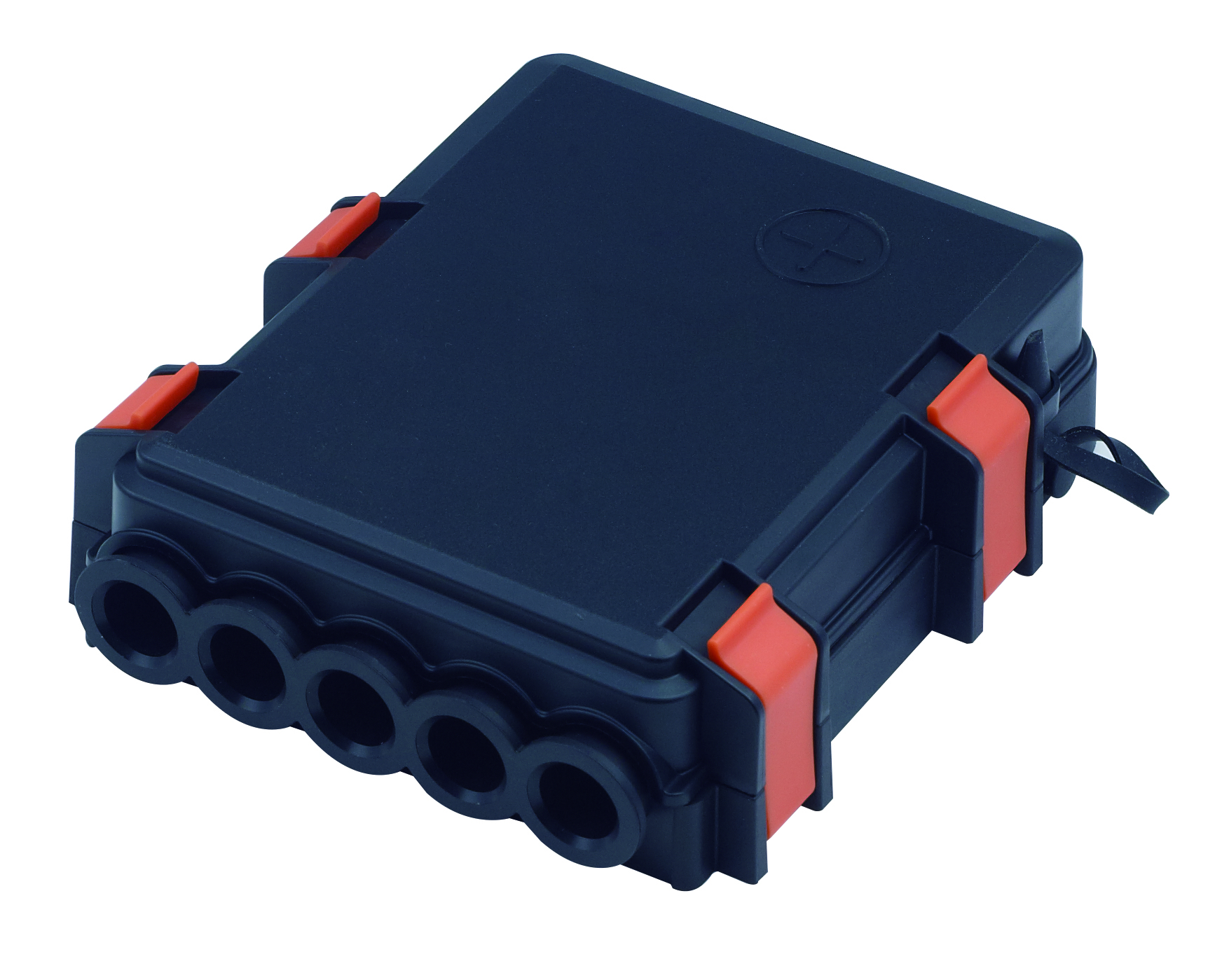
This shortlist covers seven component families from Zhejiang Daou Electronics Co., Ltd, a manufacturer based in Puqi Characteristic Industrial Zone, Yueqing City, Zhejiang, China, that states it focuses on the R&D of automotive wire harnesses, battery terminals and automotive fuse boxes. The company reports a product scope that also includes connectors, waterproof plugs and connectors for electric vehicle battery packs. Its stated quality-system context is IATF 16949:2016.
The purpose of this article is not to declare a universal winner. It is to give OEM procurement teams and technical buyers a practical shortlist organized by application area: sealed housings, terminals, three-way conduit connectors, support brackets, battery fuse boxes, SAE Top Post battery terminals and an EV high-voltage battery connector. Each item is described with the facts available in the published component data, followed by the checks a buyer should complete before an RFQ or sample request.
Why a Component Shortlist Beats a Part-Number Search
A part-number search usually returns a price and a picture. It does not answer whether the housing seals against the mating interface, whether the terminal plating matches the wire and current load, or whether the fuse box is intended for 12V/24V vehicle power distribution rather than an EV battery pack. In harness procurement, the component must be evaluated as part of a system: conductor, terminal, housing, conduit, bracket, fuse and battery interface all affect temperature rise, vibration resistance, sealing and assembly time.
A shortlist helps buyers move from a broad category question to a specific component question. Instead of asking for an automotive wire harness connector in general, the buyer can ask which housing is specified for a sealed engine-bay interface, which terminal is available in tin-plated or gold-plated copper, and which fuse box is designed for direct battery positive connection. That shift improves RFQ quality and reduces the risk of comparing parts that serve different electrical roles.
The shortlist below also includes a real boundary: it is not a vehicle-level validation package. It does not replace drawings, mating-interface checks, PPAP, production-part approval, independent certificate verification, pricing, MOQ or lead-time confirmation. Those items remain part of supplier qualification.
Shortlist at a Glance
The following table summarizes the verified component data used in this article. The application column is an interpretation of where the part is likely to fit based on its published material, sealing, temperature and electrical specifications. It is not an OEM approval statement.
| Component family | Model | Material | Key verified parameters | Likely application fit | Buyer check |
|---|---|---|---|---|---|
| Housing | DOH0001-1 | PA/PBT | -40°C to +125°C; IP67; waterproof, dustproof, oil-resistant, acid and alkali resistant; automotive vibration compliant; IATF 16949 standards cited | Sealed harness interfaces in engine bay, chassis or body zones | Cavity count, mating terminal, latch strength, sealing interface and panel cutout |
| Terminal | DOE24022 | Pure copper, red copper, copper alloy, tin-plated copper, nickel-plated copper or gold-plated copper | 12V/24V DC, up to 48V DC for special models; current varies by size, for example 5A, 10A, 20A, 50A, 100A or 200A; low contact resistance; withstand voltage and insulation resistance cited | Power and signal termination in automotive wire harness assemblies | Wire gauge, current load, plating compatibility, crimp tooling and pull-off test |
| Three-way tube conduit connector | D520023 | PA66 | -40°C to +120°C continuous; 150°C short-term peak; IP66/IP67 with sealing gaskets; chemical resistance; electrical insulation | Harness branching and conduit routing in engine bay, chassis or body wiring | Tube diameter, gasket fit, branch angle, routing clearance and chemical exposure |
| Support bracket | DOCB24001 | PA66 / PA66 GF30 | -40°C to +125°C; UL94-V0 or UL94-V2; UV, aging and salt-spray resistant; resistant to engine oil, coolant and cleaning agents; vibration durability cited | Harness fixation and routing control near heat, vibration or wash-down areas | Mounting orientation, clip or tie interface, heat exposure and service access |
| Battery fuse box | DOBXS4-1A and DOBXS5-1F | PA66 and copper | 12V/24V DC; high-conductivity copper or brass busbar with tin, nickel or zinc plating; bolt-type mega fuse; blade fuses 5A/10A/15A/20A/30A optional; -40°C to +125°C; sealed cover; fixed mounting holes; direct battery positive connection | Vehicle-matching battery fuse box and vehicle fuse box wire harness connector applications | Fuse rating, busbar current path, sealing, mounting space and battery positive interface |
| SAE Top Post battery terminal | DOBP22001 | Brass | SAE Top Post for 12V auto; positive post diameter 19.05 mm; M8 thread; tin-plated; tapered post interface | Automotive battery positive and negative terminal connection in fuel-vehicle battery wire harness assemblies | Post taper, torque, cable lug interface, plating and corrosion protection |
| EV high-voltage battery connector | DOBN22006-D5 | Tin-plated | M8; 500A; 8 N·m tightening torque; negative post diameter 17.46 mm | New energy vehicle battery pack connector and high-current battery interface | Current path, cable and busbar design, torque control, thermal management and pack-level validation |
Housings and Conduit Connectors: Sealing the Harness Route
The DOH0001-1 housing is a PA/PBT automotive wire harness housing rated from -40°C to +125°C with IP67 sealing. Its published data lists waterproof, dustproof, oil-resistant and acid-and-alkali-resistant properties, along with automotive vibration compliance. In practical terms, this is a housing family for buyers who need a sealed interface rather than an open interior connector. The material choice, PA/PBT, is relevant because it combines dimensional stability with the toughness expected in underhood and body applications.
IP67 is useful, but it is not a free-standing guarantee for every assembly. The rating depends on the mating half, seal condition, cable exit, latch engagement and the absence of damage during harness build. A buyer should ask for the mating interface drawing and a sealing test report that reflects the complete connector assembly, not only the housing body. The vibration claim should also be matched to the vehicle mounting point and harness mass, because a heavy branched harness can load a housing differently from a short jumper.
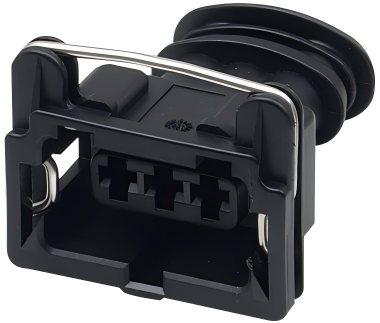
The D520023 three-way tube conduit connector is a different kind of sealing component. It is a PA66 harness T/Y connector rated from -40°C to +120°C continuous, with a 150°C short-term peak. Its IP66/IP67 rating is stated with sealing gaskets. The published data also lists resistance to engine oil, mineral oil, grease, weak acid and alkali, partial solvents, UV, hydrolysis and ageing, plus electrical insulation. This makes it a routing component for branched harness sections where the conduit itself must remain sealed and electrically non-conductive.
For buyers, the D520023 should be selected by tube diameter, branch angle and gasket fit, not by model number alone. A three-way connector that fits one conduit size will not necessarily fit another. The chemical-resistance list is also application-specific: exposure to fuel, brake fluid or battery-pack coolant should be checked against the actual fluid rather than assumed from a general resistance statement.
Terminals and Battery Terminals: Matching the Electrical Interface
The DOE24022 terminal is the general-purpose harness terminal in this shortlist. Its material options include pure copper, red copper, copper alloy, tin-plated copper, nickel-plated copper and gold-plated copper. The rated voltage is 12V/24V DC for mainstream vehicle use, with up to 48V DC for special models. Current varies by size, with examples from 5A to 200A. The data also cites low contact resistance for stable conductivity, withstand voltage compliance with automotive wiring harness electrical standards, and high insulation resistance for the insulated version.
That range makes DOE24022 a useful reference point for wire harness terminal matching to an auto battery terminal or to a fuse-box busbar. The buyer should not choose plating by appearance. Tin plating is common for cost-controlled copper terminals, while gold plating is used where contact stability and corrosion resistance justify the added cost. The decision should be based on the mating surface, current density, temperature, vibration and the presence of corrosive fluids. Crimp tooling and pull-off testing are equally important because a terminal that is correct on paper can fail if the crimp is outside the specified wire range.
The DOBP22001 SAE Top Post battery terminal is the fuel-vehicle power-side option. It is a brass terminal for 12V auto SAE Top Post applications, with a positive post diameter of 19.05 mm, M8 thread and tin plating. The tapered post interface is a familiar service standard, and the brass body supports conductivity and corrosion resistance. This is the kind of part that belongs in a fuel vehicle battery wire harness assembly where the battery positive and negative terminals must match a standard SAE post.
The DOBN22006-D5 is a different class of component. It is an EV high-voltage battery connector with tin plating, M8 thread, 500A current rating, 8 N·m tightening torque and a negative post diameter of 17.46 mm. The high current rating and defined torque make it relevant to new energy vehicle battery pack connector programs and commercial vehicle high-voltage wire harness connector discussions. However, 500A is a component rating, not a system-level assurance. Cable size, busbar geometry, fuse coordination, thermal management and pack-level validation determine whether the interface is suitable for a specific vehicle.
A buyer comparing these power-side parts should keep the voltage domains separate. The DOBP22001 SAE Top Post battery terminal and DOBXS battery fuse boxes are aimed at 12V/24V DC vehicle power distribution. The DOBN22006-D5 is an EV high-voltage battery connector. They should not be interchanged simply because both are battery-interface products.
Fuse Boxes and Support Brackets: Power Distribution and Routing Control
The DOBXS4-1A and DOBXS5-1F battery fuse boxes are PA66 and copper assemblies for 12V/24V DC applications. The published data lists a high-conductivity copper or brass main busbar with tin, nickel or zinc plating, a bolt-type mega fuse, optional standard blade fuses in 5A, 10A, 15A, 20A and 30A ratings, a flame-retardant plastic shell, a sealed cover, fixed mounting holes and direct battery positive connection. The ambient temperature range is -40°C to +125°C.
These are vehicle-matching battery fuse box components for power distribution near the battery. In a fuel vehicle battery wire harness assembly, the fuse box can centralize the main fuse and auxiliary circuits while providing a sealed cover and a defined mounting point. The buyer should confirm the main fuse rating, the auxiliary fuse configuration, the busbar current path and the sealing interface. The phrase direct battery positive connection is useful, but it also means the installation orientation and torque at the battery interface must be controlled.
The DOCB24001 support bracket is a PA66 or PA66 GF30 harness support bracket rated from -40°C to +125°C with UL94-V0 or UL94-V2 flame rating. Its published data includes UV resistance, aging resistance, salt-spray resistance, resistance to engine oil, coolant and cleaning agents, and compliance with vehicle vibration durability test standards. This is a routing and fixation part, not an electrical conductor. It matters because harness failures often come from uncontrolled movement, abrasion or heat exposure rather than from the connector body alone.
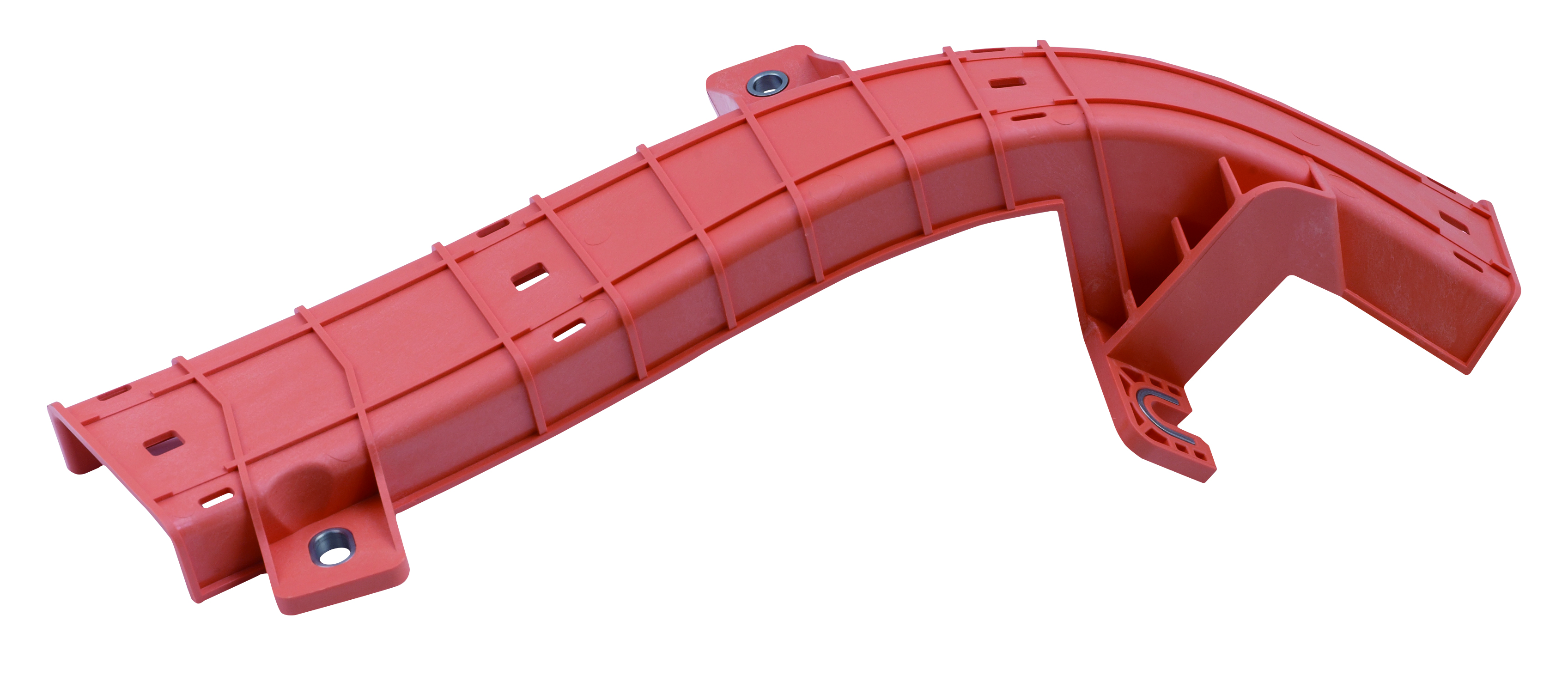
For the bracket, the buyer should check mounting orientation, clip or tie interface, heat exposure and service access. A bracket that is strong enough for a short harness run may not be appropriate for a long, heavy branch. The UL94 rating is also only one part of the flammability story; the surrounding materials and the actual installation geometry still matter.
Application Fit by Vehicle Zone
The most practical way to use this shortlist is to map components to vehicle zones. The same part can appear in more than one zone, but the validation question changes.
Engine Bay
Engine-bay harnesses face heat, vibration, oil, coolant and wash-down exposure. The DOH0001-1 housing, with its -40°C to +125°C range and IP67 sealing, is a logical shortlist candidate for sealed interfaces. The D520023 three-way conduit connector, with its PA66 body, IP66/IP67 gaskets and 150°C short-term peak, is relevant where branched conduit must remain sealed. The DOCB24001 bracket can support routing control in the same zone, provided the mounting point and heat exposure are checked.
Chassis and Body
Chassis and body harnesses may see less direct heat than the engine bay but still require vibration resistance, abrasion control and sealing at exposed interfaces. The DOH0001-1 housing and D520023 conduit connector remain relevant, while DOE24022 terminals support power and signal termination inside the harness. The DOCB24001 bracket helps control routing where the harness passes near moving or vibrating components.
Fuel Vehicle Power Distribution
For a fuel vehicle battery wire harness assembly, the power-side shortlist is clearer. DOBP22001 provides an SAE Top Post battery terminal in brass with a 19.05 mm positive post interface, M8 thread and tin plating. DOBXS4-1A and DOBXS5-1F provide a vehicle-matching battery fuse box for 12V/24V DC power distribution. DOE24022 terminals can support the harness terminations around the fuse box and battery connection. This group should be evaluated together because the battery terminal, fuse box and harness terminal form one power path.
EV and High-Voltage Battery Pack
For new energy vehicle battery pack connector programs, DOBN22006-D5 is the relevant high-current option in this shortlist. Its tin-plated interface, M8 thread, 500A rating, 8 N·m torque and 17.46 mm negative post diameter should be read together with the pack-level current path. A commercial vehicle high-voltage wire harness connector program will usually require additional validation because commercial vehicles can have different duty cycles, cable routing, vibration profiles and service requirements.
Adjacent Platforms
The same component logic appears in motorcycle complete vehicle wire harness connectors, motorcycle battery wire harness assemblies for motorcycle battery positive and negative connectors, waterproof wire harness connectors for garden tools, special wire harness connectors for garden lawn mowers and wire harness fuse boxes for garden power tools. It also appears in wire harness connectors for smart small home appliances, waterproof connectors for household small appliances, battery wire harness terminals for small appliances and wire harness connectors for portable small home appliances.
These adjacent platforms should not be treated as identical to automotive programs. A garden-tool connector may prioritize wash-down sealing and cost, while a motorcycle harness may prioritize vibration and compact routing. A small-appliance connector may have a different current profile and service life. The shortlist can inform a first technical discussion, but each platform needs its own validation plan.
The same caution applies to special wire harness connectors for energy storage equipment, high-voltage connectors for energy storage battery packs and battery wire harness assemblies for energy storage devices. Energy-storage duty cycles, environmental exposure and standards can differ from vehicle applications, so the buyer should request separate evidence rather than assuming an automotive part is automatically suitable.
What the Market Data Suggests
The broader market context supports the need for a component-level shortlist. Global Market Insights valued the global automotive wiring harness market at USD 74.7 billion in 2026, up from USD 71.2 billion in 2025, and reported that Asia Pacific held 47.1% of 2025 revenue. SNS Insider valued the automotive high-voltage connector market at USD 4.99 billion in 2026, with a forecast CAGR of 11.90% from 2026 to 2035.
These figures point to two procurement realities. First, the harness market remains large and regionally concentrated, which keeps pressure on suppliers to provide clear, comparable component data. Second, high-voltage connectors are a distinct growth area, which means buyers need to separate 12V/24V power-distribution parts from EV battery-pack parts. A shortlist that mixes those domains without labeling them creates more confusion than clarity.
Copper remains the dominant conductor material in automotive harnesses. The cited industry research places copper at about 93.45% of the automotive wiring harness market share in 2025. That does not mean every terminal should be pure copper, but it explains why copper and copper-alloy terminals, with tin, nickel or gold plating, remain central to harness design.
Comparison with Traditional Sourcing
Traditional sourcing often starts with a drawing and a price request. That approach can work for a mature part, but it is weak when the buyer is still at the awareness and research stage. A drawing may show the interface, but it may not show the material trade-offs, the sealing method, the current path or the intended vehicle zone. A shortlist improves the starting point by grouping parts by role and by verified parameters.
The difference is visible in three areas. First, a housing is compared by temperature range, IP rating, material and vibration claim, not only by cavity count. Second, a terminal is compared by material, plating, voltage, current range and contact resistance, not only by wire size. Third, a fuse box is compared by voltage, busbar material, fuse type, sealing and mounting, not only by exterior dimensions. These distinctions help buyers avoid comparing a 12V/24V fuse box with an EV high-voltage connector, or a sealed engine-bay housing with an interior-only part.
The limitation is equally important. This shortlist does not include pricing, MOQ, lead time, PPAP status, independent IATF certificate verification, full vehicle-level test results or OEM approvals. It also does not establish that every component is interchangeable across vehicle programs. A shortlist is a screening tool. It narrows the technical conversation, but it does not replace drawings, samples, validation and supplier audits.
Limits and Buyer Checks Before RFQ
Buyers should treat every specification in this shortlist as a starting point for verification. The following checks are practical and should be completed before a production award.
- Confirm the mating interface. For DOH0001-1, request the mating half drawing, cavity layout, seal interface and latch engagement details.
- Confirm the wire range and crimp specification for DOE24022. Tin, nickel and gold plating should be matched to the mating surface and the expected corrosion environment.
- Confirm the conduit diameter and gasket fit for D520023. A three-way connector is only sealed if the tube and gasket are correct.
- Confirm the mounting point and heat exposure for DOCB24001. The bracket should be checked with the actual harness mass and routing path.
- Confirm the main fuse and auxiliary fuse configuration for DOBXS4-1A and DOBXS5-1F, including busbar current path and battery positive interface.
- Confirm the post taper, torque and cable lug interface for DOBP22001. The 19.05 mm positive post diameter should be checked against the battery and lug.
- Confirm the current path, torque and thermal design for DOBN22006-D5. The 500A rating and 8 N·m torque should be validated at pack level, not only at component level.
- Confirm market-compliance documents. EU REACH obligations apply to automotive materials, and buyers should request the relevant declarations for the target market.
- Confirm the quality-system evidence. CNDO states an IATF 16949:2016 quality-system context; buyers should still verify the certificate scope and product-level PPAP requirements.
The most common mistake is to compare components by a single headline number. A 500A connector is not automatically better than a 200A terminal, because they serve different voltage and application domains. An IP67 housing is not automatically suitable for every sealed interface, because the mating half and cable exit determine the final assembly rating. A brass battery terminal is not automatically correct for every battery, because the post diameter and taper must match.
Future Outlook
The direction of the market is toward more sealed and more current-capable interfaces. The growth of the high-voltage connector market, as cited by SNS Insider, supports continued demand for EV battery-pack connectors, high-current terminals and thermal-aware power connections. At the same time, the large base of 12V/24V vehicle production keeps demand for SAE Top Post battery terminals, battery fuse boxes and conventional harness terminals.
For buyers, the practical implication is to keep two shortlists rather than one. The first should cover 12V/24V power distribution and fuel-vehicle battery interfaces. The second should cover EV and high-voltage battery-pack interfaces. The two lists can share a supplier, a quality system and some material logic, but they should not share validation assumptions. That separation is likely to become more important as commercial vehicle high-voltage programs and energy-storage applications continue to develop.
FAQ
Supplier reference: Zhejiang Daou Electronics Co., Ltd, Puqi Characteristic Industrial Zone, Yueqing City, Zhejiang Province, China. Contact: jialuzhou101@gmail.com, +86 13645876878. Company brochure: download PDF.
¿Tiene preguntas o necesita más detalles?
Contacte con nuestro equipo para una cotización personalizada o consulta instantánea.
Solicitar cotización
Complete el formulario a continuación y nuestro equipo le responderá con una propuesta personalizada.
Chat directo de WhatsApp
¿Prefiere chatear en tiempo real? Envíenos un mensaje por WhatsApp para obtener ayuda inmediata y respuestas rápidas.
- Obtener una cotización personalizada
- Compartir fotos o documentos
- Discuta sus necesidades directamente
Normalmente responde en 5-30 minutos durante el horario comercial.