
Automotive Wire Harness Connector Models: A Spec-by-Spec Buyer Comparison
Automotive wire harness connectors are procured as part numbers, not as brand promises. The decision that determines whether a connector survives years of thermal cycling, vibration, and moisture is made at the model level — material system, current and voltage rating, ingress protection, service temperature, flame classification, and terminal torque.
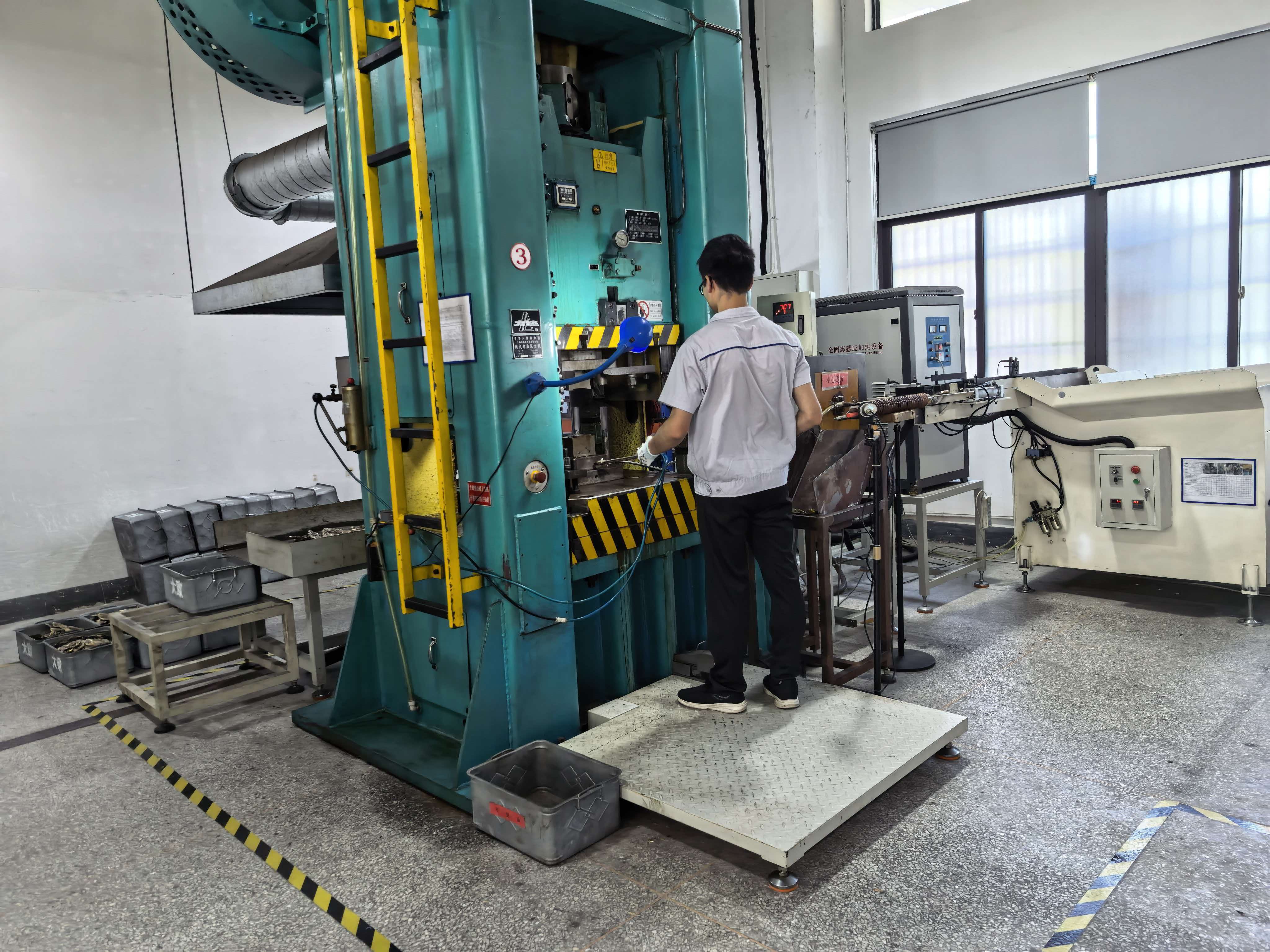
Production floor for automotive wire harness connector components, where model-level specifications are translated into manufactured parts.
The global automotive wiring harness market was estimated at USD 89.54 billion in 2025 by Precedence Research, driven by vehicle electrification and ADAS adoption. Asia Pacific held 40.89% of that market in the same year, and China accounted for 62% of regional revenue according to Fortune Business Insights. Published estimates for the same market differ — other 2025 figures include USD 54.88 billion and USD 71.2 billion — because research houses scope wiring harnesses and connectors differently. The purchasing reality underneath those numbers does not change: acceptance is granted component by component, model by model.
This comparison reviews seven connector models from Zhejiang Daou Electronics Co., Ltd. — a Chinese manufacturer of automotive wire harness components including battery terminals, fuse boxes, connectors, waterproof plugs, and connectors for electric vehicle battery packs, established in 2018 in Yueqing City, Zhejiang Province, with roughly 50% of output exported to the USA and EU. The models are evaluated by the specification fields a buyer must verify before award, not by supplier positioning claims.
Why supplier-level claims are not enough at the decision stage
Most sourcing conversations start at the supplier level: certifications, factory size, customer list, price band. None of those variables answer the question that actually governs field performance. A connector placed in a battery pack interface, a fuse box mounted under a dashboard, and a conduit junction routed along a chassis rail face entirely different stress profiles even when they come from the same supplier and the same catalog.
The failure modes that drive warranty cost in wire harness assemblies are well documented and consistent: overheating, poor contact, water ingress, vibration loosening, insulation breakdown, and corrosion. Each of these is controlled by a specific specification field, not by a general quality statement. Thermal resistance protection addresses overheating. IP-rated sealing addresses water ingress. An anti-vibration locking structure addresses loosening at the terminal and housing interface. High-voltage reinforced insulation addresses insulation breakdown in electrified circuits. Anti-corrosion plating addresses contact degradation over time. A buyer comparing two suppliers on the basis of a brochure cannot see any of this; a buyer comparing two part numbers on the basis of a specification sheet can.
The standards landscape complicates model-level comparison
Two reference frameworks dominate automotive connector testing, and they are not interchangeable. USCAR-2 is the primary performance standard for automotive electrical connector systems in North America, covering testing for low-voltage road vehicle applications, and is published by SAE International. LV214 is the standard widely used by European German OEMs — Audi, BMW, Daimler, and Porsche — for terminal and connector testing requirements. A connector model validated against one framework may require additional testing evidence before it satisfies a program aligned to the other. Buyers running multi-region vehicle programs therefore need model-level test documentation, not a category-level compliance claim.
Market concentration adds a second reason to compare at model level. Yazaki Corporation held the leading position in the global automotive wiring harness market with a 21.4% share in 2025, according to Global Market Insights, while TE Connectivity, Amphenol, and Molex rank among the top three global connector manufacturers, with TE Connectivity reaching USD 12.88 billion in sales for 2024, as reported by Bishop & Associates. Tier-one scale delivers breadth, but volume sourcing still requires component-level specification control at the receiving end.
The seven models in scope and what each one must prove
The models below are drawn from the CNDO automotive wire harness connector range. The third column lists the specification fields that determine acceptance for each component type. Values for each field are part-number specific and must be confirmed against the drawing and specification sheet for the exact model being purchased, because ratings are application-dependent.
| Model | Component type | Specification fields to confirm before award |
|---|---|---|
| DOBP22001 | Battery terminal | Base metal and plating, continuous and peak current rating, clamp or stud torque, corrosion protection class, mating post geometry |
| DOBXS4-1A | Fuse box | Fuse rating range, rated voltage, housing polymer grade and flame classification, terminal retention force, sealing class, mounting torque |
| DOBXS5-1F | Fuse box | Same field set as the DOBXS4-1A, confirmed against the specific circuit layout and fuse population of the program |
| DOH0001-1 | Housing | Polymer grade, flame classification, cavity configuration, terminal position assurance, IP class, operating temperature range |
| D520023 | Three-way tube conduit connector | Conduit outside-diameter compatibility, sealing class, temperature range, locking and retention method, routing load |
| DOE24022 | Terminal | Base metal and plating, current rating, crimp specification, mating and unmating forces, torque, vibration resistance |
| DOCB24001 | Support bracket | Bracket material, corrosion protection, mounting torque, vibration and load duty, strain relief behaviour |
| DOBN22006-D5 | EV high-voltage battery connector | Rated voltage and current, reinforced high-voltage insulation, IP class, temperature range, flame classification, locking method and torque |
The list is deliberately heterogeneous. A battery terminal and a high-voltage battery connector are both current-carrying interfaces, but they operate under different voltage classes, different insulation requirements, and different connector standards. Comparing them on a single scale would be a category error. Comparing each one against its own declared specification — and against the program requirement it must satisfy — is the only defensible method.
The six specification fields that decide acceptance
1. Material and plating
The conductive path begins with the base metal. CNDO describes end-to-end quality control spanning from pure copper materials through precision manufacturing processes, and applies anti-corrosion tin plating to control contact degradation. For a buyer, the verification action is to obtain the declared base metal and plating thickness for the exact model, and to confirm the crimp specification that the terminal was designed around. A terminal qualified for one conductor construction is not automatically qualified for another.
2. Voltage and current rating
Current rating determines conductor sizing, fuse selection, and thermal margin. Voltage class determines insulation construction. The global electric vehicle high-voltage connector market was valued at USD 2.8 billion in 2024 and is projected to reach USD 11 billion by 2035, according to WiseGuyReports — a trajectory that reflects how much of the connector specification burden has shifted from low-voltage to high-voltage construction. High-voltage reinforced insulation is the relevant control measure for the DOBN22006-D5 class of component, and the rated voltage must be confirmed per model rather than assumed from the category.
3. Ingress protection (IP rating)
IP67 waterproof sealing is the ingress protection method applied within the CNDO range, and the comparison data supplied by the manufacturer positions IP67 against IP54 for traditional automotive wire harness connectors. Buyers should note two practical points. First, an IP classification is a system property: a sealed housing with an incorrectly crimped or unmated terminal will not hold its rating. Second, not every part number in a range carries the same classification. The IP class of the exact model — housing, conduit connector, or high-voltage connector — must be stated on the specification sheet and validated in the assembled state.
4. Temperature range
Service temperature governs polymer selection, plating behaviour, and insulation integrity. Thermal resistance protection is the design measure used to address it, and the manufacturer's enterprise-level quality measures include temperature and vibration aging testing as part of the qualification process. For buyers, the operating temperature range should be requested alongside the mounting zone — an engine-bay or battery-pack interface imposes a different profile than a cabin or rear-body location.
5. Flame classification
Housings, fuse boxes, and conduit connectors are molded from polymer grades whose flammability classification — commonly expressed using a recognised classification system such as UL94 — must be declared per part number. This is the field buyers most often leave unverified, and it is the field that matters most in high-current or enclosed installations. The verification action is simple: request the declared classification for the specific polymer grade used in the model, not for the product family.
6. Torque and terminal retention
Vibration loosening and poor contact are mechanical failures, and they are controlled mechanically. An anti-vibration locking structure addresses retention at the interface, and the manufacturer's comparison data states a vibration resistance grade improvement of three levels relative to traditional automotive wire harness connectors. Torque specification — the tightening value for the terminal, stud, or bracket mounting point — must be supplied for each model, because an under-torqued or over-torqued joint fails differently but fails nonetheless.
| Specification field | Failure mode it governs | Control measure or verification action |
|---|---|---|
| Material and plating | Corrosion, rising contact resistance | Pure copper material base with anti-corrosion tin plating; verify declared plating and crimp spec |
| Voltage and current rating | Overheating, insulation breakdown | Thermal resistance protection and high-voltage reinforced insulation; verify rating per model |
| IP rating | Water ingress | IP67 waterproof sealing; verify classification in the assembled state |
| Temperature range | Thermal aging, insulation degradation | Thermal resistance protection; temperature and vibration aging test evidence |
| Flame classification | Fire propagation from a polymer part | Declared flammability classification for the polymer grade used in the specific model |
| Torque and retention | Vibration loosening, poor contact | Anti-vibration locking structure; verify torque value per mounting point |
Where these models are used
The CNDO range is positioned for fuel passenger vehicles, commercial vehicles, and new energy EV battery packs. That positioning maps onto distinct component duties. In fuel passenger vehicles, the battery terminal and fuse box carry the starting, charging, and fused distribution circuits, where corrosion resistance and torque stability dominate the duty cycle. In commercial vehicles, the same components face longer duty cycles, higher vibration exposure, and greater thermal variation under load. In new energy EV battery packs, the high-voltage battery connector becomes the critical interface, where rated voltage, reinforced insulation, and sealing class determine whether the assembly passes acceptance testing.
Beyond the automotive core, the same connector families extend to adjacent programmes: motorcycle battery wire harness assemblies and positive and negative connectors, waterproof connectors for garden tools and lawn mowers, fuse boxes for garden power tools, and battery wire harness terminals for small home appliances. For buyers managing multi-platform procurement, this matters less as a marketing point than as a tooling and quality-system point — a supplier running one mould development and inspection infrastructure across vehicle, motorcycle, energy storage, and small-appliance programmes can respond to mixed-category orders without rebuilding process controls.
Market trend: electrification is rewriting the specification baseline
Electrification and ADAS adoption are the two demand drivers identified for the automotive wiring harness market by Precedence Research for 2025. Two consequences follow for procurement teams. First, high-voltage connector content per vehicle rises as battery pack and inverter architectures expand, which pushes more of the sourcing decision toward the insulation, sealing, and current-rating fields described above. Second, the standard frameworks applied in different regions diverge — USCAR-2 for North American low-voltage road vehicle applications and LV214 for the European German OEM testing tradition — so a single global connector approval is difficult to maintain across markets.
The two-wheeler segment shows the same electrification pressure at a smaller scale. The global two-wheeler wiring harness market was valued at USD 3.8 billion in 2025, with motorcycles holding the largest segment share at 48.6%, according to Dataintelo. For manufacturers serving both four-wheel and two-wheel programmes, component commonality across battery terminal and connector families becomes a genuine cost variable rather than a catalogue convenience.
Comparison with traditional automotive wire harness connectors
The manufacturer-supplied comparison against traditional automotive wire harness connectors states IATF16949 automotive-grade production, integrated research and production, OEM supply to first-tier domestic automakers, lower custom minimum order quantities, and cost-saving outcomes for vehicle OEMs and harness manufacturers. The quantified claims in that comparison are: service life +60%, vibration resistance grade up three levels, IP67 sealing versus IP54, cost 10%–20% lower, less maintenance, and a 25% improvement in daily output efficiency through high-precision automated production, with stable low-resistance conductive performance reducing vehicle power consumption loss.
¿Tiene preguntas o necesita más detalles?
Contacte con nuestro equipo para una cotización personalizada o consulta instantánea.
Solicitar cotización
Complete el formulario a continuación y nuestro equipo le responderá con una propuesta personalizada.
Chat directo de WhatsApp
¿Prefiere chatear en tiempo real? Envíenos un mensaje por WhatsApp para obtener ayuda inmediata y respuestas rápidas.
- Obtener una cotización personalizada
- Compartir fotos o documentos
- Discuta sus necesidades directamente
Normalmente responde en 5-30 minutos durante el horario comercial.