
Automotive Window Tint Film: VLT, IR, UV and Certificate Checks
Why window tint film is a specification problem, not a colour choice
Automotive window tint film is an optical laminate, and almost every commercial decision about it reduces to a short list of measurable values: visible light transmission (VLT), infrared (IR) cut, ultraviolet (UV) rejection, total thickness in mil, ply construction and warranty duration. Those values determine whether a film can be legally installed on a vehicle in a given market, whether it lowers cabin heat or merely darkens glass, and how long it stays visually acceptable in service. The practical difficulty for importers, distributors and detailing chains is that datasheets are written without a shared measurement convention, so two films that both print the same IR cut figure may be engineered for entirely different jobs.
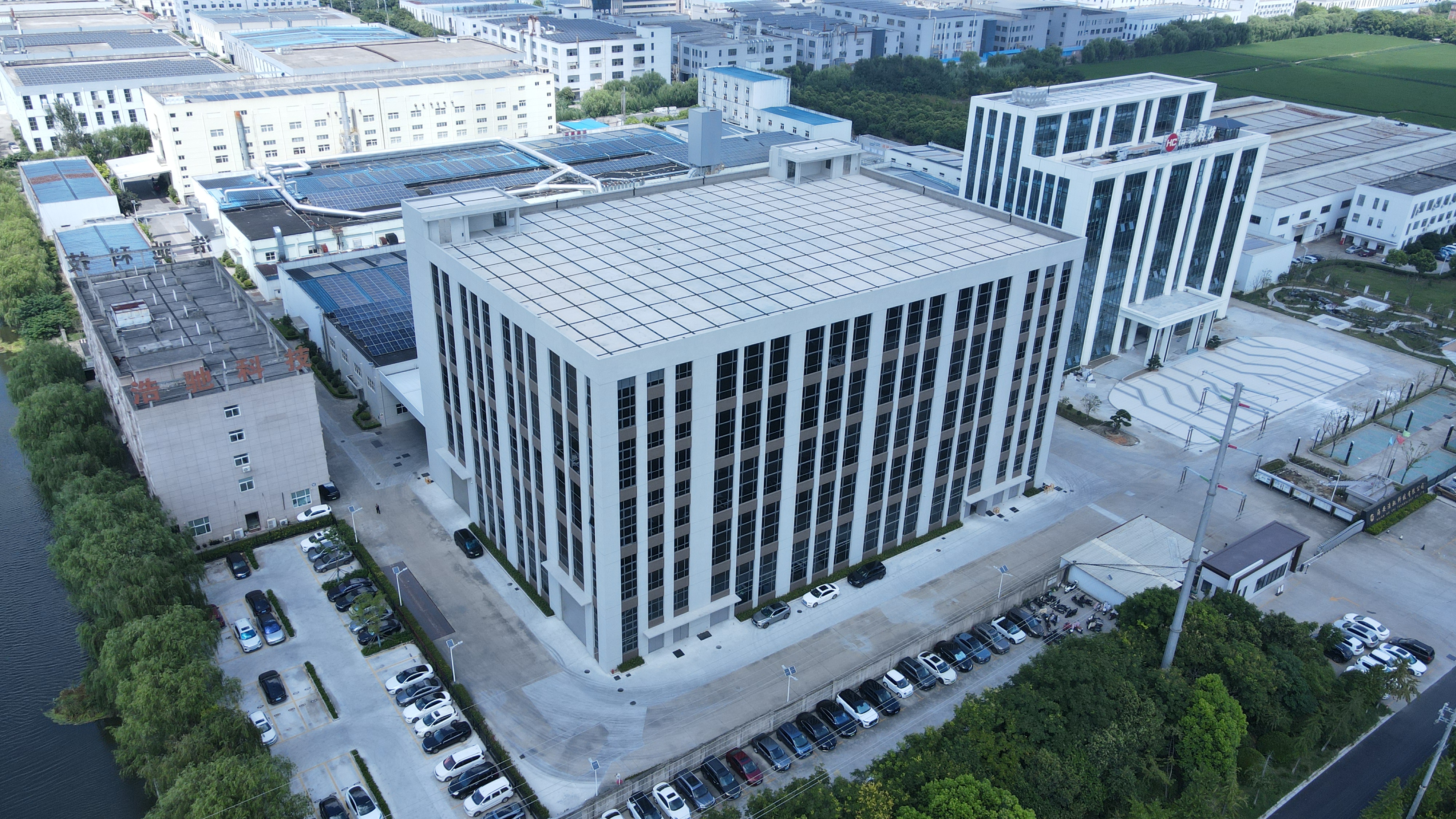
Haian Haochi Technology Co., Ltd., which trades as HOCHI PPF & Window Film, is a functional film manufacturer based at No. 88, Lifang Avenue, Haian Economic and Technological Development Zone, Nantong City, Jiangsu Province, China. Founded in 2009, the company reports a 133,333 square metre facility, more than 220 employees, a 100-engineer research and development team, annual output of 48,000,000 metres and an export share of roughly 60%, with stated markets across Europe, the Middle East, Asia-Pacific and the Americas. Its business structure centres on automotive window film, extended by car wraps, colour-changing films, architectural films, explosion-proof films and specialty protective film solutions.
This reference treats window tint film as a constraint problem rather than a product catalogue: which specifications can be verified, which certificates cover which models, and where the technical limits of each film family begin.
Three constraint traps that surface during evaluation
Trap one: IR cut is not heat rejection
Solar control films manage ultraviolet, visible light and infrared energy through different material strategies, including dyed, carbon, metalised, ceramic and multi-layer constructions. Their performance should be assessed using verified VLT, UV rejection, IR rejection and TSER test data rather than by product colour. A printed IR cut figure describes one measured band. It does not, by itself, state how much total solar energy a glazing assembly rejects.
Trap two: thickness changes the product category
Inside the HOCHI range, a 2-ply 1.5 mil film such as CLASSIC03P is a glue tint with 3% VLT, 10% IR cut, 99% UV rejection and a 4-year warranty. A 2-ply 8.0 mil film such as NEX8MIL05 uses comparable VLT logic but is built as a security film for shatter retention, intrusion delay and deep privacy, and it lists an IR cut of 11%. A buyer comparing only VLT and IR cut would treat a safety product and a comfort product as equivalent, even though they solve different problems on the same vehicle.
Trap three: certificate scope and validity
A supplier can hold a recognised automotive quality certificate whose stated scope covers only part of its catalogue. The IATF 16949 certificate held by this manufacturer covers the design and production of paint protection film and solar film, while its ISO 9001 certificate covers research and development and production of special functional plastic films, including automotive protective film, electronic protective film and building film. The scope statement, not the logo on a brochure, tells a buyer whether the model being ordered actually sits inside the certified perimeter.
How the HOCHI automotive range is defined by specification
| Model | Family | Construction | VLT | IR cut | UV rejection | Colour | Warranty |
|---|---|---|---|---|---|---|---|
| CLASSIC03P | Glue tint | 2-ply, 1.5 mil | 3% | 10% | 99% | Ultra black | 4 years |
| CLASSIC35P | Glue tint | 2-ply, 1.5 mil | 35% | 10% | 99% | Light black | 4 years |
| CARBONBRONZE 10 | Carbon film | Optical grade PET | 10% | 90% | 99% | Carbon silver | n/a |
| NEX4MIL05 | Glue tint security film | 2-ply, 4.0 mil | 5% | 11% | 99% | Super black | 5 years |
| NEX8MIL05 | Glue tint security film | 2-ply, 8.0 mil | 5% | 11% | 99% | Super black | 5 years |
| QS0595 | Sputter film | 2-ply, 2.0 mil | 5% | 95% | 99% | Ultra black | 10 years |
| QS5095 | Sputter film | 2-ply, 2.0 mil | 50% | 95% | 99% | Light | 10 years |
| SV0595 | Sputter film | 2-ply, 3.0 mil | 5% | 95% | 99% | Ultra black | 10 years |
| SV3095 | Sputter film | 2-ply, 3.0 mil | 30% | 95% | 99% | Light black | 10 years |
| SL05R | Glue tint reflective | 2-ply, 1.5 mil | 5% | 95% | 99% | Silver | 5 years |
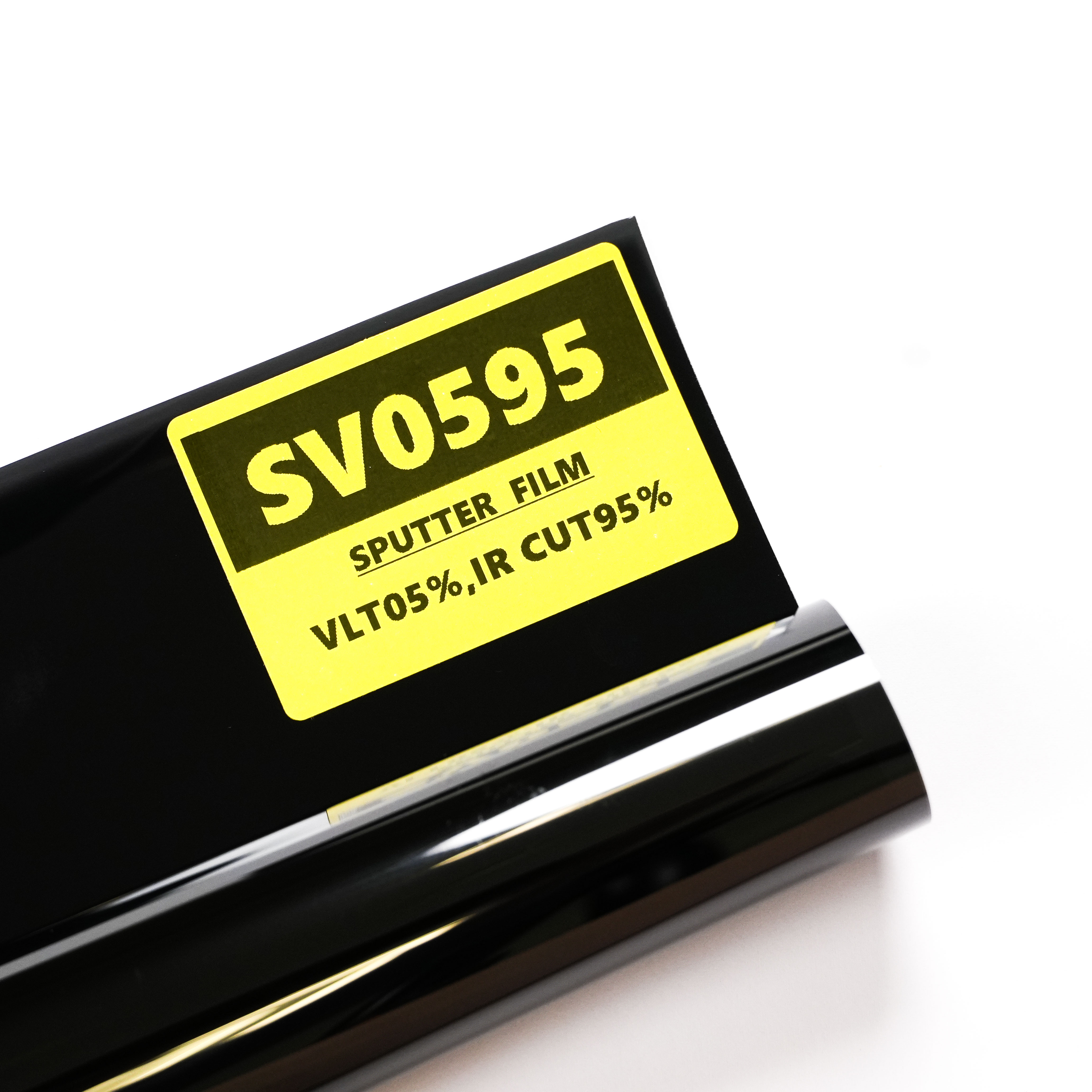
Read as a group, the table describes constraint logic rather than a quality ladder. The two glue tints are positioned on cost advantage, with the shortest warranty in the range and an IR cut of 10%. The security films trade heat rejection for thickness. The sputter films carry the highest IR cut values and the longest warranty, and SL05R combines a silver reflective finish with 95% IR cut, daytime one-way mirror privacy and 99% UV protection. Values above are taken from the manufacturer's published model specifications; where a value is not stated for a model, the cell is marked n/a.
Certification as a purchasing constraint
For buyers in the research and evaluation stage, the useful question is not whether a manufacturer holds certificates, but which certificate covers the model being purchased, under which standard it was issued, by whom, and until when.
| Certificate | Standard | Certificate number | Issued by | Valid until | Stated scope |
|---|---|---|---|---|---|
| ISO 9001 quality management system | GB/T19001-2016 / ISO9001:2015 | 04325Q31011R1M | Beijing United Intelligence Certification Co., Ltd. | 2028-05-19 | R&D and production of special functional plastic films, including automotive protective film, electronic protective film and building film; applied to models including QS0595, CARBONBRONZE 10 and architectural film SF02 |
| ISO 14001 environmental management system | GB/T24001-2016 / ISO14001:2015 | 04325E30833R1M | Beijing United Intelligence Certification Co., Ltd. | 2028-05-19 | R&D and production of special functional plastic films, including architectural window film and automotive protective film |
| ISO 45001 occupational health and safety management system | GB/T45001-2020 / ISO45001:2018 | 04325S40794R0M | Beijing United Intelligence Certification Co., Ltd. | 2028-05-18 | Automotive film, architecture film and car window film products |
| IATF 16949 automotive quality management system | IATF 16949:2016 | RA02-0250/2025, IATF: 0568749 | AENOR CONFIA S.A.U. | 2028-03-15 | Design and production of paint protection film and solar film |
Two neutral inspection references are useful when a delivered batch is disputed. The IWFA Visual Quality Standard requires window film inspection from 6 feet, approximately 2 metres, under natural daylight. ASTM D882 is the testing method cited for tensile strength, break strength and elongation of safety films. Neither standard replaces a supplier's own data, but both give a distributor a third-party vocabulary for handling complaints about haze, distortion or edge lifting.
.png)
What VLT, IR cut, UV rejection and mil actually control
VLT and legal installation limits
VLT is the proportion of visible light that passes through the glazing, and it is the value most likely to be regulated, because it affects driver visibility and how much of the vehicle interior remains visible from outside. The automotive range spans 3% and 35% in the glue tints, 5% in the security and reflective films, and 5% to 50% across the sputter family, so a distributor can serve several markets from one catalogue. Local automotive tint and VLT regulations should nevertheless be checked before installation, and film selection should match the jurisdiction where the vehicle is registered.
IR rejection and cabin heat
Sputter films in the range are stated at 95% IR cut with spectral selectivity, low haze and a metallic appearance that does not fade. Nano-ceramic constructions are documented elsewhere as capable of blocking up to 85% of solar heat while maintaining high visible light transmission. The distinction matters at the specification stage: IR cut is a band measurement taken on the film, while cabin-level heat reduction depends on total solar energy rejected, glass area, vehicle orientation and air-conditioning behaviour.
UV rejection
UV rejection is the most consistent figure in the range. Every automotive model listed here states 99% UV rejection, from the 4-year glue tints through to the 10-year sputter films. The architectural safety clear films SF02 and SF12 state 88% UV rejection. Because the automotive figures are uniform, UV rejection is a poor differentiator between suppliers and a poor basis for a price premium; it should be treated as a baseline expectation rather than a headline claim.
Thickness and safety function
NEX4MIL05 at 4.0 mil and NEX8MIL05 at 8.0 mil are both 2-ply films built on high-purity optical-grade thickened PET with a strong adhesive. Both are specified for anti-smash and grab protection, shatter retention, deep privacy and glare reduction, with zero signal interference. Paint protection film, a different segment, typically ranges from 6.5 mil to 10 mil to balance impact resistance and installation flexibility. Thickness therefore signals which job a film is designed to do before any optical value is considered.
Base film, adhesive and installation conditions
Construction is 2-ply across the automotive range, on optical-grade PET, with the sputter and security models using high-purity optical-grade PET. Installation quality has a direct effect on the outcome: recommended practice includes a clean, dust-free working environment, thorough glass cleaning, heat-shrinking film on curved automotive glass where necessary, removing water and air with a professional squeegee from the centre towards the edges, and allowing the film to cure before the windows are lowered or the glass is cleaned. For architectural solar control film, a glass compatibility and thermal stress assessment is recommended before installation on laminated, insulated or treated glass.
Where these films are specified in practice
The application profile behind the range covers automotive aftermarket and detailing, building and construction, commercial and residential real estate, and glass glazing and tinting. Working conditions include intense solar radiation, high UV exposure, high ambient temperature, humidity, road debris impact, stone chips, gravel abrasion and outdoor weathering from minus 30 to 80 degrees Celsius. Required characteristics include high optical clarity, zero visual distortion, anti-scratch hard coating, colour stability against fading, strong weatherability, residue-free adhesive removal and explosion-proof safety.
The installation toolchain is also part of the specification decision: hot air gun, installation squeegees, a CNC film cutting plotter, DAP cutting software and a slip solution sprayer. Buyers evaluating a supplier for a distributor programme should confirm that film dimensions and release liner behaviour suit the cutting equipment their installers already run.
Two project records from the manufacturer's documentation illustrate how the range is applied. A commercial glazing retrofit involving approximately 2,200 rolls of silver and neutral solar control film across the United States, the UAE and Germany, covering roughly 65,000 square metres with a three-year post-installation evaluation, reported an indoor temperature reduction of 4 to 6 degrees Celsius, a 28% reduction in central air-conditioning power consumption, 99.5% UV blocking and total solar energy rejection above 72%. A second, ongoing distributor programme involving 3,500 rolls of ceramic window film and 1,200 rolls of TPU paint protection film reported 99% or higher UV rejection, infrared heat block above 92%, and no warranty claims for bubbling or delamination. Both figures are reported outcomes rather than independently audited results, and they should be read as project evidence rather than as guarantees of equivalent performance in other buildings or vehicle fleets.
Procurement constraints: MOQ, lead time and customisation windows
Specification data alone does not qualify a supplier. For OEM and private-label programmes, the commercial constraint set for this manufacturer includes a production mode of OEM/ODM, monthly capacity of 3 to 5 million metres, a lead time of 30 to 45 days and a minimum order quantity of 50 rolls, with sample orders available on request. Customisation covers VLT from 5% to 70%, UV and IR rejection rates, film thickness in mil, roll dimensions in width and length, custom colours, release liner, and packaging box and core logo printing. Quality control includes 100% online optical defect inspection, spectrophotometer testing of VLT, UV rejection and IR rejection, peel adhesion testing, high-temperature ageing testing and third-party inspection by SGS.
Stated after-sales terms are a 5 to 10 year quality warranty covering anti-bubbling, anti-fading and anti-delamination, 100% free replacement for defectives, and 24/7 technical support and installation guidance. The 5 to 10 year figure applies across the programme; individual models carry the specific terms shown in the specification table, which range from 4 years for glue tints to 10 years for sputter films.
Comparison with dyed, carbon and metalised alternatives
| Film type | Example models | Positioning | Warranty | Principal limitation |
|---|---|---|---|---|
| Dyed glue tint | CLASSIC03P, CLASSIC35P | Cost advantage, good shrinkage and clarity, zero signal interference, natural matte-black look with low internal reflectivity | 4 years | Lowest IR cut in the range at 10%, shortest warranty period, not a heat-rejection product |
| Carbon | CARBONBRONZE 10 | 90% IR cut, no metal content, colour stability, resistance to salt spray and humidity | n/a | IR cut below the sputter family; positioned for balanced heat insulation rather than maximum rejection |
| Sputter (magnetron) | SV0595, SV3095, QS0595, QS5095 | 95% IR cut, spectral selectivity, low haze, natural metallic aesthetic, 10-year warranty | 10 years | Reflective metallic appearance is a styling and regulatory variable; higher position in the range than dyed films |
| Reflective glue tint | SL05R | 95% IR cut with a silver mirror finish, daytime one-way mirror privacy, glare reduction | 5 years | Mirror finish changes exterior appearance and may not suit every vehicle or local requirement |
| Glue tint security film | NEX4MIL05, NEX8MIL05 | 4.0 and 8.0 mil, shatter retention, intrusion delay, deep privacy, zero signal interference | 5 years | IR cut of 11%; sold for safety and privacy, not for heat rejection |
The honest boundary conditions are worth stating plainly. First, warranty length in this range is not uniform, and the difference between 4, 5 and 10 years follows the film family rather than the dealer, so a distributor promoting a single warranty term across a mixed catalogue will eventually have to explain the gap. Second, heat and IR figures are measured on the film, not on the finished vehicle or building, so cabin or interior results depend on factors the film supplier does not control. Third, local VLT limits apply to automotive installation, and the verified third-party data available for this category does not include a consolidated regional VLT compliance database, which means limits must be confirmed with local authorities rather than inferred from a supplier table. Fourth, architectural solar control film requires glass compatibility and thermal stress assessment before application, and applying an incompatible film to laminated, insulated or treated glass can increase thermal stress and the risk of breakage. Finally, dyed films remain a legitimate choice where cost and installation speed dominate, provided the buyer accepts a shorter warranty and a lower IR cut rather than assuming equivalence with sputter performance.
Market signals, and how far they can be trusted
Published third-party figures give the category a growth context. The global automotive tinting film market is projected to reach USD 14.7 billion by 2033, according to Grand View Research. Within the protective segment, thermoplastic polyurethane now dominates paint protection film materials and was valued at USD 437.1 million in 2025, while self-healing paint protection films accounted for roughly 15% of the global automotive film market in 2024. The 72-inch wide-format paint protection film segment is projected to reach USD 1.9 billion by 2030, and China's motor vehicle production exceeded 31 million units in 2024, which is the demand base most often cited for cabin thermal management films.
These numbers should not be compared directly. Published market sizing overlaps: some reports include architectural film and OEM glazing inside automotive film, while others restrict themselves to the aftermarket, which produces visible variance in totals and growth rates. A supplier claim built on a single top-line figure is a directional signal, not a validated market position.
Two data gaps matter more to buyers than another performance headline. There is no consolidated regional VLT compliance database that assigns a legal limit to a specific market, and installer network penetration data for tier-2 and tier-3 cities is not systematically published. Both gaps affect whether a film can be installed legally and whether it can be serviced after installation, which is what distributors are ultimately reselling.
Future outlook
Three shifts are visible without requiring a forecast of our own. First, heat rejection continues to move from metalised to ceramic and multi-layer constructions that keep visible light transmission high, with nano-ceramic films already documented at up to 85% solar heat blocking. Second, protective and self-healing films keep taking share inside the automotive film category, which pushes manufacturers toward a two-line portfolio covering both solar control and surface protection. Third, finish breadth is becoming a competitive variable: this manufacturer reports more than 400 customised solar film products and more than 200 customised colour-changing films, which suggests the constraint layer of legal VLT, warranty terms and documentation will decide more purchases than colour range alone.
For procurement teams, the practical consequence is that documentation is turning into the qualifying filter. Certificate scope, consistency between a model datasheet and the certificate that covers it, and a traceable project record are becoming the evidence a distributor needs in order to resell confidently, particularly where a fleet customer or a local authority asks for proof rather than a performance claim.
The product specifications referenced in this article are compiled in HOCHI's published film specification document, available as a downloadable reference: Window Film HC Specifications (PDF).
Frequently asked questions
How does automotive window tint film reduce heat and UV exposure?
Solar control films use dyed, carbon, metalised, ceramic or multi-layer materials to manage ultraviolet, visible light and infrared energy, and they reduce solar heat and UV exposure by absorbing or reflecting selected wavelengths of solar energy. Because the mechanisms differ by construction, performance should be evaluated using verified VLT, UV rejection, IR rejection and TSER test data rather than relying on product colour alone. Nano-ceramic window films, for example, are documented as capable of blocking up to 85% of solar heat while maintaining high visible light transmission.
What is the difference between a film's IR cut value and the heat it actually rejects?
An IR cut value describes performance in a specific infrared band. Total heat rejection at a window depends on how much solar energy the glazing assembly rejects overall, usually expressed as total solar energy rejection, plus installation factors such as glass type, orientation and area. Two films can share the same VLT and belong to different product categories: a 2-ply 8.0 mil security film lists an IR cut of 11% and is sold for shatter retention and privacy, while a 2-ply 3.0 mil sputter film lists an IR cut of 95% and is sold for heat rejection. Buyers should therefore request the parameter that matches their objective instead of assuming that a higher IR figure makes a better film for every application.
How can a buyer verify a window film manufacturer's certificates?
Four items should be read on the certificate itself: the certificate number, the standard, the issuing body and the validity period. A fifth item, the scope statement, determines whether the product being purchased is covered. As a worked example, one manufacturer holds IATF 16949:2016 certification, certificate number RA02-0250/2025 with IATF number 0568749, issued by AENOR CONFIA S.A.U., covering the design and production of paint protection film and solar film and valid until 2028-03-15. The same manufacturer holds ISO 9001:2015 certification 04325Q31011R1M covering research and development and production of special functional plastic films, valid until 2028-05-19; ISO 14001:2015 certification 04325E30833R1M, valid until 2028-05-19; and ISO 45001:2018 certification 04325S40794R0M, valid until 2028-05-18. A certificate whose scope excludes the product being purchased does not support that purchase, whatever the logo implies.
Do film thickness and VLT affect legal installation?
VLT is the value most often regulated, because it governs how much light reaches the driver and how visible the vehicle interior remains. Film thickness is not usually a legal parameter, but it defines function: 1.5 mil films in this range are comfort tints, while 4.0 mil and 8.0 mil films are security films with shatter retention and intrusion delay. Local automotive window tint and VLT regulations should be checked before installation, and the film should be matched to the market where the vehicle is registered. The verified third-party data available for this category does not contain a consolidated regional VLT compliance database, so limits must be confirmed with local authorities.
Which installation and service conditions most often invalidate film performance?
Installation determines a large part of the outcome. Recommended practice for automotive film includes working in a clean and dust-free environment, thoroughly cleaning the glass, heat-shrinking film on curved glass where necessary, removing water and air with a professional squeegee, and allowing curing before windows are lowered or glass is cleaned. For architectural solar control film, a glass compatibility and thermal stress assessment is recommended before installation on laminated, insulated or treated glass. Warranty terms in this range vary by family, at 4 years for the glue tints, 5 years for the security and reflective films, 6 years for the architectural silver and safety clear films, and 10 years for the sputter films, so service expectations should be set per model rather than per brand.
Can the same film be used on vehicles and on buildings?
No. Vehicle glazing and architectural glazing are different constraint environments. The architectural range is built for construction industry applications with different specifications: SILVER 5% is a 2-ply 1.5 mil silver reflective film with 5% VLT, 99% UV rejection and a 6-year warranty, while SILVER 10% is a 2-ply 1.5 mil film with 10% VLT, 88% IR cut and 99% UV rejection. SF02 and SF12 are safety clear films with a 90% VLT, 10% IR cut and 88% UV rejection, supplied in 2.0 mil and 12.0 mil constructions respectively, both with a 6-year warranty. Architectural films additionally require glass compatibility verification because of thermal stress considerations, and their colour, warranty and performance terms differ from automotive models.
¿Tiene preguntas o necesita más detalles?
Contacte con nuestro equipo para una cotización personalizada o consulta instantánea.
Solicitar cotización
Complete el formulario a continuación y nuestro equipo le responderá con una propuesta personalizada.
Chat directo de WhatsApp
¿Prefiere chatear en tiempo real? Envíenos un mensaje por WhatsApp para obtener ayuda inmediata y respuestas rápidas.
- Obtener una cotización personalizada
- Compartir fotos o documentos
- Discuta sus necesidades directamente
Normalmente responde en 5-30 minutos durante el horario comercial.