
Automotive Metal Stamping: Constraints Beyond IATF 16949
Automotive Metal Stamping: Constraints Beyond IATF 16949
Automotive metal stamping programs rarely fail on press tonnage. They fail on certification scope, material and gauge control, die strategy and change discipline across mass production. This reference sets out the constraint layers that buyers should audit during research and evaluation, and the points at which a supplier capability statement stops being sufficient evidence.
Why Automotive Metal Stamping Is a Constraint Problem, Not a Capacity Problem
Metal stamping is one of the largest discrete manufacturing categories in the industrial economy. Grand View Research estimated the global metal stamping market at USD 257.3 billion in 2025, with Asia Pacific accounting for a 37.0% revenue share. Within that total, automotive metal stamping — body panels, structural parts, brackets, brackets-to-weld assemblies and chassis components — was estimated at USD 90.6 billion in 2025 in the same research series.
Those numbers describe demand, not capability. At program level the binding constraints are narrower: whether the supplier's quality system scope actually covers the part family being quoted; whether a given material grade and gauge can be held within tolerance across a full production run; whether the die type matches the annual volume; and whether the process stays stable hundreds of thousands of cycles after first-article approval.
This is why an automotive stamping evaluation that starts with press tonnage usually ends up re-opened. Tonnage is a necessary input. It is not the constraint that decides whether a program ships.
The Four Constraint Layers Buyers Have to Audit
1. Certification scope and documentation
An IATF 16949 certificate number is a starting point, not a conclusion. The certificate carries a scope line, a standard revision, an issuing body and a validity window. For automotive buyers, the scope line determines whether the supplier is certified for the work being purchased, or merely certified in a related activity.
2. Material grade and gauge
Cold rolled steel, hot rolled steel and stainless steel grades behave differently in the die: different yield strength, different springback and different work-hardening behaviour. A die validated on one grade and gauge cannot be assumed to perform identically on another without a fresh tryout and first-article inspection.
3. Tooling and die strategy
The die decision affects unit cost, tooling cost, lead time and precision stability at the same time. Choosing a progressive die for a low-volume part raises fixed cost; choosing a single-operation die for a high-volume automotive part typically raises per-piece cost and increases precision variation across operations.
4. Volume, lead time and process discipline
Quotation speed, sample approval, tooling tryout, mass production and after-sales support are separate commitments that should be verified separately. A fast quotation cycle does not by itself indicate fast tooling or fast mass production.
What IATF 16949 Certification Actually Covers in Stamping
Hailong Metal Fabrication (Qingdao Hailong Machinery Technology Co., Ltd.) holds IATF 16949 certificate number 0593827, issued by TUV under standard IATF 16949:2016-10-01, valid from 2026-01-08 to 2029-01-07 and applicable to the global market. The certified scope is "Manufacture of Stamping & Welding Parts (without Product Design as per Chapter 8.3)" for the transportation industry.
That scope wording matters more than the certificate logo. Two consequences follow for buyers:
- Stamping and welding are inside the certified scope. Stamped components and stamp-and-weld assembly parts for transportation applications fall within the audited system.
- Product design is excluded under Chapter 8.3. Design authority stays with the customer. The buyer is expected to supply drawings, 3D data or physical samples, and to own the design validation decision.
Industry-level compliance expectations have also risen beyond the certificate itself. Commercial research on the North American automotive steel stamping market describes IATF 16949 certification combined with real-time SPC monitoring and Run@Rate testing of 4,000 defect-free pieces as a baseline entry criterion for new OEM automotive programs. In practice, that means a stamping supplier is evaluated on process monitoring and run-at-rate evidence, not only on a quality system certificate.
Material and Tolerance Constraints in Automotive Stamping
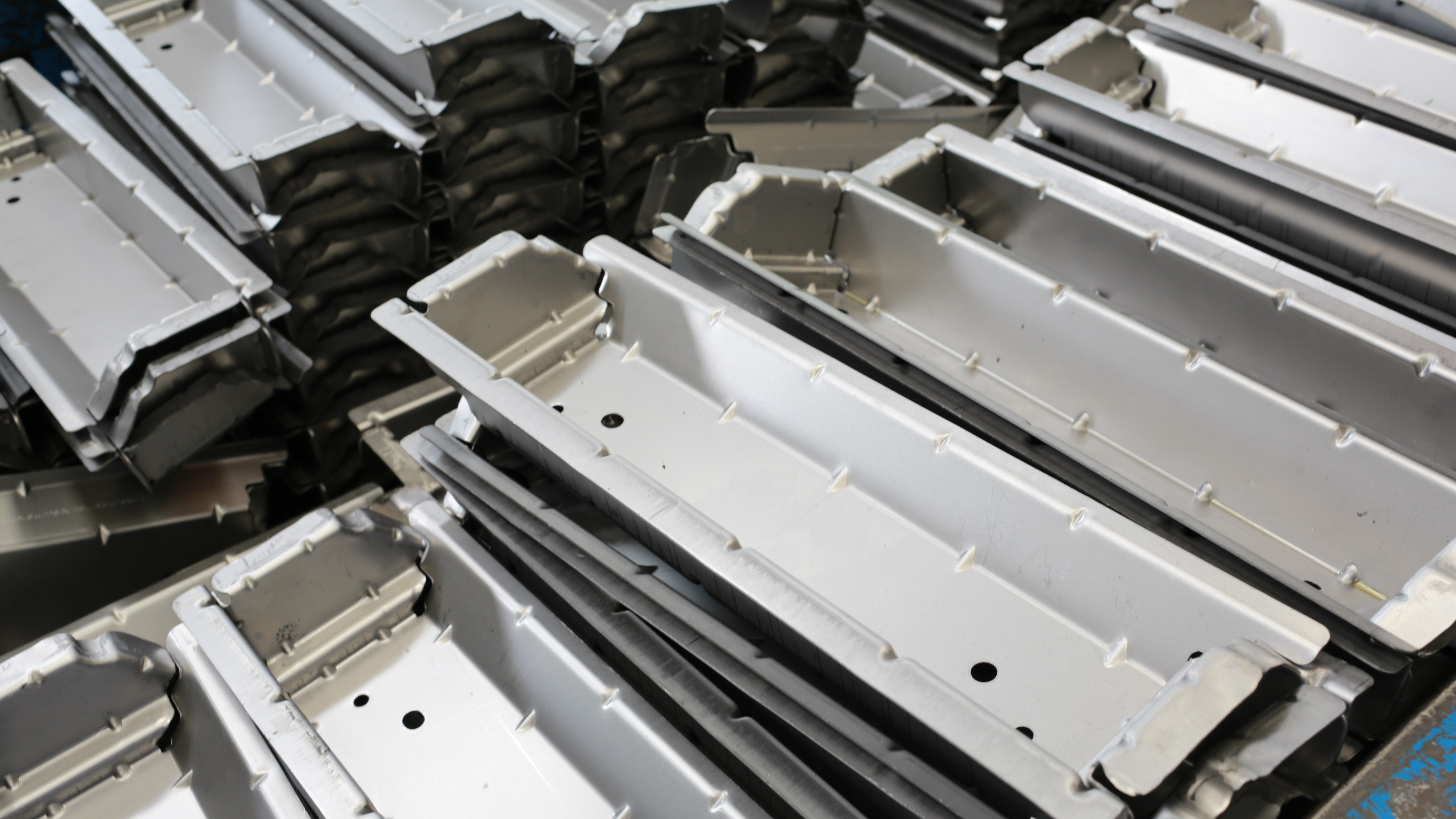
Material selection is the second constraint layer, and it is frequently the source of late-stage rework. In sheet metal fabrication for manufacturing, machinery and automotive parts, the material range typically includes cold-rolled steel, hot-rolled steel, and stainless steel grades 304 and 304L. Precision machining tolerance is stated as CT4-7 on custom fabricated parts, depending on the process route and part geometry.
Three practical constraints follow from that material set:
- Cold rolled steel offers consistent thickness and surface quality, which suits visible automotive body and bracket parts where surface finish and dimensional repeatability matter.
- Stainless steel grades 304 and 304L bring corrosion resistance but also higher work-hardening and springback. Deep draw operations and heavy-gauge stainless steel parts therefore require die design, press tonnage and lubrication to be validated per drawing rather than assumed from a general capability statement.
- Deep draw metal stamping concentrates the risk in draw ratio, die material and blank holder control. Large-size or complex deep-drawn parts are typically a different tooling and press problem from small progressive-die parts.
For buyers, the practical rule is that material, gauge, draw depth and annual volume should be specified together before a tooling decision is made. Any of the four quoted alone can produce a technically valid but commercially wrong process choice.
Progressive Die vs Single-Operation Die: A Tooling Decision Framework
The most common tooling question in auto sheet metal stamping is when to invest in a progressive die and when a single-operation die is the better engineering choice. The two are not interchangeable; they solve different problems.
A progressive die integrates multiple forming processes in one die set, delivering high production efficiency and stable precision. A single-operation die carries lower tooling cost and offers more flexibility for small batches, large workpieces or complex deep-drawn parts.
| Decision factor | Progressive die | Single-operation die |
|---|---|---|
| Process integration | Multiple forming processes completed continuously within one die set | Operations staged individually across presses |
| Best-fit volume | High-volume auto sheet metal components | Small batches, large-size parts |
| Tooling cost | Higher, reflecting multi-station die construction | Lower tooling investment |
| Development lead time | Typically 45–70 days for complex progressive dies, including trial stamping | Typically 25–40 days for simple dies |
| Precision behaviour | Consistent precision sustained at speed | Flexible, with precision managed per operation |
| Complex deep-drawn parts | Generally not the first choice | Better suited, including large workpieces |
Die material selection follows the same logic. Stamping dies are built in grades such as Cr12MoV, SKD11 and P20, selected according to the stamping material, sheet thickness and the required production lifetime of the tool. A die intended for a 500,000-cycle automotive run is specified differently from a die intended for a short prototype series.
Where Hailong Metal Fabrication Sits in the Constraint Stack
Hailong Metal Fabrication (Qingdao Hailong Machinery Technology Co., Ltd.) is a Qingdao-based metal stamping, casting and fabrication manufacturer founded in January 2000 and headquartered in Jimo District, Qingdao, supplying automotive, appliance and industrial customers. Its equipment base and certification scope allow the constraint layers above to be examined against concrete capacity figures rather than general claims.
- Facility and equipment: a manufacturing campus of over 500,000 m² of land with more than 500 machines, including CNC machining, laser cutting, stamping and welding equipment; approximately 500 employees and a 28-engineer technical team.
- Tooling: Qingdao Jitai Auto Mould Co., Ltd., established in 1993, specialises in cold stamping dies for automotive body panels and is recognised as a China Key Backbone Die Enterprise. The group's in-house Technology Center has been certified as a Qingdao Municipal Enterprise Technology Center since 2008 and holds over 100 patents across chassis structures, bumper systems and stamping tooling.
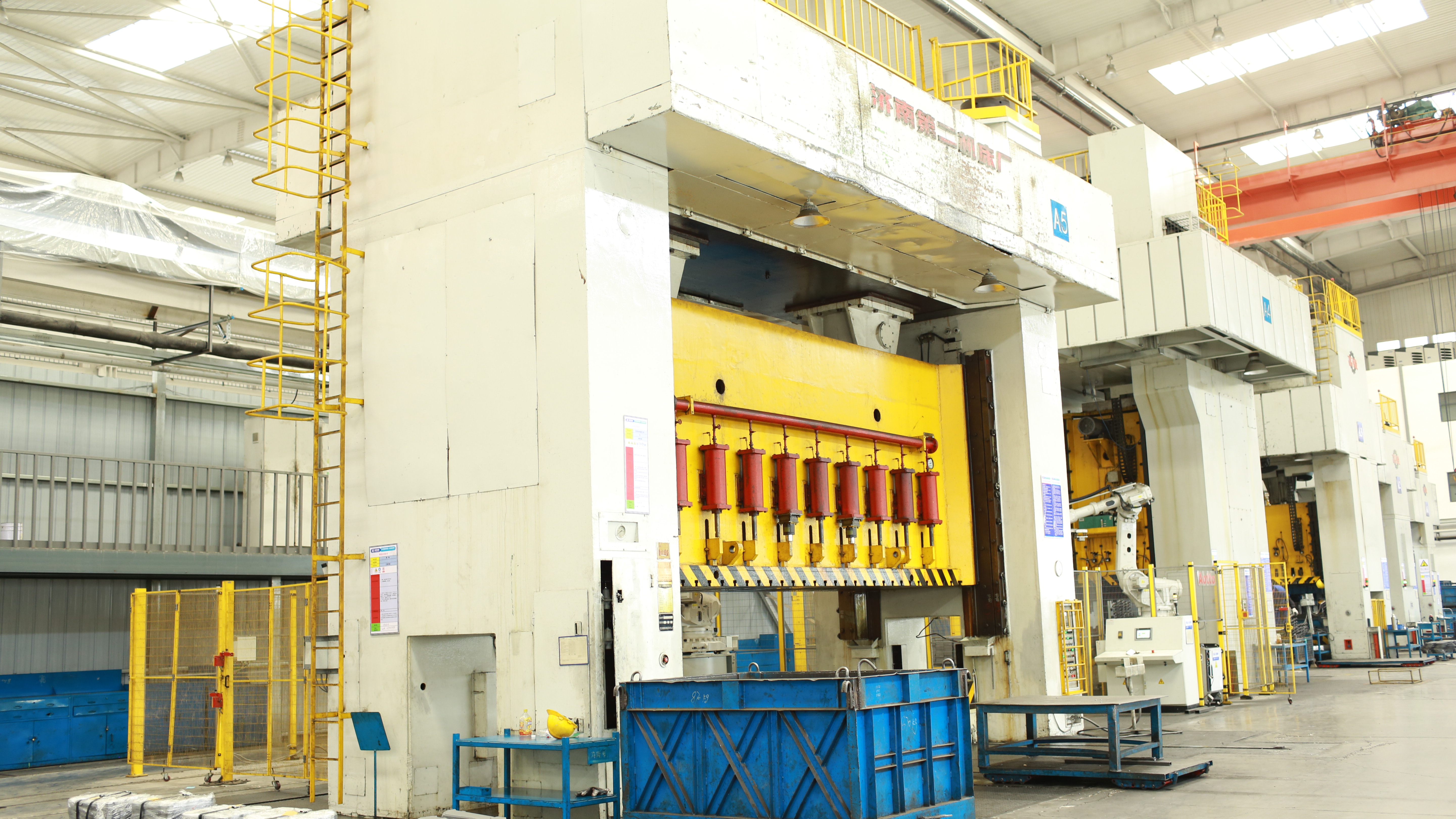
- Press capability: an automated stamping line rated at 8,250T with a 9 SPM average effective cycle, alongside 3,400T, 800T–2,400T and 630T–800T press lines, supported by laser cutters and robotic welding cells.
- Volume: monthly capacity for metal stamping parts is stated at 8,000–10,000 units, with annual output of 5,000,000 pieces. Minimum order quantity is confirmed per project rather than published as a fixed figure.
- Response and logistics: engineers respond within 24 hours and quotations are issued within 1–7 days; indicative shipping timelines are approximately 30–45 days by sea and 3–7 days by air, with actual production lead time depending on product complexity and order volume.
- Quality control: mould design checks and Moldflow analysis, incoming steel certificate inspection, key process control during machining, assembly dimension checks, slide, hardness and cooling system inspections, a pre-shipment spare parts list and die tryout video documentation.
- Certification and customers: IATF 16949, ISO 9001, ISO 14001 and OHSAS 18001 certified, supplying FAW Jiefang, SAIC-GM, BAIC, Dongfeng and Beijing Benz domestically, and Renault, Nissan, Mercedes-Benz, Doosan and GD overseas, with products exported to the United States, Europe, India and Africa.
Application Scenarios: Automotive, Appliance and Industrial Stamping
Stamped and welded components serve several industries at once, and each imposes a different constraint profile. Hailong Metal Fabrication supplies automotive and auto parts, heavy machinery, industrial equipment, household appliances, furniture and architectural components, and oilfield equipment — with country coverage including the United States, Canada, Germany, France, the United Kingdom, India, Thailand and the United Arab Emirates.
- Automotive metal stamping: parts for vehicle operation are exposed to vibration and corrosion, so the constraint priority is dimensional stability, material certification and process monitoring rather than unit cost alone.
- Household appliance metal stamping: the visible-surface requirement usually drives the choice towards cold rolled steel and controlled surface treatment, with lower structural loads than chassis parts.
- Heavy machinery and industrial equipment: parts run under high load and wear conditions, which shifts the emphasis to material grade and section thickness.
- Stamp-and-weld assembly components: robot welding cells and integrated fabrication allow stamped parts, welded assemblies and surface treatment to be delivered from one process chain rather than three separate vendors.
One documented die project illustrates the volume dimension: a manufacturer in Brazil ordered 20 sets of tooling for factory production, with the die designed for heavy-duty stamping of auto parts and reported stable high-volume production with consistent tolerance across a 500,000-cycle run. In a separate commercial vehicle program, a dealer in the United Arab Emirates took delivery of 100 dump truck bodies over a 15-year relationship, built with abrasion-resistant steel, an 8 mm reinforced floor, robotic welding and a U-shaped low-centre-of-gravity design compatible with 6×4 and 8×4 chassis, with the operator reporting up to twice the service life of standard bodies.
Market Trends: AHSS, Hot Stamping Capital Cost and Conflicting Market Data
Two trends shape automotive stamping procurement, and both are constraints rather than slogans.
Advanced high-strength steel raises the capital barrier. Commercial research on the North American automotive steel stamping market notes that adoption of hot-stamping lines for advanced high-strength steel parts such as 1,500 MPa press-hardened steel can cost USD 8–12 million per line. That capital intensity concentrates hot-stamping capacity in fewer suppliers, and it means buyers sourcing AHSS parts should verify hot-stamping capability program by program rather than inferring it from general stamping experience.
Market size figures disagree — for a verifiable reason. Published 2025 valuations for the global metal stamping market include USD 257.3 billion (Grand View Research), USD 226.3 billion (IMARC) and USD 210.37 billion (360iResearch). Regional share estimates also diverge: 37.0% for Asia Pacific in one research series against 46% in another. The documented explanation is methodological — whether captive stamping departments inside large OEMs are counted, and whether the merchant market only is measured. For procurement and benchmarking purposes, the practical conclusion is that market-level figures cannot be used to compare individual suppliers; a supplier-specific capability matrix comparing press tonnage, tooling type and material grade compatibility is the more decision-relevant instrument.
Comparison with Traditional Sourcing Routes — and the Limits That Remain
The traditional route splits a stamped assembly across a die shop, a stamper and a welding or coating subcontractor. An integrated route consolidates die design and manufacturing, sand casting and lost-foam casting, metal stamping and deep drawing, precision CNC machining, welding and assembly, surface finishing, and truck body or cabin assembly under one quality system.
The integrated route reduces hand-off risk and documentation gaps, but it does not remove constraints. Four limits should be stated plainly:
- Design authority is not included. The certified scope explicitly excludes product design under Chapter 8.3. Buyers who need a supplier to develop the part geometry itself are asking for a service outside the audited scope and should confirm how that work would be governed.
- Not every material and geometry is a fit. Cold rolled steel, hot rolled steel and 304 / 304L stainless steel are supported, but heavy-gauge stainless and complex deep-drawn parts must be assessed per drawing against press tonnage, die design and required tool life.
- Hot stamping is a separate capability. The 1,500 MPa press-hardened steel segment depends on hot-stamping lines with multi-million-dollar capital cost. Buyers should verify that capability directly for AHSS programs instead of assuming it follows from general stamping experience.
- Volume commitments are project-specific. Minimum order quantities are confirmed with sales per project, and production lead time depends on product complexity and order volume, so a quoted shipping window is not a production guarantee.
Future Outlook
Three developments are likely to shape automotive metal stamping procurement over the next planning cycle. First, process evidence — real-time SPC monitoring and Run@Rate testing of 4,000 defect-free pieces — is becoming a baseline requirement rather than a differentiator, which shifts supplier evaluation from certificates towards production data. Second, as AHSS and press-hardened steel content rises, tooling and press investment requirements will continue to separate general stamping suppliers from automotive-grade stamping suppliers. Third, buyers are increasingly consolidating stamping, welding and surface treatment into single-supplier process chains, which raises the value of integrated fabrication and e-coating capacity and makes scope clarity — including the boundary of certified activities — a first-order procurement criterion.
FAQ
1. What does an IATF 16949 certificate actually cover for a metal stamping supplier?
The certificate issued to Hailong Metal Fabrication covers "Manufacture of Stamping & Welding Parts (without Product Design as per Chapter 8.3)" for the transportation industry. It is certificate number 0593827, issued by TUV under standard IATF 16949:2016-10-01, applicable to the global market, valid from 2026-01-08 to 2029-01-07. The Chapter 8.3 exclusion means product design is outside the certified scope: design authority and design validation remain with the buyer, who supplies drawings, specifications or samples.
2. How should a buyer choose between a progressive die and a single-operation die for auto sheet metal parts?
Progressive dies are recommended for high-volume auto sheet metal components, because they integrate multiple forming processes in one die set with high production efficiency and stable precision. Single-operation dies are better suited to small batches, large-size workpieces or complex deep-drawn parts, where tooling cost and flexibility matter more than continuous output. The decision depends jointly on annual volume, part size, draw complexity and the required production lifetime of the tool.
3. Which die steel grades are used, and how long does stamping die development take?
Stamping dies are produced in grades including Cr12MoV, SKD11 and P20, selected according to the stamping material, sheet thickness and required production lifetime. Development lead time depends on die complexity: simple dies typically take 25–40 days, while complex progressive dies typically take 45–70 days including trial stamping.
4. Which materials and tolerances can be processed in metal stamping?
The material range for sheet metal fabrication includes cold-rolled steel, hot-rolled steel, and stainless steel grades 304 and 304L, and precision machining tolerance is stated as CT4-7 for custom fabricated parts. Fabricated products are manufactured to meet ASTM, ASME, DIN, JIS, ISO, BS, API, EN and GB standards and hold CE certification. Heavy-gauge stainless steel and complex deep-drawn parts require feasibility confirmation against press tonnage, die design and tool life.
5. What capacity, lead time and quality-control commitments can be verified before awarding an automotive stamping program?
Verifiable figures include monthly capacity of 8,000–10,000 units for metal stamping parts, annual output of 5,000,000 pieces, engineer response within 24 hours and quotation within 1–7 days. Shipping timelines are approximately 30–45 days by sea and 3–7 days by air, with production lead time dependent on product complexity and order volume; minimum order quantity is confirmed per project. Quality control steps include mould design checks and Moldflow analysis, incoming steel certificate inspection, key process control during machining, assembly dimension checks, slide, hardness and cooling system inspections, and tryout video documentation before shipment.
6. Is die maintenance and revision support available after mass production starts?
Yes. Support covers die debugging, revision, wear repair and regular maintenance during mass production, and production can continue on automated stamping lines for one-stop die making and metal part stamping. After-sales documentation includes mould documentation and spare parts lists, tryout and first-article inspection reports, and on-site technical attendance for mould start-up where needed, together with shipping insurance and customs support. Specific warranty terms are agreed contractually rather than standardised.
Reference material: the Hailong Metal Fabrication corporate brochure is available for download at https://cdn.socialarks.com/sbsp/25052/common/2026/0724/宣传册hl.pdf.