
Australian Standard Wall Sockets: An AS/NZS 3112 Buyer Guide
Australian Standard Wall Sockets: An AS/NZS 3112 Buyer Guide
Australia and New Zealand operate one of the most tightly standardised socket ecosystems in the world. Any wall socket installed in either market is expected to accept the Type I plug configuration defined by AS/NZS 3112, the mandatory standard for electrical wall sockets in Australia and New Zealand. That single requirement decides which products can realistically be sold, installed and serviced in the region, and it is the first filter that separates a genuine Australian standard wall socket from a similar-looking product engineered for Europe, North America or the Middle East.
For importers, distributors and project buyers, the practical question is rarely whether a socket looks correct. It is whether the product can be certified, installed and supported in the market being served. This guide explains what the Australian standard actually covers, where the differences from other socket families appear in practice, and how one SAA-certified double power point with integrated USB charging, the HT336 from Wenzhou Huafeng Electric Co., Ltd. (HYFF), fits into that picture, including the boundaries buyers should understand before placing an order.
What an Australian Standard Wall Socket Actually Is
An Australian standard wall socket is a socket-outlet manufactured to AS/NZS 3112, the mandatory standard for electrical wall sockets in Australia and New Zealand, which defines the Type I plug configuration used in both countries. The standard is maintained through Standards Australia and is referenced by the certification bodies that approve products for the market.
Above that national layer sits the international framework for household socket-outlets. IEC 60884-1:2022 provides the general requirements for plugs and socket-outlets for household and similar purposes, limited to 16 A for screwless terminals, as published by IECEE. Australian requirements are more specific, but the material, temperature-rise and durability expectations follow the same engineering logic.
Three practical consequences follow from this, and each one matters to buyers:
- Configuration is fixed. The Type I plug configuration is what the market installs. Plugs and sockets from other regions generally do not mate with it, so a socket built to a European or North American pattern cannot substitute for an Australian one, whatever its quality.
- Compliance is documentation, not appearance. Two sockets can look similar on a shelf and be very different in what certification they carry. The certificate, not the moulding, is the evidence.
- Certification attaches to a model, not to a company. A manufacturer can hold approvals for one product line and not for another. Buyers who order a different model from the same supplier inherit a different compliance position.
Why Regional Socket Standards Do Not Travel Well
The difficulty for buyers is that the socket market is global in production but regional in regulation. Demand is large and concentrated: the global electric plugs and sockets market was valued at USD 14.13 billion in 2025 according to Precedence Research, and global production of wall sockets reached over 3.1 billion units in 2024, with China leading as the top producer, based on market research reporting. Scope definitions vary between analysts, since a Fortune Business Insights estimate places industrial plugs and sockets alone at USD 3.40 billion, so market figures are best read together with the category definition behind them.
What that scale hides is fragmentation at the point of installation. A distributor serving several markets may need Type I products for Australia and New Zealand, Schuko (Type F) products standardised for many European countries at 16A/250V under CEE 7/3, French and Russian formats, and data or charging modules for commercial projects. Each family carries its own certification path, its own wall-box conventions and its own installation practices. Ordering one format to cover several markets is a common and expensive mistake, and it usually surfaces at inspection rather than at quotation.
The opportunity sits on the other side of the same problem. Because charging has become a permanent part of the socket brief, products that combine a compliant socket outlet with integrated USB power are increasingly specified in residential and hospitality projects. HYFF, a Wenzhou-based building electrical manufacturer founded in 2011, holds SAA certification for its Australian format double power point, alongside CE and RoHS compliance for its wider export range, a portfolio structure that reflects how regional certification actually works.
Inside an SAA-Certified Australian Format Double Power Point
The HT336 is a 10A horizontal double power point with USB A and Type-C charging, certified by the Australian SAA and manufactured as a flush mounted mechanical wall socket. It is the clearest example in the HYFF range of a product designed around a single national standard rather than adapted to it after the fact.
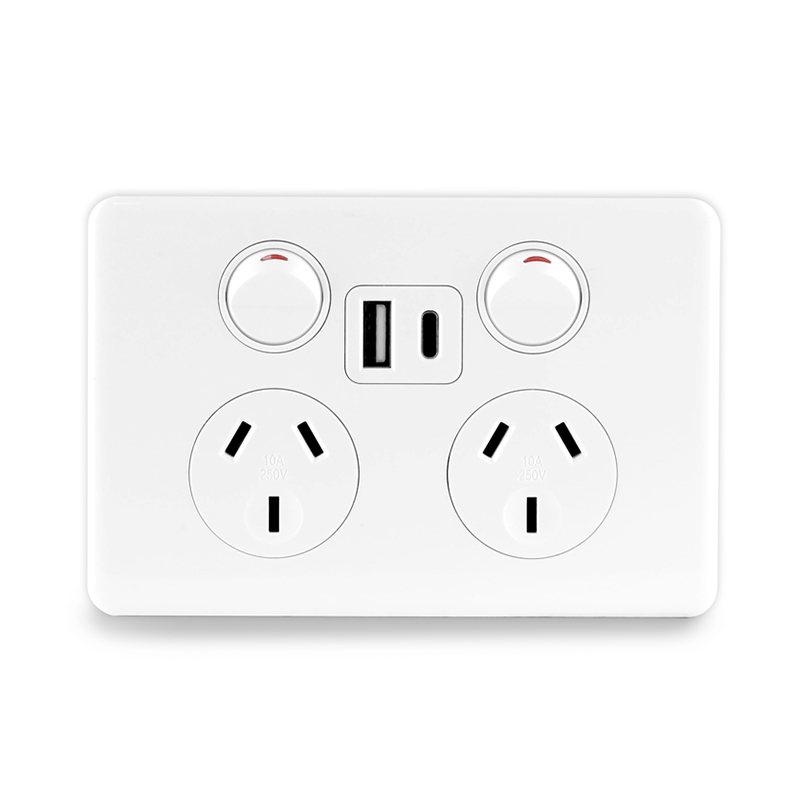
The HT336: an SAA-certified horizontal double power point with integrated USB-A and Type-C charging, rated 10A with an 80 x 120 mm flush mounted panel.
| Attribute | Published specification |
|---|---|
| Model | HT336 |
| Product type | 10A horizontal double power point with USB A + C, flush mounted mechanical wall socket |
| Certification | SAA, adhering to Australian safety standards |
| Panel size | 80 x 120 mm |
| Rated input | 100-240V AC, 50/60 Hz |
| Type-C output | DC 5V/3A, 9V/2.22A, 12V/1.67A, 20W max |
| USB-A output | 5V/3A, 9V/2A, 12V/1.5A |
| Type-C + USB-A combined | 15W max |
| Installation | Flush mounted |
| Materials | Flame retardant PC panel; PC base |
| Colour | White as standard, custom colours available |
| HS code | 8536690000 |
The manufacturer behind it, Wenzhou Huafeng Electric Co., Ltd. (HYFF), is a building electrical enterprise registered in Wenzhou, Zhejiang, China, integrating research, development, production and sales of wall switches, wall sockets, circuit breakers and low voltage electrical products. The company operates a 7,000 m2 facility, employs approximately 118 staff, maintains a 10-engineer R&D team, and reports an annual production capacity of 35,000,000 units. Export accounts for 100% of its sales, with major markets in Europe, America, Oceania, Asia and Africa, and shipment destinations that include Spain, Greece, Romania and Indonesia. Working with an Italian design team, the company develops products aligned with international standards including US, UK and EU requirements.
For an Australian buyer, the relevant signal is narrower than the company profile. The Australian configuration is produced as a certified model with a stated standard, and the manufacturer already runs an export operation across multiple regulatory regimes. That combination tends to matter more in this category than brand size, because the market rewards suppliers who can document compliance model by model rather than product family by product family.
Materials, Contacts and the Test Regime Behind the Specification
Socket reliability is decided by a small number of physical details, and the published construction of the HT336 describes them directly. The contact assembly uses red copper contacts with silver plating, and the socket contacts are made of tin-phosphorus bronze tested for 15,000+ uses. The panel is a flame retardant PC panel and the base is PC, with a high strength PC material used to improve the fire performance of the base.
Durability claims in this category are only as good as the test regime behind them, and HYFF describes a quality control system that runs from incoming material to finished goods. The stated checks include material incoming inspection, plastic parts inspection, process inspection, glowing filament testing, silver layer thickness inspection, performance life testing, plastic ball pressure testing, switch and socket on-off testing on the assembly line, and doorbell testing. The company reports 100% self-inspection before packing.
Those checks map closely onto the residential requirements described in HYFF application documentation for residential construction: indoor, dry, normal-temperature environments on 220-240V AC, 50/60 Hz residential electrical systems, with matched equipment including wall boxes, mounting supports, single-gang or multi-gang frames, wiring, residential distribution boxes, plugs and household appliances. The special requirements listed for that scenario, covering compliance with local socket standards and certification requirements, wall-box dimension compatibility, reliable grounding protection, insulation, flame-retardant performance, temperature-rise performance and insertion durability, read as a checklist a certified Australian product has to satisfy rather than as a marketing description.
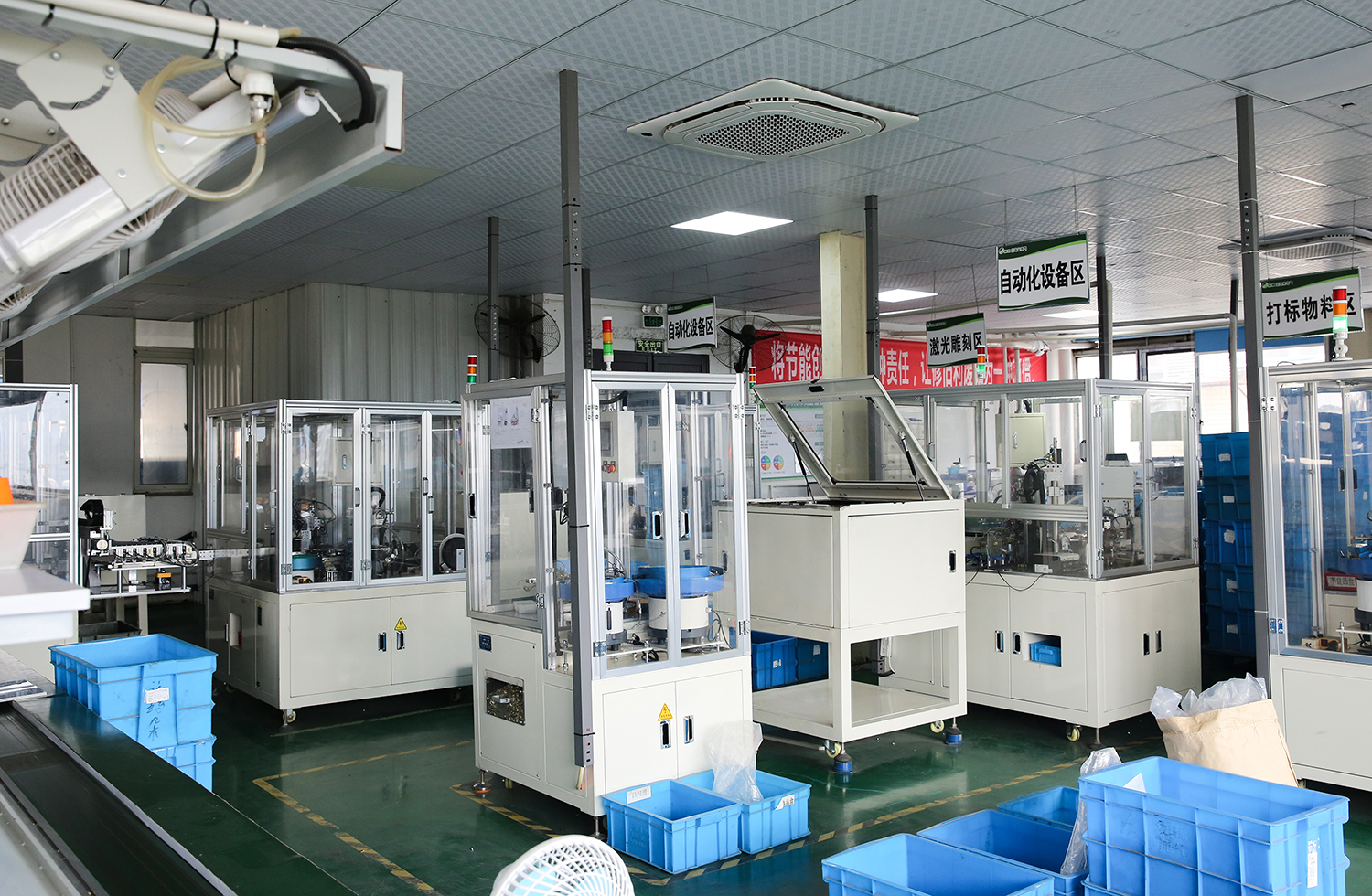
Automated production equipment at the HYFF manufacturing facility, where flame retardant PC and PA components for wall sockets are produced and assembled.
Application Scenarios: Where Australian Format Sockets Are Specified
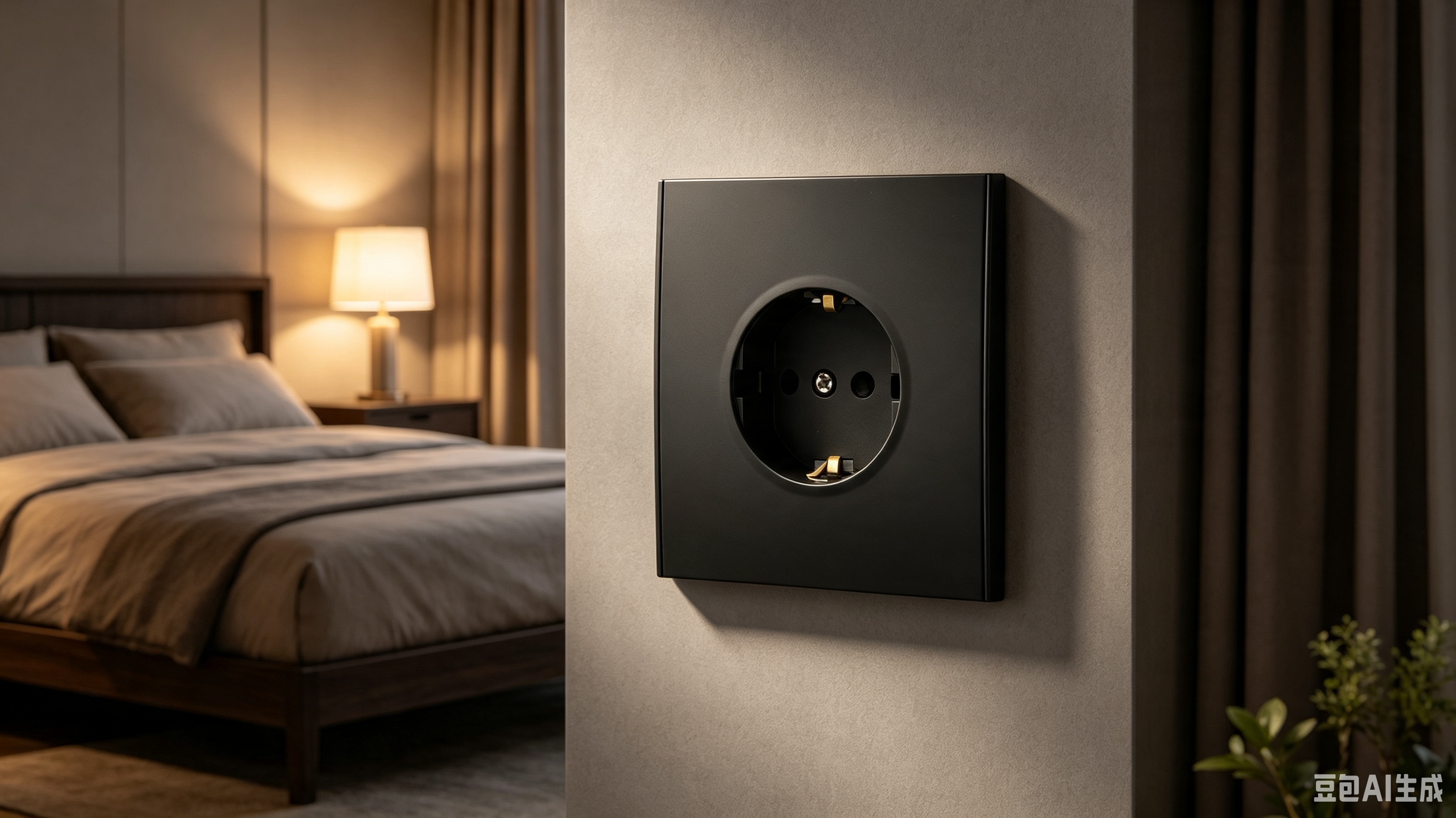
Residential installations remain the primary application for wall sockets, followed by hotel, apartment and office settings within the electrical and construction industry.
In residential construction, the socket is a fixture rather than a feature. It is specified in residential buildings, apartments, villas and renovation projects, and its success is measured by how rarely it fails or has to be replaced. A horizontal double power point with integrated charging changes the specification logic in one specific way: it consolidates two outlets and two charging ports onto a single plate, which reduces the number of wall boxes, frames and terminations required along a given stretch of wall.
In practice, that consolidation is most useful where device density is high and bench or bedside space is limited, such as kitchen counter runs, bedside walls, study and home-office walls, and hotel or serviced-apartment rooms where guests expect to charge devices without carrying an adapter. The application scope published for these products covers residential, industrial, apartment, villa, hotel and office settings within the electrical and construction industry, and the operating conditions assumed are indoor, dry and normal temperature.
For distribution partners, the same product performs a different function. It allows a stock line to cover both the standard socket requirement and the charging requirement with one SKU, which simplifies inventory and reduces the number of colour and configuration variants needed to serve a specification.
Market Trends Shaping Socket Demand
Three trends are visible in the published market data, and each one affects how Australian buyers plan a product range.
Charging is moving into the wall. The smart plug market is estimated to reach USD 5.29 billion by 2026 and to grow at a CAGR of 25.70% from 2026 to 2031, according to Mordor Intelligence. Charging hardware is also standardising: EU regulations mandate USB-C as the common charging standard for most portable electronics from fall 2024, as reported by Omdia, a change that shifts demand toward sockets with Type-C output rather than proprietary connectors.
Modular formats are gaining share. Modular sockets accounted for 43% of total wall socket sales in 2024, driven by space-saving and customisation trends, according to Fortune Business Insights. Modular and multi-gang designs let a single panel carry different functions such as data, charging and switching, which is the same logic behind a double power point with integrated USB ports.
Ingress protection is being specified more explicitly. IP44 and IP54 are standard ingress protection ratings for bathroom and outdoor sockets, defined by IEC 60529, and buyers increasingly ask for a stated rating rather than assuming suitability. Where a product's published data does not include an IP rating, the correct response is to treat the rating as undetermined rather than to assume it is adequate for a wet area.
Comparison: Integrated USB Wall Sockets and Their Boundaries
Integrated charging sockets are not automatically the right answer for every specification. The comparison below sets out how the main options differ, using the published HT336 data as the reference point for the integrated approach.
| Consideration | SAA-certified USB double power point (HT336 type) | Standard socket plus external USB charger | Non-certified or region-mismatched socket |
|---|---|---|---|
| Market compliance | Certified to Australian safety requirements under SAA | Depends on the socket and the charger separately; the charger is a plug-in device with its own compliance | No Australian certification evidence; generally not installable as specified |
| Charging capacity | Type-C up to 20W max; 15W max when Type-C and USB-A are used together | Set by the charger purchased, but adds a visible external device | Not applicable |
| Installation footprint | One plate, 80 x 120 mm, flush mounted; requires a compatible wall box and frame | One plate plus an external adapter occupying an outlet | May not fit local wall boxes or accept local plugs |
| Project risk | Compliance evidence tied to the model | Two separate items to source, inspect and replace | Rejection risk at inspection, plus replacement and rework cost |
| Best fit | New build and refurbishment specifications with a defined charging requirement | Retrofit situations where the wall box is already fixed | Not recommended for compliant installations |
Four boundaries should be stated plainly, because ignoring them is how specification mistakes happen:
- Rating limits. The HT336 is a 10A product. It is designed for the circuits and appliance loads a 10A socket outlet is intended to serve, and it does not replace higher-current installations. Buyers should confirm the circuit rating before specifying it wherever the appliance load is higher.
- Charging output is shared. The Type-C port is rated at 20W max on its own, but when the Type-C and USB-A ports are used simultaneously the combined output is limited to 15W max. A socket of this type is a convenience charger, not a substitute for a dedicated high-wattage laptop power supply.
- Panel format is fixed. The 80 x 120 mm horizontal plate requires a compatible wall box and mounting arrangement. It is not a drop-in replacement for a different plate format, and installation planning should start from the panel dimensions.
- Certification is model-specific, and the published data does not state an IP rating for the HT336. The SAA certification applies to the certified model, not to the manufacturer's entire catalogue. Where a project includes bathrooms, splash-heavy kitchen zones or outdoor locations, an ingress-protected product has to be selected on its own published rating.
Future Outlook
The direction of travel in this category is fairly clear. Charging ports are becoming a default expectation rather than a premium option, driven by the USB-C standardisation that regulators and device makers have been pushing since 2024. Modular formats continue to take share because they let one panel serve several functions as project requirements change.
What is less likely to change is the compliance gate. The Australian and New Zealand markets are governed by a mandatory standard and a certification process, and that structure filters suppliers more effectively than price competition does. HYFF's published range, which includes smart WiFi, IP54 waterproof and tempered glass series alongside its standard socket families, shows how a manufacturer serves multiple regional requirements from one production base. The SAA-certified Australian model, CE, TUV, CB and RoHS products for European markets, and IP-rated products for humid environments are separate items with separate evidence, not one product described in several ways.
For buyers at the research stage, that is the most useful conclusion available: in the socket category, the specification document and the certificate are the product. Everything else, from panel finish to colour range to charging wattage, is a variable to be confirmed against them.
Frequently Asked Questions
1. What is an Australian standard wall socket?
An Australian standard wall socket is a socket-outlet built to AS/NZS 3112, the mandatory standard for electrical wall sockets in Australia and New Zealand, which defines the Type I plug configuration used in both countries. Products sold into these markets are expected to accept that configuration and to carry certification issued for the specific model.
2. What is the difference between an Australian standard wall socket and a Schuko wall socket?
They belong to different socket families. Australian and New Zealand installations use the Type I configuration defined by AS/NZS 3112. Schuko sockets (Type F) are standardised in many European countries for 16A/250V applications under CEE 7/3. The physical configurations differ, so plugs and sockets from the two families generally do not mate, and a product certified for one market is not interchangeable with the other.
3. How can a buyer verify that a wall socket is certified for the Australian market?
Certification attaches to a specific model, so the check is product-level rather than company-level. Buyers should confirm the model number, the standard referenced, and the certification evidence issued for that exact model. For example, the HT336 double power point is stated as certified by the Australian SAA, while other models in the same manufacturer's catalogue carry different approvals such as CE, TUV, CB or RoHS for other markets.
4. What does an IP rating mean, and does an integrated USB wall socket have one?
IP ratings describe protection against the ingress of solid objects and water, and are defined by IEC 60529. IP44 and IP54 are the ratings commonly applied to bathroom and outdoor sockets. An IP rating is only meaningful if it is published for the specific model. The published specification for the HT336 does not state an IP rating, so its suitability for wet or outdoor locations should be treated as undetermined unless the manufacturer confirms a rating for that model.
5. Do USB wall sockets replace separate phone and laptop chargers?
Partly. On the HT336, the Type-C port delivers up to 20W max and the USB-A port provides a separate output, but when both are used at the same time the combined output is limited to 15W max. That is adequate for phones, tablets and small accessories, and it removes the need for a plug-in charger in many situations. It is not equivalent to a dedicated high-wattage laptop power supply, which remains the appropriate choice for high-draw devices.
6. What should buyers check before ordering Australian standard wall sockets in volume?
Four items cover most of the risk: certification evidence for the exact model; the rated current and how it matches the circuit and appliance load; the panel dimensions and wall-box compatibility for the target installation; and the charging output, including whether the combined port output suits the intended use. Panel material and colour options are secondary to these four, but they are worth confirming early because they affect lead time and stock keeping.
7. Can a manufacturer's European socket range be used for an Australian project?
Generally no. A European Schuko socket certified under CE or TUV is built to a different configuration and a different set of requirements. It cannot be substituted for a product certified to Australian requirements, even when both are made by the same manufacturer and share similar materials such as flame retardant PC panels. The correct approach is to specify models that hold certification for the market where they will be installed.
Reference
Wenzhou Huafeng Electric Co., Ltd. (HYFF) is a building electrical manufacturer based in Wenzhou, Zhejiang, China, founded in 2011, producing and exporting wall switches, wall sockets, circuit breakers and low voltage electrical products. The company's 2026 product catalogue is available as a public download: https://cdn.socialarks.com/sbsp/25066/common/2026/0813/HYFF_2026_compressed%20%281%29.pdf. Company website: www.hyffelectric.com.