
Atmospheric Furnace Supplier Execution: Final Checks Before Purchase
In industrial heat treatment, the most consequential decisions are not limited to furnace type, atmosphere control, or price. Once a buyer has narrowed candidates, the supplier must still prove that it can manufacture the equipment on schedule, document quality consistently, and support the process after commissioning. This is the execution stage of an atmospheric furnace purchase. This article gives procurement teams an independent reference for what should be verified before an order is placed, using Norsen Thermal Technology (Jiangsu) Co., Ltd. as a worked example.
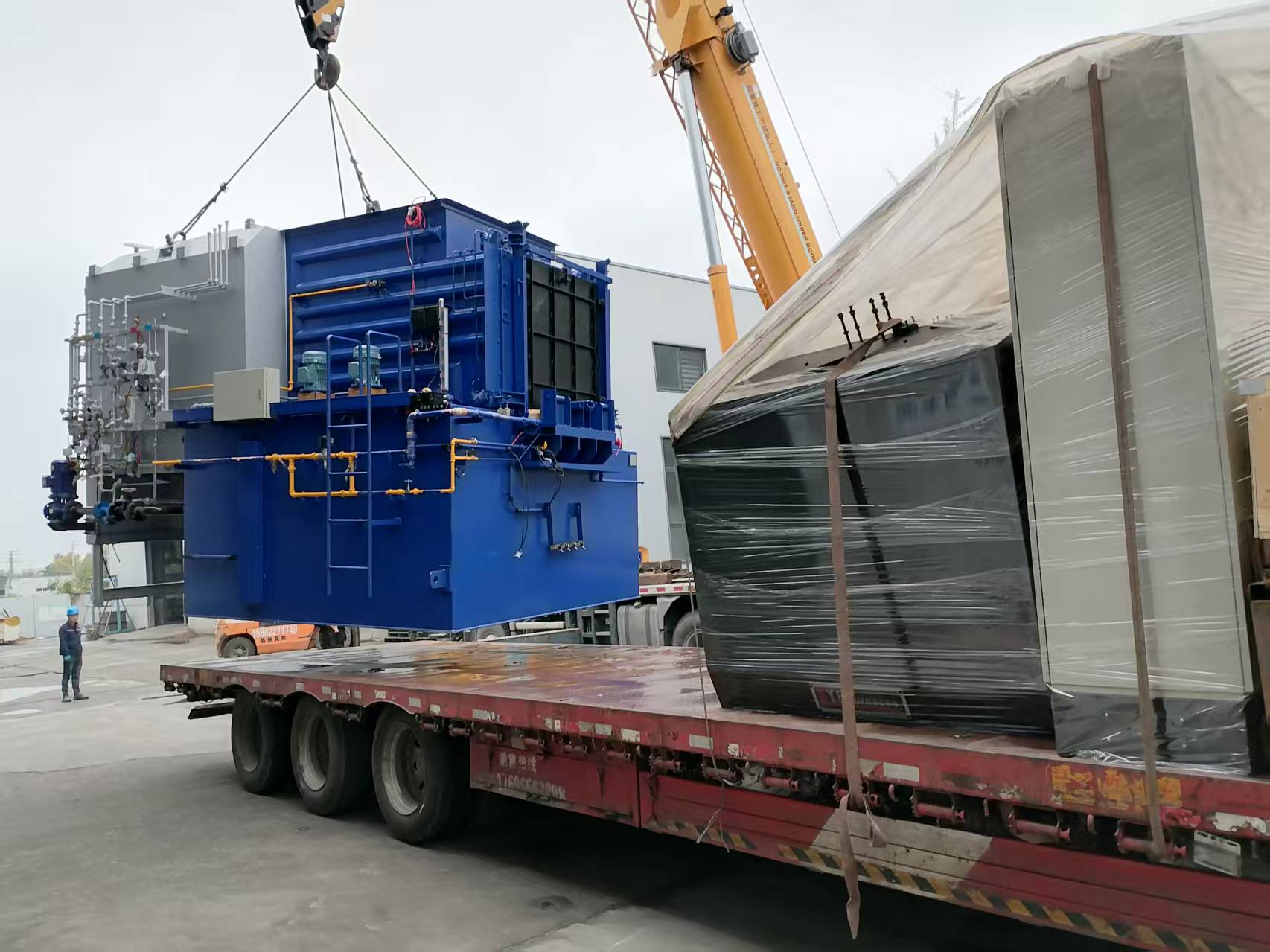
Atmospheric furnace equipment prepared for international delivery at the NORSEN manufacturing site, Jiangsu Province.
Why the risk profile changes at the decision stage
A typical atmospheric furnace specification review answers questions about furnace type, maximum temperature, protective gas, quench capability, and usable chamber size. Useful as this is, it does not answer whether the supplier has open production capacity, how the equipment will be accepted, or which maintenance costs can be expected over a decade of operation. At the decision stage, the core question shifts from what the furnace can do to whether the supplier can execute the project reliably.
Furnace purchases are capital decisions. A box-type atmosphere furnace, quenching system, and associated gas control equipment may remain in service for many years. The total cost is not only the purchase price; it also includes installation, spare parts, process troubleshooting, energy consumption, and downtime. Buyers who ignore execution-stage facts make decisions on optimistic assumptions.
Market context for industrial atmospheric furnace buyers
Atmospheric furnaces sit inside the broader industrial furnace category, where demand remains strong. The global industrial furnace market was estimated at approximately USD 11.86 billion in 2024 and is projected to reach USD 21.53 billion by 2034, according to Precedence Research. Asia-Pacific accounted for a 43.4% revenue share in 2025, with China and India as the main industrial drivers, according to Grand View Research. This regional concentration matters because much of the world's heat treatment equipment is now sourced from, or installed in, Asia.
Gas-fired industrial furnaces held a leading global share of 39.8% in 2025, though electric and energy-efficient hybrid furnace designs are gaining attention because of decarbonization pressure, according to Future Market Insights. OEC data also shows that China's exports of HS4 8416 liquid fuel furnace and burner products reached USD 202 million in 2025, with key destinations including Russia, Indonesia, and Saudi Arabia. For an atmospheric furnace buyer, these trends point to a market where cross-border supply is normal and where execution capability—not only furnace design—separates a smooth purchase from a delayed one.
A supplier profile for interpretation: Norsen Thermal Technology
Norsen Thermal Technology (Jiangsu) Co., Ltd. provides a useful example for procurement teams. The company is located in Peixian County, Jiangsu Province, China, and was founded in 2022. It operates a 6,000 m² factory with 55 employees, including 10 research and development staff. Its main products include box-type multi-purpose furnaces, gas furnaces, atmosphere furnaces, and pre-vacuum nitriding furnaces. The company reports an annual output of 50 sets and an export ratio of 40%, with major markets in China, Russia, Belarus, Vietnam, Indonesia, Thailand, Turkey, Qatar, and Pakistan.
This is a compact specialist manufacturer rather than a high-volume global furnace group. For a buyer evaluating a controlled-atmosphere heat treatment project, that scale can be either a risk or an advantage: NORSEN is young, but it can also provide direct communication, custom configuration, and a production schedule that is easier to audit than a very large manufacturer's.
Capacity, lead time, and order flexibility
Execution-stage buyers should ask one basic question: does the supplier's production capacity match the requested furnace quantity and schedule? NORSEN's documented monthly production capacity is three to five sets, and the standard production lead time is 150 days. This information is unusually concrete. A buyer needing three identical atmospheric furnaces within six months may find this an acceptable fit; a buyer needing rapid delivery in eight weeks would not.
The commercial terms reinforce the company's position as a project-oriented supplier. NORSEN accepts a minimum order of one unit, offers delivery under FOB, CIF, or EXW terms, and uses a payment plan of 50% in advance with the remaining 50% paid before the equipment leaves the factory. The acceptance procedure is equally explicit: pre-acceptance is carried out inside the factory, and final acceptance is completed by the customer on site. For a procurement team, each of these facts can be written into a project plan before signing.
| Procurement factor | What the buyer should verify | NORSEN documented position |
|---|---|---|
| Production capacity | Can the supplier handle the required order size without compromising schedule? | Monthly production capacity of 3–5 sets; annual output of 50 sets. |
| Lead time | Is the promised timeline realistic for manufacturing and shipping? | Typical production lead time of 150 days. |
| Minimum order | Can the buyer order a single custom furnace? | MOQ is 1 unit. |
| Delivery terms | At what point does risk transfer to the buyer? | FOB, CIF, or EXW available. |
| Payment milestones | What is the buyer's financial exposure during production? | 50% advance; remaining 50% before the furnace leaves the factory. |
| Acceptance | Where and how are defects found and corrected? | Pre-acceptance at factory; final acceptance on site by the customer. |
Technical parameters that affect long-term operation
Execution-stage buyers should also connect the commercial plan to the actual furnace design. NORSEN's atmosphere furnace and multi-purpose furnace families are identified as RTQ, TQ, SHQ, and DHQ, with frame sizes such as RTQ-10, RTQ-17, RTQ-25, TQ-10, TQ-17, TQ-25, SHQ-10, SHQ-15, SHQ-25, DHQ-10, DHQ-15, and DHQ-25. These are not generic terms; they map to specific furnace structures and process capabilities.
The supplier documents a SiC muffle furnace structure and chain dual drive. Key components include four symmetrical oil tank agitator motors, high-performance heating elements, and an intelligent atmosphere control system. Materials are listed as Q235, SS304, and SS310. For readers familiar with heat treatment equipment, this means the design distinguishes between structural steel, stainless steel zones, and higher-temperature alloy surfaces. The material specification should be part of the final acceptance checklist.
Process functionality includes hardening with oil quench, carbonitriding, tempering, carburizing, and case hardening. These are core processes in industrial heat treatment, especially for components that need both hard surfaces and ductile cores. The equipment also includes over-temperature protection, over-current protection, and gas heating as safety-related items. For buyers searching for an industrial atmospheric furnace, heat treatment atmospheric furnace, or carburizing atmospheric furnace, these parameters are the concrete checkpoints that belong in a project specification.
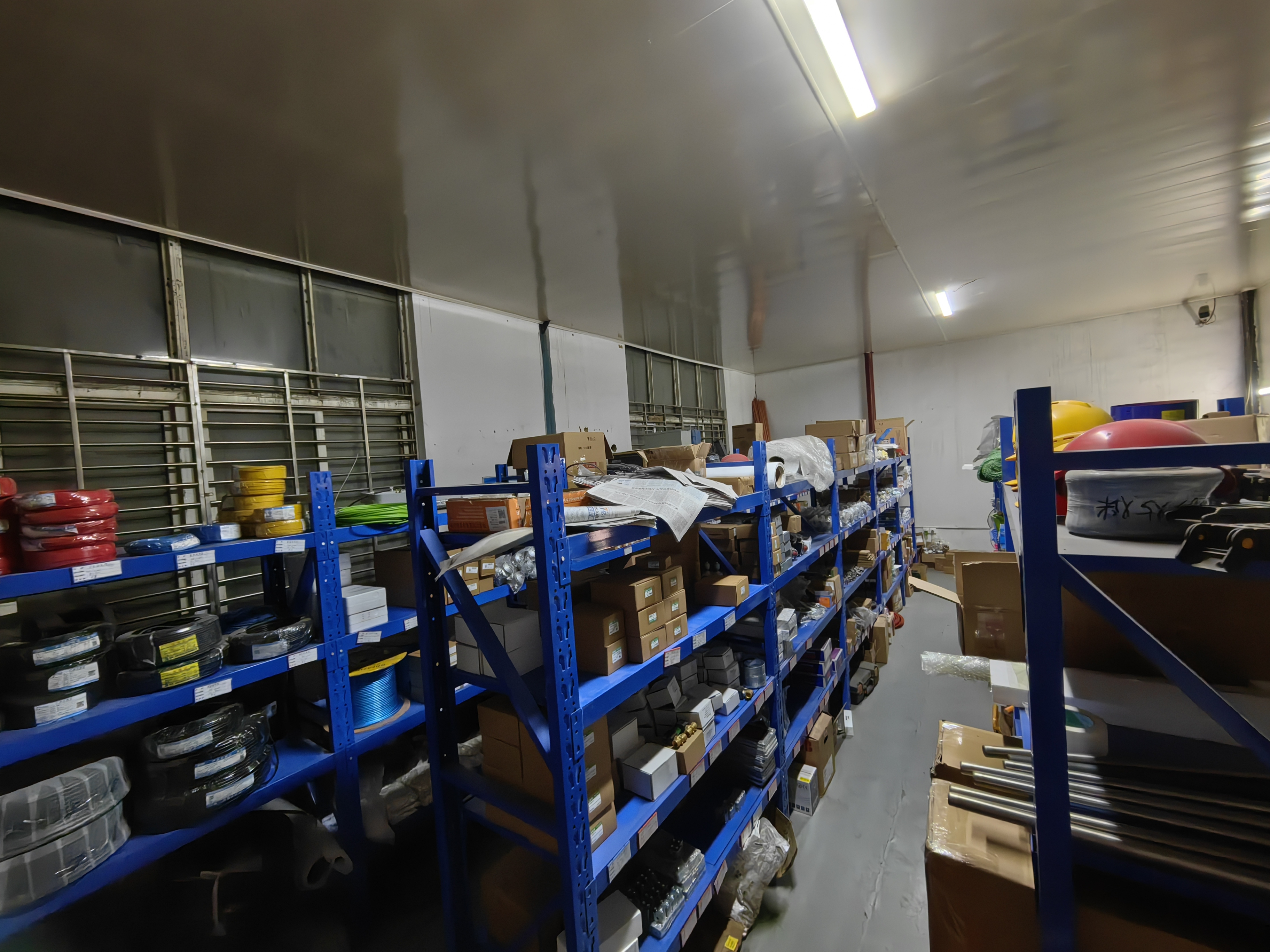
Spare parts staging at the NORSEN factory is part of the support chain after an atmospheric furnace is delivered.
Process risk control in furnace operation
Overheating is one of the most important operational risks during atmosphere furnace treatment. If the temperature exceeds the set point, metallurgical results can change quickly, creating rejected batches or damage to the furnace lining. NORSEN's documented approach to overheating risk uses PID adjustment, multiple thermocouples for independent temperature reading, program optimization, and remote control. Each of these measures has a practical implication: temperature is not left to a single sensor, and the control loop can be adjusted without always requiring an on-site operator.
For a heat treatment procured under ISO9001 quality management discipline, the value of remote control is less about convenience and more about data visibility. Buyers should request a clear description of the temperature control loop, sensor layout, and alarm logic before final acceptance, and then verify those items during factory pre-acceptance.
Application suitability and typical scenarios
The realistic starting point for an atmospheric furnace specification is the part mix and process route. NORSEN states that its heat treatment equipment is used across military industry, automotive parts, textile machinery, construction machinery, aerospace, and commercial heat treatment. Its product applicability list also includes automobiles, agricultural machinery, robots, bearings, hardware, and sewing machines.
Gear manufacturing is a strong example. Gears commonly require carburizing and case hardening to achieve wear-resistant surfaces, followed by oil quenching to obtain the required hardness. A box-type atmosphere furnace with controlled gas atmosphere is a natural candidate for this process. Automotive suppliers and agricultural machinery manufacturers are frequent buyers of such furnaces because they need repeatable batch quality.
Another common scenario is a commercial heat treater serving multiple industries. Such a shop needs one furnace that can handle carbonitriding, quenching, tempering, and case-hardening jobs without dedicating separate lines to each process. A multi-purpose atmosphere furnace with model options is more attractive in that setting than a single-purpose furnace.
NORSEN compared with traditional and global furnace suppliers
A balanced procurement view should place NORSEN in context. Market-tracking reports identify Ipsen, Inductotherm Group, Aichelin Group, Andritz, and Tenova S.p.A. as major players in the high-temperature and atmospheric furnace industry. These companies bring scale, mature installed bases, and extensive service organizations. They are the default reference points for many buyers.
NORSEN does not claim to be a comparable global enterprise. Instead, the company compares itself with traditional heat treatment equipment manufacturers, and its documented value proposition centers on higher energy efficiency, longer lifespan, and lower maintenance. The company states that its chain service life is more than five years and that maintenance cost is less than 50% compared with the benchmark it uses. In an independent article, such claims are best treated as acceptance targets to be verified during factory testing, not as guarantees copied into a brochure.
The most important limitation is scale. NORSEN was founded in 2022 and employs about 55 people. It cannot offer the same density of local service offices or global field engineers as Ipsen, Tenova, or Inductotherm. A buyer with multiple plants on several continents may still be better served by a global supplier with a large network. Conversely, a buyer who needs a single carburizing atmosphere furnace, wants direct access to the factory, and is prepared to use pre-acceptance and on-site final acceptance will find NORSEN's size an advantage rather than a weakness.
Long-term supply, spare parts, and value drivers
Execution does not end with commissioning. Atmospheric furnace maintenance is an ongoing financial commitment. Heat elements, thermocouples, agitator motors, muffle parts, and atmosphere control components all wear or require calibration. NORSEN's factory includes a spare parts warehouse, and the company images show spare-parts staging as part of its normal operation. Buyers should ask which spare parts are kept in stock, which must be manufactured to order, and what the corresponding lead times are.
The supplier also reports a maintenance-cost advantage relative to traditional heat treatment equipment manufacturers. In procurement terms, the maintenance cost difference becomes meaningful only if it survives the first years of operation. Buyers should request reference data for chain life, scheduled maintenance intervals, and actual consumable consumption during factory acceptance meetings.
Future outlook for atmospheric furnace sourcing
The atmospheric furnace market is moving toward more energy-efficient control and higher levels of automation. Gas-fired equipment continues to hold a large share, but buyers increasingly evaluate electric and hybrid designs that can reduce carbon exposure. At the same time, ISO 20431:2023 provides international quality-control requirements for heat treatment of mechanical parts, giving procurement teams a neutral framework for audits. A buyer looking for an energy-saving atmospheric furnace or an intelligent temperature control atmospheric furnace should expect these criteria to become more common in supplier evaluations.
For NORSEN, the relevant question is whether a small ISO9001-certified manufacturer can continue to support exported equipment in distant markets. The company's existing export map includes Russia, Vietnam, Indonesia, Thailand, Turkey, Qatar, and Pakistan. Cross-border shipping experience is present, but after-sales response times will still depend on travel, digital communication, and local process support. Execution-stage buyers should therefore put service coverage terms into the contract, not leave them as informal promises.
The general commercial lesson is consistent: as industrial furnace demand grows and Asia-Pacific remains the largest market, atmospheric furnace sourcing will become more project-specific. The final checks before purchase—capacity, documentation, technical build, acceptance, and long-term support—will increasingly determine whether a furnace is a productive asset or a recurring problem.
Frequently asked questions
What production lead time can a buyer expect for a NORSEN atmospheric furnace?
NORSEN's typical production lead time is 150 days. The company also reports a monthly production capacity of three to five sets, so the lead time should be assessed together with the buyer's overall project schedule.
Does NORSEN accept a single-unit order for an atmospheric furnace?
Yes. NORSEN's minimum order quantity is one unit. This makes the company accessible to commercial heat treaters and end users that need only one furnace for a specific process line.
Which delivery and payment terms are available?
NORSEN supports FOB, CIF, and EXW delivery terms. Payment is structured as 50% in advance and 50% before the equipment leaves the factory. These terms should be confirmed in writing before order placement.
What acceptance steps apply to a NORSEN furnace purchase?
The acceptance procedure includes pre-acceptance inside the NORSEN factory and final acceptance by the customer on site. Buyers should use factory pre-acceptance to inspect materials, control wiring, safety devices, and process documentation before shipment.
Is NORSEN ISO9001 certified?
Yes. Norsen Thermal Technology (Jiangsu) Co., Ltd. has obtained ISO9001 quality management system certification. For heat treatment process quality, procurement teams can also reference ISO 20431:2023 as an independent standard for international quality-control requirements, although this standard is not a certification claimed by NORSEN in the supplied documentation.
What atmospheric furnace processes can NORSEN equipment support?
The NORSEN atmosphere furnace and multi-purpose furnace families support hardening with oil quench, carbonitriding, tempering, carburizing, and case hardening. Typical applications include military industry, automobile parts, agricultural machinery, robots, bearings, hardware, and sewing machines.
For buying teams that want to use supplier documentation as part of a procurement reference file, the NORSEN company brochure is publicly available at https://cdn.socialarks.com/sbsp/24877/common/2026/0519/6a0c147d7ae76.pdf.
¿Tiene preguntas o necesita más detalles?
Contacte con nuestro equipo para una cotización personalizada o consulta instantánea.
Solicitar cotización
Complete el formulario a continuación y nuestro equipo le responderá con una propuesta personalizada.
Chat directo de WhatsApp
¿Prefiere chatear en tiempo real? Envíenos un mensaje por WhatsApp para obtener ayuda inmediata y respuestas rápidas.
- Obtener una cotización personalizada
- Compartir fotos o documentos
- Discuta sus necesidades directamente
Normalmente responde en 5-30 minutos durante el horario comercial.