
Atmospheric Furnace Selection for Carburizing Projects
Atmospheric Furnace Selection for Carburizing Projects
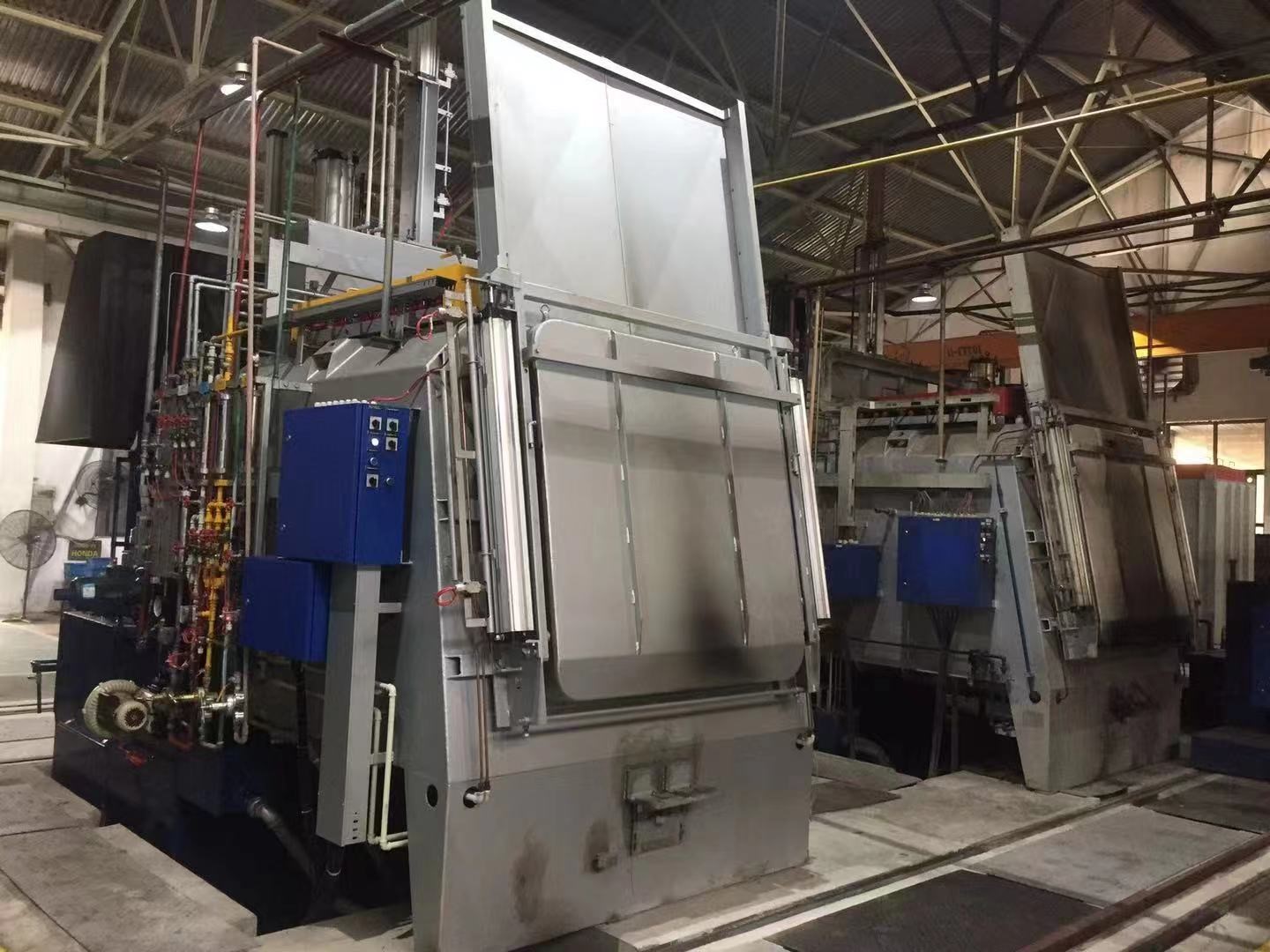
An industrial atmospheric furnace is a heat-treatment system that controls the gas composition around metal parts while they are heated, quenched, or tempered. In processes such as carburizing, carbonitriding, oil-quench hardening, and case hardening, the furnace atmosphere determines carbon potential and surface hardness. For project teams, the key question is not only 'what furnace model is available', but 'which furnace configuration fits the parts, the facility, and the production target'. This article maps the selection criteria for atmospheric furnaces in metal-part heat treatment projects, using the NORSEN box-type atmosphere furnace line as a reference model.
The Procurement Challenge in Industrial Heat Treatment
Carburizing and case-hardening processes add carbon to the surface layer of steel parts so that the component gains hardness and toughness according to the process description. The furnace must hold a stable atmosphere, reach repeatable temperature cycles, and provide consistent quenching. If any one of these conditions drifts, the part can lose case depth, hardness, or dimensional control. That is why project buyers usually evaluate an atmospheric furnace as a system, not as a heated box.
The scale of the industrial furnace market adds context to this decision. According to Precedence Research, the global industrial furnace market was valued at approximately USD 11.86 billion in 2024 and is expected to reach USD 21.53 billion by 2034. Grand View Research reports that the Asia-Pacific region held a 43.4% revenue share of the industrial furnace market in 2025, driven largely by industrialization in China and India. Future Market Insights reports that gas-fired furnaces held a leading share of 39.8% in 2025, while electric and energy-efficient hybrid furnaces are seeing increased adoption. These figures help explain why a manufacturer in an Asian market may need a furnace that is easy to integrate into existing utility infrastructure and energy-cost conditions.
Regional demand is also visible in trade data. The Observatory of Economic Complexity records China's exports of liquid fuel furnaces (HS4 8416) at USD 202 million in 2025, with major destinations including Russia, Indonesia, and Saudi Arabia. For a buyer evaluating industrial atmospheric furnace suppliers, this means cross-border procurement is an established path, and supplier execution—documentation, quality control, and delivery—becomes an important part of the evaluation.
NORSEN's Atmospheric Furnace Platform
The NORSEN Atmospheric Furnace is a multi-purpose, box-type atmosphere furnace line manufactured by Norsen Thermal Technology (Jiangsu) Co., Ltd., a heat-treatment equipment company based in Peixian County, Jiangsu Province, China. The company was founded in 2022, operates a 6,000 m² production facility, employs 55 people, and maintains a 10-person R&D team. Its annual production capacity is approximately 50 sets, with about 40% of output exported. The company holds ISO9001 quality management system certification.
The product line is designated RTQ, TQ, SHQ, and DHQ. Available models include RTQ-10, RTQ-17, RTQ-25, TQ-10, TQ-17, TQ-25, SHQ-10, SHQ-15, SHQ-25, DHQ-10, DHQ-15, and DHQ-25. The core processes covered by the series are hardening with oil quench, carbonitriding, tempering, and carburizing and case hardening.
According to the company background, this type of heat-treatment equipment is used in the military industry, automobiles, agricultural machinery, robots, bearings, hardware, sewing machines, as well as aerospace, textile machinery, construction machinery, and commercial heat treatment in different project settings.
Technical Specifications
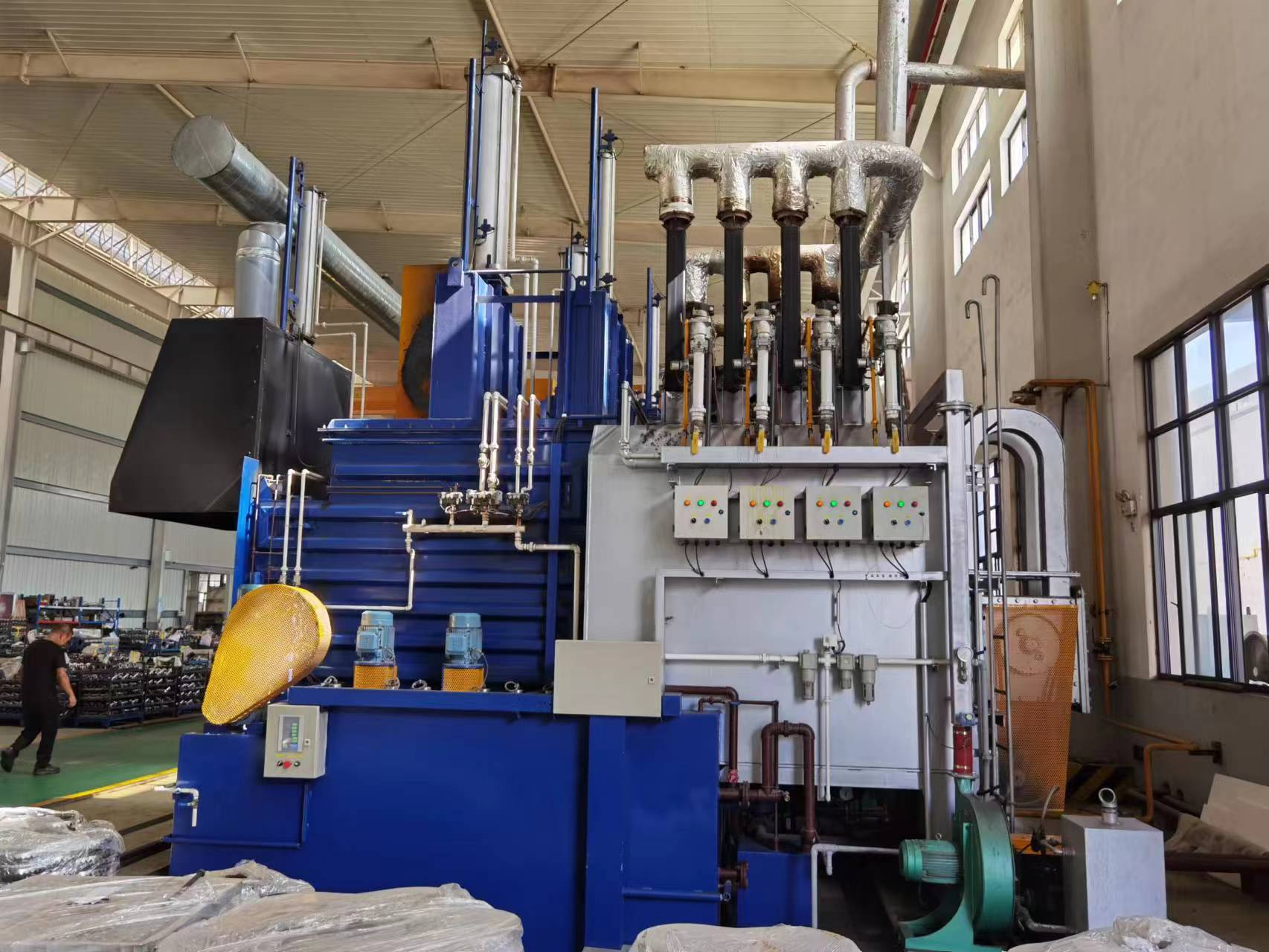
The NORSEN Atmospheric Furnace is specified with a SiC muffle furnace structure and a chain dual drive. Key components include four symmetrically arranged oil tank agitator motors, high-performance heating elements, and an intelligent atmosphere control system. Safety and protection features include over-temperature protection, over-current protection, and gas heating support. The furnace is built with Q235, SS304, and SS310 materials.
| Attribute | Specification |
|---|---|
| Furnace structure | SiC muffle furnace structure, chain dual drive |
| Key components | 4 symmetrically arranged oil tank agitator motors, high-performance heating elements, intelligent atmosphere control system |
| Safety & protection | Over-temperature protection, over-current protection, gas heating |
| Processes | Hardening with oil quench, carbonitriding, tempering, carburizing and case hardening |
| Materials | Q235 / SS304 / SS310 |
| Industries | Military industry, automobiles, agricultural machinery, robots, bearings, hardware, sewing machines |
These specifications matter in a carburizing project. The intelligent atmosphere control system is directly relevant because carbon potential must remain stable during the soak and diffusion stages. The four symmetrically arranged oil tank agitator motors are relevant to oil-quench lines because uniform agitation influences cooling consistency. The material list, including SS304 and SS310, highlights the use of stainless steel in a controlled-atmosphere environment. The chain dual drive and SiC muffle structure represent the mechanical and thermal design of the equipment.
Project Fit and Application Scenarios
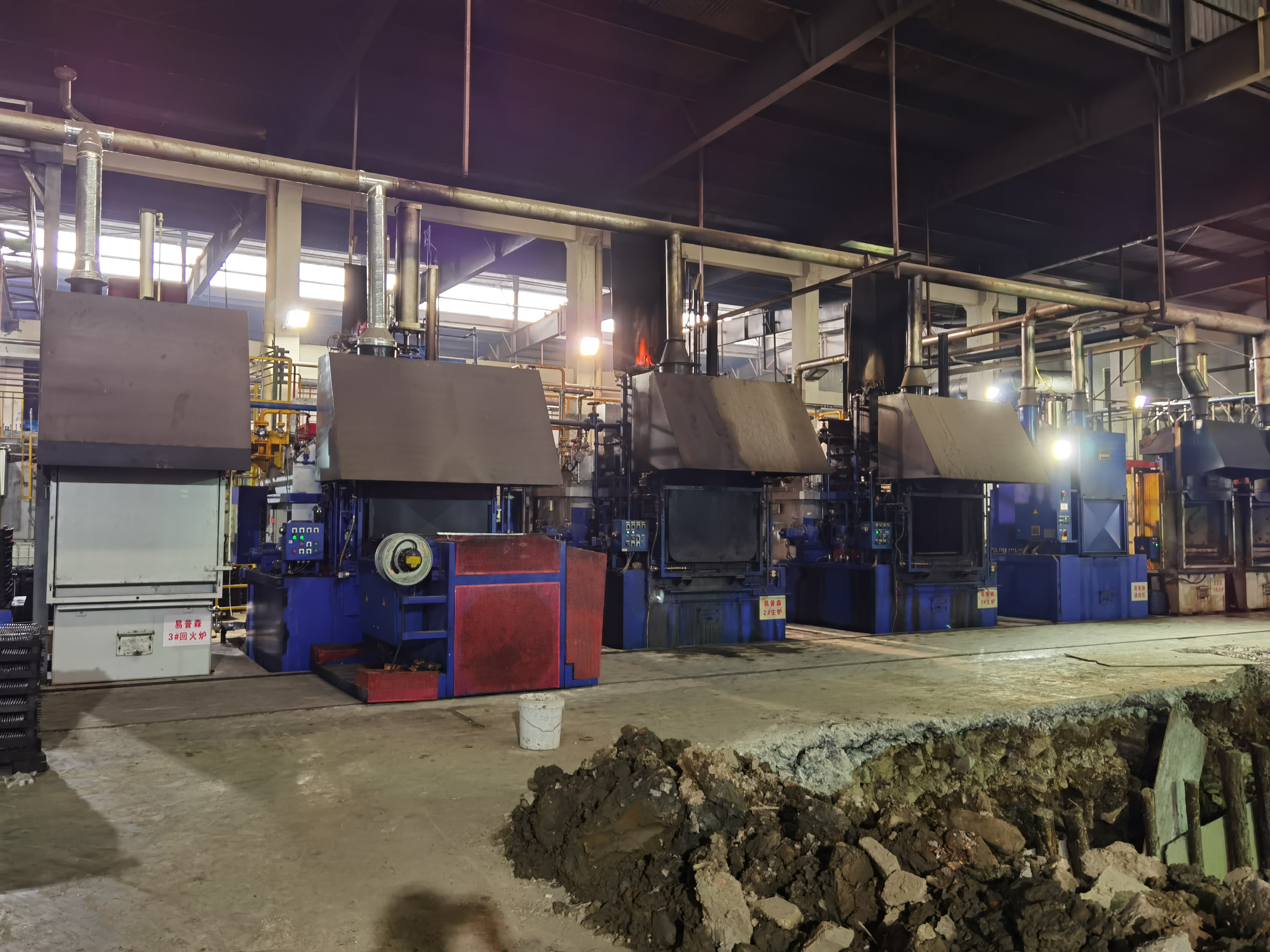
The NORSEN Atmospheric Furnace is documented for metal parts that undergo carburizing and quenching to enhance their mechanical properties, including gear processing. In this application, the product increases the hardness and toughness of metal parts. The operation mode is automated.
- Typical industries: military industry, automobiles, agricultural machinery, robots, bearings, hardware, sewing machines.
- Core process: carburizing and quenching of metal parts; gear processing is included in the described scenario.
- Function: increase hardness and toughness, enhancing mechanical properties.
- Operation mode: automated.
- Utility requirements: electricity, compressed air, natural gas, and fume/exhaust ducts.
- Installation requirement: factory crane height above 6.5 meters; the higher, the better.
- Typical regions: China, Taiwan, Russia, Belarus, Vietnam, Indonesia, India, Thailand, Turkey, Qatar, and Pakistan.
For a project engineer, this translates into a practical checklist. First, confirm the part mix and the required process: carburizing, carbonitriding, oil quenching, or tempering. Second, check the facility's utility lines and crane height. Third, determine whether the production flow needs automated, repeatable operation. Fourth, confirm that the supplier has experience exporting to the project region. The NORSEN scenario description supports all four points.
A reference case profile in the same application segments—automotive OEMs, military units, hardware tool factories, and gear factories—records ten delivered units with reported results including stable quality, precise carbon content, high production efficiency, easy maintenance, and energy conservation.
Checklist for Evaluating Industrial Atmospheric Furnace Suppliers
Buyers at the evaluation stage can organize their review around six items:
- Process coverage: does the furnace support carburizing, carbonitriding, oil-quench hardening, tempering, and case hardening?
- Furnace construction: does the design include an atmosphere control system, heating elements, and quench agitation suitable for the part mix?
- Site compatibility: are utility requirements and crane height documented before installation?
- Customization: can the supplier adjust effective size, automation degree, and performance requirements?
- Quality control: is there a pre-shipment test, and does the supplier hold ISO9001 certification?
- Delivery and support: what is the lead time, production capacity, and after-sales support model?
These six items can be answered directly from the NORSEN product and capability records.
Market Trends That Affect Furnace Selection
Beyond the immediate project requirements, two market-level trends affect furnace selection. First, regional demand is concentrated in Asia-Pacific, where the industrial furnace market accounted for 43.4% of revenue share in 2025. Second, international quality control expectations are becoming more explicit. ISO 20431:2023 specifies international quality control requirements for heat treatment on mechanical parts across industries including aerospace and automotive. Buyers that export finished parts or supply OEM chains may need to demonstrate that their heat-treatment equipment and processes meet documented quality standards.
At the same time, leading industry research shows a continued role for gas-fired furnaces, but also increasing adoption of electric and energy-efficient hybrid designs. For project teams, this points to a growing need for suppliers that can integrate automation, atmosphere control, and energy performance in one production system.
Comparison With Traditional Large-Scale Manufacturers
Market research identifies Ipsen, Inductotherm Group, Aichelin Group, Andritz, and Tenova among the major players in the high-temperature and atmospheric furnace industry. These companies offer broad product portfolios and long operating histories. The NORSEN approach is more focused: it offers a family of box-type atmosphere furnaces with ODM customization for effective size, automation degree, and performance requirements. The company's production flexibility is documented by a minimum order quantity of one unit and a monthly capacity of 3–5 sets. Lead time is approximately 150 days, and every furnace receives a 100% pre-shipment test before leaving the factory. After-sales support includes free remote technical assistance.
The main trade-off is speed and volume. A project that requires very tight delivery windows or multiple large furnace deliveries at the same time will need to factor NORSEN's lead time and monthly capacity into the procurement schedule. For buyers who prioritize customization, equipment documentation, and direct technical support, the ODM model provides a useful alternative to large-brand standardization.
Future Outlook for Project-Level Atmospheric Furnace Adoption
Looking toward 2026 and beyond, industrial heat-treatment projects are likely to place more weight on process control, energy efficiency, and automation. The verified market data already shows hybrid furnaces gaining adoption, and international standards such as ISO 20431:2023 are raising the documentation bar for heat-treatment operations. In this context, an atmospheric furnace is evaluated less by peak capability and more by its ability to hold a stable atmosphere, handle quench agitation consistently, and operate with a predictable maintenance burden. The NORSEN platform, with its intelligent atmosphere control system, automated operation, and documented facility requirements, offers a concrete reference point for project engineers building a shortlist.
Reference Resources and Manufacturer Contact
Norsen Thermal Technology (Jiangsu) Co., Ltd. publishes a downloadable technical brochure with company and product information: Download NORSEN brochure.
Company website: www.norsengroup.com
Contact: bingsen.wang — Email: jiayoubingsen@163.com — Tel: +86 153-8013-9999
Address: No. 173, Hanxing Road, Peixian Economic Development Zone, Xuzhou City, Jiangsu Province
Frequently Asked Questions
- Which heat-treatment processes can the NORSEN Atmospheric Furnace perform?
The RTQ/TQ/SHQ/DHQ series covers hardening with oil quench, carbonitriding, tempering, and carburizing and case hardening. - Which industries and parts are intended for this furnace?
Typical industries include the military industry, automobiles, agricultural machinery, robots, bearings, hardware, and sewing machines. The described scenario involves carburizing and quenching of metal parts to improve mechanical properties, including gear processing. - What facility utilities are required for installation?
The installation is designed to be paired with electricity, compressed air, natural gas, and fume/exhaust ducts. The factory crane height should be more than 6.5 meters; higher is considered better. - Can the furnace be customized for a specific project?
Yes. NORSEN supports ODM production, and the customization items include the effective size of the equipment, the degree of automation, and the performance requirements. The minimum order quantity is one unit. - What is the delivery lead time and production capacity?
Monthly production capacity is 3–5 sets, and lead time is approximately 150 days. Each unit receives a 100% pre-shipment test. - What after-sales support is available?
NORSEN provides free remote technical assistance. Export markets include Russia, Belarus, Southeast Asia, the Middle East region, and Taiwan. - Which regions commonly use this type of atmospheric furnace?
Typical application regions include China, Taiwan, Russia, Belarus, Vietnam, Indonesia, India, Thailand, Turkey, Qatar, and Pakistan.