
Atmospheric Furnace Selection: Beyond Price and Brand
An atmospheric furnace is a heat-treatment furnace in which the composition of the chamber atmosphere is actively controlled so that the surface of the workload is protected, or deliberately modified, during heating. Carburizing, carbonitriding, tempering and hardening with oil quench are the processes most often specified around that definition. Because the purchase usually commits a plant to a process route for years, the two columns most buyers begin with — price and brand — are also the two that say least about whether the equipment will actually perform. A more defensible approach is to convert the purchasing conversation into seven criteria, each of which can be answered with a document, a data point or a physically checkable design feature.
Why Price and Brand Are Weak Primary Filters
Two failure modes recur in heat-treatment procurement. The first is a price-led shortlist, where the lowest quotation wins on capital cost and then loses on rework, atmosphere drift or unscheduled downtime. The second is a brand-led shortlist, where a globally recognised name is bought for a specification the plant may never fully use. Both approaches evaluate the supplier before the process.
Three structural conditions make that weakness more expensive in 2026 than it was a few years ago. Fortune Business Insights values the global industrial furnace market at USD 10.87 billion in 2026, and reports that Asia Pacific accounted for 39.70% of the global industrial furnace market in 2025 — a supply base that is broad, regionally concentrated and far from uniform in capability. Energy regulation is tightening in parallel: China's energy-efficiency benchmarks for heavy industries carry a compliance deadline of 31 December 2028, as reported by S&P Global with reference to NDRC Notice No. 698. Capital spending in the category also remains active — Ipsen USA reported more than USD 100 million in vacuum furnace orders in 2026 year to date — which means more buyers are committing budget now, and the cost of selecting the wrong furnace rises with every additional unit ordered.
None of this argues for ignoring price or reputation. It argues for demoting them from decision inputs to outcome variables: price should be assessed against a defined capability scope, and brand should be assessed against evidence a buyer can inspect.
The Seven-Criteria Decision Framework
The framework below converts an atmospheric furnace purchase into seven questions. Each criterion has a buyer question, an evidence request, and a reference point that shows what an answer looks like in practice.
| Criterion | Buyer question | Evidence to request | Reference point (NORSEN) |
|---|---|---|---|
| 1. Process fit | Which processes must the furnace run, and how often? | Process list, cycle data, sample treatment results | Hardening with oil quench, carbonitriding, tempering, carburizing and case hardening; RTQ, TQ, SHQ and DHQ model families |
| 2. Atmosphere control precision | How is atmosphere accuracy produced, monitored and alarmed? | Control architecture, sensing method, alarm and interlock logic | Intelligent atmosphere control system; high-precision atmosphere control listed among key product highlights |
| 3. Thermal structure | What chamber construction governs uniformity and distortion? | Chamber drawing, muffle material, uniformity documentation | SiC muffle furnace structure with chain dual drive; Q235, SS304 and SS310 material options |
| 4. Energy efficiency | What is the measured consumption per cycle, not per hour? | Metered consumption data, insulation and recovery specification | Low energy consumption listed as a product highlight; energy conservation cited among reported project results |
| 5. Maintenance cost | What fails, how often, and how quickly can it be replaced? | Preventive-maintenance schedule, consumable list, spare-parts availability | Four symmetrical oil tank agitator motors and high-performance heating elements; easy maintenance listed as a highlight; manufacturer holds a spare-parts depot |
| 6. Service life | What dated field data exists for the drive chain and heating elements? | Installation records, refurbishment history, warranty terms | Long service life listed as a highlight; chain dual drive architecture; SS304 and SS310 used in material options |
| 7. Delivery, capacity and terms | What lead time, monthly capacity and acceptance route is offered? | Lead-time commitment, capacity schedule, inspection plan, payment terms | Typical lead time 150 days; 3–5 sets per month; MOQ 1 unit; 100% pre-shipment testing; FOB/CIF/EXW; 50% in advance and 50% before dispatch |
The order matters. Criteria 1 to 3 determine whether the furnace can do the job at all. Criteria 4 to 6 determine what the furnace will cost to own. Criterion 7 determines whether the supplier can actually deliver inside the project schedule. A quotation that answers none of them is a price, not an offer.
How NORSEN Answers the Framework
Norsen Thermal Technology (Jiangsu) Co., Ltd. — referred to commercially as NORSEN — is a heat-treatment equipment manufacturer based in Peixian County, Jiangsu Province, China. Founded in 2022, the company operates a 6,000 m² facility with 55 employees, an R&D team of 10 and an annual output of 50 sets, with exports accounting for 40% of its business. Its product programme includes sealed box-type multi-purpose furnace production lines, pre-evacuated gas nitriding furnaces, mesh belt carburizing and quenching furnace production lines, well-type furnaces and atmospheric furnaces. Atmospheric and multi-purpose equipment is grouped under the RTQ, TQ, SHQ and DHQ model families, with the RTQF series presented as the precision heat-treatment and atmosphere-control line.
Quality management is documented rather than asserted. The company holds ISO9001 certification under certificate ISC-Q-2024-4373-R, issued on 29 August 2024 and valid to 29 August 2027 by Beijing National Standard Joint Certification Co., Ltd., against GB/T19001-2016 / ISO9001:2015, with a registered scope covering technology development and manufacture of heat treated industrial electric furnishings.
For buyers in the evaluation stage, three operational facts carry more decision weight than the certificate itself:
- Production model: NORSEN offers ODM production services globally, with customization applied to effective equipment size, degree of automation and performance requirements.
- Capacity and timing: 3–5 sets per month, a typical production lead time of 150 days, and a minimum order quantity of 1 unit.
- Verification and support: 100% pre-shipment testing quality control, plus free remote technical assistance after delivery, provided in markets including Russia, Belarus, Southeast Asia, the Middle East region and Taiwan Province of China.
Read against the seven criteria, these facts answer criterion 7 directly and give a starting position on criteria 5 and 6. They do not answer criteria 1 to 4 for any specific plant, which is why the framework still requires a process conversation.
Technical Explanation: Where Efficiency, Maintenance Cost and Service Life Actually Come From
The published configuration of the NORSEN atmospheric and multi-purpose line is specific enough to be examined criterion by criterion:
- Furnace architecture: SiC muffle furnace structure with chain dual drive.
- Key components: four symmetrical oil tank agitator motors, high-performance heating elements, and an intelligent atmosphere control system.
- Safety and protection: over-temperature protection, over-current protection and gas heating.
- Processes supported: hardening with oil quench, carbonitriding, tempering, and carburizing and case hardening.
- Materials: Q235, SS304 and SS310.
Energy efficiency
In an atmosphere furnace, consumption is driven by how much heat the chamber retains, how quickly the atmosphere reaches and holds the required condition, and how often the process needs correction or restart. The manufacturer lists low energy consumption and high-precision atmosphere control among the product's key highlights, and cites energy conservation among the results reported on a multi-unit project. For a buyer, the practical test is metered consumption per completed cycle at the specified load — not a rated figure on a datasheet.
Maintenance cost
Maintenance cost in this equipment class is concentrated in a small number of parts: drive components, agitator motors, heating elements and atmosphere sensing. NORSEN lists easy maintenance as a product highlight and reports it again among project results, and the company holds a spare-parts depot. Claims that maintenance spending will fall to a stated fraction of comparable equipment should be treated as claims to be validated, not as evidence. The procurement answer is a schedule: which items are consumable, at what interval, at what unit cost, and whether parts are held in regional stock.
Service life
Long service life is listed among the product highlights, and SS304 and SS310 appear in the material options — alloys commonly specified where continuous heat and atmosphere exposure occur. For drive systems specifically, chain wear is a function of load, cycling frequency and lubrication regime rather than of design intent alone, so a buyer should request dated service-life data from installed units of the same model family instead of accepting a generic durability statement.
Process control
A 2020 peer-reviewed study published in MDPI Sensors concluded that accurate prediction of furnace temperature is the core and foundation of furnace optimization. The finding is generic rather than vendor-specific, but it frames the correct question: an intelligent atmosphere control system is only as valuable as the data it produces, the alarms it raises and the records it leaves behind. Buyers should ask for a sample cycle log, not a control-system label.
Application Evidence: Cross-Industry Demand and the 10-Unit Project Scale
Atmospheric furnace demand is not tied to a single industry. NORSEN equipment is applied in military industry, automobiles, agricultural machinery, robots, bearings, hardware and sewing machines, and the product is used to improve mechanical properties, increase hardness, enhance toughness and resist fatigue.
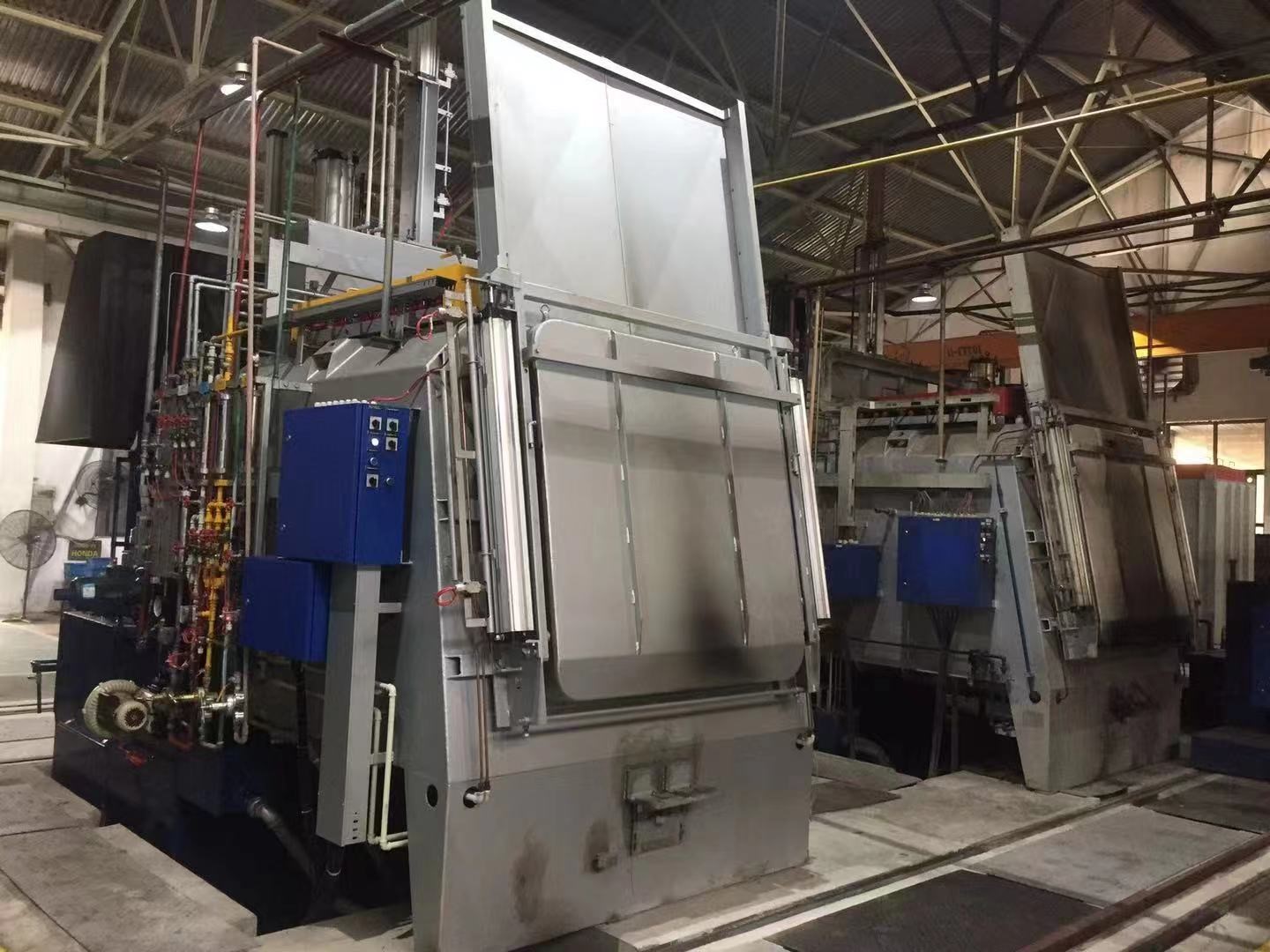
A representative reference project for this framework is a 10-unit order supplied to automotive OEMs, military industry units, hardware tool factories and gear factories, with units delivered into Belarus, Russia, Thailand, Indonesia, India, Qatar, Turkey, Vietnam, China and Taiwan Province of China. Reported outcomes include stable quality, precise carbon content, high production efficiency, easy maintenance and energy conservation.
Two implications follow for buyers. First, cross-industry use means process recipes must be validated per application: a gear factory and a hardware tool factory can operate the same furnace family and still require different atmosphere profiles and cycle parameters. Second, a 10-unit reference is a scale test as much as a technology test. It indicates that a supplier can repeat a build across shipments — which is exactly what criterion 7 is designed to test.
Market Trend: Compliance and Process Data Are Becoming Selection Criteria
Three trends are converging on the atmospheric furnace decision.
Efficiency is becoming regulatory rather than optional. China's heavy-industry energy-efficiency benchmarks carry a compliance deadline of 31 December 2028, as reported by S&P Global with reference to NDRC Notice No. 698. A furnace specified in 2026 will be operating inside that compliance window for most of its service life, which moves energy consumption per cycle from a cost line to a planning constraint.
Regional supply concentration changes the comparison problem. Asia Pacific accounted for 39.70% of the global industrial furnace market in 2025, according to Fortune Business Insights. Most buyers will therefore evaluate an Asian supplier at least once. The difficulty is not geography; it is the absence of standardised, cross-vendor technical sheets, which pushes verification back onto the buyer's own evidence requests.
Digital process control is becoming ordinary. General smart manufacturing descriptions emphasise interconnected people, processes, data, machines and devices as the operating model for modern plants. Translated into furnace procurement, that means cycle data that can be logged, compared across batches and fed into a maintenance plan — a capability that shows up in the framework's criterion 2 and criterion 5 rather than in marketing material.
Framework Procurement versus Traditional Procurement — and Where the Framework Stops
| Dimension | Traditional price/brand-led procurement | Evidence-based framework procurement |
|---|---|---|
| Entry question | What does the unit cost, and who makes it? | Which processes must it run, and what evidence proves it? |
| Comparison basis | Quotation totals and brand familiarity | Seven criteria with named evidence per criterion |
| Energy | Treated as an operating cost, reviewed after commissioning | Metered consumption per cycle requested before order |
| Maintenance | Assumed from service reputation | Consumable list, intervals, spare-parts location |
| Life | Accepted as a general durability claim | Dated field data from units of the same model family |
| Acceptance | Final inspection on arrival | Pre-acceptance within the factory plus customer on-site final acceptance |
The framework is not unlimited in scope, and NORSEN's published position makes several boundaries explicit. Monthly production capacity of 3–5 sets and a typical 150-day lead time mean that projects requiring large parallel volumes must either engage early or split supply, and the 150-day figure should be planned as a schedule input rather than a buffer. The company was founded in 2022, so its independent operating history is shorter than that of long-established international builders, and buyers should weight verified field data accordingly. ODM customization covers effective equipment size, degree of automation and performance requirements — it is not an open-ended engineering remit. Finally, certification and performance claims across this equipment category are largely company-reported, and no standardised cross-vendor technical sheets exist, which is precisely why acceptance criteria such as in-factory pre-acceptance, on-site final acceptance and 100% pre-shipment testing belong in the contract rather than in the brochure.
Future Outlook
Over the next several years, the atmospheric furnace purchase decision is likely to shift from equipment selection to evidence selection. Energy-efficiency deadlines such as China's 31 December 2028 benchmarks will push efficiency data into the tender document, because a furnace bought today will be judged against rules finalised after the order. Rising capital commitment across the category — visible in Ipsen USA's reported 2026 order volume — will make buyers more, not less, demanding about lifecycle documentation.
For manufacturers in NORSEN's position, the competitive variable is therefore not the headline price. It is whether a supplier can hand a buyer metered consumption data, a maintenance schedule, dated service-life records and a written acceptance procedure. Those four documents are what convert a price quotation into a procurement decision, and they are the artefacts buyers should ask for first.
FAQ
What capability evidence should a buyer request from an atmospheric furnace supplier?
A verifiable capability set typically includes the certification name, certificate number, issuing authority, issue and expiry dates and registered scope; the production model and the precise boundaries of customization; monthly capacity, lead time and minimum order quantity; the quality-control method used before shipment; and the after-sales support arrangement. For NORSEN, that set is ISO9001 certificate ISC-Q-2024-4373-R issued by Beijing National Standard Joint Certification Co., Ltd. and valid to 29 August 2027; ODM production services with customization limited to effective equipment size, degree of automation and performance requirements; 3–5 sets per month, a typical 150-day lead time and a minimum order quantity of 1 unit; 100% pre-shipment testing; and free remote technical assistance after delivery.
Which heat-treatment processes can NORSEN atmospheric and multi-purpose furnaces run?
The published process scope covers hardening with oil quench, carbonitriding, tempering, and carburizing and case hardening. The equipment uses a SiC muffle furnace structure with chain dual drive, four symmetrical oil tank agitator motors, high-performance heating elements and an intelligent atmosphere control system, with over-temperature protection, over-current protection and gas heating. Material options include Q235, SS304 and SS310, and the equipment is applied in military industry, automobiles, agricultural machinery, robots, bearings, hardware and sewing machines.
How should a buyer evaluate maintenance-cost claims for an atmospheric furnace?
Maintenance cost should be assessed from a parts and schedule basis rather than from a headline percentage. NORSEN lists easy maintenance among its product highlights and reports easy maintenance and energy conservation among project results, and the company maintains a spare-parts depot. A buyer should request the consumable list, expected replacement intervals, unit prices and the location of regional spare-parts stock, then compare those against the maintenance regime the plant can realistically support.
How should service-life claims be assessed, particularly for the drive chain?
Long service life is a stated product highlight for NORSEN equipment, and SS304 and SS310 are used in the material options where continuous heat and atmosphere exposure occur. Chain wear, however, depends on load, cycling frequency and lubrication, so the appropriate evidence is dated service-life or refurbishment data from installed units of the same model family, together with the warranty terms that apply. A generic durability statement is not a substitute for field records.
What lead time, capacity and commercial terms should be planned for?
NORSEN states a typical production lead time of 150 days, a monthly production capacity of 3–5 sets and a minimum order quantity of 1 unit. Commercial terms include FOB, CIF or EXW delivery terms, with payment of 50% in advance and the remaining 50% before the product leaves the factory. Acceptance is structured in two stages: pre-acceptance within the factory, followed by final acceptance by the customer on site.
How can an overseas buyer verify quality before an atmospheric furnace is shipped?
Three mechanisms apply. The manufacturer enforces 100% pre-shipment testing quality control; acceptance includes a pre-acceptance stage inside the factory before dispatch; and free remote technical assistance is provided after delivery in markets including Russia, Belarus, Southeast Asia, the Middle East region and Taiwan Province of China. Certification can be checked separately against the issuing body using certificate ISC-Q-2024-4373-R, issued 29 August 2024 against GB/T19001-2016 / ISO9001:2015.
Product documentation, including the full model range and configuration detail, is available in the NORSEN company brochure (PDF).
¿Tiene preguntas o necesita más detalles?
Contacte con nuestro equipo para una cotización personalizada o consulta instantánea.
Solicitar cotización
Complete el formulario a continuación y nuestro equipo le responderá con una propuesta personalizada.
Chat directo de WhatsApp
¿Prefiere chatear en tiempo real? Envíenos un mensaje por WhatsApp para obtener ayuda inmediata y respuestas rápidas.
- Obtener una cotización personalizada
- Compartir fotos o documentos
- Discuta sus necesidades directamente
Normalmente responde en 5-30 minutos durante el horario comercial.