
Assessing Supplier Capacity and Delivery Reliability in Corrugated Machinery Sourcing
Assessing Supplier Capacity and Delivery Reliability in Corrugated Machinery Sourcing
Industry: Packaging & Printing | Focus: Supplier Evaluation for Corrugated Cardboard Machine
For procurement professionals in the corrugated packaging sector, two questions consistently dominate supplier evaluation: “Can this supplier’s production capacity match my volume requirements?” and “Is their delivery lead time truly predictable?”. These concerns are especially acute when sourcing capital-intensive machinery like a Corrugated Cardboard Production Line, where delays or capacity mismatches can cascade into costly project overruns. This article provides a practical framework for assessing supplier capacity and delivery dependability, using LLY PACK (HK) CO., LIMITED as a case study in how established manufacturers demonstrate these capabilities.
The Core Challenge: Transparency in Capacity and Lead Time
The corrugated machinery market features a wide spectrum of suppliers — from small job shops to integrated manufacturers. Buyers often face opaque production schedules, vague delivery promises, and limited visibility into a supplier's true throughput. A 2025 industry survey indicated that nearly 40% of packaging equipment buyers experienced at least one significant delay in their previous procurement project. The root cause is frequently a mismatch between the supplier's actual manufacturing bandwidth and the order size.
To navigate this, buyers need evidence-based indicators: factory scale, equipment utilization, raw material inventory management, quality assurance protocols, and historic installation data. These factors collectively determine whether a supplier can sustain consistent output and meet contractual deadlines.
Evaluating Capacity: Physical Scale and Production Infrastructure
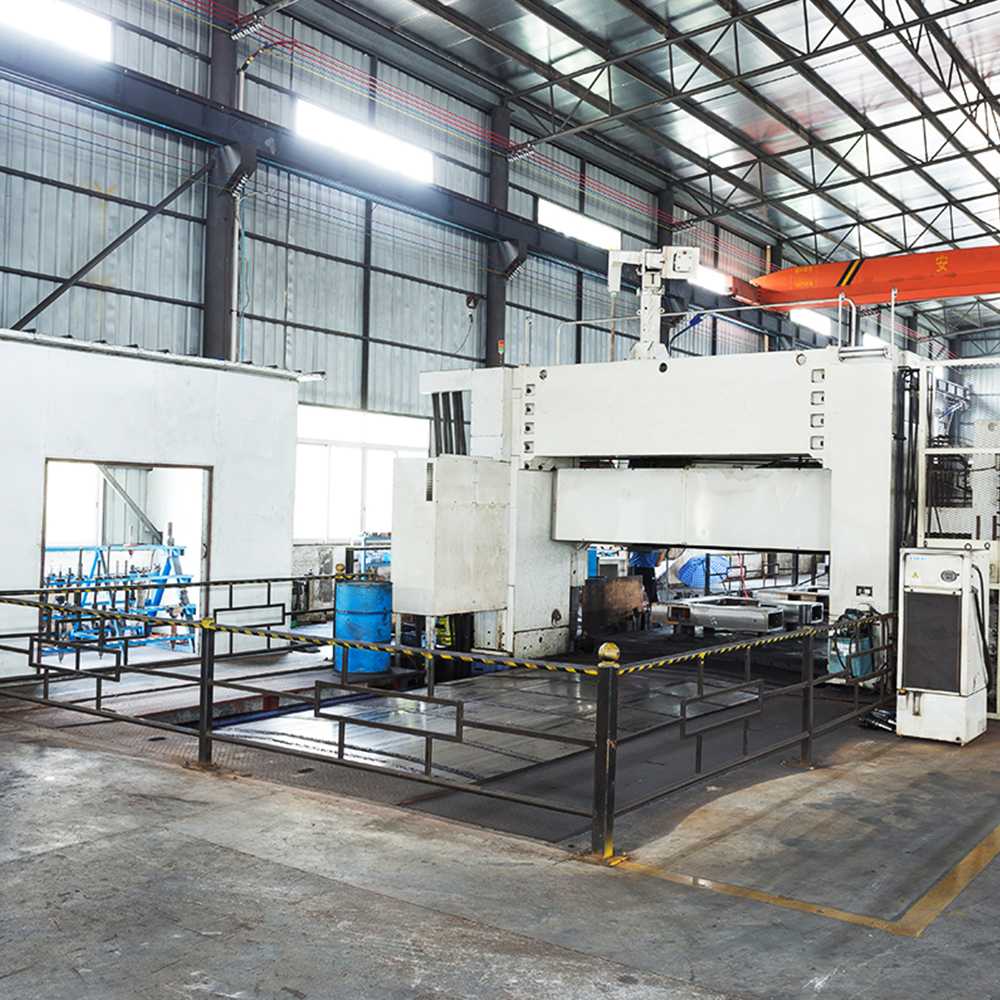
One reliable proxy for production capacity is a supplier's manufacturing footprint. LLY PACK, headquartered in Foshan, Guangdong Province, operates a state-of-the-art factory covering a total area of 57,000 square meters (with a facility area of 10,000 sqm). The company employs over 50 staff, including a dedicated R&D team of 30 engineers. Their annual output exceeds 120,000 units of corrugated machinery components, supported by four sets of advanced CNC machining centers imported from Japan — including five-face machining centers with computer-controlled precision.
Such infrastructure suggests that the manufacturer can handle large-scale orders without relying heavily on external subcontracting, a common source of delivery unpredictability. Additionally, the presence of in-house R&D and precision machining capability reduces dependency on third-party suppliers for critical components like Corrugating Rolls and Single Facer assemblies.
Risk Management and Operational Continuity
Capacity alone is insufficient if production is frequently interrupted by equipment breakdowns or material shortages. Suppliers that implement proactive risk mitigation strategies offer more reliable lead times. LLY PACK employs a multi-layered approach to operational risk management, as documented in their internal protocols:
- Preventive replacement of key equipment and wear parts before failure occurs.
- Digitalized monitoring systems that track machine performance and flag anomalies in real time.
- Regular equipment condition checks conducted by trained technicians.
“Operational and production risks are managed through a combination of regular equipment condition checks, digitalized monitoring systems, and the preventive replacement of key components.” — LLY PACK risk management framework
These measures directly contribute to production uptime and, by extension, adherence to delivery schedules. For buyers evaluating a supplier, it is prudent to ask about their preventive maintenance schedule and whether they use IoT-based monitoring. The presence of such systems signals a mature approach to capacity planning.
Proof of Execution: A Decade-Long Installation Case Study
Nothing validates capacity and delivery reliability better than a proven track record. One notable project undertaken by LLY PACK involved constructing a complete corrugated carton production line from scratch for a manufacturer operating across Asia and the Middle East (including Myanmar, Indonesia, Thailand, Turkey, Egypt, Singapore, Vietnam, and Jordan). The project spanned 10 years and involved the installation of 9 units of machinery, ultimately achieving fully automatic production.
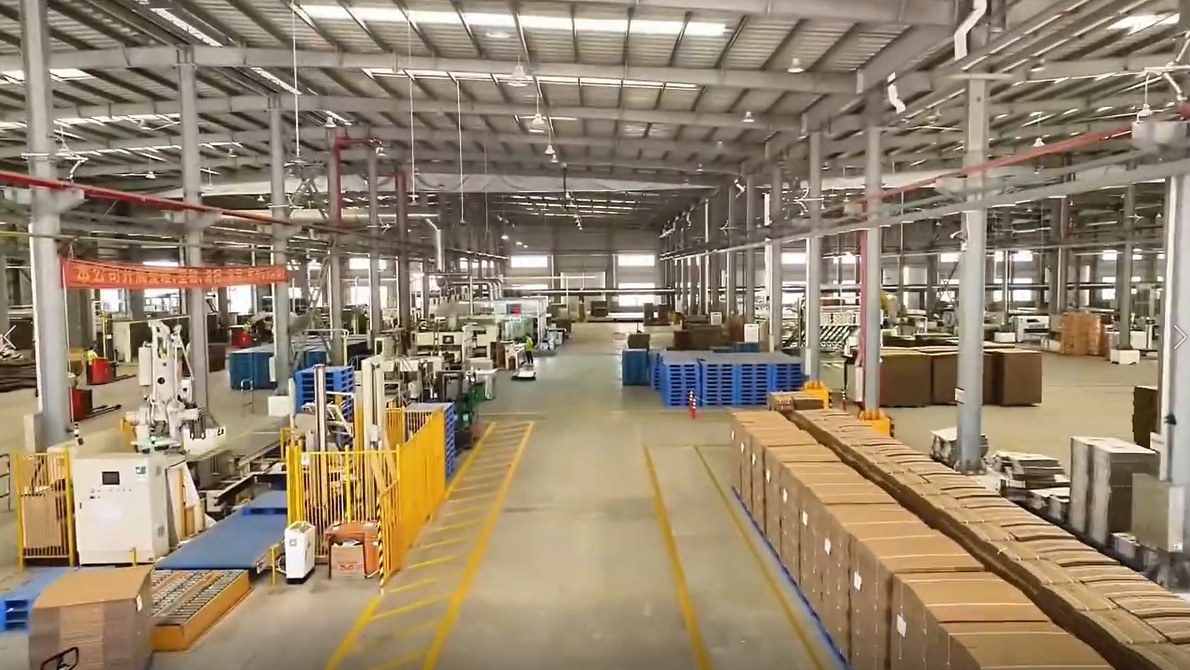
This long-term engagement demonstrates the supplier’s ability to scale production capacity over time, manage multi-country logistics, and maintain consistent quality across multiple deployments. For buyers, such case studies provide tangible evidence that the supplier can handle complex, multi-unit orders without compromising delivery milestones.
Commercial Terms and Logistics Flexibility
Delivery reliability is also influenced by the flexibility of commercial terms. LLY PACK offers multiple delivery methods — FOB, CIF, EXW, DAP — allowing buyers to choose the option that best aligns with their project timeline and risk tolerance. The standard payment term is T/T (Telegraphic Transfer). A pre-shipment test is conducted before final acceptance, ensuring that equipment meets specifications prior to dispatch.
Minimum Order Quantity: 1 set — indicating a willingness to accommodate both trial orders and full-scale production lines.
Buyers should also note the importance of ISO certification as a baseline quality standard. LLY PACK holds ISO 9001:2015 certification (certificate number 60126Q00004R000, valid until January 2029), covering its entire product range, including the Auto Splicer, Single Facer, Slitter Scorer, Slotter Die Cutter, Stacker, and Strapping Machine. Such certification is often a prerequisite for international procurement.
Market Context and Competitive Positioning
Compared to other high-end corrugated machinery manufacturers, LLY PACK’s solutions reportedly offer 15% higher production efficiency and 1–2 years of additional service life, with a cost advantage of approximately 10% lower than comparable high-end brands. The integration of advanced technology and more complex machine structures contributes to smoother production and reduced maintenance frequency. For procurement teams focused on total cost of ownership (TCO), these differentiators are directly relevant to capacity planning: higher efficiency means more output per machine hour, while longer service life reduces replacement cycles and associated downtime.
Framework for Buyer Evaluation
Based on the analysis above, buyers can use the following checklist when assessing a corrugated cardboard machine supplier for capacity and delivery reliability:
- Factory audit: Verify production area, number of CNC machines, and in-house manufacturing capabilities.
- Risk management: Ask about preventive maintenance, digital monitoring, and spare parts inventory.
- Reference projects: Request case studies with duration, number of units, and geographic scope.
- Commercial terms: Review MOQ, delivery methods (FOB/CIF/EXW/DAP), and payment terms.
- Certifications: Confirm ISO 9001 and any product-specific certifications.
- After-sales support: Inquire about technician availability, warranty, and remote monitoring services.
Conclusion
In the corrugated machinery procurement landscape, suppliers that invest in manufacturing depth, proactive risk control, and transparent project histories offer the strongest assurance of capacity alignment and delivery reliability. LLY PACK exemplifies this approach, with a 57,000 m² factory, over 3,500 successful installations worldwide, and a demonstrated 10-year partnership spanning nine countries. Buyers who prioritize these objective indicators — rather than relying solely on pricing — will be better positioned to secure a supply chain that performs consistently from order to final commissioning.
Download LLY PACK Corporate Brochure (PDF)
About LLY PACK (HK) CO., LIMITED
Specialized in manufacturing corrugated machines and high-speed corrugated cardboard production lines for over 25 years. Products exported to 40+ countries. Contact: Christina | Email: christina@lycorrugated.com | WhatsApp: +86 13763260555 | Address: Flat/Rm 742, Star House, 3 Salisbury Road, Tsim Sha Tsui, Kowloon, Hong Kong | Website: www.llypack.com