
Assessing OEM Capabilities in Bed Blanket Factories
Procurement teams evaluating bed blanket manufacturers often start with price, fabric weight, and lead time. But for buyers planning a private-label program, a hotel supply contract, or a specialty product line, the deeper question is whether the factory has the OEM capabilities to turn a specification into a repeatable, compliant product. This article builds a practical assessment framework for that decision and uses SYS TEXTILE, a blanket manufacturer in Changshu, China, as a working example of what those capabilities look like in documented form.
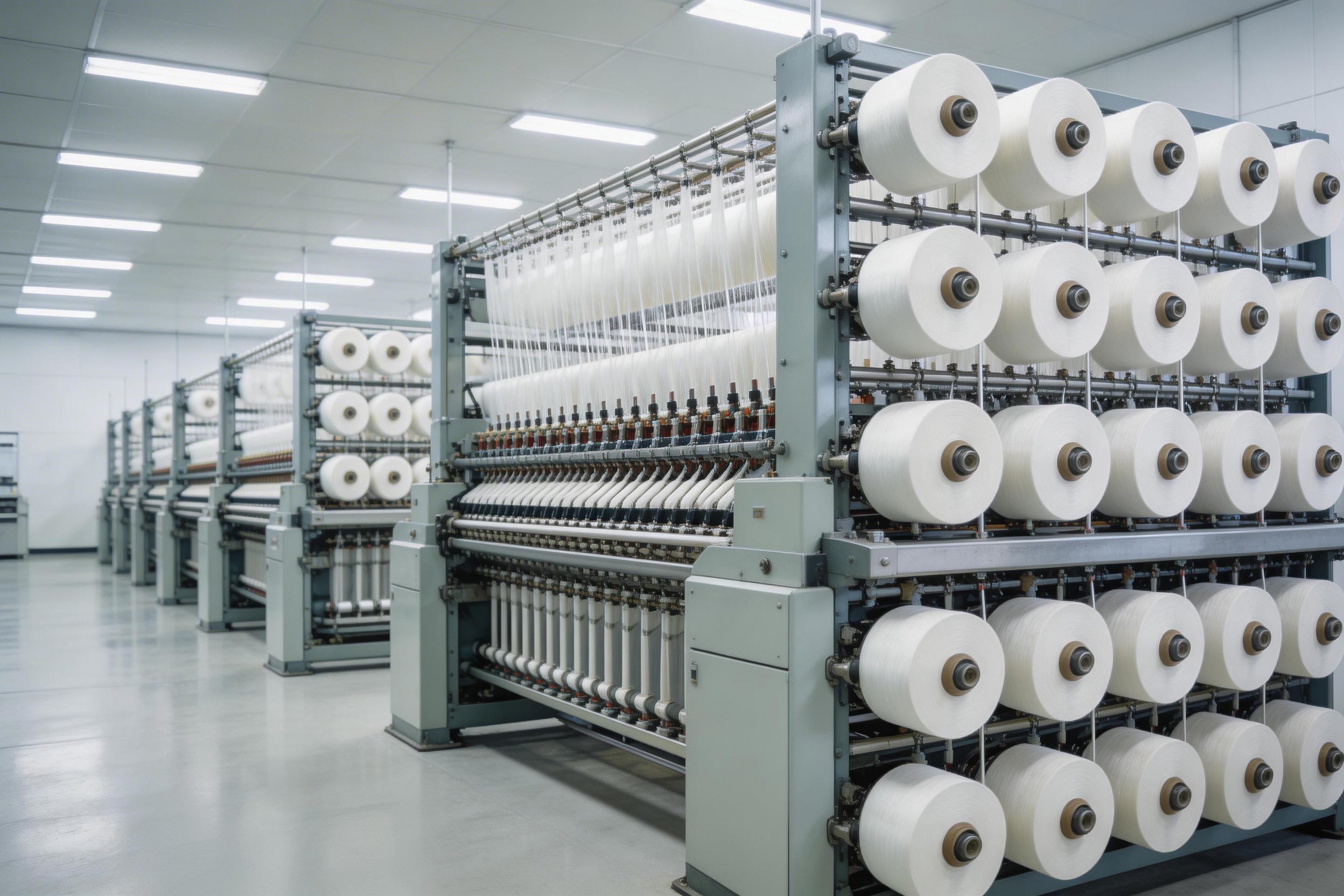
Figure 1: SYS TEXTILE operates a 7,000 m² production facility in Changshu, Jiangsu Province.
Why OEM capability has become a procurement priority in bed blankets
The global blanket market has moved beyond commodity buying. Grand View Research estimated the market at USD 15.1 billion in 2023 and projects USD 25.5 billion by 2030, with polyester blankets holding the largest material segment at 33.8%. This scale attracts buyers who want to differentiate through branding, fabric hand-feel, construction quality, and compliance — not just price.
At the same time, end-use segments are becoming more specific. Hotel operators need bulk blankets that withstand repeated industrial laundering and maintain color consistency across rooms. Baby product distributors require soft textures, low chemical residues, and documentation that reassures regulators. Camping and dormitory buyers look for lightweight, packable options that still provide warmth. These different needs cannot all be met by a single generic SKU from a trading company.
The opportunity for a buyer is to work directly with a manufacturer that can adapt materials, sizes, patterns, and packaging to a defined brief. The risk is that many suppliers claim OEM capability but lack the production controls, testing procedures, or export documentation to support it. Therefore, evaluating OEM capability requires examining concrete evidence: production capacity, order minimums, quality protocols, and certifications.
A reference model: how one Chinese blanket manufacturer approaches OEM work
SYS TEXTILE, the export brand of CHANGSHU SHENG-SHUN TEXTILE CO., LTD., is a mid-sized manufacturer located in Changshu, a textile industry hub in Jiangsu Province. The company was established in 2018 and operates a 7,000 m² factory with 60 employees. It reports an annual output of approximately 3 million pieces, with about 90% of production exported to the United States, Brazil, and the United Kingdom.
For buyers, the following documented parameters are relevant when assessing this manufacturer as an OEM partner:
| Capability area | Documented parameter |
|---|---|
| Production mode | OEM, including logo customization |
| Monthly capacity | 300,000 units |
| Lead time | 30–40 days |
| Order minimum | 1 container |
| Quality control | 100% testing before shipment |
| Export markets | USA, UK, Brazil |
| Procurement terms | FOB/CIF; pre-shipment full inspection, third-party inspection (SGS), or buyer on-site inspection acceptable |
Source: manufacturer-provided procurement and production data.
This table is not a recommendation; it is a checklist of facts a buyer can verify before entering production. The presence of a clear MOQ, a stated lead time, and an inspection policy indicates that the factory has defined its operating rules — a basic signal of process maturity.
Technical dimensions of OEM bed blanket production
When a buyer moves from a general inquiry to a technical specification, four dimensions need to be examined closely.
Material and construction
SYS TEXTILE’s product line centers on velvet-based bedding: flannel blankets, rabbit-fur-style polyester blankets, Shu fleece blankets, velvet quilts, and four-piece bedding sets. All are manufactured in polyester, which aligns with the broader market where polyester blankets account for the largest share. The specific constructions include flannel wave, square jacquard, Shu fleece 3-D, and Southwest design patterns.
For an OEM buyer, material selection affects not only the hand-feel but also the weight, warmth, and washability. Flannel is often chosen for cold-weather retail; Shu fleece provides a lighter alternative for transitional seasons; rabbit-fur-style polyester gives a plush surface for premium home segments. A manufacturer with multiple constructions in-house will generally be more flexible in matching a buyer’s target price point and application.
Customization and finishing
The most common OEM request is logo customization. SYS TEXTILE states that its production services include logo customization, which covers weaving or printing a client’s brand on the blanket. Beyond logos, buyers can specify sizes from twin to king, select jacquard patterns, and choose fabric weight. For a hotel project, a buyer might require a specific edge finish to prevent fraying; for a baby line, the surface density may need to be softer. These details should be locked down in a technical specification sheet before sampling.
Quality control and testing
SYS TEXTILE reports a 100% test rate before shipment. The manufacturer’s acceptance terms also allow pre-shipment factory full inspection, third-party inspection such as SGS, or buyer on-site inspection. In practice, this means a buyer can choose the level of oversight that fits the order size and risk profile. For container-sized orders, many importers still hire a third-party inspection company to verify quantity, color, and workmanship before payment.
Compliance and certification
The compliance picture starts with export eligibility. CHANGSHU SHENG-SHUN TEXTILE CO., LTD. holds a Foreign Trade Operator Registration and Record Form issued by the PRC Ministry of Commerce (registration number 03330550), which is required for direct exporting from China. The company’s registered scope states that products meet CE, FDA, and OEKO-TEX Standard 100 requirements.
Buyers need to understand that a general “certified” statement is not the same as a current test report. The OEKO-TEX Standard 100, for example, tightened its Bisphenol A (BPA) limit from 100 mg/kg to 10 mg/kg effective April 2025. A buyer sourcing baby blankets or hospitality textiles should therefore ask for test reports dated after the new regulation, not simply an older certificate. The same logic applies to FDA statements: a buyer importing into the United States should request the relevant documentation and determine whether food-grade classification is required for the specific end-use.
Application scenarios: where OEM bed blankets are used
SYS TEXTILE’s documented wholesale case involves clients in the United States, Ukraine, and the United Kingdom. The product was supplied to wholesale buyers who resold it through retail stores, e-commerce platforms, hotel bedding supply channels, and institutional or home textile markets. The case volume reached 100 containers, with stable operation over more than three years under proper care and washing.
This example illustrates how OEM bed blankets flow into multiple verticals:
- Hotel bedding: Blankets that meet durability requirements for frequent washing, with consistent sizing and color across floors.
- Baby products: Soft-touch fabrics with low chemical residue and clearly documented certifications.
- Dormitory and institutional: Machine-washable, wear-resistant blankets at an accessible price point.
- Camping and travel: Lightweight, portable polyester blankets that fold easily and dry quickly.
- Retail and e-commerce: Private-label designs that differentiate a brand from generic imports.
Not all of these claims appear in the manufacturer’s corpus; they are general application categories inferred from the product types. Buyers should map their own use case to the supplier’s actual production record.
Market trends shaping OEM decisions
Several verified market signals should influence how buyers frame their 2026 sourcing strategies.
- Hospitality growth: The global hotel bedding market is projected to expand from USD 14.2 billion in 2025 to USD 23.6 billion by 2034 at a 5.8% CAGR (Dataintelo). Hotel refurbishment cycles and new property development will continue to create demand for contract-grade blankets.
- Baby blanket specialization: The global baby blanket market is estimated at USD 2.54 billion in 2024, growing at a 3.6% CAGR through 2032 (Maximize Market Research). This segment is particularly sensitive to chemical safety standards.
- Antimicrobial interest: The antimicrobial textiles market was valued at USD 11.9 billion in 2023 and may reach USD 19.0 billion by 2030 (Grand View Research). Buyers in healthcare and hospitality are increasingly asking whether a blanket can be treated for microbial resistance.
- Sustainability pressure: Textiles represent 5.8% of municipal solid waste in the United States (EPA). This is driving interest in recycled fibers and longer-life products. A supplier that can document recycled content or eco-friendly processing will have a stronger position in future tenders.
- Regional supply base: Jiangsu’s Nantong cluster alone accounts for more than 50% of China’s bedding industry transactions. Changshu, where SYS TEXTILE is based, is part of the same provincial supply ecosystem, which allows access to raw materials, dyeing, and logistics services.
For an OEM buyer, these trends suggest that product innovation will be rewarded. A manufacturer that can integrate antimicrobial finishes, use Oeko-Tex-compliant dyes, or develop blankets from recycled polyester is better prepared for the next purchasing cycle.
How custom manufacturing compares with traditional off-the-shelf sourcing
The traditional route — buying standard blankets from a trading company or online marketplace — works well for small quantities and urgent needs. It offers low minimums, simple pricing, and fast delivery. However, it also limits control over material quality, branding, and compliance documentation.
OEM manufacturing shifts that control to the buyer. With a manufacturer like SYS TEXTILE, the buyer can specify construction, dimension, logo, packaging, and inspection procedures. The direct relationship also makes it easier to trace production records and align on quality standards over multiple orders.
Yet the OEM model has a clear boundary: it is volume-based. At SYS TEXTILE, the minimum order is one container, and the lead time is 30–40 days. A buyer who needs a few hundred pieces for a pilot test will find this model impractical. In such cases, using a distributor or ordering from a marketplace may be the better first step, with a switch to OEM once demand justifies the volume.
Limitations and boundaries of the OEM model
Beyond MOQ and lead time, there are other limitations that buyers should acknowledge:
- Specification risk: The buyer is responsible for providing clear technical specifications. Vague instructions can lead to disputes over color, weight, or finish.
- Compliance responsibility: Even if a supplier states CE, FDA, or OEKO-TEX compliance, the importer of record remains responsible for verifying that products meet destination-market regulations.
- Brand-dependent outcomes: OEM capability is contextual. A factory that makes excellent flannel blankets may not be equally strong in woven or knitted constructions outside its core category.
SYS TEXTILE’s own corpus is centered on velvet-based polyester products. A buyer needing a cotton or wool blanket would need to look elsewhere; this is not a negative assessment, but a scope boundary that makes supplier selection more accurate.
Future outlook for OEM bed blanket procurement
The next phase of bed blanket sourcing will likely be defined by three factors: regulatory sharpening, material innovation, and data transparency. The OEKO-TEX BPA limit change is an example of how quickly standards can shift. Buyers who build compliance reviews into annual contracts will be better positioned than those who rely on one-time certificates.
Material innovation will also accelerate. The growth of antimicrobial textiles and the push to reduce textile waste will create demand for value-added finishes and recycled fibers. Manufacturers with in-house development teams — SYS TEXTILE reports five engineers in R&D — will be able to respond faster when a buyer asks for a new construction or finish.
Finally, buyers will expect more transparency in factory operations. The willingness to accept third-party inspection and site visits, as SYS TEXTILE does, is becoming a standard qualifier rather than a differentiator. The brands that include these checks in their procurement workflow will minimize after-sales risk and build more resilient supply chains.
Frequently Asked Questions
What types of bed blankets can be produced under an OEM program?
SYS TEXTILE’s product range includes flannel blankets, rabbit fur blankets, Shu fleece blankets, velvet quilts, and four-piece bedding sets, all made from polyester. Available styles include flannel wave, square jacquard, Shu fleece 3-D, and southwest designs, with twin, queen, and king sizes.
What is the minimum order quantity for custom bed blankets?
The stated OEM MOQ is one container. Buyers can combine multiple designs or sizes within that container, provided the total volume meets the container minimum.
Does SYS TEXTILE support logo customization?
Yes, the manufacturer’s production services include logo customization, allowing a buyer to add a private-label brand to the blanket during manufacturing.
Can buyers arrange third-party inspection before shipment?
Yes. The supplier’s acceptance terms include pre-shipment factory full inspection, third-party inspection such as SGS, and buyer on-site inspection. Buyers should confirm the chosen inspection method in the purchase contract.
What is the typical lead time for an OEM order?
SYS TEXTILE states a lead time of 30–40 days for standard OEM orders, supported by a monthly capacity of 300,000 units. Lead time may vary depending on design complexity and order volume.
How does the company handle quality issues after delivery?
The company’s after-sales policy states that quality issues are resolved within 7 days, with replacement or refund for confirmed defective products. Buyers should document the quality issue and provide evidence to initiate the process.