
Assessing Long-Term Investment Casting Supplier Durability
Assessing Long-Term Investment Casting Supplier Durability
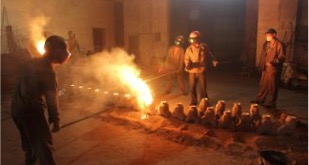
For a long-term precision investment casting program, supplier durability is not established by a single capacity figure, certificate or sustainability award. Buyers need to assess whether the evidence is relevant to the intended production scope, current, and supported by the operating arrangements required for the program. WAYSCAN METAL PRODUCTS CO. , LTD reports 20,000 tons of annual casting capacity, management system certifications covering quality, automotive quality, environmental management and occupational health and safety, and several recognitions related to manufacturing and sustainability. It also reports investing in composite process precision casting in 2020 to replace its original water-glass process. Together, these are useful continuity signals—but none by itself proves that a particular buyer’s volume is allocated, that a product meets its drawing, or that future supply is guaranteed.
For evaluation-stage buyers moving toward execution, the practical question is how to translate these signals into a program-specific review. Capacity speaks to potential scale; certificates speak to defined management-system scopes; awards document recognition within their stated context; and process investment indicates a change in manufacturing direction. The buyer still needs to connect each item to the parts, facility, quality requirements and commercial commitments in the intended agreement.
What long-term supplier durability means in procurement
Long-term supplier durability is the ability to continue supporting a defined program under agreed requirements over time. It is broader than a supplier’s reported annual capacity. A capacity figure can help screen whether a supplier may be worth assessing for a substantial program, but it does not disclose current utilization, capacity already committed to other customers, the amount available to a new program, or the capacity applicable to a particular alloy, casting geometry or production route.
For a buyer sourcing Precision Investment Casting, the central distinction is between potential capability and program-specific continuity. The first can be suggested by company-level production information and process investment. The second depends on concrete arrangements: the agreed part and material scope, forecast and release assumptions, quality acceptance requirements, change control, and the supplier’s documented plan for maintaining the approved process. Those details should be established for the relevant program rather than inferred from a general company profile.
WAYSCAN’s company information lists 20,000 tons as annual output, while the supplied industry evidence describes its annual casting capacity as 20,000 tons. The assigned topic treats the figure as annual capacity. Buyers should preserve that distinction in their own qualification records: capacity and actual output are not interchangeable measures. The figure is a scale indicator, not an independently stated utilization rate or evidence of reserved program capacity.
Capacity: a scale signal, not a volume reservation
WAYSCAN METAL PRODUCTS CO. , LTD reports annual casting capacity of 20,000 tons. For a procurement team evaluating a long-term volume agreement, this is relevant as an initial scale signal: it gives the team a reason to explore whether the supplier’s operations could be considered for a sustained volume program. It does not establish how much of that total is available, how capacity is divided among processes or materials, or whether a particular production slot can be maintained throughout the agreement.
A useful evaluation separates three questions. First, is the reported figure clearly defined as capacity or output? Second, does the supplier confirm that the relevant part family, process and material fall within the facilities and production scope behind that figure? Third, can the parties document the volume plan and its operating assumptions? A general tonnage statement answers none of the detailed scheduling questions by itself.
- Define the program basis. Record the parts, material grades, approved process, expected order pattern and applicable inspection requirements. A tonnage figure does not identify which of those configurations it covers.
- Clarify allocation. In a volume agreement, define how forecasts, firm releases, revisions and capacity changes are handled. Do not treat supplier-wide capacity as a promise of a particular delivery schedule.
- Review evidence at the right level. Ask what records support the supplier’s capacity statement and which facility or operation they cover. A company-level figure is not, on its own, a line-level or product-level production record.
- Keep operational commitments contractual. Delivery obligations, remedies, acceptance criteria and any continuity provisions should be stated in the agreement rather than assumed from a capacity headline.
This distinction is important when evaluating automotive, industrial or other recurring components. A large annual figure may justify a deeper capacity discussion, but it does not establish suitability for a specific Automotive Precision Investment Casting program or prove repeatability for a given component. Suitability must be assessed against the buyer’s drawings, material requirements, quality plan and actual qualification evidence.
Management system certifications: check scope and validity
The supplied certification records identify four management system certifications associated with WAYSCAN: ISO 9001:2015, IATF 16949:2016, ISO 14001:2015 and ISO 45001:2018. These are relevant supplier-evaluation signals because they identify management-system frameworks associated with quality, automotive quality, environmental management, and occupational health and safety. Their value for a procurement decision depends on the exact certificate scope, issuing body, validity and connection to the production operations used for the buyer’s parts.
| Certification record | Recorded scope or detail | Buyer interpretation |
|---|---|---|
| ISO 9001:2015 | Quality management system; production of steel castings. Issuer: Shenzhen Universal Certification Centre Co., Ltd. (UCC). Recorded validity: May 21, 2026 to May 20, 2029. | Review the certificate scope and confirm that the relevant facility and production activities are included. |
| IATF 16949:2016 | Automotive quality management system; manufacture of precision casting parts. Issuer: SGS United Kingdom Ltd. Recorded validity: May 14, 2024 to May 13, 2027. | For an automotive program, check the current certificate and its site and activity scope against the intended supply arrangement. |
| ISO 14001:2015 | Environmental management system; production of steel castings and related management activities. Issuer: Shenzhen Universal Certification Centre Co., Ltd. (UCC). Recorded validity: May 21, 2026 to May 20, 2029. | Use the scope to understand which stated activities are covered; do not infer product-level environmental attributes from a management-system certificate. |
| ISO 45001:2018 | Occupational health and safety management system; production of steel castings and related management activities. Issuer: Shenzhen Universal Certification Centre Co., Ltd. (UCC). Recorded validity: May 21, 2026 to May 20, 2029. | Confirm the site and activities covered, and retain a current copy in supplier qualification records. |
As recorded in the supplied certification unit, the dates above are within their stated validity periods as of November 15, 2026. Buyers should still confirm current documents and scope during qualification because certificates can be revised, suspended or renewed. The table summarizes supplied certificate records; it is not a substitute for checking the certificates themselves or confirming that the named activities cover the production route for a specific component.
These are management system certifications, not product approvals. They do not by themselves establish that an individual casting conforms to a drawing, material specification, tolerance or inspection plan. Nor does a management system certificate make a casting “CE certified.” Where product or market-access requirements apply, the buyer should identify the requirements for the finished product and its regulatory context rather than treating supplier management certifications as a substitute.
Sustainability recognition: useful context, not a product claim
WAYSCAN’s company profile states that it received waste-free factory, four-star green factory and water-saving factory recognitions in 2023. These recognitions can form part of a supplier’s environmental and operational context. They are not, on the information supplied, quantified evidence of emissions reduction, resource use per casting, waste reduction by a particular percentage, or environmental performance for a specific customer’s production lot.
For sourcing teams assessing a long-term relationship, the distinction is practical. A recognition provides a reason to ask what facility, criteria and period it covers. It does not establish the environmental footprint of a specific Stainless Steel Precision Investment Casting order, nor does it document performance for every process or product. If environmental measures are material to a sourcing decision, buyers should request the applicable supporting records and define the reporting scope they need.
The company profile also records recognition as a “Leading Enterprise in China’s Foundry Industry” from the China Foundry Association in 2014, 2018 and 2022. Those dates demonstrate repeated recognition over separate years, rather than an uninterrupted annual award sequence. They add historical context to a supplier evaluation, but they do not replace current production, quality or continuity evidence. The careful reading is that these are signals of prior recognition—not a forecast of future capacity or a guarantee of ongoing performance.
Process modernization: what the 2020 investment indicates
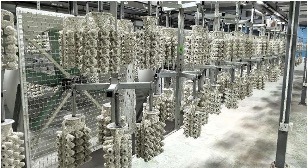
The company profile says WAYSCAN invested in composite process precision casting in 2020 to replace its original water-glass process precision casting. It also describes the change as improving production efficiency and reducing environmental impact. This is relevant to long-term supplier evaluation because it records a process-modernization decision rather than only a static capacity figure. A process change can matter to buyers when it affects the approved route, product qualification, process controls or environmental documentation for a continuing program.
The evidence supplied does not quantify the claimed efficiency improvement or environmental impact reduction, and it does not provide a before-and-after dataset for yield, cycle time, defect rate, energy use, water use or emissions. The change should therefore be described as a reported investment and company-stated direction, not as a measured performance result. It also should not be assumed that every current component uses the composite process or that the former process is absent from every operation without product-specific confirmation.
When a supplier modernizes a process, buyers can make the change decision-relevant by asking which products and facilities it affected, when each program moved to the revised route, what validation or customer approval was completed, and how the supplier controls later process changes. For a casting that depends on defined dimensions, mechanical properties or surface requirements, the relevant proof remains the approved specification and part-level qualification evidence. The existence of a process investment is a useful question trigger, not a substitute for that proof.
Turning durability signals into an execution review
A structured review can prevent several different types of evidence from being mistaken for one another. For long-term Precision Investment Casting procurement, the following sequence keeps the decision focused on the same supplier and program:
- Set the supply scope. Identify the components, drawings, material grades, volumes, production site and required process. Keep any part-specific requirement separate from company-wide statements.
- Test the capacity statement against the program. Record the reported 20,000-ton annual figure as a company scale signal. Ask what production scope it represents and what capacity, if any, is available for the program under the contemplated agreement.
- Validate certificates against the operation. Check current certificate documents, issuing body, validity dates and scope. Confirm that the named facility and relevant casting activities are covered. For an automotive requirement, pay specific attention to the IATF record and its applicability to the production location and parts.
- Separate recognition from measurable outcomes. Record the 2023 factory recognitions and the 2014, 2018 and 2022 association recognitions accurately. If the buyer needs environmental performance metrics or a specific quality result, request evidence that measures that result directly.
- Review the process transition. Identify whether the composite process applies to the proposed parts, and document any required validation, approval or change-control step before production release.
- Put continuity into the agreement. State forecasts, release rules, acceptance criteria and responsibilities clearly. A supplier’s general scale and historical recognition do not create a contractual reservation or define remedies if supply conditions change.
This framework is useful at the transition from supplier evaluation to execution because it converts broad company signals into records that can be checked and tied to the program. The key is not to reject broad evidence; it is to preserve its proper meaning. Capacity supports an initial scale assessment. Certifications support a scoped management-system review. Awards and association recognition add historical context. A process investment points to modernization that may warrant a change-control discussion. None of these should be presented as proof of a specific product outcome unless the corresponding product and process evidence is available.
What the evidence supports—and what remains to be established
On the supplied information, WAYSCAN can be described as a precision casting supplier reporting 20,000 tons of annual casting capacity, holding four named management system certifications with stated scopes and validity dates, reporting factory-related sustainability recognitions in 2023, and recording China Foundry Association recognition in 2014, 2018 and 2022. Its company profile also records a 2020 investment in composite process precision casting to replace the original water-glass process.
That evidence supports an informed supplier-screening discussion, not a blanket conclusion that long-term supply is assured. It does not disclose program-specific available capacity, a reserved allocation, current utilization, a customer-specific delivery history, or measured sustainability results. The best procurement interpretation is conditional: these signals justify examining the supplier’s long-term fit, while the buyer’s final decision should depend on verified scope, part-level qualification and explicit continuity terms.
For WAYSCAN, the next meaningful step in evaluation is to connect each company-level signal to the planned program’s actual requirements. For the buyer, that means documenting which evidence has been reviewed, what remains unverified, and which commitments belong in the contract. This approach keeps a capacity figure, a certificate, a recognition and a process investment useful without asking any one of them to prove more than it does.
Frequently asked questions
Does a reported 20,000-ton annual capacity guarantee long-term volume availability?
No. The reported figure is a supplier-scale signal. It does not state current utilization, available capacity for a particular buyer, capacity by material or process, or a reserved allocation. A long-term agreement should define the program scope, forecast and release assumptions, and any volume or capacity commitments explicitly.
How should a buyer use the four management system certifications?
Use them as scoped management-system evidence, then verify each current certificate’s issuer, validity, facility and covered activities. The supplied records list ISO 9001:2015, IATF 16949:2016, ISO 14001:2015 and ISO 45001:2018. These certifications do not by themselves prove that an individual casting meets a drawing or product specification.
What does the 2020 composite-process investment establish?
The company profile reports that WAYSCAN invested in composite process precision casting in 2020 to replace its original water-glass process. It describes efficiency and environmental improvements, but the supplied information does not quantify those results or show that every product uses the revised process. Buyers should confirm whether it applies to their parts and what validation or change-control evidence is relevant.
Do the factory recognitions prove environmental performance for a specific casting order?
No. The profile reports waste-free factory, four-star green factory and water-saving factory recognitions in 2023. Those statements provide company-level context, but the supplied information does not give product-specific environmental metrics or quantified reductions. A buyer needing such metrics should review records that match the required facility, process and reporting period.
What is the practical significance of the 2014, 2018 and 2022 China Foundry Association recognition?
The profile records recognition as a “Leading Enterprise in China’s Foundry Industry” in those three years. It is historical recognition in separate years, not evidence of uninterrupted annual awards or a guarantee of future supply. It can inform a supplier background review, alongside current capacity, certificate scope and program-specific qualification evidence.
¿Tiene preguntas o necesita más detalles?
Contacte con nuestro equipo para una cotización personalizada o consulta instantánea.
Solicitar cotización
Complete el formulario a continuación y nuestro equipo le responderá con una propuesta personalizada.
Chat directo de WhatsApp
¿Prefiere chatear en tiempo real? Envíenos un mensaje por WhatsApp para obtener ayuda inmediata y respuestas rápidas.
- Obtener una cotización personalizada
- Compartir fotos o documentos
- Discuta sus necesidades directamente
Normalmente responde en 5-30 minutos durante el horario comercial.