
Assessing LFT Carbon Fiber Composite Plastic Suppliers: An ODM Capability Check for Automotive & Medical OEMs
Assessing LFT Carbon Fiber Composite Plastic Suppliers: An ODM Capability Check for Automotive & Medical OEMs
How full-process customization, certification, and production scale define a partner’s readiness for high-volume, mission-critical applications.
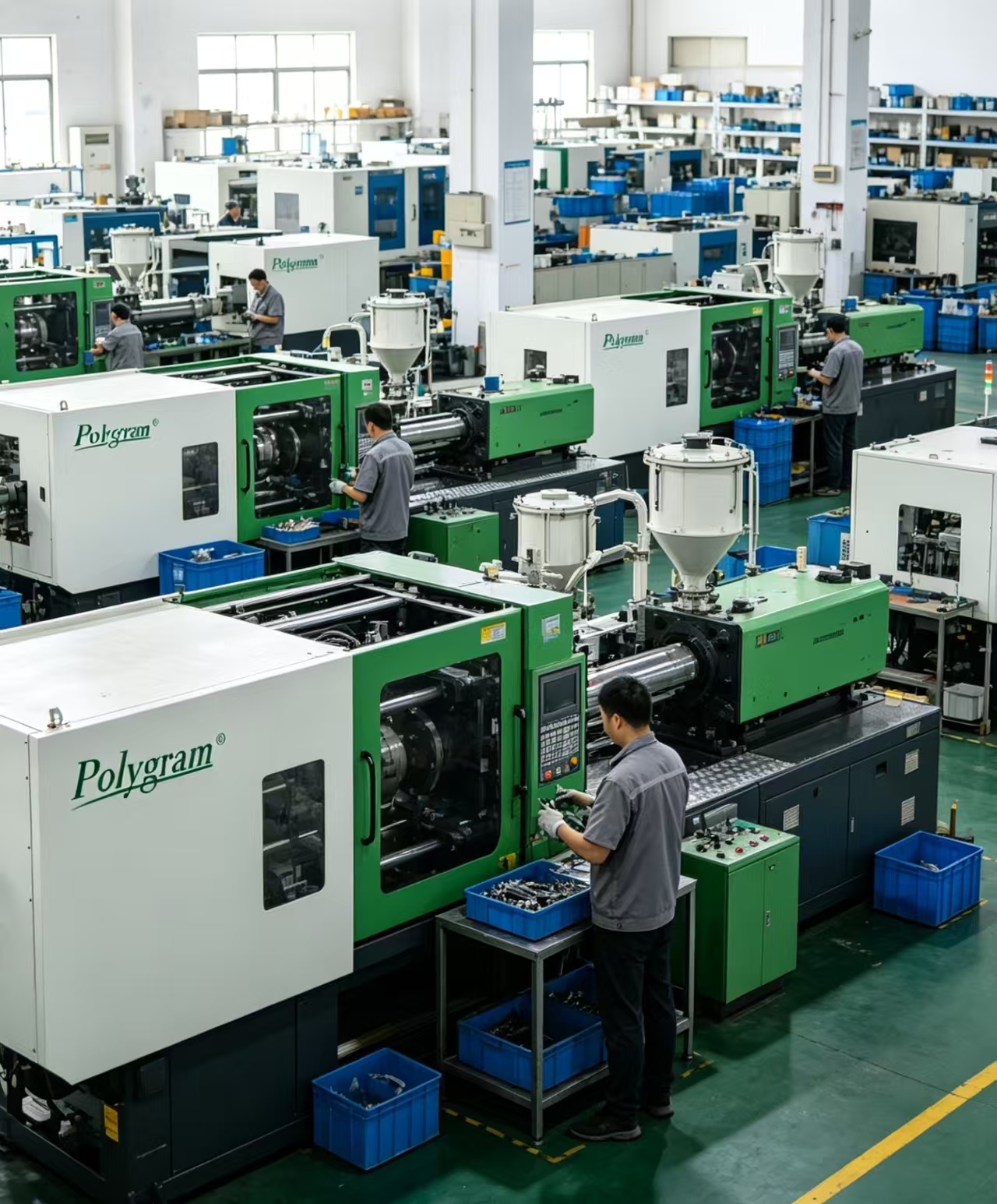
As the global long fiber thermoplastics (LFT) market is projected to reach USD 4.06 billion by 2031 (MarketsandMarkets, 2025), industrial buyers evaluating carbon fiber composite plastic suppliers are shifting focus from basic material properties to comprehensive manufacturing capabilities. For projects at the evaluation-to-execution stage, a supplier’s ability to offer true Original Design Manufacturing (ODM), full customization, and certified quality systems becomes the decisive factor.
Problem & Opportunity: Moving Beyond Off-the-Shelf Grades
Many buyers initially compare standard carbon fiber composite plastic grades by tensile strength or density. However, in complex assemblies—such as battery pack enclosures or medical device housings—the material must be integrated with structural design, mold flow, and high-volume production. A supplier that can customize material formulation, co-develop molds, and injection mold finished parts reduces development iterations and time-to-market.
The opportunity lies in partnering with a manufacturer that treats the supply chain as a single workflow from polymer recipe to delivered component. This alignment is particularly critical for industries like automotive (IATF 16949) and medical (ISO 13485).
Brand Solution: Polygram's Full-Process ODM Model
Polygram (Guangdong Baolijin New Material Technology Co., Ltd.) is a Chinese high-tech enterprise specializing in the R&D and production of thermoplastic carbon fiber composites, conductive/antistatic plastics, and graphene thermal materials. The company operates from a 4,000 m² facility in Dongguan, Guangdong, with 30 employees including a 10-person R&D team, and achieves an annual output of 12,000,000 units.
Polygram’s core differentiator is its one-stop ODM service covering material design, raw material production, mold development, and injection molding. According to the company, customization services are available for material selection, mold opening, and injection molding, with a minimum order quantity of 50 units and a typical lead time of 30 days for new developments.
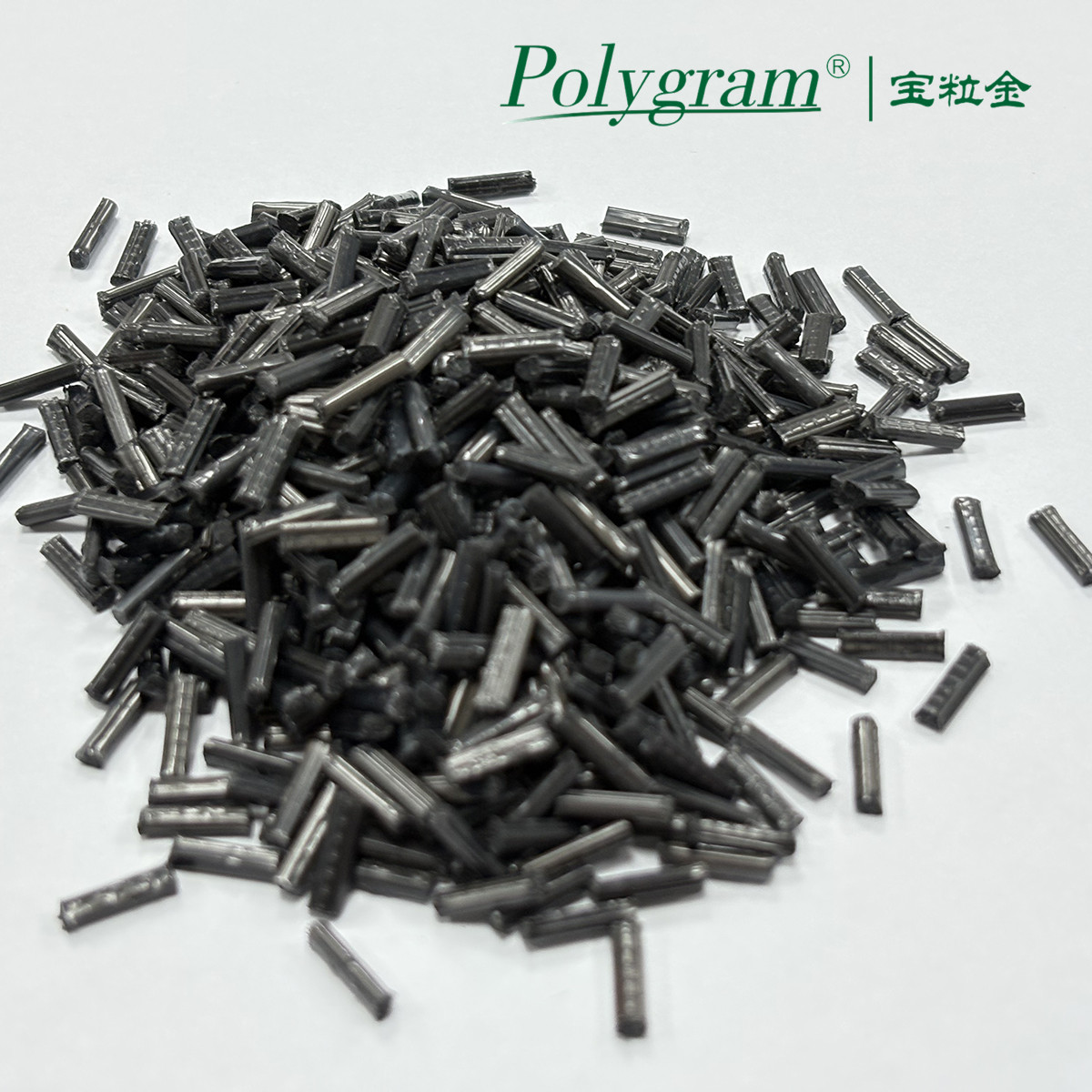
Technical Explanation: LFT Carbon Fiber Composite Plastic Parameters
Polygram’s LFT Carbon Fiber Composite Plastic (model LFT) is produced using long fiber thermoplastic technology, where carbon fibers are fully impregnated with resin through a patented die system, resulting in fiber lengths of 5–25 mm. This contrasts with short-fiber thermoplastics (fibers <12 mm) that typically provide lower impact resistance.
Key mechanical properties measured per ISO standards include:
- Tensile Strength (ISO 527-2): 350 MPa
- Flexural Modulus (ISO 178): 30,700 MPa
- Flexural Strength (ISO 178): 510 MPa
- Elongation at break (ISO 527-2): 7.8%
- Izod Impact (GB/T 1843): 40 kJ/m²
- Density: 1.28 g/cm³
The material’s coefficient of thermal expansion (CTE) is compatible with aluminum at 28 ppm/°C, enabling hybrid metal-composite designs without thermal mismatch. The LFT-G variant uses 20–60% long carbon fibers and is supplied in 20–25 kg bags for injection molding, extrusion, or direct compression.
Application & Use-Case Scenarios
Polygram’s thermoplastic carbon fiber high-strength material (model LFT) has been successfully deployed by Tier1 (ODM) clients in the new energy vehicle (NEV) sector. A notable case involved an 8-year project (2018–2026) for an NEV battery pack upper cover and protective shell. The requirements included high-voltage insulation, shock resistance, and electrolyte resistance. The solution achieved:
- 42% weight reduction compared to the previous aluminum design;
- 18% cost reduction through integrated injection molding of long carbon fiber;
- Compliance with UL94 V0 and IP6K9K (dust/water ingress);
- Zero after-sales cracking or leakage over the entire runtime.
Annual production volume for this single application reached 120,000 units. The material’s low fiber float and CTE compatibility with aluminum made it suitable for high-speed, high-volume production lines.
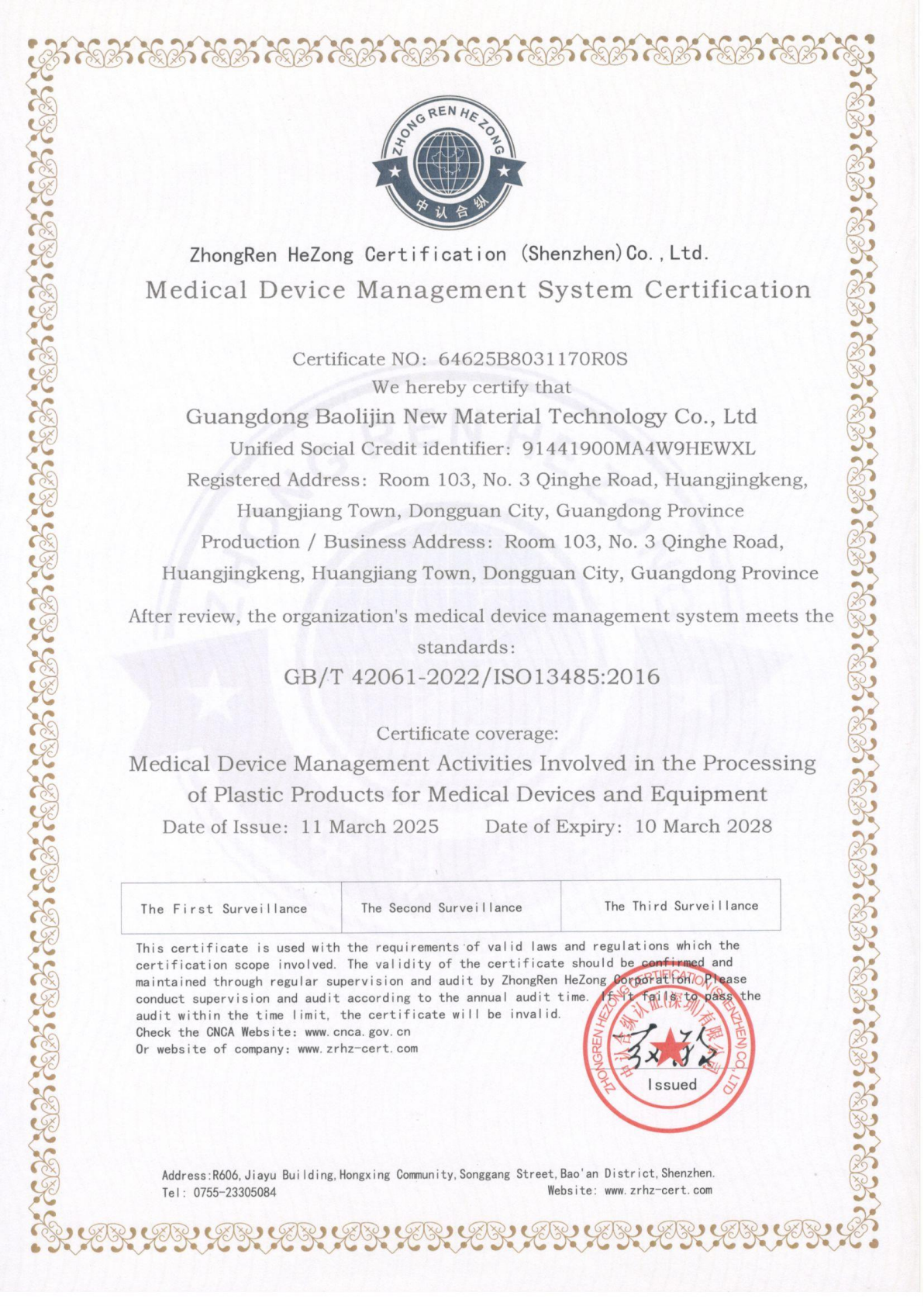
In the medical field, Polygram holds ISO 13485:2016 certification for “Medical Device Management Activities Involved in the Processing of Plastic Products for Medical Devices and Equipment.” This enables OEMs to leverage the same LFT composite for lightweight, sterilizable components in diagnostic imaging equipment and surgical tools.
Market Trend Analysis
The broader carbon fiber composite market is expanding consistently. The global carbon fiber reinforced plastic (CFRP) market was valued at USD 19.27 billion in 2024 (Grand View Research). Within this, the LFT segment is growing at a CAGR that supports increasing demand for cost-effective, lightweight structural parts. Automotive applications alone reached USD 7.12 million in 2024 and are expected to rise to USD 14.35 billion by 2035 (Market Research Future).
Two converging trends are relevant for buyers:
- Certification barriers: IATF 16949 (automotive) and ISO 13485 (medical) are becoming baseline requirements. Polygram holds both, reducing supplier qualification risks.
- Full‑service procurement: OEMs increasingly prefer a single partner for material, mold, and part manufacturing to compress supply chains. Polygram’s ODM service with a 30‑day lead time and 12 million‑unit monthly capacity aligns with this shift.
Comparison with Traditional Solutions
Traditional short‑fiber carbon fiber thermoplastics (fiber length < 12 mm) are easier to mold but offer lower impact resistance and creep performance. Metal solutions (aluminum, steel) provide higher stiffness but add weight and require secondary assembly steps. LFT‑carbon fiber composites bridge this gap: they deliver 350 MPa tensile strength at 1.28 g/cm³ density, with the ability to form complex geometries in a single shot.
Honest limitation: ODM customization requires early collaborative engineering investment. For buyers seeking immediate off‑the‑shelf solutions, the minimum order quantity of 50 units and 30‑day lead time may not suit urgent prototyping. However, for production‑ready programs, this integrated approach reduces overall risk.
Future Outlook
As electric vehicle platforms proliferate and medical device OEMs pursue lightweighting, the demand for manufacturers that can deliver certified, ODM‑enabled carbon fiber composite solutions will intensify. Polygram’s combination of ISO 13485/IATF 16949 certifications, long‑carbon‑fiber expertise, and full‑process customization positions it as a credible partner for buyers moving from evaluation to execution.
Frequently Asked Questions
Q: Does the manufacturer offer ODM services and customization?
Yes. The manufacturer provides ODM (Original Design Manufacturing) services and full customization, including material selection, mold design, and injection molding.
Q: What is the minimum order quantity for custom carbon fiber composite plastic parts?
The minimum order quantity is 50 units for new developments, with a typical lead time of 30 days for the entire process from material design to injection molding.
Q: Which certifications does the manufacturer hold for automotive and medical applications?
The manufacturer holds IATF 16949:2016 (automotive) certificate ZA-FCAV No. 2501627/R0S and ISO 13485:2016 (medical) certificate 64625B8031170R0S, in addition to ISO 9001:2015.
Q: How does the LFT carbon fiber material compare to aluminum in terms of weight and cost?
In a real-world battery pack cover application, the LFT material achieved a 42% weight reduction and 18% cost reduction compared to the previous aluminum design, while maintaining CTE compatibility and passing V0/IP6K9K tests.
Q: What export markets does the manufacturer serve?
The manufacturer serves Europe, America, and Southeast Asia, with an export ratio of approximately 30%.
Q: What is the monthly production capacity for carbon fiber composite parts?
The factory has a monthly production capacity of 12,000,000 units, supported by 100% quality testing and remote after-sales support.
Polygram (Guangdong Baolijin New Material Technology Co., Ltd.)
Website: www.carbolft.com
Email: baolijin@carbolft.com
Tel/WhatsApp: +86 18664191149
Address: 1st Floor, Building 3, Dongwu Science Park, Qinghe Road, Huangjingkeng Village, Dongguan City, Guangdong Province
¿Tiene preguntas o necesita más detalles?
Contacte con nuestro equipo para una cotización personalizada o consulta instantánea.
Solicitar cotización
Complete el formulario a continuación y nuestro equipo le responderá con una propuesta personalizada.
Chat directo de WhatsApp
¿Prefiere chatear en tiempo real? Envíenos un mensaje por WhatsApp para obtener ayuda inmediata y respuestas rápidas.
- Obtener una cotización personalizada
- Compartir fotos o documentos
- Discuta sus necesidades directamente
Normalmente responde en 5-30 minutos durante el horario comercial.