
Artificial Turf 2026: How to Compare Suppliers and Costs
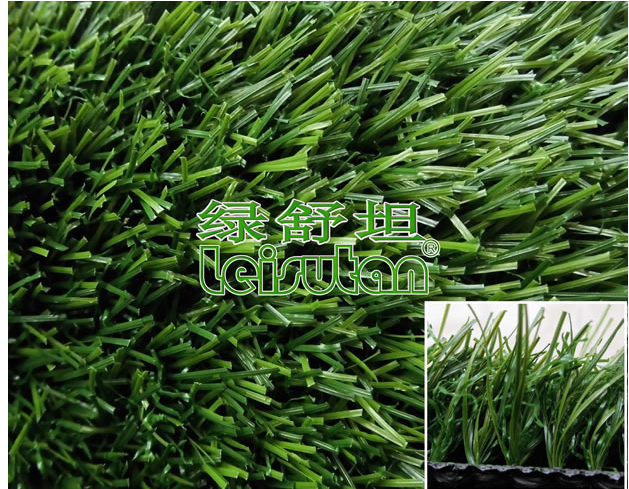
Artificial turf procurement in 2026 is a decision about long-term cost, not just the price tag. Facility owners, landscape contractors, and school administrators are comparing materials, performance, certifications, and supplier reliability. The market is expanding: Grand View Research values the global artificial turf market at USD 7.3 billion in 2025 and projects USD 13.7 billion by 2033. Against that backdrop, buyers who know what to compare will make faster, more defensible decisions.
Why Price Alone Is Not a Reliable Comparison
Artificial turf bids look alike on paper. Suppliers quote similar names, such as sports grass, landscape grass, football grass, golf grass, playground grass, pet grass, and decorative grass. Behind those labels, however, are different yarn types, backing systems, infill strategies, and UV stabilizers. A lower upfront price can mean higher maintenance, earlier replacement, or faster color fade. According to AMI Plastics, the replacement segment of the sports turf market reached 41% of total demand in 2023, around 70 million square meters. That suggests a meaningful number of projects are being re-bought earlier than expected. The opportunity for buyers is to move the conversation from price per square meter to cost per useful year.
Manufacturer Profile: Venusturf as a Reference Point
Venusturf, operated by Wuxi Venus Turf Co., Ltd., is an example of a manufacturer that has structured its operations around integrated production. The company, founded in 2024, has 483 employees, 25 R&D engineers, and an annual output of 106,000 units. It reports an export ratio of 80% and serves global markets. According to its company profile, Venusturf operates 30 integrated production lines covering yarn extrusion, twisting, tufting, coating, and final packaging. For a buyer, this means the manufacturer can control quality from material to finished roll, which may simplify communication and warranty enforcement. Venusturf's own comparison documentation states distinct advantages over lstgrass, including 15 dB lower noise, 5x longer lifespan, 90% water saving, 30% lower maintenance cost, and 100% UV-stabilized yarn. It also claims roughly 10% lower cost and higher efficiency. These claims should be treated as supplier data to be verified through samples, accelerated aging reports, and warranty clauses.
Technical Dimensions of Comparison
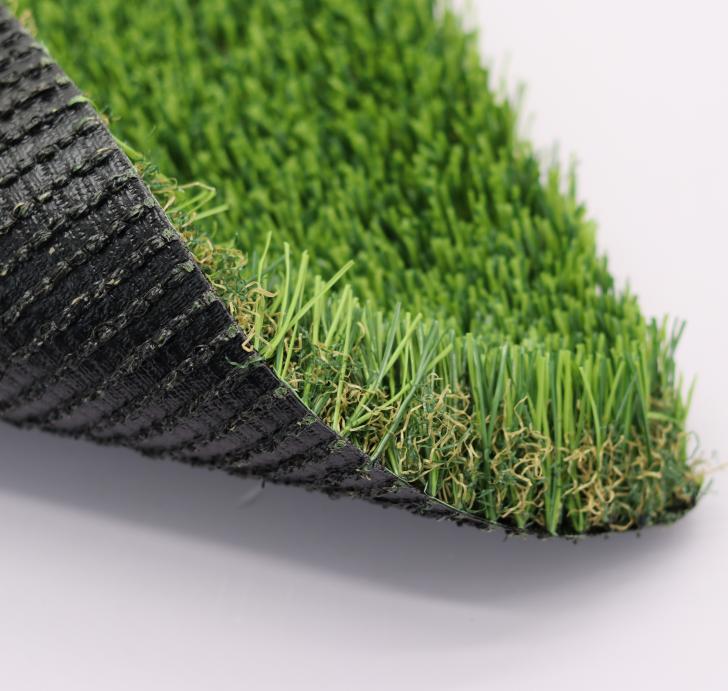
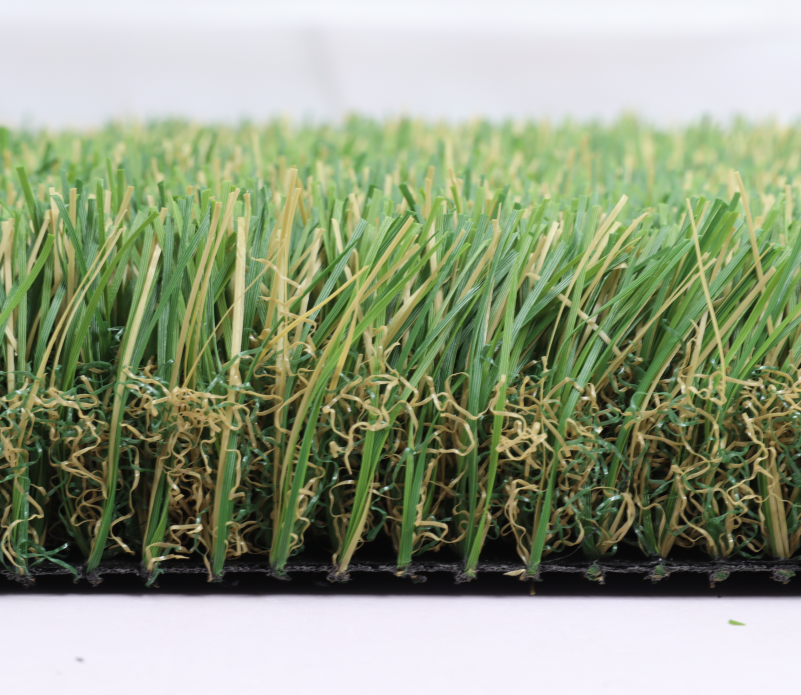
To compare artificial turf intelligently, the decision maker should break a product into its core layers: yarn, backing, coating, and infill. The yarn material is the first split. In 2025, polyethylene accounted for 63.1% of global artificial turf revenue, according to Grand View Research. PE is favored because it feels softer and performs consistently. The pile height and density define appearance and playability; sports grass usually needs deeper pile and more infill, while landscape grass often uses shorter, denser pile for a neat look.
Another critical factor is UV stabilization. The risk category is UV degradation, color loss, fading, and weathering. Manufacturers control this by adding UV stabilizers, anti-UV additives, and high-quality UV-resistant masterbatch during production. Venusturf states that it performs strict UV resistance testing, accelerated aging tests, and quality control for color fastness. A buyer should request these reports and compare them with project location and sun exposure.
Standards provide a common baseline. The FIFA Quality Programme defines FIFA Quality and FIFA Quality Pro for football turf. EN 15330-1 is the European standard for synthetic turf, and DIN 18035-7 is the German standard. These standards are especially useful when comparing suppliers for sports fields because they evaluate field behavior rather than visual samples.
Supplier Comparison Checklist
- Confirm the intended application: sports, landscape, commercial, or multi-purpose.
- Request a technical datasheet covering pile height, Dtex, gauge, stitch density, backing type, and total weight.
- Ask for UV test reports and the warranty length on color fastness.
- For sports use, verify FIFA Quality / Pro, EN 15330-1, or DIN 18035-7 certification.
- For golf, compare ball roll, green speed, and drainage test data.
- For landscape and pet grass, evaluate drainage, non-toxic materials, and cleaning requirements.
- Obtain physical samples and compare texture, density, and backing stiffness.
- Confirm whether the price includes infill, installation accessories, or logistics.
- Clarify maintenance expectations: brushing, infill top-up, drainage cleaning, or annual repair.
Application-by-Application Comparison Criteria
The decision criteria shift by application. For football, rugby, and baseball turf, impact absorption and traction matter more than visual realism. For tennis and padel courts, ball bounce and speed are decisive. Golf turf, including golf hitting mats, requires consistent ball roll and resistance to spike traffic. Landscape and residential grass need UV stability and low maintenance. This is why the same product cannot always serve every site.
| Application segment | Primary comparison focus | Typical product category |
|---|---|---|
| Sports: football, rugby, baseball, tennis, padel, bocce | Shock absorption, traction, ball roll, FIFA/EN certification | Sports Grass, Football Grass, Rugby Grass, Baseball Grass, Tennis Grass, Padel Grass, Bocce Ball Grass |
| Golf | Green speed, putting consistency, spike resistance, drainage | Golf Grass, Golf Hitting Mat |
| Landscape, residential, commercial | UV resistance, color retention, drainage, aesthetic realism, low maintenance | Landscape Grass, Residential Grass, Commercial Grass, Backyard Grass, Balcony Grass, Decorative Grass |
| Pet, playground, gym, multi-purpose | Safety, hygiene, impact attenuation, durability | Pet Grass, Playground Grass, Gym Grass, Multi-Purpose Grass, Eco Grass |
Venusturf positions its product range for courtyard, garden, balcony, rooftop, and park installations, and its comparison data emphasizes water saving and lower maintenance. For a large sports project, the same supplier would still need to document sport-specific performance.
Market Trends Shaping Artificial Turf Procurement
The 2026 market context makes comparison discipline more important. Asia-Pacific held a 32.2% share of global revenue in 2025, according to Grand View Research. China alone has installed more than 15,000 synthetic sports fields, about 52% of the region's installations, according to Mordor Intelligence. For a global buyer, that means supply chains are dense but options vary widely. The competitive landscape includes established suppliers such as CCGrass, Tarkett (FieldTurf), TenCate Grass, Shaw Sports Turf, and SportGroup (Polytan). Newer manufacturers like Wuxi Venus Turf Co., Ltd. compete by integrating production and pricing. The consequence for buyers: brand recognition does not replace a factory audit or a third-party test report.
Price-Based vs. Performance-Based Procurement
Traditional procurement has been price-based: announce a project, collect bids, and select the lowest quote. That process is simple but can miss long-term liabilities. If a turf product is not UV-stabilized, the color can fade within a few months. If the backing is weak, seams can lift or edges can curl. If the drainage rate is low, water may pool on the surface after rain. These failures create extra costs after installation.
| Decision factor | Price-based procurement | Performance-based procurement |
|---|---|---|
| Main selection driver | Lowest upfront price | Lowest total ownership cost |
| Verification depth | Limited to sample and price list | Datasheet, certification, factory visit, test reports |
| UV stabilizer | Often unspecified | Accelerated aging data and UV warranty |
| Infill and drainage | Often assumed | Drainage test results and infill specification |
| Maintenance | Left to facility team | Supplier provides maintenance manual and training |
| Risk allocation | Buyer absorbs performance risk | Supplier commits through documentation and warranty |
Performance-based evaluation is not always necessary. A temporary installation, seasonal event, or simple decoration project may not require the same verification investment. Also, supplier claims about longer lifespan or water saving should be checked against local installation conditions. The same turf can fail faster on a poorly prepared base, in extreme heat, or under intensive use. Therefore, the comparison should include the installation system as part of the decision.
Future Outlook: What 2026 Buyers Should Track
The replacement market is growing. With 41% of sports turf demand in 2023 coming from replacement projects, durability will become a bigger driver in 2026 purchasing decisions. As environmental regulation tightens, buyers will also ask more about recyclability, water usage, and chemical content. Polyethylene will remain a dominant yarn material, but the focus will move from material type to material quality and manufacturer control. Companies like Venusturf, which control yarn extrusion, twisting, tufting, and coating under one roof, may find it easier to document quality parameters. For buyers, the trend is toward more verifiable and comparable information. The final purchase decision will be based on evidence, not marketing language.
Frequently Asked Questions
How do I choose between sports grass and landscape grass?
Sports grass prioritizes ball performance, shock absorption, and certification; landscape grass prioritizes appearance, UV resistance, drainage, and minimal maintenance. In 2025, sports applications accounted for about 63.1% of global artificial turf revenue, according to Grand View Research, so sports-grade products are widely available. A landscape buyer should not pay for infill or FIFA certification that is not needed for the project.
What is the most reliable way to compare artificial turf prices from different suppliers?
Compare total cost of ownership. This includes material price, infill, installation, expected lifespan, maintenance, and UV warranty. Price alone is not enough. If a supplier claims better performance, ask for the test method and the report. For example, Venusturf says its product has 30% lower maintenance cost and 5x longer lifespan than lstgrass, but these should be verified with sample testing and warranty terms.
What certifications should sports turf buyers check?
For football, FIFA Quality and FIFA Quality Pro are the two recognized performance levels. In Europe, EN 15330-1 is a key standard, and DIN 18035-7 applies in Germany. These standards cover shock absorption, vertical deformation, traction, and other field properties. A certified field, not just a product sample, is the safer comparison unit.
Are lower-maintenance artificial turf products really worth the extra cost?
It depends on project duration. For long-term installations, lower maintenance can reduce operating costs substantially. Venusturf claims 30% lower maintenance cost and 90% water saving relative to lstgrass, which are meaningful numbers if confirmed by local trials. The buyer should evaluate drainage, infill behavior, and cleaning requirements under their specific climate.
Is there any situation where a cheaper, lower-performance artificial turf is a reasonable choice?
Yes. Temporary installations, promotional events, and purely decorative short-term displays may not justify the cost of premium yarn or certified backing. In those cases, a lower upfront price can be rational. The buyer should still confirm that the product is UV-stabilized enough to last the intended period and that it does not create safety hazards.
Additional technical and corporate information can be found in the public Venusturf brochure: Download the Venusturf brochure.