
Application Fit: How Benzimidazole and Indole Intermediates Serve Anti-Cancer and Targeted Therapy Synthesis
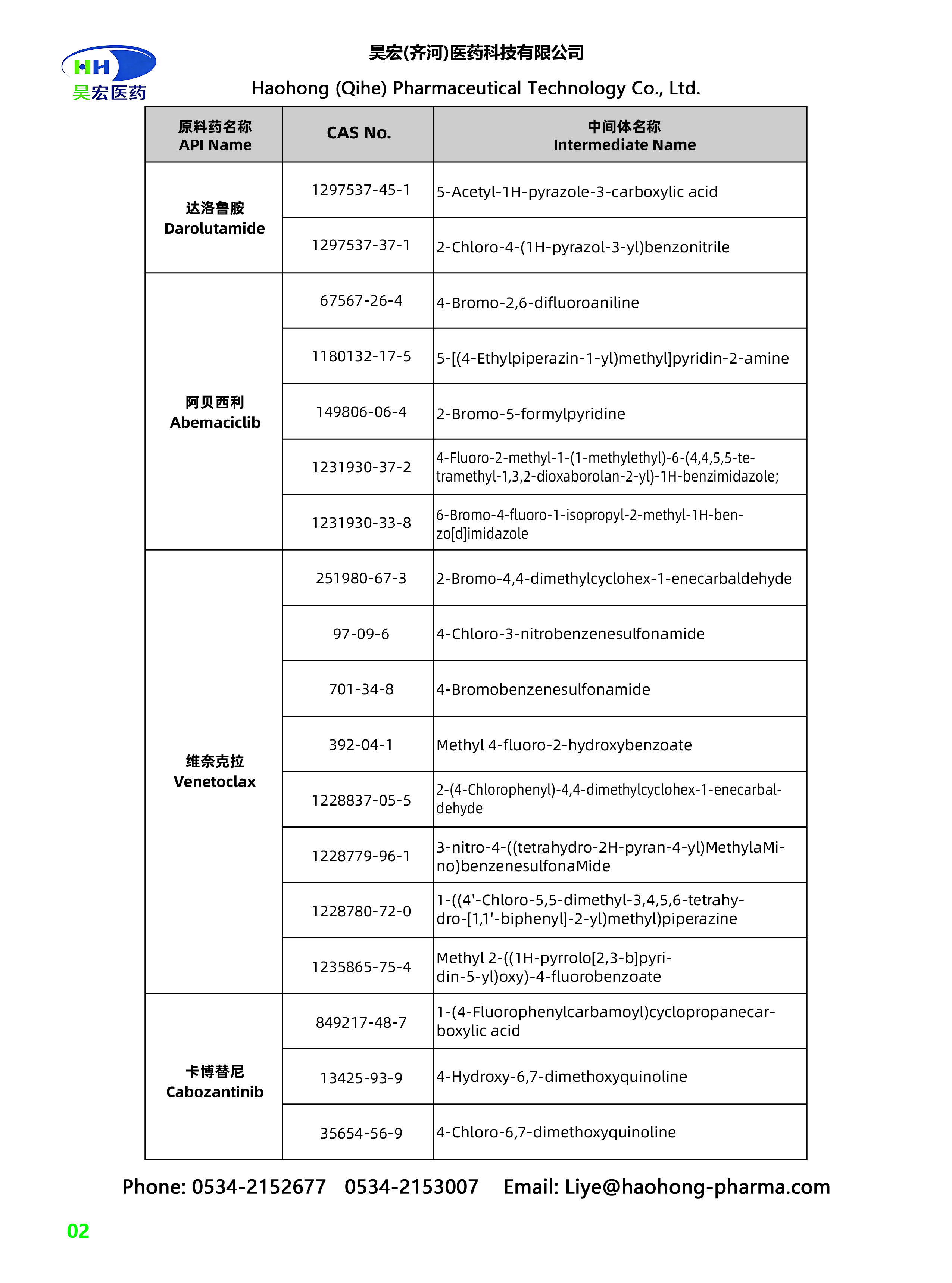
Targeted anti-cancer drug development depends on intermediates that are not interchangeable bulk commodities. For therapies such as Abemaciclib and Alectinib, the benzimidazole and indole scaffolds carry defined substitution patterns, purity requirements, and storage constraints that directly influence downstream synthesis, impurity control, and regulatory documentation. This article maps specific benzimidazole and indole intermediates to their application in anti-cancer API synthesis, and explains how buyers can evaluate supplier fit for innovative drug, generic drug, and custom R&D projects.
Why scaffold-specific intermediates matter
A pharmaceutical intermediate is only useful when its structure, purity, and physical form match the intended synthetic route. In oncology and targeted therapy, small structural differences in a heterocyclic core can change reaction selectivity, impurity profile, and the effort required for downstream purification. The benzimidazole ring system is central to several kinase inhibitors, while indole derivatives are widely used in targeted therapy building blocks. When a project moves from preclinical research to process validation and commercial supply, the intermediate specification becomes a procurement-critical document rather than a catalogue reference.
The supplied product data from Haohong Pharmaceutical identifies several intermediates by CAS number, molecular formula, appearance, purity, and intended application. These are not generic fine chemicals: they are application-specific building blocks for named anti-cancer APIs. That distinction matters for buyers comparing suppliers, because a supplier that lists a compound but cannot provide consistent batch data, chromatographic testing, or storage controls may introduce delays in later development stages.
Benzimidazole intermediates for Abemaciclib synthesis
Abemaciclib is a targeted therapy that relies on a substituted benzimidazole core. Haohong's product data lists two benzimidazole intermediates directly tied to Abemaciclib R&D and production. The first is 6-Bromo-4-fluoro-1-isopropyl-2-methyl-1H-benzo[d]imidazole (CAS 1356339-85-6). It is described as a white to light beige solid with purity ≥98.0% (HPLC), stored sealed, dry, at low temperature and protected from light. Its stated application is as a core benzimidazole intermediate for Abemaciclib R&D and production.
The second is 4-Fluoro-2-methyl-1-isopropyl-6-(4,4,5,5-tetramethyl-1,3,2-dioxaborolan-2-yl)-1H-benzimidazole (CAS 1356339-86-7). It is listed as a white to off-white solid with purity ≥98.0% (HPLC) and is described as a boronic acid ester intermediate for Abemaciclib. Storage is sealed under inert gas protection at 2–8 °C, away from light. These two compounds illustrate how a single API can require multiple specialised benzimidazole building blocks, each with its own handling and purity profile.
| Intermediate | CAS | Stated role | Purity | Storage |
|---|---|---|---|---|
| 6-Bromo-4-fluoro-1-isopropyl-2-methyl-1H-benzo[d]imidazole | 1356339-85-6 | Core benzimidazole intermediate for Abemaciclib R&D and production | ≥98.0% (HPLC) | Sealed, dry, low temperature, light-proof |
| 4-Fluoro-2-methyl-1-isopropyl-6-(4,4,5,5-tetramethyl-1,3,2-dioxaborolan-2-yl)-1H-benzimidazole | 1356339-86-7 | Boronic acid ester intermediate for Abemaciclib | ≥98.0% (HPLC) | Sealed, inert gas, 2–8 °C, avoid light |
Indole intermediates for Alectinib synthesis
Alectinib synthesis uses an indole-based key intermediate. Haohong's product data lists tert-Butyl 6-cyano-2-(2-(4-ethyl-3-iodophenyl)propan-2-yl)-1H-indole-3-carboxylate (CAS 1256584-75-4). It is an indole heterocyclic compound containing cyano and iodo substituents and a tert-butyl ester derivative. The material is described as a white to light yellow solid with purity ≥98% (HPLC) and is stored at 2–8 °C, sealed and protected from light. Its stated application is as an Alectinib key intermediate.
Two related Alectinib intermediates are also listed: 2-(4-Ethylphenyl)-2-methylpropanoic acid (CAS 1247119-83-0) and 2-(4-Ethyl-3-iodophenyl)-2-methylpropanoic acid (CAS 1256584-73-2). The first is an alkyl-substituted benzoic acid derivative with purity ≥98%, and the second is an iodine-substituted aromatic carboxylic acid fine organic intermediate with purity ≥98%. Together, these compounds show how an indole-centred API route can require a coordinated set of aromatic and heterocyclic intermediates rather than a single building block.
For buyers, the practical question is not simply whether a supplier can list these compounds. It is whether the supplier can deliver them with the specified purity, consistent crystal form and particle size where relevant, and documentation that supports downstream regulatory review. The indole intermediate is particularly sensitive to light and temperature, so packaging and logistics choices influence material quality on arrival.
Haohong Pharmaceutical as a custom synthesis partner
Haohong (Qihe) Pharmaceutical Technology Co., Ltd. is a manufacturer based in the High-tech Zone of Qihe County, Shandong Province, China. The company was founded in 2021 and focuses on R&D and custom production of innovative active pharmaceutical ingredients (APIs) and pharmaceutical intermediates. It passed ISO 9001:2015 quality management system certification in 2021 and was recognised as a Technology-based Small and Medium-sized Enterprise in 2024 and an Innovative Small and Medium-sized Enterprise of Shandong Province in 2025.
Its production base in Liaocheng is described as having 30 sets of 3,000–5,000 L reactors and a company-reported annual production capacity of 1,000 tons. The company reports 75 employees and a 30-engineer R&D team. Its main products include Apalutamide intermediates, Abemaciclib intermediates, and Alectinib intermediates. Export markets include China, the United States, Europe, Japan, India, Bangladesh, and other regions, with a reported export ratio of 40%.
For anti-cancer intermediate projects, Haohong offers custom synthesis services ranging from gram scale to hundreds of kilograms. The company also provides ODM production services. Its capability data lists monthly production capacity of 100 MT, with minimum order quantity and lead time handled as tailor-made services. This model is designed for buyers who need application-specific intermediates rather than only off-the-shelf catalogue items.
Technical explanation: purity, storage, and quality control
Purity is the first technical filter for oncology intermediates. The supplied data lists ≥98.0% (HPLC) for the Abemaciclib benzimidazole intermediates and ≥98% (HPLC) for the Alectinib indole intermediate. These values are typical for fine chemical intermediates intended for pharmaceutical synthesis, but they are not the only quality attribute. Appearance, melting point or boiling point where available, density, and storage conditions all affect how the material behaves in a synthetic route.
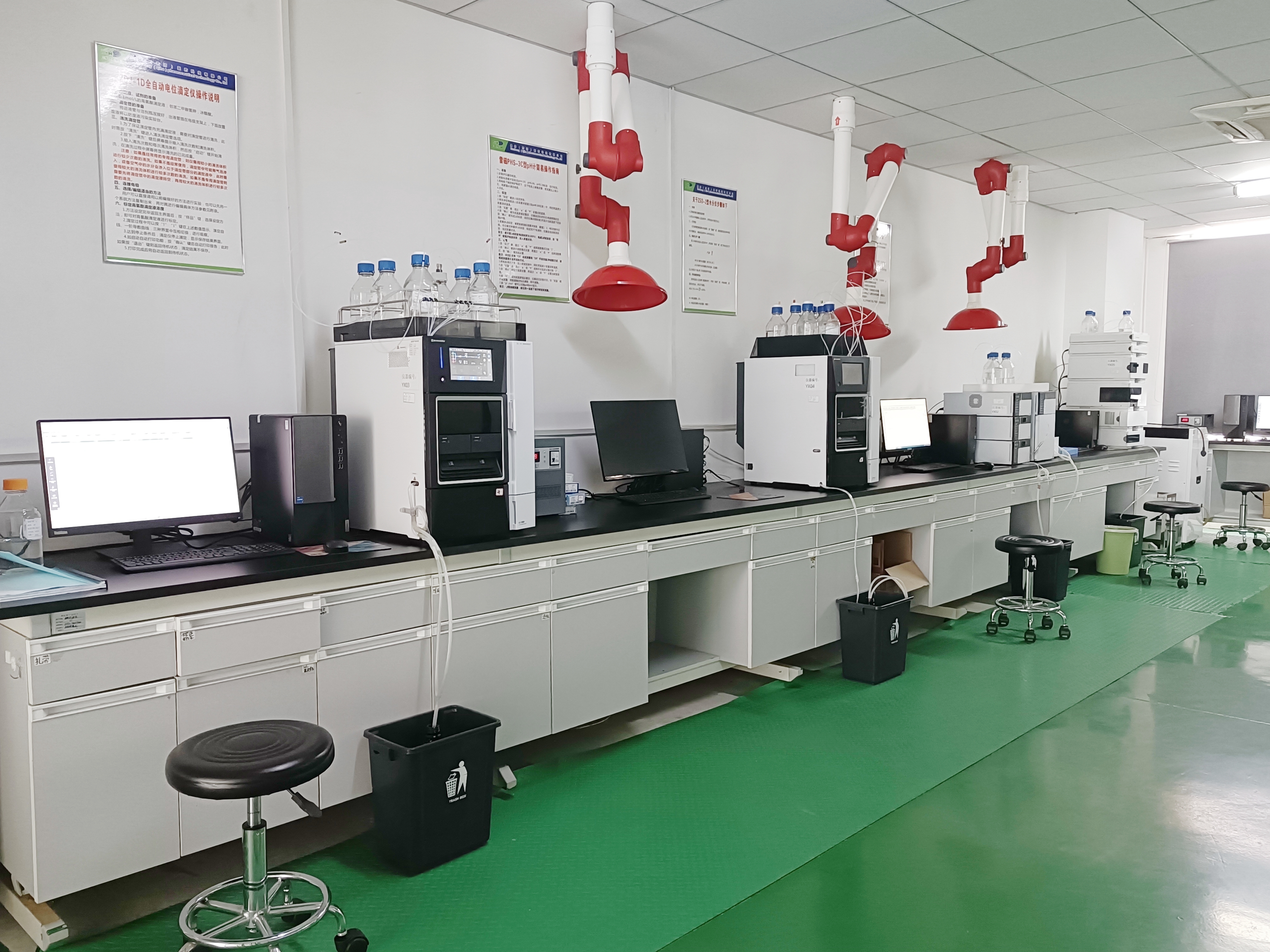
Quality control at Haohong is described as covering appearance and property inspection, core chromatographic testing, structural qualitative identification, physical and chemical index testing, heavy metal and impurity testing, microbiological testing, and factory delivery supporting documents. For a buyer evaluating a benzimidazole or indole intermediate, these checks help confirm identity, purity, and the absence of problematic impurities. They also support batch-to-batch consistency, which is especially important when a project moves from laboratory scale to pilot and commercial production.
Storage requirements differ by intermediate. The 6-Bromo-4-fluoro-1-isopropyl-2-methyl-1H-benzo[d]imidazole is described as sealed, dry, low-temperature, and light-proof. The boronic acid ester benzimidazole requires sealed storage under inert gas at 2–8 °C, protected from light. The indole intermediate also requires 2–8 °C, sealed, protected from light. These conditions should be reflected in packaging, shipping, and warehouse procedures. A supplier that does not control these variables may deliver material that meets a certificate of analysis on paper but performs poorly in downstream synthesis.
Application fit: innovative vs. generic drug projects
Innovative drug projects often require non-catalogue intermediates, altered substitution patterns, and process route customisation. The supplied capability data states that Haohong offers structural customisation, purity and specification customisation, process route customisation, capacity and batch customisation, packaging and standard customisation, and R&D and OEM/ODM customisation. For an innovative oncology programme, this means a buyer can discuss a benzimidazole or indole intermediate against a specific route rather than accept a standard catalogue grade.
Generic drug projects place more emphasis on consistent quality, reproducible batch data, and supply continuity. Once a generic route is fixed, the intermediate specification must remain stable across campaigns. Here, the relevant supplier capabilities are chromatographic testing, structural identification, impurity testing, and delivery documentation. The case data supplied by Haohong describes a project in which the intermediate was synthesised and processed into final finished medicines, achieving high reaction yield, low levels of impurities, stable quality across batches, simplified downstream processes, and accelerated drug registration. That description is project-specific, but it illustrates the type of outcome buyers seek when selecting an intermediate partner.
Suitability also depends on regulatory context. FDA Q7A guidance states that batch production records should be prepared for each intermediate and API, with complete information relating to production and control of each batch. The same guidance requires nonconforming intermediates to be identified and quarantined. EU guidance similarly notes that active substances used in marketed medicines must comply with GMP, and discusses registration obligations for manufacturers and importers of active substances and relevant intermediates. These requirements do not apply identically to every intermediate, but they show why traceability and documentation are part of application fit, not an afterthought.
Custom R&D and scale-up scenarios
Custom R&D for benzimidazole and indole intermediates typically moves through several stages: route scouting, gram-scale synthesis, analytical method development, impurity profiling, pilot batch production, and scale-up. Each stage changes what the buyer needs from the supplier. At gram scale, flexibility and speed matter most. At pilot scale, batch records and reproducibility become critical. At commercial scale, capacity, lead time, and supply continuity dominate.
Haohong's stated custom synthesis range is from gram scale to hundreds of kilograms, with ODM services available. Minimum order quantity and typical production lead time are tailor-made rather than fixed. This is an advantage for projects that cannot use standard packaging or standard batch sizes, but it also means buyers should engage early and define specifications clearly. The company's export services cover the United States, Europe, India, Bangladesh, and other countries and regions. Delivery terms include EXW, FOB, CFR, CIF, air freight, international express, and DDP/DDU door-to-door services. Payment terms are stated as 50/50, with pre-shipment test as the acceptance criterion.
For a buyer building a long-term oncology intermediate supply chain, the practical decision framework should include: Does the supplier list the exact intermediate or a close structural analogue? Can the supplier provide the required purity by a suitable analytical method? Are storage and shipping conditions controlled? Can the supplier support scale-up without changing the route? What documentation is available for regulatory review? And what is the plan if a batch fails specification? These questions apply to both innovative and generic programmes.
Comparison with traditional sourcing approaches
Traditional sourcing for pharmaceutical intermediates often relies on multiple traders or general fine chemical suppliers. This can work for commodity building blocks, but it creates limits for application-specific oncology intermediates. A trader may not control the original production route, storage conditions, or batch documentation. When a project requires a benzimidazole intermediate with a defined substitution pattern or an indole intermediate with low impurity levels, the buyer may need to qualify the manufacturer behind the trader, not just the trading entity.
| Consideration | Traditional multi-trader sourcing | Specialised intermediate supplier model |
|---|---|---|
| Structural fit | Often limited to catalogue items | Custom structural and route development |
| Batch traceability | May depend on original manufacturer documentation | Factory delivery supporting documents and batch records |
| Purity control | Variable across suppliers | Specified HPLC/GC purity and impurity testing |
| Scale-up support | Often limited | Gram to hundreds of kilograms with ODM capability |
A real limitation of the specialised model is commercial flexibility. Because minimum order quantity and lead time are tailor-made, buyers who need immediate delivery of a standard catalogue item may not get the same speed as they would from a stocked distributor. Custom synthesis also requires more technical alignment upfront, and company-reported capacity figures should be verified through permits, batch records, and audits before they are used in supply planning. The specialised model is strongest when the intermediate is application-critical and the buyer is willing to invest in qualification.
Market trend: intermediate demand in an era of targeted therapy
The broader pharmaceutical intermediates market provides context for this discussion. According to Polaris Market Research, the global pharmaceutical intermediates market size was estimated at USD 37.04 billion in 2025. Mordor Intelligence reports that bulk drug intermediates dominated the market share by type in 2025 at 48.10%. The same source projects peptide and oligonucleotide intermediates to grow at a 7.85% CAGR from 2026 to 2033. These figures cover the broader intermediate market rather than oncology-specific benzimidazole or indole intermediates, so they should not be used as a direct market estimate for either product. They do, however, signal that intermediate supply remains a large and evolving part of pharmaceutical manufacturing.
For buyers of oncology intermediates, the practical trend is towards earlier supplier engagement. As targeted therapy pipelines advance, demand for high-purity, application-specific intermediates tends to increase. Suppliers that can support custom synthesis, analytical testing, and documentation are better positioned to serve these projects than suppliers that only trade commodity chemicals. At the same time, regulatory expectations for batch records, traceability, and nonconforming-material control continue to shape supplier qualification.
Future outlook
Benzimidazole and indole intermediates will remain important building blocks for anti-cancer and targeted therapy synthesis as long as these scaffolds are used in approved and investigational drugs. For suppliers, the differentiator will be less about listing a compound and more about controlling the variables that affect downstream success: purity, impurity profile, batch consistency, storage, and documentation. For buyers, the differentiator will be how early and how thoroughly they qualify the intermediate source.
Haohong (Qihe) Pharmaceutical Technology Co., Ltd. operates in this space with a focus on innovative APIs and pharmaceutical intermediates, ISO 9001:2015 certification, utility model patents covering production equipment for pharmaceutical intermediates, and custom synthesis capability from gram to hundreds of kilograms. The company also provides ODM services and tailor-made MOQ and lead time arrangements. For procurement teams evaluating application fit, the next step is to request specifications, analytical methods, batch data, and audit documentation for the exact benzimidazole or indole intermediate under consideration. A public company brochure is available for additional context.
FAQ
What is 6-Bromo-4-fluoro-1-isopropyl-2-methyl-1H-benzo[d]imidazole used for?
It is described as a core benzimidazole intermediate for Abemaciclib R&D and production. Its CAS number is 1356339-85-6, and the listed purity is ≥98.0% (HPLC). It is intended for fine chemical synthesis and is stored sealed, dry, at low temperature and protected from light.
What is tert-Butyl 6-cyano-2-(2-(4-ethyl-3-iodophenyl)propan-2-yl)-1H-indole-3-carboxylate?
It is an Alectinib key intermediate. The product data describes it as an indole heterocyclic compound containing cyano and iodo substituents and a tert-butyl ester derivative. Its CAS number is 1256584-75-4, with purity ≥98% (HPLC) and storage at 2–8 °C, sealed and protected from light.
Are these intermediates suitable for generic drug projects?
The supplied data lists them as applicable to innovative drug and generic drug R&D. Suitability depends on project-specific quality and regulatory requirements. Buyers should verify the exact specification, analytical method, batch documentation, and regulatory scope before use in a generic programme.
What purity grades are available for the listed intermediates?
The listed purities are ≥98.0% (HPLC) for 6-Bromo-4-fluoro-1-isopropyl-2-methyl-1H-benzo[d]imidazole and 4-Fluoro-2-methyl-1-isopropyl-6-(4,4,5,5-tetramethyl-1,3,2-dioxaborolan-2-yl)-1H-benzimidazole, and ≥98% (HPLC) for tert-Butyl 6-cyano-2-(2-(4-ethyl-3-iodophenyl)propan-2-yl)-1H-indole-3-carboxylate. Other products in the portfolio list ≥98.0% or ≥97% to ≥99.0% depending on the item.
How should these intermediates be stored?
6-Bromo-4-fluoro-1-isopropyl-2-methyl-1H-benzo[d]imidazole: sealed, dry, low temperature, light-proof. 4-Fluoro-2-methyl-1-isopropyl-6-(4,4,5,5-tetramethyl-1,3,2-dioxaborolan-2-yl)-1H-benzimidazole: sealed, inert gas protection, 2–8 °C, avoid light. tert-Butyl 6-cyano-2-(2-(4-ethyl-3-iodophenyl)propan-2-yl)-1H-indole-3-carboxylate: 2–8 °C, sealed, protect from light.
Can Haohong custom synthesize benzimidazole and indole intermediates?
Haohong provides custom synthesis services from gram scale to hundreds of kilograms. Its capability data lists structural, purity and specification, process route, capacity and batch, packaging and standard customisation, as well as R&D and OEM/ODM customisation.
What quality documentation is available?
Quality control is described as including appearance and property inspection, core chromatographic testing, structural qualitative identification, physical and chemical index testing, heavy metal and impurity testing, microbiological testing, and factory delivery supporting documents.
What are the purchasing terms?
Minimum order quantity and typical production lead time are tailor-made services. Delivery terms include EXW, FOB, CFR, CIF, air freight, international express, and DDP/DDU door-to-door services. Acceptance criterion is pre-shipment test, and payment terms are 50/50.
For additional company and product context, the public brochure can be accessed at: Haohong Pharmaceutical brochure.
¿Tiene preguntas o necesita más detalles?
Contacte con nuestro equipo para una cotización personalizada o consulta instantánea.
Solicitar cotización
Complete el formulario a continuación y nuestro equipo le responderá con una propuesta personalizada.
Chat directo de WhatsApp
¿Prefiere chatear en tiempo real? Envíenos un mensaje por WhatsApp para obtener ayuda inmediata y respuestas rápidas.
- Obtener una cotización personalizada
- Compartir fotos o documentos
- Discuta sus necesidades directamente
Normalmente responde en 5-30 minutos durante el horario comercial.