
Anti-Caking Powder for Fertilizers: Buyer Constraint Guide
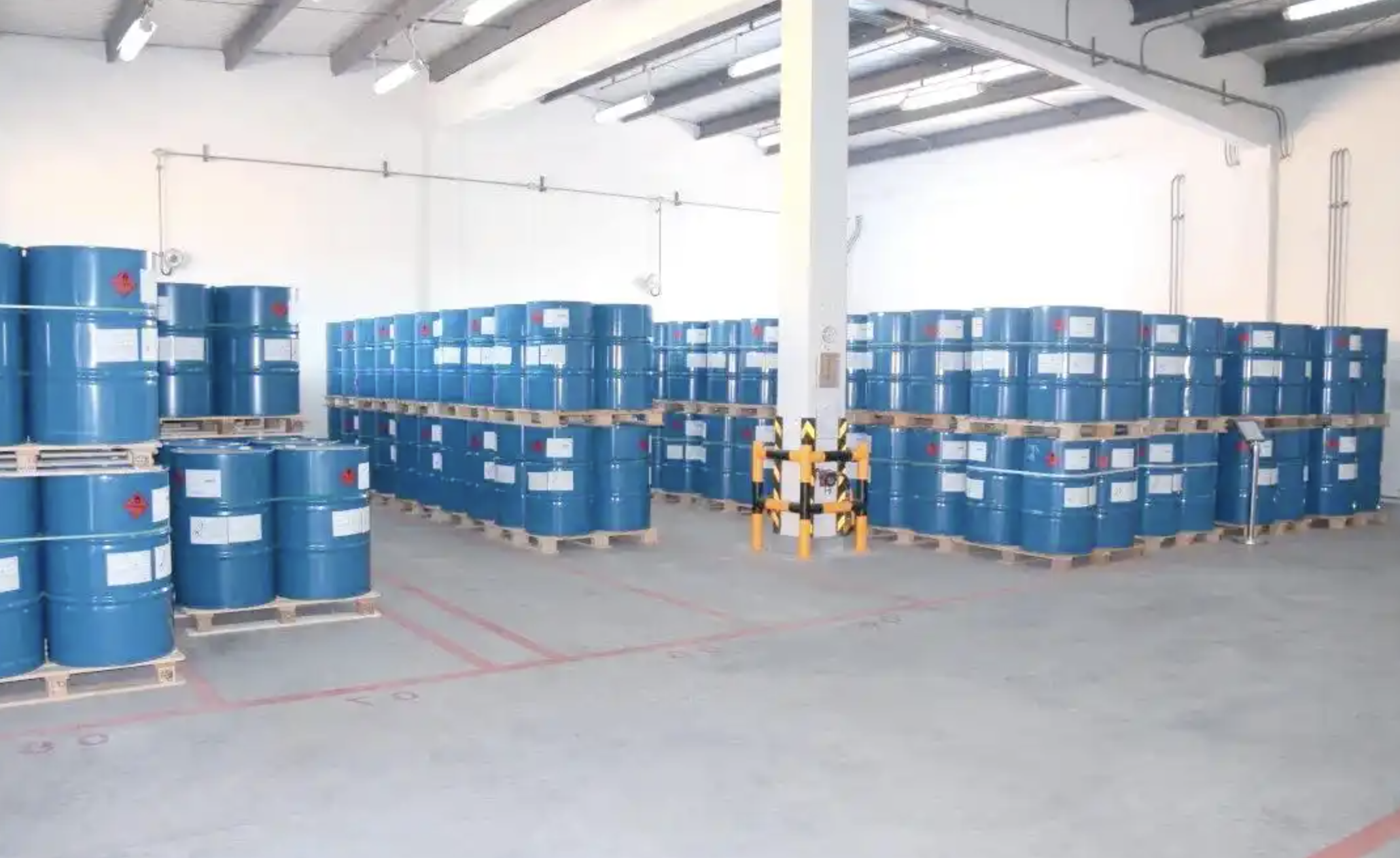
Cover: bagged additive and fertilizer storage. Anti-caking performance is judged in conditions like these, not on a spec sheet.
For a formulation or procurement team in the research-to-evaluation stage, the useful question is not which anti-caking powder is best. It is a constraint question. Which physical form fits the plant's dosing equipment. Which documentary evidence survives an import inspection. Which regulatory boundary the additive must not push a finished DAP, MAP or NPK product across. And which performance claims can actually be tested at pilot scale before a container is committed.
This guide treats anti-caking powder as a specification problem with defined boundaries, using product and capability facts from Wuhan Fertchem Technology Co., Ltd. together with third-party regulatory and market evidence. Where a data point could not be verified, it is not stated.
Why Anti-Caking Powder Is a Specification Decision, Not a Commodity Purchase
Anti-caking agents do not change what a fertilizer is. They change how it behaves between the granulator and the field. That distinction matters commercially, because two suppliers can quote the same broad product name, anti-caking powder, while delivering different physical forms, different carrier chemistries and different documentary packages.
The Fertchem Anti-caking Agent range is supplied under the Supersoft and Superflow model designations, in oil-base, powder-base and water-base forms, with oil-base, water-base and water-soluble variants offered for fertilizer applications. The declared material composition across the range includes surfactants, oil and talc.
| Physical form | What it is | Typical fit | What the buyer must verify |
|---|---|---|---|
| Powder-base | Dry solid applied to granule surfaces | Plants without liquid dosing infrastructure | Adhesion and coverage on the actual granule surface |
| Oil-base | Surfactant and oil carrier system | Stronger moisture barrier; can combine with colouring | Tankage, handling and storage conditions for oil systems |
| Water-base | Aqueous carrier system | Simpler handling than oil systems | Adequate curing or drying on the granule |
| Water-soluble | Formulation designed to dissolve in water | Where residue-free distribution matters | Dilution regime and dosing equipment control range |
Three sourcing consequences follow. First, a request for quotation that names only anti-caking powder will produce responses that are not comparable. Second, the form determines dosing equipment and operating window, not just performance. Third, the documentary pack, including safety data, composition detail and compliance statements, differs by form and by destination market.
The Physical Problem Behind the Purchase
Caking is a moisture-driven bonding process. Granules absorb moisture from ambient air or from the product itself, dissolved salts migrate to the contact points between particles, and on drying they re-crystallise as solid bridges. The result is a product that no longer flows freely, doses unevenly, and generates dust when broken apart mechanically.
Operating conditions matter as much as chemistry. Fertilizer plants typically run continuous production in high-temperature, high-humidity environments, and additives are expected to hold performance across long storage and transport cycles rather than only at the plant gate.
Fertchem's stated function for this additive family is to reduce caking and moisture absorption, provide long-term caking and dusting control, and support optimisation of fertilizer quality, output and production cost. That is a process-outcome claim rather than a chemical-mechanism claim, and buyers should read it that way: the additive is judged by what happens to the pile after 30, 60 or 90 days, not by what is printed on the drum.
What Fertchem Supplies, and What Is Documented
Wuhan Fertchem Technology Co., Ltd. is a Chinese fertilizer additive manufacturer founded in 2000, operating a 50,000 m² facility with 120 employees, an annual output of 120,000 tons and a 30-person R&D team. The company reports a 50% export ratio, serves the global market, and holds ISO 9001, ISO 14001 and ISO 45001 certification.
Its portfolio covers the phosphate chemical and compound fertilizer production chain and includes: Anti-caking Agent, Coating Agent, Anti-caking Powder, Oil-base Anti-caking Agent, Water-base Anti-caking Agent, Water Soluble Anti-caking Agent, Coloring Agents for DAP/NPK, Anti-dusting Agent, Granulating Aid, Hardness Additive, Disintegrating Agent, Flotation Agent, Phosphoric Acid Additives, Defoamer, Filtration Modifier, Filtration Aid, Scale Inhibitor, Concentration Modifier, Flocculant and Anti-deposition Agent.
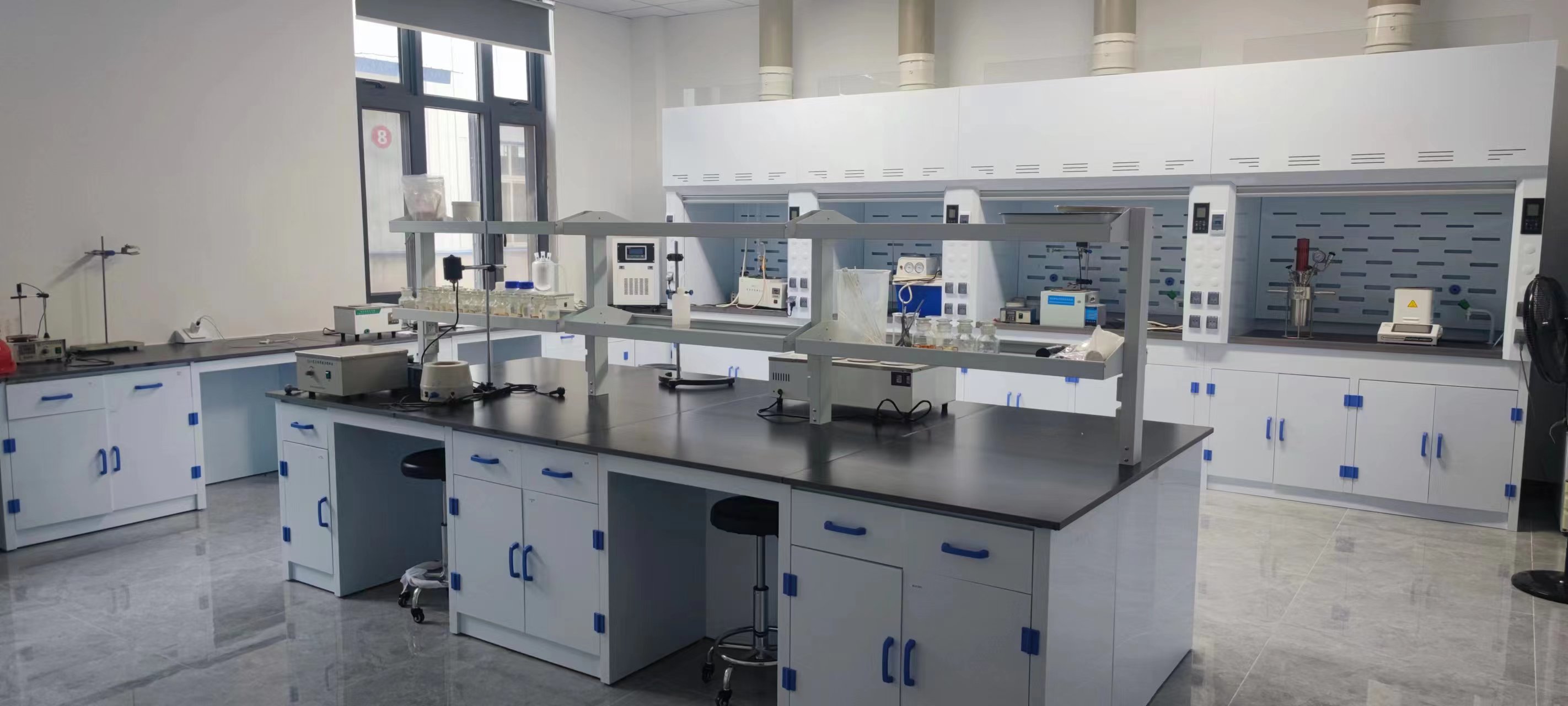
Quality control laboratory: additive formulations are tested before shipment rather than sampled after delivery.
Capability facts relevant to a first order
- Monthly capacity: 10,000 tons/month
- Lead time: 7 to 20 days
- Minimum order quantity: one container
- Quality control: 100% test
- Customisation: additives can be formulated according to process problems, fertilizer types and production needs
- After-sales: on-site support
- Export markets: global
For an evaluation-stage buyer, the customisation and after-sales facts carry more weight than headline capacity. Anti-caking performance is recipe-dependent, and a supplier that cannot adjust a formulation to a specific granulation line is offering a catalogue item rather than a solution.
The adjacent products that affect total additive spend
Anti-caking is rarely bought alone. Fertchem also supplies DAP, MAP and NPK coloring and coating agents based on oil and pigment (model FM), an oil- and polymer-based anti-dusting agent for TSP, SSP and granular fertilizers (model Superclean), and a granulating aid based on modified starch (model Supergran). For a plant buying several additives, sourcing them from one qualified supplier reduces the number of compliance files, safety data sheets and incoming inspections to manage.
Technical Explanation: How the Protective Film Works
The mechanism, as described in Fertchem's own technical documentation, is film formation. The anti-caking agent forms a uniform protective film on fertilizer granule surfaces. That film blocks moisture absorption and reduces crystal bridge formation between particles, so the fertilizer keeps free-flowing during long-term storage and transportation. The formulation can be customised for NPK, DAP, MAP, urea and other fertilizer types.
Two engineering implications follow.
Coverage is the controlling variable. A film only blocks moisture where it exists. Uneven coverage, caused by poor spraying, inadequate drum residence time, or a granule surface that is too hot or too wet, leaves unprotected patches, and caking begins there. This is why the same product can perform well on one line and poorly on another.
The additive is dosed, not poured. Fertchem's application profile specifies automatic dosing equipment and 24/7 operation. Continuous, controlled addition is a different engineering requirement from batch addition, and buyers should confirm that existing dosing hardware can handle the chosen form before ordering.
Application Fit: Fertilizer Types, Plant Conditions and Form Selection
Fertchem's anti-caking and coating products are supplied for fertilizer production, with stated applications across fertilizer plants, compound fertilizer plants, DAP/MAP plants, phosphoric acid plants and flotation plants.
| Application area | Product and model | Form or basis | Buyer note |
|---|---|---|---|
| DAP, MAP, NPK granulation | Anti-caking Agent (Supersoft, Superflow) | Oil-base, powder-base, water-base | Match form to dosing hardware and granule surface condition |
| DAP, MAP, NPK coating and colour | Coloring and Coating Agents (FM) | Oil and pigment | Can combine barrier function with colour control |
| TSP, SSP, granular fertilizers | Anti-dusting Agent (Superclean) | Oil and polymer | Addresses dust rather than caking; different failure mode |
| Granular fertilizer forming | Granulating Aid (Supergran) | Modified starch | Affects granule formation, not storage flowability |
| Phosphate rock processing | Flotation Agent (FM) | Surfactants, fatty acids | Upstream of the fertilizer line, separate evaluation |
| Phosphoric acid production | Phosphoric Acid Additives (FM) | Surfactants | Defoamer, filtration and scale functions in one family |
Selection and customisation should account for four variables that Fertchem identifies explicitly: fertilizer type, raw materials, process issues and target formulation. A buyer who cannot describe those four variables is not yet in a position to evaluate a supplier, because the supplier has no basis on which to differentiate a formulation.
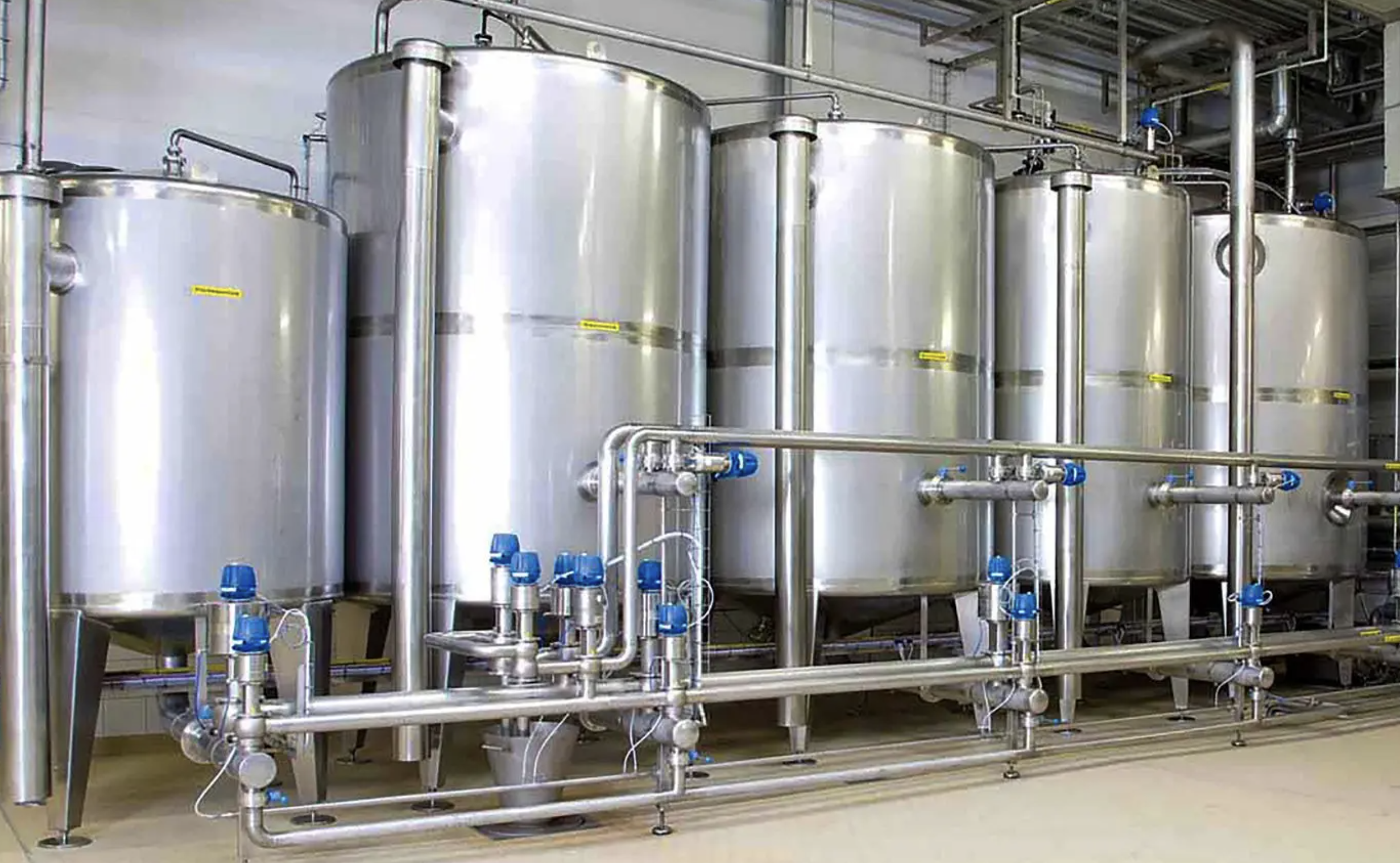
Liquid additive storage: form selection determines tankage, dosing hardware and handling procedures.
Certification and Regulatory Constraints Buyers Must Verify
Certification is where anti-caking powder stops being a commodity and becomes a documentation exercise. Three layers apply, and they are not interchangeable.
Layer 1: Management system certification
Fertchem holds ISO 9001, ISO 14001 and ISO 45001 certification. These are management system standards covering quality, environmental management, and occupational health and safety. They indicate that a documented quality and safety process exists. They do not certify the performance of any individual anti-caking product. Buyers should treat them as a supplier-qualification filter and then test the product separately.
Layer 2: Substance and product regulation in the destination market
In the European Union, Regulation (EU) 2019/1009 has applied since 16 July 2022 and sets the conditions for placing fertilising products on the market with CE marking. A product must fall within a product function category and be composed exclusively of component material categories in order to be CE marked. The regulation also includes a dedicated category for inhibitors, separate from fertilisers, which is the entry route for nitrification and urease inhibitor additives.
The same regulation sets contaminant limits, including cadmium limits for phosphate fertilizers that tighten in stages. That regime constrains the chemistry permitted in coatings and additives applied to phosphate-based products, because the additive must not push the finished product over a regulated threshold.
Two further instruments apply at substance level. REACH (Regulation (EC) No 1907/2006) requires EU manufacturers and importers to register chemical substances manufactured or imported at or above one tonne per year, which covers additive substances placed on the EU market. The CLP Regulation (Regulation (EC) No 1272/2008) requires suppliers to classify, label and package hazardous substances and mixtures before placing them on the EU market, which governs hazard communication for amine-based and surfactant-based additive chemistries.
In the United States, there is no single equivalent instrument. AAPFCO maintains model definitions and regulatory guidance that US state fertilizer control officials adopt, covering fertilizer products, soil amendments and additives. The consequence: an anti-caking agent is not automatically CE compliant. CE marking applies to the fertilising product, and the additive is one input to that assessment. Buyers importing into the EU should ask for the registration status and CLP classification of the specific substances in the formulation, not a generic compliance statement.
Layer 3: Customs classification
Compound fertilizers such as DAP, MAP and NPK fall under HS heading 3105, which covers mineral or chemical fertilisers containing two or three of the fertilising elements nitrogen, phosphorus and potassium. Chapter 31 Note 6 restricts heading 3105 to products of a kind used as fertilizers that contain at least one of those elements as an essential constituent. A standalone additive preparation containing none of them is therefore generally assessed against residual chemical headings, such as 3824, rather than under the fertilizer heading. Buyers should confirm classification with a binding customs ruling in the destination market rather than inferring it from the fertilizer's HS code.
Market Trend Analysis
Three trends shape how anti-caking powder is bought today.
Anti-caking is the largest functional segment. IMARC Group's 2026 report places the global fertilizer additives market at approximately USD 3,123.3 million in 2025, with anti-caking agents accounting for roughly 49% to 55% of the total. That share reflects the fact that caking is a near-universal problem in granular fertilizer handling rather than a niche one.
Supply is concentrated in Asia Pacific. The same source puts Asia Pacific at over 60.5% of the global market in 2025, driven by China and India. For buyers in Europe, North America or Latin America, that concentration has a practical effect: most anti-caking powder originates in a region whose regulatory documentation must be translated into the destination market's conformity language.
Contaminant rules are tightening on phosphate products. The staged cadmium limits under Regulation (EU) 2019/1009 raise the value of low-contaminant coating and anti-caking chemistries, because an inert additive that contributes little to the regulated contaminant load preserves more of the finished product's compliance margin.
Commercial research also indicates that organic and bio-based anti-caking agents are the faster-growing product segment relative to mineral-based agents. Buyers evaluating that route should apply the same documentation test as for mineral products: bio-based origin does not exempt a substance from REACH registration or CLP classification.
Comparison with Traditional Solutions, and Where Anti-Caking Powder Stops
Anti-caking powder is one of several ways to control caking. It is not always the right one, and the comparison below is the basis on which a plant should decide.
| Approach | Mechanism | Strength | Limit |
|---|---|---|---|
| Mechanical control (cooling, drying, screening) | Removes moisture and fines before storage | Attacks the root cause; no additive cost | Capital-intensive; cannot prevent re-absorption in humid storage |
| Inert dusting (talc, clay) | Physical barrier between granules | Low cost; simple to apply | Generates dust; limited moisture blocking; can affect appearance |
| Oil-based coating | Hydrophobic film; can carry colour | Strong moisture barrier; dual function | Requires oil handling and storage infrastructure; film uniformity depends on equipment |
| Water-based or water-soluble anti-caking agent | Film formation from an aqueous system | Simpler handling than oil systems | Needs adequate drying or curing on the granule surface |
| Anti-caking powder (dry) | Dry film plus physical separation | No liquid handling; suits plants without liquid dosing | Coverage depends on adhesion; performance varies with granule surface condition |
The limits in the Fertchem record, stated plainly:
- Dosage is not published. No verified application rate per tonne of fertilizer is available in the source material. Selection and customisation depend on fertilizer type, raw materials, process issues and target formulation, which means the rate has to be established by plant trial rather than read off a datasheet.
- Performance is conditional. The stated claim is reduced caking and moisture absorption under high-temperature, high-humidity plant conditions. It is not a claim that the additive compensates for inadequate cooling, wet storage, or poor granule quality upstream.
- No crush-strength data is published for the granulating aid. Where a buyer's decision depends on granule hardness rather than flowability, the available documentation does not settle the question, and separate testing is required.
- Certification scope has boundaries. ISO 9001, ISO 14001 and ISO 45001 describe management systems. They are not product performance certifications and should not be presented internally as such.
- Classification is not automatic. Anti-caking preparations without nitrogen, phosphorus or potassium as an essential constituent generally fall outside HS Chapter 31, and the correct code for a specific shipment should be confirmed with customs rather than assumed.
Future Outlook
Three developments are likely to change how anti-caking powder is specified over the next procurement cycle.
Documentation will keep moving up the evaluation criteria. As contaminant limits tighten and substance-level registration obligations are enforced, a supplier's ability to produce a complete, current and destination-specific document pack will matter as much as its ability to produce a consistent product. Buyers who screen on documentation early avoid late-stage delays at customs and at the formulation stage.
Formulation customisation will become a standard expectation rather than a premium service. Because anti-caking performance depends on granule surface condition, climate and storage duration, a single catalogue grade cannot serve every plant. Suppliers organised around formulation adjustment and on-site support are structurally better placed than suppliers selling only standard grades.
Cost conversations will shift toward cost per tonne treated. With no verified public price benchmark for anti-caking agents, and with downstream fertilizer prices tracked monthly by the World Bank Commodity Markets publication for DAP, phosphate rock, urea and potassium chloride, the defensible comparison is total additive spend against measured reduction in caking losses, not unit price in isolation.
Frequently Asked Questions
What is the difference between oil-base, water-base, water-soluble and powder anti-caking agents?
Fertchem supplies anti-caking agents in oil-base, powder-base and water-base forms, with oil-base, water-base and water-soluble variants offered for fertilizer applications. The form determines handling rather than just performance: oil-base systems require liquid handling and storage, powder-base systems are applied dry, and water-soluble variants are handled as aqueous systems. The declared material composition across the range includes surfactants, oil and talc. Form selection should account for fertilizer type, raw materials, process issues and target formulation.
Which fertilizer types can anti-caking agents be applied to?
Fertchem states that its anti-caking agent can be customised for NPK, DAP, MAP, urea and other fertilizer types. The application profile lists fertilizer plants, compound fertilizer plants, DAP/MAP plants, phosphoric acid plants and flotation plants. The same supplier also provides coating and colouring agents for DAP, MAP and NPK, and an anti-dusting agent for TSP, SSP and granular fertilizers.
What certifications should a buyer verify from a fertilizer additive supplier?
Fertchem holds ISO 9001, ISO 14001 and ISO 45001 certification. These are management system standards covering quality, environmental management and occupational health and safety. They qualify a supplier's process discipline rather than a specific product's performance, so buyers evaluating anti-caking performance should still require product-level testing and, for regulated markets, substance-level documentation such as REACH registration status and CLP classification.
Does an anti-caking agent change the declared nutrient content of DAP or NPK?
The source material for this article does not state a nutrient contribution figure for the anti-caking agent, and no verified nutrient analysis is published. Because declared nitrogen, phosphorus and potassium content is a labelling matter in most markets, buyers should request a nutrient analysis for the specific additive grade and dosage before finalising a formulation declaration. In the EU, contaminant limits under Regulation (EU) 2019/1009 also apply to the finished fertilising product, so the additive's contribution to the regulated load should be documented as well.
How is the application rate of an anti-caking agent determined?
Fertchem states that selection and customisation should consider fertilizer type, raw materials, process issues and target formulation. No verified dosage rate per tonne of fertilizer is published, so the rate is established through plant trials rather than taken from a catalogue. The application profile specifies automatic dosing equipment and 24/7 operation, which means the dosing system's control range should be confirmed before the product is ordered.
What documentation is needed to import fertilizer additives into the EU?
Under REACH (Regulation (EC) No 1907/2006), substances manufactured or imported at or above one tonne per year require registration. Under the CLP Regulation (Regulation (EC) No 1272/2008), hazardous substances and mixtures must be classified, labelled and packaged before being placed on the EU market. Regulation (EU) 2019/1009 governs CE marking of fertilising products and requires compliance with an applicable product function category and component material categories. A buyer should confirm the registration status and CLP classification of the specific substances in the formulation.
What are the minimum order quantity and lead time?
Fertchem's stated minimum order quantity is one container, with a lead time of 7 to 20 days and a monthly capacity of 10,000 tons. Quality control is described as 100% test, and after-sales support is provided on site.
The full 2026 product catalogue, covering anti-caking, coating, colouring, anti-dusting and phosphate process additives, is available as a downloadable PDF: Wuhan Fertchem Product Catalog 2026.
¿Tiene preguntas o necesita más detalles?
Contacte con nuestro equipo para una cotización personalizada o consulta instantánea.
Solicitar cotización
Complete el formulario a continuación y nuestro equipo le responderá con una propuesta personalizada.
Chat directo de WhatsApp
¿Prefiere chatear en tiempo real? Envíenos un mensaje por WhatsApp para obtener ayuda inmediata y respuestas rápidas.
- Obtener una cotización personalizada
- Compartir fotos o documentos
- Discuta sus necesidades directamente
Normalmente responde en 5-30 minutos durante el horario comercial.