
Answering Drum Motor RFQ Questions on Roller Width, Belt Speed and IP Rating
Answering Drum Motor RFQ Questions on Roller Width, Belt Speed and IP Rating
A drum motor RFQ rarely fails on price. It fails on three details that look minor in a quotation and expensive at commissioning: the roller width the conveyor frame can physically accept, the belt speed the line was designed around, and the IP rating the washdown regime actually demands.
This FAQ answers those three questions in the order a buyer meets them, using published SEAPARKS specifications as worked examples — the light-duty TM80M (single-phase asynchronous, 80 mm roller, 260 mm minimum roller width) and the hygienic DM80F (IP69K, 304 stainless steel, 316 optional) — and closes with the acceptance criteria that belong inside the purchase order rather than in a later email thread.
Tianjin Seaparks Machinery-Electronics Co., Ltd (SEAPARKS) is a Tianjin-based manufacturer founded in 2002 that designs and builds motorised conveyor drums, in which the motor and gear train sit inside the conveyor roller. Its portfolio is organised into light-duty, hygienic and heavy-duty groups. A 50,000 m² plant and a 40-engineer R&D team sit behind the range.
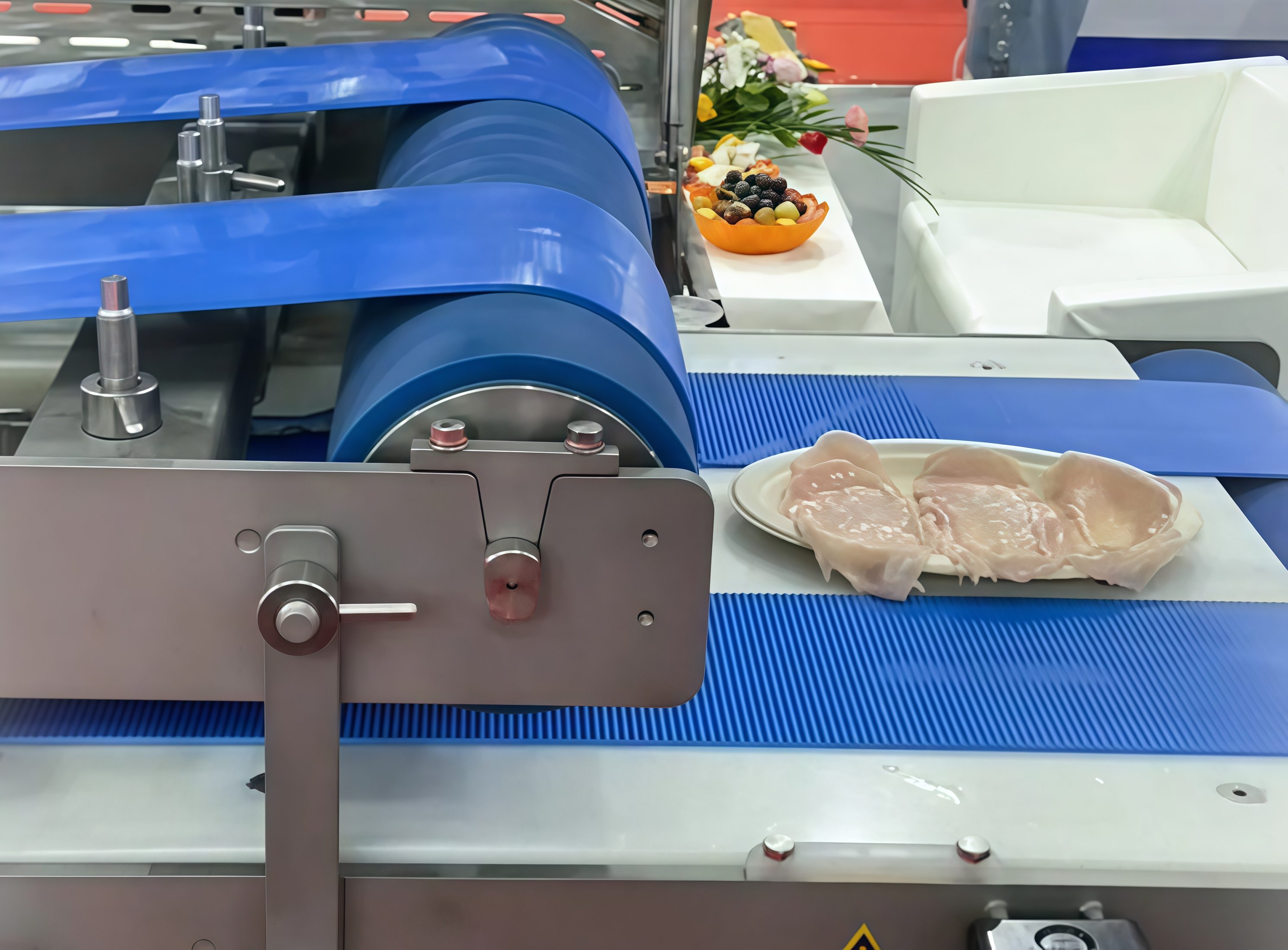
Drum motor driven conveyor in a food processing environment, where the cleaning procedure usually decides the IP rating before the drive rating does.
Why roller width, belt speed and IP rating decide the order
A drum motor is not a component that can be corrected later. The roller diameter and face width fix the mechanical interface with the frame. The internal gear train and motor speed fix belt speed and torque. Housing material and sealing fix the cleaning envelope. A quotation that lists only a power rating leaves all three open, and the mismatch usually surfaces after the frame has been welded.
The three questions also interact. Increasing roller diameter to solve a torque problem changes belt speed at the same motor speed. Moving up to IP69K changes the material and sealing specification, and sometimes the model family. Treating any one of them as a standalone line item is how a routine RFQ turns into a frame modification.
Q1. How do SEAPARKS drum motor model codes differ?
A SEAPARKS model code carries three pieces of information: the motor-series prefix, the roller diameter in millimetres, and the series suffix. It does not carry power, torque, belt speed or IP rating — those must be read from the model datasheet that will be attached to the order.
| Code element | What it indicates | Worked example |
|---|---|---|
| Prefix T | Asynchronous oil-immersed series | TM80M, TM113A |
| Prefix D | Synchronous oil-immersed series | DM80F, DM138A |
| Numerals | Roller (drum) diameter in millimetres | 80 = 80 mm roller |
| Suffix F | Hygienic group | DM80F, TM113F, DM216F |
| Suffix A or M | Light-duty group | TM113A, TM80M, DM138A |
| Suffix H | Heavy-duty group | DM138H, TM320H |
Code structure as reflected in SEAPARKS product and certification records. The code identifies a family and a diameter, not a performance level.
The grouping is visible in SEAPARKS' certification records, which list F models as hygienic drum motors, A and M models as light-duty drum motors, and H models as heavy-duty drum motors. Across the three groups the diameter span runs from 80 mm to 320 mm.
Two cautions follow. First, a code identifies a family, not a performance tier. The listed power range of 0.37 kW to 4.0 kW belongs to TM216F specifically and cannot be transferred to a smaller or differently configured model. Second, the M designator appears only inside the light-duty group (TM80M, TM113M). Treat it as a variant marker and confirm on the datasheet what it changes, rather than assuming it denotes a particular motor type.
Q2. What does the minimum roller width actually mean?
On the TM80M, the 260 mm minimum roller width is the narrowest drum face into which the internal motor, gear train, bearings and oil fill can be assembled. It is a manufacturing floor, not a preference, and it cannot be negotiated down by ordering a narrower belt.
The reason is structural. In a drum motor the drive train is inside the shell, so the shell must be long enough to contain it and still leave room for bearing support and sealing at both ends. Below that face width there is no assembly to build.
What it means at the conveyor frame
If a conveyor is designed around a belt narrower than the model minimum, the drum cannot simply be shortened. The buyer either moves to a model whose minimum fits the frame, or changes the frame and belt width to suit the drum. Both are legitimate; deciding after fabrication is not.
Minimum width also says nothing about the maximum. Confirm the upper face-width limit for the exact model, and specify the face width you actually need — belt width plus the tracking allowance your frame design uses — rather than quoting belt width alone.
A workable RFQ line reads: belt width 400 mm; required drum face width stated in millimetres; confirm the minimum and maximum face width for the proposed model and the resulting overall shaft length.
Q3. How should belt speed and torque be specified?
Specify belt speed in metres per second at the drum shell, and torque at the shell under the stated load — not only motor power in kW. Power alone does not size a drum motor, because the same motor produces a different belt speed and a different shell torque depending on drum diameter and gear ratio.
The relationship is straightforward: belt speed equals roller circumference multiplied by rotational speed. At a fixed motor speed, a larger drum runs the belt faster; a smaller drum runs it slower but delivers more shell torque for the same motor. This is why a diameter change made late in a project to chase torque also moves the line speed, and why the two values should be quoted together in the RFQ.
What to put in the RFQ
- Required belt speed in m/s, with an acceptable tolerance.
- Conveyed load per metre and total load on the belt section.
- Incline angle, if the conveyor is not horizontal.
- Start-stop frequency and whether soft start or variable speed is needed.
- Available electrical supply: single-phase or three-phase, voltage and frequency.
SEAPARKS lists both single-phase and three-phase asynchronous configurations across the range, which is why the supply question belongs in the first RFQ round rather than the last. TM80M, for example, is a single-phase asynchronous unit, so a site without a three-phase supply can still be served within the light-duty group.
On power and torque figures for TM113A and DM138A, this FAQ deliberately does not restate numbers. Model-level power and torque must come from the datasheet revision that will be attached to the PO, because ranges differ between models and a figure quoted from memory is exactly the kind of error an acceptance inspection is meant to catch.
Q4. Which IP rating fits the conveyor environment?
Match the IP rating to the documented cleaning method, not to the industry label. A dry sorting room and a washdown filling line can sit in the same factory and need different enclosures. Where the cleaning procedure includes high-temperature, high-pressure water jets, IP69K is the relevant class; where the line is wiped or dry-cleaned, a lower rating matched to that procedure may be appropriate, and paying for washdown protection buys nothing.
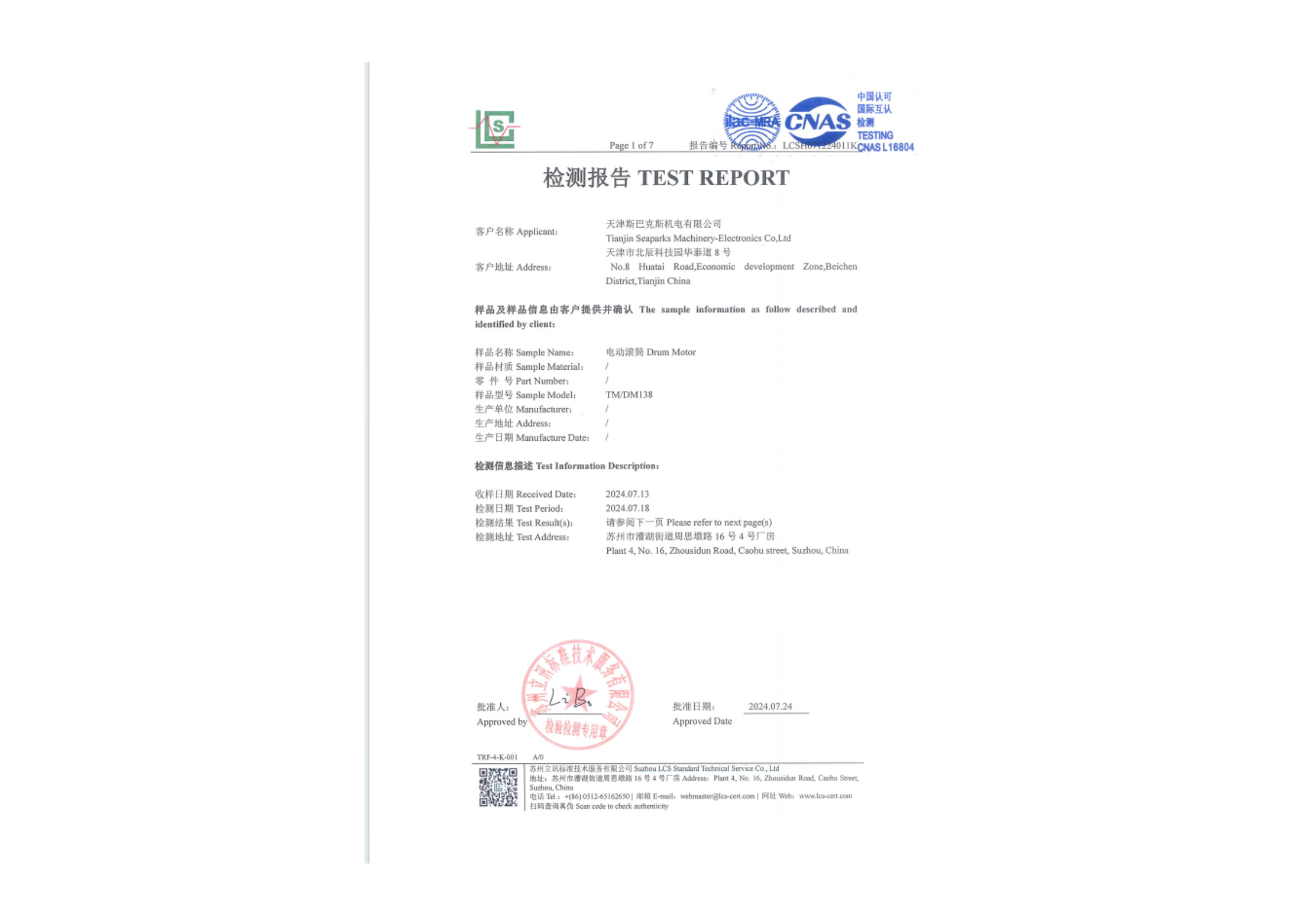
IP69K evidence is a document, not a label on a nameplate: the test report number, the standard and the covered model list are what an inspector checks.
What IP69K evidence looks like in practice
SEAPARKS' hygienic range is covered by an IP69K protection rating test report, number LCSH071224011K, issued on 24 July 2024 by Suzhou Luxun Standard Technical Service Co., Ltd., a CNAS-accredited laboratory. The report covers IP69K high-temperature, high-pressure waterproof and dustproof performance of the electric drum and references ISO 20653:2023. DM80F appears among the models listed as applicable.
That detail matters at acceptance. When a supplier states IP69K, ask for the report number, the issuing laboratory and the list of covered models, and check that the ordered model is on that list. A rating asserted in a catalogue without a report is a claim; a rating backed by a numbered report with the model in scope is evidence.
IP rating is not a hygienic certification
Ingress protection describes resistance to water and dust entry. It does not establish food-contact suitability, cleanability or corrosion performance, and it should not be read as a substitute for a hygienic design review. Buyers in food and pharmaceutical lines usually need three separate document sets: ingress protection evidence, electrical conformity, and material documentation for the wetted or splash-exposed surfaces.
The electrical set on the SEAPARKS drum motor range includes CE certification to the Low Voltage Directive 2014/35/EU (TÜV Rheinland, certificate AN 50337407 0001), CE certification to the EMC Directive 2014/30/EU with EN 60034-1:2010 (certificate AE 50461043 0001), UL certification to UL 1004-1:2012R8.18 and CAN/CSA-C22.2 No.100-04 (certificates CU7219001101, CU7219001102 and CU7219000901), RoHS 2.0 verification under 2011/65/EU and (EU)2015/863 (SGS, report TSNEC24001272701, dated 25 July 2024), and ISO 9001:2015 quality management certification (AMTIVO, QAIC/CN/60456, issued 19 July 2024 and valid to 21 July 2027). Each is scoped to drum motors, so the request should be for the certificate covering the ordered configuration, not a generic company certificate pack.
Q5. Carbon steel, 304 or 316 stainless steel?
SEAPARKS housing options include carbon steel, 304 stainless steel, and 316 stainless steel as an option within the hygienic series. The practical split is by exposure rather than by budget: carbon steel for dry general-duty conveying where corrosion is not a factor, 304 stainless steel for hygienic washdown areas, and 316 stainless steel where the cleaning chemistry is aggressive enough that the buyer's own materials assessment calls for it.
Grade alone does not settle the question. Corrosion resistance and cleanability also depend on surface finish, weld treatment, seal design and the actual cleaning agents used. The useful RFQ attachment is therefore a list of the cleaning chemicals and concentrations in use, plus the surface finish the site's hygiene plan requires, so the supplier can confirm the material against real conditions instead of a generic grade.
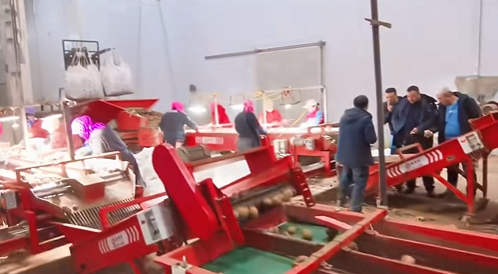
Light-duty conveying on an agricultural sorting line: dry duty, where belt speed and duty cycle typically outweigh washdown specification.
TM80M and DM80F: the same 80 mm roller, two different purchase orders
Both models use an 80 mm roller, which is exactly why they illustrate the risk of ordering by diameter. TM80M answers a light-duty, dry-environment, single-phase question with a 260 mm minimum face width. DM80F answers a hygienic washdown question with IP69K protection and a 304 stainless steel housing, with 316 available as an option.
| Specification | TM80M | DM80F |
|---|---|---|
| Series group | Light duty | Hygienic |
| Roller diameter | 80 mm | 80 mm |
| Motor configuration | Single-phase asynchronous | Confirm electrical configuration on the model datasheet |
| Minimum roller width | 260 mm | Confirm for the exact model |
| Housing material | Carbon steel or stainless option per order | 304 stainless steel standard, 316 optional |
| Ingress protection | Per model datasheet | IP69K, within the scope of test report LCSH071224011K |
| Typical setting | Dry conveying, lighter loads, low-noise requirements | Washdown food and hygienic conveying |
Comparison of documented characteristics. The two models are not interchangeable on the same frame and cleaning regime.
The equal diameter is the trap. A buyer who specifies 80 mm and a power rating can receive two quotations that look comparable and fit entirely different lines. The frame width, the cleaning procedure and the electrical supply each eliminate one of the options before price is even discussed.
Where the answers shift by application
SEAPARKS describes its drum motors as used in airport baggage handling, security inspection machines, postal and parcel operations, food processing, pharmaceutical handling, warehousing and agricultural conveying. The three RFQ questions weigh differently in each.
In warehousing and parcel sorting, the environment is dry and the dominant variables are belt speed, start-stop frequency and face width. IP rating is usually a secondary confirmation. In airport baggage and X-ray security screening conveyors, short, frequent starts and low noise matter, which places the light-duty group's low-noise positioning in scope; face width is set by the screening tunnel geometry and should be quoted from the machine drawing.
Food processing is where the order of questions reverses. Cleaning procedure comes first and determines whether an F-series hygienic model with IP69K is required; material grade follows; belt speed is then specified within that envelope. Pharmaceutical conveying behaves similarly but weights documentation and cleanability above washdown intensity, so the certificate set is part of the technical specification rather than a purchasing formality. Agricultural conveying is typically dry and dust-exposed, where enclosure and material selection still need confirming but high-pressure washdown is not the driver.
The market context behind these specifications
Commercial research published in 2026 frames a category that is still growing: Market.us projects the global drum motor market at about USD 3.1 billion by 2035, from roughly USD 2.0 billion in 2025, while Dataintelo places AC motor types at 52.3% of 2025 revenue. Both are commercial estimates with their own segment boundaries and should be read as context for specification trends, not as a forecast for an individual project.
The direction they point to is consistent with what RFQs already show. AC configurations remain the default reference point, so single-phase and three-phase asynchronous options stay central to light-duty specification, while hygienic lines are increasingly defined by documentation — a numbered IP69K report against ISO 20653:2023, a scoped CE and UL set, and material evidence at model level.
Acceptance criteria to attach to the purchase order
SEAPARKS' stated purchasing terms are a minimum order quantity of 1 unit, delivery on FOB or CIF terms, pre-shipment inspection as standard with customised inspection available on customer request, and 100% advance payment for new customers. Those terms settle the commercial framework; they do not define what is inspected. That has to come from the datasheet.
The practical approach is to convert every specification answer above into acceptance items:
- Model code and datasheet revision number, referenced in the PO line.
- Roller diameter and face width, with the minimum and maximum face width confirmed for the model.
- Belt speed in m/s and shell torque at the stated load and supply conditions.
- IP rating, with the test report number, the standard referenced and the model listed in scope.
- Housing material grade and surface finish, matched to the cleaning agent list supplied with the RFQ.
- Electrical configuration: phase, voltage, frequency and any variable-speed requirement.
- Certificate set for the ordered configuration: CE LVD, CE EMC, UL, RoHS 2.0 and ISO 9001 as applicable.
- Inspection scope: pre-shipment inspection items, plus any customised inspection requested before shipment.
- Marking, packing and documentation language, if the unit is destined for installation by a third-party integrator.
Each line is a value that can be checked against a document. That is the difference between an acceptance criterion and an intention.
What changes next
Two developments are already visible in the documentation rather than in marketing language. First, hygienic specification is migrating from a claimed rating to a numbered test report: the SEAPARKS IP69K report issued in 2024 references ISO 20653:2023 and names the covered models, which makes verification routine rather than discretionary. Second, the certificate set is being read as part of the technical specification in food and pharmaceutical procurement, not as a post-award formality.
The practical consequence for buyers is modest but real: an RFQ that names the report number, the standard and the covered model list will receive fewer unusable quotations than one that asks for IP69K in general terms. Where those documents cannot be produced for the ordered configuration, that is a finding in itself, and it is better established before the PO than at pre-shipment inspection.
FAQ
How can I tell what a SEAPARKS drum motor model code means without a catalogue?
Read it in three parts. The prefix distinguishes the asynchronous series (T) from the synchronous series (D). The numerals give the roller diameter in millimetres, so 80 means an 80 mm roller and 216 means a 216 mm roller. The suffix places the model in a group: F for hygienic, A or M for light duty, H for heavy duty. The code does not state power, torque, belt speed or IP rating, so those values must come from the datasheet for that exact model.
Why does a drum motor have a minimum roller width at all?
Because the motor, gear train, bearings and oil fill sit inside the roller. The shell has to be long enough to contain that assembly and still provide bearing support and sealing at both ends, which sets a hard manufacturing floor. On the TM80M that floor is 260 mm. A conveyor designed around a narrower belt cannot be served by shortening the drum; the buyer either selects a model whose minimum fits the frame or changes the frame and belt width.
How do I convert motor speed into belt speed for an RFQ?
Belt speed equals the roller circumference multiplied by rotational speed, so it depends on drum diameter as well as motor speed. At the same motor speed, a larger drum produces a higher belt speed and a smaller drum produces a lower belt speed with more shell torque. Rather than converting figures yourself, state the required belt speed in m/s, the load and the incline in the RFQ and ask the supplier to confirm the resulting configuration in writing against the model datasheet.
Is IP69K necessary for every food conveyor?
No. IP69K describes protection against high-temperature, high-pressure water jets, so it is only necessary where the cleaning procedure uses that kind of washdown. Lines that are wiped or dry-cleaned can be specified with a rating matched to the actual procedure. Where washdown does apply, ask for the test report number and confirm the ordered model is in scope; the SEAPARKS hygienic range is covered by report LCSH071224011K against ISO 20653:2023. In every case, IP69K is ingress protection evidence, not a food-contact certification.
What acceptance items belong in a drum motor purchase order?
At minimum: the model code and datasheet revision; roller diameter and face width with minimum and maximum confirmed; belt speed and shell torque at the stated conditions; IP rating with the report number and standard; housing material grade and finish matched to the cleaning agents; electrical configuration including phase and frequency; the certificate set applicable to the ordered configuration; and the inspection scope, which for SEAPARKS covers pre-shipment inspection with customised inspection available on request. Payment terms for new customers are 100% in advance, and delivery is quoted on FOB or CIF terms.
Before the order goes out
Three questions, answered against documents rather than assumptions, remove most of the risk from a drum motor order: does the roller width fit the frame, does the drive produce the belt speed and torque the line was designed for, and does the protection and material specification match the cleaning procedure the site actually runs. The models used here — TM80M for a light-duty, single-phase, 260 mm minimum application, DM80F for an IP69K hygienic application in 304 stainless steel with 316 as an option — show how differently two 80 mm rollers can answer those questions.
For buyers who need the full model range, dimensions and certificate references in one place, the SEAPARKS product and corporation brochure is available for download: Product & Corporation 260624 (PDF).
¿Tiene preguntas o necesita más detalles?
Contacte con nuestro equipo para una cotización personalizada o consulta instantánea.
Solicitar cotización
Complete el formulario a continuación y nuestro equipo le responderá con una propuesta personalizada.
Chat directo de WhatsApp
¿Prefiere chatear en tiempo real? Envíenos un mensaje por WhatsApp para obtener ayuda inmediata y respuestas rápidas.
- Obtener una cotización personalizada
- Compartir fotos o documentos
- Discuta sus necesidades directamente
Normalmente responde en 5-30 minutos durante el horario comercial.