
Una guía objetiva para la adquisición: mesas de mármol estándar vs. tamaño personalizado y la elección del proveedor adecuado
Introduction: The Core Decision in Commercial Marble Table Procurement
For procurement managers, project developers, and interior designers sourcing marble tables for commercial and high-end residential projects, the decision-making process is often bifurcated into two critical choices. First, selecting the right product type—standard, modular options versus fully custom, bespoke pieces. Second, and perhaps more strategically significant, is choosing the right supplier origin: a well-established international brand or a specialized, integrated supplier from a global manufacturing hub like China. This guide provides an objective, data-driven analysis to navigate these choices, with a focus on practical outcomes for project timelines, budgets, and design integrity.
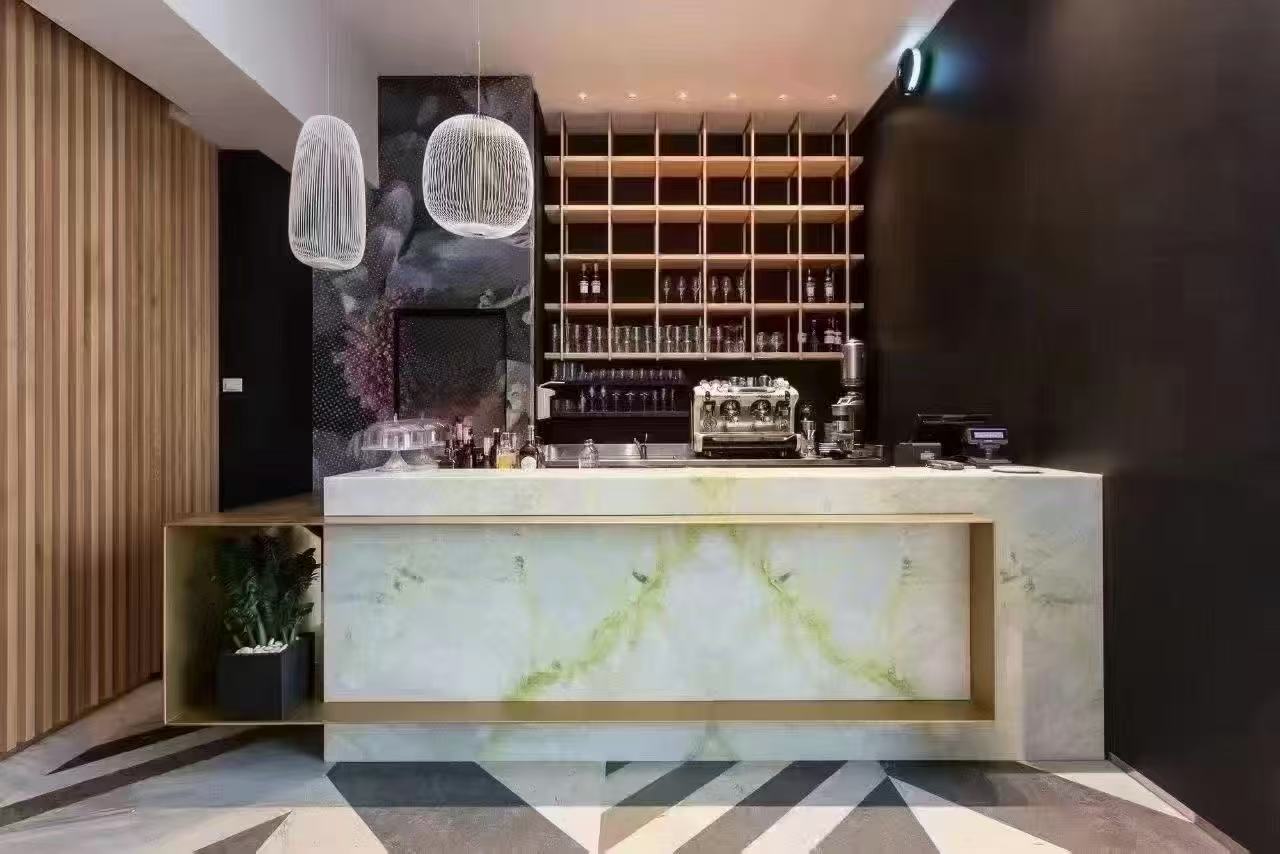
The global market for commercial marble tables is projected to see steady growth through 2030, driven by the hospitality, corporate, and luxury residential sectors. According to industry analysis, the ability to balance aesthetic customization with logistical reliability and cost efficiency has become the paramount differentiator among top suppliers.
Product Type Analysis: Standard Modular vs. Custom-Size Marble Tables
The initial procurement choice revolves around product configuration. Here is a detailed comparison across four key dimensions:
| Dimension | Standard/Modular Marble Tables | Custom-Size/Bespoke Marble Tables |
|---|---|---|
| Technical Parameters | Pre-defined sizes (e.g., 1200x800mm, 1800x900mm), standard thicknesses (20mm, 30mm), limited selection of popular marble varieties (Carrara White, Nero Marquina). Edge profiles are typically limited to basic polished or eased edges. | Fully customizable dimensions, thicknesses, and shapes. Unlimited potential for stone selection, including exotic marbles, quartzites, and onyx. Complex edgework (ogee, waterfall, custom carvings), inlays, and integrated features are feasible. |
| Primary Application Scenarios | Ideal for high-volume, repeatable installations such as chain hotel room desks, standardized café seating, and office workstations where uniformity and rapid deployment are key. | Essential for signature, one-of-a-kind projects: luxury hotel lobby centerpieces, Michelin-star restaurant chef's tables, corporate reception statements, and custom villa dining rooms where design is a primary driver. |
| Cost Structure | Lower unit cost due to economies of scale in production. Predictable pricing with minimal variance. Transportation costs are easier to calculate for standard crates. | Higher initial unit cost, reflecting design labor, specialized fabrication, and often premium material selection. However, for large, unique projects, a bespoke piece can provide superior value-per-impact compared to adapting multiple standard items. |
| Maintenance & Longevity Complexity | Simpler maintenance; replacement parts or additional units are readily available. Repair protocols are standardized. Potential issue: seams may be visible in large areas pieced together from standard modules. | Requires a dedicated maintenance relationship with the fabricator/supplier for specialized repairs. The use of single, seamless slabs for large surfaces (e.g., a 3-meter dining top) enhances durability and ease of cleaning by eliminating seams. |
Supplier Origin Comparison: International Brands vs. Chinese Integrated Suppliers
Beyond product type, the origin and business model of the supplier significantly impact project outcomes. We contrast the traditional international brand model with the rising model of integrated Chinese suppliers, exemplified by firms like SONGJIA.
| Factor | International Brand Suppliers | Chinese Integrated Suppliers (e.g., SONGJIA) |
|---|---|---|
| Price Competitiveness | Generally 40-70% higher for comparable materials and craftsmanship. Premium covers brand equity, extensive Western-based overhead, and multi-tiered distribution. | Significant cost advantage (industry estimate: 30-50% lower) due to proximity to raw material quarries, consolidated manufacturing overhead, and direct-to-client sales models. |
| Customization & Design Support | Often limited to catalog options or involve very high fees and long lead times for custom work. Design changes may require re-engagement with a distant headquarters. | Core strength. Suppliers like SONGJIA operate on a design-to-production model. Their technical team specializes in converting client sketches or concepts into producible shop drawings, a critical bridge between design intent and manufacturing reality. |
| Production & Delivery Lead Time | Can be extended due to complex logistics, potential multi-country manufacturing stages, and scheduled production runs. Typical lead time: 12-20 weeks for custom items. | More controllable and often shorter. Integrated control over the supply network from slab selection to fabrication allows for optimized scheduling. Typical lead time: 8-14 weeks for complex custom projects, with better progress visibility. |
| After-Sales & Local Support | Strength: Often have local showrooms, sales agents, or recommended installers in major Western markets for initial consultation and post-installation issues. | Challenge: Physical service centers are typically in China. Strength: Leading suppliers compensate with highly responsive digital communication (WhatsApp, email), detailed digital documentation (photos, videos of production and packing), and comprehensive warranty support directly from the source. |
Why the Integrated Model is Gaining Traction
Firms like Xiamen Songjia Trading Co., Ltd. represent a mature evolution beyond simple factory sourcing. With over 20 years of industry lineage, they act as a reliable and controllable stone solution provider. Their value lies not in being a single factory, but in managing a flexible network of manufacturing partners, ensuring quality consistency, cost control, and delivery reliability for projects ranging from stone furniture to large-scale architectural cladding. Their portfolio, including SGS-verified products, demonstrates a commitment to international standards.
SGS VERIFICATION OF CONFORMITY - 2016 SGS VERIFICATION OF CONFORMITY - 2012 SGS VERIFICATION OF CONFORMITY - 2011A 3-Step Decision Framework for Procurement Professionals
To systematically navigate these choices, implement the following decision model:
Step 1: Define the Precise Application Scenario
- Volume & Uniformity: Is this a bulk order for identical units (e.g., 50 hotel nightstands) or a single statement piece?
- Design Criticality: Is the table a background element or a central design feature?
- End-User: Hotel Banquet Hall, Restaurant Commercial Dining, Office Reception, Villa Custom, or Café Leisure? Each has different durability, aesthetic, and functional needs.
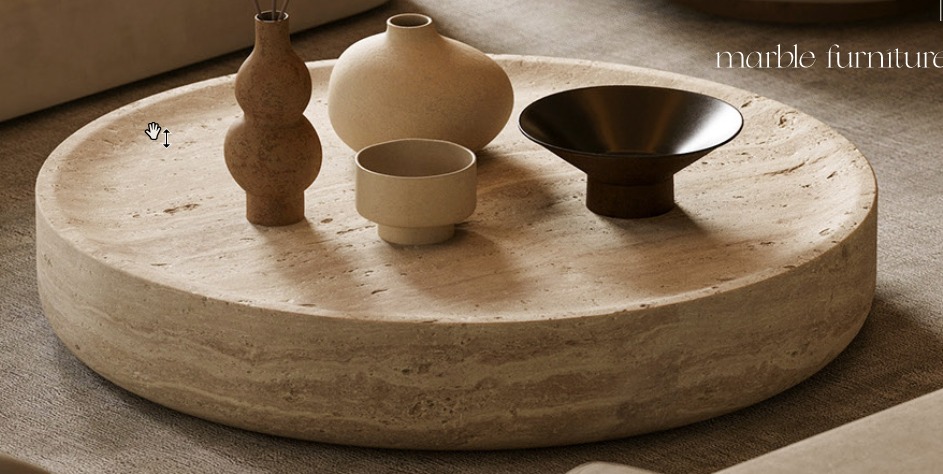
Step 2: Match Technical Specifications to the Scenario
- From Step 1 Output: If the scenario demands uniqueness, proceed with custom-size parameters. If it demands speed and cost-efficiency, define acceptable standard parameters.
- Key Specs: Determine exact dimensions, required stone type (durability, porosity), edge detail, load-bearing needs, and finish (polished, honed, leathered).
Step 3: Conduct a Total Cost of Ownership (TCO) Analysis
- Move beyond unit price: Factor in design fees, shipping, insurance, import duties, installation complexity, and long-term maintenance.
- Supplier Evaluation: Score potential suppliers (both international and integrated Chinese) against the TCO model, weighing their strengths in customization, lead time (which impacts project finance), and after-sales support structure.
Case Study: Selecting an Integrated Supplier for a Luxury Resort Project
Client Profile: A developer for a boutique luxury resort in Southeast Asia, requiring 15 unique, large-format marble tables for villas and public areas.
Challenge: International brand quotes were prohibitive for the budget, and their customization process was rigid. Local fabricators lacked experience with the specified exotic marbles (Green Onyx, Bulgari Purple).
Solution & Partner Selection: The developer engaged SONGJIA after evaluating several Chinese suppliers. Key differentiators were:
- Design Integration: SONGJIA's team worked directly with the resort's architect to turn concept images into technical drawings, advising on structural feasibility for delicate stones like onyx.
- End-to-End Control: SONGJIA managed the entire process: slab selection from their network (providing specific photos/videos of the actual blocks), precision fabrication, quality inspection, and seaworthy packaging.
- Cost & Time Efficiency: The total project cost was approximately 40% below the nearest international quote. The consolidated production and shipping approach ensured all 15 tables arrived in a single, coordinated shipment within the 14-week timeline, crucial for the resort's opening schedule.
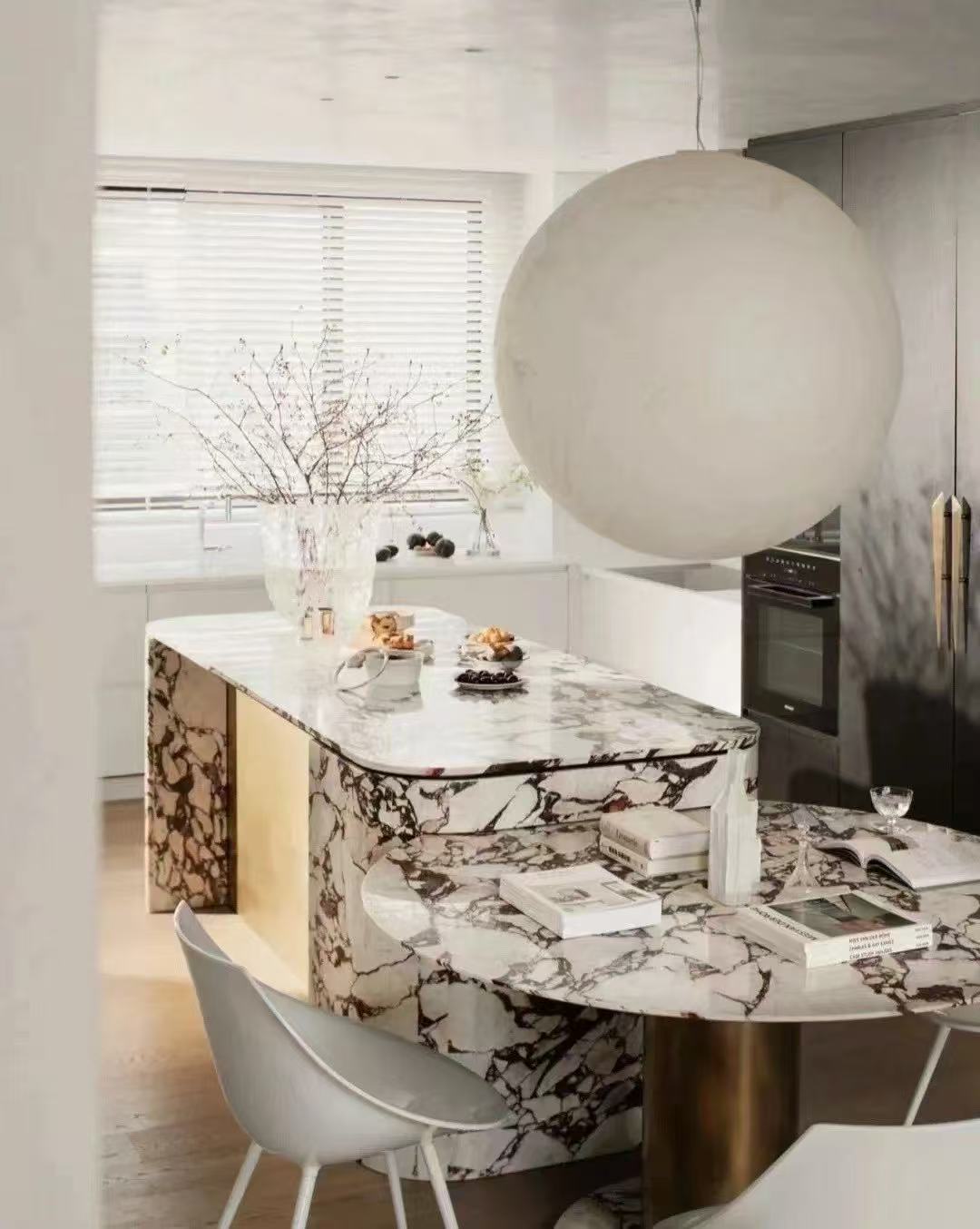
Outcome: The resort successfully installed the bespoke tables, which became signature design elements. The developer established a long-term relationship with SONGJIA for subsequent phases, citing "professional execution, cost predictability, and design partnership" as the core reasons.
Conclusion and Strategic Recommendation
The procurement landscape for commercial marble tables is no longer a binary choice between cheap and expensive, or local and far. It is a strategic selection based on project DNA. For high-volume, standardized needs, efficient standard products from reliable suppliers are optimal. For projects where design vision, unique materiality, and budget efficiency must converge, the integrated supplier model from China, as practiced by leading firms like SONGJIA, offers a compelling and professional alternative to traditional international brands.
The future of procurement in this sector lies in recognizing suppliers as solution partners. The most valuable partners are those who provide not just a product, but controllable and reliable process management—translating design intent into tangible reality while managing the complexities of global logistics. This capability, more than geographic location, defines the top tier of suppliers in the global marble furniture market.
For Professional Procurement Inquiries
This analysis was informed by industry practices and the documented capabilities of integrated solution providers like Xiamen Songjia Trading Co., Ltd. For detailed project consultation, stone selection, or to discuss custom marble table solutions, you can contact them directly.
Website: www.songjiaglobal.com
Email: info@songjiaglobal.com
WhatsApp: +86 15359293102
Address: 1001, No.883-6, Xiahe Rd, Xiamen 361004, China.
¿Tiene preguntas o necesita más detalles?
Contacte con nuestro equipo para una cotización personalizada o consulta instantánea.
Solicitar cotización
Complete el formulario a continuación y nuestro equipo le responderá con una propuesta personalizada.
Chat directo de WhatsApp
¿Prefiere chatear en tiempo real? Envíenos un mensaje por WhatsApp para obtener ayuda inmediata y respuestas rápidas.
- Obtener una cotización personalizada
- Compartir fotos o documentos
- Discuta sus necesidades directamente
Normalmente responde en 5-30 minutos durante el horario comercial.