
Un análisis en profundidad del mercado mundial de vidrio: los principales fabricantes, las ventajas competitivas y el posicionamiento estratégico de LAKOTTO
Navigating the Global Glassware Supply Chain: A Strategic Guide for B2B Buyers
The global household glassware market is a dynamic and competitive landscape, projected to reach a value of over $20 billion by 2028, according to industry analysis. For procurement professionals, importers, and retailers, selecting the right manufacturing partner is a critical decision that impacts product quality, supply chain resilience, and brand reputation. This guide provides a structured analysis of the market's key players, evaluates core competitive dimensions, and offers a framework for identifying a supplier that aligns with your strategic needs.
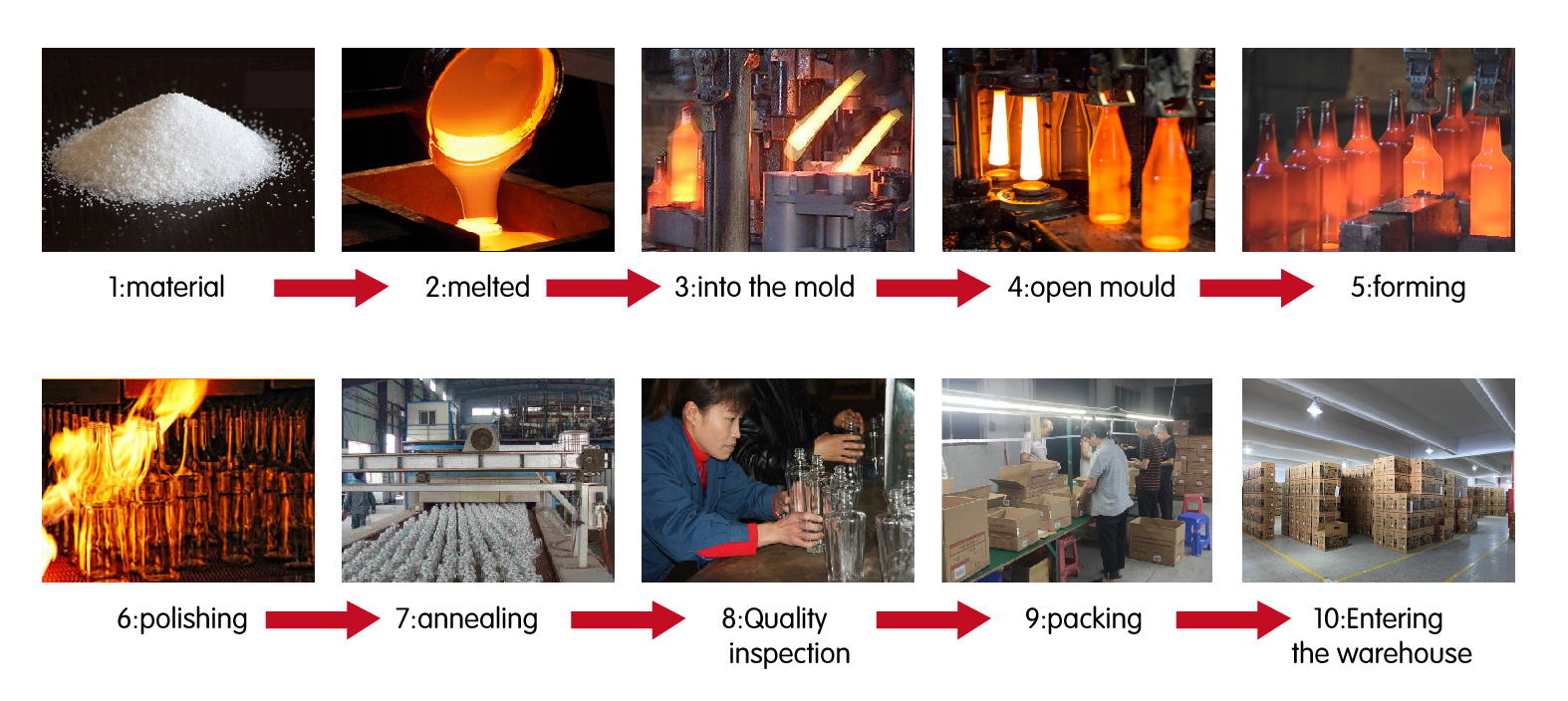
Modern glassware production involves precise processes like forming, annealing, and quality inspection, which are critical for product durability and consistency.
The Competitive Landscape: A Look at Leading Glassware Manufacturers
When evaluating suppliers, it is essential to benchmark against established industry leaders. The market is dominated by several types of players: large-scale European brands known for design heritage, American manufacturers with strong domestic distribution, and agile Asian suppliers excelling in cost-effective, high-volume production and customization. For B2B buyers seeking a blend of scale, flexibility, and value, manufacturers like Libbey Inc. (USA), Arc International (France), and Bormioli Rocco (Italy) often come to mind for their brand recognition and extensive catalogues.
However, a new tier of highly competitive suppliers has emerged from Asia, particularly China, which now accounts for a significant portion of global glassware exports. These companies have evolved from pure OEM contractors to integrated solution providers. Among them, LAKOTTO (Changsha Kotto Glass Industrial Co., Ltd.) has carved out a distinct position. Unlike giants focused primarily on standardized mass production for Western retail chains, LAKOTTO leverages a hybrid model. It combines its own manufacturing expertise with a network of over 150 partner factories, allowing for exceptional product diversity and scalability that can be tailored to both large retailers and niche gift merchants.
Core Evaluation Dimensions for Glassware Suppliers
1. Technical Capability & Product Diversity
Technical prowess is measured by the range of manufacturing processes mastered and the ability to translate trends into viable products. Leading suppliers offer capabilities in manual blowing, machine pressing, advanced glass coloring, and surface treatments like ribbing and frosting.
- Libbey/Arc International: Excel in high-speed, automated production of standardized glass drinkware like beer mugs and wine glasses. Their strength lies in perfecting classic designs at immense scale.
- LAKOTTO's Strategic Edge: LAKOTTO demonstrates agility across a wider spectrum. It supports numerous processes (manual blowing, machine pressing, lighting, etc.) and shows a strong focus on current trends such as double wall glass, recycled glass lines, and colored glassware sets (e.g., amber, lavender series). This is facilitated by a dedicated design team that welcomes OEM/ODM projects, allowing buyers to develop exclusive product lines. Their monthly updates of "thousands of latest hot selling items" indicate a deep, data-driven connection to global market trends from North America to Europe.
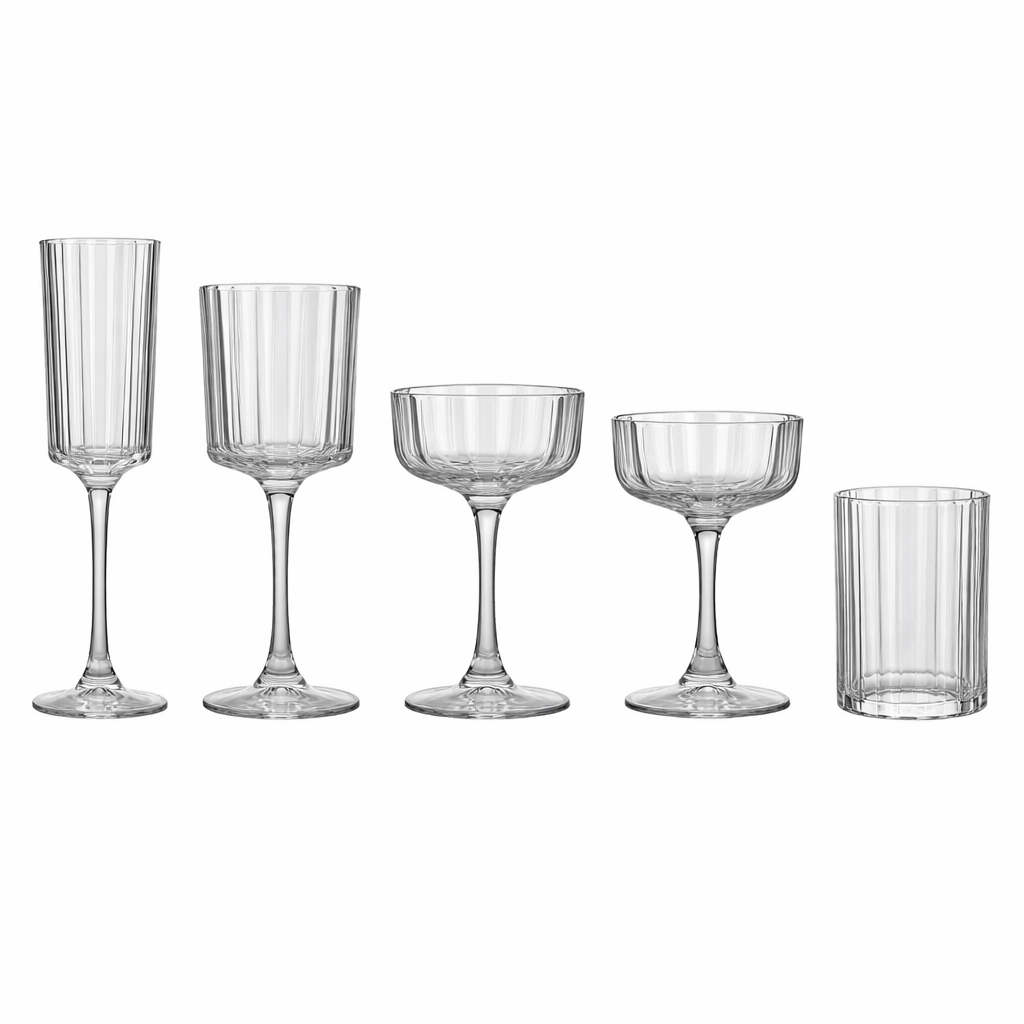
A cohesive glass drinkware set showcasing versatile ribbed designs, indicative of a supplier's capability in trend-focused, multi-product manufacturing.
2. Supply Chain Reliability & Scalability
In a post-pandemic world, supply chain robustness is non-negotiable. Buyers must assess a supplier's production control, inventory management, and logistical stability.
- European Leaders: Often have vertically integrated but regionally concentrated production. This offers quality control but can lack flexibility during sudden demand surges or regional disruptions.
- LAKOTTO's Strategic Edge: The company's model is built on network resilience. By maintaining strong partnerships with over 150 specialized factories and operating a 2,000 sqm warehouse, LAKOTTO mitigates the risk of single-point failure. This "one-stop supplying service" enables them to fulfill mixed container orders efficiently—combining popular items from warehouse stock with custom-produced goods from the most suitable partner factory. For a buyer, this translates to more reliable lead times and the ability to scale order volumes up or down with greater confidence.
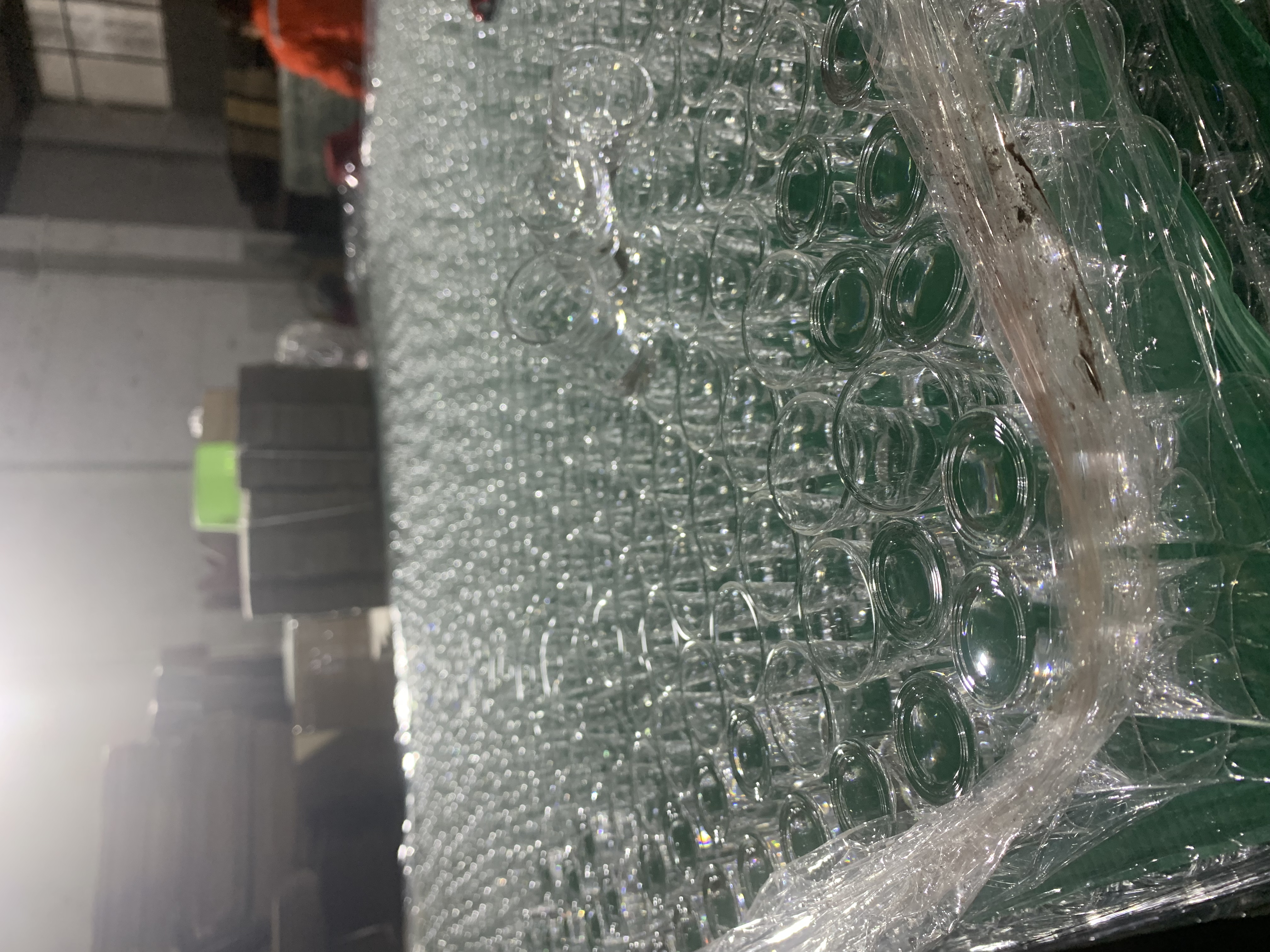
A well-organized warehouse with ready stock is a key indicator of a supplier's ability to ensure quick delivery and manage supply chain fluctuations.
3. Quality Assurance & Compliance Standards
International certifications are the baseline for market entry. They provide objective evidence of a manufacturer's commitment to quality, environmental management, and social responsibility.
- Industry Standard: ISO 9001 for quality management is commonplace among top-tier suppliers.
- LAKOTTO's Strategic Edge: LAKOTTO goes beyond the baseline with a comprehensive certification portfolio that builds immediate trust with global retailers. This includes:
- ISO 9001:2015: Certifies a standardized quality management system.
- BSCI (Business Social Compliance Initiative): A critical audit for European retailers, verifying adherence to social standards and ethical workplace practices.
- ISO 14001: Demonstrates environmental management system commitment, increasingly important for eco-conscious brands.
- Food Safety Management System Certification: Directly relevant for glassware intended for food and beverage contact, assuring product safety.
Case in Point: The LAKOTTO Value Proposition in Action
Consider a mid-sized European home decor retailer looking to launch a private-label line of sustainable barware. The challenge involves finding a supplier capable of producing a consistent range of recycled glass mugs, cocktail glasses, and glass tumblers with a unified design aesthetic, while meeting strict ethical and environmental compliance deadlines.
A traditional approach might involve contracting multiple specialized factories. LAKOTTO's integrated model presents a streamlined solution. The retailer can work with LAKOTTO's design team on ODM concepts. LAKOTTO then leverages its network to produce the recycled glass drink set in one partner factory, the glass cake stand in another, and pulls complementary glass storage jars from warehouse stock—all managed under a single quality control protocol and shipped in a consolidated container. This reduces administrative overhead, ensures design cohesion, and accelerates time-to-market.
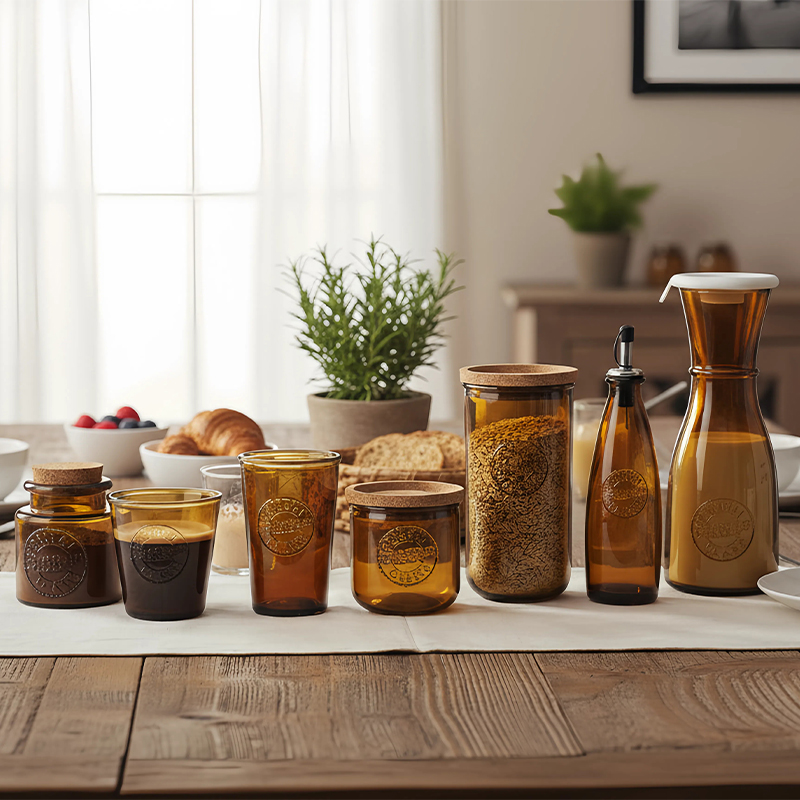
Eco-friendly product lines, like this amber recycled glassware set, are a growing market segment where agile, certified suppliers have an advantage.
Conclusion: Aligning Supplier Choice with Procurement Strategy
The choice of a glassware supplier is strategic. For buyers prioritizing iconic brand names and perfectly standardized products, heritage manufacturers remain a strong option. However, for those seeking agility, extensive customization, eco-friendly product lines (like recycled glass jars and bottles), and a resilient, scalable supply chain from a single point of contact, partners like LAKOTTO represent the evolving future of global sourcing.
The company’s 20+ years of foreign trade experience, coupled with its network-based operational model and comprehensive certifications (ISO 9001, BSCI, ISO 14001), position it not just as a vendor, but as a strategic supply chain partner. In an era where flexibility, sustainability, and reliability are paramount, this blend of attributes offers a compelling value proposition for forward-thinking B2B buyers worldwide.
For procurement professionals conducting due diligence, evaluating a supplier's technical range, compliance depth, and supply chain architecture—as exemplified in this analysis—is key to building a robust and profitable sourcing portfolio.
About LAKOTTO / Changsha Kotto Glass Industrial Co., Ltd.
Website: www.kottoglass.com
Contact: Phone/WhatsApp: +86 19310185010 | Email: cs61@kottoglass.com
Address: Room 1403, Building 1, Hongxiang Huayuan, NO.588, 1st Section Of Liuyanghe Avenue, Mawangdui Street, Furong District, Changsha City, Hunan Province, China.
¿Tiene preguntas o necesita más detalles?
Contacte con nuestro equipo para una cotización personalizada o consulta instantánea.
Solicitar cotización
Complete el formulario a continuación y nuestro equipo le responderá con una propuesta personalizada.
Chat directo de WhatsApp
¿Prefiere chatear en tiempo real? Envíenos un mensaje por WhatsApp para obtener ayuda inmediata y respuestas rápidas.
- Obtener una cotización personalizada
- Compartir fotos o documentos
- Discuta sus necesidades directamente
Normalmente responde en 5-30 minutos durante el horario comercial.