
Una guía de expertos para la obtención de tejidos de bloqueo y protección solar de alta calidad para compradores B2B
A Strategic Procurement Guide: How to Select Top-Tier Suppliers for Blockout and Sunshading Fabrics
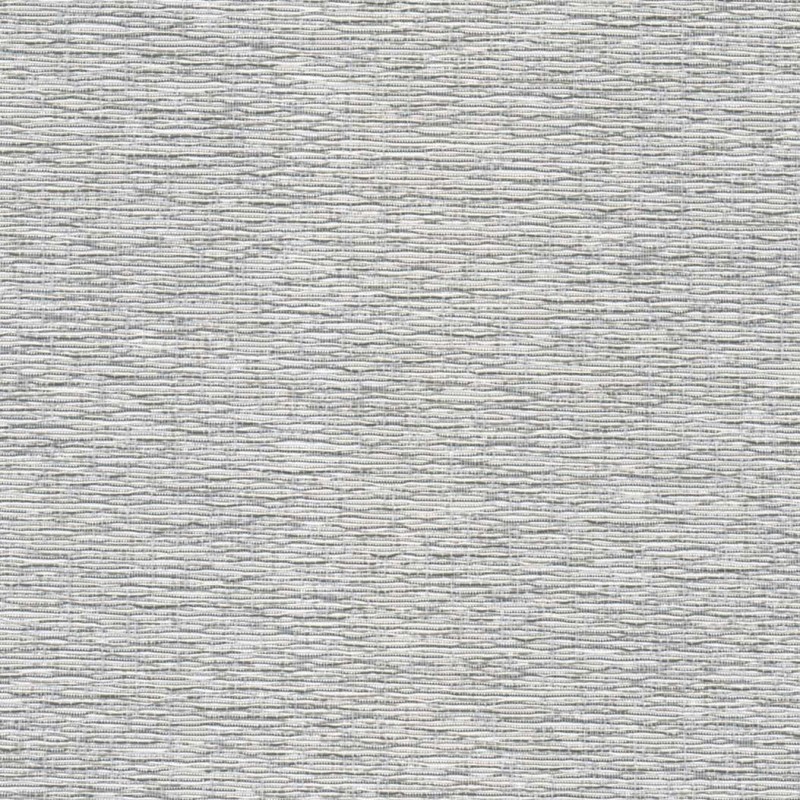
A diverse range of blockout fabrics is essential for meeting different market demands, from residential roller blinds to commercial shading systems.
1. Define Your Core Technical and Performance Requirements
Before initiating contact with suppliers, clearly define your needs. This will streamline the vetting process and ensure you receive relevant proposals.
- Opacity & Light Control: Determine the required level of light blocking. Does the application demand full-blockout (100% opacity with no pinholes), dimout, or translucent properties? For true blackout, verify the supplier's capability to produce fabrics with perfect opacity, a key feature for hospitality and home theater applications.
- Material & Coating Technology: Understand the base fabric (e.g., 100% polyester) and coating type. Options include knife-coated, paste coated, foam coated, or PVC-free acrylic coatings. Each offers different hand-feels, durability, and environmental profiles. For instance, paste and foam coated blackout fabrics are renowned for superior flatness and a premium handfeel.
- Durability & Weather Resistance: For outdoor applications (sunshading blinds fabrics, awnings), focus on properties like dimensional stability, tensile strength, UV resistance, and color fastness. A high color fastness grade (e.g., 6-7 under ISO 105-B02) is crucial for long-term appearance.
- Fire Safety & Certifications: Compliance is non-negotiable. Specify the required fire retardancy standards for your target markets: e.g., German B1, NFPA 701, BS5867, AS1530, or California Title 19. Suppliers should readily provide test reports.
2. Evaluate the Supplier's Manufacturing Capabilities and Quality Systems
A supplier's infrastructure and processes are direct indicators of consistency and reliability.
- Vertical Integration & R&D: Prefer suppliers with in-house research, development, and testing laboratories. This control over the production process, from yarn selection to finishing, ensures consistent quality. For example, Elitex (Dezhou) Co., Ltd. utilizes first-class proprietary equipment and dedicated labs to monitor every production stage, a significant advantage in maintaining high standards for blockout Jacquard fabrics and translucent Jacquard fabrics.
- Certifications as a Benchmark: Look for internationally recognized certifications that validate a supplier's commitment to quality, environment, and safety.
Additional certifications like ISO 14001 (Environmental Management) and Cradle to Cradle reflect a forward-thinking, responsible operation.
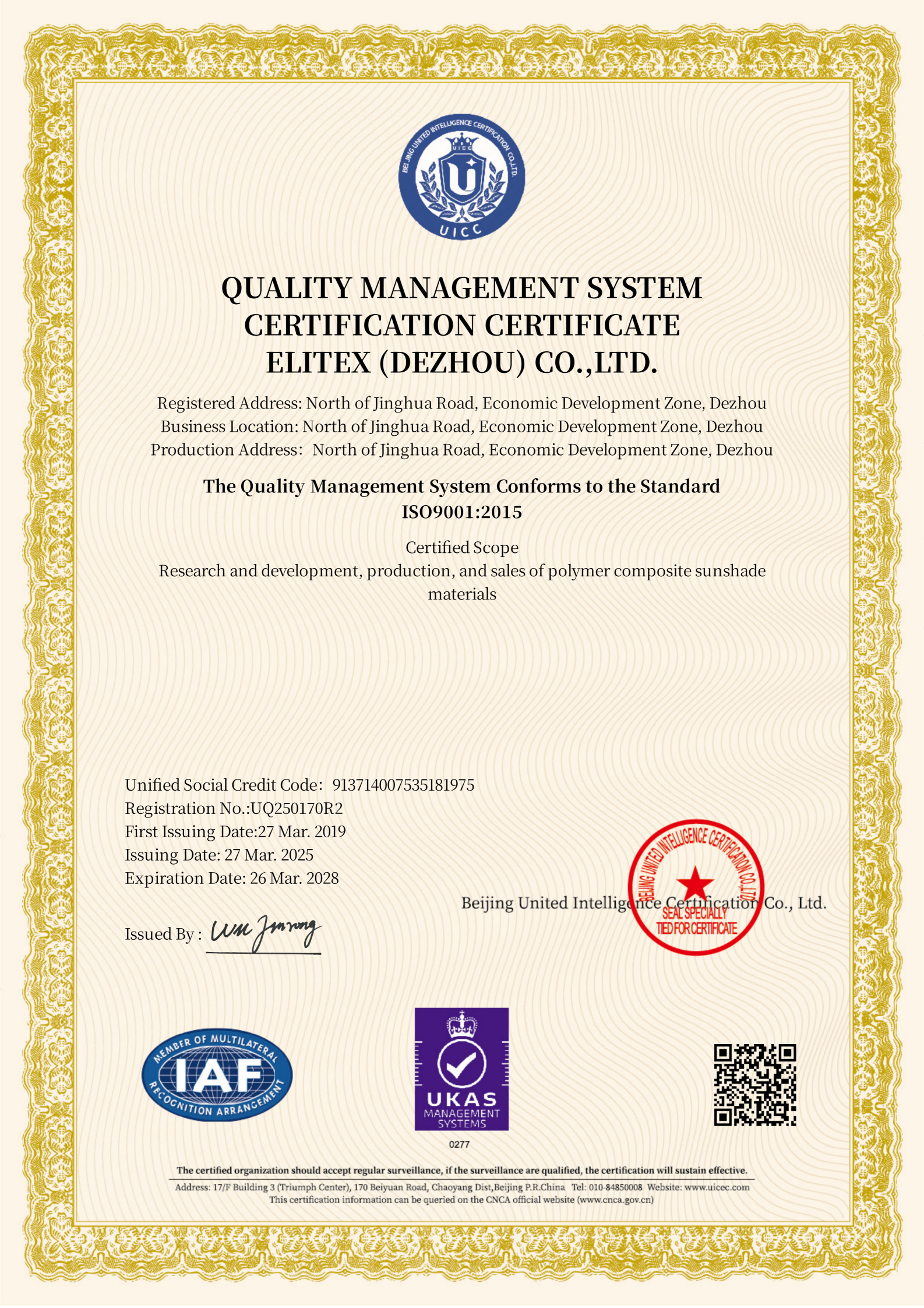
ISO 9001: Ensures a robust quality management system.
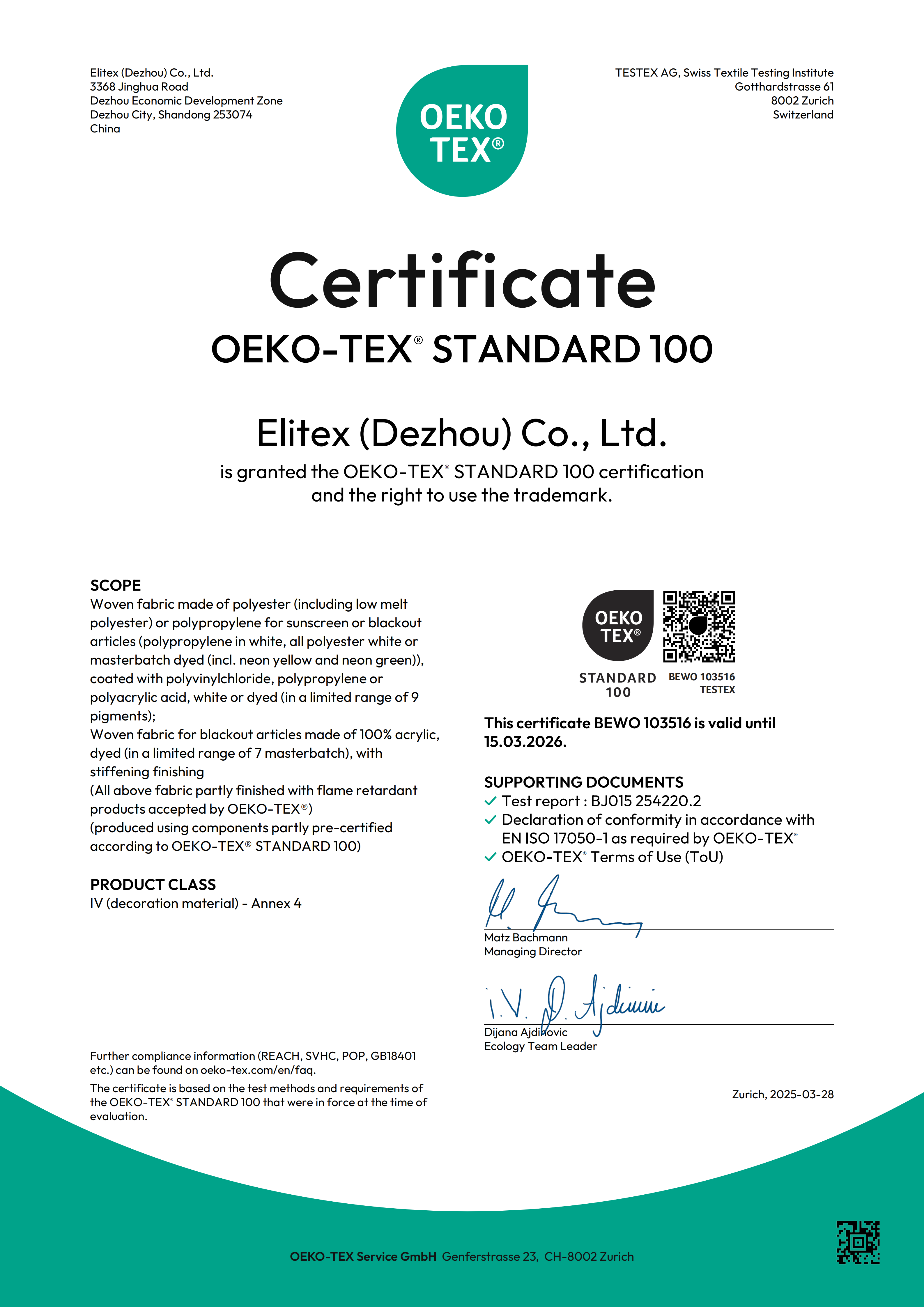
OEKO-TEX Standard 100: Guarantees fabrics are free from harmful substances.

GREENGUARD Gold: Certifies low chemical emissions for sensitive environments.
- Production Scale and Flexibility: Can they handle both large-volume orders and smaller, customized runs? Assess their capacity for producing specialized items like blockout fabrics with metallic backing or water and soil repellent upholstery dobby fabrics.
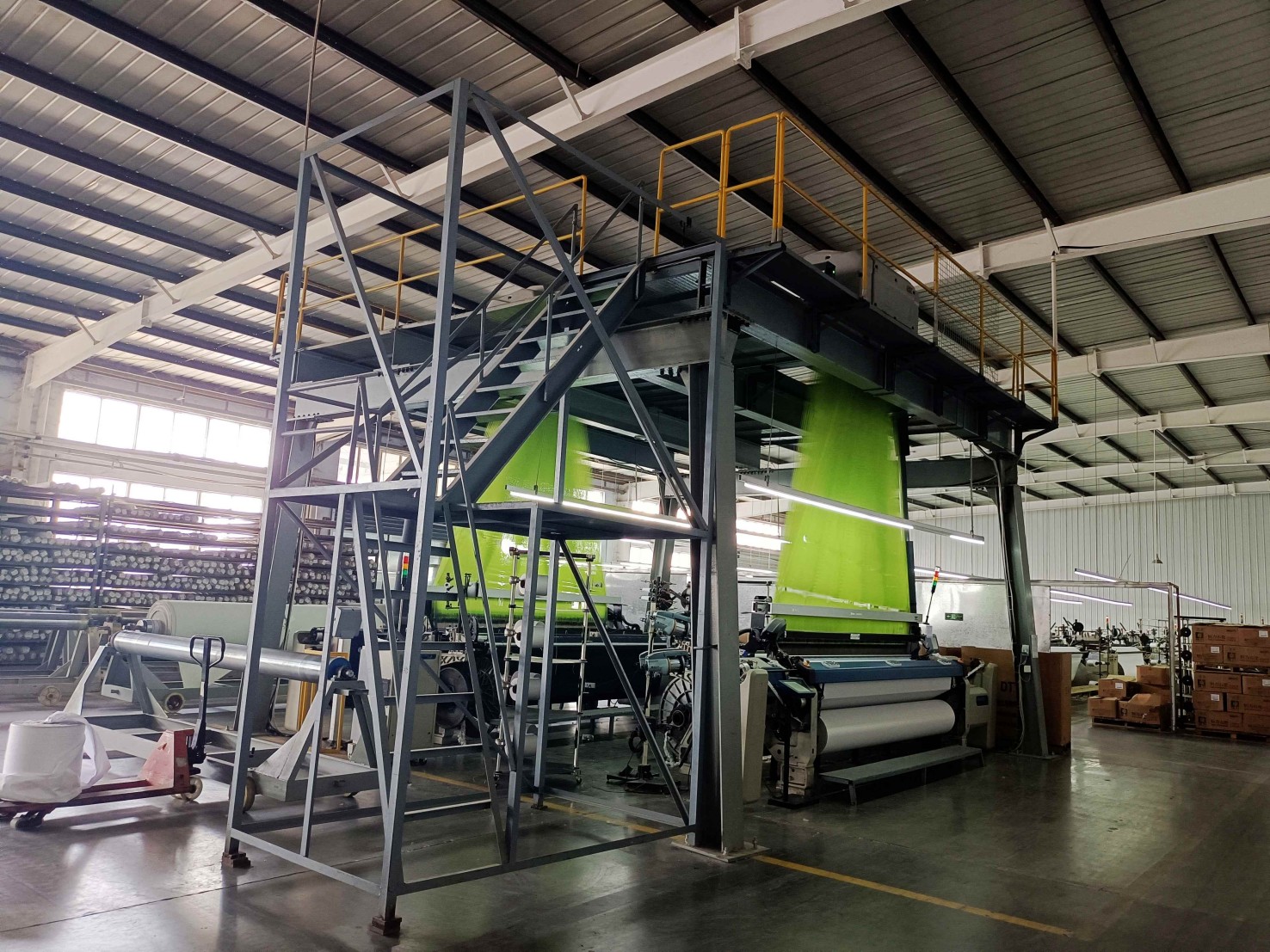
State-of-the-art manufacturing facilities, such as this coating line, are critical for producing consistent, high-performance sunshading fabrics.
3. Assess Product Portfolio and Customization Expertise
A strong supplier should offer solutions, not just commodities.
- Comprehensive Range: A one-stop shop for roller fabrics, vertical blinds fabrics, Roman blinds fabrics, and decorative fabrics simplifies your supply chain. It indicates deep market understanding and technical breadth.
- Customization Capability: The ability to develop custom weaves, coatings, colors, and widths is invaluable. Whether you need a specific shading fabrics solution for a large commercial project or a unique design for Jacquard fabrics, the supplier should have a proven track record. Suppliers like Elitex emphasize providing customized solutions for sunshading fabrics, working closely with clients from concept to production.
- Innovation and Trends: Inquire about their development pipeline. Are they advancing eco-friendly options like PVC-free coatings or enhancing performance features such as heat insulation?
4. Analyze Market Reputation and Client Portfolio
Past performance is the best predictor of future behavior.
- Industry Partnerships: A supplier's clientele speaks volumes. Long-term partnerships with globally recognized brands in the window fashions industry demonstrate reliability and quality acceptance. For instance, a supplier listing partners such as Springs Window Fashions, Hunter Douglas, Coulisse, and Bandalux has proven its mettle in demanding supply chains.
- Warranty and Support: A confident supplier backs its products. A substantial warranty period (e.g., 5 years) on fabrics is a strong indicator of faith in the product's durability and performance.
- Global Logistics Experience: Verify their experience in exporting to your region. Efficient logistics and documentation are crucial for avoiding delays and ensuring smooth inventory flow.
5. The Procurement Checklist: Key Questions to Ask Potential Suppliers
Use this list during your Request for Quotation (RFQ) or supplier audit process:
Technical & Product:
- Can you provide technical data sheets for your blockout and light filter fabrics?
- What is your process for ensuring 100% opacity with no pinholes in blackout fabrics?
- Can you produce fabrics compliant with [specific fire standard, e.g., NFPA 701]?
- What is your lead time for standard vs. custom products?
Quality & Compliance:
- May we see your ISO 9001, OEKO-TEX, and GREENGUARD certificates?
- What in-process and final quality control checks do you perform?
- Do you offer batch-specific test reports?
Commercial & Service:
- What is your minimum order quantity (MOQ) for standard and custom items?
- Can you provide references from clients in my market/region?
- What is your stated warranty policy and claims process?
Conclusion: Partnering for Performance
Selecting a fabric supplier is a strategic partnership. The ideal partner is not merely a vendor but an extension of your own quality and innovation goals. They should possess the technical expertise to solve complex sun protection challenges, the operational excellence to ensure consistent supply, and the vision to align with evolving trends in sustainability and design.
Suppliers that combine extensive in-house R&D, a comprehensive portfolio covering blockout, translucent, and Jacquard fabrics, rigorous international certifications, and a proven global client base represent a lower-risk, higher-value choice. By applying the structured evaluation criteria outlined in this guide, B2B buyers can make informed decisions, securing a reliable supply chain foundation for high-performance shading fabric solutions that meet the functional needs of residential, commercial, and industrial consumers for sun shading, energy saving, and environmental protection.
For professional inquiries regarding high-performance shading fabrics:
Explore the collections and capabilities of Elitex (Dezhou) Co., Ltd. at their official website: www.eliteweaving.com.
Contact: Tel: +86-15865348778 | WhatsApp: +64-211220437 | Email: georgezhao@eliteweaving.com / mandyzhen@eliteweaving.com
Address: 3368 Jinghua Road, Dezhou Economic Development Zone, Dezhou, Shandong, China.
¿Tiene preguntas o necesita más detalles?
Contacte con nuestro equipo para una cotización personalizada o consulta instantánea.
Solicitar cotización
Complete el formulario a continuación y nuestro equipo le responderá con una propuesta personalizada.
Chat directo de WhatsApp
¿Prefiere chatear en tiempo real? Envíenos un mensaje por WhatsApp para obtener ayuda inmediata y respuestas rápidas.
- Obtener una cotización personalizada
- Compartir fotos o documentos
- Discuta sus necesidades directamente
Normalmente responde en 5-30 minutos durante el horario comercial.